
Not literally never. Europe is full of people buying new stuff every day. The real difference is the reflex. In a lot of Europe, the first question is not “Which new one should I get?” It is “Can I repair this, buy it used, or get a better one second-hand?”
That reflex is not just thrift.
It is infrastructure.
It is policy.
It is habit.
It is also one reason some European households quietly keep their budgets under better control than Americans expect. Millions of Europeans now buy second-hand goods online across categories like clothes, electronics, toys, and home goods, while the EU keeps tightening rules that make repair easier and more attractive instead of treating replacement as the normal end of the story.
The categories that show the difference most clearly are not glamorous. They are smartphones, laptops, washing machines, vacuum cleaners, bookcases, dining chairs, bicycles, skis, winter coats, occasion wear, and children’s clothes.
A lot of Americans still replace those on autopilot.
A lot of Europeans check the used market first.
Smartphones And Laptops

This is probably the clearest gap now.
In the U.S., a lot of people still talk about refurbished tech like it is a compromise for students, the recently divorced, or someone who made a bad financial quarter. In Europe, refurbished phones are increasingly normal mainstream consumer behavior. A 2025 survey across five European countries found that 30% of consumers had already bought a refurbished smartphone, with France at 38%, Spain at 28%, and Germany at 25%. The same study found that 40% of consumers say their next smartphone will definitely or probably be refurbished.
That is not fringe behavior.
That is a market.
And once that behavior becomes normal for phones, it spills into laptops and tablets too. Europeans are helped here by something Americans still underestimate: a stronger cultural and regulatory push toward repairability, spare parts, and reasonable repair access. The EU’s right-to-repair rules explicitly target products like mobile phones and require manufacturers to support repair with accessible information and reasonably priced spare parts, while repair chosen under guarantee extends liability by at least 12 months.
The budget logic is hard to argue with.
A new mid-to-high-end phone is now expensive enough to feel faintly insulting. A refurbished one often does the same job for materially less money, and Europeans seem increasingly willing to accept minor cosmetic wear in exchange for that trade. The 2025 Vodafone Institute study found that consumers expected refurbished devices to come at 25% to 50% discounts versus new, and a large majority said they would use a stronger right to repair if it were easy to access.
That changes household behavior.
A cracked phone screen becomes a repair question.
An older MacBook becomes a battery question.
A decent two-year-old device becomes a used-market opportunity instead of e-waste dressed as aspiration.
Washing Machines And Vacuum Cleaners

This is where the American replacement instinct starts looking expensive and a little childish.
A washing machine stops spinning right. A vacuum loses suction. In the U.S., a lot of households jump quickly from “annoying problem” to “maybe it’s time for a new one.” In Europe, the reflex is more often call the repair person first.
That is not because Europeans enjoy spending Tuesday afternoons waiting for appliance technicians.
It is because the repair path is more normalized and increasingly more supported. The EU’s repair rules specifically name washing machines and vacuum cleaners among the product categories consumers should be able to request repair for, and the whole legal direction is toward making repair cheaper, faster, and less obstructed by manufacturers.
France is a good example of how this gets embedded in ordinary behavior. There, repair bonuses reduce the consumer’s bill on a wide range of products, including household appliances, and France also subsidizes repairs for textiles and shoes. Even outside France, the policy climate is clearly trying to make “repair first” a more normal sentence.
That matters because appliances are one of the easiest places for a household to destroy money while telling itself it is being practical.
A new washing machine is not only the machine.
It is delivery.
It is installation.
It is disposal of the old one.
It is often a same-week decision made under stress.
A repair bill is annoying too, but it is often much smaller than the full replacement spiral.
A lot of Europeans know that.
They also know something Americans forget: older appliances are sometimes ugly but perfectly serviceable. The European instinct is often keep the boring machine alive, not replace it because the finish looks tired or the control panel is not very 2026.
That sounds unromantic.
It is also how households stop bleeding money on white goods every few years.
Bookcases And Dining Chairs

Furniture is one of the easiest places to see how different the two cultures still are.
A lot of Americans buy furniture the way they buy seasonal mood. New apartment, new chair. New house, new dining set. One scratch, one wobble, one move across state lines, and half the room is apparently emotionally obsolete.
Europe is much less sentimental about that.
Bookcases and dining chairs in particular are classic second-hand territory because they are durable, easy to inspect, boring to ship, and usually overpriced when bought new for what they actually are. That is exactly why second-hand marketplaces keep expanding around them. IKEA now runs a dedicated second-hand marketplace in five countries and says it is scaling toward 170,000 listings in 2026. In Spain, IKEA openly markets pre-loved IKEA pieces as a normal way to furnish a home more affordably.
That tells you a lot.
Once the biggest flat-pack furniture brand in Europe decides that resale should be a core customer habit, the cultural battle is basically over.
Europeans are also helped by housing reality. Smaller flats, more renting, more moving within dense cities, and less obsession with perfect matching sets all make it easier to treat furniture as functional inventory instead of sacred identity. A used BILLY bookcase, a mismatched dining chair, a lamp from someone else’s guest room, these are not personal failures. They are normal household economics.
France and Spain make this especially visible because the resale infrastructure is so embedded. Leboncoin says the total value of exchanges on its platform in 2024 was €27 billion, while Wallapop’s 2025 framing is openly about reuse helping households preserve purchasing power.
A lot of Americans still think used furniture means sad curbside leftovers.
A lot of Europeans think used furniture means not paying full price for a chair.
That is the healthier attitude.
Bicycles And Skis
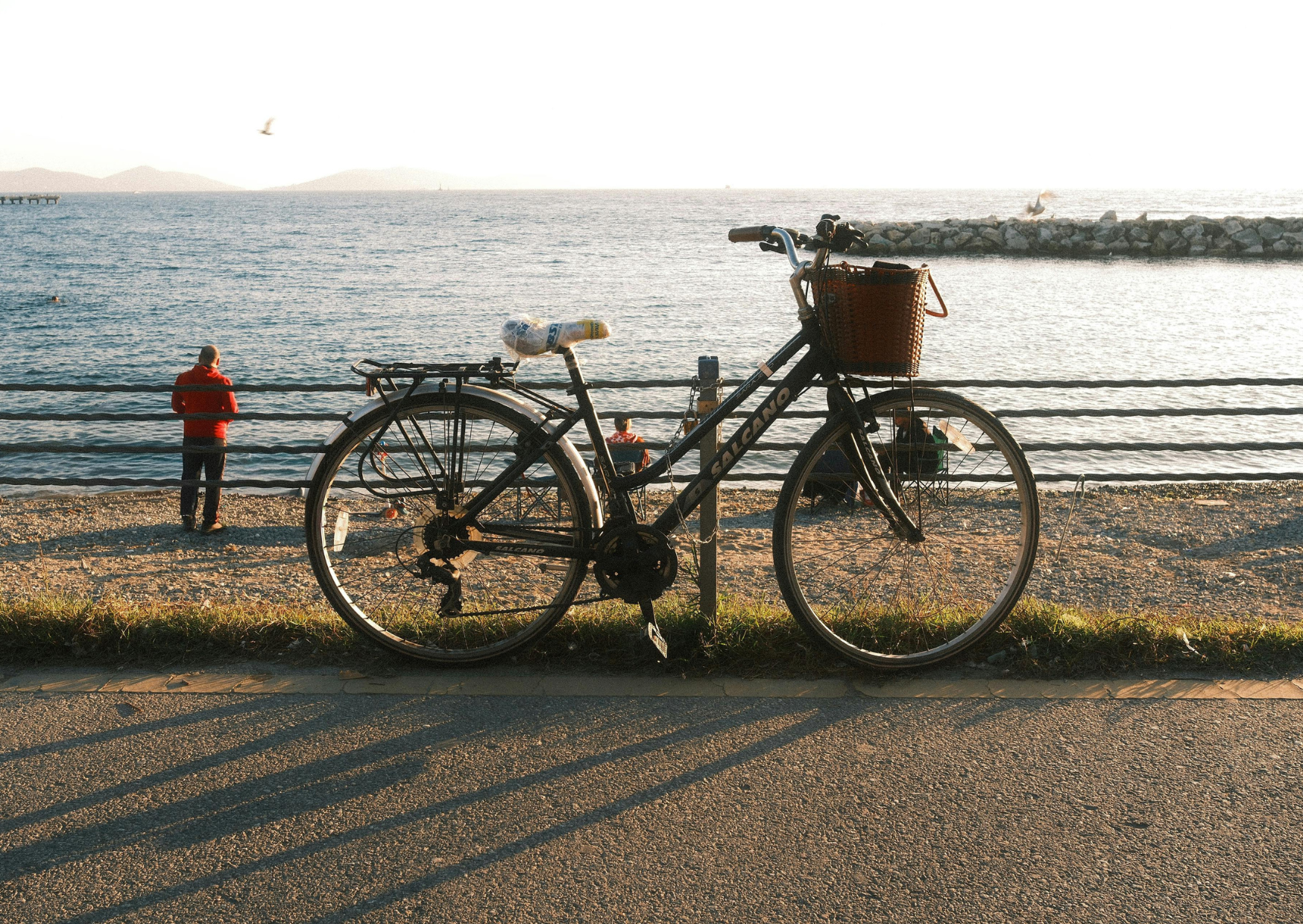
These are almost too obvious in Europe.
A new bicycle in Amsterdam, Copenhagen, Berlin, Valencia, or Lyon is not always a status purchase. Very often it is a theft risk. That alone changes the buying logic. A perfectly decent used bike makes emotional and financial sense in a way that a shiny new one often does not. The same goes for family bikes, commuter bikes, and “I need something to get around the neighborhood” bikes.
The market now reflects that. Decathlon in Spain actively sells second-hand bicycles and buys back sports equipment from customers, while social-enterprise repair and refurbishment projects around Europe keep turning discarded bikes into working ones again. An EU-supported case study on SoliCycle in Belgium reported 1,258 refurbished bikes sold in 2024 along with 2,862 second-hand parts.
That is not niche repair-culture cosplay.
That is product life extension at street level.
Skis sit in a slightly different category but follow the same logic. In the U.S., a lot of middle-class households quietly normalize buying seasonal equipment new because the family goes skiing once a year and wants the clean version of the ritual. In Europe, especially closer to mountain regions, skis and related gear are much more likely to be rented, inherited, bought second-hand, or passed around because everyone understands how absurd it is to pay full retail for equipment that spends most of the year dormant. Decathlon’s second-life channels are full of used sports gear, and France’s repair and circularity rules have deliberately pushed consumers toward longer product life in clothing and equipment rather than constant replacement.
The deeper point is not only price.
It is frequency of use.
Europeans are often stricter about refusing full-price ownership for products that do not earn it.
A commuter bike earns ownership.
A one-week-per-year ski fantasy often does not.
Winter Coats, Occasion Wear, And Children’s Clothes

This is where American retail psychology really starts to look wasteful.
A lot of Americans still buy clothes as if each social event, each weather shift, and each child growth spurt deserves fresh inventory. Europe is not innocent here. Fast fashion is alive and well. But the resale side of the wardrobe is much more normalized than many Americans realize.
Vinted’s 2024 impact report is the clearest signal. Among its members across Europe, 65% said a quarter or more of their wardrobe was second-hand, and 37% said second-hand already made up half their wardrobe or more. In Germany, France, Poland, and the UK, more than 40% reported that over half their wardrobe was second-hand.
That does not mean all Europeans have turned into linen-wearing reuse saints.
It means the stigma is mostly gone.
And once the stigma disappears, the obvious categories move first.
Winter coats are one of them because good coats are expensive, durable, and usually worn for years rather than destroyed in one season. Occasion wear is another because paying full retail for a dress or blazer used for one wedding, one work dinner, or one graduation starts to feel embarrassing once resale becomes easy. Children’s clothes may be the most obvious of all because children are brutally efficient at turning brand-new clothing into a three-month asset.
This is where France’s repair and anti-waste approach matters again. France’s official repair bonus for textiles and footwear gives direct discounts for things like patching tears and replacing linings, and the government explicitly wants to push repaired volumes well above past levels.
That policy only works because it matches existing household logic.
A lot of Europeans do not see a torn coat and think “shopping trip.”
They think “tailor.”
A lot of Americans still see a torn coat and think the coat has entered its final spiritual chapter.
That is a more expensive religion.
Why These 11 Categories Keep Showing Up
The pattern is not random.
These are products with some combination of long useful life, easy inspection, repairable parts, high new-retail markup, or short emotional ownership.
That is why the same categories keep returning on European platforms and in European homes:
Phones and laptops can be refurbished.
Washers and vacuums can be repaired.
Bookcases and chairs survive multiple households.
Bikes can be tuned.
Skis can be rented or resold.
Coats age well.
Children’s clothes barely have time to get old.
The habits around them are reinforced by infrastructure. Europe now has stronger repair rules, more explicit repair support, more cultural tolerance for second-hand, and more mature resale channels than a lot of Americans still imagine. The European Commission notes that millions of consumers already buy second-hand online. The EU’s repair rules are designed to make durable goods cheaper to fix. France subsidizes clothing and appliance repairs. Big retailers like IKEA and Decathlon are no longer pretending second-hand belongs outside the business model.
That changes what feels normal.
And normal is what controls spending.
Not lectures.
Not aspiration.
Normal.
The American Habit Behind The Waste
Americans do not always buy new because they are richer.
A lot of the time they buy new because the system makes new feel easier.
Retail is frictionless. Repairs are patchy. Small-city and suburban life make pickup harder. Storage is larger. Social shame around “used” still hangs around more than people admit. And a lot of Americans confuse fresh with reliable, even when the product category clearly does not justify it.
That is how someone replaces a dining chair instead of tightening it.
That is how someone buys a new vacuum instead of fixing a hose or battery.
That is how someone buys brand-new children’s clothes for the next size jump as if no other child in the neighborhood has ever grown.
Europe is not morally superior here.
It is just operating under a different set of habits and incentives.
Smaller homes discourage accumulation.
Higher repair visibility makes repair feel normal.
Better second-hand infrastructure makes used shopping less embarrassing.
And policy now backs the instinct instead of fighting it. The European Parliament and Council are not subtly suggesting this direction. They are explicitly trying to make repair easier and more economically attractive because replacement waste has become too costly to ignore.
That produces a different consumer reflex.
The reflex is the real story.
The Better First Question This Week
Anyone trying to borrow the European habit does not need to become a flea-market romantic.
The useful move is smaller.
For anything in these 11 categories, ask four questions before buying new:
Is there a decent second-hand version within easy reach?
Can the current item be repaired at a sane price?
Will this still make sense in a year?
Is this product actually hard to inspect used, or am I just defaulting to new out of habit?
That one sequence catches a shocking amount of household waste.
It catches the phone upgrade that is mostly boredom.
It catches the coat replacement that is really just a lining issue.
It catches the chair purchase that could have been a €20 second-hand solution.
It catches the children’s-clothes haul that could have been half the price from a local seller or Vinted bundle.
It catches the bike purchase that should have started with Decathlon’s second-life section, a repair workshop, or a neighborhood listing.
A lot of Europeans are not doing anything mystical.
They are just asking the cheaper question first.
The Expensive Part Is Not Buying New. It Is Buying New By Default.
That is where this really lands.
There is nothing wrong with buying a new phone, new coat, new dining chair, or new bike when the category and the budget justify it.
The expensive habit is buying new by default.
That is the part a lot of Europe has moved away from faster than the U.S.
In those 11 categories, Europeans are often more willing to repair, more willing to accept cosmetic imperfection, more willing to browse second-hand first, and less likely to confuse “brand new” with “the only respectable option.” That is not universal. It is just common enough now to shape the market, the policy, and the everyday household math.
That habit saves money quietly.
Which is usually how the best household habits work.

About the Author: Ruben, co-founder of Gamintraveler.com since 2014, is a seasoned traveler from Spain who has explored over 100 countries since 2009. Known for his extensive travel adventures across South America, Europe, the US, Australia, New Zealand, Asia, and Africa, Ruben combines his passion for adventurous yet sustainable living with his love for cycling, highlighted by his remarkable 5-month bicycle journey from Spain to Norway. He currently resides in Spain, where he continues sharing his travel experiences with his partner, Rachel, and their son, Han.