

The gap is not only taste. It is structure. In a lot of American tubs, thickness is helped along with starches, protein concentrates, sweeteners, preservatives, or stabilizers. In the Greek version people romanticize, the basic idea is much simpler: milk, cultures, then straining.
Greek yogurt in America is now two different things wearing one name.
One version is still close to the old model. Milk. Live cultures. Strain it until it gets thick. FAGE’s plain Total still describes itself that way, made with only milk and live active yogurt cultures.
The other version is the one most Americans actually meet first in a supermarket fridge. It is high-protein, low-fat, sweetened, flavored, “zero sugar,” dessert-coded, or engineered to stay glossy and spoonable week after week. That is where the labels start stretching. Dannon Light + Fit Vanilla Greek lists cultured nonfat milk, water, fructose, modified food starch, sweeteners, citric acid, potassium sorbate, and cultures. Yoplait Greek 100 Vanilla adds fructose, corn starch, potassium sorbate, sweeteners, and added vitamins. Oikos Pro Plain uses cultured ultra-filtered milk, whey protein concentrate, cream, and cultures.
That is not a scandal.
It is a category split.
A lot of American “Greek yogurt” is no longer just strained yogurt. It is strained yogurt plus food technology built for texture, shelf life, sweetness, and macros. The U.S. yogurt standard itself allows optional sweeteners, flavorings, stabilizers, emulsifiers, preservatives, and added vitamins.
In Greece, the ideal people are usually picturing is much narrower.
A thick strained yogurt, often cow’s milk today, sometimes sheep or goat in older traditions, with very little standing between the milk and the spoon. Greek Kri Kri’s “My Authentic Greek Yogurt 0%” is sold as strained yogurt made from 100% Greek milk. MEVGAL markets its authentic Greek yogurt as made from pasteurized Greek cow’s milk. Greek-market analysis also notes that much of the yogurt sold in Greece still falls into plain, traditional, or strained categories rather than the American-style high-protein dessert aisle logic.
That is why the “two ingredients” line mostly holds up.
Milk.
Cultures.
Then strain.
If you want the closest home version to what people mean when they say “real Greek yogurt,” the recipe is almost offensively plain.
The Real Version Is Milk Plus Culture, Then A Cloth
The central trick is not an ingredient.
It is removal.
Greek yogurt gets thick because whey is strained off after fermentation. That is the whole structural difference. A current homemade Greek yogurt guide from The Mediterranean Dish explains it exactly that way: Greek yogurt becomes Greek yogurt when plain yogurt is strained until it turns thicker and creamier.
That matters because it explains why the Greek version can stay short on ingredients without turning watery or weak. The thickness is not being imported from starch. It is being created by taking water away.
So the basic formula looks like this:
whole milk
live-culture yogurt starter
That is it.
Some packaged yogurts list the bacterial strains separately, and that can make the ingredient panel look a little longer, but the kitchen reality is still simple. Milk gets inoculated with yogurt cultures. The milk ferments. Then the yogurt is strained.
That is why the cleanest Greek-style tub can still taste rich without cream cheese energy or pudding-cup behavior. The body comes from concentration, not decoration.
Americans often miss this because the local category has become so broad. “Greek yogurt” in the U.S. can now mean at least four different experiences:
- plain strained yogurt with a short label
- flavored yogurt with sugar or sweeteners
- high-protein yogurt with added milk solids or whey protein
- low-calorie yogurt thickened and stabilized to keep the spoon feel intact
All of those can be commercially sensible.
Only one of them is the simple old thing.
The Recipe Greeks Still Recognize
This is the home version worth learning because it gives you the real texture without the industrial help.
Homemade Strained Greek Yogurt
Ingredients
- 2 liters whole milk
- 120g plain live-culture yogurt, preferably full-fat and unsweetened
That is the full list.
No gelatin.
No pectin.
No modified starch.
No gums.
No protein concentrate.
No sweetener.
Just milk and starter.
Method
Pour the milk into a heavy pot and heat it gently to about 82°C to 85°C. Do not let it scorch. Stir occasionally. This hotter step helps denature proteins so the final yogurt sets more firmly.
Take the pot off the heat and let it cool to about 43°C to 46°C. Whisk a little of the warm milk into the yogurt starter to loosen it, then stir that mixture back into the pot.
Cover and keep warm for about 6 to 10 hours, until the milk has set into plain yogurt. The exact time depends on room temperature and starter strength. The Mediterranean Dish’s current method uses the same logic and notes that plain yogurt becomes Greek yogurt only after straining.
Once set, chill the yogurt for a few hours.
Then line a sieve or colander with cheesecloth or a very clean thin kitchen towel, set it over a bowl, and pour the yogurt in. Refrigerate and strain for 3 to 8 hours, depending on how thick you want it. Shorter gets you a looser spoonable yogurt. Overnight gets you something almost spreadable.
That is the whole recipe.
The longer it drains, the closer it moves toward labneh territory.
Europe And U.S. Substitutions
In Greece or Spain, whole supermarket milk works well. In the U.S., whole milk is still the easiest route to a satisfying texture. The starter matters more than people think. Use a plain yogurt with live active cultures and a clean label. FAGE Total Plain is a safe choice in the U.S. because it explicitly uses only milk and live cultures.
If using lower-fat milk, the yogurt will still work, but the result is usually thinner and a little less lush. If using UHT milk, it can work, but the flavor often feels flatter.
A lot of first-time yogurt fails are not really failures.
They are just under-strained.
What It Costs In Euros
This is not one of those fake “homemade is always cheaper” stories.
Sometimes it is.
Sometimes it is not.
The useful part is that the cost is transparent.
At Sklavenitis in Greece, a liter of high-pasteurized whole milk from Olympos is currently listed at €2.47 per liter. Two liters come to €4.94. Add 120g of starter yogurt. If that starter comes from a plain Greek yogurt already in the fridge, the marginal cost is small. If bought fresh, you are still only adding part of one tub.
So a realistic homemade batch lands around €5 to €6 in Greece using current retail milk pricing, depending on the starter and how premium the milk is.
After straining, that will yield less final yogurt by weight than the original milk volume because whey leaves the system. The exact yield depends on how aggressively you strain, but the trade is the point. You are concentrating the milk instead of bulking it up with additives. The Mediterranean Dish notes that plain yogurt can be transformed into thick Greek yogurt simply by draining whey, and that longer draining makes it progressively thicker.
In the U.S., the math is different but still sane. BLS city-average data put whole milk at $4.026 per gallon in February 2026. Two liters is a little over half a gallon, so the milk portion of a batch is roughly $2.10 at that average. Walmart’s current shelf pricing can run lower in some stores, but the national average is the safer benchmark.
That means homemade Greek yogurt is not crazy expensive in either market.
It is just honest about where the thickness comes from.
Why The American Tub Keeps Getting Longer Labels
Because the U.S. market rewards multiple things at once.
It wants high protein, low fat, low sugar, sweet taste, long shelf life, uniform texture, and usually a low enough price that the cup can live in a grocery cart without causing a household argument.
Those demands pull products away from the old Greek model.
Once a company wants 15 to 25 grams of protein, dessert-like texture, near-zero fat, and sweetness without much sugar, the ingredients list usually starts to stretch. Oikos Pro Plain reaches 25g protein partly by using ultra-filtered milk and whey protein concentrate. Light + Fit Vanilla Greek uses water, modified food starch, sweeteners, and potassium sorbate to build its 80-calorie flavored cup. Yoplait Greek 100 Vanilla uses corn starch, potassium sorbate, sweeteners, and added vitamins.
Again, that is not fake food theater.
It is product engineering with a target.
The problem is that Americans then compare that engineered cup to an imagined Greek village yogurt and pretend they are still in the same category.
They are not really.
One is strained fermented milk.
The other is often strained or concentrated dairy made to hit a commercial brief.
The FDA’s yogurt standard helps explain why this divergence is so easy. U.S. yogurt can legally include optional sweeteners, flavorings, stabilizers, emulsifiers, preservatives, and vitamins. So a long-label American yogurt is still playing inside the official rules.
That is why the word “Greek” on an American cup does not tell you very much on its own.
The ingredient panel does.
What Greece Still Gets Right
Not purity.
Not some fantasy untouched by supermarkets.
Just clarity.
In Greece, strained yogurt is still culturally legible as a plain dairy product first. Greek brands still market the milk source and the strained process much more directly than the American aisle tends to. Kri Kri emphasizes 100% Greek milk. MEVGAL emphasizes pasteurized Greek cow’s milk. Greek market research still separates strained yogurts, traditional yogurts, and plain yogurts as meaningful categories.
That keeps the consumer expectation narrower.
The shopper is more likely to ask:
Is it strained?
What milk is it from?
How much fat?
How thick?
The American shopper is more likely to face:
20 grams protein or 15?
0 sugar or 3 added?
Dessert flavor or breakfast flavor?
Low-fat but creamy somehow?
That is a different food culture.
It is not that Greece has never industrialized yogurt.
It absolutely has.
It is that the original product still feels visible there.
In the U.S., the original product is still available, but it is often sharing shelf space with cups that behave more like protein pudding with yogurt ancestry.
The Texture Difference Is Not Mystical
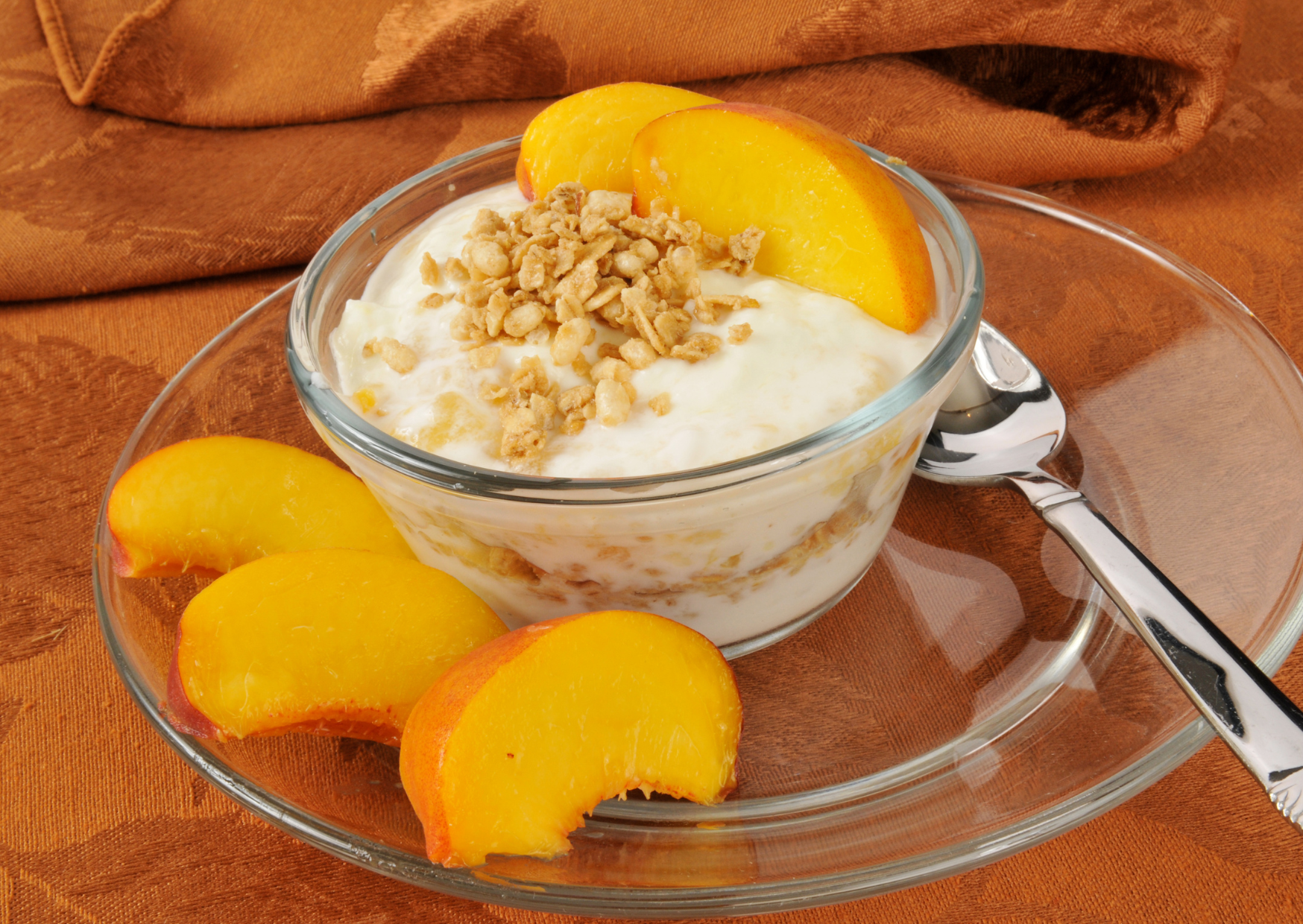
A lot of food writing gets silly here.
People talk as if Greek yogurt in Greece tastes better because Mediterranean grandmothers whispered to it near the sea.
The real answer is less poetic.
When yogurt is thickened by straining, the result usually feels cleaner on the spoon. When yogurt is thickened by starches, gums, concentrates, or other texture supports, the result can still be pleasant, but it often behaves differently. It may feel more pudding-like, more sticky, or more plastically smooth.
That is especially obvious in low-fat flavored products.
The old Greek approach also accepts fat more calmly. Greek yogurt in Greece is often sold at 2%, 5%, or 10% fat and is allowed to taste like dairy rather than like a macro-optimized correction to dairy. Greek-market analysis found commercial products ranging from fat-free all the way up to around 10% fat, with strained yogurts spanning wide protein ranges as well.
Americans spent decades pushing yogurt toward a strange ideal: as little fat as possible, as much protein as possible, still creamy, still sweet, still cheap.
That is how you get ingredient drift.
French yogurt did not have to solve that problem in the same way.
Greek yogurt in Greece did not have to solve that problem in the same way either.
What To Buy If You Want The Real Thing
Start with the shortest label.
That rule catches most of the nonsense immediately.
In the U.S., plain FAGE Total is one of the cleanest mainstream examples because it is still just milk and live active yogurt cultures. Chobani plain Greek also positions itself as made with only natural ingredients, though the scraped search text is less precise than FAGE’s plain ingredient statement.
The tubs to read more skeptically are the ones promising three goals at once:
- very high protein
- very low calories
- dessert flavor or zero sugar
That combination is where concentrates, starches, water, sweeteners, preservatives, and flavor systems start showing up more often. The official ingredient lists on Light + Fit, Yoplait Greek 100, and Oikos Pro show exactly how that works.
In Europe, especially in Greece, the simpler purchase is usually easier to spot because “strained yogurt” is still a straightforward selling point. If the label is plain, full-fat or medium-fat, and not trying to moonlight as a protein dessert, you are usually much closer to the old thing.
That does not mean flavored yogurt is bad.
It means it is a different purchase.
What To Do With The Real Version
The best uses are the ones that do not fight its dairy weight.
A good plain strained yogurt works for breakfast with honey and walnuts, with fruit, with olive oil and flaky salt, stirred into cucumber for tzatziki, spooned next to roasted vegetables, whisked into dressings, or folded into cakes and marinades.
It also takes seasoning beautifully.
That is another place Americans get trapped by the dessert aisle. If all your Greek yogurt exposure comes from vanilla cheesecake flavor cups, it is easy to forget the plain version is one of the best savory ingredients in the kitchen.
A very Greek way to use it is almost absurdly simple:
- thick plain strained yogurt
- a drizzle of honey
- a few walnuts or pistachios
Or go savory:
- thick yogurt
- grated cucumber squeezed dry
- garlic
- olive oil
- dill or mint
- salt
That is much closer to the actual job of the product.
It is food.
Not only branding.
The Better Habit Starts With Reading The Dairy Aisle Properly
The clean takeaway is not that American yogurt is fake.
It is that the American aisle asks yogurt to do too many jobs.
Snack dessert.
Weight-loss tool.
Protein supplement.
Sweet treat.
Lunchbox convenience food.
Shelf-stable-ish weekly default.
When one food has to do all of that, the label usually gets busier.
Greek yogurt in Greece still has industrial products and modern branding, but the basic product remains easier to see for what it is: fermented milk, then strained. The home recipe reflects that. Milk and starter. Ferment. Strain. That is why the ingredient logic still feels so much cleaner.
So yes, the headline holds in spirit.
A lot of Greek yogurt in America really does come with stabilizers, starches, concentrates, or sweetener systems.
And the version people mean when they say “the real Greek one” usually can be reduced to two practical ingredients:
milk
cultures
Everything else is either process, drainage, or marketing.

About the Author: Ruben, co-founder of Gamintraveler.com since 2014, is a seasoned traveler from Spain who has explored over 100 countries since 2009. Known for his extensive travel adventures across South America, Europe, the US, Australia, New Zealand, Asia, and Africa, Ruben combines his passion for adventurous yet sustainable living with his love for cycling, highlighted by his remarkable 5-month bicycle journey from Spain to Norway. He currently resides in Spain, where he continues sharing his travel experiences with his partner, Rachel, and their son, Han.