
By 60, a lot of travelers have figured out that “budget travel” often means paying in discomfort.
Tiny room. Bad mattress. Airport-fringe hotel. Four stairs that somehow become 84 with luggage. A kitchen so fake it qualifies as decorative fiction. A neighborhood that is “up and coming” in exactly the way that makes a woman text a friend her location before dinner.
House sitting looks like the opposite of that.
No nightly rate. Real home. Real kitchen. Often a washing machine. Sometimes a garden, a terrace, a car, a dog with emotional needs, two cats with opinions, and a local neighborhood that behaves more like life than tourism.
It can be a very good deal.
It can also be a terrible idea for the wrong person.
The romantic version is “free accommodation in Europe.”
The accurate version is temporary housing in exchange for responsibility.
That difference matters more at 60 than it does at 28. Younger travelers can treat discomfort like a story. A lot of people over 60 would rather sleep well, know where the pharmacy is, and avoid being stranded in a village with a Labrador who needs medication at 7:15 a.m.
That is not a lack of adventure.
That is judgment.
And the good news is that judgment is exactly what makes older sitters attractive.
The Best Sitters At 60 Usually Look More Trustworthy Than Cool
This is one of the few travel niches where age can work in your favor almost immediately.
Homeowners handing over their house and animals are not usually shopping for charisma. They are shopping for stability, follow-through, and the general feeling that the sitter will not turn the week into a police report involving an unlocked gate and a diabetic spaniel.
That tends to favor people who look like they know how to keep a house functioning.
At 60, many travelers already understand the unglamorous things that actually matter in a sit. Plants need water on the correct days, not whenever inspiration strikes. Mail needs checking. Bins go out on the actual collection day, not on a personal spiritual timeline. Dogs need routine, not “adventure energy.” Cats need food, doors, litter, and a respectful distance from whatever personality they have chosen this week.
In other words, older sitters often present better because they look more like the person you would trust with your keys.
That does not mean every homeowner is age-blind. Some want hikers for a mountain dog. Some want someone strong enough to manage a large property or a complicated animal setup. Some prefer couples. Some want someone already on the platform with 19 glowing reviews and a face that says “we own a label maker.”
Fine.
But in general, house sitting is one of the rare travel arrangements where maturity can read as practical value.
That is especially true in Europe, where many sits are not luxury villas but ordinary lived-in homes with older pets, neighborhood routines, and a preference for calm. A sitter who sounds organized, responsive, and not remotely weird about daily structure is often much more appealing than a younger applicant trying to sound free-spirited in five countries at once.
This is where 60 can be an asset.
Not despite age.
Because of it.
What You Are Really Saving And What You Are Really Paying
People love the phrase “free accommodation” because it makes the arithmetic feel delicious.
It is not wrong.
It is just incomplete.
Yes, the accommodation cost can disappear. If you land a two-week sit in Madrid, Bordeaux, Turin, or Valencia, you may save a very real amount of money compared with a hotel or short-term rental. In that sense, the model is powerful. Annual membership fees on the main platforms are usually modest compared with even a few nights of paid lodging. Current pricing on major sites ranges from about US$29 on the very low end for MindMyHouse to about €149 to €189 for higher Nomador tiers, while TrustedHousesitters now layers membership pricing with booking-fee differences depending on tier. That is still cheap compared with paying nightly rates in Europe for any meaningful stretch.
But the trade is not cash for nothing.
You are paying with commitment.
You sleep where the animals sleep.
You wake up when the animals wake up.
You do not casually decide to spend two nights in another city because the train fare looked good after lunch.
You are not really “based in Paris for free” if a dog needs walking at 7 a.m., 1 p.m., and 9 p.m., and the owners expect photos because this is their dog, not your charming side quest.
That is why the arrangement works well for some retirees and badly for others.
If the goal is to move slowly, learn neighborhoods, cook at home, and reduce lodging costs while living a more ordinary version of Europe, house sitting can be brilliant.
If the goal is spontaneous movement, full-day excursions, late dinners in another town, or six countries in five weeks, it becomes a terrible fit almost immediately.
The right mental model is not “free.”
It is lodging traded for reliability.
That is still often a very good bargain.
But it is a bargain, not a loophole.
Europe Works Best When You Stop Treating House Sitting Like A Backpacker Trick
A lot of the worst house-sitting mistakes come from using a student-travel mindset on a responsibility-based arrangement.
This is where age can help again.
At 60, many travelers are not trying to “hack Europe.” They want longer stays, lower friction, and less money burned on accommodation that disappears by checkout time. House sitting supports exactly that, but only if the traveler understands the rhythm.
The best European sits for older travelers are often not the glamorous ones everyone imagines. They are not always central Paris in May or a Tuscan stone house with a cinematic dog and no obligations beyond admiring sunset. Often the better fits are medium-sized cities, suburbs with rail access, quieter coastal towns out of peak season, or residential neighborhoods where normal life is still happening and daily errands are easy.
That setup can be wonderful.
You get a kitchen that works.
You get a bed that feels like somebody actually sleeps in it.
You get laundry.
You get a local supermarket instead of another room-service menu pretending to be dinner.
And perhaps most important, you get time in one place long enough to understand whether you like it there.
This is a huge advantage for people considering future relocation or extended European stays. Hotel travel tells you how a city performs. House sitting can tell you how a place lives. You notice the bus frequency, the pharmacy hours, the grocery prices, the street noise, the dog culture, the weather reality, and whether the attractive district from social media still feels good on a windy Tuesday.
That kind of knowledge is expensive when bought through hotels.
House sitting can make it affordable.
Provided, again, that the sitter is actually willing to sit.
The Legal Bit Is More Boring Than People Want
This is where adults need to stay adults.
For U.S. and other non-EU travelers doing short stays in the Schengen area, the broad rule is still 90 days in any 180-day period unless they have another right to stay. That is the first reality. House sitting does not erase it. It does not make someone a resident. It does not create a special travel category where pet care turns into a magical border exemption. If you are stringing together sits across Spain, France, Italy, Portugal, or elsewhere in Schengen, those days still count.
The second reality is less tidy.
In some countries and situations, unpaid house sitting sits in a gray area when it starts looking like work exchanged for accommodation. Many people do it without trouble. Plenty cross borders and complete sits quietly. But quiet success is not the same thing as a universal legal blessing. Some platforms have become much more explicit that members themselves are responsible for complying with immigration and local law. That tells you everything you need to know about how much certainty exists.
So the sensible rule is simple:
If you are an EU citizen or already have the right to stay and spend time in the country, life is easier.
If you are doing short tourist-style travel from outside the EU, keep the arrangement modest, documented, truthful, and within your actual permitted stay.
And if you are planning to sit for months in a way that starts looking like you have built a shadow residency strategy around pet care, stop and rethink the plan before a border officer does it for you.
This is not me being dramatic.
It is me refusing to write the fake internet version where house sitting is a harmless little trick that governments somehow forgot to notice.
The better way to use house sitting at 60 is as slow temporary travel, not as an immigration workaround.
That distinction protects people.
The Pets Decide Whether The Sit Is Easy
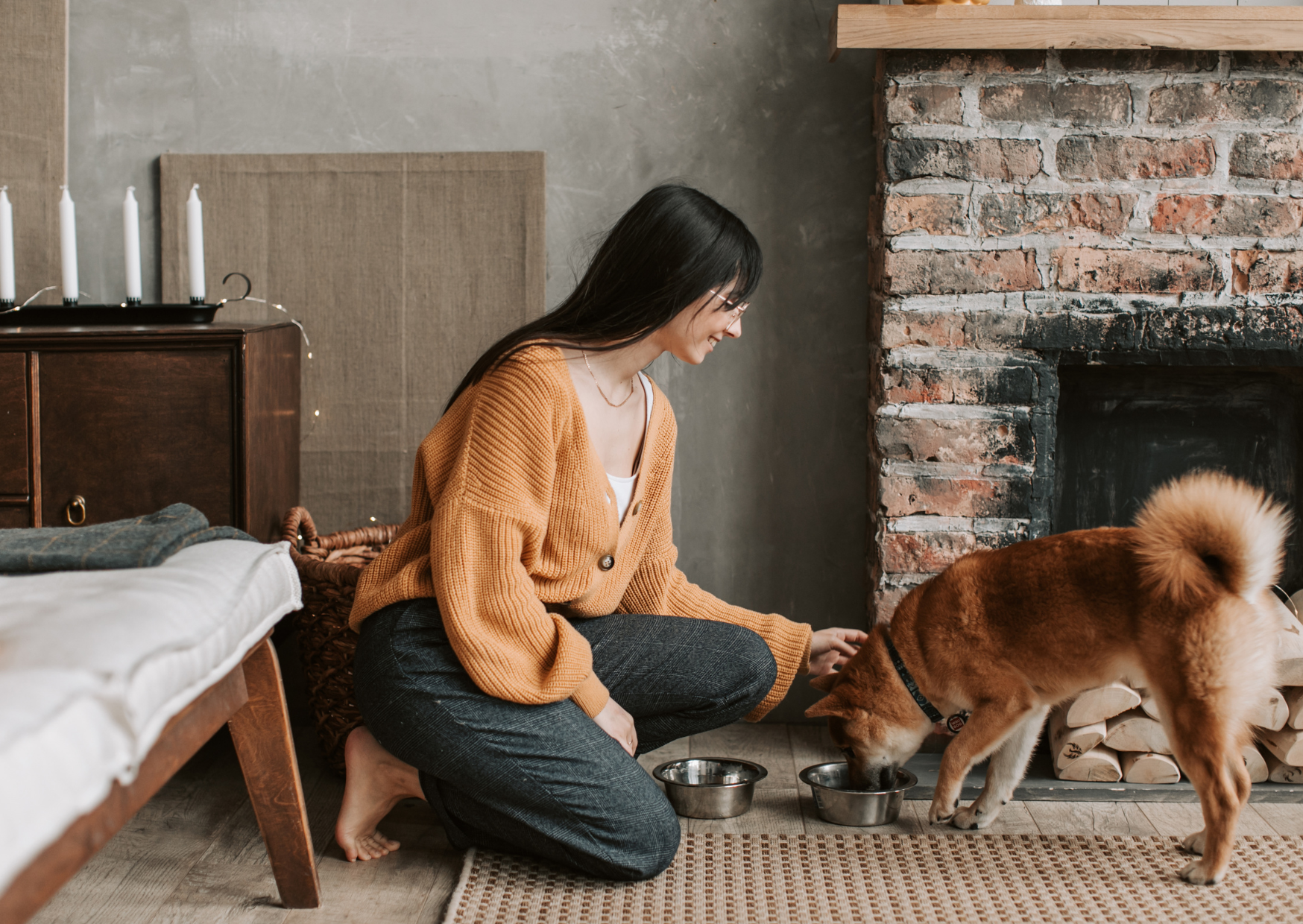
Not the city.
Not the kitchen.
Not the terrace.
The pets.
This gets lost because listing photos naturally lead with the terrace.
But a sit rises or falls on animal reality.
A sleepy older cat in Lyon with a timed feeder and one litter habit is a very different assignment from two anxious rescue dogs outside Porto who cannot be left more than four hours and have opinions about scooters, men in hats, and rain.
Both are legitimate sits.
Only one may fit the traveler.
This is where people over 60 can do very well if they are honest. You do not need to accept every animal to be a good sitter. You need to understand your energy, your mobility, your sleep, your appetite for uncertainty, and your tolerance for interruption. A large reactive dog on icy winter streets may not be your thing. Excellent. Say no. A cat sit in a walkable neighborhood with clear routines and a washing machine may be perfect. Great. Apply well.
The key is to screen for daily life, not property fantasy.
How long can the animals be left?
What time do they wake up?
Are there medications?
Can they be walked by one person comfortably?
How many stairs are involved?
Is there outdoor space?
Is the litter routine simple or weird?
Are there cameras inside?
Will neighbors be checking in?
Is there a car involved?
Are there rural emergencies you might need to handle?
These questions are not neurotic. They are the adult core of the whole deal.
At 60, the smartest sitters are often the ones who understand that “free stay in Provence” is not the offer.
The offer is living somebody else’s animal schedule in Provence.
That is either charming or annoying depending on the actual animal schedule.
The Better European Strategy Is Fewer Sits And Longer Ones

This is where older travelers tend to outperform younger ones.
The immature strategy is to stack sits like dominoes. Five nights here, six there, another week somewhere else, maybe a flight in between, maybe a train, maybe a one-night gap solved by a panic hotel near a ring road.
That is how “free accommodation” turns into a project management problem.
The stronger strategy at 60 is longer sits, fewer transitions, and enough breathing room between assignments that one late train or one owner delay does not wreck the month. Two to four weeks is often where the model starts making emotional sense. You settle. The animals settle. The supermarket becomes yours. The route to the pharmacy becomes obvious. The city stops performing for you and starts behaving normally.
This is also where the savings become real without the travel becoming frantic.
A month of decent accommodation in Europe can cost a lot, especially in cities older travelers actually want to spend time in. A two-week or four-week sit can take a serious bite out of that. But the real luxury is not only money. It is stability without a lease.
That phrase matters.
A lot of people in their sixties are done with unstable travel. They do not need more chaos. House sitting works best when it gives them domestic stability, not when it turns them into unpaid animal nomads chasing platform notifications across the continent.
That is why the best sits are often the ones no influencer would post. A normal apartment in Bordeaux. A quiet district outside Valencia. A cat in Bologna. A retired couple’s dog in Utrecht. Not because those places are boring, but because they allow a calmer kind of Europe.
And calmer is often the whole point.
The 7 Day House Sitting Start At 60
This is one of those travel ideas that gets much better when stripped of fantasy.
Day one, decide if you actually like animals enough for this. Not in theory. In routine. Feeding, walking, wiping paws, cleaning litter, staying nearby, noticing patterns, adjusting your day.
Day two, pick your geography. Do not apply everywhere. Choose one or two countries, or one region, that match your season, transport comfort, and actual interest.
Day three, join one or two platforms, not six. A cheap platform can be worth trying, but the main issue is not platform quantity. It is profile quality and fit.
Day four, build a profile that sounds trustworthy, not adorable. Mention reliability, homeownership or long household experience if true, pet experience, schedule flexibility, non-smoking if true, and the fact that you understand routine matters.
Day five, gather proof. Pet references, house references, identity verification, and any previous sitting or caregiving experience that makes a homeowner exhale instead of worry.
Day six, apply only to sits you could genuinely complete well. Not just places you want to visit. That distinction will save you.
Day seven, interview like a calm adult. Ask about the pets, the schedule, transport, sleeping arrangements, the home temperature, internet, emergency contacts, and exactly how long the animals can be left.
A few rules help a lot:
- Choose the animal before the city.
- Prefer longer sits over stacked short ones.
- Keep transport simple.
- Build in paid nights before or after if a timing gap would otherwise make you frantic.
- Do not use house sitting as a visa strategy.
- Do not apply to dogs you cannot physically manage.
That last one should not need saying, but apparently it does.
The People This Works Best For Usually Want A Home More Than A Holiday
That may be the cleanest way to end it.
House sitting in Europe at 60 works best for people who are no longer trying to extract maximum stimulation from every day. It suits travelers who like ordinary mornings, neighborhood life, cooking sometimes, sleeping well, moving slowly, and saving serious accommodation money without pretending there is no trade involved.
It is good for the traveler who wants a temporary local life.
It is bad for the traveler who wants total freedom.
And once that is clear, the whole thing gets easier.
You stop chasing glamorous sits that do not match your body or your mood. You stop pretending every animal is manageable. You stop thinking of a sit as free Europe and start seeing it as structured exchange. You become more selective, which makes you more trustworthy, which makes better homeowners choose you.
That is the loop.
At 60, house sitting is not about being young enough to do something scrappy.
It is about being old enough to know how to live in someone else’s house without making it weird.
That skill is rarer than it sounds.
And in Europe, it can buy a very good kind of travel.

About the Author: Ruben, co-founder of Gamintraveler.com since 2014, is a seasoned traveler from Spain who has explored over 100 countries since 2009. Known for his extensive travel adventures across South America, Europe, the US, Australia, New Zealand, Asia, and Africa, Ruben combines his passion for adventurous yet sustainable living with his love for cycling, highlighted by his remarkable 5-month bicycle journey from Spain to Norway. He currently resides in Spain, where he continues sharing his travel experiences with his partner, Rachel, and their son, Han.