
A widow moving to Crete on Social Security is not a fantasy-retirement story.
It’s a math story.
It’s also a nervous-system story. Grief rewires your appetite for complexity. Some widows want noise and company. Others want quiet and sunlight and a place where life feels smaller and more manageable. Crete can offer that. It can also punish you if you arrive with U.S. assumptions about housing, paperwork, and “I’ll figure it out.”
This is the honest 3-year version: what it costs, where the money leaks, what surprises you, and what makes the move sustainable.
I’m going to use one realistic setup so the numbers stay useful:
- A widow, early 60s to early 70s, living alone.
- Income is Social Security only, no employment in Greece.
- Living in Crete, not in the most expensive peak-season tourist pocket.
- Renting, not buying.
- She wants stability, not constant island hopping.
If your situation is different, treat this as a framework. The point is the shape of the costs, not the exact cent.
Year 0 Reality Check Before You Spend A Euro
The first thing to say out loud is that Social Security can generally be paid while you live in Greece if you’re eligible, and the U.S. government has clear guidance and screening tools for this. Your check can follow you to most countries, and the SSA has a Payments Abroad screening tool and published guidance for living outside the U.S.
That’s the good news.
The next reality is harder: Greece residency isn’t “I arrived, therefore I live here.” You’ll be dealing with a residency pathway and proof of means, and many non-EU residency paths require showing sufficient resources and medical coverage. There are multiple residency routes and a lot of confusion online, including conflicting income thresholds depending on the route, the year, and the consulate. A Greek tax-law summary cites the legal basis for a financially independent residence permit and the requirement to show sufficient resources for living expenses.
So before we talk groceries and beaches, the honest starting point is:
- Social Security can keep paying in Greece for many eligible U.S. citizens.
- Residency and healthcare coverage rules are separate issues that can add costs and friction.
If you treat Crete like a long vacation, year one might still be lovely. Year two will bite you.
Year 1 Costs The “New Life Tax” Is Real
Year one is expensive because you don’t know what you’re doing yet.
Even if you’re frugal, you pay for uncertainty. You pay for short-term rentals. You pay for deposits. You pay for setting up basics. You pay for translation, paperwork, and occasional paid help because you don’t have the language and you don’t have the patience.
A realistic Year 1 cost picture for a widow in Crete looks like this.
One-time Year 1 costs you should expect
- Rent deposit and first month: often 2 to 3 months of rent up front depending on landlord terms.
- Basic setup: cookware, bedding, heaters, small furniture if unfurnished.
- Admin friction: document copies, notary, translation, courier costs, photos, fees.
- Health coverage setup: private insurance is commonly required for residency permits and widely used by expats for speed and English access.
If you want a number: many widows spend €2,000 to €6,000 in Year 1 one-time costs even when they’re careful, mostly because housing deposits and setup are unavoidable.
Monthly costs in Year 1
Year one monthly costs vary wildly based on rent and whether you choose Chania center, Heraklion city life, a smaller town, or a more rural setup. Broad public cost-of-living guides often give wide rent ranges for Crete, especially between popular areas and rural zones.
A realistic Year 1 monthly range for a single widow in Crete:
- Rent: €550 to €950 for a one-bedroom, depending on location and season.
- Utilities: €140 to €260 average, but winter heating and summer cooling can push it. Some 2026 guidance puts utilities for a typical retiree apartment in Greece roughly €170 to €280 with seasonal swings.
- Food: €250 to €420, depending on how much you cook and how much you buy in tourist-priced areas.
- Transport: €35 to €120 if you rely on buses and walking. Add more if you rent cars often.
- Health: €60 to €220 depending on your private insurance and out-of-pocket care. Private cover is often used to avoid waits and access private facilities.
- Phone and internet: €25 to €50.
- Buffer: €120 to €250 for “something happens.”
So a workable Year 1 monthly budget is often €1,200 to €2,000.
If your Social Security is, say, $1,700 to $2,400 a month, you can see the core tension immediately: the budget can work, but it’s not loose. Exchange rates matter. A single surprise month matters. And if you get seduced by tourist pricing, you’ll burn cash fast.
This is where widows make the most common Year 1 mistake: they spend to soothe loneliness.
A coffee becomes two coffees every day. A lunch out becomes a habit. A day trip becomes a weekly thing because silence at home feels too heavy. It’s understandable. It’s also how the numbers stop working.
The enemy in Year 1 is not rent. It’s drift.
Housing In Crete The Tourist Price Trap Is Seasonal
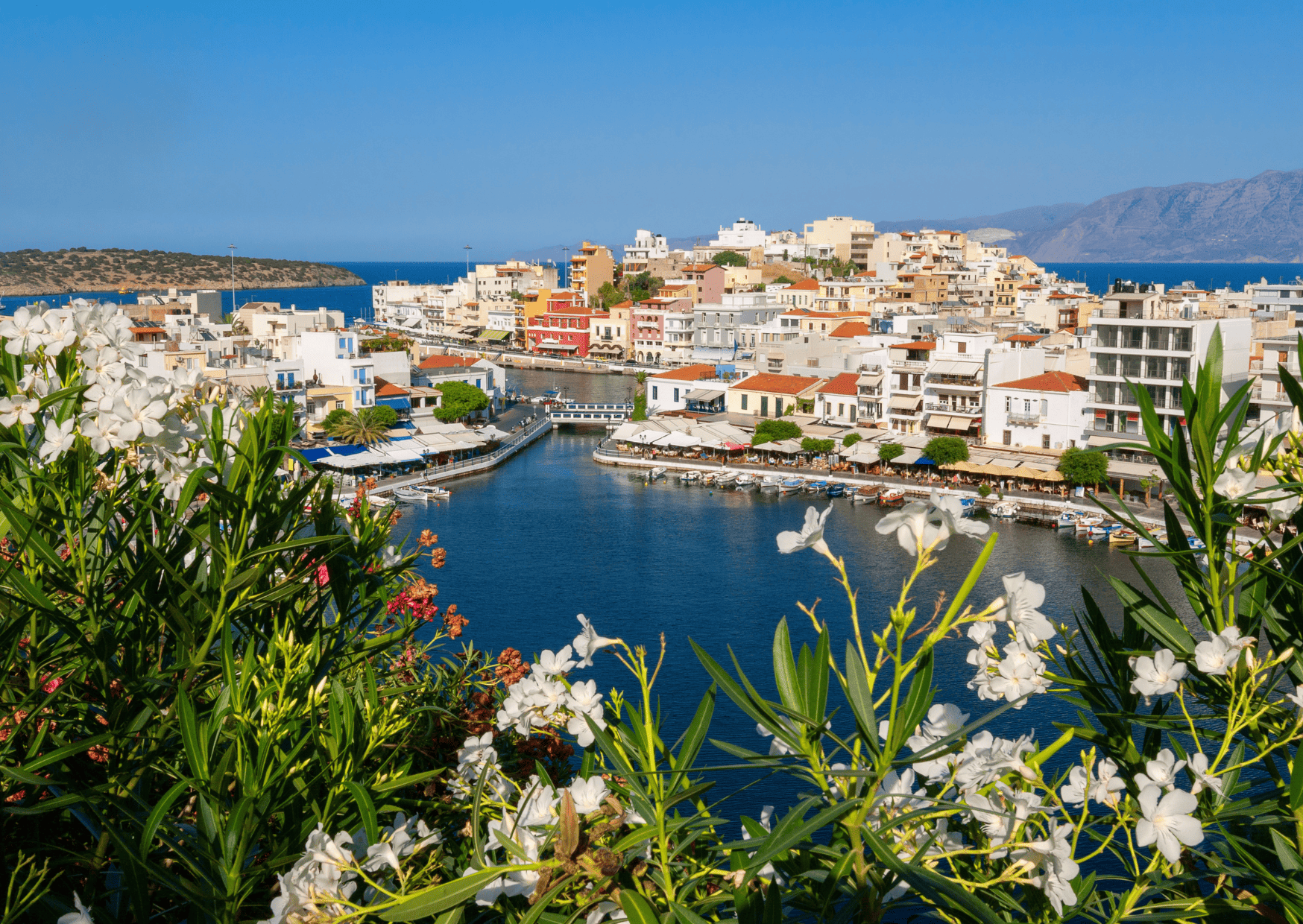
Crete is not one market.
Chania, Heraklion, Rethymno, and beach-adjacent towns behave differently. Winter and summer behave differently. Long-term rental dynamics can be very different from short-term listings you see online.
A widow who thrives by Year 3 usually learns one rule:
Don’t choose housing in peak-season mode.
Here are the housing patterns that blow up the budget:
- Renting short-term in summer pricing for too long.
- Living in a high-demand tourist zone where prices track tourism, not local wages.
- Choosing a “sea view” that comes with wind exposure, weak insulation, and higher utility bills.
- Accepting damp or poorly ventilated apartments that create health discomfort and constant dehumidifier costs.
The housing pattern that supports widows long-term is boring:
- A normal neighborhood, not a tourist strip.
- A place you can walk to a bakery, pharmacy, and café.
- A building with decent windows.
- A winter comfort plan.
Crete can be mild compared with many places, but older buildings can still feel cold and damp in winter, and air conditioning costs matter in summer. If you come from a U.S. home with sealed windows and central systems, you’ll feel the difference quickly.
Your best “cost of living” lever in Crete is not food. It’s choosing the right apartment.
Year 2 The Budget Gets Easier If You Stop Paying For Uncertainty
Year two is where the move can become livable.
The goal in year two is to cut the new-life tax:
- Stop moving rentals.
- Stop paying for short-term flexibility.
- Stop spending money to calm grief.
- Build repeatable weekly habits.
Here’s what often changes between Year 1 and Year 2:
Rent stabilizes
You move out of a short-term rental and into a normal lease, or at least a longer arrangement. That can cut housing cost by hundreds per month.
Utilities become predictable
You learn what winter heating actually costs. You learn when to run AC. You learn that Greek apartments can have surprises like electric water heaters and how that affects bills.
Food cost drops
You stop shopping like a tourist. You use local markets. You cook more. Greece can be expensive in some supermarket categories, and some expat guides warn that supermarket prices can be higher than people expect, which is why markets matter.
Healthcare becomes calmer
You either settle into a private plan you like, or you learn how to navigate public options where eligible. Greek health coverage access often involves AMKA and EFKA contribution realities, and many residency scenarios still rely on private insurance.
A realistic Year 2 monthly budget for a stable widow in Crete:
- Rent: €550 to €850
- Utilities: €150 to €240
- Food: €240 to €380
- Transport: €35 to €100
- Health: €60 to €220
- Phone/internet: €25 to €50
- Buffer: €150 to €250
Total: €1,210 to €2,090.
Most widows who make Crete work on Social Security live closer to the lower half of that range and protect their buffer.
The ones who don’t make it usually have a pattern like this:
- rent too high
- winter utilities higher than expected
- eating out as default
- frequent flights back to the U.S. or frequent visitor hosting
- no buffer
Year two is where you stop living like a visitor.
Year 3 The Real Cost Is Not Money It’s Maintenance
By year three, the question isn’t “Can I afford Crete?”
The question is “Can I maintain this life without it becoming smaller and lonelier every year?”
Widows who thrive in Year 3 usually have four systems working:
1) Money system
A monthly budget that leaves a buffer and doesn’t pretend every month will be smooth.
2) Paperwork system
A calendar for renewals, copies of documents, and a routine for handling admin without panic.
3) Health system
A local pharmacy relationship, one doctor path, and private insurance that matches reality.
4) Social system
One weekly anchor that is not dependent on tourists or other expats who leave.
This is where the honest “widow” part matters.
A widow can build a life in Crete, but she has to build it deliberately. Grief can make you either withdraw or overspend. Crete’s quiet can feel healing or isolating depending on whether you have structure.
The social system is the one people ignore. Then Year 3 hits and they realize they have no one to call if they get sick.
A widow doesn’t need fifty friends. She needs three reliable points of contact:
- one neighbor-level person
- one local acquaintance who can help in a pinch
- one community routine where she is recognized
Without that, the move becomes emotionally expensive even if it’s financially affordable.
Year 3 is when you find out if you built a life or just moved your loneliness somewhere prettier.
The Honest 3-Year Number Sheet

Let’s put the numbers into a clean, realistic model.
I’ll use three scenarios, because one budget never fits everyone.
Scenario A: Careful and stable
- Monthly spend: €1,350
- Year 1 one-time costs: €3,500
- Total for 3 years:
- Monthly: €1,350 × 36 = €48,600
- One-time: €3,500
- 3-year total: €52,100
This is doable for a widow with Social Security that converts to roughly €1,600 to €2,000 most months, and who lives simply.
Scenario B: Comfortable but not reckless
- Monthly spend: €1,750
- Year 1 one-time costs: €5,000
- Total for 3 years:
- Monthly: €1,750 × 36 = €63,000
- One-time: €5,000
- 3-year total: €68,000
This requires either higher Social Security, additional income, or savings support. It’s the “I want a nicer apartment and more eating out” version.
Scenario C: The tourist drift version
- Monthly spend: €2,300
- Year 1 one-time costs: €6,500
- Total for 3 years:
- Monthly: €2,300 × 36 = €82,800
- One-time: €6,500
- 3-year total: €89,300
This is where people start saying “Greece is more expensive than we expected.” It’s not Greece. It’s the drift.
If you want the blunt takeaway: the difference between Scenario A and Scenario C is €37,000 over three years. That gap is mostly choices, not inflation.
Your budget is your lifestyle. Your lifestyle is your budget.
Pitfalls Widows Hit That Couples Often Don’t
Widows run into a few traps that couples sometimes avoid by accident.
Comfort spending as grief management
Solo evenings can be heavy. Spending becomes an anesthetic: cafés, dinners out, little purchases. It’s understandable. It’s still math.
Safety anxiety spending
Paying more rent for the most “secure-feeling” location, paying for constant taxis, paying for services instead of learning basic systems.
Health fear spirals
Avoiding care because of language, then paying more later for private care in panic. Or overusing private care because it feels safer, which can be fine, but it has to be budgeted.
The expat bubble illusion
Expats are friendly. Then they leave. Widows need stable ties, not only friendly chats.
Paperwork avoidance
Grief makes admin harder. Avoidance makes admin catastrophic. You need a routine.
This is why the “honest numbers” matter. Widows can absolutely do this. They just need to protect the budget from emotional leakage.
Grief doesn’t care about your spreadsheet. Your spreadsheet has to care about grief.
Your First 7 Days In Crete If You Want Year 3 To Work
If you’re planning this move, the first week matters more than people think.
Day 1: Choose your base like you’re living there in winter, not like you’re visiting in July.
Day 2: Lock your monthly number. Decide what rent ceiling you can tolerate while still keeping a buffer.
Day 3: Build your “money logistics.” Decide how you’ll receive Social Security and how you’ll move money, and keep documentation clean. SSA guidance and tools exist for payments abroad and reporting responsibilities.
Day 4: Get your healthcare plan clear. Private insurance is widely used by expats and is often required for residency permits. Don’t treat it as an afterthought.
Day 5: Build your daily circuit. Walk route, café, grocery, pharmacy. If you can’t do daily life without a car, you picked the wrong base.
Day 6: Choose one weekly social repetition. Same day, same time. If you want Crete to feel like home, this is how.
Day 7: Plan your quiet days. Not busy tourist days. Quiet days are where grief shows up. You need a structure that holds you when the day is empty.
This is the real “retirement abroad” plan. Not the beach.
Structure is the comfort.
The Part Nobody Says Out Loud
Crete can be a beautiful place to rebuild after loss.
But a widow doesn’t move to Crete to become someone else. She moves to become herself again, without constant noise and pressure.
The move works when:
- the apartment is comfortable and affordable
- the monthly budget has buffer
- health access is not a mystery
- paperwork is managed before it becomes fear
- social life has repetition and recognition
- the island is treated like home, not like a permanent vacation
If all you build is scenery, grief will fill the quiet and your money will leak into coping.
If you build systems, the quiet starts to feel like relief.
That’s the honest 3-year update.
Not “Crete healed me.”
More like: Crete gave me enough calm to rebuild, and I kept the numbers boring enough to stay.

About the Author: Ruben, co-founder of Gamintraveler.com since 2014, is a seasoned traveler from Spain who has explored over 100 countries since 2009. Known for his extensive travel adventures across South America, Europe, the US, Australia, New Zealand, Asia, and Africa, Ruben combines his passion for adventurous yet sustainable living with his love for cycling, highlighted by his remarkable 5-month bicycle journey from Spain to Norway. He currently resides in Spain, where he continues sharing his travel experiences with his partner, Rachel, and their son, Han.