
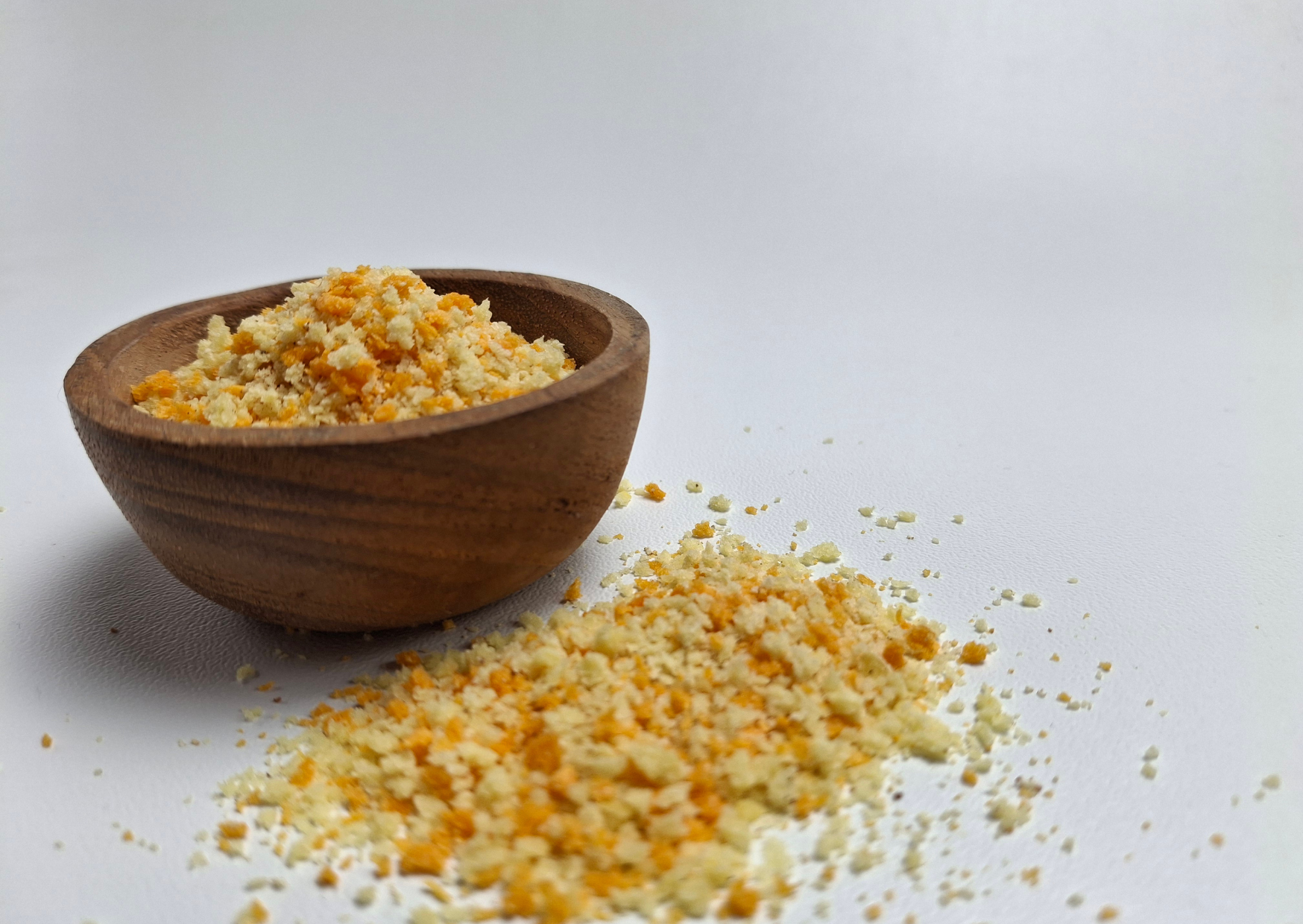
The old Italian version starts with bread in a bowl, not meat on a board. Stale bread gets soaked, squeezed, and mixed into the mince until the texture turns soft enough to almost worry you. Then it cooks into the kind of meatball Americans keep trying to describe as tender, juicy, or “like somebody’s grandmother made it,” which is exactly the point.
A lot of Americans hear “bread in meatballs” and think filler.
A lot of Italian grandmothers hear that and think dry dinner.
The disagreement is not really about thrift. It is about what a meatball is supposed to become. In much of Italy, especially in home cooking, a meatball is not meant to prove the purity of the meat. It is meant to come out soft, moist, and gentle enough for sauce. Bread is part of that design.
So let’s do this properly.
Not as a theory.
As a recipe.
The Recipe
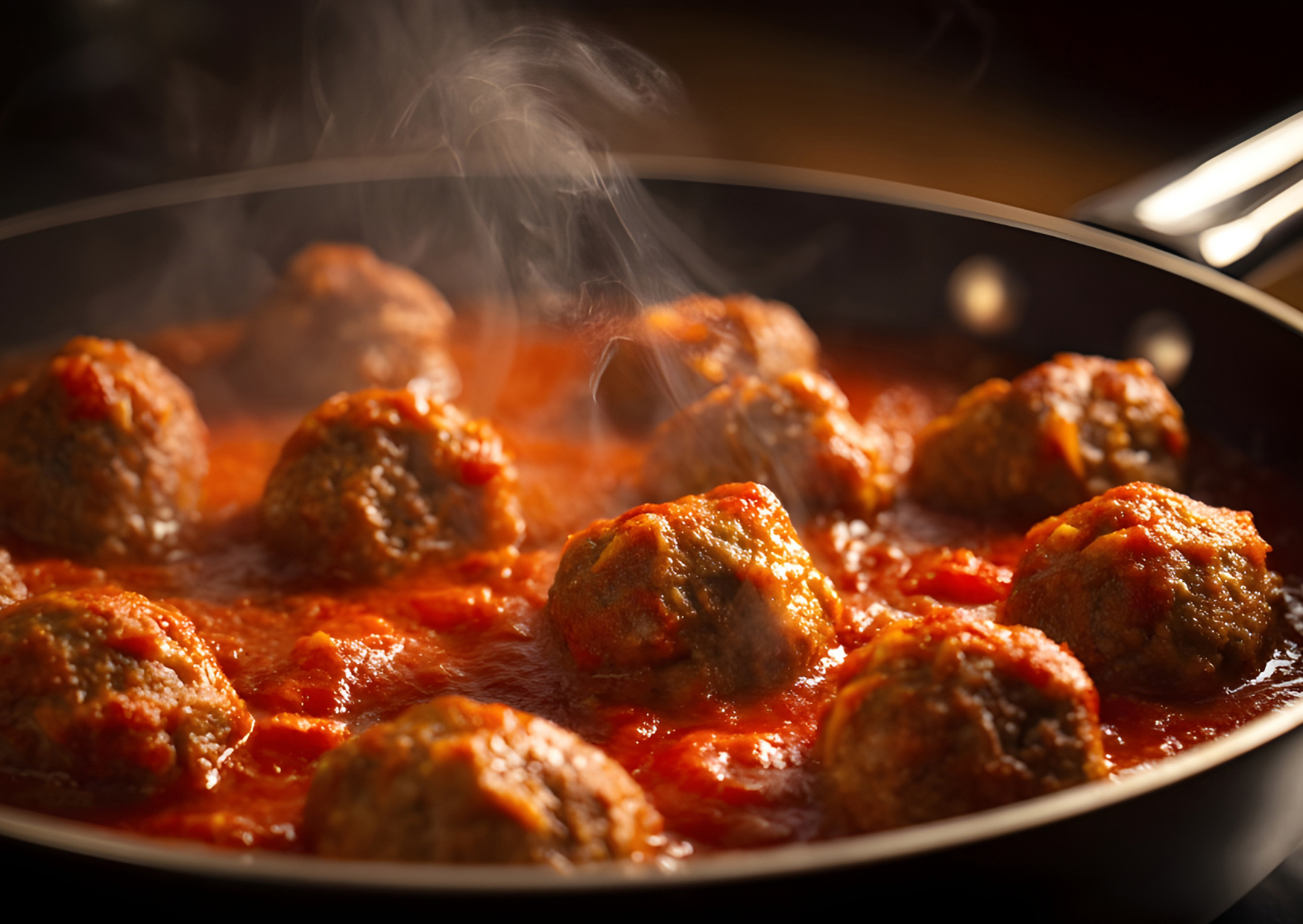
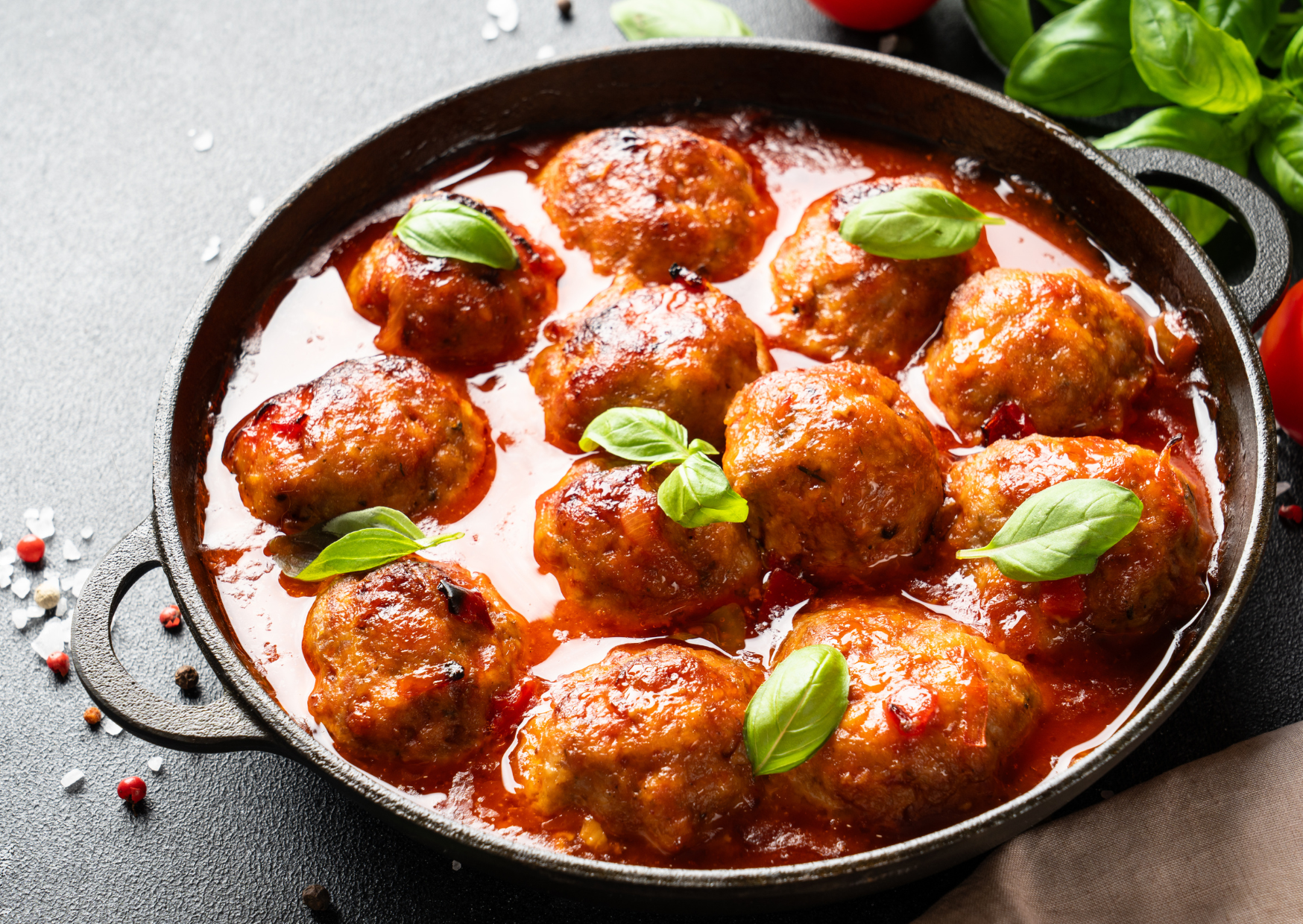
This is a classic home-style Italian meatball recipe built the grandmother way, with soaked bread instead of dry breadcrumbs. It makes meatballs that are tender, light, and good enough to simmer in tomato sauce without turning hard.
Yield
Serves 4 to 6
Makes about 18 to 20 medium meatballs
Time
25 minutes prep
25 to 35 minutes cooking
Ingredients for the Meatballs
- 500 g ground meat, ideally half beef and half pork
- 100 g stale country bread or white rustic bread, torn into small pieces
- 120 ml whole milk or water
- 1 large egg
- 50 g finely grated Parmigiano Reggiano or Pecorino Romano
- 2 tablespoons finely chopped flat-leaf parsley
- 1 small garlic clove, finely grated or minced
- 1 teaspoon fine salt
- 1/2 teaspoon black pepper
- 2 tablespoons olive oil, if browning in a pan
Ingredients for the Sauce
- 2 tablespoons olive oil
- 1 garlic clove, lightly crushed
- 800 g passata or crushed tomatoes
- 1/2 teaspoon fine salt
- a few basil leaves, optional
Equipment
- 2 mixing bowls
- large sauté pan or shallow pot
- spoon or hands for mixing
- plate or tray for shaped meatballs
Procedure
- Soak the bread.
Put the torn bread in a bowl and pour over the milk or water. Leave it for 5 to 10 minutes until fully softened. Then squeeze it gently with your hands. It should feel damp and mushy, not dripping. - Make the meatball mixture.
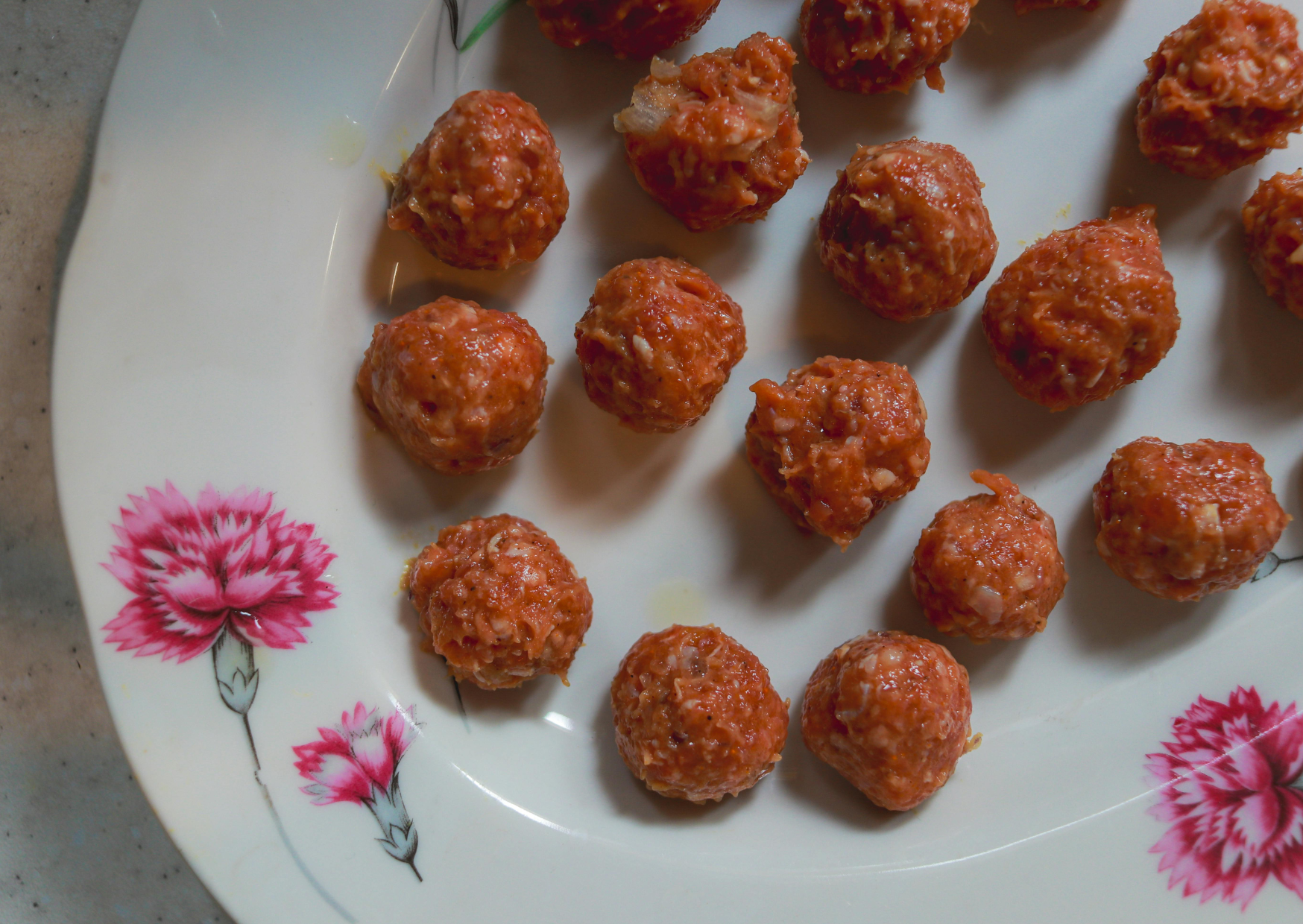
In a large bowl, combine the soaked bread, ground meat, egg, grated cheese, parsley, garlic, salt, and pepper. Mix with your hands just until combined. Do not knead it like dough. The mixture should feel soft and slightly loose. - Shape the meatballs.
Wet your hands lightly and form the mixture into 18 to 20 meatballs, about the size of a golf ball or a little larger. Set them on a tray. - Start the sauce.
In a wide pan or shallow pot, warm the olive oil over medium-low heat. Add the garlic and cook for about 1 minute, just until fragrant. Add the passata and salt. Stir, then lower the heat and let the sauce simmer gently for 10 minutes. - Brown the meatballs lightly.
In a separate pan, heat 2 tablespoons olive oil over medium heat. Brown the meatballs for 1 to 2 minutes per side. You are not cooking them through. You just want a little color and structure. - Finish the meatballs in the sauce.
Transfer the browned meatballs into the simmering tomato sauce. Spoon a little sauce over them. Cover loosely and simmer on low for 15 to 20 minutes, turning once if needed. The sauce should bubble gently, not boil aggressively. - Rest before serving.
Turn off the heat and leave the meatballs in the sauce for 5 minutes. This helps the texture settle and keeps them tender. - Serve.
Serve with bread, polenta, mashed potatoes, or pasta if you want the Italian-American comfort version. In many Italian homes, the meatballs themselves matter more than the pasta.
What You Are Looking For
The finished meatball should be soft in the middle, lightly springy on the outside, and moist enough to catch sauce. If it feels like a mini burger, something went wrong.
Why the Bread Matters More Than People Think
The bread is not there as a budget patch.
It is doing real work.
Once soaked, it turns into a soft paste that breaks up the density of the meat and helps hold moisture inside the mixture. That is why Italian meatballs made with soaked bread feel different from the all-meat versions many American cooks defend so fiercely. They are less tight, less chewy, and much better the next day.
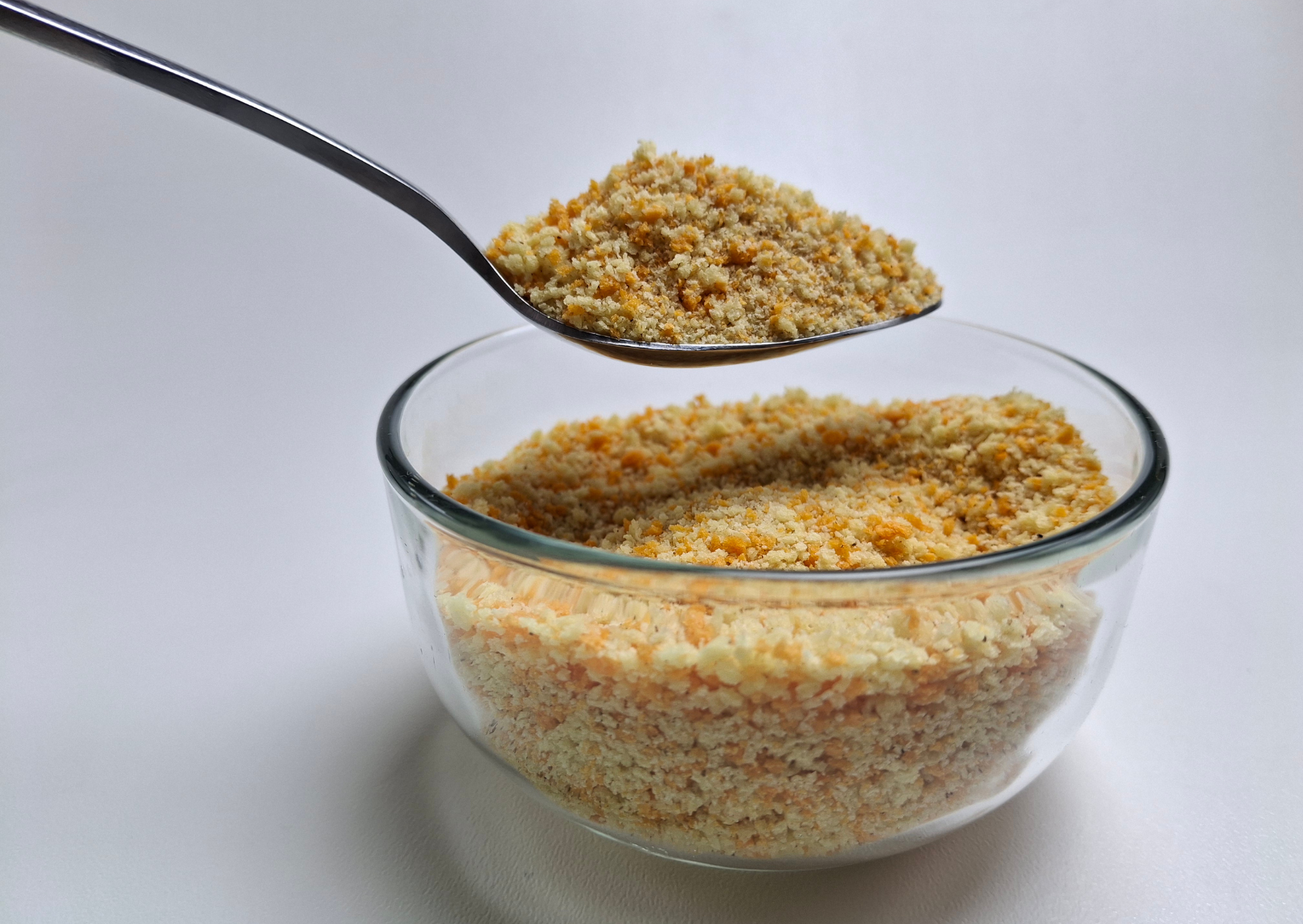
This is also why stale bread works so well. It absorbs liquid, softens fully, and disappears into the mixture. Dry breadcrumbs can work in a hurry, but they usually give you a more compact interior unless you handle the ratio very carefully.
A grandmother is not trying to make the meatball more economical in some cynical sense.
She is trying to make it gentler.
That is a different priority.
Milk or Water
Both are traditional.
Both work.
They just push the recipe in slightly different directions.
If you soak the bread in milk, the meatballs come out richer and a little softer. The flavor is rounder. This is the version a lot of people associate with Sunday meatballs or more indulgent home cooking.
If you soak the bread in water, the result is a little cleaner and lighter. This is also a very old-school move. It is practical, unfussy, and perfectly good.
Neither choice is wrong.
What matters is that the bread gets fully soaked first.
That is the step many American cooks skip when they throw dry crumbs into the bowl and then wonder why the final texture feels heavy. Wet bread is the method. Dry filler is not.
Why American Butchers Push Back
The butcher’s argument makes sense at first.
If you paid for good meat, why dilute it.
That question comes from a respectable instinct. Butchers are trained to value the grind itself. Fat ratio, freshness, cut quality, texture. From that angle, adding bread can look like a compromise or a disguise.
The problem is that a meatball is not a butcher-shop product anymore once it hits the bowl.
It is a cooked mixture.
And cooked mixtures have different priorities.
The raw meat may be excellent and still produce a disappointing meatball if it is handled with the wrong logic. Too much lean meat, no soaked bread, too much mixing, too much heat, and suddenly the “pure” version is dry and stubborn. The butcher protected the meat. The cook forgot to protect the dinner.
That is why the grandmother usually wins this argument at the table.
Not because she cares less about quality.
Because she cares more about the final bite.
The Mistakes That Make Meatballs Dense
This is the part people usually need more than philosophy.
If your meatballs keep coming out hard, the problem is usually one of these:
- The bread was too dry. It needs to be soaked properly.
- The meat was too lean. Beef and pork together work better than very lean beef alone.
- The mixture was overworked. Mix until combined, then stop.
- The heat was too aggressive. A hard boil toughens the outside fast.
- The meatballs were too big. Oversized meatballs often cook unevenly and get heavier.
The recipe above is designed to avoid exactly those problems.
A good meatball should feel almost a little fragile before it cooks. That softness is not a flaw. It is usually a sign that the interior will stay tender. Soft before cooking often means soft after cooking.
This is where a lot of American cooks get nervous and start adding more crumbs, more meat, or more handling “for structure.”
That is how they ruin it.
What Italians Mean by Meatballs
This matters more than people realise.
In the United States, the meatball often became a symbol of abundance. Big red-sauce plates, oversized portions, giant meatballs perched on pasta like trophies. That version has its own charm, but it changed the logic of the dish.
In Italy, polpette were never only about showing off how much meat was in the bowl. They were often modest, mixed, practical, and deeply tied to household cooking. Bread, cheese, herbs, leftover meat, stale bread, all of that belongs naturally to the category.
That is why adding bread does not feel like cheating in an Italian kitchen.
It feels normal.
It also explains why many Italian meatballs are smaller and gentler than the restaurant-sized versions Americans expect. The goal is not to impress the room with one giant sphere of protein. The goal is to make something that cooks evenly, sits comfortably in sauce, and works for a family meal.
A lot of food arguments disappear once you realize the two sides are cooking for different emotional outcomes.
One wants more meat.
The other wants a better meatball.
How to Serve Them So They Still Taste Italian
There is no single correct serving rule, but there are better instincts.
Serve them with good bread and tomato sauce and you are already close to the point. A little grated cheese on top is fine. Polenta works beautifully. Mashed potatoes work too, especially if the weather is bad and everybody wants comfort.
Pasta is the obvious American expectation, and it is perfectly good if that is what you want.
But the Italian instinct is often a little less theatrical. The meatballs can stand on their own. They do not need a giant plate of spaghetti to justify themselves. They are already the main event.
They are also very good reheated the next day, which is one more reason soaked bread matters. A bread-free meatball can be decent on day one and unkind on day two. The grandmother version usually holds up much better because the interior stays moist and forgiving.
That leftover test is not glamorous.
It is also one of the best ways to judge whether the recipe is actually good.
The Real Difference Between the Two Sides
The American butcher is usually defending ingredient purity.
The Italian grandmother is defending texture.
That is the cleanest way to understand the disagreement without turning it into a cartoon. Neither side is stupid. They are just judging from different places.
But meatballs are not steaks.
They are not burgers.
They are not a referendum on whether bread deserves to touch meat.
They are a mixed preparation designed to come out tender, flavorful, and deeply edible. Once you understand that, the soaked bread stops looking like a shortcut and starts looking like what it is: the method that makes the recipe work.
So yes, Italian grandmothers add bread to meatballs.
They do it because stale bread becomes soft when soaked, because that soft bread protects the mixture from turning dense, because cheese and herbs want a gentler interior, because sauce clings better to a tender meatball than a hard one, and because a family recipe is judged by how it eats, not by how pure it sounds.
That is why the butcher sounds persuasive in theory.
And why nonna still tastes better.

About the Author: Ruben, co-founder of Gamintraveler.com since 2014, is a seasoned traveler from Spain who has explored over 100 countries since 2009. Known for his extensive travel adventures across South America, Europe, the US, Australia, New Zealand, Asia, and Africa, Ruben combines his passion for adventurous yet sustainable living with his love for cycling, highlighted by his remarkable 5-month bicycle journey from Spain to Norway. He currently resides in Spain, where he continues sharing his travel experiences with his partner, Rachel, and their son, Han.