
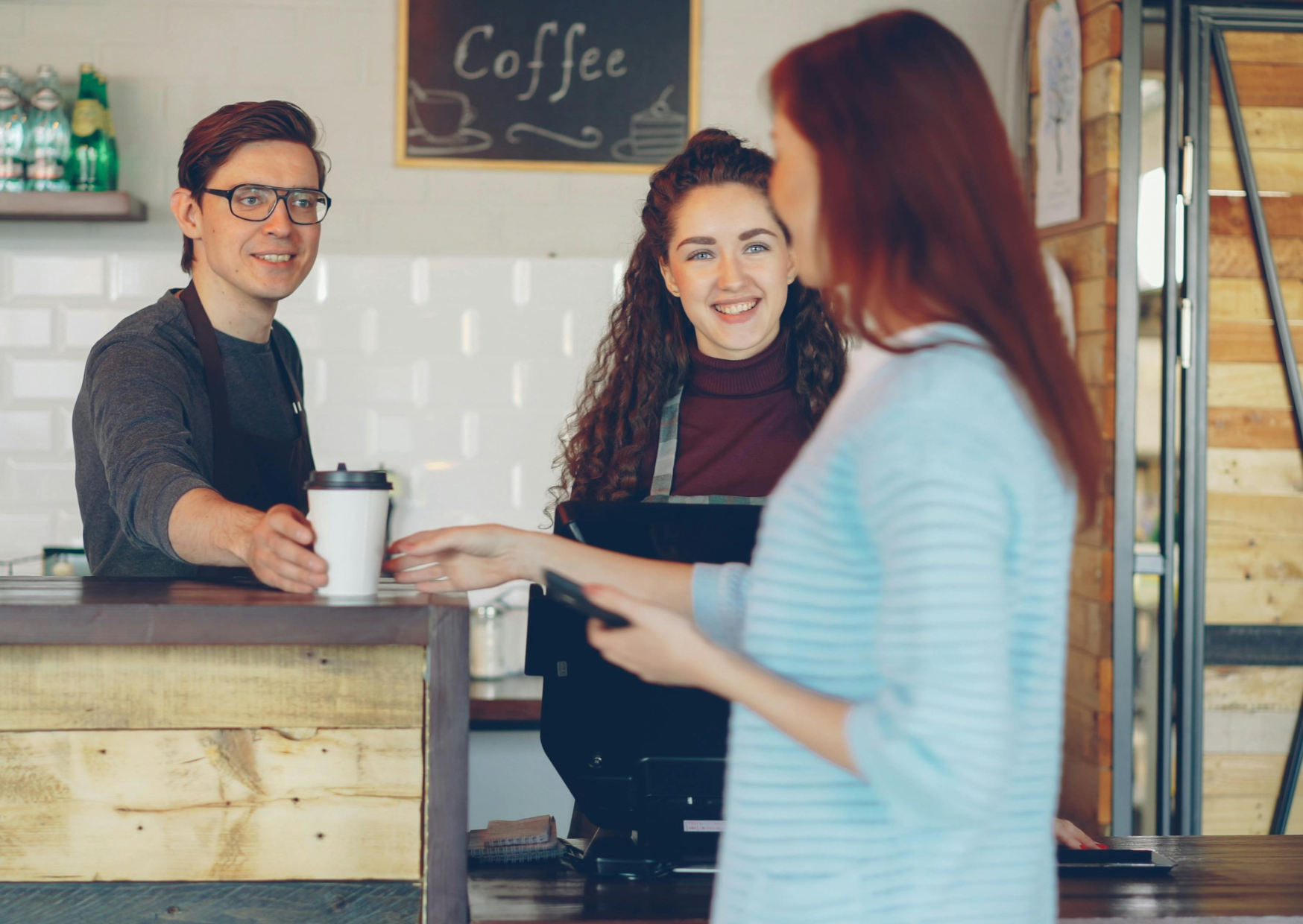
The giveaway is not your sneakers, your accent, or your phone in your hand. It is treating coffee like a portable fuel source instead of the short social pause Spain still expects it to be.
A lot of Americans walk into a café in Spain carrying a script from home.
Order quickly. Grab a cup. Keep moving.
If there is seating, maybe open the laptop. If there is a terrace, maybe settle in for a while over one drink. If the line is slow, ask for the coffee para llevar and get back to the day.
That script is understandable.
It also reads visitor almost immediately.
Spain’s café culture still leans much more toward drinking there, either standing at the bar or sitting down, than treating coffee as a commuter accessory. Recent guides for Seville still describe locals drinking coffee standing at the bar or seated at a table, and broader Spanish coffee guides continue to frame coffee as part of daily social life rather than a mobile personal ritual.
That does not mean nobody in Spain gets takeaway coffee anymore.
They do.
Spain’s branded coffee-shop market grew 3% to 2,215 outlets in the year to April 2025, and younger consumers are buying more cold coffee and specialty drinks than before. The café scene is changing, especially in Madrid, Barcelona, Málaga, and Valencia.
But the old pattern still runs the country more than many Americans expect.
Walk into a traditional bar-cafetería and ask for a giant coffee to go, then rush out with it like you are late for a conference call, and nobody will arrest you. You will just look like someone using Spain without really joining it.
The Real Tell Is Treating Coffee Like A Utility
In Spain, coffee is still woven into the day as a pause, not only as caffeine delivery.
That matters.
Spanish coffee guides still describe coffee as part of breakfast, the mid-morning break, the afternoon merienda, and after-meal social time. Spain’s own tourism messaging keeps emphasizing the terrace, the walk, the outdoor pause, the social rhythm. Even language-learning material aimed at foreigners still notes that “ir a tomar un café” functions as a social act, not just a beverage errand.
That is why the tourist habit is not merely “ordering takeaway.”
It is trying to make the café efficient.
Americans often import a whole cluster of behaviors at once: rush in, customize heavily, get it in a disposable cup, leave immediately, or occupy a table like a mini office. Those moves all come from the same instinct. Coffee is treated as a private productivity tool rather than a short public ritual.
Spain notices that difference.
Not because Spaniards are precious about beans.
Because the room is being used differently.
A local bar in Seville, Cádiz, Zaragoza, or Madrid is often built around quick standing coffees, brief table stops, and repeated familiar contact with staff and neighbors. The social function matters as much as the drink. Even when the stop is short, it is still a stop.
That is the adjustment Americans usually need.
Drink the coffee where you ordered it.
Then leave.
That one shift fixes more than people think.
Para Llevar Is Not Illegal. It Is Just Not The Default.
Spain is not frozen in 1998.
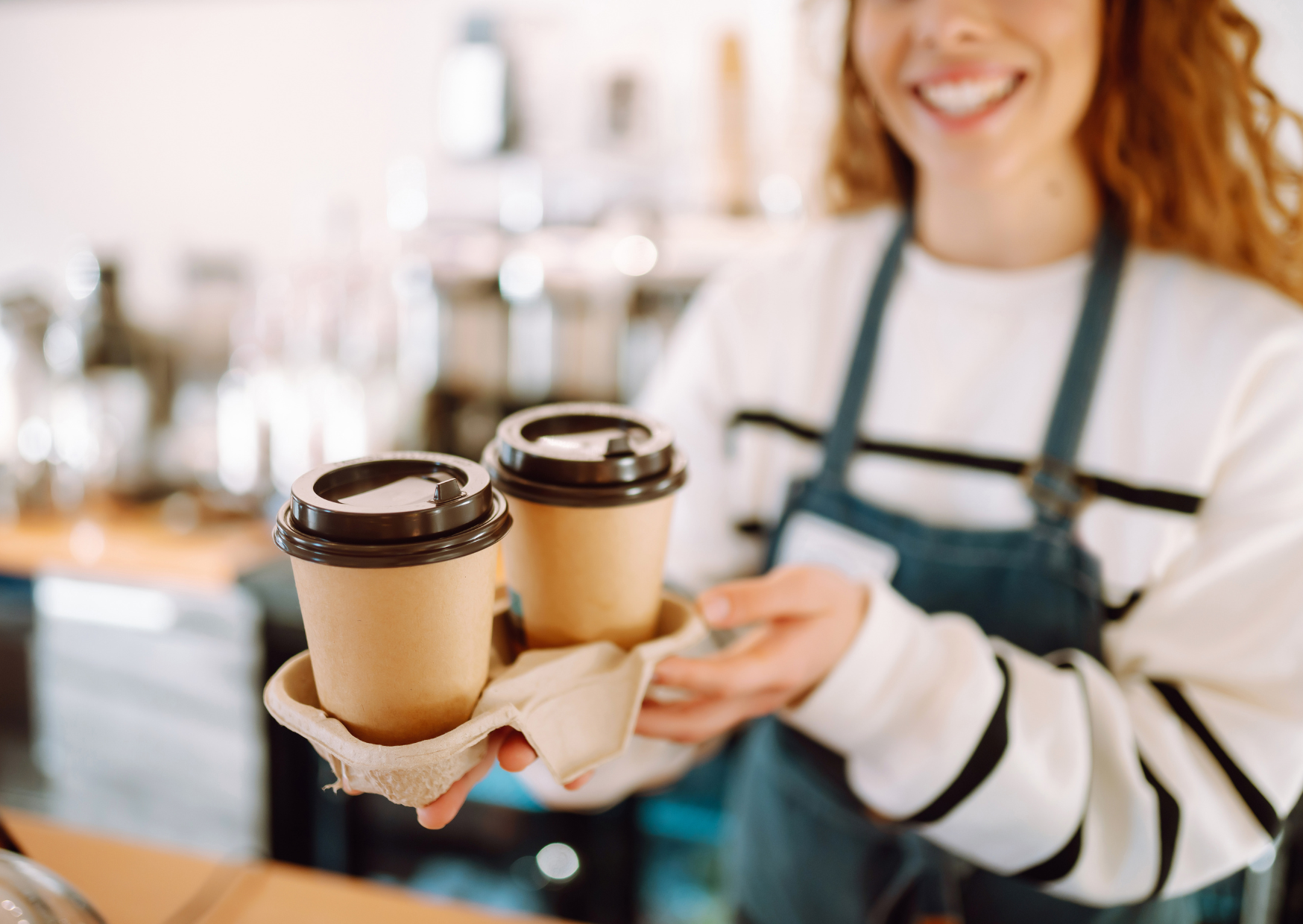
You can absolutely get takeaway coffee in parts of the country now.
Recent coffee guides for Seville explicitly say that some modern coffee shops do offer take-away, and current reporting on Spain’s coffee market shows strong growth in branded and specialty operators, especially in larger cities. Cold coffee is growing. Flavor additions are growing. Younger consumers are changing the market.
That is the nuance tourists need.
Takeaway exists.
It just does not define the culture.
In a specialty shop near Malasaña, Poblenou, Chueca, or Soho Málaga, takeaway may be normal. In a traditional neighborhood bar, the assumption is still much more likely to be that you will drink the coffee there. A current Seville guide says the local tradition remains bar or table, not takeaway cup and pavement stride.
That is why the move still reads tourist.
The behavior is legible.
It says, “I need this coffee to fit my schedule,” while the local room is saying, “Have the coffee now.”
The giveaway gets even louder when the order itself is built like an American chain-café order. A lot of Spain still runs on café solo, cortado, café con leche, americano, and a few regional variations. Specialty cafés are widening the menu, but the national default is still much tighter than the U.S. customization habit.
So yes, ask for para llevar if you need it.
Just do not mistake that for the local baseline.
It is often the exception, not the script.
The Counter, The Table, And The Terrace Are Not The Same Thing
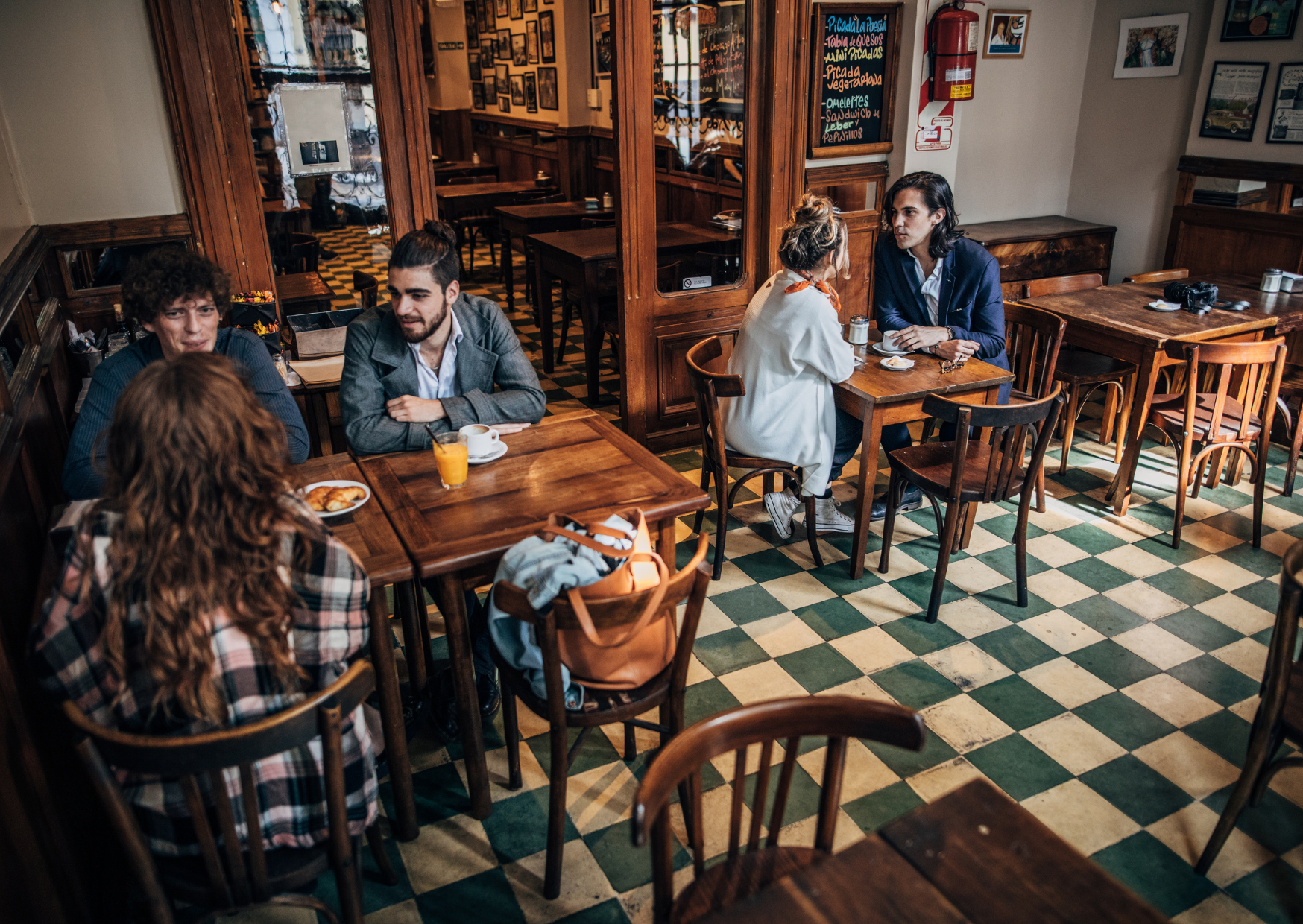
Another reason Americans stand out in Spanish cafés is that they treat every coffee location as interchangeable.
Spain often does not.
The bar, the inside table, and the terrace can carry different pricing, and those differences must be stated clearly on the menu or price list. Consumer reporting in Spain has repeatedly noted that businesses can lawfully charge different terrace prices if those prices are clearly shown in advance, and Andalusian consumer guidance has also stressed that menus and price lists must be visibly available to the public.
That changes behavior more than outsiders expect.
Locals often know, even without thinking much about it, that standing at the bar is one kind of stop and sitting on the terrace is another. The terrace is not just scenery. It is part of the transaction. Spain’s tourism messaging practically celebrates terrace life as part of daily happiness, especially in the south.
Americans often walk into this with the wrong assumptions.
They see an empty outdoor table, order one coffee, then settle in like the chair came bundled with a temporary lease.
That can work.
It can also look clueless.
A 2025 Barcelona case even went viral because a bar tied coffee prices to time spent on the terrace, which tells you how sensitive this issue has become in some heavily visited areas. The argument was not really about coffee. It was about space, time, and who gets to occupy a table for how long.
The broader point is simpler. In Spain, a café seat is still more communal and situational than many Americans assume.
Use it like shared space.
Not like private office rent.
One Coffee And A Laptop Is An Especially Fast Way To Look Wrong

This is where the tourist habit mutates into the digital-nomad version of the same mistake.
Open laptop.
One coffee.
Two hours.
Maybe three.
Spain has started pushing back on that pretty visibly. Euronews reported that cafés in Valencia, Santiago, and Barcelona were cracking down on laptop users who occupied tables for hours after buying very little. The complaint from owners was blunt: some people were taking up space for the price of a single coffee.
That does not mean laptops are banned everywhere.
They are not.
There are plenty of laptop-friendly cafés in Madrid and Barcelona, and newer specialty spots often design for that crowd on purpose. Spain’s coffee market is evolving fast enough that both cultures now exist at once.
But that is exactly the point.
You now have to know which room you are in.
If the place is a traditional bar-cafetería, a busy terrace, or a compact neighborhood spot with people rotating through breakfast and midday stops, turning one cortado into a remote-work lease is one of the clearest signs that the customer is operating on imported rules.
The easy fix is not moral.
It is practical.
Use cafés that are clearly laptop-friendly for laptop work. Use ordinary cafés for coffee, breakfast, a short sit, conversation, and then movement. If you are taking up a table for a long stretch, order accordingly and make sure the place is built for that rhythm.
Spain is not anti-work.
It is just increasingly unwilling to pretend all cafés are coworking spaces.
What Locals Actually Order Instead Of A Giant To-Go Drink
One reason Americans default to takeaway is that they do not know what to ask for fast enough.
So they reach for the universal chain-café move: big milk drink, walking cup, keep going.
Spain gives you a cleaner menu than that.
The everyday backbone is still café solo, cortado, and café con leche. Recent guides continue to describe café con leche as a morning classic and cortado as one of the standard all-day orders, with small differences by region and venue. In Seville, a café con leche is commonly served in a glass and locals can be oddly attached to that detail.
That matters because the local order is built for the local pace.
A café solo is fast.
A cortado is fast.
A café con leche is still a sit-down coffee more than a marching coffee.
Even an americano in Spain is usually smaller and less theatrical than what many U.S. travelers expect.
There is also the timing piece.
Coffee in Spain runs with the day differently. Mid-morning coffee is normal. Afternoon coffee is normal. Coffee after a meal is normal. The point is not to memorize a rigid rulebook. The point is to understand that Spain’s coffee life is still built around routine moments more than customized beverage identity.
So the easier way to blend in is not speaking perfect Spanish.
It is ordering something the room already understands.
A cortado at the bar.
A café con leche with breakfast.
A solo after lunch.
Drink it there.
Move on.
That looks much more local than asking a harried barista in a traditional café for a giant oat-milk iced vanilla thing in a paper cup and then looking disappointed by the answer.
The Social Tempo Is The Part Visitors Usually Miss
The American mistake is often described as a coffee mistake.
It is really a tempo mistake.
Spain’s bars and cafés still sit inside a culture that values the pause more than the U.S. commuter model does. Outdoor terraces remain one of the country’s defining habits. Historic cafés are still framed as places of conversation and cultural life, not just beverage throughput. Even the phrase “go have a coffee” still carries social weight.
That is why rushing the café reads off.
It is not only the cup.
It is the refusal of the pause.
Tourists often assume slowing down in Spain means taking forever. That is not quite right either. Plenty of Spanish bar coffees are quick. People stand at the bar, order, drink, exchange a few words, and go. The point is not that every coffee becomes a philosophical event. The point is that it usually remains situated, not portable.
There is a useful correction here.
Some Americans hear all this and overcompensate. They think the “local” move must be to camp at a terrace table for ninety minutes over one coffee.
That is wrong too.
Spain’s café rhythm is not hurry, but it is not entitlement either.
Drink your coffee where you are.
Respect the room.
If you want a long sit, choose a place and order pattern that supports it.
If you want speed, the bar is often your friend.
The tourist mark is not being quick.
It is trying to make the whole culture bend around one imported use case.
The Cheap Fix Starts With One Better Order
This is much easier to fix than people think.
Walk into a café in Spain and make one small decision first:
Am I having coffee here, or do I genuinely need takeaway?
If the answer is “here,” then lean into the local setup. Order at the bar if that is how the place runs. Sit if the room is clearly set up for sitting. Drink the coffee there. If you want to blend in more, choose one of the common orders rather than treating the menu like a chain customization test.
If the answer is “I really need takeaway,” then do it cleanly.
Ask for para llevar.
Just understand what you are asking for.
In a modern specialty shop, no problem. In an older neighborhood bar, they may do it, they may improvise it, or they may look at you like you are trying to export the coffee before it has had a chance to be coffee.
A practical first-week reset in Spain looks like this:
Order café con leche at breakfast once.
Order cortado once in the afternoon.
Have one coffee standing at the bar.
Sit on a terrace when you actually want the terrace, not because it is there.
Do not open the laptop unless the place clearly welcomes that use.
And if you want takeaway often, start learning which cafés are built for that instead of expecting every Spanish bar to behave like an airport concourse.
That is enough.
Most readers do not need a language breakthrough.
They need a behavior adjustment.
The Better Rule Is Simple. Stop Making Coffee Mobile By Default.
The café habit that marks Americans as tourists in Spain is not loud.
It is just obvious.
They try to carry the coffee away from the café too quickly, physically or mentally. The cup becomes transport. The table becomes office rent. The stop becomes one more task to optimize. Spain’s café culture, even as it modernizes, is still resisting that pattern more than the United States does.
That is why the easy fix works so well.
Have the coffee there.
Not forever.
Not theatrically.
Just there.
At the bar. At the table. On the terrace if that is what you chose and the price fits. Order something the place already knows. Use takeaway when you need it, not as the automatic setting for every cup. Respect the difference between a laptop café and a neighborhood bar.
Do that, and the whole interaction changes.
You stop looking like someone extracting caffeine from Spain.
You start looking like someone actually in it.

About the Author: Ruben, co-founder of Gamintraveler.com since 2014, is a seasoned traveler from Spain who has explored over 100 countries since 2009. Known for his extensive travel adventures across South America, Europe, the US, Australia, New Zealand, Asia, and Africa, Ruben combines his passion for adventurous yet sustainable living with his love for cycling, highlighted by his remarkable 5-month bicycle journey from Spain to Norway. He currently resides in Spain, where he continues sharing his travel experiences with his partner, Rachel, and their son, Han.