
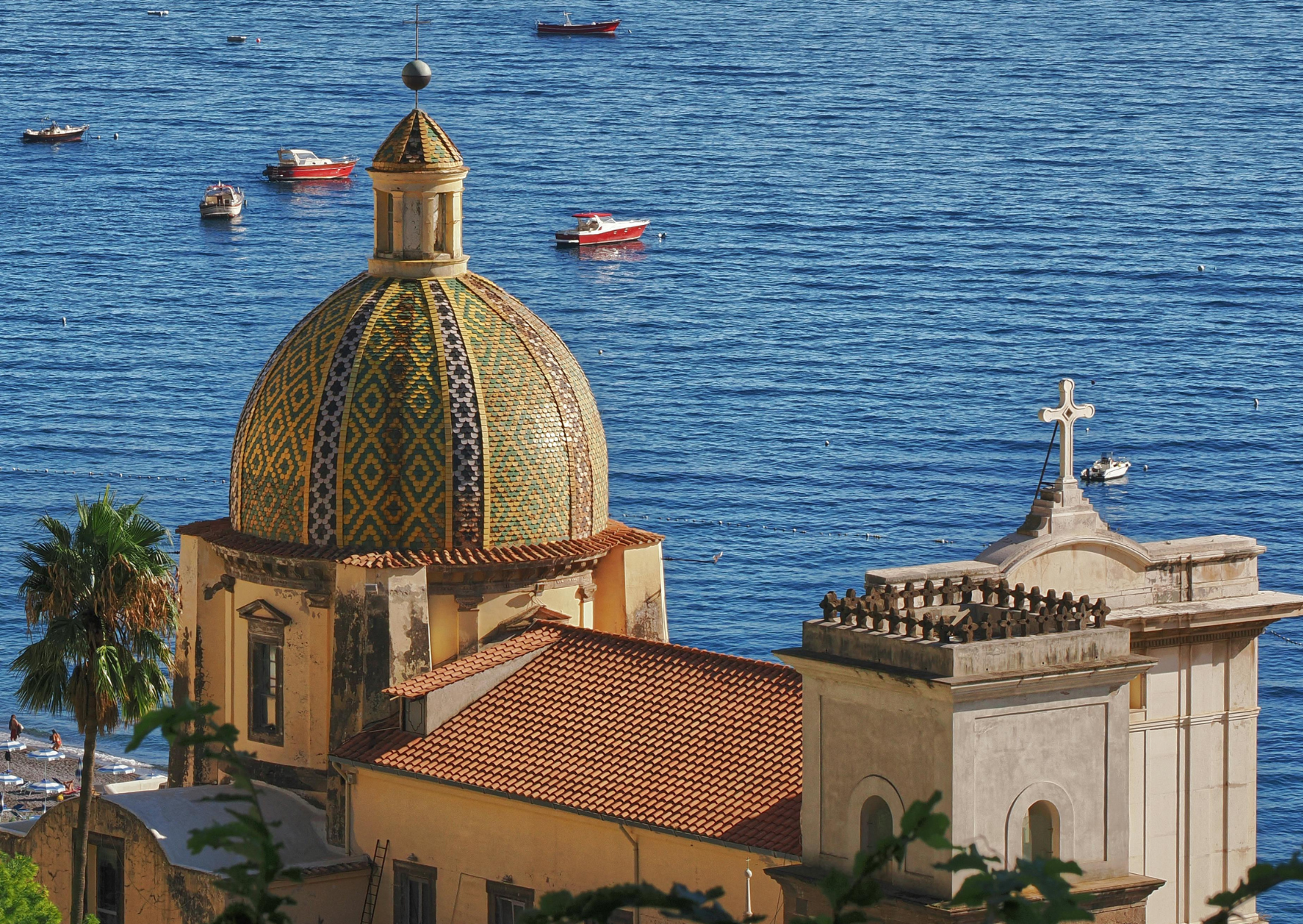
The Mediterranean longevity story gets flattened into olive oil, fish, tomatoes, and a nice-looking lunch. The less photogenic answer is often stronger: in long-living Mediterranean settings, people tend to stay in regular contact with other human beings as part of ordinary life, not as a scheduled self-improvement project.
Spain and Italy keep showing up near the top of Europe’s life-expectancy tables. That does not prove one habit explains everything. It does make the region worth watching when the same pattern keeps surfacing in the research: shared routines, repeat contact, and a daily life that keeps people socially in circulation instead of sealed off at home.
The habit is not “having a lot of friends” in some vague, inspirational sense.
It is seeing people often enough that connection stops being an event.
That usually looks unglamorous. Coffee at the same place. A walk at the same hour. Lunch with family that happens because it always happens. A market run with actual conversation. A local square, church, club, or café where absence is noticed. Mediterranean lifestyle researchers now treat conviviality, lifelong social connectedness, and strong family and community bonds as core features of the pattern, not nice extras bolted onto the diet.
It Works Because Contact Is Built Into The Day

A lot of Americans hear “social connection” and picture something exhausting.
A full calendar. Hosting. Networking. Coordinating six adults for dinner three weeks from now.
That is not the useful version.
The protective version is low-friction contact. You leave the house and run into people. You do errands on foot and exchange words. You eat with others often enough that meals are not always solitary fuel stops. The advantage is not that everyone becomes charming. The advantage is that contact becomes normal, frequent, and boringly repeatable.
That difference matters because habits survive better when they are socially embedded. The Mediterranean model is not only a menu. It is a way of living where food, walking, rest, community ties, and social rituals reinforce each other. Shared meals are part of the mechanism, but the deeper point is wider than meals. People are harder to forget when they keep appearing in one another’s day.
This is also why copying only the recipes usually disappoints people.
Imported olive oil cannot do the job of a street life.
The Mortality Effect Is Bigger Than Most People Think
The strongest defensible version of the claim is not that one cheerful lunch buys a decade. It is that social disconnection carries a mortality hit big enough to be benchmarked against smoking, and smoking is tied to roughly a decade of life expectancy loss. Public-health guidance now describes social disconnection as having a mortality impact similar to smoking up to 15 cigarettes a day, while smoking cessation guidance says quitting can add as much as 10 years to life expectancy. That is why this subject has moved out of the “soft wellness” corner and into serious health policy.
The older meta-analysis that still anchors much of this field found a 50% greater likelihood of survival among people with stronger social relationships, across 148 studies and more than 300,000 participants. The effect was strongest for richer measures of social integration, not just simplistic markers like whether someone lived alone.
There is also a more direct, less headline-friendly number. In a large Japanese cohort of adults 65 and older, disability-free life expectancy rose sharply with more social participation. Men with no social activities were estimated at 17.8 disability-free years, compared with 22.7 for those with three activities. Women went from 21.8 to 26.7 years. That is almost five extra healthy years, and it held even after looking at smoking, body weight, physical activity, and depression.
No honest researcher would tell readers that one habit guarantees ten extra years.
But the broad direction is not subtle. The penalty for isolation is large, and the upside of staying socially engaged is large enough that pretending it is a lifestyle garnish starts to look foolish.
Mediterranean Longevity Is More About Structure Than Personality
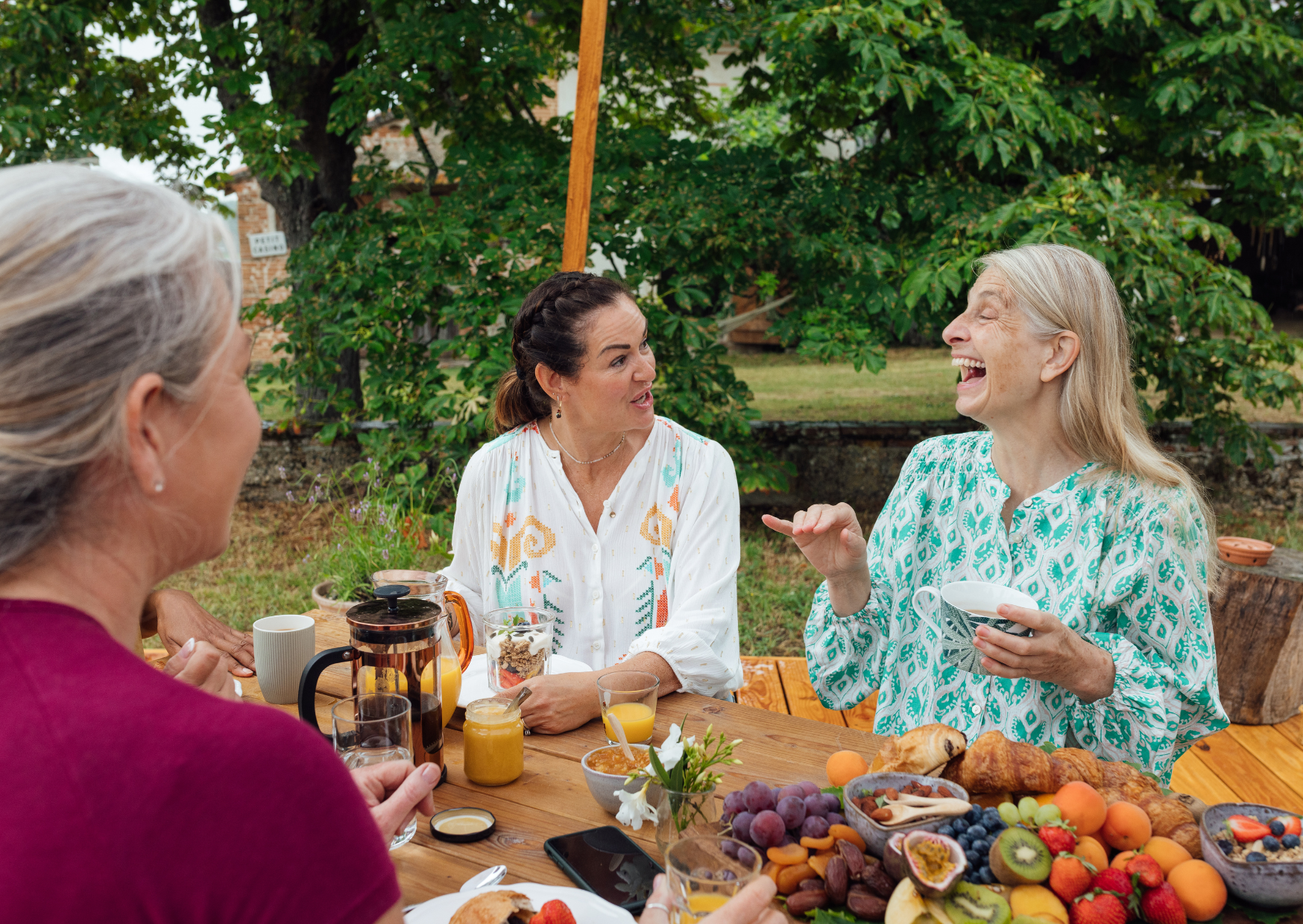
People in Mediterranean countries are not automatically wiser, calmer, or morally superior.
The simpler explanation is that many Mediterranean environments still make contact easier.
Dense neighborhoods help. Walkable errands help. Markets help. Squares help. Cafés help. Family meal expectations help. Community rituals help. Recent global health work has been unusually direct about this, pointing to social infrastructure like parks, libraries, and cafés because loneliness is partly a design problem, not just a personal failing.
That is the real contrast with a lot of suburban, car-heavy life. When every interaction requires driving, parking, scheduling, and effort, connection turns into a project. Projects are fragile. They get bumped by weather, traffic, work, and fatigue. Routines survive longer because they ask less motivation from people who are already tired.
The Mediterranean lesson is not “be extroverted.”
It is reduce friction.
Make sure your week contains places where other people exist on purpose and in repetition. That is not romantic. It is structural.
What Americans Usually Miss Is The Difference Between Support And Contact
Many people are loved.
Far fewer are regularly seen.
Those are not the same thing.
A person can have adult children who care deeply, old friends from work, and a phone full of warm text threads, yet still spend most weekdays in practical isolation. Home, car, store, home again. Plenty of midlife and older adults have decent diets, medication, and money, but almost no ambient contact built into the week.
Another mistake is treating social life like entertainment. The version linked with healthier aging is often repetitive, slightly obligatory, and not especially glamorous. You show up at the same café. You call the same relative. You see the same vendor at the market. You walk the same route and recognize the same faces. Repetition is not the boring part that can be skipped. Repetition is the protective part.
Screens blur this issue further. Digital contact can help, especially when distance or disability gets in the way. But the evidence base does not treat a text thread as a full substitute for embodied presence, shared space, and the tiny feedback loops of ordinary in-person life. Recent public-health guidance even flags excessive screen time and negative online interactions as part of the modern loneliness problem.
Light ties count too.
Not every relationship has to be deep, emotional, or confessional. The barista who notices your absence, the neighbor who asks about your knee, the man selling vegetables who remembers what you bought last week, the woman from choir who texts when you miss a rehearsal, these are not trivial. They help keep a person socially oriented, and that is healthier than living as a private unit with excellent intentions.
The Biology Is Less Mystical Than Wellness Culture Makes It Sound
The body does not care whether a health habit looks elegant on social media.
It cares about chronic stress, inflammation, movement, sleep, depression, and whether anyone notices when a person disappears.
Recent global evidence reviews describe social connection as protective across the lifespan, with links to lower inflammation, better mental health, and lower risk of serious problems including stroke, heart disease, diabetes, cognitive decline, and premature death. Loneliness and isolation are not only emotional states. They are also physiological exposures that show up in the body over time.
There is another reason the Mediterranean pattern travels well in the research. Social connection rarely arrives alone. It often comes bundled with walking, more regular meals, less erratic sleep, stronger purpose, and lower odds of spending whole days inactive and unseen. The pattern is cumulative. One protective factor nudges the next one into place.
That is why the old superfood framing keeps missing the point.
A perfect breakfast cannot do the job of a connected life.
After 50 The Important Word Is Recurrence

For people in midlife and beyond, the useful target is not “make more friends.”
It is build repeat contact.
That can mean a fixed Tuesday walk with one person. A Friday coffee that does not get renegotiated every week. A standing Sunday lunch. A volunteer shift. A religious community. A language exchange. A market run done slowly enough to include conversation. A local class where absence is visible. Being expected somewhere turns out to be healthier than being optional everywhere.
This is where a lot of high-functioning people sabotage themselves. They want connection, but only the frictionless premium version. Same values, same politics, same niche interests, same schedule, same taste. That is too expensive. Mediterranean social life often looks messier than that. Family can be loud. Obligations can be repetitive. Neighbors can be nosy. The point is not curation. The point is recurrence with real humans, not ideal humans.
A decent test is simple. If a person vanished from their normal week for seven days, who would notice without being told?
That question reveals more than a supplement drawer ever will.
The First Week Should Fix Friction Not Motivation

Most failed health resets demand a new personality.
This one should demand a different default.
For the next seven days, the job is to create automatic face-to-face contact instead of relying on mood.
- Pick one repeatable public place and go at the same time twice this week. A café, library, church, park loop, market, senior center, gym, or community class works. Familiarity matters more than novelty.
- Turn one solo habit into a shared one. Walk with someone. Eat one meal with someone. Run one errand with someone. Stack connection onto something that already exists instead of inventing a whole new hobby.
- Start one standing plan that repeats weekly without fresh negotiation. Wednesday coffee beats ten vague “we should catch up” messages. Regularity is doing the heavy lifting here.
- Add one low-stakes neighborhood tie. Learn a name. Stop for five minutes. Ask one question. Weak ties still count as ties.
- Replace one hour of dead screen time with physical presence somewhere other people exist. Public-health guidance now explicitly includes greeting a neighbor, joining a local group, volunteering, and being fully present in conversation as practical steps.
- Put next week’s contact on the calendar before this week ends. Social life collapses fast when it depends entirely on spontaneous energy.
None of this requires becoming charismatic.
It does require less hiding.
And that, much more than a photogenic salad, is the Mediterranean habit worth stealing.
A Longer Life Usually Has More Witnesses
The Mediterranean lesson is not that southern Europe discovered a magical ingredient.
It is that many long-living places held onto something modern life keeps stripping away: regular human contact without heroic effort.
Walk more, yes.
Eat better, yes.
But health built entirely in private is missing one of the sturdier pieces of the puzzle. A body tends to do better when the week contains other people in repetition, in public, and at close range. Not because every conversation is profound. Because isolation is costly, and ordinary contact keeps dragging a person back toward movement, routine, accountability, and meaning.
The daily habit linked with the extra years is not a food.
It is a life where someone is likely to notice if you do not show up.

About the Author: Ruben, co-founder of Gamintraveler.com since 2014, is a seasoned traveler from Spain who has explored over 100 countries since 2009. Known for his extensive travel adventures across South America, Europe, the US, Australia, New Zealand, Asia, and Africa, Ruben combines his passion for adventurous yet sustainable living with his love for cycling, highlighted by his remarkable 5-month bicycle journey from Spain to Norway. He currently resides in Spain, where he continues sharing his travel experiences with his partner, Rachel, and their son, Han.