

The surprising part was not the gas.
Yes, California’s average price for regular is sitting around $5.89 a gallon right now, which is the sort of number that would have sounded fake a few years ago and now just passes through the bloodstream like one more insult. But gas was never the whole car story. Gas was just the easiest part to hate because the number was right there on the sign, lit up in public, asking to be resented.
The real cost of the car was everything else attached to it.
The insurance. The registration. The maintenance. The “while you’re here” repair. The parking. The spontaneous little errands that somehow turned into full driving operations. The weird way an ordinary day in America keeps demanding a vehicle even when the trip is stupidly short and the weather is fine and the body would clearly be better off walking.
That is what changed when I moved to Spain.
I did not just sell a car.
I deleted a whole category of anxiety.
And once that category disappears, you start noticing how much of American adulthood was organized around protecting, feeding, fixing, parking, and emotionally justifying a machine you often did not even enjoy. The actual liberation was not environmental virtue or urbanist theory or some performative European self-reinvention.
It was much simpler.
My monthly life stopped having a car-shaped hole in the middle of it.
That is why selling it was the best decision.
The Pump Price Is Real. The Better Story Is What Comes After The Pump.
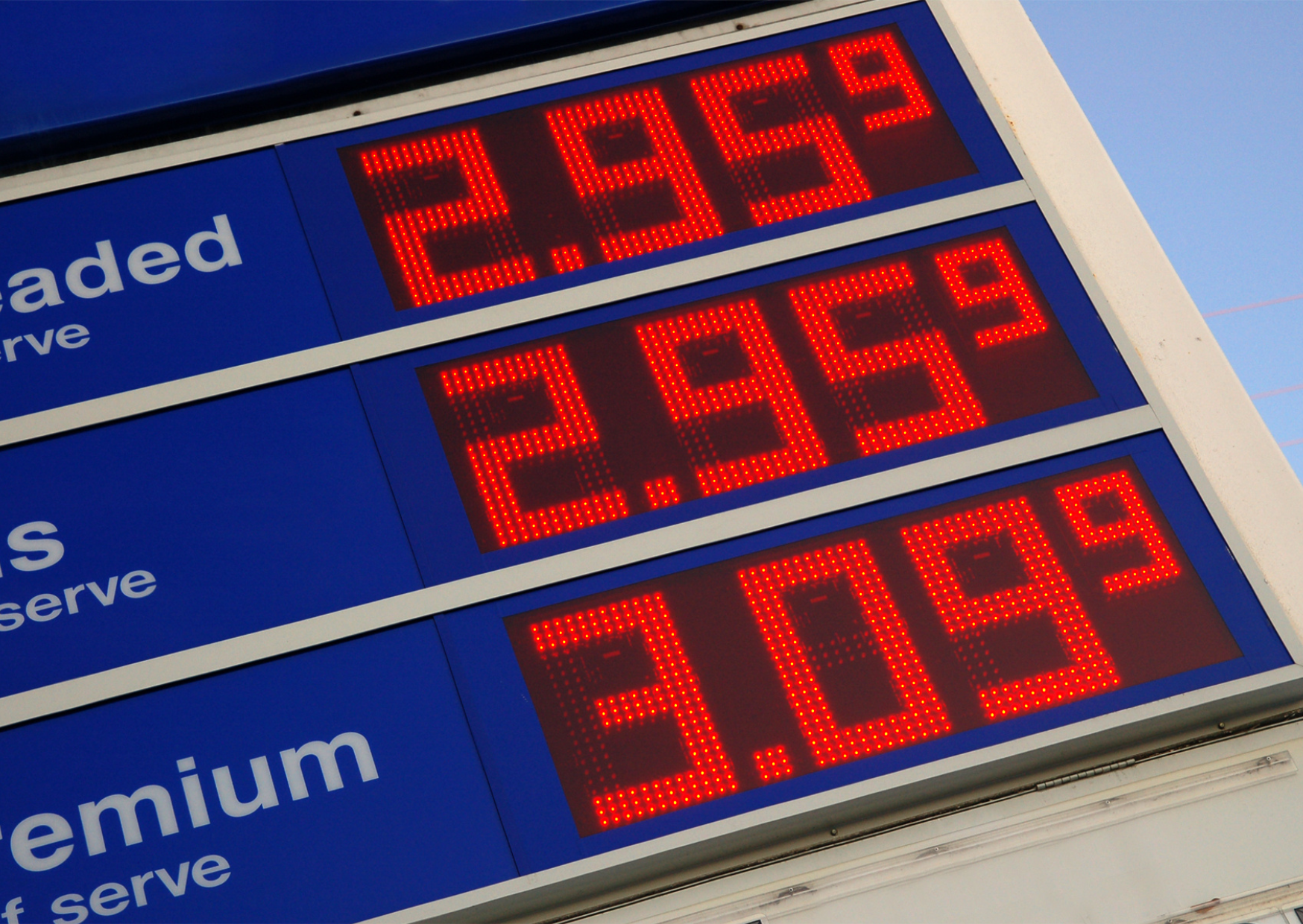
People love gas because gas is dramatic.
The sign is huge. The pain is instant. The complaint writes itself.
And yes, as of early April 2026, California’s statewide average for regular is about $5.895 a gallon. That is real. It is also only one layer of the trap.
The deeper problem is that in California, and in a lot of the U.S., the car is not really an optional expense. It is the operating system. Which means the fuel cost is only the first tax you see. The others arrive more politely. Insurance auto-renews. Tires go soft. Brakes become a conversation. Registration exists to remind you the state has also met your car. Parking appears in odd places and somehow always feels insultingly priced relative to the exact misery of parking there.
That is why I stopped finding gas complaints especially interesting.
They were too narrow.
When a system requires a car for too many normal actions, the real problem is not what fuel costs. The real problem is that you have built a daily life where too many necessities drag a vehicle behind them. Once that is true, every other cost starts growing around the car like mold.
Americans get weirdly used to this. They say things like “I have to run out” or “I’ll just hop in the car” or “it’s only a ten-minute drive” and stop hearing how much hidden structure is packed into those little phrases. They stop noticing that every pharmacy trip, every grocery top-up, every coffee with a friend, every doctor appointment, every basic act of being a person now includes the machinery of ownership.
That ownership cost is what I sold.
Not just the metal.
Spain Did Not Give Me Cheap Gas. It Gave Me Fewer Reasons To Need Any.

This is the correction people keep missing.
Spain is not some fantasy where fuel becomes free and everyone glides through life on sunbeams and tram tickets. Petrol still costs money. In Spain’s own fuel data, average 95 petrol prices in early 2026 were still sitting around the mid-€1.40s per litre, which means the country is not handing drivers some miraculous bargain.
That is exactly why this matters.
The win was not that Spain made driving cheap.
The win was that Spain made not driving plausible.
That is a much more serious advantage.
When I moved, the whole architecture of the day changed. Suddenly the pharmacy was something I could walk to. The bakery was not a trip. The market did not require a parking strategy. Dinner did not mean calculating whether I wanted to drive back tired, circle for a spot, and treat one glass of wine like a moral decision. The car stopped being the translator between me and ordinary life.
This is where Americans often think the story is romanticized.
It is not romance.
It is proximity.
A place that still lets daily needs cluster at human distance changes your budget because it changes your habits. You stop batching life into giant driving sequences. You stop treating every errand as a mini-commute. You stop carrying the car around inside your head even when you are not using it.
That is what Spain gave me.
Not a cheaper steering wheel.
A smaller radius of hassle.
Public Transport In Spain Is Cheap Enough To Feel Slightly Rude.
This is where the comparison gets embarrassing for California.
Madrid’s standard 30-day transport pass for adults 26 to 64 still sits at €32.70 in Zone A, and people 65 and older continue to ride for free under the current policy. Barcelona’s one-zone T-usual monthly pass is €22.80. Valencia’s current reduced SUMA monthly price can be as low as €14.90 for one zone through the current temporary fare window. Those are not once-a-year promotions designed to shock tourists. Those are the kinds of numbers normal people actually use to structure ordinary movement.
That is the part that took a minute to settle into my nervous system.
In California, mobility often feels like a cost-management problem before it even becomes a movement problem. You calculate fuel, parking, wear, traffic, distance, and whether the trip itself deserves the effort. In Spain, at least in cities where this article makes sense, movement often drops into the category of routine civic infrastructure. You pay the monthly fare and then mostly get on with your life.
That is not a tiny quality-of-life detail.
It changes the emotional weight of the week.
A lot of American car ownership feels expensive not because each individual trip is catastrophic, but because every trip carries the memory of ownership behind it. The gas tank. The repair history. The parking ticket. The insurance email. The battery that died in a grocery lot six months ago and left a permanent scar on your trust.
A cheap transit pass does not just save money.
It removes drama.
And by middle age, drama removal is wildly underrated as a financial strategy.
I Did Not Lose Freedom. I Lost Friction.
This is the line Americans always get wrong.
They hear “I sold my car” and assume the rest of the sentence must be sacrifice.
More waiting. Less flexibility. More dependence. More standing around in weather. More carrying bags. More compromise. Less spontaneity.
Sometimes, yes.
But mostly, no.
What I lost was the American definition of freedom, which is often just the right to spend a lot of money in order to remain independently mobile inside a badly organized environment.
That is not always real freedom.
Sometimes it is just expensive compensation.
The version of freedom I found in Spain was different. I could walk out the door and get things done without beginning with ignition. I could have a drink and not think about the return trip. I could move through the city without carrying the emotional overhead of a parked car I needed to recover later. I could take a train to another city and arrive where life was actually happening instead of in a rental lot or parking structure or some concrete purgatory attached to an exit road.
This is the point American car culture keeps obscuring.
Cars feel like liberty because the surrounding design often denies every alternative enough dignity to compete. Once you live in a place where alternatives actually work, the emotional story changes fast. You start asking a less flattering question:
Was I really free, or was I just paying a lot to solve a problem the environment kept creating?
That is where the whole California-to-Spain shift became obvious to me.
I did not become anti-car in some doctrinal way.
I just stopped pretending the thing was making my life lighter.
It was making it heavier and calling that normal.
The Weekly Budget Looks Better Before You Even Run The Full Math.
Let’s keep this at the useful level.
Say you are in California. Gas is around $5.89 a gallon. Your car still needs insurance, maintenance, and the occasional money-burning surprise. The average U.S. household spending profile keeps transportation high enough that people stop being shocked by it and start being resigned to it. That resignation is expensive.
Now put yourself in a normal Spanish city setup that actually supports living without a car.
You buy a monthly pass.
Maybe it is €32.70 in Madrid. Maybe €22.80 in Barcelona. Maybe €14.90 in Valencia for the current reduced one-zone monthly fare. Add the occasional taxi, train, or regional ticket and your mobility line is still often lighter than what California charges just to keep the car legally and physically alive.
That is before you even price the hidden victories:
- no registration renewal dread
- no parking calculation attached to dinner
- no “I should probably get the brakes checked” month
- no errand inflation where one short drive somehow creates three extra purchases
- no carrying the car as a standing background problem
This is why the decision ended up feeling bigger than transport.
The car was not just consuming dollars.
It was consuming attention.
And once you stop spending attention on the same expensive object over and over, life starts feeling cheaper even before the spreadsheet fully catches up.
Spain Works Better Only If You Pick The Right Spain.
This is where every Europe article has to stop itself before it turns into fantasy.
No, this is not true in every corner of Spain.
If you pick a place where the car is still doing heavy daily work, the whole story weakens. If you move to an isolated villa zone, a car-dependent suburb, or somewhere that looks romantic but functions badly without wheels, then congratulations, you have imported the American cost structure into better weather.
That is not what I am defending.
The story works in actual urban Spain. Places where shops, trains, buses, metros, pharmacies, parks, bars, and boring life infrastructure still cluster tightly enough that movement does not require private machinery every time. Madrid works. Barcelona works. Valencia absolutely works. So do plenty of smaller and medium cities if you pick your neighborhood intelligently.
This is another place where Americans get tripped up.
They think the move is Spain.
It is not.
The move is the city and neighborhood. That is where the budget gets decided. That is where the car either dies as a necessity or survives as an expensive habit in a place you chose badly.
A lot of the people who insist Europe is not actually cheaper are simply living in the wrong version of it. Not wrong for them, necessarily. Just wrong for the argument. If your Spain life still requires a car, then of course you will not feel the biggest financial rewrite. The article title only becomes true once the car stops being a structural requirement.
That is why selling mine felt so decisive.
It meant I had finally picked a life that could hold the decision.
The Best Part Was Not Financial. It Was Psychological.
The money matters.
Of course it matters.
But the more surprising gain was mental.
A car in California can become a low-grade emotional relationship. Not a healthy one. Just a constant managing relationship. You monitor fuel. You anticipate maintenance. You notice noises. You think about street cleaning. You think about break-ins. You think about where you parked. You think about whether a destination is worth the parking reality attached to it. You think about whether you should move it, fix it, wash it, insure it better, drive it more, drive it less.
That is a lot of brainpower for an object that mostly claims to be helping.
Once the car left my life, I noticed the absence before I noticed the savings.
I noticed that I could leave the house without planning around recovery of the vehicle later.
I noticed that dinner was just dinner.
I noticed that the city felt like a place I participated in rather than a place I crossed.
I noticed that errands shrank back to their true size.
That is what Americans often miss when they talk about transport. They focus on speed. They focus on convenience. They focus on whether a train is slower than a car at 11:00 a.m. on paper.
They ignore the psychic wear of ownership.
Ownership is tiring.
That is the part I was ready to stop pretending was freedom.
The First Month After Selling A Car Feels Strange In A Good Way.
There is a brief period where you feel almost underprepared.
You leave the house without keys to a machine that used to function like armor. You walk more. You wait more, though usually not as much as people imagine. You carry groceries and remember that humans once did this without writing opinion pieces about oppression. You learn the transit system. You misjudge a bus schedule. You take one unnecessary taxi because your old instincts are still noisy.
Then something shifts.
The day stops being segmented around trips.
It becomes connected again.
That is the part Americans need to hear, especially the ones burning through gas in California and assuming the only realistic response is more income, a better hybrid, or a deeper tolerance for pain at the pump.
Sometimes the better answer is not optimizing the car.
Sometimes it is escaping the need for one.
That is harder to do in the United States because so many environments are built to punish the attempt. In the right parts of Spain, the environment supports the decision instead. Once that happens, the whole thing starts compounding in your favor. Less fuel. Less maintenance. Less parking. Less stress. More walking. More incidental life. More city. More money left intact for things that are not made of metal and monthly obligation.
That is what made the decision feel so obviously right.
Not because it was bold.
Because once I lived without the car for a little while, keeping it would have felt ridiculous.
The Best Decision Was Not Selling The Car. It Was Refusing To Build My Life Around Another One.
That is the cleaner ending.
Selling the car was one act.
The real decision was choosing a version of Spain where I did not immediately need to replace it.
That is where the savings live. That is where the relief lives. That is where the quality of life lives too.
California’s $5.89 a gallon number is a useful symbol because it catches the eye. It tells the truth loudly. But the real truth is quieter than the gas sign. The real truth is that a car-centered life keeps charging you in ways that are only partly visible, and the moment you move somewhere that breaks that dependency, the whole budget changes shape.
Not everything gets cheaper in Spain.
That would be a stupid claim.
But a life without car dependence gets simpler in a way that is very hard to unsee once you have lived it.
That is why I sold mine.
And that is why I never missed it enough to regret the decision.

About the Author: Ruben, co-founder of Gamintraveler.com since 2014, is a seasoned traveler from Spain who has explored over 100 countries since 2009. Known for his extensive travel adventures across South America, Europe, the US, Australia, New Zealand, Asia, and Africa, Ruben combines his passion for adventurous yet sustainable living with his love for cycling, highlighted by his remarkable 5-month bicycle journey from Spain to Norway. He currently resides in Spain, where he continues sharing his travel experiences with his partner, Rachel, and their son, Han.