
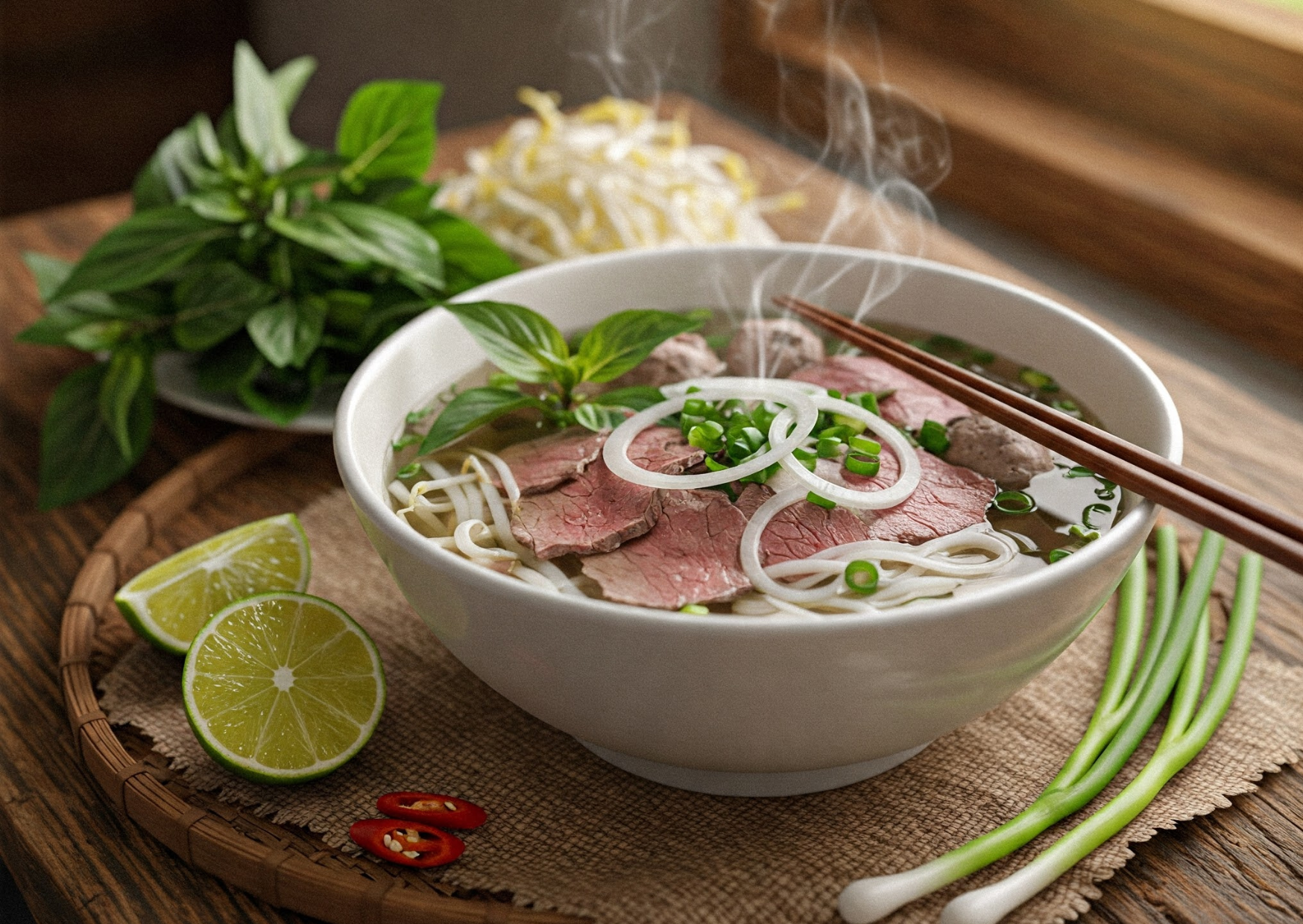
Traditional pho broth takes hours. Sometimes all day. Bones roasted and simmered for six, eight, ten hours until the collagen has broken down and the liquid is deep, golden, and impossibly rich.
That version is extraordinary.
That version is also the reason most people never make pho at home.
Because no reasonable person is going to char onions at 6 a.m., roast beef bones for an hour, and then babysit a stockpot until dinner. Not on a Tuesday. Not with a job. Not in an apartment kitchen that barely fits a sheet pan.
So pho stays in the restaurant category. Something you order. Something you crave. Something that feels too serious to attempt.
That is a shame. Because a genuinely good 30-minute pho is not only possible. It is one of the best weeknight meals you can build. Not the same as the 8-hour version. Not pretending to be. But a bowl of soup that is aromatic, warming, deeply satisfying, and better than 90 percent of the instant noodle soups most people default to when they want something fast and comforting.
The trick is understanding what the long version is actually doing, and then finding faster ways to get most of the same effects.
Why The Long Version Takes So Long
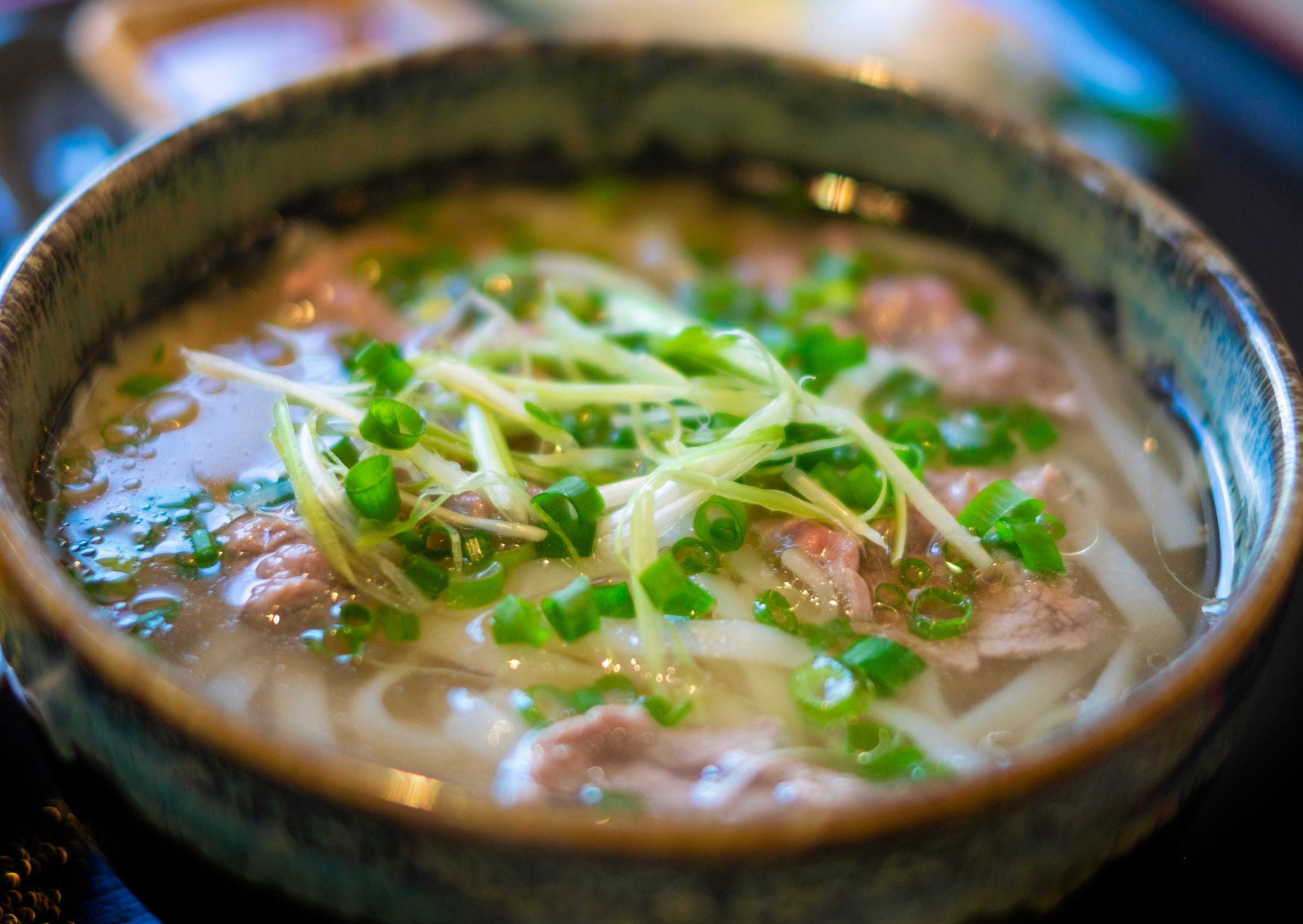
This matters because if you do not understand what the time is doing, you cannot shortcut it intelligently.
Traditional pho broth, specifically pho bo (beef pho), builds flavor from three layers.
Layer 1: Bone depth. Beef bones, especially marrow and knuckle bones, release collagen, gelatin, and minerals over hours of simmering. This gives the broth body. That thick, lip-coating quality that makes restaurant pho feel substantial rather than watery.
Layer 2: Char and spice. Onions and ginger are charred over open flame or under a broiler before going into the pot. Whole spices (star anise, cinnamon, cloves, coriander, fennel) are toasted and added. These aromatics need time to infuse into the liquid.
Layer 3: Seasoning. Fish sauce, sugar, and salt are adjusted at the end. This layer is fast. It is the other two that take hours.
The 30-minute version cannot replicate Layer 1 fully. You will not get that deep collagen body without time or a pressure cooker. But you can get close enough to make the bowl satisfying. And you can nail Layers 2 and 3 almost perfectly, which is where most of the flavor people actually remember lives.
When people say they love pho, they are usually talking about the aroma. The star anise. The charred ginger. The cinnamon. The fish sauce. That is all Layer 2 and 3. And that is exactly what the 30-minute version delivers.
The Recipe
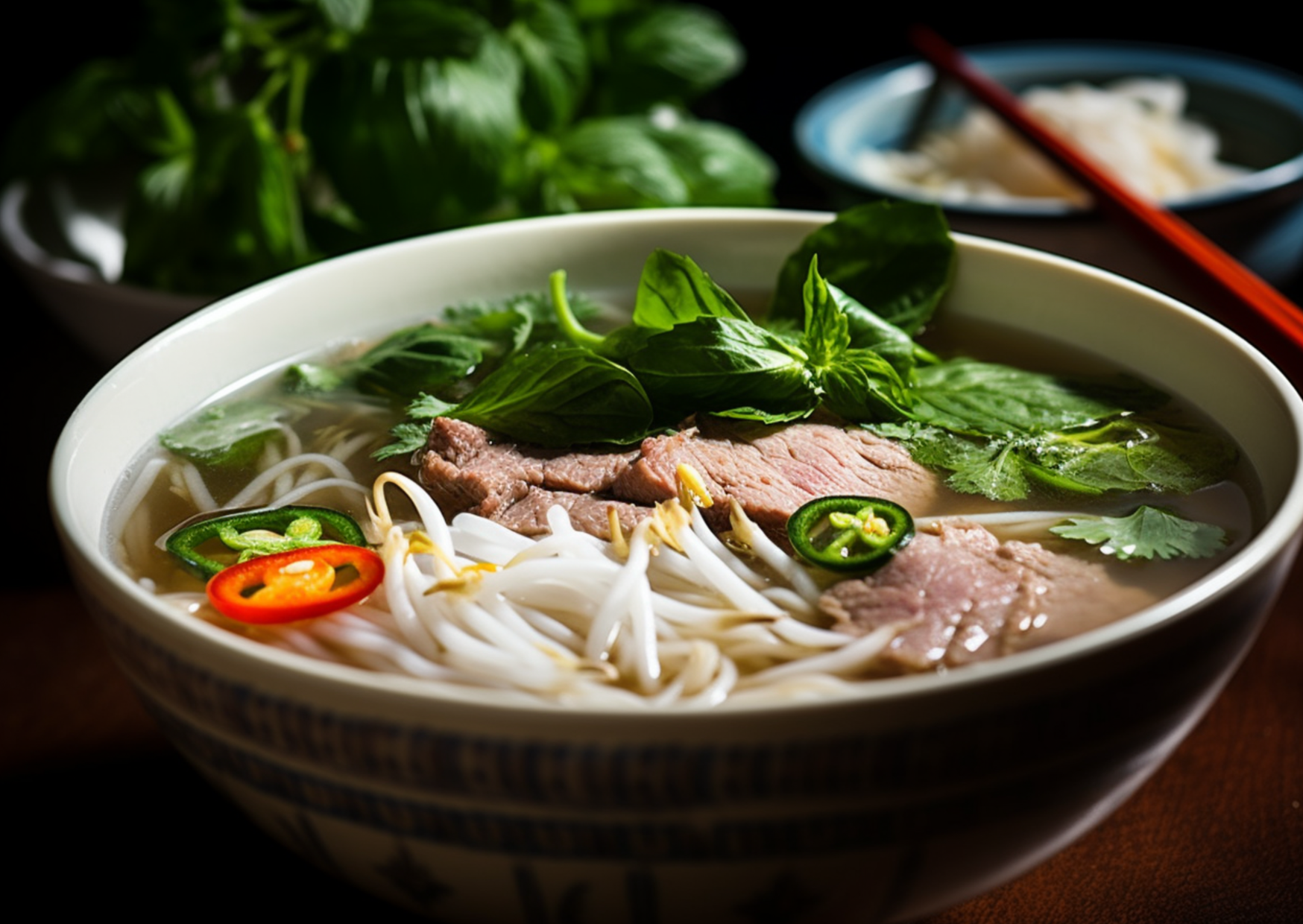
This is pho bo, the beef version. Simplified for speed but not dumbed down. Every step that matters is here. Every step that only matters at hour six has been cut.
Serves 4. Total time: 30 minutes.
For the broth:
- 1.5 liters good-quality beef stock (store-bought is fine, see notes below)
- 500ml water
- 1 large onion, halved
- 1 piece of ginger, about 8cm, halved lengthwise
- 3 whole star anise
- 1 cinnamon stick
- 4 whole cloves
- 1 tablespoon coriander seeds
- 1 teaspoon fennel seeds
- 2 tablespoons fish sauce (more to taste)
- 1 teaspoon sugar
- Salt to taste
For the bowls:
- 400g dried flat rice noodles (banh pho), about 3 to 5mm wide
- 300g beef sirloin or eye of round, sliced as thin as possible
- Bean sprouts
- Fresh herbs: Thai basil, cilantro, mint (use what you can find)
- 1 to 2 limes, cut into wedges
- Sliced fresh chili (bird’s eye or jalapeño)
- Hoisin sauce and sriracha on the side (optional, controversial, but common)
Step 1: Char the aromatics.
Cut the onion in half. Cut the ginger lengthwise. Place both cut-side down in a dry, heavy skillet over high heat. Press them down. Let them char hard for 4 to 5 minutes until deeply blackened on the cut face. Do not stir them. The char is the point.
If you have a gas burner, you can char them directly over the flame with tongs. This is the traditional method and gives a smokier result.
Step 2: Toast the spices.
In the same dry pan over medium heat, add the star anise, cinnamon stick, cloves, coriander seeds, and fennel seeds. Toast for 1 to 2 minutes, shaking the pan, until fragrant. Do not burn them. The line between toasted and burnt is about 30 seconds.
Step 3: Build the broth.
Combine the beef stock and water in a pot. Add the charred onion and ginger. Add the toasted spices. Bring to a boil, then reduce to a gentle simmer. Cook for 15 to 20 minutes with the lid slightly ajar.
In the last 2 minutes, add the fish sauce, sugar, and salt. Taste and adjust. The broth should taste slightly too salty and slightly too strong on its own. The noodles and raw toppings will dilute it in the bowl.
Strain the broth through a fine mesh sieve. Discard the solids. Return the broth to the pot and keep it at a bare simmer.
Step 4: Prepare the noodles.
While the broth simmers, cook the rice noodles according to the package directions. Most dried flat rice noodles need 6 to 8 minutes in boiling water. Drain and rinse briefly with warm water to prevent sticking. Divide among four large bowls.
Step 5: Slice the beef.
Slice the sirloin as thinly as you possibly can. Partially freezing it for 20 minutes beforehand makes this dramatically easier. The slices should be almost translucent. They will cook in the hot broth in the bowl.
Step 6: Assemble.
Noodles in the bowl. Raw beef slices laid over the noodles. Ladle the simmering broth directly over the beef. The hot liquid will cook the thin slices in about 30 seconds. They will turn from red to pink to gently cooked as you watch.
Top with bean sprouts, fresh herbs, a squeeze of lime, and sliced chili.
That is it. Thirty minutes from start to bowl.
Why This Works
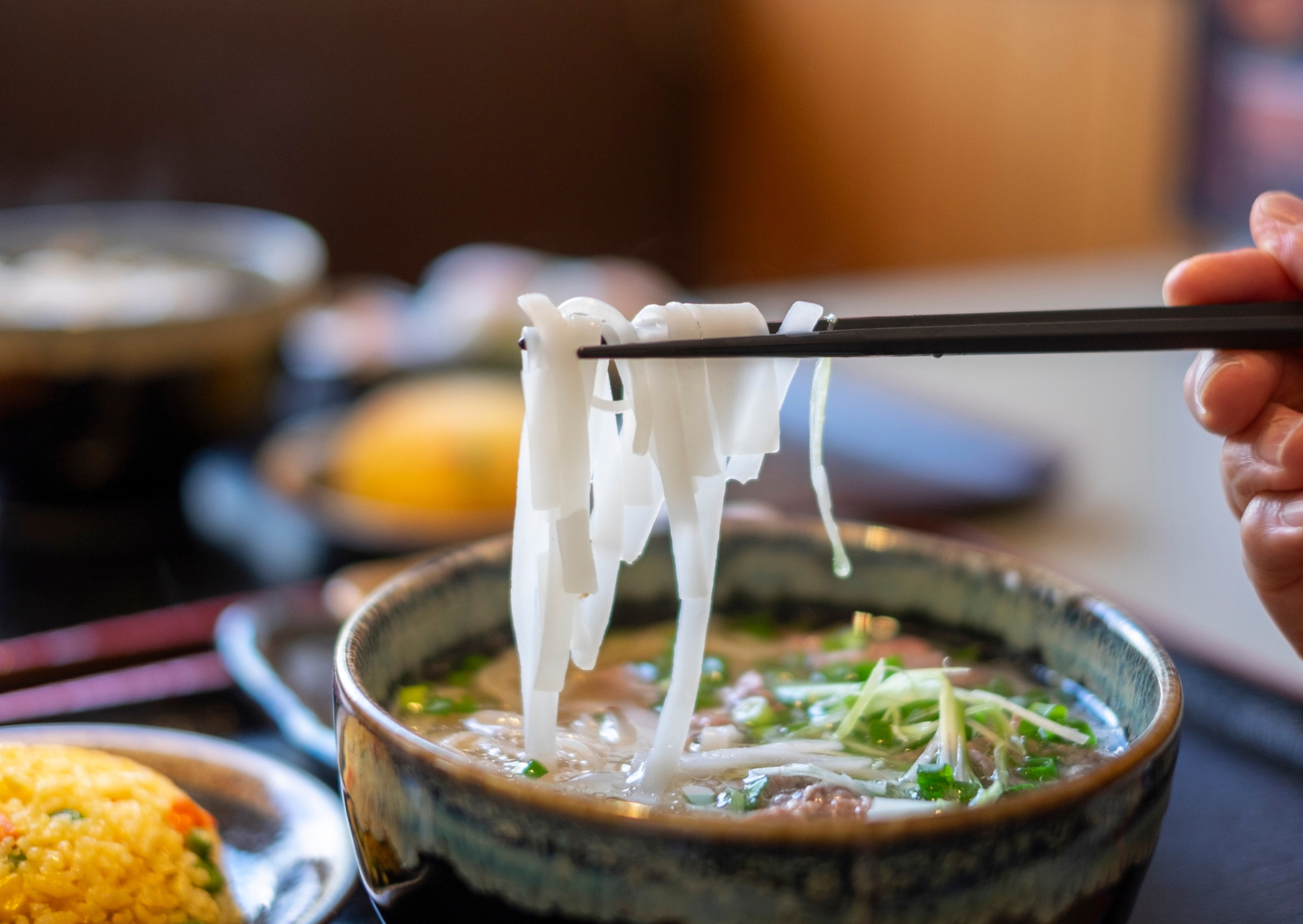
The 30-minute version works because it focuses effort on the layers that matter most for perceived flavor and skips the layer that requires the most time for the least noticeable return in a quick-cook context.
The charred onion and ginger are non-negotiable. They provide the smoky, caramelized backbone that makes pho smell like pho. Skipping this step is the single biggest mistake people make with quick pho. A broth without charred aromatics tastes like beef soup. A broth with them tastes like pho. The difference is five minutes and a hot pan.
The toasted whole spices are doing most of the aromatic heavy lifting. Star anise is the dominant note. Cinnamon adds warmth. Cloves add depth. Coriander adds a citrusy, slightly floral quality. Fennel adds sweetness. These spices release their essential oils quickly when toasted and infuse into simmering liquid within 15 minutes. You do not need hours for this.
The store-bought stock is the shortcut for Layer 1. A good commercial beef stock provides the base body and meaty depth that would otherwise require hours of bone simmering. It is not identical to homemade bone broth. But it is 80 percent of the way there in zero additional time.
The thin-sliced raw beef cooked by the hot broth in the bowl is not a shortcut. That is actually traditional. This is how pho is served in Vietnam. The broth is brought to a rolling boil, ladled over raw beef, and the residual heat cooks the meat to a perfect, tender medium. If your beef is sliced thin enough and your broth is hot enough, this step works exactly as intended.
The Simple Food Science
Three things are happening in this process that are worth understanding.
Charring the aromatics triggers the Maillard reaction on the onion’s surface and partially caramelizes the sugars in the ginger. This produces hundreds of new flavor compounds that do not exist in raw onion and ginger. The blackened surface also adds a subtle bitterness that balances the sweetness of the spices. This is why charring matters and why simply adding raw onion and ginger to the pot produces a flat, one-dimensional broth.
Toasting whole spices heats the essential oils trapped in their cellular structure and causes them to volatilize. Once released, these oils dissolve into the simmering liquid quickly. Ground spices release flavor faster but also turn the broth murky and gritty. Whole spices, toasted and simmered, give cleaner flavor and a clearer broth.
Fish sauce provides glutamate. Fish sauce is one of the most concentrated natural sources of free glutamic acid (umami). Two tablespoons in a pot of broth does more for perceived depth and savoriness than another hour of simmering bones would. This is the single most important seasoning in the entire recipe. If the broth tastes thin or flat, the answer is almost always more fish sauce, not more time.
Cost Breakdown
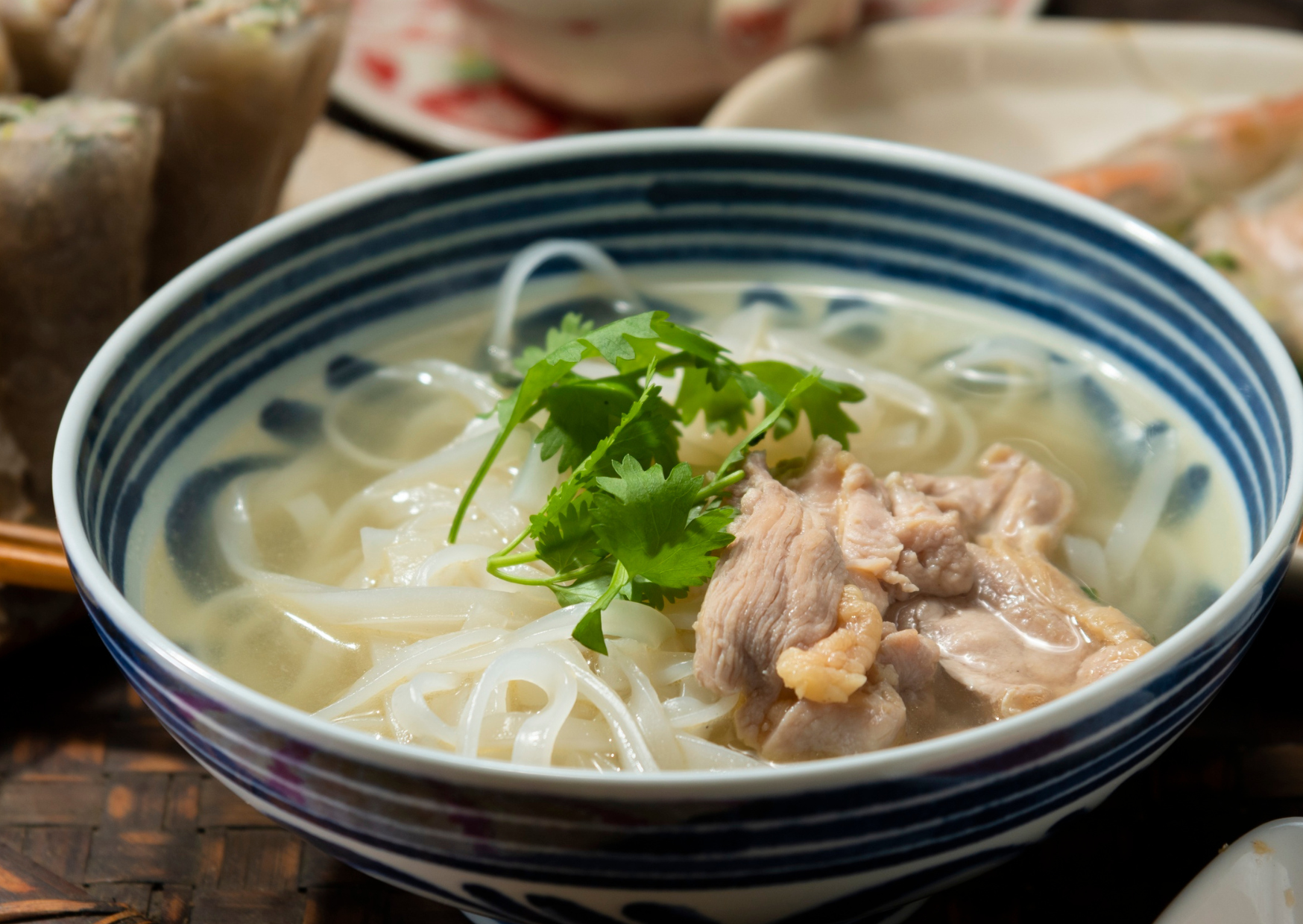
In Europe (Spain/France, supermarket prices):
- Beef stock, 1.5 liters (commercial, good quality): €2.50 to €3.50
- Beef sirloin, 300g: €4.50 to €6.00
- Rice noodles, 400g: €2.00 to €3.00
- Onion, ginger: €0.50
- Whole spices (per use from bulk): €0.50 to €0.80
- Fish sauce (per use): €0.30
- Bean sprouts, herbs, lime, chili: €2.00 to €3.00
- Sugar, salt: negligible
Total for 4 servings: roughly €12 to €17. That is €3 to €4.25 per person.
In the U.S. (grocery store prices):
- Beef stock, 1.5 liters: $3 to $5
- Beef sirloin, 300g: $5 to $8
- Rice noodles: $2 to $4
- Other ingredients: roughly $3 to $5
Total for 4 servings: roughly $13 to $22. About $3.25 to $5.50 per person.
Both versions cost less than a single bowl of pho at a restaurant, which typically runs €10 to €15 in European cities or $14 to $18 in the U.S. Four bowls at home for the price of one bowl out is a strong ratio.
Ingredient Substitutions
Beef stock: This is the backbone. Use the best commercial stock you can find. In Europe, brands like Aneto (Spain) sell high-quality liquid stock that works well. In the U.S., Better Than Bouillon beef base dissolved in water produces a rich, concentrated result. Avoid thin, watery stocks. If the stock tastes weak on its own, the broth will taste weak finished.
Beef sirloin: Eye of round works and is cheaper. Flank steak works if sliced against the grain very thinly. Brisket works but needs to be partially cooked before serving, not raw-sliced. For a lighter bowl, chicken breast or thigh can replace the beef entirely. The broth then becomes closer to pho ga (chicken pho), which is also traditional and arguably easier for beginners.
Rice noodles: Flat rice noodles (banh pho) are the correct choice. Thin vermicelli rice noodles (bun) are a different dish (bun bo Hue uses those). In a pinch, thin linguine-width rice noodles from any Asian grocery work. Do not use wheat noodles. That is a different soup.
Star anise: No real substitute. It is the defining aroma of pho. If you leave it out, the soup will taste fine but it will not taste like pho. One of the most widely available spices at Asian groceries and increasingly at regular supermarkets.
Fish sauce: Essential. Not optional. Do not substitute with soy sauce (different flavor entirely). In Europe, fish sauce is available at most Asian grocery shops and many mainstream supermarkets. In the U.S., it is a standard grocery item. Red Boat and Squid brand are both reliable.
Thai basil: If unavailable, regular basil works as a partial substitute. The flavor is different (less anise, more peppery) but still adds freshness. Do not skip herbs entirely. They are a defining textural and aromatic contrast.
Bean sprouts: If unavailable, shredded raw cabbage provides a similar crunch. Not the same flavor. But the function in the bowl (cool, crisp contrast to hot broth) is preserved.
Storage And Leftovers
Broth: Stores beautifully. Keeps for 4 to 5 days in the fridge and freezes for up to 3 months. Cool completely before refrigerating. Store in portions for easy reheating. This is the single best component to make in bulk.
Noodles: Store separately from the broth. Cooked rice noodles become sticky and clump in the fridge. Store in a lightly oiled container and reheat by pouring hot water over them for 30 seconds. Or, better yet, cook noodles fresh each time. They only take 6 to 8 minutes.
Raw beef: Keep unsliced in the fridge for up to 2 days. Slice just before serving. Pre-sliced raw beef oxidizes quickly and loses its appeal.
Assembled bowls: Do not store. Pho is a dish that is assembled at the moment of eating. The noodles absorb broth. The herbs wilt. The beef overcooks. Everything about it is built for immediate consumption.
The smart leftover strategy is to store the broth and keep everything else ready for quick assembly. A reheated bowl takes 10 minutes if the broth is already made. Boil the noodles. Slice the beef. Ladle. Done.
The Repeatable Week Plan
Pho works exceptionally well as a batch-broth system. Here is how to build it into a weekly rhythm.
Sunday: Make a double batch of broth. Takes the same 30 minutes. Store half in the fridge, half in the freezer. Eat pho for dinner.
Monday or Tuesday: Reheat broth. Cook fresh noodles. Slice new beef or use leftover chicken, shrimp, or tofu. Assembly takes 10 minutes. This is faster than ordering delivery.
Wednesday through Friday: Other meals. The frozen broth sits in the freezer for next week or for a night when you need dinner in 10 minutes and have nothing planned.
The following weekend: Thaw the frozen broth. Make another fresh batch if you want. The rotation sustains itself with almost no friction.
One batch of spices (star anise, cinnamon, cloves, coriander, fennel) lasts months. One bottle of fish sauce lasts months. The recurring costs are stock, noodles, beef, and fresh herbs. That brings the repeat cost per bowl down to roughly €2 to €3 after the pantry is stocked. At that price, homemade pho becomes a genuine weeknight staple rather than a weekend project.
What The 30-Minute Version Cannot Do
Honesty matters here too.
This version does not produce the same body as a broth simmered from bones for 8 hours. The gelatin content is lower. The mouthfeel is thinner. If you put this next to a bowl from a serious pho restaurant that makes their broth from scratch overnight, you would taste the difference.
That is fine.
The point is not to replicate the masterwork version. The point is to make a bowl of pho good enough that you actually make it on a Wednesday instead of thinking about it wistfully and ordering pad thai.
Perfection that never gets cooked is worth less than a good version that gets made twice a week.
The other thing this version cannot do is the bone marrow richness that some traditional pho achieves. If you want that, there is no shortcut. You need bones and you need time. A pressure cooker can compress that time to 90 minutes, which is a reasonable compromise for a weekend project. But it is not a 30-minute meal.
What this version does extremely well is aroma and seasoning. The charred ginger, the toasted star anise, the fish sauce depth. Those are the flavors that make pho pho. And this version delivers all of them, fully developed, in half an hour.
For a Tuesday night in a small kitchen, that is more than enough.
What Actually Matters Here
Pho is one of the great soups on the planet. It has been gatekept by its own reputation for difficulty. The 8-hour broth narrative has turned a practical, everyday Vietnamese dish into something that feels aspirational rather than accessible.
In Vietnam, pho is street food. It is breakfast. It is the thing you eat quickly at a stall before work. The long-simmered broth tradition is real, but so is the tradition of making it work with what you have and what you can do in the time available.
A 30-minute pho made with store-bought stock, charred ginger, toasted spices, and good fish sauce is not a compromise.
It is a bowl of soup that is better than almost anything else you could make in the same amount of time. And once you have made it twice, you will stop ordering it and start keeping star anise in the cupboard permanently.
That is not a shortcut. That is just learning to cook.

About the Author: Ruben, co-founder of Gamintraveler.com since 2014, is a seasoned traveler from Spain who has explored over 100 countries since 2009. Known for his extensive travel adventures across South America, Europe, the US, Australia, New Zealand, Asia, and Africa, Ruben combines his passion for adventurous yet sustainable living with his love for cycling, highlighted by his remarkable 5-month bicycle journey from Spain to Norway. He currently resides in Spain, where he continues sharing his travel experiences with his partner, Rachel, and their son, Han.