
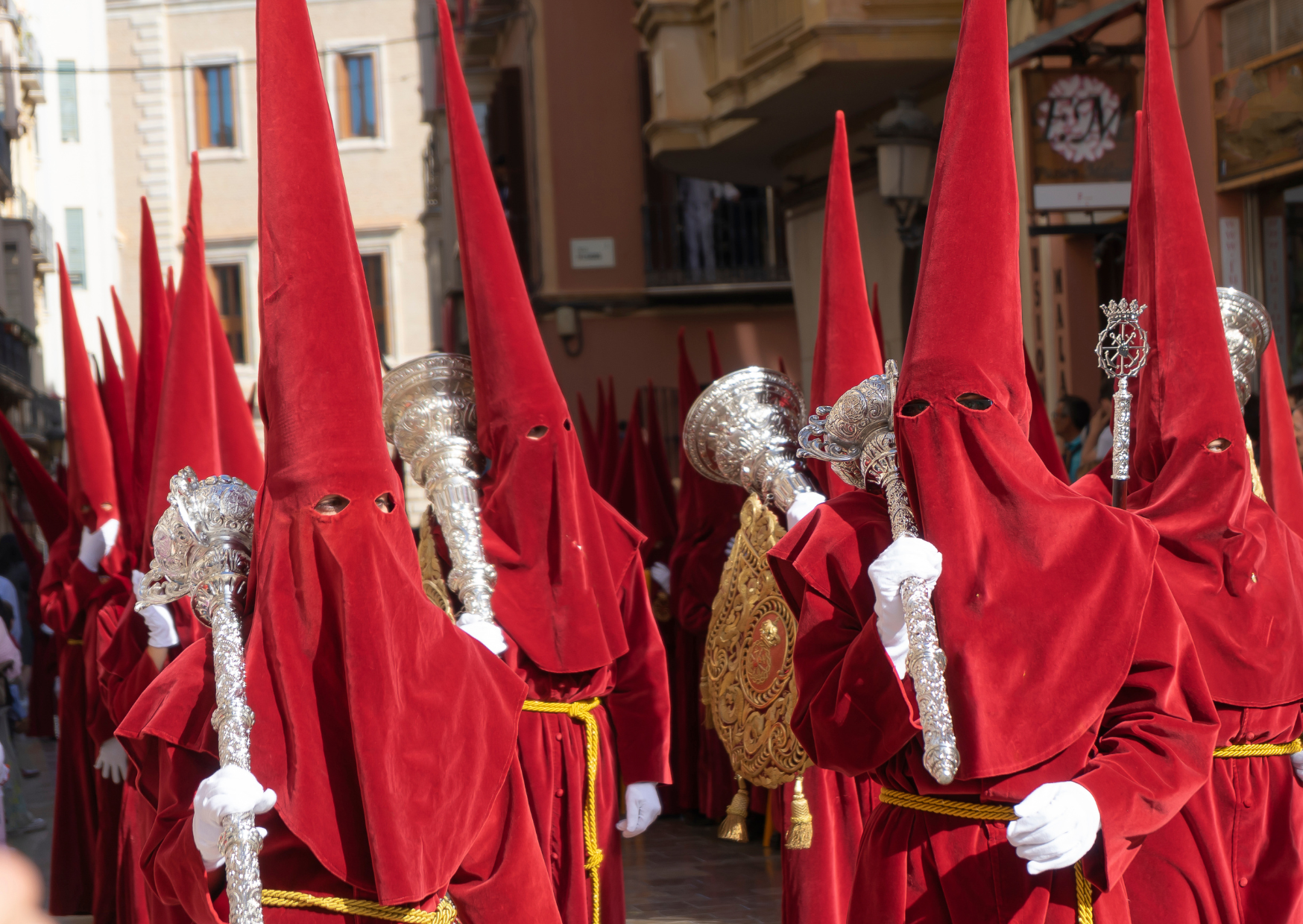
A lot of Europe does spectacle well.
Cathedrals. Mountains. Opera houses. Alpine trains. Venetian light at the exact hour it starts feeling unfair. The continent has no shortage of places that know how to arrive on cue.
Seville during Easter week is different.
It does not feel staged for your appreciation. It feels like the city has agreed to submit to something older, slower, heavier, and emotionally louder than ordinary life. Streets tighten. Time stretches. People wait for hours without acting as if waiting is the problem. Brass crashes around a corner. Incense hits the air. A crowd goes still. Then a float the size of a room starts moving at the speed of belief.
That is why the processions in Seville feel so intense.
Not because they are quaint. Not because they are picturesque. And not because they are merely religious theater for visitors with decent phone cameras.
They feel intense because the city means it.
In 2026, Seville’s Holy Week runs from March 29 to April 5, and the city and the Council of Brotherhoods have published official schedules, route changes, safety plans, and live crowd-management tools around that fact. This is not an improvised local custom clinging on for tourists. It is a civic event big enough to reorganize movement across the city.
This Is Not A Parade And That Is The First Shock
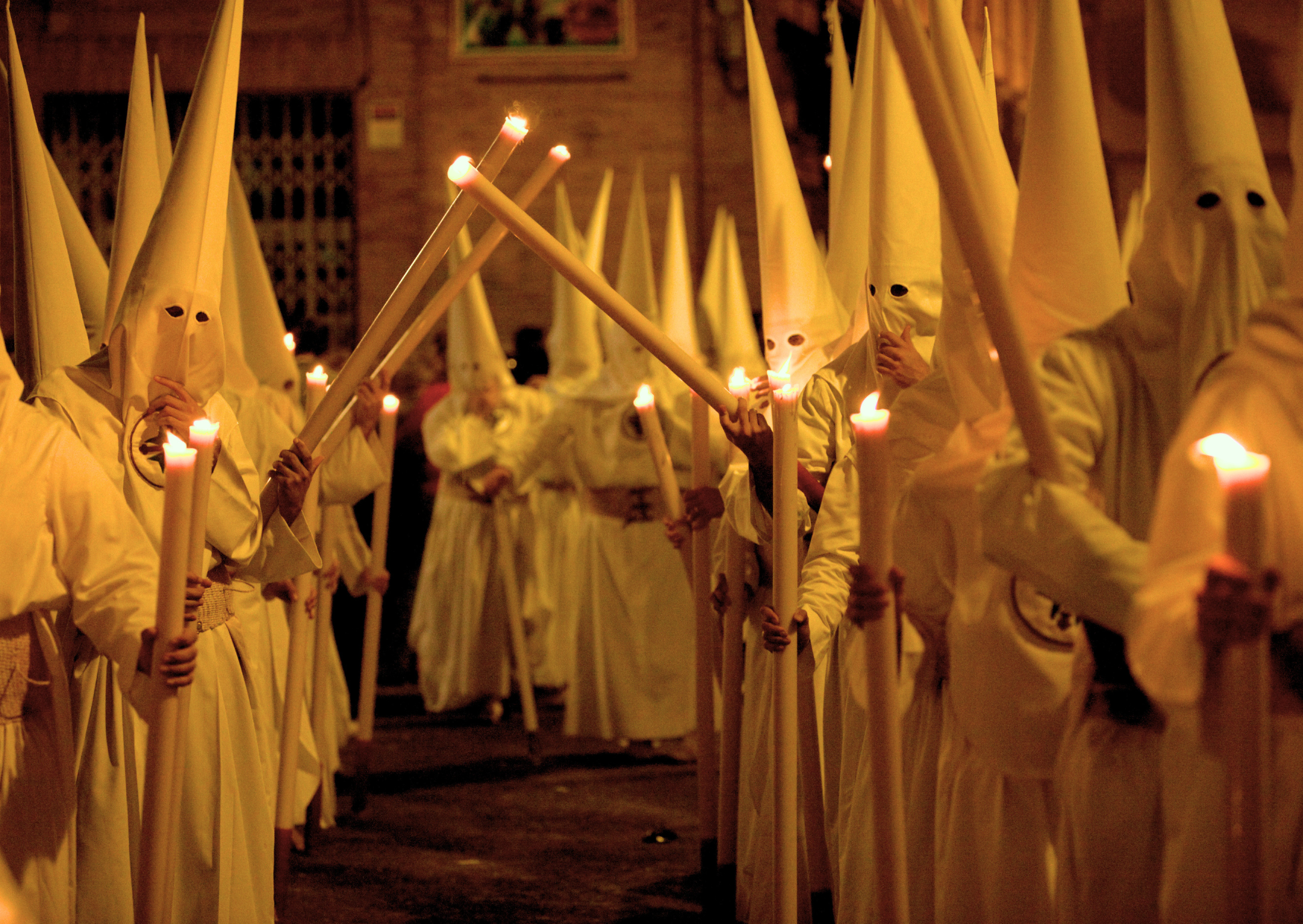
Americans often arrive expecting something between a procession, a festival, and a very elaborate form of public pageantry.
That description is not wrong, exactly.
It is just nowhere near enough.
A parade moves for the crowd.
Seville’s Easter processions move through the crowd.
That difference changes everything. A parade usually wants pace, visibility, and a clean spectator relationship. You stand there, it passes, you react, everyone goes to lunch. In Seville, the relationship is murkier and much stronger. People are not only watching. They are waiting, listening, anticipating, judging, praying, remembering, comparing, murmuring, and trying to get one street closer to the thing they came for.
The procession is not a performance dropped onto the city.
It is the city temporarily becoming processional space.
That is why the first encounter can feel so disorienting. The silence is not casual. The slowness is not decorative. The robes are not costume. The candles are not set dressing. The flowers, silverwork, music, velvet, gold embroidery, and carved images are visually overwhelming, yes, but the real force comes from the way the crowd treats them.
With attention.
With memory.
With stakes.
Official tourism material is right to call Holy Week in Seville one of the world’s largest open-air artistic events, because the city really does become a moving museum of sculpture, metalwork, embroidery, floral design, and music. But “artistic event” still undersells the atmosphere, because museums do not usually press this hard on the nervous system.
The Scale Is Worse Than Your Brain Expects
It is easy to say “big” and mean nothing.
So here is the useful version.
Seville’s Holy Week involves 60 different brotherhoods and more than 100 pasos, and the official route to the cathedral remains the structural spine around which the whole week is organized. Once those numbers stop being abstract, the week makes more sense. This is not one dramatic evening. It is a sustained civic occupation by devotional movement, neighborhood identity, inherited hierarchy, and logistical obsession.
That scale does something strange to the body.
At first the visitor thinks the main challenge will be watching the processions.
It is not.
The main challenge is living in a city where processions are happening with enough density and seriousness that your normal instinct for movement becomes unreliable. A five-minute walk becomes a 35-minute detour. A street that looked open is suddenly sealed by people who have been standing there for an hour and do not intend to be charitable about your timing mistakes. A dinner reservation starts feeling theoretical.
Then the opposite happens.
You stop trying to control the city.
That is when Holy Week in Seville becomes legible.
The visitor who insists on efficiency suffers. The visitor who accepts that the city has entered another rhythm starts seeing the real thing. The corner where a band rounds into view. The long line of nazarenos that makes a narrow street look like it has developed its own spine. The physical absurdity of a paso emerging from somewhere that clearly should not have been large enough to contain it in the first place.
And then the deeper shock lands.
None of this feels symbolic to the people around you.
That is where the intensity comes from.
The Streets Feel Smaller Than They Are
One reason Seville processions hit so hard is physical compression.
This is not an event built for broad modern avenues and generous spectator zones. Even when a procession reaches the grander central spaces, it often gets there by passing through streets that feel too narrow for the weight, height, and emotional charge being asked of them.
That matters.
A huge amount of Europe’s public spectacle depends on distance. You admire it from across a square. You process it from a comfortable remove. Seville often denies you that comfort. The route folds into old streets, side turns, church fronts, little openings, awkward corners, and human bottlenecks that keep pulling the event back toward the body.
You hear the work before you see it.
A march in the brass.
A call.
A change in the crowd.
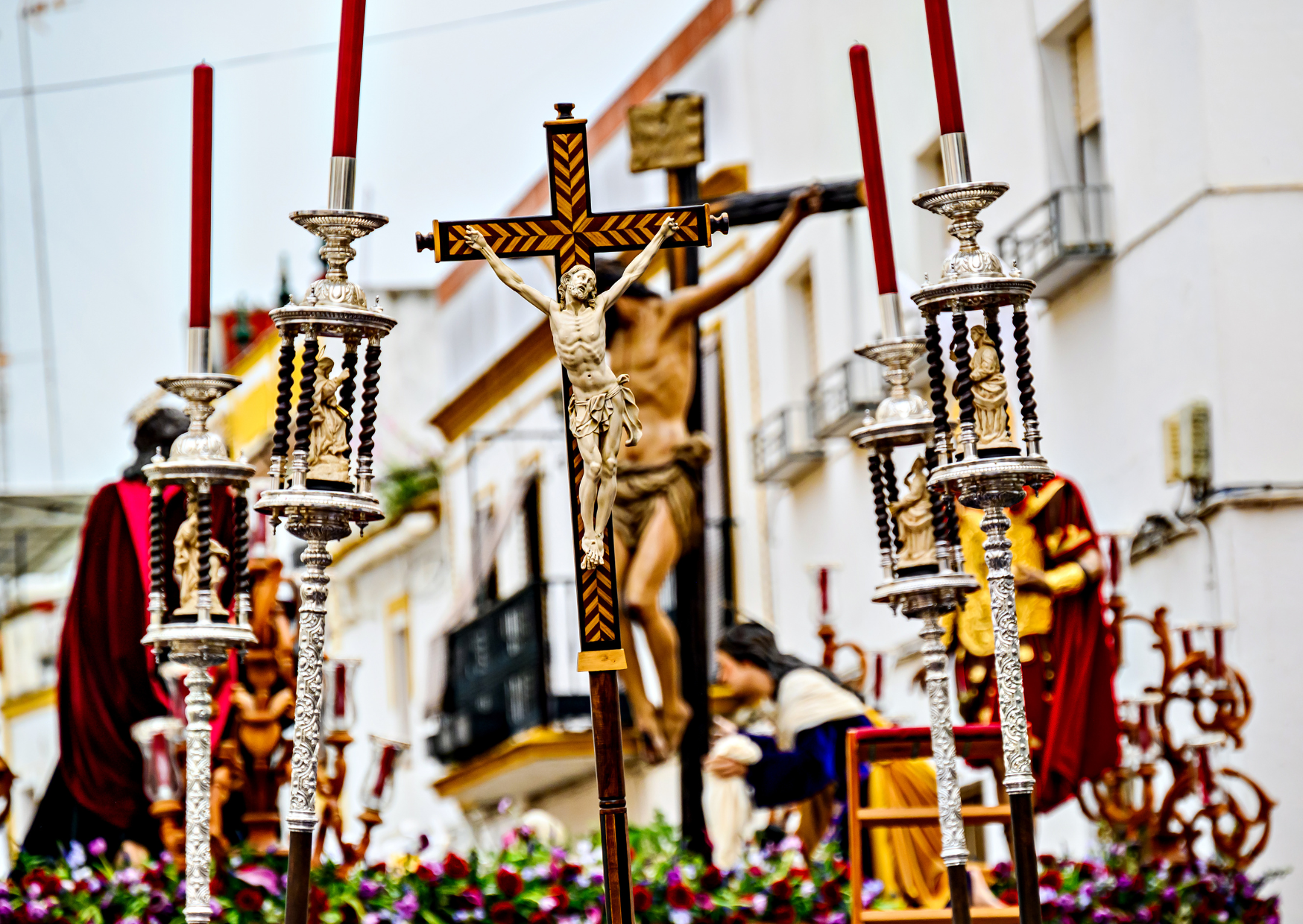
Then the float appears, and because the street is narrow, the object feels larger than it would in any rational setting. Candles become wall-like. Flowers stop reading as decoration and start reading as mass. The Virgin under a palio does not drift. She advances like something impossible being negotiated forward by will.
This is also why photographs tend to lie about Seville processions.
They flatten the labor.
On the street, the pasos do not look “beautiful” first.
They look heavy enough to disturb the air.
Beauty comes a second later.
That sequence is important. It keeps the whole thing out of the realm of postcard Europe. Nothing about the best moments feels lightweight. Even the prettiest scenes carry strain, coordination, balance, and a sort of municipal surrender to ritual.
Which is exactly why they do not feel like tourism content.
They feel like impact.
La Madrugá Is Where Seville Stops Pretending To Be A Normal City
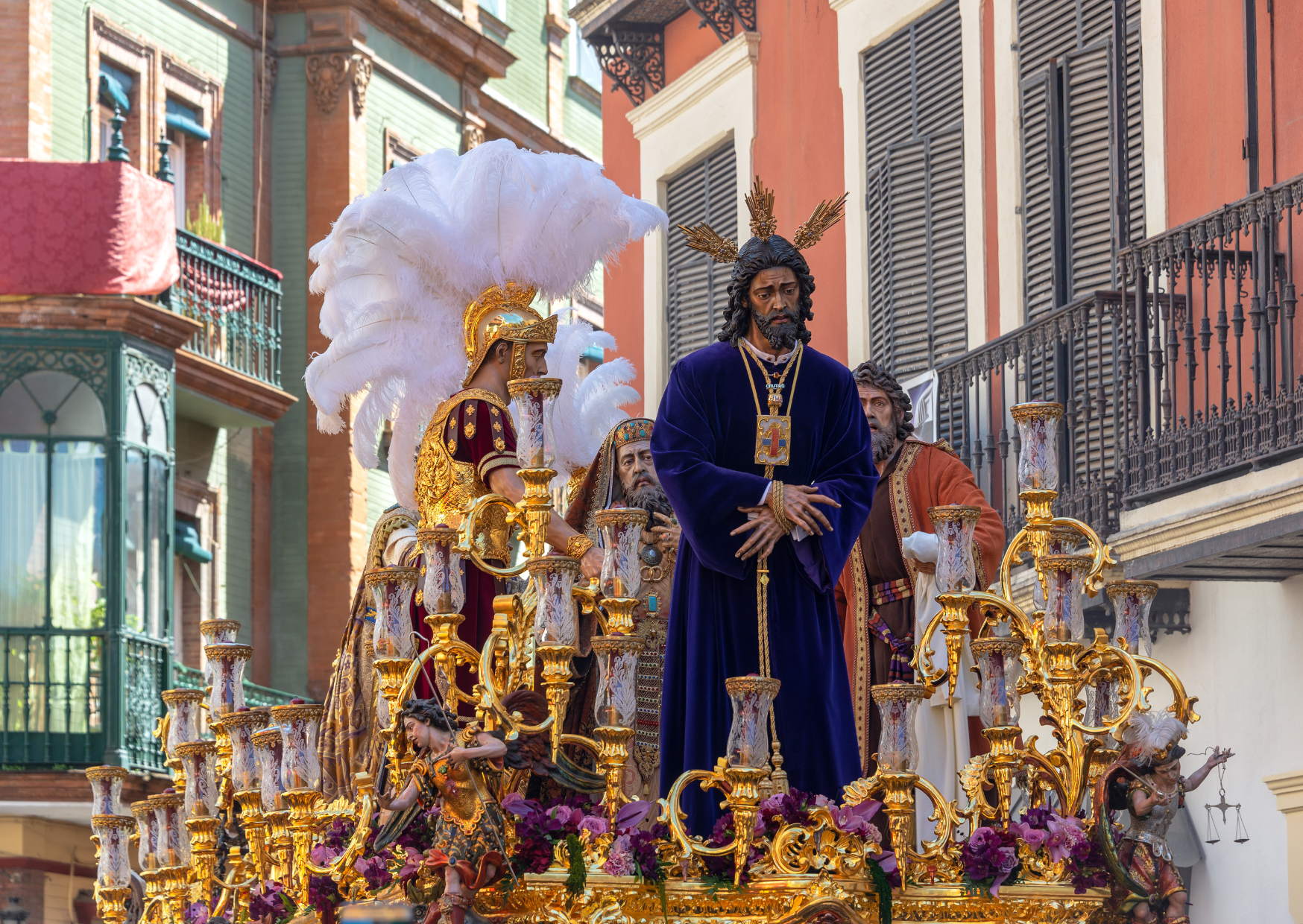
If one part of the week explains the city’s reputation, it is La Madrugá.
This is the overnight hinge between Thursday and Good Friday, the stretch that reorganizes sleep, movement, patience, and emotional stamina. In the official 2026 configuration, the Madrugá begins its passage through the official route at 1:00 a.m., with adjustments and route changes affecting major brotherhoods including El Silencio, Gran Poder, La Macarena, El Calvario, Esperanza de Triana, and Los Gitanos. That is the technical description. The lived version is harsher and better: the city decides not to go to bed.
This is where outsiders finally understand that Seville is not “celebrating” Easter in the loose modern sense.
It is enduring it, offering it, submitting to it, and in some corners almost surviving it.
Midnight changes the whole event. Daylight gives the processions grandeur. Night gives them voltage. The black sky, the candlelight, the waiting, the strange combination of exhaustion and precision, all of it pushes the week out of the realm of impressive tradition and into something much closer to collective intensity.
And no, intensity is not the same thing as pleasure.
That is the point.
A lot of Europe is very good at making itself enjoyable. Seville’s overnight processions are not primarily enjoyable. They are overwhelming, beautiful, tiring, devotional, theatrical, crowded, and occasionally hard to love in a simple way. That complexity is part of their force.
The first-time visitor keeps expecting a release valve.
There often is not one.
Instead, the city keeps tightening the experience. More people, less sleep, tighter streets, stronger reactions, more anticipation around particular images and routes, more friction, more payoff. By the time dawn starts thinning the sky, the viewer is no longer deciding whether the night was “worth it.”
The night has already won.
What Actually Overwhelms People Is Not Religion
This needs saying carefully.
The processions can absolutely move people on religious grounds. For many locals, that is the point. But the thing that overwhelms first-time observers is often not theology in the narrow sense.
It is total civic concentration.
Modern cities are not supposed to focus this hard on one thing anymore. They are supposed to fragment gracefully. There should be apps, options, subcultures, alternate scenes, and enough ambient distraction to keep any one shared public emotion from becoming too dominant.
Seville during Holy Week rejects that arrangement.
Not completely, obviously. People still eat, complain, check messages, and get tired feet. But the city’s center of gravity becomes unmistakably singular. Official city services now include GPS tracking for the processions and a public-density indicator inside the municipal app, which tells you a lot about the scale involved. This is not just heritage. It is active crowd management for a city under temporary devotional stress.
That concentration is what reads as intensity to outsiders.
Not simply the robes.
Not simply the incense.
Not simply the carved images, however extraordinary they are.
It is the realization that thousands of people are investing real time, emotional loyalty, and bodily endurance into something that is not asking to be modernized for your convenience. The city is not smoothing the event into a festival product. It is trying to run it, protect it, and contain it without draining its force.
That is a very different public atmosphere from the one most Americans are used to.
And it explains why Seville can feel almost severe even at its most visually extravagant.
The Visitor Mistake Is Trying To Consume It Efficiently
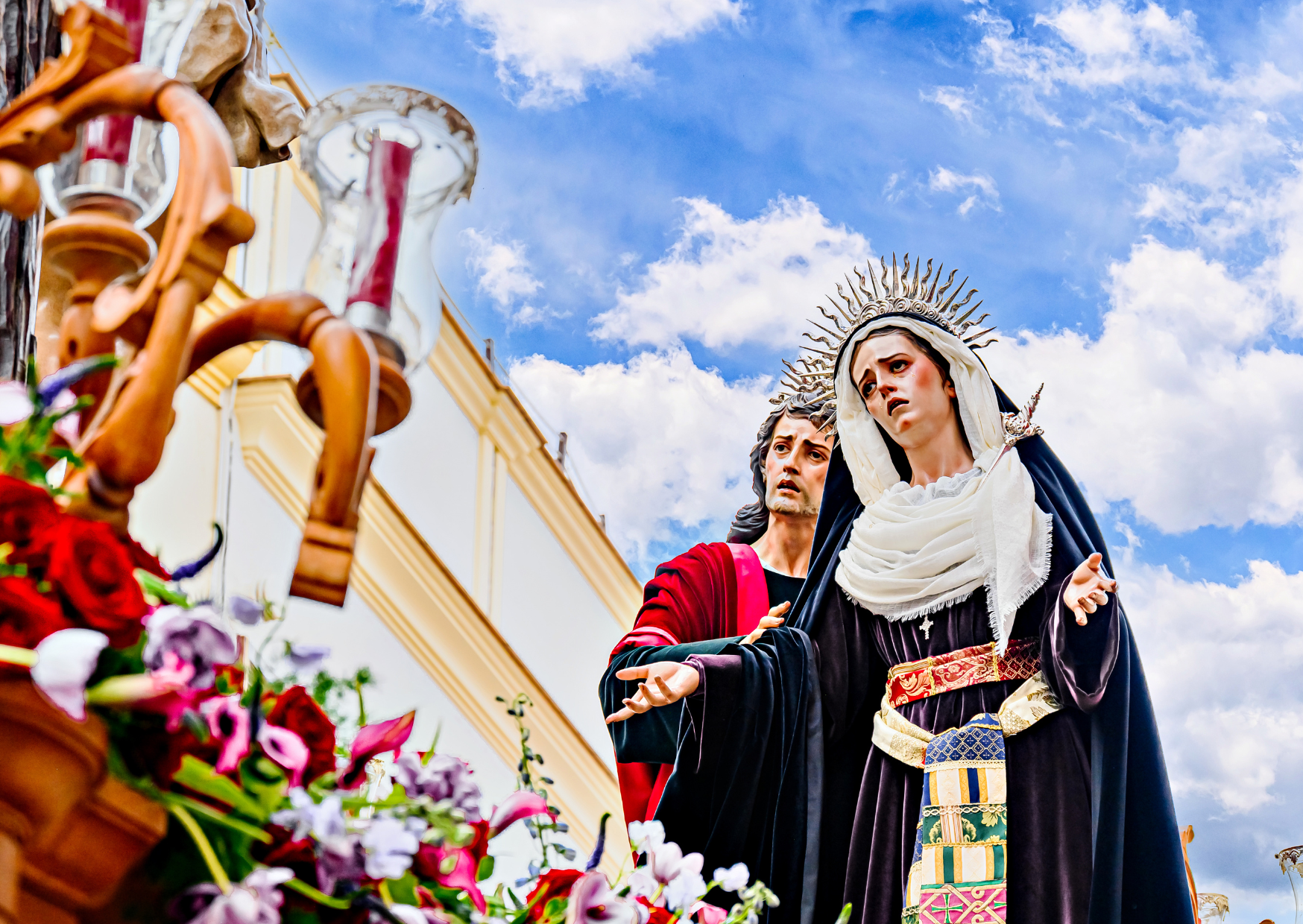
This is where sensible adults become fools.
They arrive with a plan.
Three processions today. Two strategic corners. Late lunch. A break. Then the famous overnight section, but only the good part. Maybe squeeze in another church. Maybe a rooftop drink if the timing holds.
The timing will not hold.
Seville Holy Week humiliates the efficient visitor with almost personal enthusiasm.
That is not because the city is badly run. Quite the opposite. The routes and schedules are obsessively managed, and 2026 has official itineraries, route changes, movement planning, safety planning, and live tracking support. The problem is that a tightly managed giant event is still a giant event, and giant events do not care that your calves were hoping for a more curated cultural experience.
The stronger approach is much less ambitious.
Pick one or two moments a day.
Choose neighborhoods, not only “top sights.”
Accept that waiting is part of the event rather than dead time surrounding it.
Use the city’s official tools if you need them, especially if you are trying not to get trapped inside crowd density you did not mean to sign up for.
And understand that the best memory may not be the “big famous” image.
It may be a side street.
A church exit.
A band approaching before the turn.
A hush that makes no sense if all you expected was spectacle.
That is the paradox of Seville processions. They are massive, but they are not best understood through quantity. They land through atmosphere, compression, and the feeling that something serious is moving through ordinary urban space and forcing everything else to reorganize around it.
That is not very Instagrammable as a sentence.
It is much truer than most travel writing on the subject.
What Makes It So European Is Also What Makes It So Unrepeatable
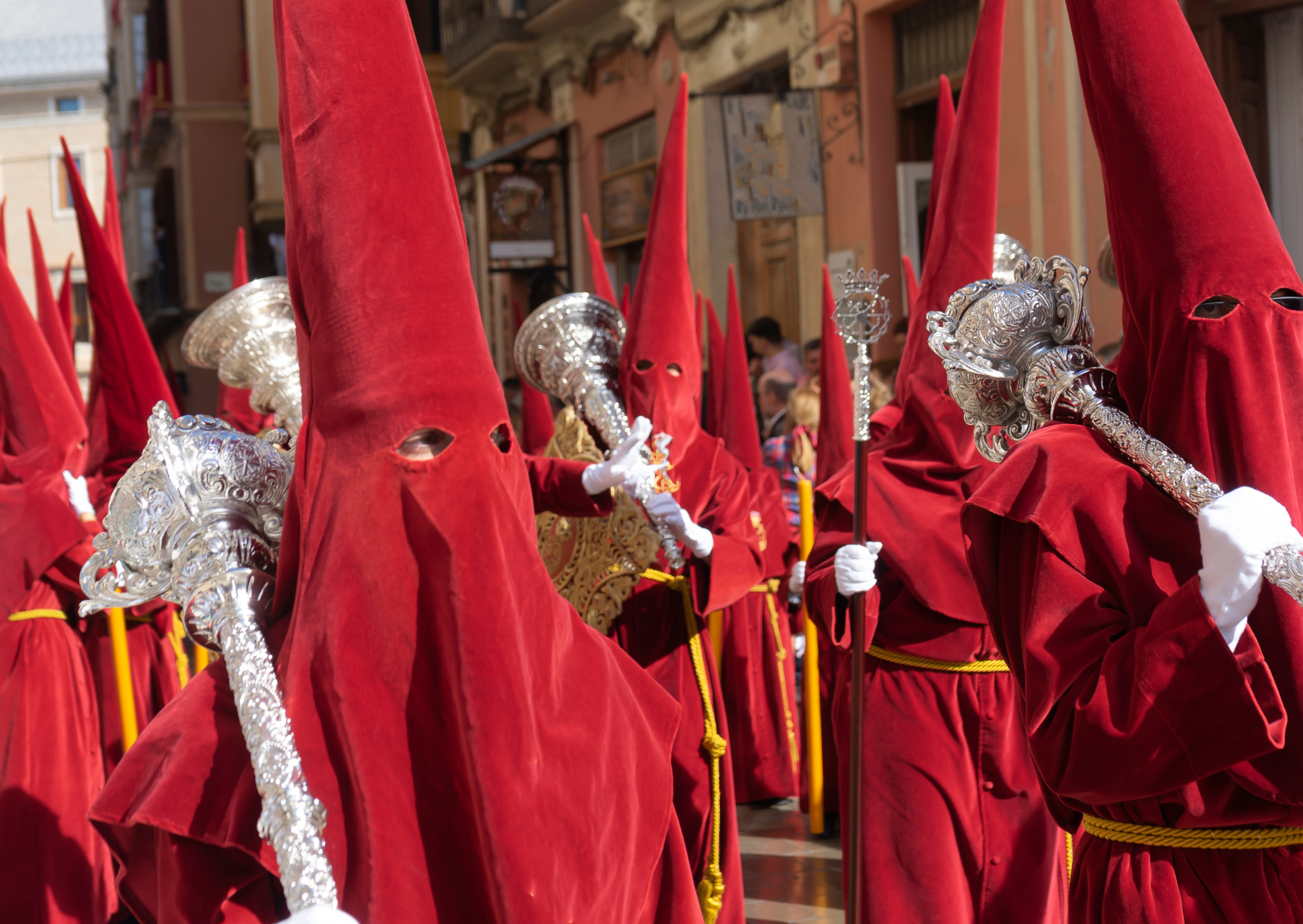
There are grand religious events all over Europe.
There are pilgrimage sites, processions, festivals, saints’ days, Holy Week traditions, and city rituals in more countries than one article could handle. Europe is not short on inherited public drama.
But Seville still feels distinct.
Partly because of the artistry.
Partly because of the urban setting.
Partly because of the brotherhood system and the depth of neighborhood attachment.
Partly because the city seems to accept, every year, that a whole week of daily life will be bent around this one inherited sequence rather than the other way around. The official schedules, official route changes, official mobility planning, and official city services exist precisely because the event is not marginal. It is central enough to require an administrative skeleton beneath all the velvet, silver, and candle wax.
And that may be the part that lingers.
Not only the visual memory, though that is considerable.
Not only the sound.
Not only the smell of incense and orange blossom getting tangled in the air.
The lingering thing is the recognition that Seville still knows how to let a public ritual dominate the city without apologizing for it or flattening it into friendly entertainment. The processions are not trying to be accessible in the modern therapeutic sense. They ask for patience, time, tolerance for discomfort, respect for local meaning, and a willingness to let the city’s priorities outrank your own.
That is why they feel so intense.
Intensity, in the end, is not just loudness or emotion.
It is collective seriousness made visible.
And Seville, during Easter week, has more of that than almost anywhere in Europe.

About the Author: Ruben, co-founder of Gamintraveler.com since 2014, is a seasoned traveler from Spain who has explored over 100 countries since 2009. Known for his extensive travel adventures across South America, Europe, the US, Australia, New Zealand, Asia, and Africa, Ruben combines his passion for adventurous yet sustainable living with his love for cycling, highlighted by his remarkable 5-month bicycle journey from Spain to Norway. He currently resides in Spain, where he continues sharing his travel experiences with his partner, Rachel, and their son, Han.