
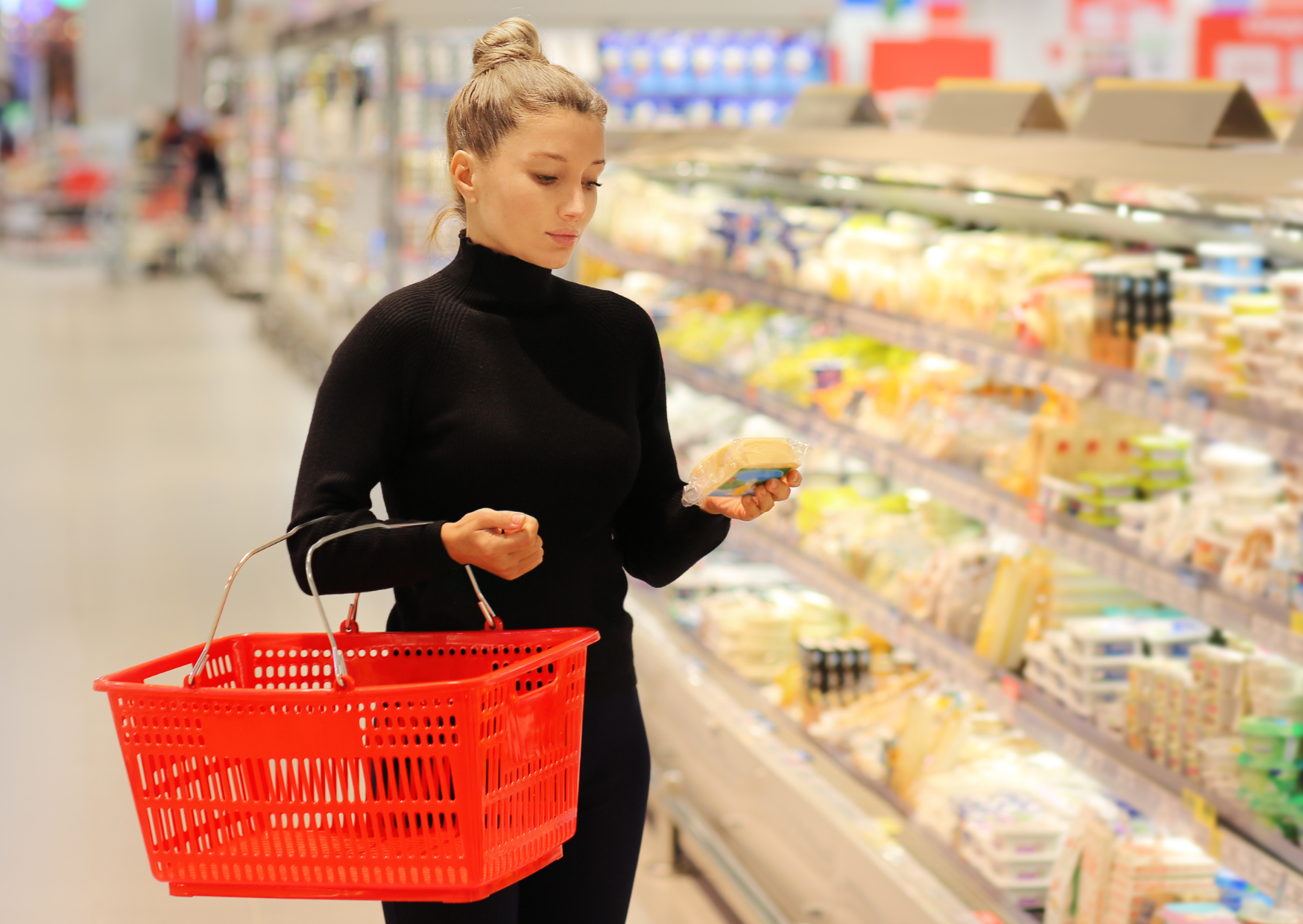
The expensive part of grocery shopping is not always the price tag.
A lot of the time, it is the fantasy.
The fantasy that this is the week you will cook four different dinners, eat berries every morning, finish the salad leaves before they liquefy, use the herbs you bought for one noble recipe, and somehow turn a heroic supermarket run into a calm domestic life.
That fantasy is expensive in America because the store is built for it. Big cart. Big aisles. Big weekly haul. Big fridge waiting at home like it is ready to absorb every good intention you throw at it.
In a lot of Europe, the more ordinary grocery rhythm is less dramatic and more effective. People buy less at once. They shop closer to when they will actually cook. They check what is already at home. They accept repetition. They stop treating grocery shopping like a once-a-week provisioning event for a minor naval expedition.
That one shift can cut a food bill hard.
Not because Europe has discovered a magical cheap cucumber.
Because smaller, tighter shops kill the two things that inflate food spending fastest: waste and wishful buying.
That is the habit.
And it works better than people want it to, mostly because it is so annoyingly unglamorous.
The Habit Is Not Markets Or Organic Tomatoes

People hear “European grocery habit” and immediately picture a grandmother at a market buying peaches, anchovies, and a loaf wrapped in paper.
Lovely image. Wrong lesson.
The useful habit is not “shop at a charming market.”
It is stop doing the giant weekly stock-up.
The more practical European pattern, especially in cities, is a rolling rhythm. Bread when needed. Produce in smaller amounts. Protein for the next couple of meals, not a speculative five-day future. Yogurt because it will get eaten. A few things today, a few things two days later.
That sounds trivial until it collides with the way many Americans shop.
The classic American supermarket run is built around distance, car space, convenience, and the fear of needing something midweek. So the cart fills with backup food, duplicate food, snack insurance, produce that seemed responsible in the moment, and one or two items bought for the person who definitely cooks on Thursday.
Thursday never quite arrives.
Or rather, Thursday arrives and people are tired.
The European pattern is less ambitious and more honest. It buys for appetite, not aspiration.
That does not mean nobody in Europe does big shops. Of course they do. Hypermarkets exist. Families bulk-buy. Suburban life is suburban life in more than one language.
But in a lot of ordinary city life, the useful habit is simple: buy what turns into the next stretch of meals, then buy again. Not in a precious way. In a practical way.
That change matters because the European Commission’s own food-waste guidance points directly at insufficient shopping and meal planning, along with over-purchase driven by promotions, as key reasons food gets wasted at home. If the household is where waste happens, then the household shopping rhythm is where a lot of the savings live.
So no, this is not about falling in love with open-air markets.
It is about learning to buy less food with more intention.
The Big Weekly Shop Makes You Pay For Food Twice
First you pay at the checkout.
Then you pay again when the spinach dies, the berries soften into grief, the deli turkey gets shoved behind a jar, and the expensive yogurt you bought for “quick breakfasts” turns into a science experiment with a clean lid.
That is the part people do not count.
A lot of grocery overspending is invisible because it shows up as waste, not as spending. The money is already gone, so the brain files it under “we should do better next week” instead of “that was a failed purchase.”
The U.S. has been normalizing this for years. USDA says food waste in the United States is estimated at 30 to 40 percent of the food supply, and that estimate has sat there for long enough that people almost stop hearing how absurd it is. Thirty to forty percent. That is not a rounding error. That is a system that keeps selling more food than households realistically convert into meals.
The weekly stock-up model helps create that problem.
A big shop encourages insurance buying. Extra lettuce, just in case. Another protein, just in case. A second loaf because maybe lunch happens at home. Snack options because the week may be stressful. A “healthy” item because guilt was nearby. One special ingredient because a recipe seemed like a new beginning.
That is how a cart turns into a personality assessment.
And the store encourages it. Bigger baskets feel economical. Promotions flatter the shopper. Multi-buy offers make restraint feel irrational. The freezer whispers that everything can be solved later.
Meanwhile, the European habit of smaller repeat shops is boring enough to save money. It never gives the cart enough time to become a mood board.
That is why frequency can reduce cost, which sounds backward until you realize what is being cut is not only food quantity. It is decision slippage.
Buy three tomatoes because three tomatoes are needed.
Buy six yogurts because six yogurts will get eaten.
Buy bread because bread is tonight and tomorrow, not because the cart needed a bakery section.
There is a quiet brutality to this kind of shopping, and that is exactly why it works.
The Real Savings Come From Sequence
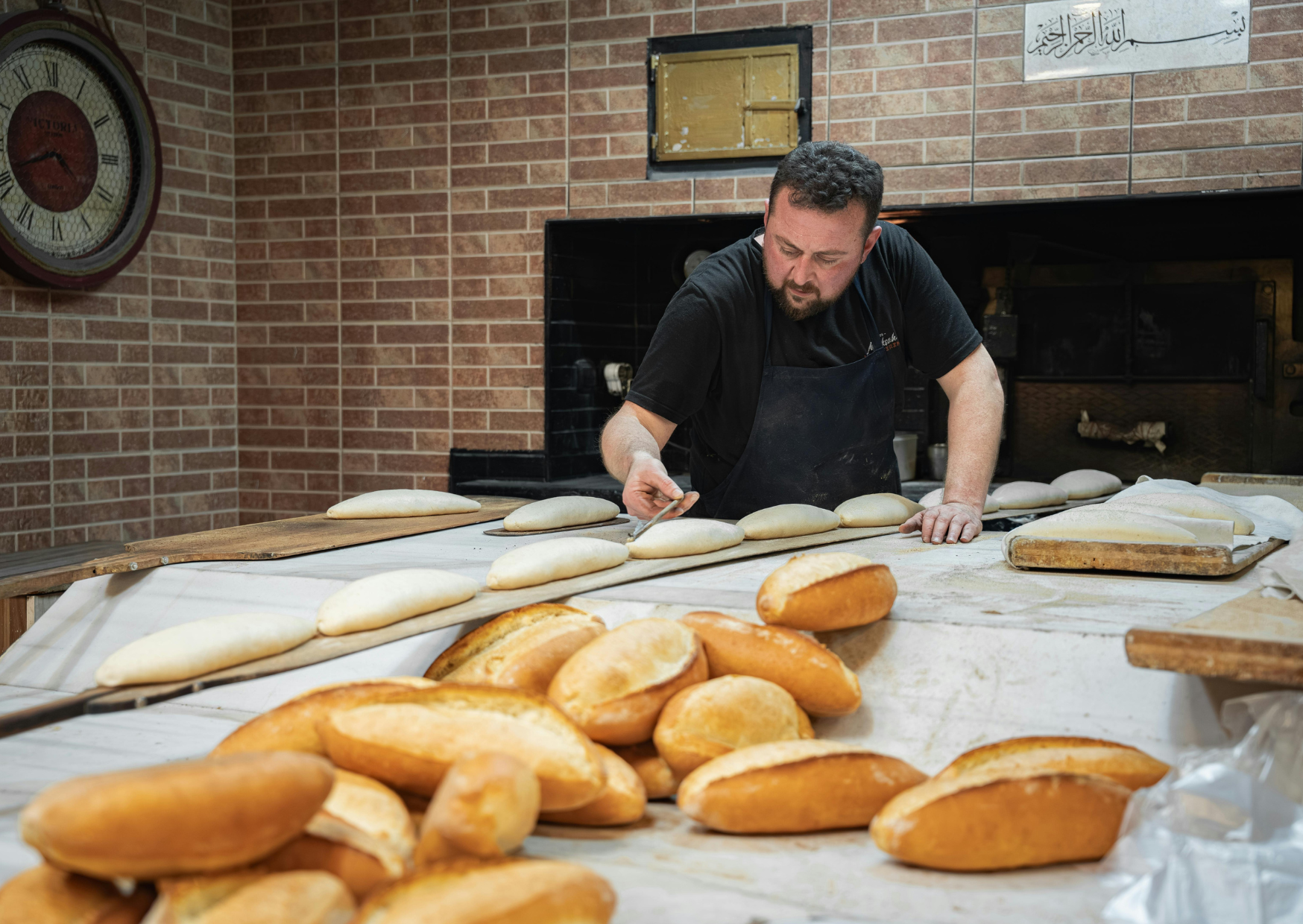
The smartest European grocery shopping is built around sequence.
Not variety. Not abundance. Sequence.
Tonight’s dinner becomes tomorrow’s lunch. The leftover roast chicken turns into soup, rice, toast, or a sandwich. Yogurt is breakfast and sauce. Tomatoes are salad and pasta and the thing that saves a lazy plate of eggs. Bread is not “carbs.” It is the landing strip for half the fridge.
That mindset makes a smaller basket feel bigger.
Here is the part Americans often get wrong. They think the European advantage is price alone. Lower produce prices. Better bread. More local food. Sometimes yes. But those are not the deepest savings.
The deepest savings come from overlap.
If ten items each have only one job, the basket is expensive no matter what they cost.
If eight items keep recombining into actual meals, the basket stretches.
This is why European home cooking can look repetitive from the outside. Soup again. Eggs again. Tomatoes again. Yogurt again. Pasta again. Some version of bread and something again.
Good.
Repetition is not failure. It is budget competence.
The American cart often overpays for variety and underinvests in overlap. It buys a different breakfast mood, a different lunch mood, a different snack identity, a different dinner ambition, and then seems surprised when half of that food ages out before anyone gets around to the life it was purchased for.
The smaller European method does the opposite. It repeats on purpose.
Not forever.
Just enough to stop the bin from eating the budget.
Actually, “repeat” is not even the full story. The better word is recycle, not in the sad leftover sense, but in the kitchen sense. Ingredients keep being invited back in different forms.
That is where the 40 percent savings usually hide. Not in one heroic cheap haul. In the repeated refusal to buy food that has no second act.
What The Math Looks Like When You Stop Shopping For A Fantasy Week

Here is a realistic example using current Spanish supermarket pricing from Carrefour.
A tight, useful basket can still look like this:
- chicken breast, 500 g, €4.72
- 12 eggs, €3.19
- Greek yogurt, 1 kg, €2.29
- cooked chickpeas, 400 g, €0.85
- tomatoes, 1 kg, about €2.39 to €2.59
- rustic bread, €0.69
- extra virgin olive oil, 500 ml, €4.25
- pasta, 500 g, €1.45
That lands at roughly €19.83 to €20.03 before adding a stray onion, fruit, or coffee.
And no, that is not a full glorious weekly shop for a large household.
It is something more useful. It is a basket with meal geometry.
Eggs and tomato on bread.
Pasta with tomatoes and olive oil.
Chicken one night, then again cold or chopped into lunch.
Chickpeas with tomato and oil, maybe with yogurt on the side.
Yogurt for breakfast, or as a sauce, or as the thing that saves dinner when dinner is thin.
Now compare that logic to the kind of larger weekly shop many people fall into. Greens, berries, deli meat, crackers, hummus, salad mix, two proteins, a loaf, wraps, flavored yogurt, snack bars, some freezer item, a sauce bought for one recipe, maybe avocados, maybe a drink, maybe something “healthy” and expensive because the week needed a redemption arc.
That cart can hit €85 to €100 or more for a couple without being remotely luxurious.
The smaller, repeat-shop version of the same week often lands closer to €55 to €65 because fewer items expire, fewer backup foods are bought, and fewer purchases are made for imaginary future energy.
That is where the 40 percent cut becomes plausible.
Not guaranteed. Not universal. But entirely believable.
Because the savings are not coming from becoming a coupon genius.
They are coming from refusing to let the cart drift.
Europe Helps This Habit Because The Retail Geography Is Better
This is one of the few places where everyday European urban design genuinely helps.
If the bakery is downstairs, the produce shop is on the next block, and the supermarket is ten minutes away on foot, buying smaller amounts is easy. If the city is dense enough that a midweek top-up is ordinary, the household does not need to build every grocery decision around scarcity.
That changes behavior.
Smaller fridges help too.
People complain about European fridges until they realize the fridge is quietly disciplining the household. There is less room for backup produce, backup yogurt, backup sauces, backup beverages, backup everything. Which sounds annoying until the monthly total drops and the trash gets lighter.
Again, this is not a saintly European trait. It is infrastructure shaping behavior.
American grocery life often assumes one big drive, one big load, one big cold-storage solution. European city life often allows more frequent, smaller corrections.
That does not mean Europe is automatically cheap. Anyone can blow €40 on cheese, cherries, and pretty nonsense in under nine minutes.
It means the environment makes the cheaper habit easier to maintain.
And the habit compounds. Once a household gets used to buying three things because three things are needed, it becomes almost painful to go back to the inflated weekly haul. The cart starts looking theatrical.
Which, frankly, it often was.
The Waste Problem Is Bigger Than The Price Problem
This is where the grocery conversation gets more honest.
In the EU, Eurostat says around 130 to 132 kg of food waste per person has been generated in recent years, and households account for 53 to 54 percent of that waste, roughly 69 to 72 kg per inhabitant. That is a lot. Europe does not get to smugly pretend it solved household waste.
But that is exactly why the habit matters.
If household waste is the problem, then the fix is not only “find cheaper groceries.” It is buy fewer groceries that die unused.
The European Commission’s guidance is painfully direct on this. Poor planning, overbuying, confusing date labels, and weak food-management habits all feed the waste problem. In plain English, people buy too much, store it badly, forget what they own, and then feel vaguely guilty while throwing money into the bin.
That is why this habit cuts the bill so effectively.
Not because it transforms someone into a peasant minimalist with excellent tomatoes.
Because it reduces the number of times food enters the home without a clear path to being eaten.
That is the real budget leak.
The fancy jar bought for one pasta idea.
The herbs bought for an imagined Tuesday.
The “healthy” produce purchased as a personality statement.
The large tub because it was better value, which is true right up until half of it goes bad.
It is not romantic, but it is precise. Buy less. Use more. Rebuy what is actually moving. Stop rewarding groceries for sounding useful and start rewarding them for becoming dinner.
There is a difference.
A very expensive difference.
The First 7 Days Of Shopping Like A European Adult
Do not try to “become European.” That is embarrassing.
Just run the method for one week.
On day one, check the fridge before leaving the house. Not a vague glance. A real inventory. What protein exists. What produce is still alive. What dairy needs using. What carb is already there.
Then buy only enough fresh food for two dinners, two lunches, and a breakfast base.
That is it.
Think in overlaps, not categories. One protein. One legume. One breakfast anchor. One bread or starch. Two vegetables that can appear more than once. One fat that makes food satisfying.
On day three, do a small top-up. Bread, fruit, yogurt, eggs, tomatoes, whatever the house is actually burning through.
Do not “take the opportunity” to stock up. That is how the old habit sneaks back in wearing a practical hat.
On day five, buy dinner and one thing for tomorrow. No more.
At the end of the week, look at three numbers:
- what got thrown out
- what got repurchased
- what sat untouched all week
That list tells the truth faster than any budgeting app.
Most households discover the same thing. The staples move. The fantasy items stall. The produce bought with no meal attached is fragile and waste-prone. The expensive “just in case” food rarely earns its keep.
This is also the week to accept one unsexy fact: a tighter basket usually means more repetition. Fine. That is not punishment. That is the mechanism.
People overspend on groceries because they keep trying to shop like every meal needs a fresh plot twist.
It does not.
Your Grocery Bill Is Not A Tomato Problem
People love blaming grocery pain on inflation alone because inflation is real and external and nobody has to change.
And yes, food prices matter. Olive oil prices matter. Eggs matter. Meat matters. A basket in 2026 is not a basket from a few years ago.
But a shocking amount of household grocery pain is not a tomato problem.
It is a shopping rhythm problem.
Too much food bought too early.
Too much variety bought without sequence.
Too many “good deals” bought without a plan.
Too much trust in the giant weekly haul as a sign of competence.
The European habit that cuts the bill is not elegant. It does not require a better personality, a better market, or a better life.
It requires a little less ego in the aisle.
Buy what the next few meals need.
Buy what the kitchen can actually absorb.
Buy what has a second use.
Buy again before buying bigger.
That is the whole trick.
It feels smaller while you are doing it.
Then the month ends, and the bill looks smaller too.

About the Author: Ruben, co-founder of Gamintraveler.com since 2014, is a seasoned traveler from Spain who has explored over 100 countries since 2009. Known for his extensive travel adventures across South America, Europe, the US, Australia, New Zealand, Asia, and Africa, Ruben combines his passion for adventurous yet sustainable living with his love for cycling, highlighted by his remarkable 5-month bicycle journey from Spain to Norway. He currently resides in Spain, where he continues sharing his travel experiences with his partner, Rachel, and their son, Han.