

Most Americans living in Europe have a will.
Or at least they think they have a will.
What they usually don’t have is the document that matters while they’re still alive, when things go sideways and you need someone to do basic life administration without a court fight.
That document is a durable power of attorney.
Not the vague “my spouse can handle it” assumption. Not a scribbled letter. Not “my kid knows the passwords.”
A real durable power of attorney that banks and institutions will actually accept, in the places where your money actually lives.
If you’re 55–75 and living abroad, this is the document that prevents the most common expat financial nightmare:
You’re alive, but you can’t act.
You’re in a hospital. You’re sedated. You’ve had a stroke. You’re in rehab. You’re dealing with chemo fatigue. You’re mentally fine but physically wiped. Or you’re just stuck in the wrong country when a U.S. account needs urgent action.
And suddenly nobody can:
- pay your bills from the right account
- talk to your brokerage
- renew your insurance
- sign a lease renewal
- sell a property
- handle a tax issue
- move money
- manage a claim
- deal with a U.S. bank that will not accept “but I’m the spouse” as authority
A durable power of attorney is boring. That’s why people skip it. It’s also the document that stops a bad month from turning into a legal emergency.
Why A Will Doesn’t Solve This Problem

A will is a death document.
A power of attorney is a life document.
That distinction sounds obvious and still catches people.
If you are alive but incapacitated, a will does nothing. Your executor is not in charge yet. Your family cannot just “step in.” Institutions want legal authority.
Also, a power of attorney generally stops working at death, which means it is not your estate plan tool. It is your keep-life-running tool.
So the retirement reality is:
- Will: who gets what after you die
- Durable power of attorney: who can act for you while you’re alive but unable
- Healthcare directive: who can make medical decisions and what you want
Most Americans abroad obsess over the will because death feels like the big scary event.
The real disaster is often the months before death, or the years of reduced capacity, where the wrong documents create financial chaos.
Why This Gets Worse When You Live In Europe
In the U.S., a family can sometimes stumble through incapacity with fewer cross-border problems.
In Europe, the cross-border friction multiplies.
You usually have:
- U.S. accounts governed by U.S. institution rules
- European housing, utilities, taxes, and local bureaucracy
- two languages
- two sets of notaries and authentication norms
- and at least one institution that will say, politely, no
Many financial institutions have their own preferred power-of-attorney forms or preferred requirements, which is why relying on a generic document can fail at the exact moment you need it.
So the “one document” you need is not just “a power of attorney.”
It is a power of attorney designed to be accepted where it must be used.
The Mistake Everyone Makes The One POA That Supposedly Works Everywhere

Americans love a single-document fantasy.
One POA. One notarization. One folder. Done.
The real world is messier:
- A U.S. bank may be skeptical of a foreign notarization or a document it doesn’t recognize.
- A European notary system may require local formality.
- Some countries expect an apostille or legalization step for foreign documents.
So the practical expat truth is:
You often need two powers of attorney, even if you think you only need one.
- A U.S. durable power of attorney for U.S. assets and U.S. institutions
- A local power of attorney for local tasks in your European country of residence
This isn’t overkill. It’s friction prevention.
What A Durable Power Of Attorney Actually Lets Someone Do
A durable power of attorney can be broad or limited. The right shape depends on your comfort level.
For retirees abroad, the typical “keep life running” powers include:
- banking and bill pay
- dealing with brokerage accounts
- tax filings and IRS interaction
- property management, buying, selling, leasing
- insurance claims and renewals
- dealing with government benefits administration
- signing contracts related to your day-to-day life
The point is not to give someone your life. The point is to allow someone to do essential administration without needing guardianship.
Because guardianship is where people lose time, money, and dignity.
Why Banks Are The Hardest Part Of This
This is where the horror stories live.
People assume a POA means a bank will cooperate. That’s not guaranteed.
Institutions often apply internal policies. They may:
- require their own POA form
- require specific wording
- require the POA to be recent
- reject a document if they suspect fraud risk
- require in-person verification
- require notarization and additional authentication steps
Even mainstream wealth and estate planning guidance warns that financial institutions can have their own preferred POA forms and recommends checking with the institution.
This is why “I printed a POA template” is not a plan.
A retiree living in Europe should assume at least one institution will be difficult and plan around that instead of being shocked later.
Apostille And Authentication The Step That Makes Documents Real Abroad
If you sign a power of attorney in one country and need it recognized in another, it often must be authenticated.
In many cases, that means an apostille under the Hague Apostille Convention framework, plus translation if required.
This is where Americans make two mistakes:
- They assume notarization equals acceptance.
- They forget that Europe cares about formal validity in ways U.S. institutions often do not.
The apostille step is not glamorous. It is often the difference between your document being treated as valid or being treated as a nice piece of paper.
Also, a warning that saves real pain: if you need a POA for use in a specific European country, you often want it drafted in a format that fits that country’s expectations, not just translated after the fact.
The Divorce And Remarriage Problem Nobody Wants To Update
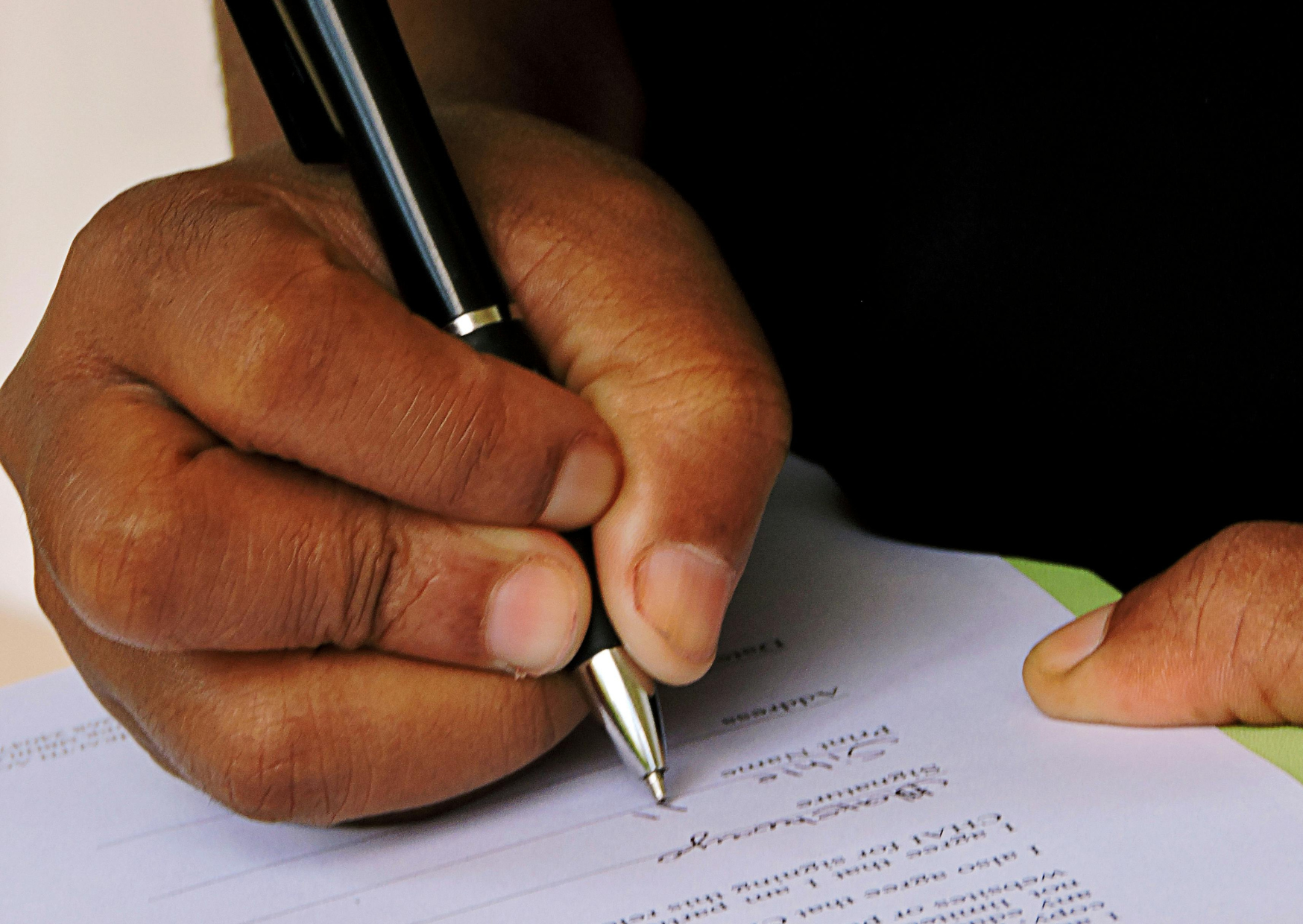
If you are a retiree who divorced, remarried, or has adult children from a previous marriage, your POA is not a neutral form.
It is a power choice.
The most common disaster pattern is:
- ex-spouse still named as agent on an old POA
- adult child expected to help but has no authority
- new spouse assumed to have authority but doesn’t
- family conflict triggers institutions to freeze and demand court authority
This is why POA is not a “one and done” document. It must be reviewed when life changes.
The “Durable” Part Matters
Durable is the difference between helpful and useless.
A durable power of attorney is designed to remain effective if you become incapacitated. If it’s not durable, or it is drafted in a way that fails under incapacity, you can end up right back in court.
This is why expat retirees should not rely on casual forms or vague documents. You want a document built to survive your worst month.
The Local Reality In Europe You Might Need A Local POA Anyway
Even if you have a perfect U.S. POA, you can still get stuck in Europe.
Because European life tasks often require:
- local notarial forms
- local registry interactions
- local language documentation
- and local expectations of authority
Spain is a good example of how formal power-of-attorney practice can be, with Spanish notarial POAs and the expectation of proper legalization when executed abroad.
This isn’t Spain-specific in spirit. Many European countries want “authority” proven in their own administrative language.
So the expat approach is not “choose U.S. or local.”
It is “cover both.”
What To Put In A POA If You Live Abroad
If you want this to be useful, it has to match your real risk.
Here’s what tends to matter most for Americans in Europe:
U.S. accounts and U.S. tax power
Include explicit authority to:
- access and manage bank and brokerage accounts
- deal with the IRS and sign tax forms
- handle retirement accounts and required distributions if applicable
- manage property transactions if you own U.S. real estate
Digital and administrative power
This is the modern trap. A lot of your life is locked behind:
- two-factor authentication
- phone numbers
- app logins
Your POA may not automatically solve access to digital accounts, but your overall plan must acknowledge this reality. Otherwise your agent can have legal authority and still be blocked by a login wall.
Limits that still keep you comfortable
You can limit powers by:
- requiring two people for big asset sales
- limiting gifting authority
- limiting changes to beneficiary designations
- allowing only specific accounts or tasks
A POA is not all-or-nothing. If you don’t trust anyone enough to grant it, that is itself a problem you should face honestly. Because the alternative is a court deciding who controls your life.
The Scenario That Breaks People Cancer And A Cross-Border Life

Here’s the scenario that turns this from “planning” into “you’ll thank yourself.”
You get cancer in Europe. You are alive, but wiped out.
You need someone to:
- handle U.S. insurance claims or Medicare decisions if relevant
- pay U.S. bills
- manage investments without panic selling
- deal with tax deadlines
- renew leases
- coordinate family travel and caregiving logistics
- talk to financial institutions that will not talk to your spouse without authority
This scenario doesn’t require death. It requires fatigue.
And fatigue is normal in your 60s and 70s when something serious happens.
A durable power of attorney is how you keep your life from becoming a legal mess while you are trying to survive.
The 7-Day Authority File
This is an actionable estate-planning topic, so here’s the fastest way to fix the most dangerous gaps without turning your life into a paperwork hobby.
Day 1 Choose your agent and backup agent
Pick one primary and one backup. If your primary is your spouse, the backup should usually be someone who can function if your spouse is also stressed or ill.
Day 2 List the institutions that matter
Make a list of:
- U.S. banks
- brokerages
- retirement accounts
- insurers
- any property titles
- your accountant or tax preparer
This list becomes your “who must accept this document” map.
Day 3 Confirm each institution’s POA friction
Some institutions have their own form or process. Many planners recommend verifying with the financial institution because they often have preferred POA forms.
Day 4 Draft a U.S. durable POA that matches your map
Do not draft it in isolation. Draft it knowing where it must be used.
Day 5 Draft a local POA for your European country if needed
Use a local professional who understands local notarial practice.
Day 6 Handle apostille and translation if cross-border use is expected
Cross-border acceptance often depends on proper authentication steps like apostille and translation.
Day 7 Build the “authority pack”
One folder, physical and digital:
- POA documents
- copies of passports and IDs
- account list
- emergency contacts
- where the will is stored
- instructions for what to do in the first 48 hours of incapacity
This is the file your family uses when they are scared and tired. Make it easy.
What Actually Matters Here
The document American retirees need in Europe that nobody talks about is the durable power of attorney, because it solves the most common expat disaster: being alive but unable to act across borders.
A will is still important. But a will doesn’t help when you’re in a hospital bed and a U.S. bank will not talk to your spouse.
If you live abroad, you want authority that works in both places:
- a U.S. durable POA for U.S. assets
- and often a local POA for local life
It’s not glamorous. It’s what makes the rest of your “beautiful life abroad” actually survivable when the hard year arrives.

About the Author: Ruben, co-founder of Gamintraveler.com since 2014, is a seasoned traveler from Spain who has explored over 100 countries since 2009. Known for his extensive travel adventures across South America, Europe, the US, Australia, New Zealand, Asia, and Africa, Ruben combines his passion for adventurous yet sustainable living with his love for cycling, highlighted by his remarkable 5-month bicycle journey from Spain to Norway. He currently resides in Spain, where he continues sharing his travel experiences with his partner, Rachel, and their son, Han.