

A lot of Americans hit 50 and start living like they’re fragile.
Not medically fragile. Socially fragile. They drive everywhere, sit a lot, outsource movement, and treat walking as “exercise” instead of transportation. Then they look at a European couple in their 70s dragging a little grocery trolley up three flights of stairs and think those people must be genetically superior.
They’re not. They’re just living inside a different default.
Europe doesn’t have one magical secret. It has a set of boring conditions that keep older adults practicing the skills that Americans stop practicing in midlife. And the skills compound.
So when people ask what European 70-year-olds can do that American 50-year-olds can’t, the answer is not “live forever.” It’s more specific and more annoying:
They can still do basic physical tasks without turning them into a crisis.
They Can Walk As Transportation Without Calling It A Workout
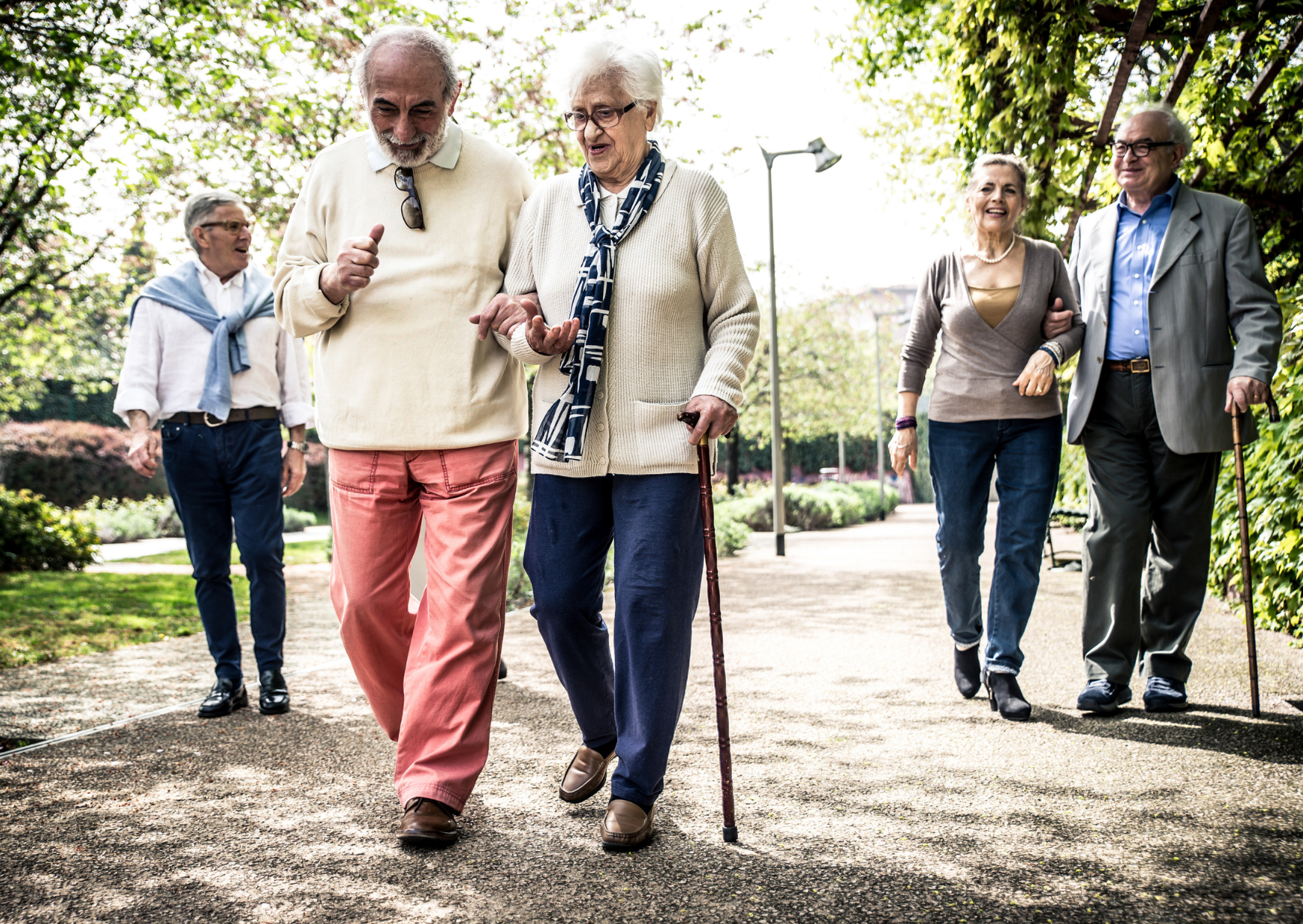
The most obvious difference is the one Americans refuse to take seriously because it sounds too simple.
A lot of European 70-year-olds walk every day because they have to. Not in a heroic way. In a boring way. They walk to the bakery, the pharmacy, the market, the café, the bus stop. Their body stays practiced at walking because the environment keeps asking for it.
In the U.S., a lot of 50-year-olds can physically walk, but they don’t. Their daily life is built around sitting and driving. Walking becomes a fitness project, which makes it optional. Optional becomes rare. Rare becomes painful. Pain becomes avoidance. Avoidance becomes “I’m getting old.”
You can see how fast this spiral works.
Europeans don’t usually have to motivate themselves to move. The city does it. The town does it. The errand does it.
That’s the difference between daily low-intensity movement and occasional high-intensity guilt workouts. One builds capacity. The other builds injuries and resentment.
And yes, plenty of Europeans are sedentary too. But the built environment and routine in many European places still makes it easier for older adults to keep movement woven into life.
They Can Get Up And Down Stairs Without Treating It Like A Medical Event
Stairs are a quiet divider between people who feel young at 70 and people who feel old at 50.
In many European cities, stairs are not optional. Older buildings, metro stations, hills, walk-up apartments. Even when elevators exist, stairs still show up as part of normal movement.
So older Europeans keep training the skill without calling it training.
In the U.S., a lot of daily life is designed to remove stairs:
- elevators everywhere
- escalators everywhere
- single-story suburban homes
- parking lots that deliver you to the door
The result is predictable. Americans lose leg strength and balance earlier than they need to, not because their bodies are doomed, but because their environment stopped demanding it.
When you stop using stairs, you stop having:
- glute strength
- quad endurance
- ankle mobility
- balance under fatigue
Then one day a European metro staircase feels like an altitude test, and you think something is wrong with you.
What’s wrong is practice disappeared.
European 70-year-olds who can still handle stairs usually aren’t “fitness people.” They’re just people whose life kept asking for leg strength.
They Can Carry Groceries Home Without Needing A Car And A Recovery Day
Watch older Europeans grocery shop and you’ll notice a pattern Americans find strange:
They buy less, more often.
That’s not because they’re poor. It’s because it’s practical when the store is near your house and you’re walking.
They carry a few bags. Or use a little trolley. Or a backpack. They do it two or three times a week. Their grip stays strong. Their posture stays functional. Their core and hips keep doing real work.
A lot of Americans shop once a week in a giant car trip, fill a cart like they’re prepping for a storm, and then unload into a garage. It’s efficient, but it removes daily strength practice.
By 50, many Americans have lost:
- grip endurance
- shoulder tolerance
- the ability to carry uneven loads without back pain
- confidence moving with weight
Then they see a 70-year-old carrying two bags up a hill and decide Europe must be magic.
It’s not magic. It’s load exposure. Light load, often.
You don’t need CrossFit. You need a life where carrying a bag happens frequently enough that it stays normal.
They Can Sit In Public For Hours Without Spending Money To Cope
This one isn’t physical. It’s nervous system.
A lot of European older adults can sit in a café or a plaza and do almost nothing. They watch the street. They talk. They sit quietly. Time passes. Nobody panics.
In the U.S., especially for people shaped by a grind culture, stillness can feel like failure. So Americans fill stillness with:
- shopping
- driving
- snacking
- screens
- errands that don’t need to exist
That matters because a calmer nervous system supports better aging. Not in a mystical way. In a blunt way:
Less chronic stress often means better sleep, lower inflammation burden, fewer impulse decisions, and better consistency with movement and meals.
Europe isn’t stress-free. But many places have a stronger culture of public stillness and slow social time that doesn’t require constant consumption.
That’s a survival advantage for older adults.
It also affects loneliness. Americans often become isolated at 50 because social life becomes scheduled, expensive, and car-based. Europeans often maintain light social contact through routine: the same café, the same route, the same greetings. That routine doesn’t require big planning energy.
Older adults stay mentally steadier when they have ambient social contact without needing constant events.
They Can Maintain Mobility Because Their Day Keeps Asking For It
Mobility isn’t just stretching. It’s the ability to move through normal life without fear.
European daily life often demands:
- stepping off curbs
- navigating cobblestones
- walking on uneven surfaces
- balancing on transit
- turning, stopping, and starting in crowds
- carrying things while moving
That keeps joints and balance systems practiced.
In the U.S., Americans often live in a flat, car-delivered environment. Then when they travel to Europe, the uneven surfaces become a shock. People blame age. It’s not age. It’s lack of exposure.
The most practical difference is that Europeans often keep functional movement skills alive longer:
- ankle mobility
- hip stability
- balance under distraction
- leg endurance
Americans can absolutely have those skills at 70 too. They just need an environment and routine that demands them. Most American environments don’t.
This is why a European 70-year-old can look “younger” than an American 50-year-old. They’re not younger. They’re more practiced.
They Often Have Lower Metabolic Drag Because The Food Pattern Is Less Constantly Engineered
This is the part where people want a simple villain story. Seed oils. sugar. chemicals. Pick your fight.
The real difference that shows up in many older adults is the pattern:
- fewer ultra-processed snacks as a daily default
- more structured meals
- more walking
- less constant sweet drinking
- fewer calories eaten in cars
- less eating while stressed and driving
That pattern affects body weight and metabolic health. And metabolic health affects mobility.
If you want to understand why an American 50-year-old can already have knee pain, fatigue, and poor sleep while a European 70-year-old is still moving around comfortably, you can’t ignore weight and conditioning. Extra weight is mechanical load on joints. Poor conditioning makes everything harder. Harder makes people move less. Less movement makes everything worse.
U.S. obesity prevalence remains high overall, and age groups in midlife have been reported among the highest in some CDC obesity mapping summaries. That doesn’t mean every American is struggling, but it means the baseline burden is heavier.
Europe isn’t immune to obesity or sedentary life. But many European environments still make it easier to avoid a fully sedentary pattern, especially in cities with daily walking built in.
So the “what can they do” answer often comes down to this: they can still move because moving stayed normal, and their body composition didn’t drift as far from functional.
The Big Lie Americans Believe About Aging
Americans are taught that aging is mostly a cliff:
- you hit a birthday
- your body falls apart
- you accept it
Europe is not immune to aging, but in many places older people are still expected to do life:
- carry their own groceries
- walk to the market
- take transit
- sit in public
- do stairs
- keep moving
Expectation shapes behavior. Behavior shapes capacity.
In the U.S., a lot of people start outsourcing movement early. Suburban design helps them do it. Then they interpret the loss of capacity as inevitable.
It isn’t inevitable. It’s trained.
And once you see that, the comparison stops being depressing and starts being useful.
The real takeaway isn’t “Europe is better.” It’s:
Aging is partly policy and design. It’s also daily habit.
Pitfalls Americans Miss When They Try To Copy “European Aging”

A lot of Americans try to copy this and fail because they copy the wrong things.
They copy:
- wine
- bread
- travel
They don’t copy:
- daily walking
- smaller grocery trips
- social routines
- a calmer pace of life
- less constant snacking
Other common traps:
They move to Europe and still live like Americans.
They rent in an expat bubble, take taxis, eat out constantly, and don’t build routine. Then they say Europe didn’t change anything. Of course it didn’t.
They underestimate how much the environment matters.
If you live in a car-dependent place, you can still build walking, but you have to work harder. In many European cities, the environment does a chunk of the work for you.
They treat movement as punishment.
Europeans often treat walking as normal life, not a moral test. If you treat it like punishment, you won’t do it.
They don’t plan for strength.
Walking is huge, but older Europeans also get incidental strength through stairs, carrying, and daily movement. Americans often need to add intentional strength work because their environment doesn’t provide it.
The point isn’t to worship Europe. The point is to copy the mechanisms that keep people functional.
What Actually Matters Here

If you’re an American in your 50s looking at European 70-year-olds and feeling alarmed, the most useful way to read the comparison is this:
Europe keeps more people practicing basic physical life skills for longer.
Walking. Stairs. Carrying. Balance. Public stillness. Routine social contact.
That’s what you’re seeing. Not magic healthcare. Not perfect diets. Not superior genetics.
And the uncomfortable part is that most of this is reversible earlier than Americans think. Not instantly. Not through a supplement. Through a shift in daily structure.
The European advantage is that the structure is often already built into the place.
The American disadvantage is that you usually have to build it yourself.

About the Author: Ruben, co-founder of Gamintraveler.com since 2014, is a seasoned traveler from Spain who has explored over 100 countries since 2009. Known for his extensive travel adventures across South America, Europe, the US, Australia, New Zealand, Asia, and Africa, Ruben combines his passion for adventurous yet sustainable living with his love for cycling, highlighted by his remarkable 5-month bicycle journey from Spain to Norway. He currently resides in Spain, where he continues sharing his travel experiences with his partner, Rachel, and their son, Han.