
And what it reveals about respect, rhythm, and the invisible social rules every traveler should know
Spain’s beaches are famous for their beauty, openness, and welcome. You can spend the entire day under the Mediterranean sun, take a dip at midnight, sip a cold drink at a chiringuito, or watch families gather in full force with umbrellas, towels, and tupperware. It’s easygoing. It’s vibrant. It looks, on the surface, like the rules don’t apply.
But they do.
Because while Spain’s beaches may appear casual and free-spirited, they operate under a very specific code of conduct one that many American visitors, used to more permissive beach cultures back home, accidentally violate.
The result? Confused stares, warnings from lifeguards, or in some cases fines. And yes, they’re real.
Here are the beach behaviors that can get American tourists fined in Spain and why these rules reflect not just law, but a deeper respect for space, order, and public life.
Want More Deep Dives into Everyday European Culture?
– Why Europeans Walk Everywhere (And Americans Should Too)
– How Europeans Actually Afford Living in Cities Without Six-Figure Salaries
– 9 ‘Luxury’ Items in America That Europeans Consider Basic Necessities
Quick Easy Tips
Cover Up When Leaving the Sand: Walking through town in just a bikini or trunks is a major no-no in many Spanish beach towns. Always wear a shirt, cover-up, or sundress when leaving the beach.
Don’t Smoke on the Sand: Several beaches in Spain have banned smoking entirely to protect the environment. Look for signs or ask a local if you’re unsure.
No Loud Music or Speakers: Using Bluetooth speakers can get you fined for noise pollution, especially on quieter beaches.
Watch Where You Picnic: Eating food in certain public beach areas is restricted to avoid litter and pests.
Public Urination is a Major Offense: It might seem obvious, but Spanish beach patrols enforce this rule strictly even during festivals or after beach parties.
Many American tourists view beaches as carefree zones a place to relax, loosen up, and behave more casually than they would in a city. But in Spain, beaches are still considered public shared spaces with civic rules, and this cultural disconnect often leads to fines, frustration, and bad reputations for visitors.
What seems like harmless fun like walking barefoot through town in swimwear or playing music can be interpreted by locals as disrespectful, dirty, or disruptive. Spanish locals take pride in their coastal areas, and their rules are less about policing fun and more about preserving local culture, safety, and cleanliness.
1. Eating or Drinking in the Wrong Area — Especially at the Wrong Time

In the U.S., beaches are for picnicking. You bring chips, drinks, sandwiches, coolers — maybe even a full grill setup. You snack wherever you sit.
In Spain, food is welcome — but there are boundaries, especially in high-traffic or urban beaches. Some beaches prohibit eating directly on the sand, especially in zones marked for swimming or high crowd flow. Others ban glass bottles entirely.
And on certain beaches in places like Barcelona, eating in large groups outside designated picnic zones can result in a warning — or a fine of up to €300.
To locals, these rules preserve cleanliness and avoid conflict.
To Americans, they often feel arbitrary — until someone shows up with a clipboard.
2. Smoking on the Beach — Where It’s Now Banned

As of 2025, more than 500 beaches in Spain have banned smoking, including many in Catalonia, the Balearic Islands, Galicia, and parts of Andalusia.
The aim is environmental — to reduce cigarette litter and improve air quality for families and swimmers.
But American tourists, used to lenient outdoor smoking laws (or simply unaware), often light up casually — and then receive unexpected fines, sometimes €30 to €90 depending on the region.
Some beaches have signs, others do not. But enforcement is increasing.
And pleading ignorance doesn’t always work.
3. Nudity or Toplessness in the Wrong Place

Spain is famously open when it comes to beach nudity. Topless sunbathing is common. Nude beaches exist. But that doesn’t mean it’s a free-for-all.
Nudity is only legal on specific beaches, or in clearly tolerated areas. In more traditional coastal towns — especially in southern or religiously conservative areas — stripping down on the wrong stretch of sand can cause complaints. Police have been known to issue fines or warnings to people who go nude without checking the norms of the location first.
American tourists often assume that Spain’s openness means universal acceptance. It doesn’t. Context matters. And showing too much in the wrong place can lead to both legal trouble — and serious social discomfort.
4. Using Soap or Shampoo at Outdoor Showers

After a swim, Spain’s outdoor showers seem perfect for rinsing off. But many tourists treat them like personal washrooms — bringing shampoo, body wash, or even full scrubbing routines.
What they don’t realize is that using soap in beach showers is illegal in many municipalities — especially in places like Málaga, Valencia, and Barcelona.
Why? Because the runoff goes directly into the sand or sea, harming ecosystems.
Fines for using soap in public showers can range from €60 to over €500 depending on the region and environmental protections in place.
5. Sleeping on the Beach Overnight

American travelers, especially backpackers and vanlifers, often assume it’s fine to crash on the beach. You spread a towel, lie back under the stars, and think — why not?
But sleeping overnight on beaches in Spain is illegal in many coastal areas — particularly in tourist-heavy zones.
Local ordinances treat overnight stays as forms of camping, which are restricted to designated areas. Municipal police patrol beaches at night, especially in summer, and fines of €100 or more are common for anyone caught sleeping on the sand.
It’s not personal. It’s about managing crowds, safety, and sanitation.
6. Playing Loud Music — Especially from a Speaker
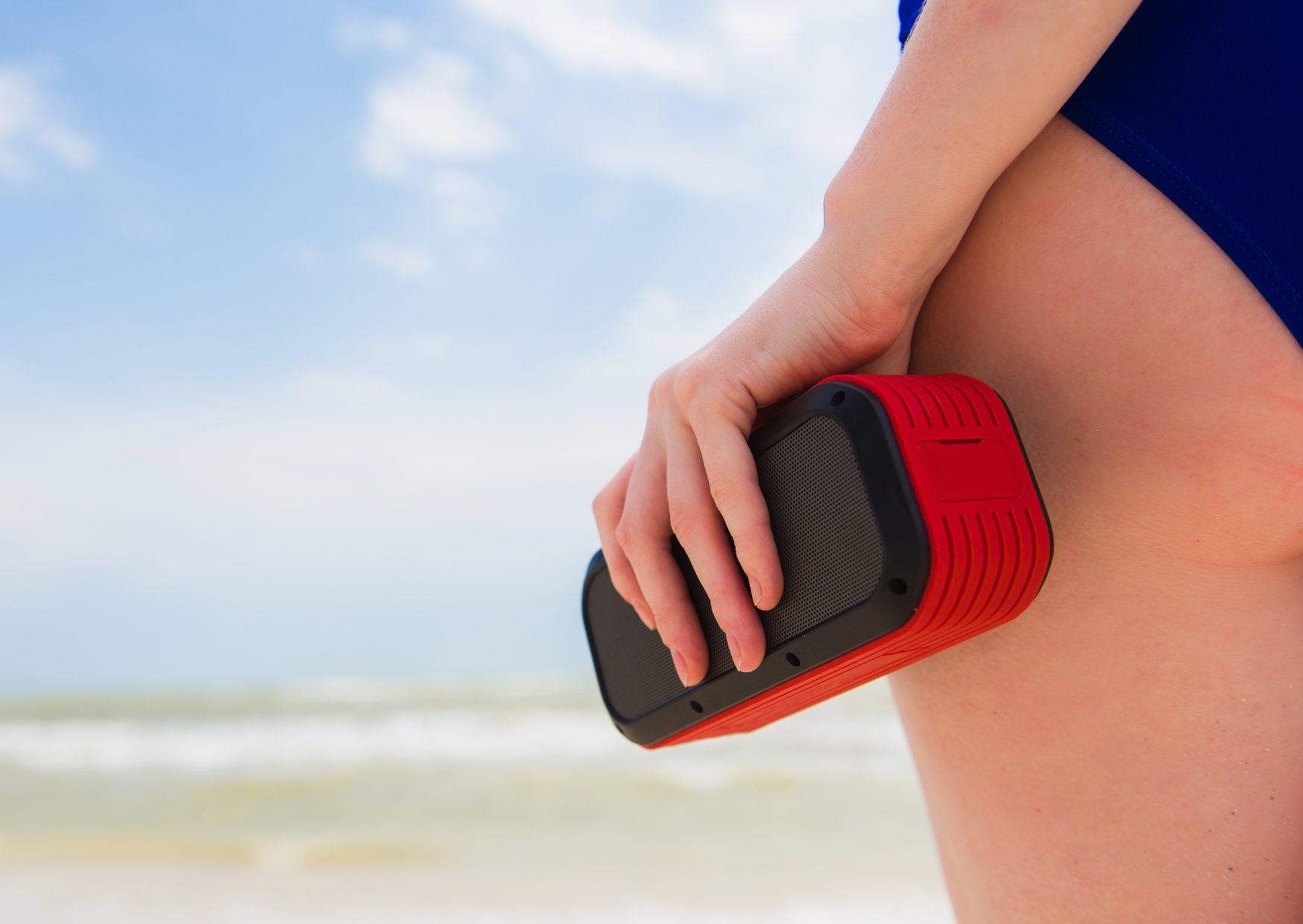
In the U.S., it’s not unusual to hear music playing on the beach — bluetooth speakers, portable radios, even full boom boxes.
In Spain, playing loud music on the beach — especially through speakers — is banned in many regions unless you’re in a designated activity zone.
The cultural expectation is quiet enjoyment, not turning your playlist into a public performance.
Police can and do fine beachgoers for playing disruptive music — even if it’s from a small device. A complaint from another beachgoer is often enough to trigger a warning.
7. Bringing Dogs to the Beach — Without Checking First

In many parts of the U.S., beach dog rules are loose. You might see unleashed dogs at all hours. In Spain, however, most beaches prohibit dogs entirely, especially during high season.
Unless the beach is clearly labeled as a “playa canina” (dog beach), your pup isn’t allowed — even on a leash.
Fines can be steep — from €90 to €300 depending on the municipality.
Locals take this rule seriously, especially families with young children. Tourists often don’t realize they’ve broken it until someone reports them — or an officer arrives.
8. Changing Clothes or Bathing Without Proper Coverage

It’s common in Spain for locals to change on the beach — under towels, with finesse, or using portable cover-ups. But full nudity, careless changing, or washing off in swimwear outside of showers can be penalized, particularly near promenades or in more conservative regions.
American tourists sometimes forget where they are, strip off behind a car or near a public walkway, and get caught.
Spanish police may issue a verbal warning — or a fine — especially if children or families are nearby.
Again, it’s not about being prudish. It’s about location and respect.
9. Leaving Trash — Even Accidentally

Spanish beaches are carefully maintained. In many regions, leaving behind any form of litter — even a bottle cap or cigarette butt — is considered a fineable offense.
And yes, police do check.
In places like San Sebastián or the Costa Brava, officers walk the beaches near sunset and ask visitors to clean up. In some cities, cameras or drones monitor public areas during high season.
American tourists, used to more lenient enforcement, are often surprised when they’re fined not for intentional littering, but for what they forgot to pick up.
Why you Should Follow
You should follow this idea because Spanish beach rules are not random. In many coastal towns, they reflect a larger effort to manage overtourism, protect public space, and stop behavior locals see as disruptive. Across Spain, municipalities have been enforcing rules against reserving beach spots with umbrellas or towels, smoking on smoke-free beaches, using soap at beach showers, loud music, overnight sleeping, and even public urination or urinating in the sea in some places. When tourists understand that these are not just petty restrictions, they are more likely to see the beach as a shared civic space rather than a free-for-all.
You should also follow it because it helps avoid needless conflict and expensive mistakes. Many tourists assume a beach is an informal zone where ordinary vacation behavior gets a pass, but Spain often treats beaches as regulated public areas with local bylaws. Something that feels harmless to an American visitor, like setting up a tent, saving a spot early, or drinking openly on the sand, can trigger fines depending on the town. Knowing that ahead of time makes the trip easier and reduces the chance of learning the rules in the worst possible way.
Another reason to follow this perspective is that it encourages better travel habits overall. A lot of these rules come down to basic courtesy: do not monopolize shared space, do not leave a mess, do not blast noise, and do not treat public infrastructure like a private backyard. Tourists who adapt to those expectations usually have a smoother experience and often get a better response from locals. The rules may feel strict, but the underlying message is simple: respect the space and the people around you.
You should follow it because Spain’s tougher beach enforcement is part of a broader national mood. Recent reporting has connected stricter local rules and anti-tourism sentiment to overcrowding and resident frustration in Spanish destinations. That means beach fines are not only about isolated infractions. They are also part of a bigger push to signal that tourist-heavy areas are no longer willing to tolerate behavior long dismissed as normal holiday excess.
Finally, you should follow it because it makes you a more intelligent traveler. The best visitors are not the ones who know every rule in advance, but the ones who quickly understand that local norms matter. Spanish beaches may look relaxed, but that does not mean they are lawless. Taking the rules seriously shows flexibility, awareness, and respect, and that usually leads to a better holiday than arguing over whether a fine feels fair after the fact.
Why you Shouldn’t Follow
You should not follow this idea too blindly because the phrase “Spanish beach rules” can make the whole country sound more uniform than it really is. Many of these fines come from municipal ordinances, not one single national beach code. What gets penalized in Marbella, Benidorm, Vigo, Valencia, or Málaga may differ in scope, enforcement, or amount. If travelers treat every Spanish beach as identical, they may end up just as confused as before.
You also should not follow it if it turns into the assumption that Americans are uniquely bad tourists. The headline works because it is provocative, but the rules are not aimed only at Americans, and local authorities are responding to broad tourist pressure, not one nationality alone. Articles about Spain’s tourism crackdown consistently describe a wider backlash against mass tourism and antisocial visitor behavior. Framing the issue as though Americans alone are the problem may get attention, but it oversimplifies what is really happening.
Another reason not to follow it uncritically is that some of these bylaws genuinely sound surprising or even absurd at first glance. Rules around urinating in the sea, soap at showers, or beach games can feel like the kind of thing people would assume is rumor until they see it enforced. Tourists are not always being arrogant when they get caught off guard. Sometimes the gap between common vacation habits and local law is simply wider than most people expect.
You should not follow this perspective if it becomes an excuse to romanticize Spain as perfectly civil and tourists as inherently uncivilized. Spain’s beach crackdowns are tied to real pressures, but not every fine or local ordinance is a masterpiece of common sense. Some are clearly reactive, some are highly local, and some may be inconsistently enforced. A stronger article admits that the rules can be understandable and still feel excessive to outsiders.
Finally, you should not follow it if it makes travelers anxious enough to stop enjoying themselves. The goal of learning these rules is not to create paranoia about every umbrella, snack, or towel. It is to understand the local environment well enough to avoid obvious mistakes. Good travel advice should make people more aware, not more fearful. The best takeaway is not that Spanish beaches are waiting to punish tourists, but that visitors should assume local rules matter more than they think.
One Shoreline, Two Approaches
To American beachgoers, Spanish beach rules can feel surprisingly strict — especially in contrast to the atmosphere, which seems open, lively, and casual.
But that contrast is the key. The freedom of Spanish beach life exists because it’s structured, not in spite of it.
The rules preserve the experience. The order allows for pleasure.
And the locals who follow them aren’t trying to ruin your vacation they’re trying to protect the place they love.
So before you light a cigarette, pitch a tent, or unpack your shampoo, take a moment. Look for the signs. Ask a local. Respect the space.
Because in Spain, the sea is for everyone as long as you learn how to share it.
If you’re heading to Spain’s stunning beaches, remember this: enjoying the coastline like a local means blending in, not standing out. Respect the rules, keep the noise down, cover up when appropriate, and treat the beach not like a private backyard but as a shared, cherished part of the community. That awareness is what truly separates tourists from travelers and could save you a hefty fine.

About the Author: Ruben, co-founder of Gamintraveler.com since 2014, is a seasoned traveler from Spain who has explored over 100 countries since 2009. Known for his extensive travel adventures across South America, Europe, the US, Australia, New Zealand, Asia, and Africa, Ruben combines his passion for adventurous yet sustainable living with his love for cycling, highlighted by his remarkable 5-month bicycle journey from Spain to Norway. He currently resides in Spain, where he continues sharing his travel experiences with his partner, Rachel, and their son, Han.