
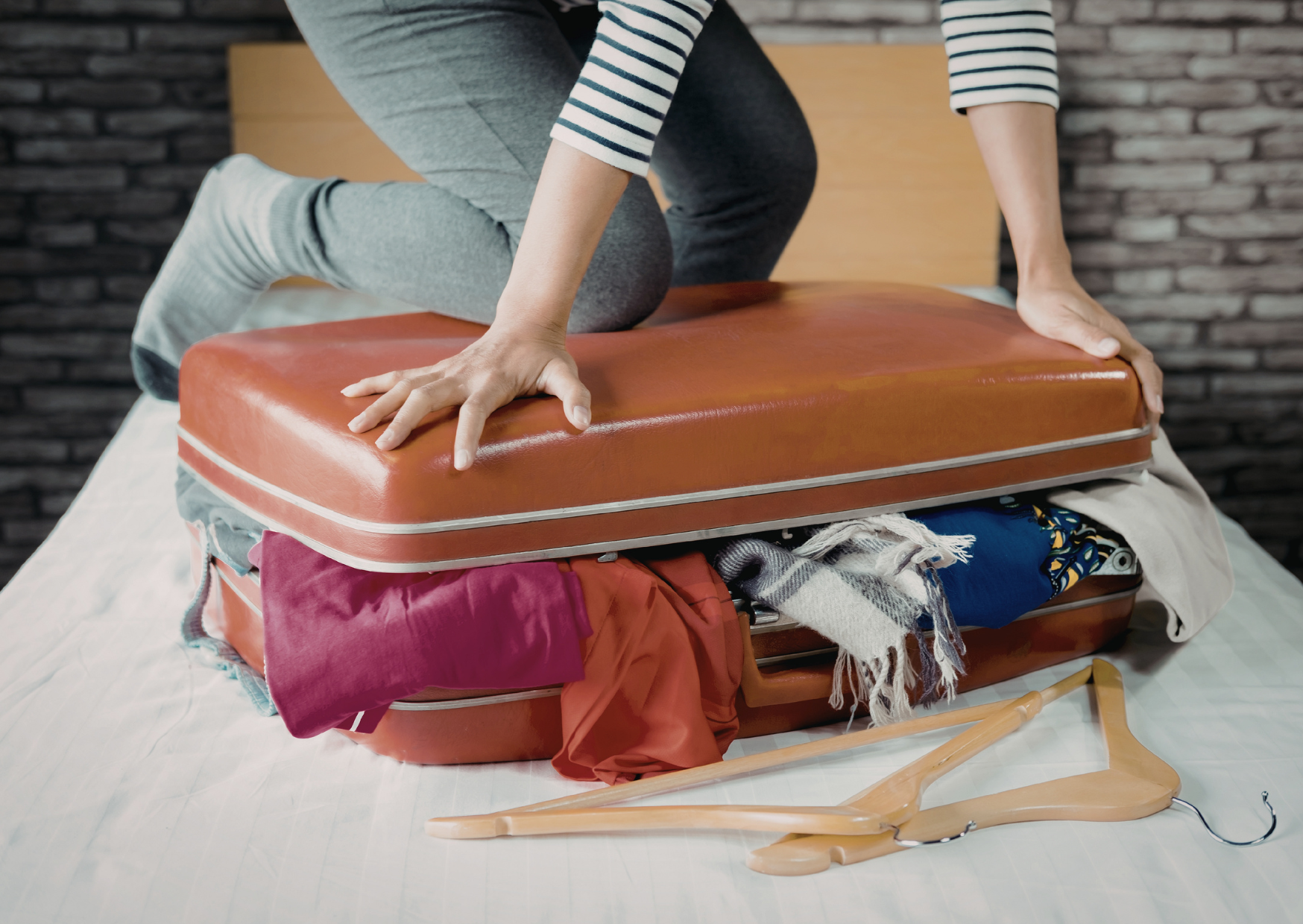
The trick isn’t a secret zipper pocket or some “viral” folding method.
It’s a mindset shift that experienced travelers learn after one too many gate-side bag weigh-ins:
You don’t make your suitcase lighter by packing better. You make it lighter by moving dense weight off the scale.
Dense weight is the stuff that weighs a lot but doesn’t take much space:
- charger bricks
- power banks
- toiletries in glass or thick plastic
- a heavy pair of shoes
- a laptop and tablet together
- a camera body
- a book that you swear you’ll read
- a jeans-and-belt combo that weighs like a small dog
Low-cost European airlines are especially good at making you pay for dense weight mistakes, because the “free” bag is often a small under-seat bag and the paid cabin bag may have a weight limit. Ryanair’s free personal bag allowance is 40 × 30 × 20 cm, and its paid second cabin bag is a 10 kg allowance. Wizz Air’s free carry-on is also 40 × 30 × 20 cm and has a 10 kg limit. easyJet allows a free under-seat bag at 45 × 36 × 20 cm and notes a 15 kg limit as long as you can lift it.
So the “experienced traveler trick” is building a density plan:
- put dense items in your personal item and pockets
- put bulky light items in the main bag
- choose lighter containers and gear so you’re not fighting physics
Do that and you’ll stop losing money at the gate.
Why Bag Weight Becomes A Problem At The Worst Moment
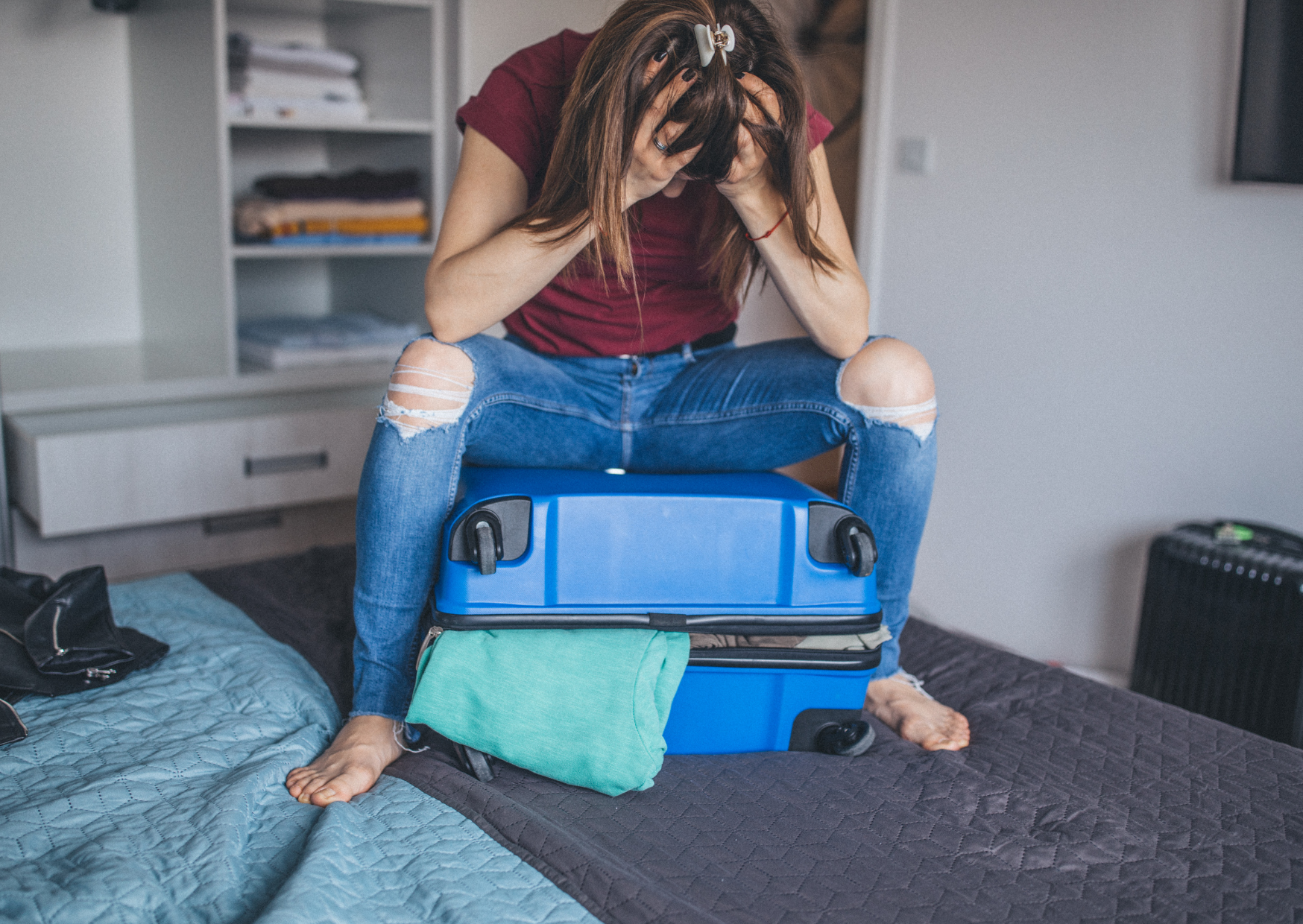
The worst time to learn your bag is overweight is when you’re already at the gate, stressed, and someone is pointing at a scale like it’s a courtroom.
That’s when people start doing the frantic shuffle:
- stuffing pockets
- putting on two jackets
- holding a laptop in their hands
- moving toiletries into a tote
- looking like they’re smuggling a small electronics store
The thing experienced travelers do differently is they plan for that shuffle in advance. They don’t rely on luck.
They assume the airline might:
- measure the bag
- weigh the bag
- or both
And they pack so that if it happens, they can offload weight in 20 seconds without making a scene.
Planning for the gate is the trick. Not packing cubes.
The Real Trick Is Treating Your Personal Item Like A Weight Dump
Most people treat the personal item as “extra space.”
Experienced travelers treat it as a strategic weight container.
Because the personal item is often:
- less likely to be weighed
- more likely to be inspected for size, not weight
- allowed even when you don’t pay for Priority or extra cabin baggage
On airlines like Ryanair and Wizz Air, the free personal item dimensions are tight, which makes size compliance important. But it still gives you a powerful place to put dense items.
The rule is simple:
- Personal item gets dense weight.
- Main bag gets bulky volume.
Dense weight list that belongs in your personal item by default:
- laptop, tablet, camera body
- charger brick and cable bundle
- power bank
- toiletries in small amounts
- medicines
- a book or Kindle
- spare glasses
- wallet, documents, keys
This isn’t only about getting under the weight limit. It also protects the stuff you can’t afford to lose.
Dense items live with you. Not in the bag that might get gate-checked.
Choose Clothing That Moves Like Weight, Not Like Fashion
The most reliable weight trick is the oldest one: wear the heavy items.
Not because you want to look like a layered lunatic. Because it’s the easiest way to move 2 to 4 kg off the scale instantly.
High-impact wearable items:
- your heaviest shoes
- your bulkiest jacket
- jeans instead of packing them
- belt, watch, and heavier accessories
- hoodie or cardigan that would otherwise eat space and weight
This is especially useful on short European flights where you’ll be sitting still and weight limits are strict.
A practical version that doesn’t make you miserable:
- Wear one heavier layer.
- Put a lightweight packable layer in the bag.
If you’re the person who always overpacks shoes, this is your wake-up call: shoes are a weight problem first, a space problem second.
One extra pair of shoes can be the difference between free and fee.
Your Toiletries Are Heavier Than You Think
Toiletries are one of the sneakiest weight traps because people pack them like they’re moving house.
Experienced travelers do three boring things:
- decant into smaller containers
- avoid glass
- avoid carrying half-full “just in case” bottles
If you’re trying to stay under 10 kg, don’t pack:
- full-size shampoo and conditioner
- multiple fragrance bottles
- skincare in glass
- a full pharmacy aisle of backups
Pack the minimum that gets you through:
- 5 to 7 days
- or the first 2 days if you’ll buy locally
In Europe, pharmacies and supermarkets exist. You don’t need to bring your entire bathroom.
This is also where liquids rules matter, but the weight trick is independent of security rules: you’re not trying to carry more liquid. You’re trying to carry less unnecessary packaging.
Packaging weight is the silent killer.
Electronics Will Get You Every Time, So Treat Them Like A System
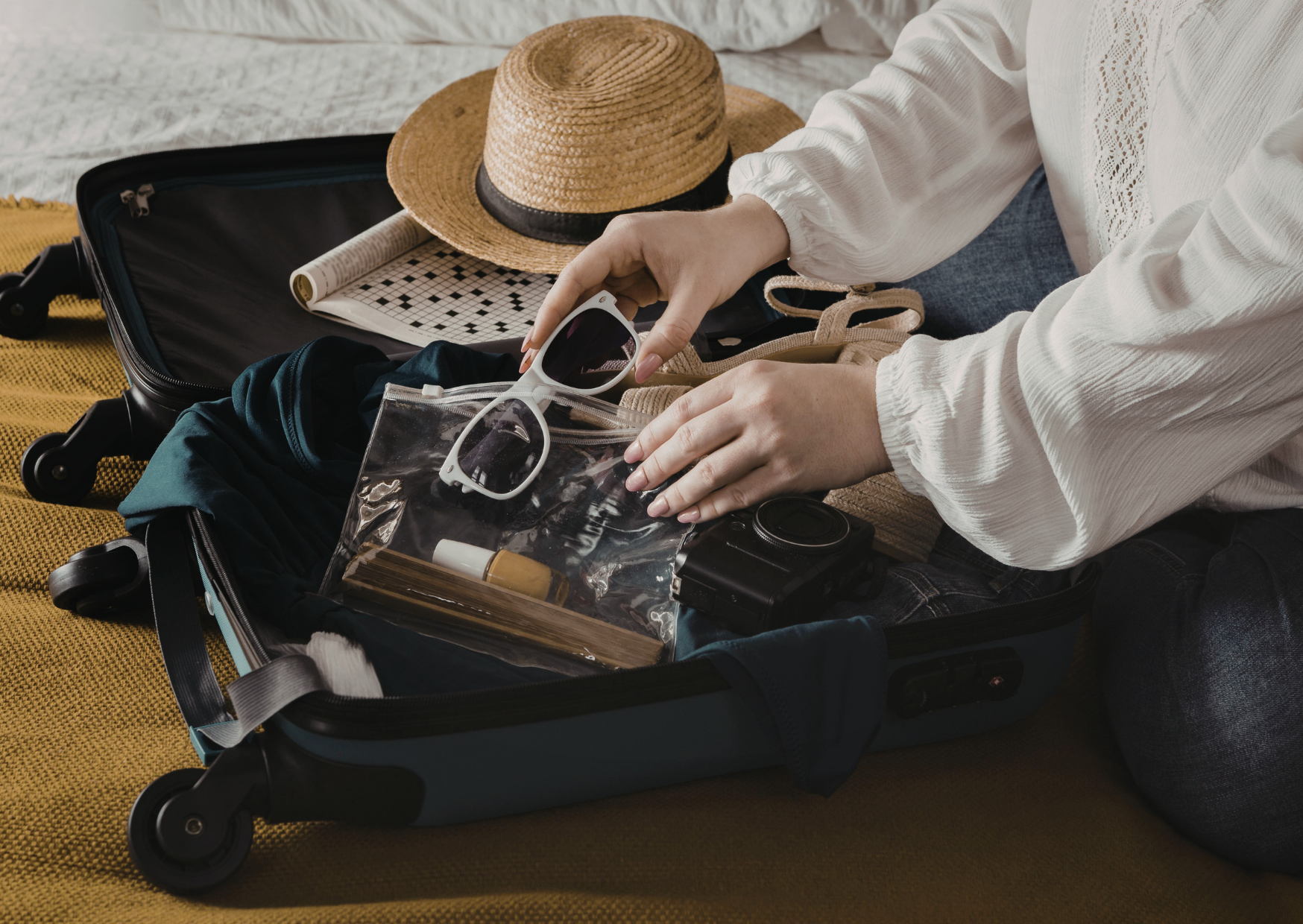
Electronics are dense and non-negotiable.
They’re also where people accidentally bring duplicates:
- two power banks
- three charging cables for one device
- a heavy multi-port brick plus a spare brick
- a laptop for email that could be done on a phone
- a camera kit that never leaves the bag
If you want the experienced traveler approach, build an electronics kit once:
- one main charging brick
- one cable per device
- one short backup cable
- one power bank that is actually necessary
Also, batteries and power banks should be carried in hand baggage under common airline safety guidance. IATA’s guidance for passengers traveling with lithium batteries emphasizes carry-on handling and safety precautions.
So the weight trick aligns with safety:
- put power banks and spare batteries in your personal item
- do not bury them deep in a bag you might check
One clean kit beats a tangle of panic backups.
The Underseat Bag Reality In Europe Is Smaller Than Americans Expect
A lot of Americans pack like their “personal item” is a U.S. domestic personal item.
European low-cost carriers can be tighter. Ryanair’s free personal bag size is 40 × 30 × 20 cm. Wizz Air’s free bag is also 40 × 30 × 20 cm. easyJet’s free under-seat bag is larger at 45 × 36 × 20 cm and states a 15 kg limit, but it must fit under the seat.
So the experienced traveler trick is not “bring a tote and hope.” It’s:
- use a personal item bag that is built for those dimensions
- pack it like a dense weight container, not like a second suitcase
- keep it compressible so it passes a size sizer
If your personal item is rigid and overstuffed, you lose the whole advantage.
Soft bag wins. Rigid bag loses.
The 2-Minute Gate Shuffle That Saves You Money
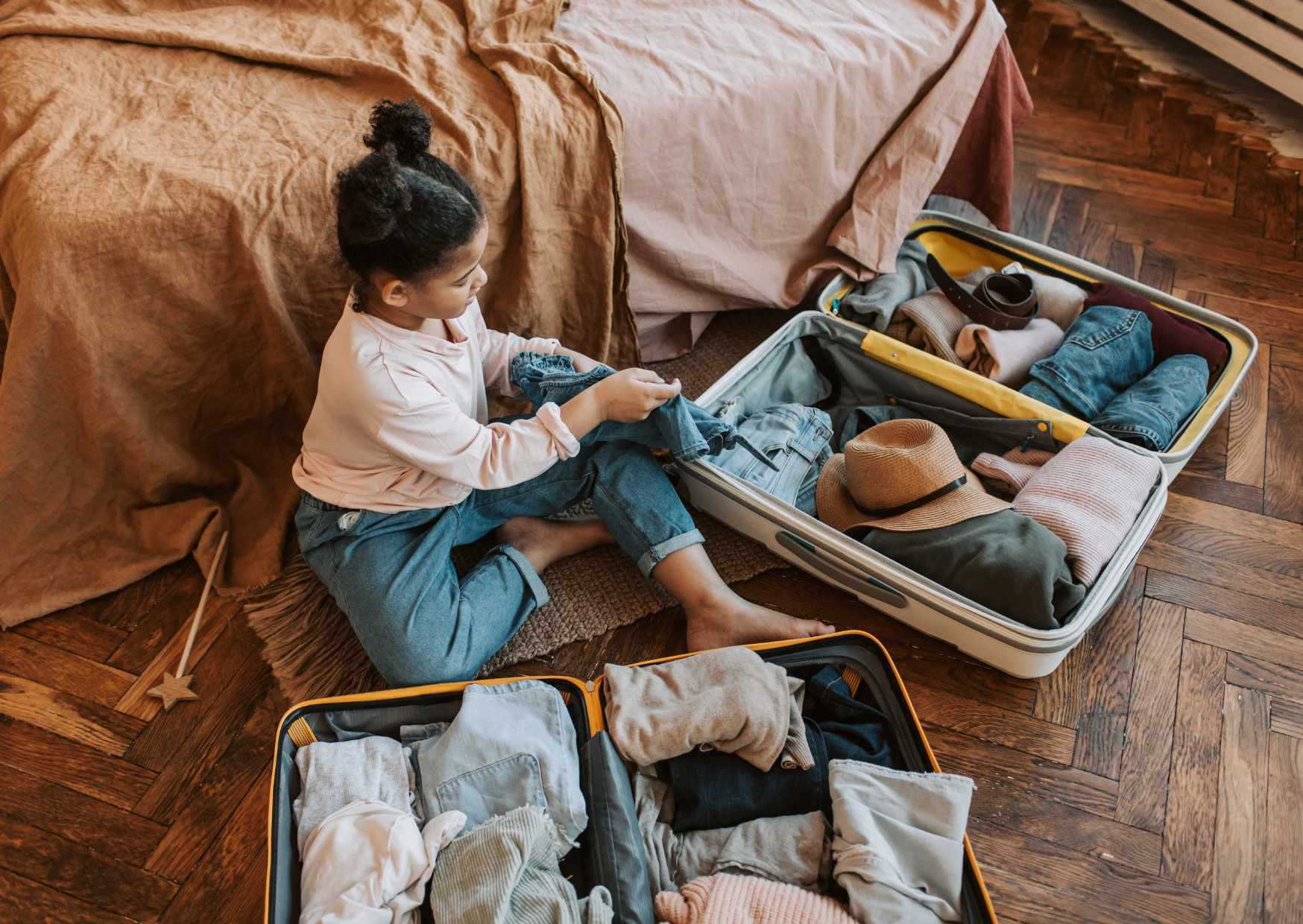
This is the part nobody teaches, but experienced travelers do it automatically.
They pack so they can remove 2 to 4 kg in two minutes if asked.
Your gate shuffle plan should be:
- laptop slides out instantly
- charger pouch lifts out instantly
- power bank in an outer pocket
- heaviest layer ready to wear
- a small foldable tote inside your personal item for emergency redistribution
That foldable tote is not for adding stuff. It’s for moving weight so you can comply if they suddenly weigh your main bag.
You don’t want to be the person repacking on the floor.
Fast shuffle is the difference between calm and chaos.
The First 7 Days You Pack Like A Repeat Traveler
If you want this to become automatic, do a one-week reset before your next trip.
Day 1: Weigh your empty bag. If it’s heavy, you’re losing weight allowance before you start.
Day 2: Build your dense kit. Electronics, meds, documents. Put them in the personal item.
Day 3: Cut toiletries in half. Smaller containers, no glass, no duplicates.
Day 4: Limit shoes. Two pairs max for most trips. Wear the heavy pair.
Day 5: Choose a capsule wardrobe. Fewer heavier items, more light layers.
Day 6: Do a full test pack and weigh everything. Then remove 1 kg. Always remove 1 kg. That’s your buffer for souvenirs and last-minute adds.
Day 7: Practice the gate shuffle once. Literally pull the dense items out and put them back. If it takes longer than two minutes, reorganize.
This is how experienced travelers make luggage rules feel irrelevant. They’re not breaking rules. They’re packing for reality.

About the Author: Ruben, co-founder of Gamintraveler.com since 2014, is a seasoned traveler from Spain who has explored over 100 countries since 2009. Known for his extensive travel adventures across South America, Europe, the US, Australia, New Zealand, Asia, and Africa, Ruben combines his passion for adventurous yet sustainable living with his love for cycling, highlighted by his remarkable 5-month bicycle journey from Spain to Norway. He currently resides in Spain, where he continues sharing his travel experiences with his partner, Rachel, and their son, Han.