

$375,000 sounds like breathing room at 57.
In the Algarve, it can be. It can also be a slow-motion leak if you treat it like income instead of runway.
By 65, she has $98,000 left. Roughly €90,000 give or take, depending on the exchange-rate month and how she converts. The number looks like a cautionary tale, but it’s usually not a single catastrophe. It’s a decade of normal decisions that weren’t priced honestly.
This is the real story: how a comfortable-looking nest egg can shrink fast in Portugal when housing is expensive by local standards, healthcare gets real, tax assumptions are outdated, and “we’re in Europe” spending becomes a daily mood stabilizer.
I’m going to lay out the money like a mechanic lays out an engine. Not pretty. Useful.
The First Problem Is Treating Savings Like Salary
The Algarve is full of people living off “the pile.”
The pile feels like a paycheck because it’s big. It isn’t.
$375,000 is not wealth in the way people mean it in retirement marketing. It’s a bridge. If you spend €2,500 a month all-in, that’s €30,000 a year. Eight years later, even without major emergencies, you’ve burned €240,000. Add the normal one-time hits and you can see how you land near €90,000 left.
The trap is psychological: a person sees a six-figure balance and subconsciously gives themselves permission to live like a mid-career professional, just without the income part.
Portugal doesn’t drain you. Burn rate drains you. The Algarve just makes it easy to run a high burn rate while telling yourself you’re “living simply.”
If you want to avoid this outcome, the first rule is blunt: savings are not a lifestyle. Savings are a buffer for a lifestyle supported by stable monthly inflow.
If you don’t have stable inflow, you need a plan that makes the pile last.
Runway is finite. Spending is the engine. Portugal will not interrupt you.
Algarve Housing Is Where The Money Starts Bleeding
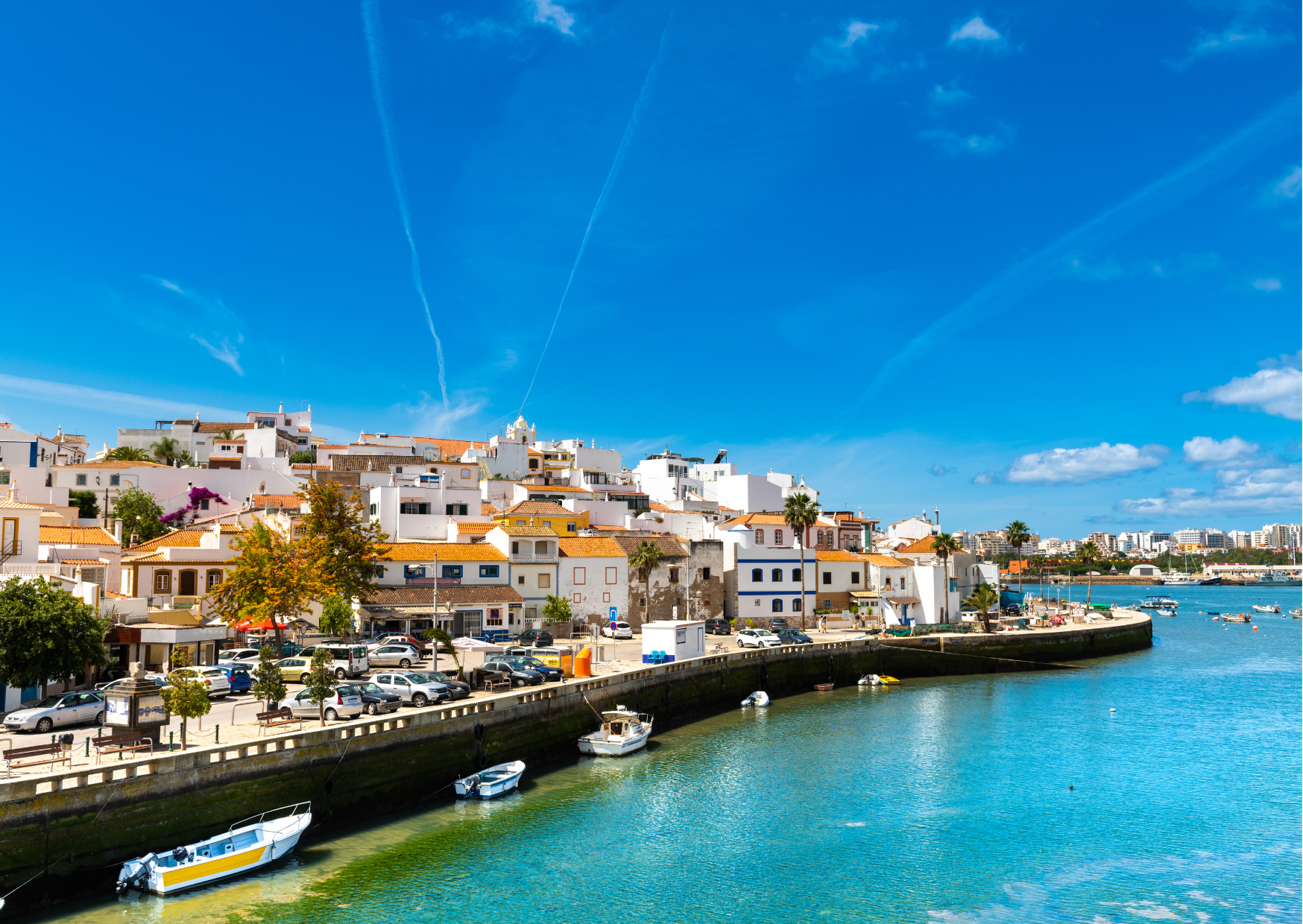
A lot of people move to the Algarve for comfort.
Sun, ocean, walkable old towns, good food, a large English-speaking ecosystem. The issue is that many of the places Americans want are also the places everyone else wants. Rents have risen. The Algarve is not the cheap corner of Portugal it used to be.
A typical long-term rent in a desirable area can easily sit in the €900 to €1,600 range for a one to two bedroom that feels comfortable, depending on location, season, and whether you want furnishing, outdoor space, and modern insulation. If you drift into resort towns or prime coastal zones, the number climbs.
Then the hidden Algarve costs show up:
- you rent furnished at a premium because you don’t want to commit
- you move once or twice because the first place was charming but miserable in winter
- you pay deposits and agency fees repeatedly
- you add space heaters, dehumidifiers, and winter fixes because the “mild Algarve winter” still feels cold indoors in weak buildings
- you keep choosing coastal exposure and then pay the price in wind, damp, and bills
If she paid even €1,350 a month in rent, that’s €16,200 a year. Eight years is €129,600, and that’s rent only.
If she paid €1,700 a month for a “nice” setup, that’s €163,200 over eight years. Again, rent only.
Most people don’t see rent as the thing that kills the plan because rent is “normal.” But it’s the largest predictable outflow, and it sets the tone for everything else. If rent is high, you compensate by treating the rest of the budget loosely, because you feel like you deserve enjoyment.
That’s how you get drift.
Rent is the anchor cost. Furnished premiums add up. Moving is expensive.
The Lifestyle Leak Looks Small Until You Add It Up

The Algarve is a pleasure machine.
That is why people move there. It also means you need rules, because the easy pleasures are constant.
Here’s what a typical “this doesn’t feel expensive” Algarve leak looks like:
- €6 to €12 daily café stops
- €25 to €60 lunches that become a routine
- €40 to €90 dinners out, even if not fancy
- €250 weekend trips that feel cheap because Europe is close
- €1,200 flights back to the U.S. that happen more often than planned
- visitor hosting where you become the tour guide and the restaurant wallet
- taxis and convenience spending when you’re tired of figuring things out
Even modest daily drift can wreck a pile.
If the extra lifestyle spending above baseline averages €30 a day, that’s about €900 a month. Over eight years, that’s €86,400.
If it averages €50 a day, that’s €144,000 over eight years.
This is why people wake up at 65 and feel confused. They remember the big bills. They forget the drip.
And retirees are especially vulnerable to the drip because the days are long. Boredom spending is real. Loneliness spending is real. “We deserve it” spending is real.
The Algarve is built to invite it.
Daily treats become a budget line. Tourist mode is expensive. Boredom costs money.
Healthcare Is Cheaper Than The U.S. Until It Isn’t Simple

Portugal can be a relief for Americans who are burned out by U.S. healthcare.
But the Algarve retirement story often includes private insurance, private clinics, and a lot of out-of-pocket care choices, especially early on. Many retirees choose private cover for speed, choice, and English access, and those premiums rise with age and underwriting.
A common real-world pattern looks like this:
- a basic private policy in early 60s might feel manageable
- by mid-60s, costs climb, coverage changes, and the person adds paid plans or extra cover
- dental and vision are still real costs
- prescriptions and specialist visits become more frequent with age
Even if healthcare is far cheaper than the U.S., it still needs a budget lane.
If she spent €120 a month on insurance and €80 a month in out-of-pocket care, that’s €2,400 a year. Eight years is €19,200.
If she spent closer to €250 a month all-in, that’s €24,000 over eight years.
Now add one serious year: a procedure, imaging, a course of rehab, or private specialist runs. The total still might not resemble U.S. catastrophe numbers, but it can easily add a few thousand euros at the wrong time.
The bigger danger is psychological: some Americans use more healthcare once they move because it no longer feels financially threatening. That’s good. It also means the “healthcare is cheap” assumption breaks.
Private cover is not free. Aging increases usage. One medical year changes the curve.
Taxes And Old Assumptions Quietly Break Budgets
A lot of people still move to Portugal with stale tax expectations.
For years, Portugal’s non-habitual resident regime was marketed like a golden ticket. That era changed. Many new arrivals do not get the old deal, and transitional conditions applied for people already in the pipeline. If your plan assumed tax treatment you don’t actually receive, your net income and withdrawal strategy can be wrong from year one.
Even if taxes aren’t “worse,” uncertainty is expensive:
- you pay professionals to explain your situation
- you restructure accounts later than you should
- you make withdrawals in inefficient ways
- you delay decisions and drift
And Americans bring an extra layer: U.S. filing doesn’t stop just because you moved. You have ongoing compliance needs and reporting considerations. Many retirees end up paying a cross-border tax preparer annually, not because they’re rich, but because the penalty risk for mistakes is not worth the stress.
It’s common for retirees abroad to spend €800 to €2,500 a year on tax and compliance help depending on complexity. Over eight years, that can be €6,400 to €20,000, and it buys nothing tangible. It’s just the cost of existing in two systems.
The other tax-related leak is more basic: Portugal becomes your tax residence. That shapes how income and withdrawals behave. If you were planning based on “Portugal is low tax” without a clear model, your net numbers can get squeezed.
Tax clarity is a budget tool. Old regime assumptions are dangerous. Compliance is a recurring cost.
The Real Eight-Year Math That Explains $375,000 To $98,000
Let’s build a realistic model that gets you from the starting number to the ending number without any villain story.
I’ll keep the math in euros because the spending happens in Portugal, then translate roughly.
Assume she arrives with about €340,000 in spending power after conversion friction. That is a reasonable ballpark for $375,000.
By 65, she has roughly €90,000 left. That implies about €250,000 was spent over eight years, or around €31,250 a year.
That is not extravagant. It’s just steady.
Here’s a plausible eight-year spend profile:
Fixed and semi-fixed annual costs
- Rent: €15,000 to €20,000
- Utilities and internet: €2,200 to €3,200
- Health insurance and out-of-pocket: €2,000 to €4,000
- Transport, taxis, car rental, occasional car costs: €1,000 to €3,500
- Phone and basics: €300 to €600
Subtotal: €20,500 to €34,300
Variable and lifestyle annual costs
- Groceries: €3,200 to €4,800
- Eating out and cafés: €2,500 to €7,000
- Trips within Europe: €1,500 to €6,000
- Flights to U.S. and family travel: €1,200 to €4,000
- Clothing, household items, repairs, admin: €1,500 to €4,000
- Taxes and professional help: €800 to €2,500
Subtotal: €10,700 to €30,300
Now you can see the range: even a fairly ordinary Algarve retiree life can land around €30,000 to €40,000 a year, especially if rent is high and travel remains frequent.
Over eight years, €30,000 a year is €240,000.
Add a couple of one-time hits:
- moving costs and deposits: €3,000 to €6,000
- furnishing and setup: €2,000 to €7,000
- a medical year or two: €2,000 to €8,000
- a bad exchange-rate year: effectively a stealth cost if you convert at the wrong time
You can see how the total hits €250,000.
That’s the whole story.
Not scams. Not stupidity. Just a life designed without guardrails.
€30,000 a year is not luxury. Eight years is long. Small leaks compound.
The Algarve Trap Is Thinking You’re Living Like A Local
A lot of Americans say they want to live like locals.
Then they choose the Algarve version of Portugal that locals don’t live in at the same density.
The Algarve is full of year-round Portuguese life, but many retirees cluster in expat-heavy zones, resort-adjacent areas, and coastal pockets where prices reflect international demand. That’s fine. But it’s not “local pricing.”
If you want local pricing, you usually need:
- a normal Portuguese town, not a resort town
- a home that is comfortable without constant climate-control spending
- a routine that doesn’t rely on restaurants as daily therapy
- fewer short-term rentals and fewer moves
The Algarve can still work. It just has to be treated like a real place, not a retirement theme park.
The moment you treat it like a theme park, the budget will behave like a theme park budget.
Expat clusters cost more. Tourist rhythms cost more. Local routines cost less.
Pitfalls Most Buyers Miss Before They Move At 57
This is where the decision goes wrong early.
They underestimate the length of the runway.
Eight years is not “a while.” It’s a full era. You can drain a pile in one era without realizing you’re doing it.
They don’t set a rent ceiling.
If housing is allowed to drift, everything else becomes defense spending.
They assume healthcare is solved by moving.
Portugal reduces some stress. It still requires a budget and a plan.
They import American convenience.
Delivery, taxis, eating out, paid help. All of it is soothing. All of it costs.
They underestimate flights.
Americans rarely stop traveling back. Family needs, weddings, funerals, grandkids. The flight line item is real and recurring.
They don’t price the “visitor tax.”
When family and friends visit, you spend more. Often a lot more. The Algarve is a magnet for visitors.
They keep money in two places without a clear strategy.
Currency swings and transfer friction can create real losses over time.
If you want to avoid the $98,000 at 65 ending, you don’t need perfection. You need a few firm boundaries.
The First Seven Days You Stop The Bleed
If someone is already in Portugal and sees the pile dropping fast, this is the week that changes the trajectory.
Day 1
Calculate the real burn rate in euros. Not the “basic living” rate, the real rate. Include travel, eating out, visitors, and paid help. If you don’t know the burn rate, you can’t control it.
Day 2
Set the housing ceiling. If rent is too high, start planning the move now, not later. Housing is the biggest lever you have.
Day 3
Create the “normal week.” Two café visits, not daily. One restaurant meal as default. One day trip a month. The Algarve is addictive. You need rules.
Day 4
Lock healthcare into a lane. Premium, out-of-pocket, dental, prescriptions. Stop treating medical spending as random.
Day 5
Do the tax reality check. Stop living on old incentives in your head. Get one clean model for what you owe and when.
Day 6
Build a travel budget. Flights to the U.S. and Europe need an annual cap. Without a cap, travel eats the pile quietly.
Day 7
Protect a buffer. A buffer is not money you spend if the month feels boring. It’s money that buys you stability when a surprise arrives.
This week does not make you frugal. It makes you stable.
Clarity reduces drift. Boundaries preserve runway. Routine beats mood spending.
What Actually Changes At 65
By 65, the story shifts.
You have less time to “fix it later.” Your risk tolerance changes. Your health needs can increase. Your willingness to relocate again might drop. Your social circle might be more fragile than you expected.
$98,000, or around €90,000, can still be meaningful. But it is no longer a pile you can casually spend from. It becomes a reserve you protect.
If you want the Algarve to still work at 65 with that remaining amount, the plan usually becomes:
- stable housing at a lower rent level
- more home cooking and fewer restaurant routines
- fewer flights and more local life
- tighter monthly budgeting
- a clear plan for medical coverage and future care needs
This is where some people decide to leave, not because Portugal failed them, but because their financial model was always temporary and they didn’t admit it early.
The ones who stay usually do one thing well: they downgrade lifestyle without treating it like defeat. They treat it like maturity.
Downshifting is not failure. It’s adaptation. It’s how you stay.

About the Author: Ruben, co-founder of Gamintraveler.com since 2014, is a seasoned traveler from Spain who has explored over 100 countries since 2009. Known for his extensive travel adventures across South America, Europe, the US, Australia, New Zealand, Asia, and Africa, Ruben combines his passion for adventurous yet sustainable living with his love for cycling, highlighted by his remarkable 5-month bicycle journey from Spain to Norway. He currently resides in Spain, where he continues sharing his travel experiences with his partner, Rachel, and their son, Han.