

The “energy secret” isn’t a rare herb or a miracle powder.
It’s a morning habit that looks almost too plain to matter: a warm, salty broth-based breakfast that hydrates, settles the stomach, and delivers a small dose of protein before the day gets loud.
In a lot of Chinese households, especially among older generations, “breakfast” isn’t always a sweet pastry situation. It’s often a warm bowl of something simple. Congee, noodle soup, dumplings in broth, or just a clear stock with ginger and scallions. The exact dish varies by region and family. The pattern is consistent: warm liquid, savory, gentle, repeatable.
Americans hear this and think it’s quaint. Then they try it for a week and realize something annoying: when you start the day with a warm savory bowl, you stop feeling like you need a second breakfast at 10:30. You also stop starting the day dehydrated and jittery.
This is not magic. It’s a better opening move.
Why This Habit Feels Like “Energy” Instead Of “Health”
Most people don’t want wellness. They want a day that doesn’t feel like a fight.
A broth-based breakfast helps for very boring reasons:
- Hydration happens early, before coffee turns into a replacement for fluids.
- Salt and warmth can make the body feel steadier and less shaky.
- A little protein reduces the “I’m starving by mid-morning” crash.
- Low sweetness means fewer cravings and less snack hunting.
A lot of Americans start the day with a sugar-and-caffeine combo and call it normal. That pattern can feel energetic for 45 minutes, then lousy for three hours.
Chinese grandmothers often start the day with something that doesn’t spike the system. It’s not exciting. It’s stable.
Stable mornings create easier afternoons. That’s why people experience it as energy.
What They’re Actually Drinking

The phrase “Chinese grandmothers drink broth” can sound like everyone is sipping bone broth from a mug.
Sometimes they do. More often it shows up as a simple soup base used as breakfast. Two common forms:
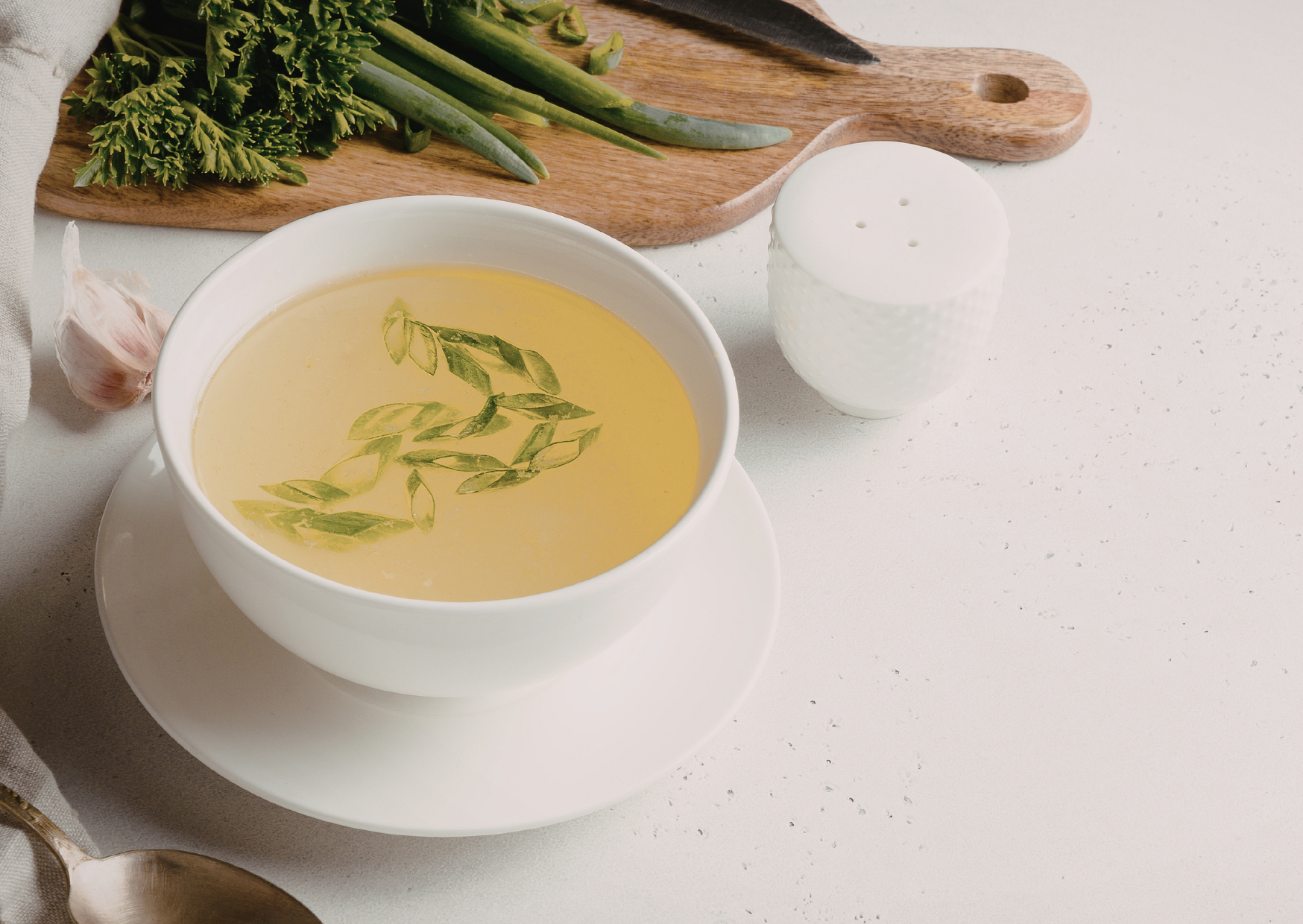
Clear ginger scallion broth
A light stock, warmed with ginger and scallion, sometimes with a beaten egg or tofu. It’s less a “dish” and more a baseline. You can sip it, or add something small to it.
Congee made with stock
Congee is rice cooked down with water or broth into a soft porridge, then topped with small savory things. It’s one of the most common breakfast patterns across China because it’s gentle and flexible. It’s also how families use leftovers and keep mornings calm.
People call it an energy secret because it feels like it “turns the lights on” without the crash.
The real secret is that it’s a breakfast built to be digestible and hydrating, not a breakfast built to feel like dessert.
The Morning Problem Americans Don’t Notice Is Dehydration Plus Dessert
A lot of Americans wake up already behind.
Not morally behind, just physically behind.
They wake up slightly dehydrated, a little hungry, and a little stressed. Then they start the day with coffee and sugar and call it breakfast. Even when the “sugar” is disguised as a muffin, a flavored yogurt, a granola bar, or a fancy coffee drink, the body reads it the same way: fast energy, fast drop, then hunger and irritability show up mid-morning.
That’s why this broth habit feels like a secret. It fixes the part people don’t see.
Warm liquid early changes how the whole morning feels. You’re hydrating before caffeine dries you out. You’re adding salt before the day becomes a snack chase. You’re giving your stomach something gentle that doesn’t trigger that “I’m hungry again in 90 minutes” loop.
This is also why older adults stick with it. When you get older, your tolerance for chaotic mornings drops. Sleep can be lighter. Digestion can be touchier. Blood sugar swings can feel harsher. A warm, savory start is a way of keeping the day steady without turning breakfast into a project.
Americans often think breakfast has to be big or exciting to “count.” Chinese grandmother breakfast logic is different. It’s about settling the system.
There’s also a behavioral piece people miss: broth is hard to eat mindlessly. You don’t wolf it down in the car. You sip it. You slow down for five minutes. That alone can reduce the frantic tone of the day.
Now add the simplest possible protein and you’ve built a breakfast that actually lasts.
This is where most Americans copy it wrong. They do “just broth” and then wonder why they’re hungry again. In many homes, the broth is paired with something small and strategic:
- an egg dropped in at the end
- tofu cubes
- a spoon of leftover rice
- a few dumplings
- a small piece of fish
- a steamed bun on the side
Not a huge meal. Just enough to keep the morning from collapsing into cravings.
Protein plus salt is the quiet stabilizer. It’s the difference between “I feel calm” and “I need a snack and I don’t know why.”
The other thing Americans underestimate is how much sweetness affects appetite. A sweet breakfast often makes you want more sweet later. A savory breakfast often makes the day feel less snacky, even if you still have dessert later. You’re not banning sweetness. You’re moving it out of the driver’s seat.
If you want to test whether this is real, pay attention to one simple marker: what happens around 10:30 a.m.
On a sweet morning, many people hit the dip. On a broth morning, the dip often softens. Not because you became a new person. Because you started the day with hydration and steadiness, not stimulation and crash.
That’s the energy secret.
Not “Chinese medicine.” Not rare ingredients. Just a different opening move.
Warm and savory beats sweet and frantic more often than people want to admit.
Why Americans Don’t Want To Try It
Americans usually resist for three reasons.
It feels wrong at breakfast time
In the U.S., breakfast is culturally coded as sweet or bready: cereal, muffins, pancakes, pastries, flavored yogurt, sweet coffee drinks. Savory soup at 8 a.m. feels like dinner behavior.
They think it’s too much work
Americans assume broth equals a two-day stock project. In reality, the daily version is often quick because the broth already exists in the fridge or freezer, or because it’s made from simple store-bought stock improved with ginger.
They think it’s too bland
This is usually because Americans under-salt and under-season savory breakfasts. The Chinese approach isn’t bland. It’s subtle but properly salted, and often lifted with ginger, scallion, sesame oil, and a little acid or pepper.
Once you fix those three misunderstandings, most people find the habit surprisingly easy.
The barrier is cultural, not culinary.
The Broth Recipe That’s Actually Morning-Friendly
This is the version that works for real life: fast, cheap, adjustable, and built around ingredients you can keep on hand.
Morning Ginger Scallion “Grandma Broth”
Makes 2 large mugs or 1 bowl plus leftovers
Ingredients
- Stock (chicken or vegetable): 600 ml
- Fresh ginger: a 3 to 4 cm piece, sliced
- Scallions: 2, sliced
- Soy sauce: 1 to 2 teaspoons
- Sesame oil: 1/2 teaspoon
- Salt: to taste
- White pepper or black pepper: to taste
Optional add-ins for real breakfast staying power:
- 1 egg
- a handful of spinach
- tofu cubes
- leftover rice or cooked noodles
- shredded cooked chicken
Method
- Pour stock into a small pot. Add ginger and bring to a gentle simmer for 4 minutes.
- Add scallions for the last minute.
- Season with soy sauce, a small pinch of salt if needed, and pepper.
- Turn off heat. Stir in sesame oil.
If adding an egg:
- Beat the egg in a bowl, then pour it slowly into the hot broth while stirring gently. You get soft ribbons in 30 seconds.
If adding spinach:
- Add at the end and let it wilt for 30 seconds.
That’s it. This is an 8 to 10 minute morning ritual that creates a steady body feeling. It is not a weekend project.
Hot broth plus small protein is the entire play.
The Congee Version That Turns It Into A Full Breakfast

If you want the classic older-generation “this counts as breakfast” feeling, congee is the move.
Congee is simple: rice cooked with a lot of water or stock until it becomes soft and creamy. It can be plain, but most families top it with small savory items.
Lazy Weekday Congee
Makes 3 to 4 portions
Ingredients
- Rice: 150 g
- Water or stock: 1.2 liters
- Salt: 1 teaspoon, then adjust
- Ginger: a few slices
Toppings, choose 2 to keep it simple:
- soy sauce
- scallions
- sesame oil
- egg
- tofu
- shredded chicken
- pickled vegetables
- peanuts
- cilantro
Method
- Rinse rice. Add to a pot with water or stock, salt, and ginger.
- Bring to a boil, then reduce to a gentle simmer.
- Stir occasionally. Cook 40 to 60 minutes until creamy.
- Serve with toppings.
If you want the truly easy version: cook it once, then reheat portions all week, thinning with hot water or stock.
This is why grandmothers love it. It’s economical and predictable. It makes breakfast stop being a decision.
One pot becomes four mornings.
What “Energy” Actually Means Here
People often say they have low energy when they mean one of three things:
- dehydration
- unstable blood sugar
- poor sleep plus a harsh morning start
A warm broth breakfast touches all three.
Hydration without forcing water
Many people do not want cold water first thing. Warm broth makes hydration easy. It’s also lightly salty, which can help fluids feel more satisfying, especially for people who wake up feeling flat.
Fewer sugar spikes
A savory broth breakfast is low in added sugar and often lower on the glycemic rollercoaster than pastries and sweet cereals. That matters for mid-morning appetite and mood.
A calmer nervous system
Warmth, routine, and the act of sitting down for something simple can reduce the frantic “coffee and go” feeling that sets a stressed tone for the day.
There’s also a real research angle worth mentioning: breakfast habits in older adults have been associated with better cognitive outcomes in large population studies, with diet quality playing a mediating role. That does not mean broth makes you smarter. It supports the broader idea that consistent breakfast behavior can be part of healthier aging patterns.
The “energy secret” is not mystical. It’s that this habit changes how the day starts.
The day starts steadier, so you feel better.
Pitfalls Most People Miss

This habit fails when people copy it in a way that doesn’t match their real life.
They make it too complicated
If your morning broth requires ten ingredients, you’ll stop doing it. The real habit is minimal.
They under-salt it
If the broth tastes like warm water, you won’t crave it. A proper savory breakfast needs enough salt to taste like food.
They skip protein
If you drink only broth and nothing else, you might feel good for an hour and then crash. Add an egg, tofu, or a small leftover protein.
They expect it to “fix” poor sleep
This habit improves the morning. It doesn’t replace sleep. If you’re sleeping five hours and living on coffee, the broth helps, but it won’t save you from the bigger problem.
They drink it standing at the counter
Sitting down for five minutes is part of why it works. It changes pacing. Older adults often keep this ritual calm. Americans tend to rush and then wonder why they feel frantic.
Make it easy, and it sticks.
The First 7 Days To Try It Without Becoming A Different Person
If you want to test whether this works for you, don’t overthink it. Run a week like an experiment.
Day 1
Make the ginger scallion broth. Add an egg. Notice your appetite at 11 a.m.
Day 2
Make it again, but keep it lighter. Broth, ginger, scallion, soy, sesame oil. Notice if coffee cravings change.
Day 3
Do a congee batch in the evening. Portion it for 3 mornings.
Day 4
Congee breakfast with one topping, like soy sauce and scallions. Keep it simple. Notice whether your mood feels steadier mid-morning.
Day 5
Broth breakfast plus fruit after. This is the easiest hybrid for Americans. Savory first, sweet last.
Day 6
Try it on a day you normally would skip breakfast. If it feels doable then, it’s a real habit.
Day 7
Choose your default. If you hate congee, stick with broth plus egg. If you love congee, keep it as your weekday base.
The goal isn’t purity. The goal is a morning that doesn’t set you up to snack all day.
One week is enough to feel the shift.
The Honest Takeaway
Chinese grandmothers aren’t hiding a secret potion.
They’re practicing a simple morning pattern that Americans often abandoned: warm savory breakfast that hydrates early, avoids sugar spikes, and adds a little protein so the day doesn’t start on fumes.
That’s why it feels like energy.
It’s not a hack. It’s a calmer baseline.
And if you try it for a week, you’ll understand why some people swear by it. Not because it cures anything. Because it makes mornings less chaotic, which is where a lot of “low energy” starts.

About the Author: Ruben, co-founder of Gamintraveler.com since 2014, is a seasoned traveler from Spain who has explored over 100 countries since 2009. Known for his extensive travel adventures across South America, Europe, the US, Australia, New Zealand, Asia, and Africa, Ruben combines his passion for adventurous yet sustainable living with his love for cycling, highlighted by his remarkable 5-month bicycle journey from Spain to Norway. He currently resides in Spain, where he continues sharing his travel experiences with his partner, Rachel, and their son, Han.