

If you want to understand why some European couples still look like a unit at 70, don’t start with romance.
Start with logistics.
The secret isn’t that Europeans are more in love. The secret is that many European places make it easier for couples to keep doing the small shared rituals that protect closeness. The rituals are cheap, local, repeatable, and built into the neighborhood. They don’t require planning a whole evening like a military operation. They don’t require driving. They don’t require babysitting swaps that feel like a hostage negotiation. They don’t require a new outfit and a reservation and a performance.
It’s date night, but it’s not “date night.”
It’s the small weekly outing that says: we still have a life outside the house, and we still have a life together.
A lot of Americans stop doing that around 40, not because they stop caring, but because the system around them makes it harder to keep it going. Work hours, commutes, car dependence, suburban isolation, childcare logistics, and the American habit of turning everything into a big expensive event. The ritual gets crowded out. Then the couple wakes up at 55 with no shared routine besides TV and errands.
In many European communities, older couples still have a simple date night that survives aging because it’s not fragile. It’s small.
It’s local. It’s repeatable. It’s built for ordinary life.
The European Date Night Is Usually One Hour And Very Boring

This is where Americans misunderstand it.
They picture a long dinner, wine, a romantic walk, a late night. Sometimes, sure. But the more common “still doing it at 70” version is modest:
- a short walk to a familiar place
- one drink or a coffee
- a small shared plate
- a slow sit where nobody rushes you
- a walk home
That’s it.
It’s not about novelty. It’s not about looking young. It’s not about posting. It’s not even about talking intensely. Sometimes they talk. Sometimes they just sit in the same place and watch the street. The point is presence and continuity.
This works because it doesn’t demand energy you no longer have at 70. It doesn’t demand a perfect mood. It doesn’t demand a big budget. It just demands showing up.
American couples often stop doing date night because their version of it is too heavy. It requires too much activation energy. If it’s not a full event, they don’t bother. Then “we didn’t bother” becomes the default.
The European version survives because it’s designed to be easy.
Small outing beats big plan. Consistency beats intensity.
Why Americans Stop At 40 Has Less To Do With Love Than With Systems
A lot of Americans stop dating their partner when life becomes a machine.
The machine has predictable components:
- long work hours that leave couples depleted
- commutes that steal time and patience
- childcare and school schedules that turn evenings into logistics
- car-dependent environments where going out is a project
- suburban layouts that offer fewer casual third places
- social lives that become fragmented and scheduled
It’s not that American couples don’t want to go out. It’s that the cost of going out keeps rising.
If your “date night” means:
drive, park, pay, sit under bright lights, rush, drive home, and then clean up the day you didn’t finish,
you need motivation.
Motivation is fragile at 40.
A couple with two jobs, two kids, and chronic exhaustion isn’t going to manufacture motivation weekly. They’re going to default to whatever is easiest. In many American households, what’s easiest is staying home.
Europe isn’t magically easier. But in many neighborhoods, going out can be a ten-minute walk and a modest bill. That changes whether couples keep the habit.
You can love someone deeply and still lose them slowly through missed rituals. That’s what Americans underestimate. Closeness is not only a feeling. It’s a schedule.
Love needs time. Time needs infrastructure.
The Thing Europeans Still Have Is The Third Place

The European date night often happens in what sociologists call a third place: not home, not work, a familiar public spot that supports social life.
A café. A bar. A small restaurant. A plaza bench near a kiosk. A neighborhood place where being there isn’t weird even if you aren’t celebrating.
The key detail is that it’s familiar.
Many older European couples have “their place.” They know the staff. They know the hour. They know what they’ll order. They don’t have to decide much. Decision fatigue is what kills rituals.
American life, especially suburban life, often has fewer low-stakes third places that are walkable and socially normal for older adults. There are places, sure. But they tend to be:
- farther away
- more commercial
- more tied to spending
- less embedded in daily life
- less casual
If every outing is a mini consumption event, couples do it less often. Then their social world shrinks, and intimacy starts carrying too much weight. When a couple has no shared public life, they become each other’s entire social ecosystem. That’s a lot to ask at 50, let alone 70.
The European model often spreads the social load. The couple doesn’t have to be everything for each other because the neighborhood provides light social contact.
That’s why date night survives. It isn’t responsible for the entire emotional life of the relationship. It’s just a weekly anchor.
A shared place is a relationship stabilizer. A public routine lowers pressure.
The European Date Night Is Built Around Walking, Not Driving
This is one of the most practical reasons older couples keep doing it.
At 70, driving at night can become unpleasant. Vision changes. Stress rises. Parking gets annoying. Alcohol becomes a consideration. Traffic is tiring. The threshold for “let’s go out” rises sharply when driving is required.
In many European settings, couples can walk or take a short bus ride. That changes the entire emotional tone of the night. It becomes a stroll, not a mission.
Walking does more than move the body. It gives couples a transition space. The walk to the café is where you decompress and arrive together. The walk home is where you talk or stay quiet without needing to “perform conversation.” Those transitions matter more than people think.
American couples often go straight from the chaos of the day into a car, into traffic, into a parking fight, into a noisy restaurant, and then back again. That doesn’t feel like romance. It feels like more work.
So they stop.
European couples keep going because the outing is physically and mentally lighter.
Walkable date night stays possible in older age. Car date night often doesn’t.
Money Is Not The Point, But Price Friction Still Matters
A European date night at 70 is often inexpensive on purpose.
It might be:
- two coffees and a pastry
- a glass of wine and a small tapa
- a shared plate and sparkling water
- a soup and a sandwich, eaten slowly
- a small dinner, not a three-course performance
The bill is often low enough that it doesn’t feel like a decision. When an outing doesn’t require financial justification, couples do it more often.
In the U.S., date night can feel expensive, even when it’s not objectively outrageous. Add tip expectations, tax, parking, and the cultural norm of “if we go out, it should be worth it.” Then the outing becomes a once-a-month thing. Sometimes it becomes a once-a-quarter thing. Then it becomes never.
This is not because Europeans don’t pay. It’s because many European couples have a culture of small paid pleasures that don’t carry the weight of being “a special night.” That makes the habit sustainable.
The American pattern often swings between extremes:
- either a full night out that costs a lot
- or staying home entirely
Europe is better at the middle.
Small spending supports repeatable ritual.
American Couples Often Replace Date Night With Screen Time And Call It Rest

This is the quiet relationship trade most people don’t admit.
After 40, many couples stop going out together and start “resting” together. The rest is usually screens. It’s not automatically bad. People are tired. Life is heavy. Sometimes staying home is exactly right.
The problem is when the screen becomes the only shared ritual.
Screens are passive. They don’t create a shared story. They don’t create a shared place. They don’t create a public identity as a couple. They don’t generate light novelty. They don’t generate micro-flirtation. They don’t generate the kind of small, repeated social contact that keeps couples from collapsing into roommate mode.
European couples at 70 often have a weekly outing that forces them to move through the world together. They still see themselves as a couple in public, not only as a household unit.
That matters for intimacy, even if nothing sexual is happening. Feeling like a couple is partly about how you show up.
American couples often stop showing up because there’s nowhere easy to show up, and because they’ve been trained that leaving the house costs time, money, and energy they don’t have.
So the screen wins.
And then, ten years later, the couple tries to “fix” the relationship with a big trip or therapy or a dramatic date night reboot. Sometimes it helps. Often it feels forced because the small rituals died long ago.
Ritual beats rescue. Weekly beats occasional.
What This Looks Like In Real European Places

This isn’t theory. You can watch it.
In Spain, you’ll see older couples on an early evening paseo, then sitting at a café with a small drink and a plate. They might be with friends or alone. Either way, it’s normal.
In Portugal, you’ll see older couples sitting at a café with a bica and something small, watching the street like it’s their living room.
In Italy, you’ll see older couples doing a passeggiata and stopping for an aperitivo. Not as a luxury, as a rhythm.
In France, you’ll see older couples at a neighborhood brasserie or café, not dressed up, not rushing, just existing together.
The specifics vary, but the structure repeats:
- a small walk
- a small sit
- a small shared thing
Americans often expect romance to be dramatic. Europeans often let romance be routine. Not always. Not everyone. But often enough that it becomes visible.
This is why the European date night survives at 70. It’s not “special occasion behavior.” It’s weekly behavior.
A little togetherness is easier than a big togetherness.
Pitfalls Most Couples Miss When They Try To Copy This
American couples hear this and think the solution is “go on dates.”
Then they try to schedule a full date night with a reservation every week and fail in two weeks because life is busy.
That’s not the European model.
Here are the common mistakes:
Making it too big.
If it requires childcare gymnastics, it won’t last. If it requires a long drive, it won’t last. If it requires a perfect mood, it won’t last.
Trying to make it romantic on purpose.
The power is in regularity, not in intensity. You don’t need candles to maintain closeness.
Expecting conversation to be profound.
Some weeks you’ll talk. Some weeks you’ll sit. The point is shared space, not performance.
Ignoring the environment.
If your neighborhood doesn’t support casual outings, you may need to choose a different spot. A ritual needs a place.
Treating it as a relationship fix.
It’s not a fix. It’s maintenance. Maintenance works because it prevents collapse, not because it rescues collapse.
The couples who succeed copy the boring version.
Keep it small. Keep it local. Keep it weekly.
Your First 7 Days Rebuilding Date Night Like Europeans Do
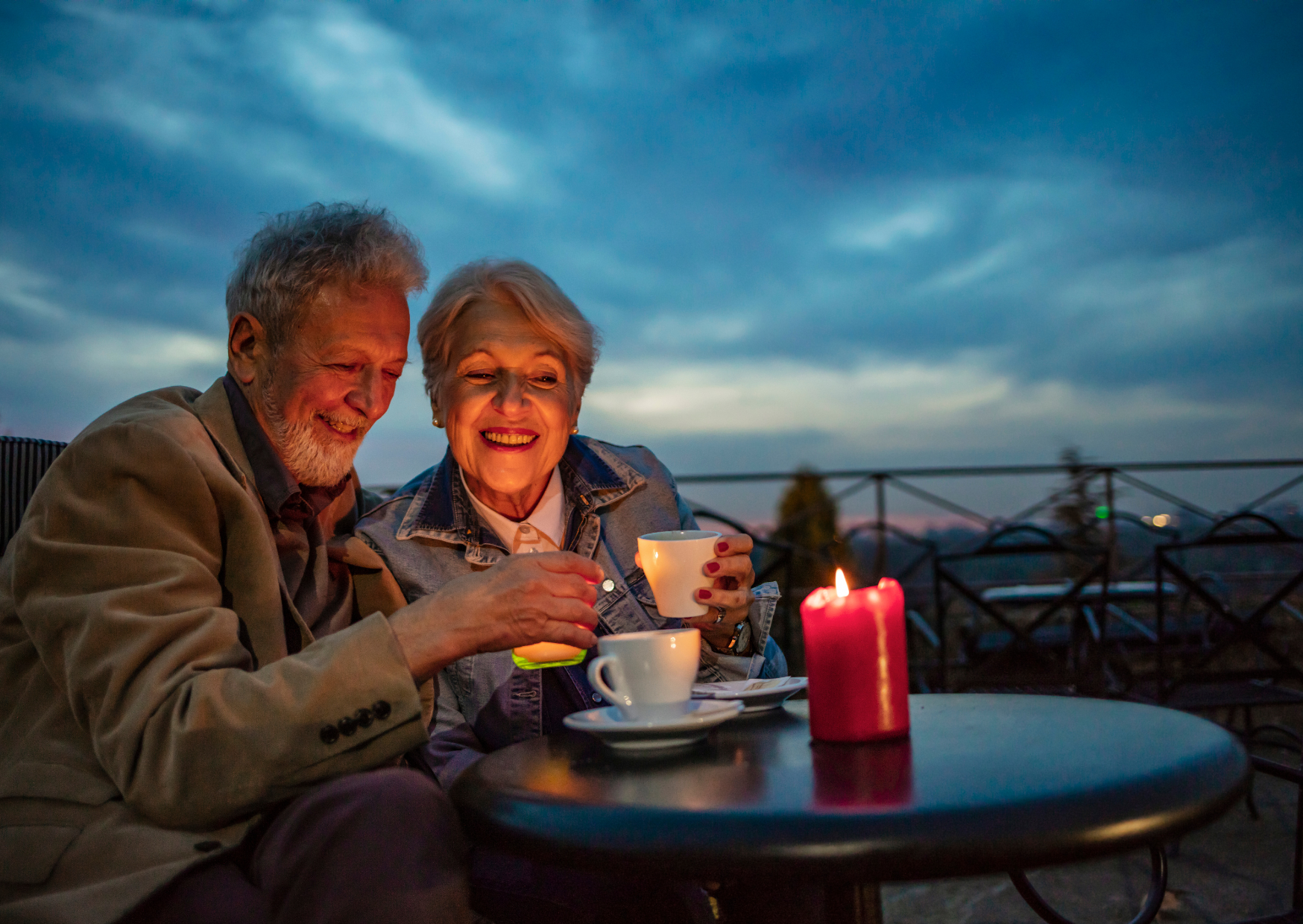
If you want the European at-70 version, you don’t start by planning a fancy dinner. You start by building the smallest possible ritual and protecting it.
Day 1
Pick the place. One place within ten to fifteen minutes that you can go to without drama. Café, bar, diner, park bench plus takeaway coffee. The place has to be easy.
Day 2
Pick the time. Same day, same hour every week. Protect it like an appointment. Don’t negotiate it every week. Negotiation kills rituals.
Day 3
Pick the budget. Keep it small. A ritual that costs €15 to €25 total is easier to repeat than one that costs €120. If you’re in the U.S., adjust for your market, but keep the idea: it should not feel like a financial decision.
Day 4
Make it walkable if possible. If you can’t walk, make driving minimal and remove friction: choose easy parking, early hour, or a place you can reach without stress.
Day 5
Remove the performance. No forced “how are we doing” talk. No relationship review. Treat it like a normal outing. Let conversation happen naturally.
Day 6
Add one small shared habit. The same drink, the same snack, the same seat if possible. Repetition creates comfort. Comfort creates return.
Day 7
Do it again next week. This is the entire point. A ritual isn’t a ritual until it repeats.
If you can keep this for a month, you’ll notice something subtle: you start seeing each other outside the household again. That changes tone. It changes patience. It changes warmth. It changes how you move around each other.
That’s what Europeans protect. Not a big anniversary dinner. A weekly habit that keeps the couple alive as a couple.
The Honest Takeaway
The date night European couples still have at 70 is not a grand romantic event.
It’s a small weekly outing that is:
- easy to repeat
- close to home
- built around walking or simple transit
- inexpensive enough to feel normal
- casual enough to survive tired weeks
- steady enough to keep the relationship from drifting into roommate mode
Americans often stop because their version of date night becomes too expensive, too logistically heavy, and too tied to driving and “special occasion” energy. Then the ritual dies. When the ritual dies, closeness becomes something you try to summon instead of something you maintain.
If you want the European version, you don’t need a new personality.
You need a smaller definition of date night and a place that makes it easy.
Small ritual is what lasts to 70. Big effort rarely does.

About the Author: Ruben, co-founder of Gamintraveler.com since 2014, is a seasoned traveler from Spain who has explored over 100 countries since 2009. Known for his extensive travel adventures across South America, Europe, the US, Australia, New Zealand, Asia, and Africa, Ruben combines his passion for adventurous yet sustainable living with his love for cycling, highlighted by his remarkable 5-month bicycle journey from Spain to Norway. He currently resides in Spain, where he continues sharing his travel experiences with his partner, Rachel, and their son, Han.