

For some people, anxiety medication is medically necessary. SSRIs, SNRIs, benzodiazepines, buspirone. These drugs exist because anxiety disorders are real, neurochemically driven conditions that cannot always be managed by lifestyle changes alone. Current psychiatric guidelines, including those from the APA and NICE, continue to recommend medication as a frontline treatment for moderate to severe generalized anxiety, panic disorder, and social anxiety disorder.
So no, this is not a story about how croissants cure panic attacks.
It is a story about a pattern that shows up consistently among Americans who spend extended time in France or Southern Europe more broadly. They arrive medicated for anxiety that was partially or largely generated by how they were living. And then, gradually, the daily structure changes. The inputs change. The nervous system starts running differently. And the medication that once felt essential starts feeling like it is treating a problem that has gotten smaller.
Not for everyone. Not for severe cases. Not as a replacement for clinical care.
But for the large category of Americans whose anxiety is downstream of chronic stress, sleep deprivation, overstimulation, poor diet, and a daily routine that never lets the nervous system fully rest, the French daily structure offers something that no pill can provide on its own.
A life that is less anxious by design.
The American Anxiety Baseline Is Not Normal
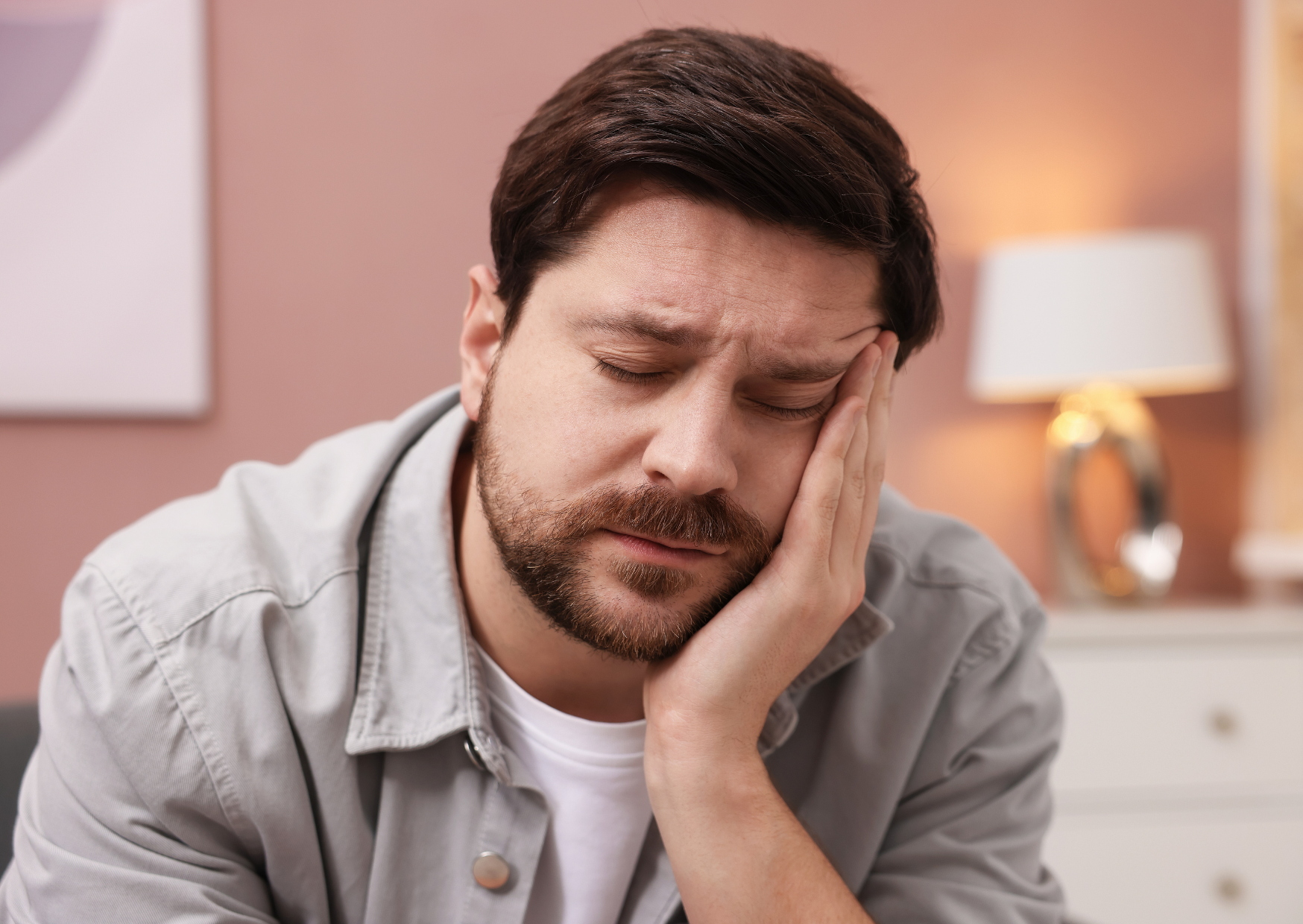
Americans tend to think their anxiety levels are just how life feels.
They are not.
The U.S. has among the highest rates of anxiety disorders in the developed world. Roughly 40 million American adults meet diagnostic criteria for an anxiety disorder in any given year. Prescriptions for anti-anxiety medications have climbed steadily for over a decade.
The instinct is to treat this as a medical problem with medical solutions. And for many people, that is correct.
But there is a structural question underneath the clinical one that rarely gets asked:
What if a significant portion of American anxiety is not a malfunction but a predictable response to the way American daily life is built?
Consider the standard American weekday:
- Wake to an alarm after insufficient sleep
- Check phone immediately (news, email, social media)
- Commute in traffic or on a crowded train
- Work 8 to 10 hours in a high-pressure environment
- Eat lunch at a desk or skip it
- Commute home
- Manage household logistics in the remaining hours
- Scroll screens until falling asleep too late
- Repeat
That routine is a cortisol manufacturing system. It is designed, unintentionally, to keep the nervous system in a low-grade fight-or-flight state from morning to night.
Medicating the anxiety that routine produces is like taking painkillers for a hand you keep putting on a hot stove. The medication is not wrong. But the hand is still on the stove.
What The French Daily Routine Actually Looks Like

The phrase “French daily routine” is not one thing. France has workaholics, stressed parents, and burned-out professionals just like anywhere else.
But the structural defaults of French daily life are different from American ones in ways that directly affect the nervous system.
Morning pace is slower. Not leisurely. Not vacation-like. But less compressed. The average French morning includes a short breakfast (coffee, bread, maybe fruit), less phone engagement in the first hour, and a commute that is more likely to involve walking or short public transport. The day does not start at a sprint.
Lunch is a real meal. This is the one Americans notice first. The French lunch break, even in office environments, tends to be longer and more structured than the American desk lunch. A meal with colleagues at a nearby restaurant. An actual plate. An hour or close to it. This is not universal and it is under pressure from modern work culture, but it remains far more common than in the U.S.
That midday pause does something specific to the nervous system. It breaks the cortisol arc. Instead of a continuous stress ramp from 8 a.m. to 6 p.m., the day has a valley in the middle. The body gets a signal that it is safe to downshift, even briefly.
Evenings are socially structured. French evenings tend to involve more social eating, slower meals, and less screen time than American ones. Dinner at 8 or 8:30 p.m. is normal. The meal itself takes an hour or more. The conversation is the activity, not the background.
The work boundary is legally reinforced. France’s “right to disconnect” law, passed in 2017, requires companies with more than 50 employees to establish rules about after-hours digital communication. Enforcement is imperfect. But the cultural norm it reflects is real. The expectation in France is that evenings and weekends are not work time. In the U.S., the expectation is that you are always reachable.
None of these things is a treatment for anxiety. All of them, stacked together and repeated daily, create conditions where the nervous system is less chronically activated.
The Cortisol Architecture Difference

This is the mechanism worth understanding.
Cortisol is the body’s primary stress hormone. In healthy function, it follows a predictable daily curve: high in the morning to promote alertness, declining through the day, low in the evening to promote sleep.
Chronic stress flattens and distorts this curve. The morning spike stays elevated. The evening decline never fully happens. The body stays in a state of alert that it was only designed to maintain temporarily.
The American daily structure, for many people, produces exactly this pattern. The morning alarm and phone check spike cortisol early. The desk lunch and continuous work keep it elevated. The evening screen time prevents the decline. The insufficient sleep prevents the overnight reset.
The French daily structure, by contrast, builds in more cortisol downshifts.
- A less compressed morning allows the cortisol spike to follow its natural timing
- A real lunch break creates a midday dip
- The social evening with slower eating signals safety to the nervous system
- The cultural boundary around after-hours work allows genuine downtime
- The earlier digital disconnection supports the evening cortisol decline
This is not magic. It is endocrinology. A daily structure that includes more rest signals produces a more functional cortisol curve. A more functional cortisol curve produces less baseline anxiety.
For Americans whose anxiety is significantly driven by chronic cortisol dysregulation, changing the daily structure can produce measurable changes in how anxious they feel. Not overnight. Over weeks and months.
The Food Connection
This section is not about superfoods. It is about meal patterns.
The American eating pattern tends toward:
- High sugar at breakfast
- Caffeine dependency throughout the day
- Skipped or rushed meals
- Ultra-processed snacks between meals
- Large portions at dinner
- Eating while doing something else
That pattern produces blood sugar instability. Blood sugar instability produces symptoms that overlap heavily with anxiety: racing heart, shakiness, irritability, difficulty concentrating, a vague sense of dread.
A meaningful number of Americans experiencing “anxiety” are actually experiencing blood sugar crashes layered on top of genuine anxiety. The two are difficult to separate without changing the food pattern first.
The French eating pattern, by default, tends to produce more stable blood sugar:
- A lighter, less sugary breakfast
- A substantial, balanced lunch as the main meal
- Fewer snacks between meals
- A moderate dinner eaten slowly
- Less ultra-processed food overall
This is not a diet. It is a meal rhythm. And for people whose anxiety has a significant blood sugar component, shifting to this rhythm can reduce the physical symptoms that amplify psychological anxiety. The anxious thoughts may still be there. But the body is no longer adding fuel to them every four hours with a sugar crash.
The Movement Pattern
Americans exercise. French people move. These are different things.
The American model is binary. You are either working out (gym, running, class) or you are sedentary (desk, car, couch). The gap between the two states is large.
The French model, especially in cities, involves more baseline movement throughout the day. Walking to the boulangerie. Walking to the metro. Walking to lunch. Taking the stairs because the elevator is small and slow. Walking home. Walking to dinner.
This consistent low-level movement has a different effect on anxiety than a 45-minute gym session followed by 10 hours of sitting.
Research consistently shows that regular moderate physical activity, including walking, is associated with reduced anxiety symptoms. The mechanism is partly neurochemical (endorphins, endocannabinoids, GABA modulation) and partly nervous system regulation (movement helps discharge the physical activation that anxiety produces).
A French person who walks 7,000 to 10,000 steps through their daily routine is getting a consistent anti-anxiety input that the American who drives everywhere and then does a 6 p.m. spin class is not getting in the same way.
The spin class helps. But it is a single spike of activity in an otherwise sedentary day. The walking is a low, steady baseline that keeps the nervous system from locking into a stationary, activated state.
The Stimulation Difference
This one is harder to measure but impossible to ignore.
American daily life is loud.
Not just in decibels. In information load. The average American checks their phone 96 times a day. News cycles run on alarm. Social media algorithms optimize for emotional activation. Advertising is constant. The sensory environment in most American cities and suburbs is designed to capture attention, not to leave it alone.
The French daily environment, particularly outside Paris, runs at a lower stimulation level.
Shops are closed on Sundays in many areas. Advertising is regulated more heavily. Public spaces are quieter. Phones are less present during meals and social interactions. The cultural norm around constant availability is weaker.
This matters for anxiety because the nervous system has a finite capacity for stimulation processing. When that capacity is exceeded chronically, the system stays in a hypervigilant state. Reducing the input load, even partially, allows the nervous system to return to a baseline that is not constantly scanning for the next alert.
Americans who move to France often describe a feeling they struggle to name in the first few weeks. “Quieter” is the word they usually land on. Not silent. Not boring. Just quieter. Less input. Less urgency. Less ambient noise competing for attention.
For anxiety, that reduction in ambient stimulation is not trivial. It is one of the most underestimated factors in the entire equation.
The Six-Week Honest Timeline
This is what actually happens when an American shifts to a French-style daily structure, based on patterns reported by expats and supported by what the research suggests about habit change and nervous system adaptation.
Week 1 to 2: Discomfort. The slower pace feels wrong. The lack of constant productivity feels lazy. The phone stays in hand out of habit. Sleep may improve slightly if screen time drops in the evening. Anxiety may actually increase temporarily because the American coping mechanism of staying busy is being disrupted.
Week 3 to 4: The body starts adjusting. The midday meal break begins to feel normal rather than indulgent. Walking replaces some of the restless energy that used to require a gym session to burn off. Sleep quality tends to improve more noticeably. The blood sugar stabilization from regular, balanced meals starts reducing the physical anxiety symptoms.
Week 5 to 6: This is where people start noticing. The background hum of anxiety, the one that felt permanent, is quieter. Not gone. Quieter. Mornings feel less compressed. Evenings feel less wired. The nervous system is spending more time in a resting state than it was six weeks ago.
Not everyone gets here. People with clinical anxiety disorders, trauma-based anxiety, or neurochemical patterns that do not respond to lifestyle changes may feel no different. Those people need clinical support, not a daily routine change.
But for the subset of Americans whose anxiety was significantly maintained by the structure of their daily life, six weeks of a genuinely different pattern can produce a shift that feels disproportionately large relative to how simple the changes were.
What This Does Not Fix

This section matters more than everything above it.
A French daily routine will not fix:
- Generalized anxiety disorder with a strong genetic or neurochemical component
- Panic disorder
- PTSD or complex trauma responses
- OCD
- Social anxiety disorder that is not primarily driven by lifestyle
- Anxiety secondary to another medical condition
Lifestyle changes reduce lifestyle-generated anxiety. They do not replace psychiatric medication when that medication is treating a condition that exists independent of how you live.
The worst version of this story is someone with a genuine anxiety disorder stopping their SSRI because a blog told them to eat lunch slower and go for walks. Do not be that person.
If you are on medication, any changes should be discussed with and supervised by the prescribing clinician. Tapering psychiatric medication without guidance can produce withdrawal effects that are easily mistaken for proof that you “needed the drug all along.” The process matters.
Your First 7 Days On The French Anxiety Pattern
Day 1: Do not check your phone for the first 30 minutes after waking. Not a digital detox. Just a delay. Let the cortisol spike happen naturally instead of being artificially amplified by news and notifications.
Day 2: Eat a real lunch. Away from your desk. Away from a screen. A plate with actual food, eaten slowly, for at least 30 minutes. This is the single most impactful structural change in the entire list.
Day 3: Walk for 20 minutes after dinner. Not exercise. A walk. Slow. No podcast. Let the nervous system process the day without additional input.
Day 4: Set a hard boundary on work communication after 7 p.m. Turn off email notifications. Let messages wait until morning. The French have a law for this. You need personal discipline.
Day 5: Cook a simple dinner and eat it at a table. Not in front of a screen. Not standing at the counter. The act of sitting down to a meal without competing stimulation signals safety to the nervous system in a way that eating while scrolling does not.
Day 6: Notice your anxiety level compared to a normal week. Not hoping for a miracle. Just observing. Is the background hum the same? Slightly quieter? Louder because the busyness that was masking it is gone?
Day 7: Decide what is sustainable. Not all of this will fit your life permanently. But some of it will. The lunch break. The evening walk. The morning phone delay. Pick the changes that felt most impactful and keep them. Drop the rest without guilt.
This is not a treatment plan. It is an experiment in changing inputs and observing what happens to the output.
What Actually Matters Here
The French daily routine is not medicine. It is not therapy. It is not a substitute for clinical care.
It is a structure.
A structure that happens to produce fewer of the conditions that amplify and sustain anxiety in otherwise healthy people. Less cortisol pressure. More stable blood sugar. More consistent movement. Less chronic stimulation. More genuine rest.
For Americans whose anxiety was largely built by the daily environment they lived in, changing that environment can do something that medication alone often cannot. It can reduce the supply of anxiety at the source instead of managing the symptoms downstream.
That is not a miracle. It is just a different way of organizing a day.
But for people who have spent years medicating what was partly a structural problem, discovering that the structure was the variable all along can feel like something close to one.

About the Author: Ruben, co-founder of Gamintraveler.com since 2014, is a seasoned traveler from Spain who has explored over 100 countries since 2009. Known for his extensive travel adventures across South America, Europe, the US, Australia, New Zealand, Asia, and Africa, Ruben combines his passion for adventurous yet sustainable living with his love for cycling, highlighted by his remarkable 5-month bicycle journey from Spain to Norway. He currently resides in Spain, where he continues sharing his travel experiences with his partner, Rachel, and their son, Han.