

A bad knee can turn the whole day into logistics.
Stairs become planning. Walking becomes negotiation. Sleep gets worse. Weight goes up because movement gets expensive. Then someone tells you the surgery that could fix it might cost $50,000 in the United States, and suddenly the knee is not the only thing that hurts.
That number is not fantasy. Current U.S. pricing references still place total knee replacement in a very wide range, with cash or billed prices often landing somewhere between the low $20,000s and the $70,000s, and medical-tourism comparisons still use about $45,000 to $50,000 as a plausible U.S. benchmark for private-pay comparison. GoodRx’s current knee-replacement coverage discusses U.S. costs in that general band, and Spain-focused medical tourism pricing still cites the U.S. average around $45,000 when comparing savings.
Spain is different.
Not “free.”
Not “€6,000 for every patient in every city.”
Different.
Private knee replacement in Spain is usually much cheaper than the U.S., but the real numbers depend on whether the surgery is partial or total, what implant is used, what hospital is chosen, how many nights are included, and whether rehab is bundled. Current Spain pricing references put total knee replacement more often in the €10,990 to €20,000 range, while lower figures around €6,000 to €8,000 show up more often as low-end medical tourism quotes or selected minimally invasive/partial cases.
That is the real story.
America makes the surgery financially terrifying.
Spain makes it look like a medical procedure again.
The American Number Gets Big for Reasons Patients Can Feel but Rarely Control
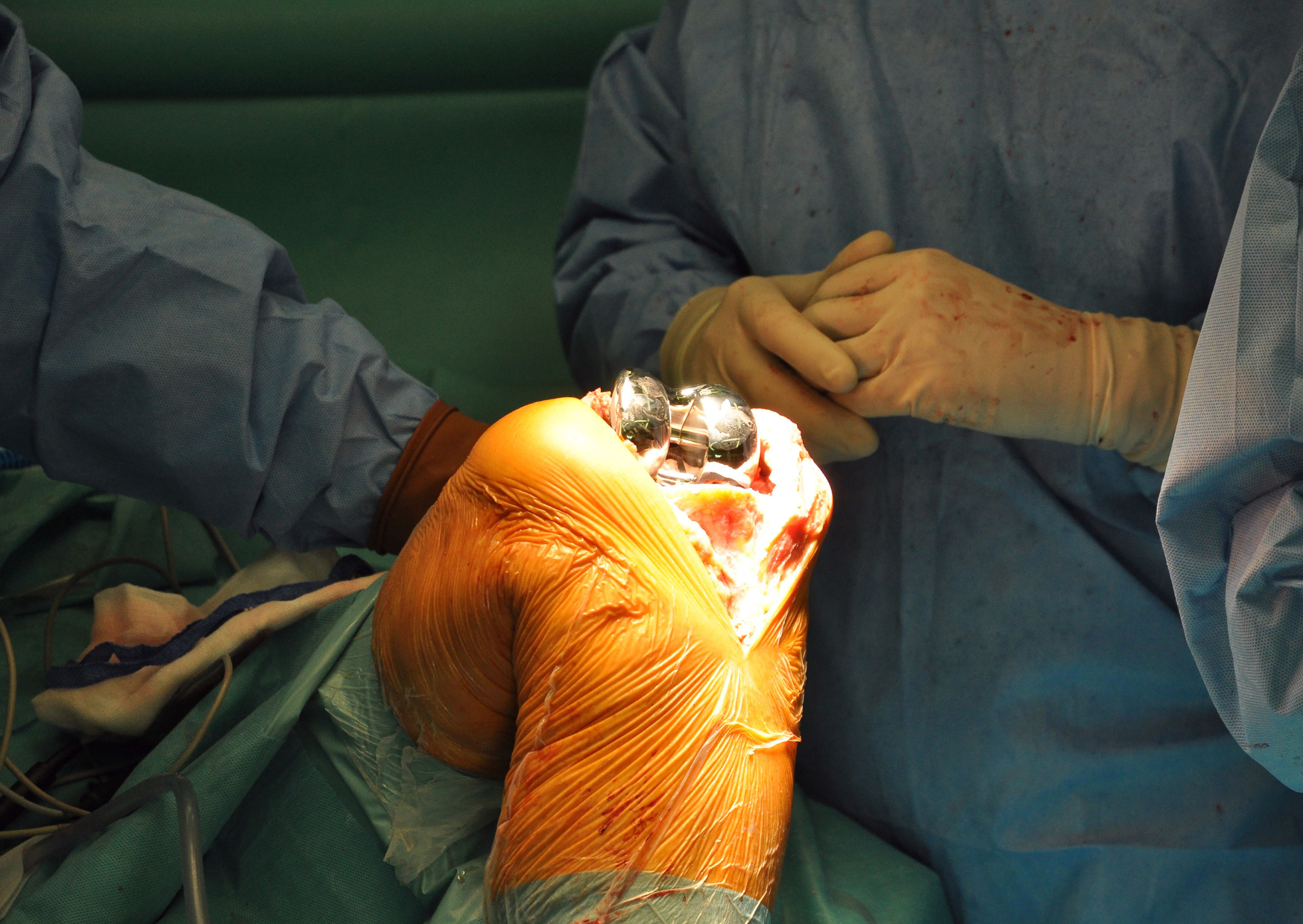
A lot of Americans still underestimate how quickly orthopedic surgery gets priced into absurdity.
It is not just the surgeon. It is the facility fee, implant, anesthesia, imaging, hospital stay, rehab, and the sheer fact that U.S. healthcare billing still behaves like a machine built to test how much chaos a person can survive while in pain. GoodRx’s current knee replacement guide explains that out-of-pocket costs vary dramatically by insurance type and site of care, and U.S. comparison pieces on joint replacement continue to show a wide pricing spread that can easily cross $40,000 to $50,000 in billed or private-pay settings.
This is why the number sounds so offensive.
Because it is not only about surgery. It is about the entire American habit of turning standard care into a financial event.
A knee replacement is not a niche experimental procedure. It is one of the most common major orthopedic operations in the developed world. And yet the American pricing environment still lets the same operation range from “painful but manageable” to “life-disrupting debt story,” depending on coverage, network, and provider.
That is exactly why Spain keeps entering the conversation.
Not because Spain discovered a magical cheaper knee.
Because Spain did not build the same billing theater around the operation.
In Spain, the Same Operation Is Usually Priced as a Package
This is one of the biggest differences.
Spain’s private market often presents knee replacement more like a package and less like a financial scavenger hunt. Current Spanish surgery platforms and private hospital intermediaries typically list what is included: surgeon, anesthetist, operating room, implant or osteosynthesis material, hospital stay, pre-op workup, and sometimes post-op consultation until discharge. Operarme, one of the clearer Spanish private-pricing references, currently lists total knee replacement from €10,990 in multiple cities with an all-inclusive structure. That package includes the room, surgeon and anesthesia fees, surgical material, implant-related costs, pre-op study, blood products if needed, and up to five days of hospitalization.
That matters because Americans are used to the opposite.
They are used to asking:
Is the surgeon in network?
Is the hospital in network?
Is the implant separately billed?
Is rehab included?
What exactly does the estimate not include?
Spain’s private system is not perfect, but the pricing logic is far easier to understand. You can still end up paying more depending on complexity or city. But the structure is legible in a way U.S. billing often is not.
That alone changes how a patient thinks about the surgery.
The €6,000 Number Exists, But It Is Not the Whole Spain Story
This is where people get confused.
Yes, you will find knee-replacement prices in Spain starting around €6,000 or the equivalent in dollars. Current cross-border treatment sites still show low-end figures around $6,000 to $8,000 for certain knee-replacement categories in Spain, and WhatClinic listings in the Costa del Sol currently show knee-replacement prices starting from €6,385.
But those numbers are not the universal Spain price for a full private total knee replacement in a major hospital.
They are better understood as:
- low-end starting quotes
- selected clinic pricing
- sometimes partial or less complex cases
- sometimes packages that do not fully reflect the final all-in recovery bill
If you want the most defensible real-world Spain number for total knee replacement, the stronger current range is usually more like €10,990 to €20,000, depending on city, implant, and provider. Operarme’s current all-inclusive pricing starts at €10,990. A broader Spanish orthopedic price guide from 2024 estimates private-hospital knee arthroplasty around €10,000 to €20,000. Bookimed’s 2026 Spain page gives a similar private-pay band of roughly $9,500 to $16,000.
So yes, Spain can look like €6,000 in the low-end advertising version.
Most patients planning a full private knee replacement should budget more.
Still far less than America.
Just not as low as the most viral number.
What Spain Usually Includes That Americans Still Have to Decode

This is where the comparison gets useful.
A Spanish private knee replacement quote often covers:
- surgeon fees
- anesthetist
- operating room
- implant or surgical material
- hospital room
- preoperative testing
- in-hospital follow-up
- immediate post-op care until discharge
That is not theoretical. It is spelled out in current package descriptions from providers like Operarme and in Spain surgery comparison sites for international patients.
What may not always be fully included is:
- extensive post-discharge rehab
- flights
- accommodation for recovery after discharge
- longer-term physiotherapy
- revision or complication management outside the package
- a companion’s travel costs
- the extra days you stay in Spain because walking onto a plane too early is a terrible idea
This is still much cleaner than the U.S. setup.
But it is why a patient should not treat the lowest Spain quote as the final life cost either.
The honest comparison is not $50,000 vs €6,000 exactly.
It is more like:
$45,000 to $50,000 in the U.S. private-pay comparison frame
versus
roughly €11,000 to €20,000 in Spain for a realistic total private package
with some low-end quotes below that depending on clinic and case.
That is still a huge gap.
Rehab Is the Part People Forget When They Get Excited About Surgery Abroad
A knee replacement is not just a surgery purchase.
It is a recovery project.
That is why this topic gets distorted online. People compare the operation prices and stop there, as if the surgery itself were the entire event. It is not. Recovery matters at least as much as the operating room. GoodRx’s knee-replacement guidance makes clear that rehab and physical therapy are part of the normal recovery process, and Spain surgery packages that look attractively low do not always spell out how much structured rehab is included after hospital discharge.
This matters because a patient flying to Spain for surgery still needs a real recovery plan.
Where are you doing the first two to six weeks?
Who helps you?
How much walking is realistic?
When do you start physiotherapy?
How long before the flight home is sensible?
What happens if swelling, pain, or limited range of motion drag on longer than expected?
The surgery can still be an excellent financial decision.
It just is not a 48-hour bargain-shopping event.
The people who do this well budget for the whole arc:
consultation
surgery
hospital stay
recovery accommodation
physio
follow-up
then home
That is still much cheaper than U.S. billed chaos for many patients.
It is just not as simple as “book flight, get new knee, done.”
Why America Ends Up So Much Higher

This is the part that keeps annoying people, because the answer is not medical mystery.
It is system design.
The U.S. does not get better results simply because it charges more. It charges more because the pricing structure allows more layers of billing, bigger facility spreads, more insurer distortion, and much weaker transparency. GoodRx’s surgery cost discussions, plus the broader private-pay ranges used by medical tourism comparison sites, are enough to show how ordinary it is for a routine joint replacement to drift into a five-figure or even high-five-figure event.
Spain’s private system is not cheap because surgeons work for free.
It is cheaper because the total package is priced inside a healthcare market that simply does not normalize the same billing inflation.
That does not mean Spain is always the best choice for every person. It does mean the U.S. number is not some unavoidable law of nature.
It is a policy outcome.
And patients can feel that in their bones, even before anyone touches the knee.
The Knee Patients Most Likely to Consider Spain
This option usually becomes attractive for three groups.
First, uninsured or underinsured Americans who are staring at a U.S. private-pay bill that feels impossible.
Second, Americans with insurance but very high deductibles, out-of-network exposure, or denied timing who still end up facing large cash costs.
Third, international patients who can self-fund but would rather spend the money on actual treatment and recovery than on U.S. billing excess.
Spain works especially well in this conversation because it is not a fringe medical tourism destination. It has a strong private hospital sector, orthopedic expertise, and a healthcare system with a good overall reputation. Cross-border treatment sites keep leaning on that combination: quality plus lower pricing.
That is why the country keeps showing up in these comparisons.
Not because the internet loves tapas.
Because the arithmetic is real.
What You Should Actually Budget If You’re Serious

If you are looking at Spain for a knee replacement, the useful budgeting number is not the most dramatic low-end quote.
It is the all-in number.
A sensible working budget for a full private knee replacement in Spain is more like this:
- surgery package: €10,990 to €20,000
- flights and local travel: €300 to €1,500+ depending on origin
- post-discharge accommodation: €500 to €2,000+
- early rehab and physio: variable, often several hundred euros or more
- contingency for complications or extra days: always needed
That is the adult budget.
If the final all-in number lands around €13,000 to €22,000, the patient is still often far below the sort of U.S. private-pay exposure that made them look abroad in the first place.
And yes, some people will land lower.
The point is not to optimize the fantasy.
The point is to survive the recovery with the finances intact.
The Real Comparison That Matters
The reason this topic hits so hard is not just the price gap.
It is what the price gap reveals.
A total knee replacement is ordinary modern medicine. It is not bespoke luxury. The fact that one developed country can make it feel like a $50,000 financial emergency while another can often price it as a five-figure but understandable package tells you almost everything you need to know about the two systems.
That is the real scandal.
Not that Spain is cheap.
That the U.S. made standard orthopedic care feel financially extreme.
If You Do One Thing
Do not compare the American bill to the lowest Spanish teaser price.
Compare:
- the actual U.S. private-pay or billed reality
to - the actual Spanish all-in recovery reality
That is the honest frame.
And even under that stricter frame, Spain still often wins by a huge margin.

About the Author: Ruben, co-founder of Gamintraveler.com since 2014, is a seasoned traveler from Spain who has explored over 100 countries since 2009. Known for his extensive travel adventures across South America, Europe, the US, Australia, New Zealand, Asia, and Africa, Ruben combines his passion for adventurous yet sustainable living with his love for cycling, highlighted by his remarkable 5-month bicycle journey from Spain to Norway. He currently resides in Spain, where he continues sharing his travel experiences with his partner, Rachel, and their son, Han.