
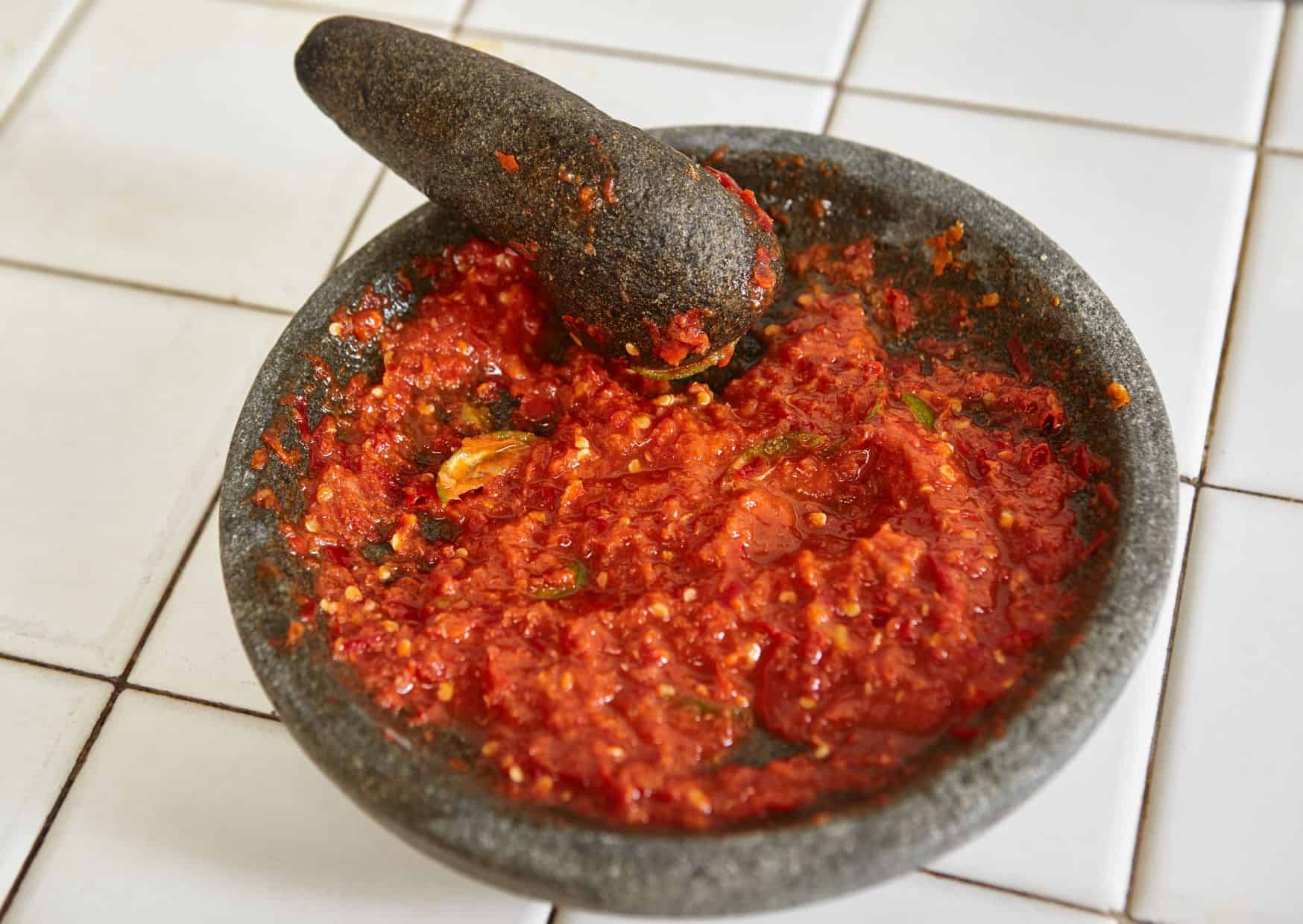
When it comes to the bold and fiery world of Indonesian cuisine, no condiment captures the national palate quite like sambal. This spicy chili-based sauce is more than just a side it’s a staple on virtually every Indonesian table, woven into the country’s culinary identity. Made from a blend of fresh chilies, garlic, shallots, vinegar, and sometimes lime or shrimp paste, sambal delivers a perfect punch of heat, tang, and umami in each spoonful.
While there are dozens of regional variations each with its own twist homemade sambal offers a flexibility that store-bought versions simply can’t match. Whether you prefer your sauce fiery-hot or more balanced with sweetness and acidity, making sambal at home allows you to tailor the heat to your liking while connecting with a vibrant culinary tradition. It’s quick to prepare, stores well, and adds depth and character to everything from rice and noodles to grilled meats and vegetables.
In this recipe guide, we’ll show you how to make a classic homemade sambal that you can enjoy with your favorite dishes. Once you’ve made it once, it will likely become a kitchen essential you’ll reach for again and again.
Read here the best Indonesian Breakfast and Indonesia Sim Card
BOOK YOUR TRAVEL INSURANCE
Two of our favorite travel insurance: Heymondo Vs Safetwing cheapest travel Insurance. You can get for $135 USD your Heymondo Travel Insurance with Heymondo discount code valid for 90 days. Read our full comparison of Genki vs Safetywing Travel Insurance Review and the comparison Heymondo vs Genki
Best Time to Eat and What to Pair It With
Best time to eat:
Sambal isn’t tied to a specific mealtime it’s an all-day flavor booster. Use it at breakfast with fried rice (nasi goreng), at lunch with noodles, or at dinner alongside grilled fish, satay, or stir-fried vegetables.
Perfect pairings:
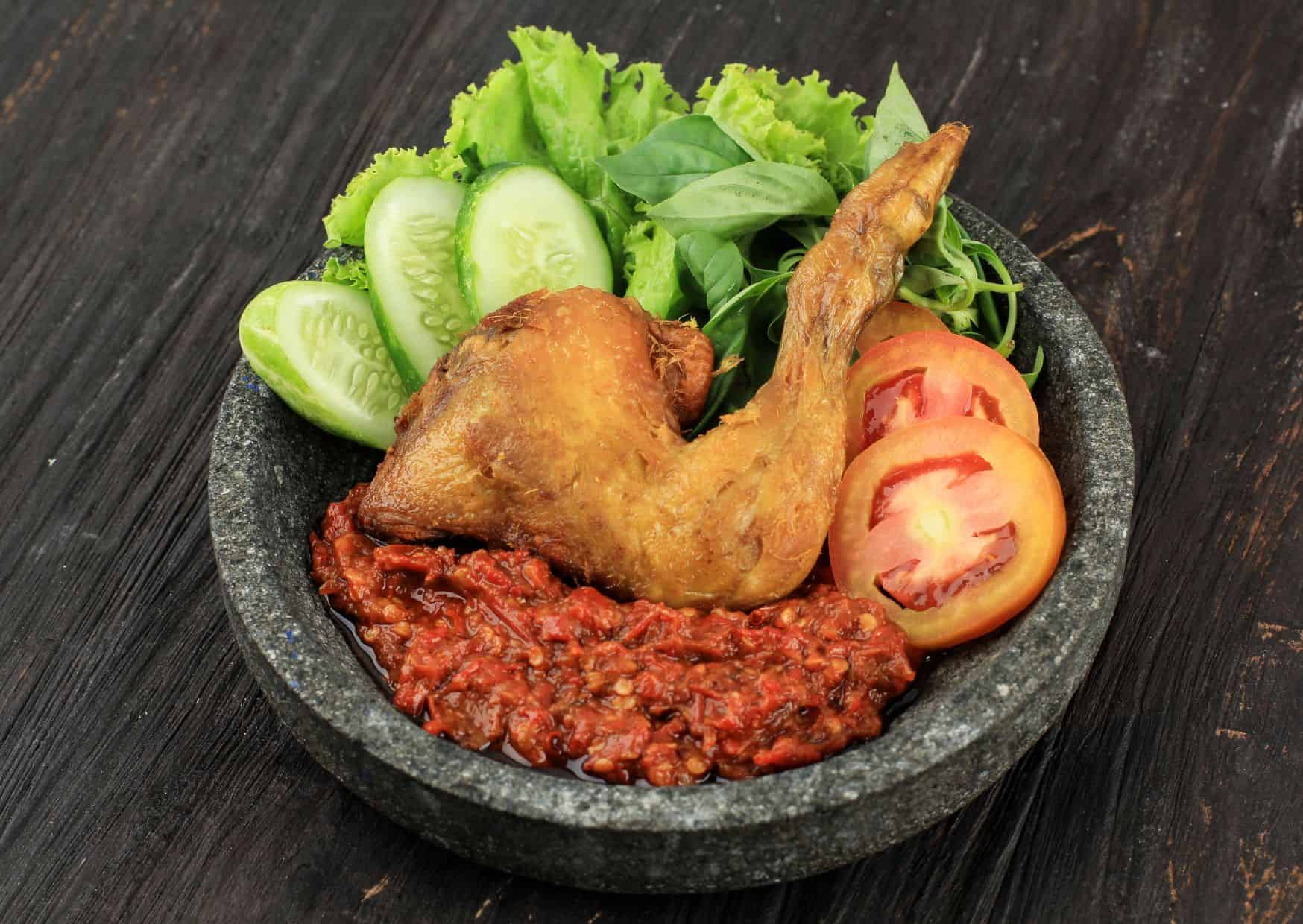
Main dishes: Pair with Indonesian classics like nasi goreng, gado-gado, or ayam penyet (smashed fried chicken).
Side: Serve it with plain steamed rice and tempeh or tofu for a satisfying vegetarian combo.
Drink: Cool off the heat with an iced jasmine tea, coconut water, or a glass of refreshing lime soda.
Sambal doesn’t just spice up your food it transforms it. Once you’ve mastered the basics, you’ll understand why this sauce is the soul of so many Indonesian meals.
One of the biggest debates in Indonesia is over how sambal should be made. Traditionalists swear by using a stone mortar and pestle to crush the ingredients by hand, claiming it releases the natural oils and enhances the flavor. Modern cooks, however, often use blenders for convenience, sparking a generational divide over what counts as “real” sambal.
Another controversy lies in how spicy sambal should be. Some believe the hotter, the better true Indonesian sambal should make you sweat. Others argue that excessive heat hides the delicate balance of flavors that make sambal special. The best sambal, many chefs say, is about harmony, not punishment.
Finally, there’s a question of regional authenticity. With over 200 variations of sambal across Indonesia, no single recipe can claim to be the “original.” Yet each region proudly defends its version as the most authentic whether it’s the shrimp-paste-rich sambal of Java or the raw shallot-based sambal from Bali.
How to Make Sambal
Sambal Recipe Ingredients
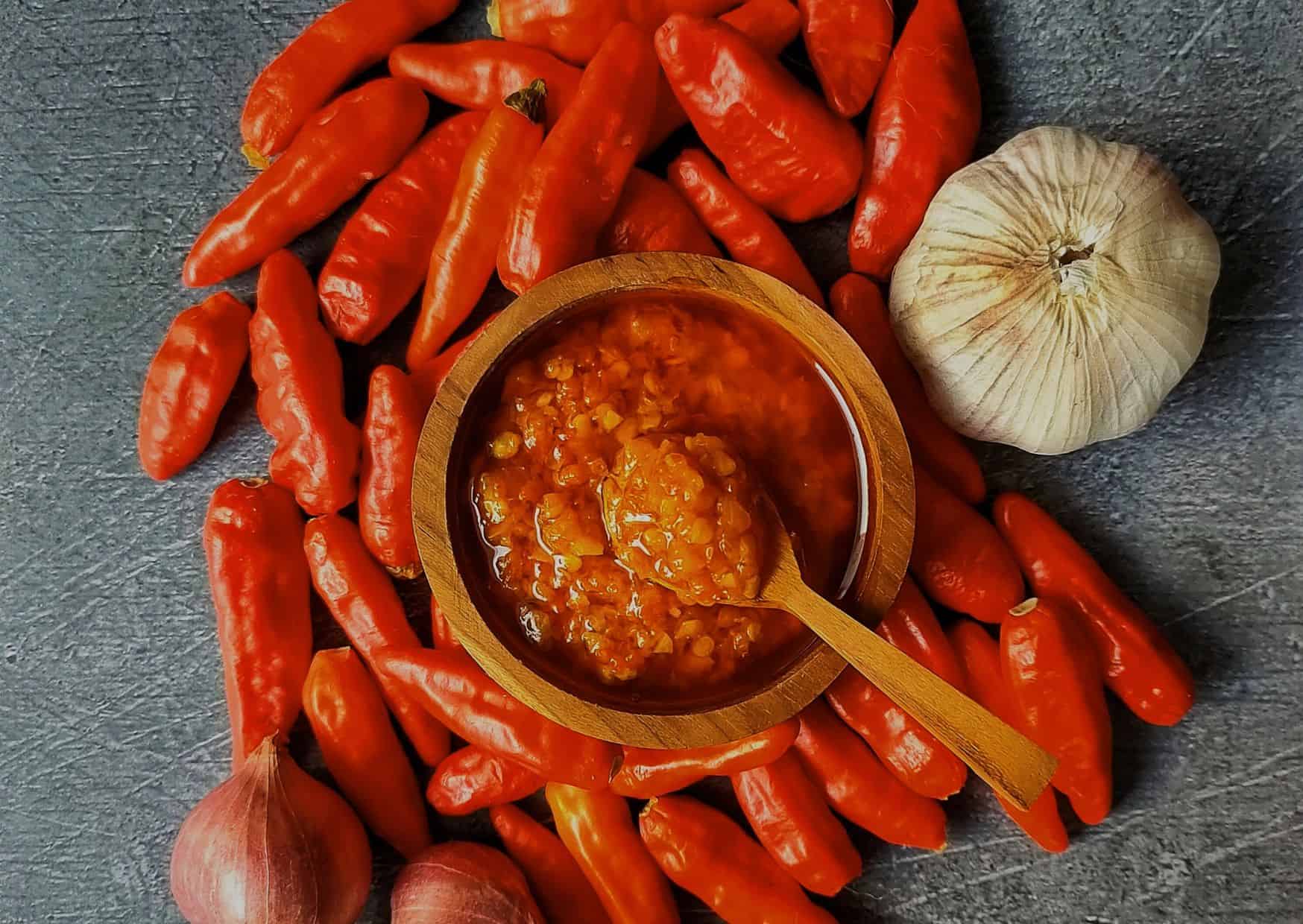
10-15 red chilies (adjust to taste)
3-4 cloves garlic
2-3 shallots
1 medium tomato
1 teaspoon shrimp paste (terasi) or fish sauce (optional)
1 tablespoon lime juice
1 tablespoon palm sugar or brown sugar
2 tablespoons vegetable oil
Salt to taste
Get the best deals for your home and kitchen needs
Step By Step How to Make Sambal
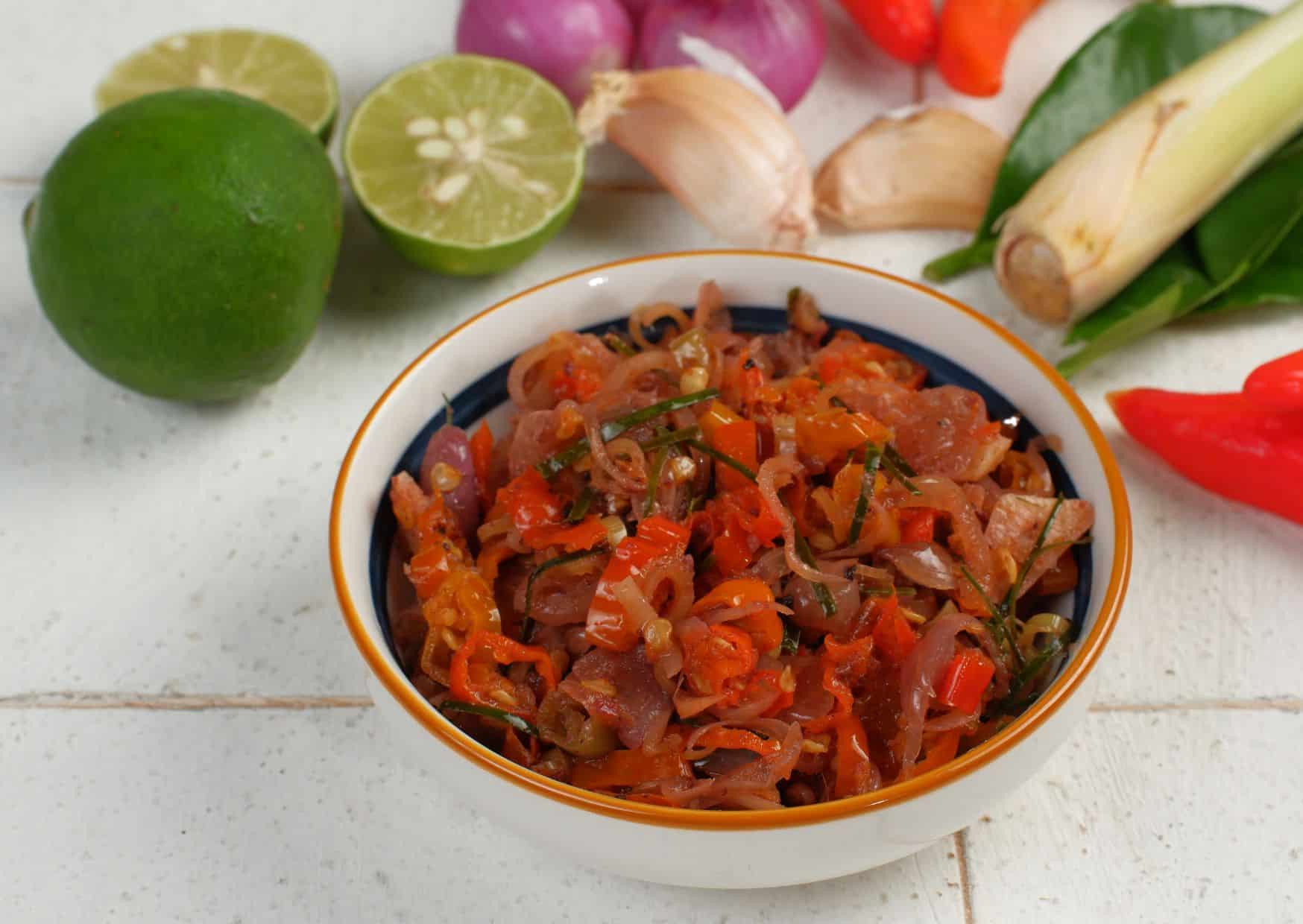
Prepare the Ingredients
Remove the stems from the chilies. If you prefer a milder sambal, you can remove the seeds. Peel and roughly chop the garlic and shallots. Roughly chop the tomato.
Blend the Ingredients
In a food processor or blender, combine the chilies, garlic, shallots, and tomato. Blend until you achieve a coarse paste. You can add a small amount of water if necessary to help with blending.
Cook the Sambal
In a pan, heat the vegetable oil over medium heat. Add the blended chili paste to the pan and cook, stirring frequently, for about 5-7 minutes until the mixture becomes fragrant and the oil starts to separate from the paste.
Add the shrimp paste or fish sauce if using, and cook for another 2-3 minutes. Stir in the lime juice, palm sugar, and salt to taste. Continue cooking for another 2 minutes until everything is well combined.
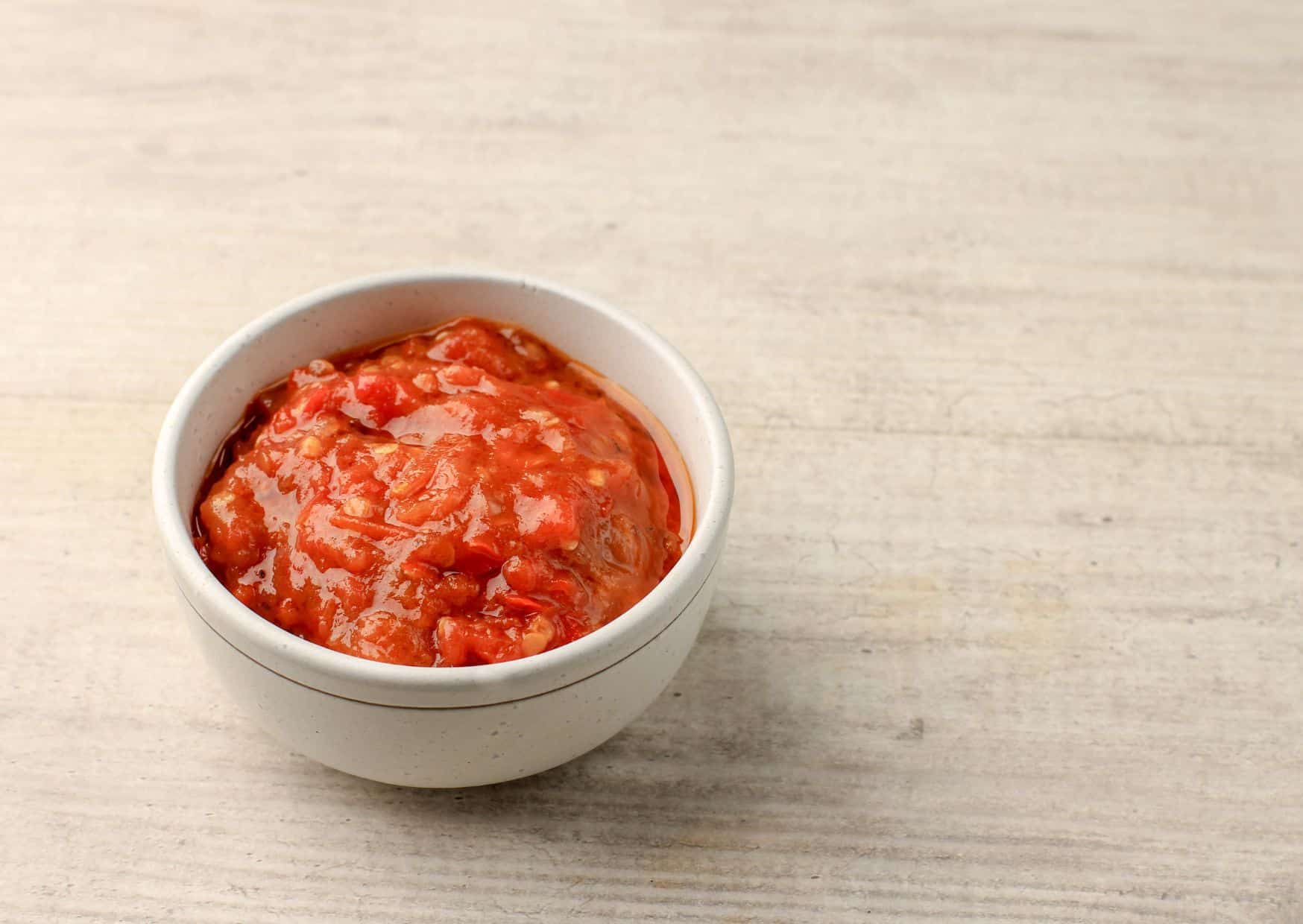
Adjust and Store
Taste the sambal sauce and adjust the seasoning if necessary. You can add more salt, sugar, or lime juice according to your preference. Allow the sambal to cool before transferring it to a clean jar or container. Store in the refrigerator for up to two weeks.
The heat level of the sambal can be adjusted by the type and amount of chilies used. For a milder sambal, use fewer chilies or remove the seeds.
If you prefer a smoother sauce, blend the ingredients longer. For a chunkier texture, blend briefly. You can add additional ingredients such as lemongrass, ginger, or tamarind paste for different flavor profiles.
Be patient while cooking the paste. The longer it cooks, the deeper the flavors will be.
Tips To Make Sambal
The heat level of the sambal can be adjusted by the type and amount of chilies used. For a milder sambal, use fewer chilies or remove the seeds.
If you prefer a smoother sauce, blend the ingredients longer. For a chunkier texture, blend briefly. You can add additional ingredients such as lemongrass, ginger, or tamarind paste for different flavor profiles.
Be patient while cooking the paste. The longer it cooks, the deeper the flavors will be.
How Many Calories Have Sambal
Chilies: 2 calories
Garlic: 4 calories
Shallots: 5 calories
Tomato: 3 calories
Shrimp Paste/Fish Sauce: 5 calories
Lime Juice: 1 calorie
Palm Sugar/Brown Sugar: 15 calories
Vegetable Oil: 40 calories
Total Estimated Calories per Tablespoon: Approximately 75 calories.
Origin and History
Sambal is far more than a spicy condiment. It is one of the defining elements of Indonesian cuisine and a daily presence on countless tables across the archipelago. At its core, sambal is a chili-based sauce or paste, but its identity goes well beyond heat. It represents local ingredients, regional traditions, and the idea that a meal is not fully complete until it has the right balance of fire, acidity, salt, and depth.
The history of sambal is closely tied to Indonesia’s long relationship with trade, agriculture, and culinary adaptation. Although chili peppers arrived in Southeast Asia through global trade after the Columbian Exchange, they were absorbed so completely into local cooking that sambal now feels inseparable from the region’s food culture. Over time, Indonesian cooks combined chilies with ingredients such as shallots, garlic, shrimp paste, lime, tamarind, tomatoes, and palm sugar to create an enormous range of versions.
Different islands and regions developed their own sambals based on local tastes and ingredients. Some are bright and fresh, others dark and smoky, some sharply acidic, and others deeply savory. In one area, sambal may be pounded raw with bird’s eye chilies and lime, while in another it may be slowly cooked until rich and jammy. That diversity is one of the reasons sambal has such a strong hold on anyone who grows up eating it.
Today, sambal has traveled far beyond Indonesia and become known around the world, but its heart remains intensely local. What outsiders often call “sambal” as if it were one thing is actually a vast family of sauces with different personalities. That depth is part of why people become so attached to it. Sambal is not just spicy. It is expressive, personal, and rooted in place.
One of the biggest debates around sambal is authenticity. Many people outside Indonesia think of sambal as a single bottled hot sauce, but in reality the most authentic sambal is often the one that reflects a specific household, island, or meal. That makes the question of what counts as “real” far more complicated than most people expect. Authenticity in sambal is often less about one perfect formula and more about whether the method and flavor make sense in their original context.
Another point of tension is the role of shrimp paste, known in many forms across Southeast Asia. For some cooks, a sambal without fermented shrimp paste lacks depth and true character. For others, especially in vegetarian or halal-adapted contexts, sambal can still be entirely legitimate without it. This debate highlights how tradition and practicality constantly interact in real kitchens.
There is also disagreement over texture and technique. Some insist sambal must be ground by hand in a mortar and pestle to achieve the right body and release the oils properly. Others accept blenders and food processors as modern tools that save time without ruining the result. Purists often claim the flavor changes when the sauce is over-processed, while practical home cooks argue that a good sambal matters more than strict ritual.
Finally, the global popularity of sambal has created confusion about sweetness, intensity, and branding. Commercial versions sometimes become sweeter, milder, or more uniform to fit broader markets. That has helped sambal spread, but it has also flattened public understanding of what it really is. For many Indonesians and serious home cooks, the bottled version is only a distant cousin of the fresh, layered condiment they know.
How Long It Takes to Prepare
One reason sambal is so beloved is that it can be made surprisingly quickly. A simple fresh sambal can take as little as 10 to 15 minutes from start to finish, especially if the ingredients are already washed and ready to go. That makes it one of the most rewarding small-batch condiments to prepare at home because the flavor payoff arrives almost immediately.
Cooked sambals usually take longer, but not dramatically so. If you are frying the aromatics, softening tomatoes, or letting the mixture reduce into a richer paste, the process may take 20 to 30 minutes. Much of that time is hands-off once the ingredients hit the pan, and the slower cooking often produces a deeper, rounder flavor.
If you are using a mortar and pestle, the preparation may take a little more effort, but many cooks consider that time part of the pleasure. Crushing the chilies, garlic, shallots, and other ingredients by hand gives you direct control over texture and intensity. It also creates a sauce that feels more alive than one blended into perfect smoothness.
Overall, sambal is a highly manageable condiment for home cooks. Even if you are making it for the first time, the process is not complicated. The real challenge is usually not time but balance. Once you understand how much acid, salt, sweetness, and heat you prefer, it becomes one of the easiest signature sauces to keep in your kitchen.
Serving Suggestions
Serve sambal in a small bowl or jar alongside rice dishes, grilled meats, or noodles. It should always be on the table, just like salt or pepper in Western dining. You can also use it as a marinade for chicken or fish to add depth and complexity before grilling.
For a vibrant presentation, garnish sambal with a few slices of red chili or a squeeze of lime. The bright red color and glossy texture make it visually striking a small detail that instantly enhances the look of any meal.
Store homemade sambal in an airtight container in the fridge for up to a week. Over time, the flavors deepen, creating an even richer and smokier taste. It’s one of those condiments that only gets better with age.
Final Thoughts
Sambal represents everything that makes Indonesian cuisine special bold, vibrant, and full of character. It’s more than just spice; it’s a cultural bridge connecting people through shared meals and unforgettable flavors. Making it from scratch gives you a deeper appreciation for Indonesia’s culinary traditions and the care that goes into every meal.
Whether you prefer it fiery and raw or mellow and roasted, sambal is the perfect way to bring warmth and authenticity into your kitchen. It’s proof that a few simple ingredients, when treated with love and respect, can create something extraordinary.
So next time you’re cooking at home, skip the bottled sauces and try making your own sambal. You’ll not only unlock a new level of flavor you’ll experience a taste of Indonesia’s soul.

About the Author: Ruben, co-founder of Gamintraveler.com since 2014, is a seasoned traveler from Spain who has explored over 100 countries since 2009. Known for his extensive travel adventures across South America, Europe, the US, Australia, New Zealand, Asia, and Africa, Ruben combines his passion for adventurous yet sustainable living with his love for cycling, highlighted by his remarkable 5-month bicycle journey from Spain to Norway. He currently resides in Spain, where he continues sharing his travel experiences with his partner, Rachel, and their son, Han.