
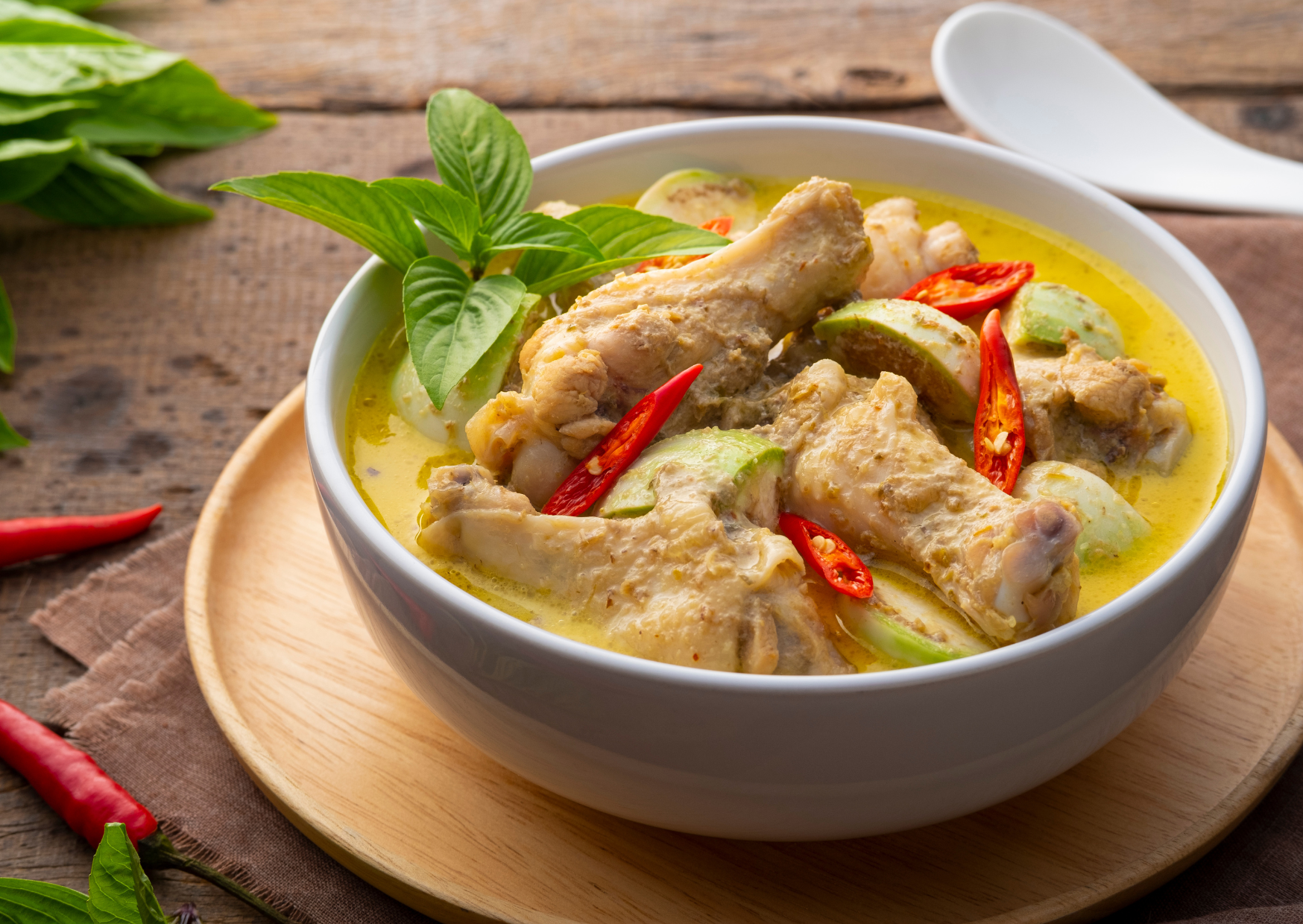
Takeout Thai green curry has one job.
Arrive fast, taste good enough, and convince you it was worth paying restaurant prices for coconut milk, chicken, and a sauce that usually needed more basil and less sugar.
Sometimes it works.
A lot of the time, it arrives thin, too sweet, short on herbs, and somehow both expensive and forgettable. That is the real opening for a home version. Thai green curry is one of the few dishes that can feel restaurant-level on a weeknight without behaving like a weekend project. Good versions still come down to the same structure: curry paste fried until fragrant, coconut milk for richness, fish sauce for depth, sugar for balance, lime for lift, basil at the end, and quick-cooking protein and vegetables that do not need a long braise. That basic pattern shows up across reliable recipe sources, whether they lean more weeknight or more traditional.
The other reason this works at home is cost.
A basic chicken green curry for four usually needs chicken thighs, coconut milk, curry paste, fish sauce, sugar, rice, and a few vegetables. Using current grocery pricing in Spain and broadly available supermarket ingredients, a realistic total often lands around €12 to €18 for four servings, depending on how fancy you get with herbs and whether you already have fish sauce and rice in the cupboard. That puts the homemade version well below the cost of four restaurant portions or a typical delivery order.
And unlike takeout, the home version lets you fix the things restaurants usually get wrong.
More basil. More heat. Less sugar. Thicker sauce. Better chicken. Real vegetables instead of tired peppers. Rice that is not a clump in a plastic tray.
That is the whole advantage.
The 25-Minute Recipe
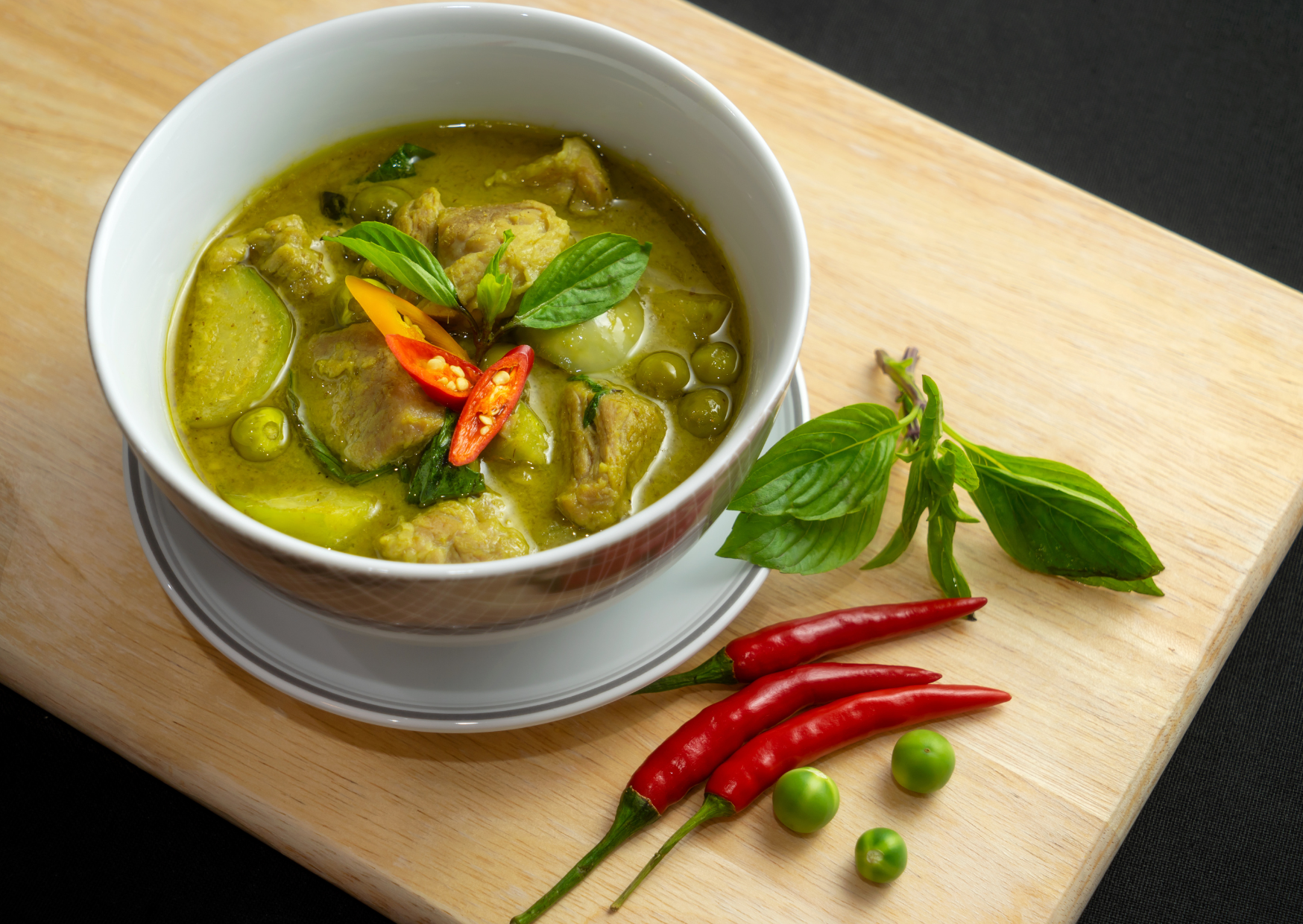
This version is built for speed, not for proving purity on the internet.
It uses store-bought green curry paste on purpose. Serious Eats and Hot Thai Kitchen both note that good curry paste shortcuts are absolutely workable for home cooks, and for a weeknight meal that is exactly the right compromise.
Serves 4
You need
- 500 g boneless skinless chicken thighs, cut into bite-size pieces
- 2 tablespoons neutral oil, if your coconut milk is not very rich
- 3 to 4 tablespoons Thai green curry paste
- 2 x 400 ml cans coconut milk
- 150 to 200 ml water or light chicken stock
- 1 tablespoon fish sauce, then more to taste
- 1 to 2 teaspoons sugar or palm sugar
- 1 courgette or 1 small aubergine, cut into chunks
- 150 g green beans or sugar snap peas
- 1 red pepper, sliced, optional
- 1 good handful Thai basil if you can get it, or regular basil if you cannot
- Juice of half a lime, plus more to finish
- Cooked jasmine rice, to serve
- Optional but excellent: 2 kaffir lime leaves, sliced chili, bamboo shoots
How to do it
Put the rice on first. That is the only way this stays a 25-minute dinner.
Heat a wide pan or wok over medium heat. Add a little oil only if your coconut milk is not especially rich. Spoon in the green curry paste and cook it for a minute or two until it smells stronger and less raw. BBC Good Food and Hot Thai Kitchen both use this same general move because frying the paste first wakes everything up.
Add the thick top part of one can of coconut milk if it has separated. If it has not, just add a good splash. Stir until the paste loosens and the fat starts to look glossy.
Add the chicken and coat it in the paste. Cook for 2 to 3 minutes.
Pour in the rest of the coconut milk and the water or stock. Add fish sauce, sugar, and the lime leaves if using. Bring it to a gentle simmer, not a violent boil.
Add the vegetables. Simmer for about 6 to 8 minutes until the chicken is cooked and the vegetables are tender but not wrecked.
Turn off the heat. Stir in the basil and lime juice. Taste it.
Then fix it properly:
- needs more depth, add fish sauce
- needs more balance, add a little sugar
- needs more brightness, add lime
- needs more heat, add chili or more curry paste next time
- too thick, add a splash of water
- too thin, simmer 2 more minutes uncovered
Serve over jasmine rice.
That is dinner.
Why This Tastes Better Than Takeout More Often Than It Should
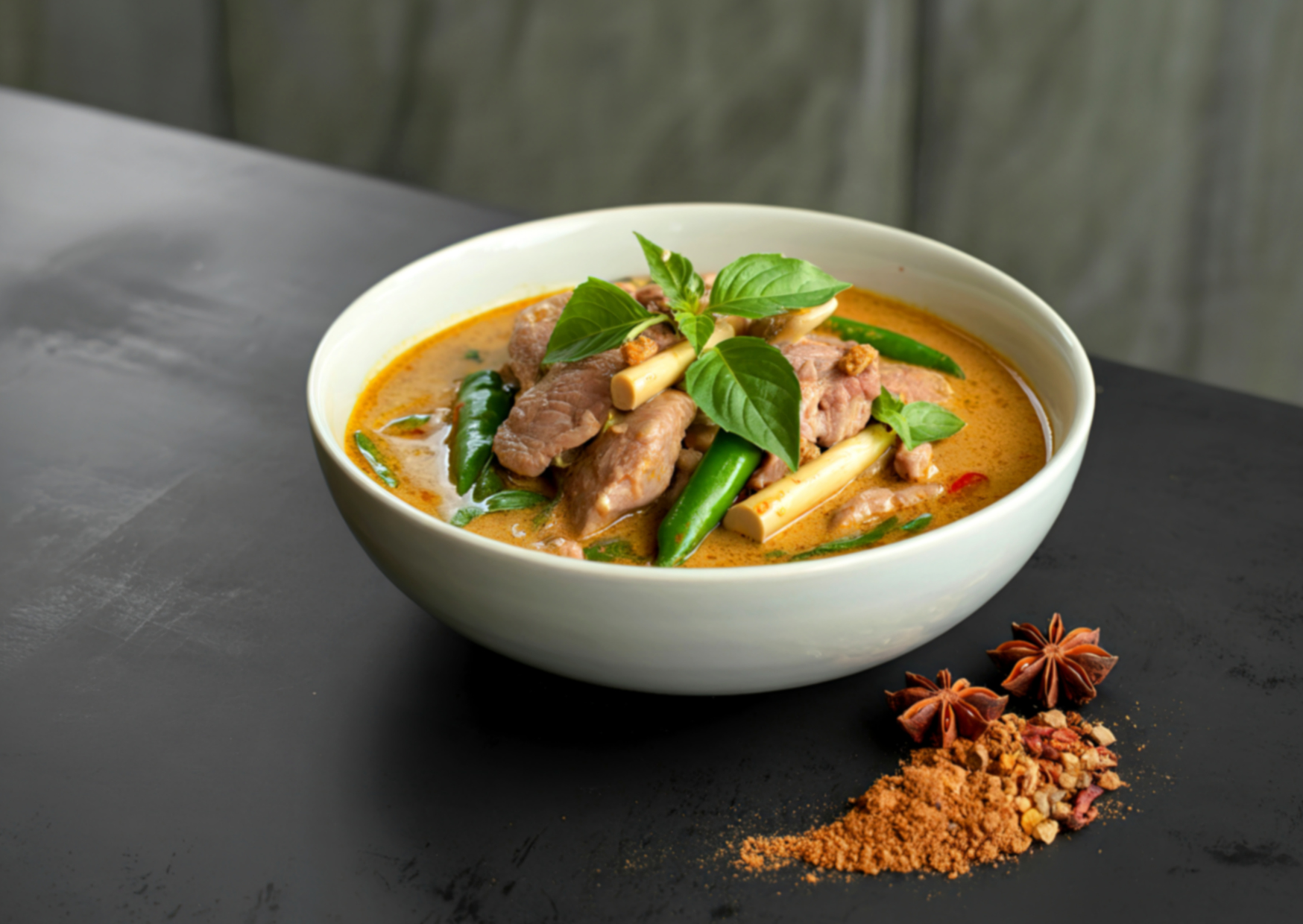
A lot of takeout green curry fails in predictable ways.
It is often too sweet because sweetness travels well and offends nobody. It is often too thin because restaurant sauce has to stretch. It is often short on herbs because fresh basil is a pain at scale. And the vegetables are often chosen for convenience, not because they suit the dish.
At home, you can fix all of that.
The first reason the home version wins is sauce control. Thai green curry should hit sweet, salty, spicy, aromatic, and rich in balance. Serious Eats describes green curry as crowd-pleasing partly because of that balance, not because one note dominates. When you cook it yourself, you can stop the sugar before it gets silly and push lime or fish sauce harder if the curry needs it.
The second reason is better chicken. Chicken thighs are the right move here. Hot Thai Kitchen specifically uses thigh meat because it stays juicy and handles fast simmering better than breast meat. That matters in a dish that is supposed to be done quickly.
The third reason is timing. Vegetables cooked at home can stay bright and useful. Takeout vegetables often arrive in the sad middle zone where they are neither fresh nor properly soft.
And then there is basil.
A lot of green curry places treat basil like garnish. It is not garnish. It is part of the identity of the dish. Add it right at the end and the whole pot tastes more alive. Skip it and the curry feels flatter immediately.
That is why this dish beats takeout more often than it should. It is not because you are a genius. It is because the dish rewards freshness and last-minute adjustment.
The Ingredient Choices That Actually Matter
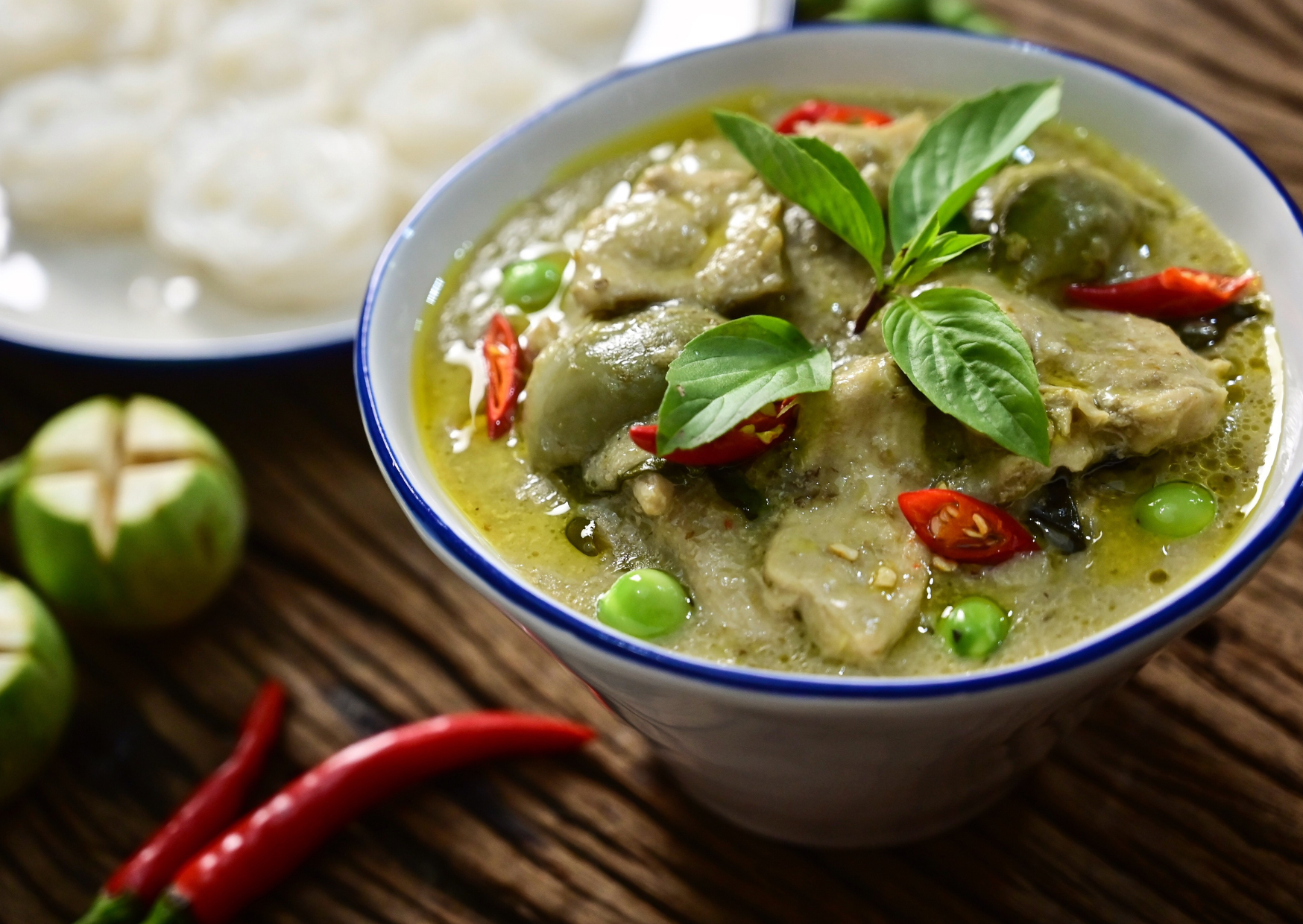
Not every ingredient matters equally.
Some are worth caring about. Some are not worth turning into a personality.
The most important one is the curry paste. If the paste is bad, the curry will spend the whole meal trying to recover. Hot Thai Kitchen’s green curry recipe and Serious Eats’ Thai curry coverage both make clear that a solid commercial paste is a very reasonable shortcut for home cooking. This is not the place to be heroic on a Tuesday.
The second most important is coconut milk. Thinner coconut milk gives you weaker body and less gloss. Better coconut milk gives the sauce more richness and a better chance of separating slightly into that glossy curry look people associate with restaurant versions.
The third is fish sauce. This is the ingredient people underuse because they get scared. The curry usually needs more depth than first-time cooks think. Fish sauce is not there to make the dish taste fishy. It is there to make it taste complete. BBC Good Food’s quicker versions use it modestly, while more Thai-leaning versions push it more assertively. Both approaches point to the same truth: if your curry tastes flat, fish sauce is often part of the fix.
The fourth is basil, ideally Thai basil. It gives the dish its final lift. If you cannot get it, regular basil is still much better than doing nothing.
The least important debate is usually the vegetables.
Use what cooks fast and fits the flavor. Green beans work. Courgette works. Aubergine works. Sugar snaps work. Peppers are fine, though they are often more takeout-default than essential. The goal is not authenticity theater. The goal is a pan of curry that tastes good and gets made again next week.
The 25-Minute Timing Only Works If You Stop Doing Three Useless Things
This recipe is fast, but only if you avoid the classic weeknight delays.
The first delay is starting the rice too late. Rice is not a side thought here. It is part of the clock. Start it first or spend the last ten minutes standing around while your curry cools.
The second delay is cutting the vegetables too carefully. This is curry, not architecture. Keep the pieces bite-size and move on.
The third is overcooking the sauce because you think longer equals deeper. It does not. This is not a braise. Green curry gets its speed partly because the sauce is already concentrated in the paste. Once the chicken is cooked and the vegetables are right, you are done.
That is why the dish is so useful.
It gives you the feeling of something more elaborate without the drag of something more elaborate.
In practical terms, the timeline looks like this:
- 0 to 5 minutes: rice on, veg cut, pan heated
- 5 to 8 minutes: paste fried, coconut milk started
- 8 to 12 minutes: chicken in, liquids added
- 12 to 20 minutes: veg cooks, sauce balances
- 20 to 25 minutes: basil, lime, serve
That is a normal weeknight.
Not a project.
What It Costs at Home
This is where the home version becomes hard to argue with.
Using current broadly available supermarket pricing in Spain, a rough home cost for four servings looks like this:
- 500 g chicken thighs: €3.00 to €4.50
- 2 cans coconut milk: €3.00 to €4.50
- green curry paste: €1.50 to €3.50 used proportionally
- rice: €0.60 to €1.20
- vegetables: €2.50 to €4.00
- fish sauce, sugar, lime, basil, pantry share: €1.50 to €3.00
That lands you around €12 to €18 total, or roughly €3 to €4.50 per serving, depending on your ingredients and whether you already keep Asian pantry basics around. Current supermarket catalog pricing for chicken, coconut milk, rice, and vegetables in Spain supports that range.
Now compare that with takeout.
A single restaurant green curry plus rice can easily run €11 to €16 per person in many Spanish cities before delivery fees. Four people eating takeout lands you in the €45 to €65 territory very quickly, often for a curry that is less fresh and less adjustable than the home version.
That is the real weeknight argument.
Not just better taste.
Better value by an insulting margin.
What To Use If You’re Cooking in Europe or the U.S. and Cannot Find Thai Ingredients
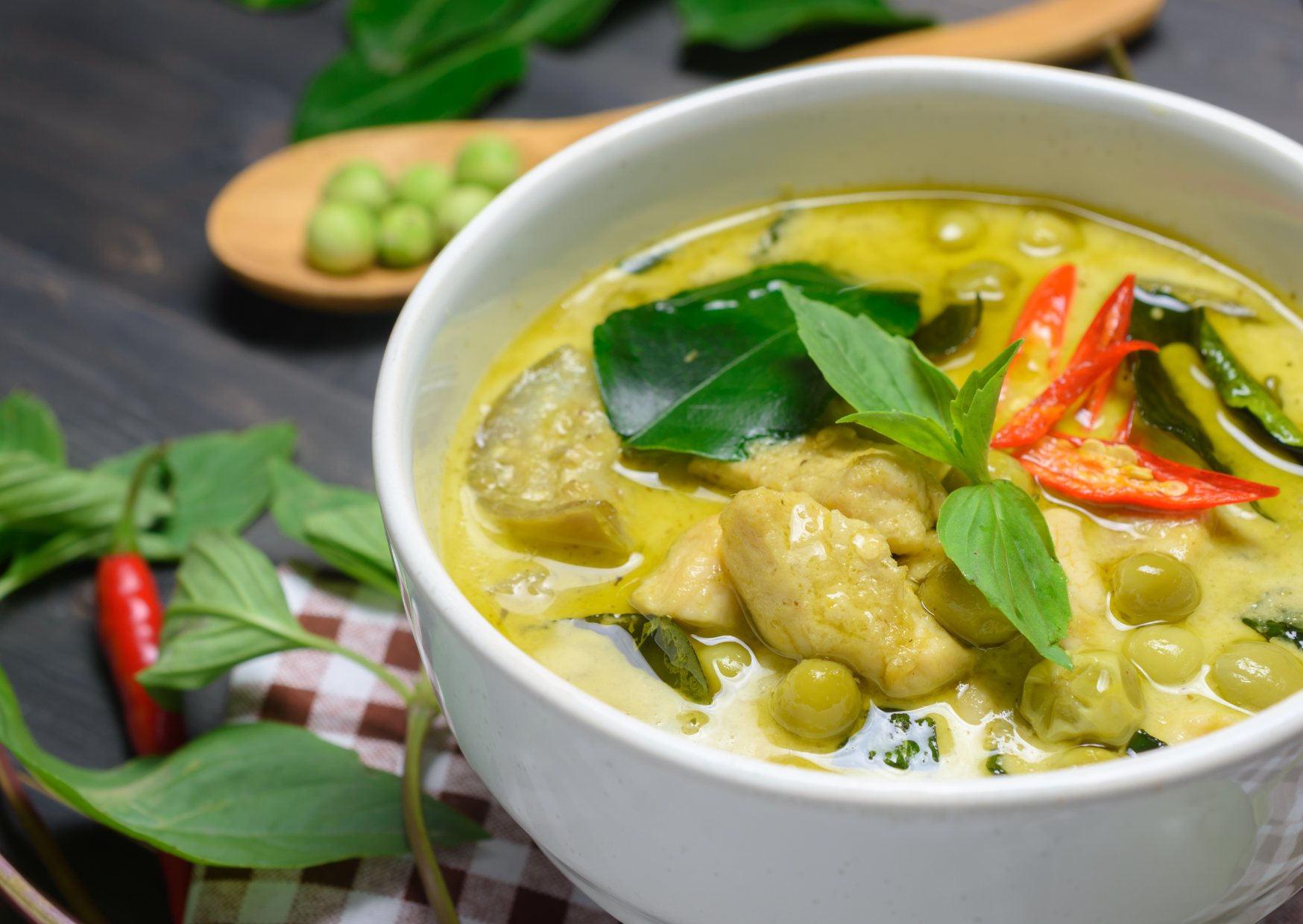
This is where most weeknight recipes become annoying.
People write as if makrut lime leaves, Thai basil, pea aubergines, and perfect fresh curry paste are lying around in every neighborhood shop. They are not.
So here is the useful substitution list.
If you cannot get Thai basil, use regular basil. It is not identical, but it still gives the dish freshness and the right herb finish.
If you cannot get Thai aubergines, use normal aubergine, courgette, or green beans. BBC Good Food’s weeknight versions already lean into potatoes, green beans, and accessible vegetables for exactly this reason.
If you cannot get kaffir lime leaves, leave them out and finish more carefully with lime juice. Do not let the missing leaf become the reason you order delivery.
If you cannot get palm sugar, use ordinary sugar. Small amounts are fine.
If you do not have fish sauce, you can cook without it, but the curry will taste less complete. Soy sauce can patch saltiness in an emergency, but it does not really replace the specific savory depth.
If you want a vegetarian version, swap the chicken for tofu and add mushrooms or extra green veg. Keep the same structure. Use soy or a vegetarian “fish sauce” alternative if needed.
The right rule is simple.
Protect the core:
curry paste, coconut milk, salt-savory balance, basil, lime.
Be flexible with the rest.
Why the Sauce Sometimes Splits, Thickens Too Much, or Tastes Flat
This section saves people from declaring the recipe “not authentic” when the problem is usually basic pan behavior.
If the sauce splits a little, that is not necessarily bad. Thai curry often gets a glossy look when the fat in the coconut milk separates slightly, especially after the paste is fried properly. Hot Thai Kitchen leans into that fat separation as part of building flavor.
If the sauce gets too thick, add water or light stock. This is normal. Coconut milk reduces faster than people expect, especially in a wide pan.
If the sauce tastes flat, the issue is usually one of four things:
not enough fish sauce
not enough sugar
not enough lime
not enough basil
Green curry is a balance dish. Flatness usually means one of the balancing points is missing.
If the curry tastes too aggressive, it often just needs more coconut milk or a little more sugar. Heat without richness can feel harsh.
If the chicken tastes dry, it is almost always because breast meat was used or because the curry simmered too long. Use thighs and stop earlier.
Most curry problems are not major problems. They are adjustment problems.
That is another reason home green curry is such a good weeknight recipe. It is forgiving if you keep tasting.
What To Do With Leftovers
Green curry leftovers are useful, but not infinite.
By the next day, the sauce is often thicker, the basil is less bright, and the vegetables are softer. That is still perfectly good. It just means you should reheat with a splash of water and maybe a squeeze of lime at the end to wake it back up.
Stored in the fridge, it is generally best within 2 to 3 days. Rice should be cooled and stored properly and reheated thoroughly. Standard food-safety guidance on cooked rice and leftovers still applies here, and it is worth taking seriously because reheated-rice laziness is one of the least glamorous ways to lose a weeknight victory.
Leftover curry also works well in a few lazy forms:
- over fresh rice
- thinned into a soup-like bowl
- spooned over noodles
- reheated with extra veg to stretch it
That is another quiet advantage over takeout.
Takeout leftovers usually feel like compromise.
Homemade green curry leftovers feel like a plan.
How To Make This a Repeat Weeknight Dinner
The trick is not becoming more disciplined.
The trick is reducing setup.
Keep these in the house:
- green curry paste
- coconut milk
- jasmine rice
- fish sauce
- one herb option
- one fast protein
- two vegetables that cook quickly
Once that base exists, the dinner is always close.
That matters more than “mastering Thai food.” Serious Eats’ recent Thai weeknight coverage makes the same broader point: a handful of pantry ingredients can unlock very fast Thai-style dinners without turning the process into a big production.
The easiest repeat version is this:
chicken thighs, curry paste, coconut milk, green beans, rice.
The nicer version adds basil, lime leaves, aubergine, and better garnish.
Both beat takeout more often than they should.
And the fast version is usually the one that survives real life.
The Part That Actually Makes It Better Than Takeout
Not authenticity.
Not imported ingredients.
Not the idea that home cooking is morally superior.
It is freshness and control.
You control the thickness.
You control the sweetness.
You control the heat.
You control whether the chicken is actually juicy.
You control whether basil shows up as garnish or as a real flavor.
You control whether the vegetables are still alive.
That is enough.
A lot of takeout curry is built for consistency, transport, and broad appeal. Home curry is built for tonight. That is why it can win even when it takes only 25 minutes and uses a jar of paste.
That is the real lesson.
You do not need a harder recipe.
You need the right quick one.

About the Author: Ruben, co-founder of Gamintraveler.com since 2014, is a seasoned traveler from Spain who has explored over 100 countries since 2009. Known for his extensive travel adventures across South America, Europe, the US, Australia, New Zealand, Asia, and Africa, Ruben combines his passion for adventurous yet sustainable living with his love for cycling, highlighted by his remarkable 5-month bicycle journey from Spain to Norway. He currently resides in Spain, where he continues sharing his travel experiences with his partner, Rachel, and their son, Han.