
Americans love France. They just love a very small version of it.
Paris. Nice. Maybe Provence if they watched a movie about it. Occasionally Bordeaux if they drink wine seriously. That is roughly the entire American mental map of France, a country with dozens of cities that most American visitors and potential retirees have never considered.
The problem with the popular list is not that those places are bad. Paris is extraordinary. Nice is beautiful. Provence is everything the books promise.
The problem is cost.
Paris rents have climbed past the point where most retirees can live comfortably without a serious budget. Nice is increasingly priced like a resort, not a city. Provence is seasonal, car-dependent, and expensive in the areas Americans actually want to live.
Meanwhile, France has mid-sized cities with stunning architecture, excellent healthcare, real food culture, functioning public transport, and rents that would make a Parisian cry.
These are not rural villages. They are not compromise picks. They are cities that most French people already know are excellent. Americans just have not caught up yet.
Why The Lesser-Known Cities Are Often Better For Long Stays
The logic mirrors what is happening in Spain, but France adds a few layers.
The French healthcare system is consistently ranked among the best in Europe. That access does not concentrate in Paris. Regional hospitals across the country are high quality. A retiree in Toulouse or Angers gets the same system as one in the 7th arrondissement, at a fraction of the daily cost.
France also has excellent rail infrastructure. The TGV network connects most major cities to Paris in under three hours. That means living in a cheaper city does not mean being isolated. A retiree in Lyon or Montpellier can be in Paris for a weekend without a car or a flight.
The residency pathway matters too. France’s long-stay visa (visa de long séjour) for retirees requires proof of financial means and health coverage, similar in structure to Spain’s non-lucrative visa. The income threshold is roughly equivalent to the French minimum wage, around €1,400 to €1,700 per month for a single applicant, though consulates can ask for more. That monthly figure goes dramatically further in Limoges than it does in Paris.
And then there is the food. This is France. The food culture is not limited to Michelin-starred restaurants in the capital. Market towns, regional capitals, and even small cities have food ecosystems that are genuinely world-class. The difference is that in the lesser-known cities, lunch costs €13 instead of €35.
Toulouse
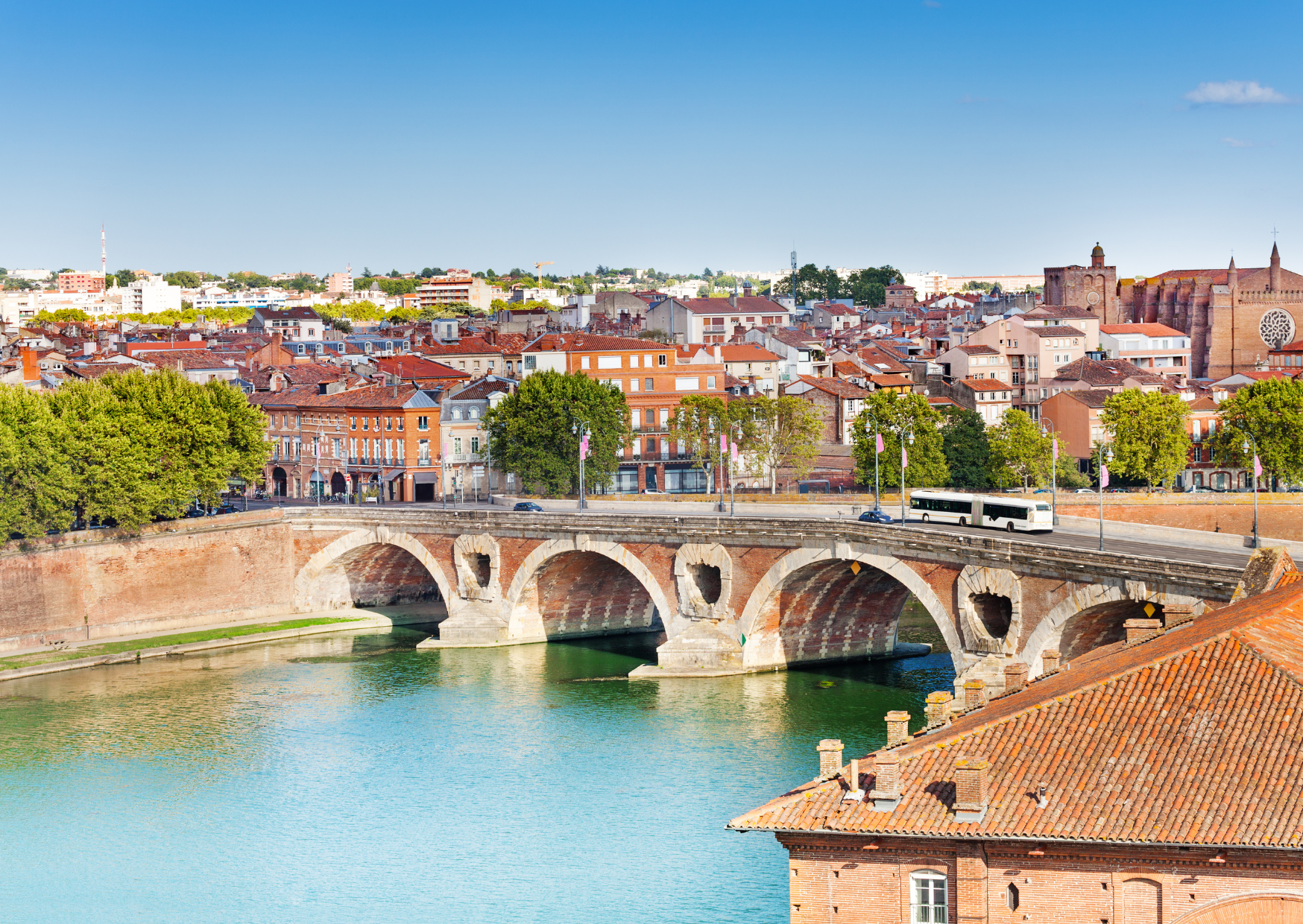
Toulouse is the fourth-largest city in France. It has an international airport. It has a metro system. It has some of the best food in the country. And most Americans have never thought about it for more than five seconds.
The city sits in southwest France, roughly equidistant from the Atlantic, the Mediterranean, and the Pyrenees. The climate is warmer than Paris, with genuine sunshine and mild winters that rarely drop below freezing.
Cost of living is where it gets interesting.
- A one-bedroom apartment in the center rents for €550 to €800
- A two-bedroom in a good neighborhood outside the center runs €650 to €900
- A full menú at a local restaurant is €12 to €16
- Monthly groceries for two run roughly €300 to €400
The food culture is built around cassoulet, duck, foie gras, and Armagnac. The Marché Victor Hugo is one of the great indoor markets in France, with butchers, fishmongers, cheese vendors, and restaurants on the upper floor that cook whatever is freshest downstairs.
The university population (Toulouse is the largest university city in France outside Paris) keeps the cultural calendar full and the restaurant scene competitive. There are theaters, live music, cinemas, and a nightlife scene that functions year-round rather than seasonally.
Healthcare access is excellent. The Centre Hospitalier Universitaire de Toulouse is a major teaching hospital. Private options are plentiful.
The downside: Toulouse is not as architecturally dramatic as Lyon or Bordeaux. The city’s nickname is “La Ville Rose” for its pink terracotta buildings, which are beautiful but more subtle than Gothic cathedrals and grand boulevards. For retirees who prioritize daily life quality over postcard backdrops, that trade-off is easy.
Montpellier
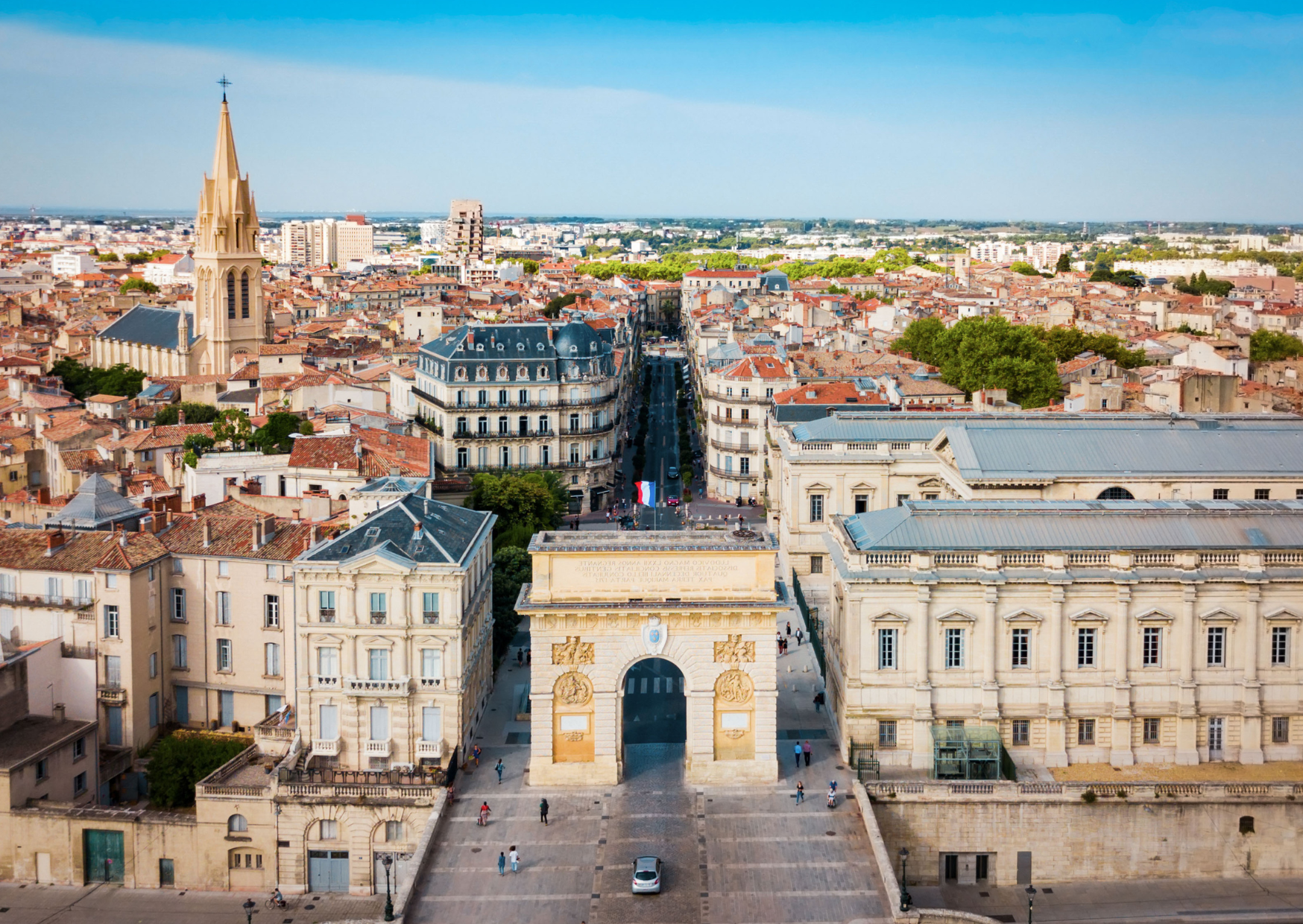
Montpellier is southern, sunny, walkable, and young. It has grown fast over the past two decades and now has a population of roughly 300,000 in the city proper, with a broader metro area pushing past 600,000.
The appeal for retirees is the combination of Mediterranean climate, genuine urban infrastructure, and prices that have not yet caught up to Nice or Aix-en-Provence.
- One-bedroom apartments in the center run €550 to €800
- Eating out at a neighborhood bistro costs €12 to €18 for a full meal
- The beach is 15 minutes by tram
- Monthly costs for a couple including rent can stay under €2,500
The tram system is one of the best in France for a city this size. Three lines cover most of the city, and a fourth is under development. The old town, l’Écusson, is entirely pedestrianized. Daily life is walkable in a way that many larger French cities are not.
The climate is the real draw. Over 300 days of sunshine a year. Winters that hover around 8 to 12°C. Summers that are hot but manageable with the coastal breeze. If the primary reason for moving to France is escaping grey Northern European or American winters, Montpellier delivers that without the Riviera price tag.
Healthcare access includes CHU de Montpellier, a large teaching hospital, plus a well-developed private sector.
The food scene is strong and getting stronger. The Halles Castellane market, the wine bars around Place de la Comédie, and the growing restaurant culture benefit from proximity to both the sea and the Languedoc wine region.
The downside: Montpellier is growing fast, and parts of the city feel like they are still catching up to that growth. Some outer neighborhoods are less charming. And the rapid expansion means prices are rising, though still well below Nice or Marseille’s desirable arrondissements. The current pricing window is favorable but not permanent.
Angers
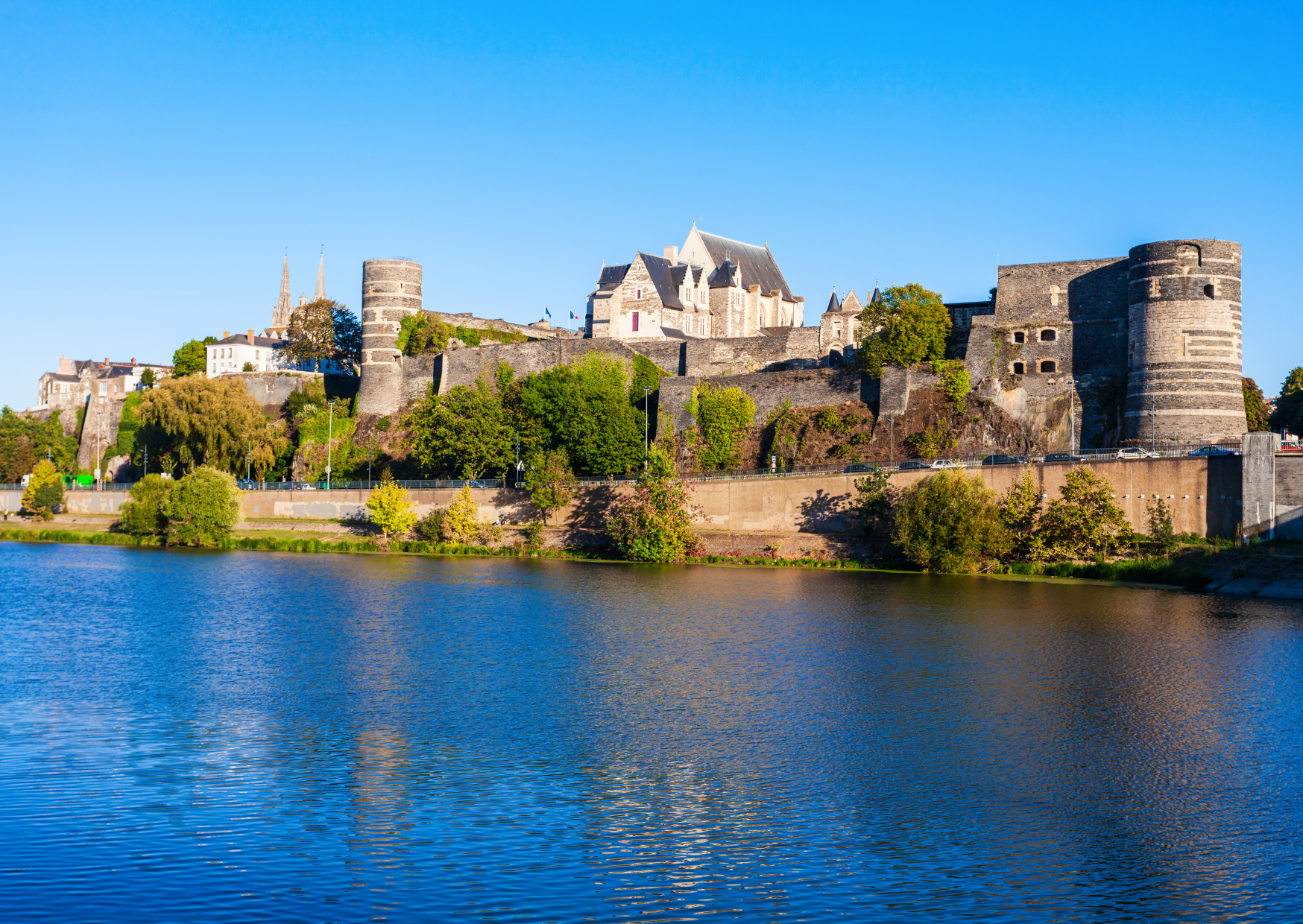
Angers is the pick that makes French people nod and Americans squint.
It is a city of about 155,000 in the Loire Valley, roughly 90 minutes from Paris by TGV. It is consistently ranked among the most livable cities in France in domestic quality-of-life surveys. And it is almost completely absent from the American imagination.
The cost of living is low by any French standard.
- A one-bedroom in the center rents for €450 to €650
- A two-bedroom outside the center runs €500 to €700
- Restaurant meals are €10 to €15 for a full lunch
- Monthly expenses for a couple can stay under €2,000 including rent
Angers is walkable, green, and architecturally lovely without being a museum. The Château d’Angers houses the Apocalypse Tapestry. The Maine river runs through the center. The surrounding Loire Valley is one of the great wine and food regions in France. Weekend trips to châteaux, vineyards, and market towns are built into the geography.
The climate is mild Atlantic. Winters are cool but rarely harsh. Summers are warm but not Mediterranean-hot. Rainfall is moderate.
Healthcare access is handled through CHU d’Angers, a well-regarded teaching hospital. The city is large enough to support specialist care without needing to travel to Paris.
The TGV connection is the quiet advantage. Paris is 90 minutes away. That means access to international flights, cultural events, and the full infrastructure of the capital without paying Parisian rent.
The trade-off: Angers is not glamorous. It does not have a beach. It does not have the buzz of Toulouse or the sunshine of Montpellier. It is a city that rewards people who want a calm, affordable, well-organized daily life more than an exciting one. For a certain kind of retiree, that is exactly the point.
Limoges
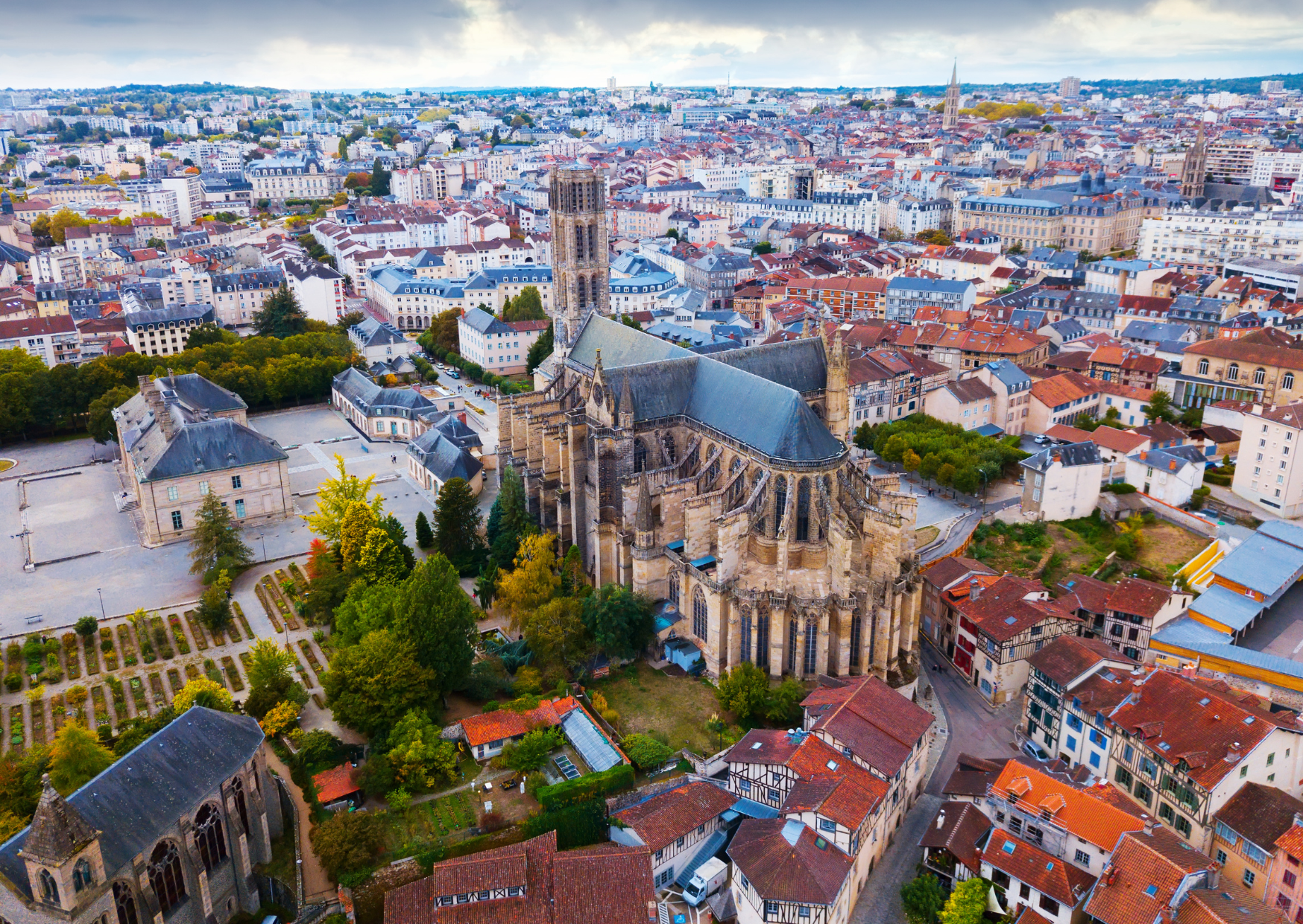
Limoges is the one that makes people ask “where?”
It is a city of about 130,000 in central France, historically famous for porcelain and enamelwork. It is not on any American travel itinerary. It is not on most French ones either.
And that is why it is so affordable.
- A one-bedroom in the center rents for €350 to €500
- A two-bedroom outside the center can be found for €400 to €550
- Restaurant meals run €10 to €14
- Monthly expenses for a couple including rent can realistically stay under €1,600
Those are not typos. Limoges is one of the cheapest cities in France with genuine urban infrastructure.
The city has a hospital (CHU de Limoges), a university, a train station with connections to Paris (three hours), an airport with limited routes, and a food market culture that benefits from the surrounding Limousin countryside. The beef from this region is among the best in France. The chestnuts, mushrooms, and game are exceptional.
The old town is attractive, with half-timbered houses, a cathedral, and a riverside setting. The city is small enough to walk everywhere and large enough to have what you need.
The downsides are real. Limoges is remote by French standards. The train to Paris takes three hours, not ninety minutes. The airport has limited connections. The cultural scene is smaller. The expat community is nearly nonexistent. This is a city for retirees who want deep France, not convenient France. If you want English-speaking services, international social groups, and easy flights home, Limoges is the wrong pick.
But if you want to live in a real French city, eat extraordinary food, and spend under €1,600 a month as a couple, it is almost impossible to beat.
Perpignan
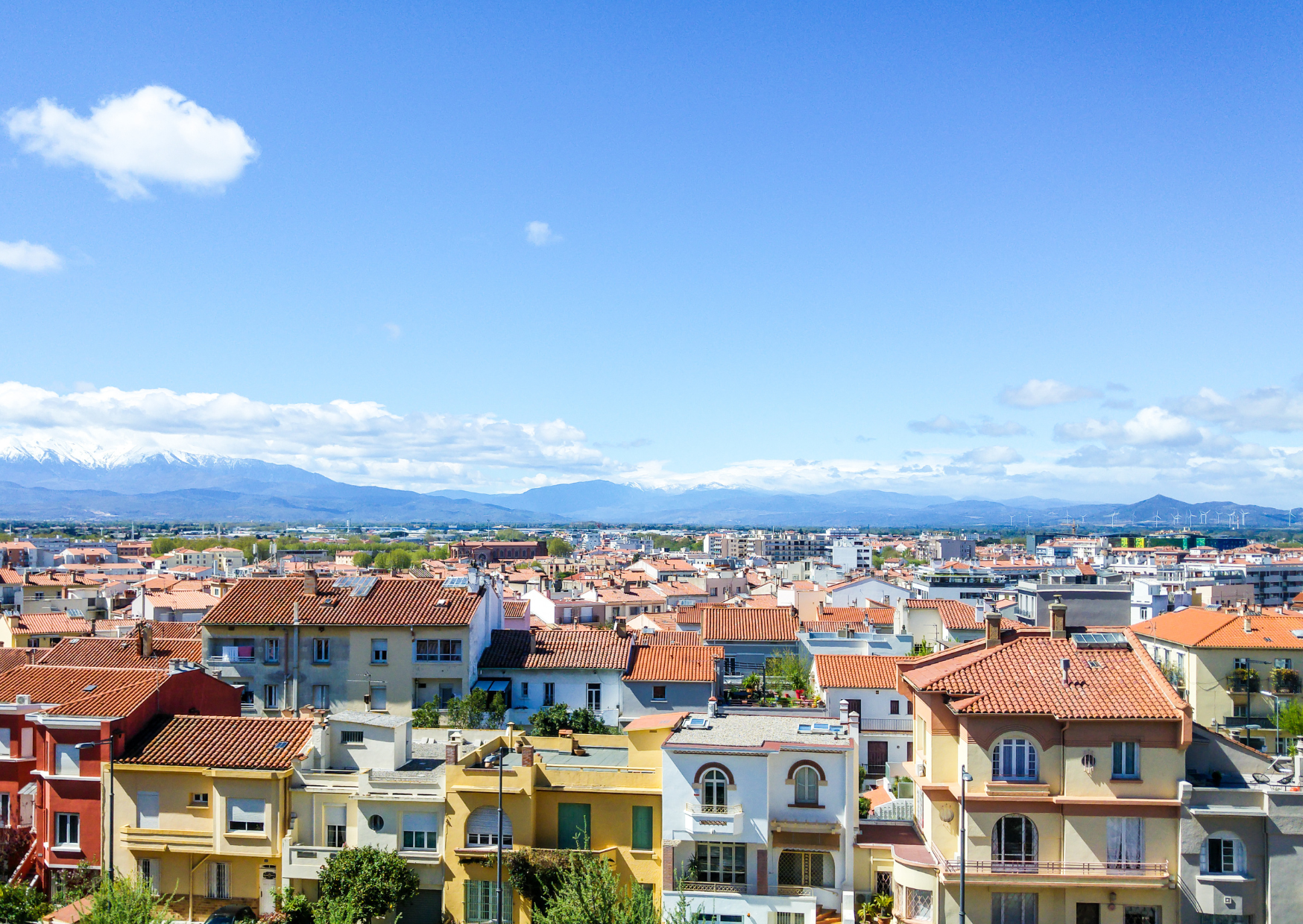
Perpignan sits at the very bottom of France, close enough to the Spanish border that you can hear Catalan in the streets. Salvador Dalí once declared Perpignan’s train station the center of the universe, which is eccentric but not entirely wrong as a metaphor for its geographic position.
The city is a gateway between France and Spain, with a climate that feels more Mediterranean than Parisian, a cultural identity that mixes French and Catalan influences, and prices that reflect its distance from the usual tourist circuits.
- One-bedroom apartments in the center rent for €400 to €600
- Eating out at a local restaurant runs €10 to €15
- The beach is 15 minutes by car
- Monthly costs for a couple including rent can stay under €1,800
The climate is the headline. Perpignan gets over 300 days of sunshine a year and has one of the mildest winters in mainland France. Summer is hot. But for retirees whose primary complaint about France is grey skies and damp winters, this solves the problem at a fraction of Riviera pricing.
The food is a hybrid. French technique meets Catalan ingredients. The anchovy tradition, the local wine from Roussillon, the markets full of stone fruit and peppers in summer. It is not Paris dining culture. It is something more rustic and arguably more interesting on a daily basis.
Healthcare is available through Centre Hospitalier de Perpignan. For more specialized care, Montpellier is about 90 minutes north.
The downside: Perpignan has economic challenges. Unemployment is higher than the French average. Some neighborhoods are rough. The city does not have the polished feel of Toulouse or Montpellier. It is a real, slightly gritty French city that happens to have extraordinary weather and low prices. That combination appeals to a specific kind of retiree and will not appeal to everyone.
The proximity to Spain is a genuine advantage. Barcelona is about two hours south by train. The Costa Brava beaches are closer. A retiree in Perpignan has access to two countries’ worth of travel, food, and culture without needing a car.
The Cost Comparison That Changes The Conversation
Here is what the same monthly budget buys across different French cities, roughly estimated for a couple including rent, food, healthcare, utilities, and moderate dining out.
Paris: €3,500 to €4,500. Tight. Limited to smaller apartments in less central neighborhoods.
Nice: €2,800 to €3,500. Comfortable but not lavish. Rising fast.
Toulouse: €2,000 to €2,600. Very comfortable. Full urban life.
Montpellier: €2,000 to €2,500. Comfortable with sunshine and beach access.
Angers: €1,700 to €2,200. Comfortable and calm. TGV to Paris.
Perpignan: €1,500 to €1,800. Comfortable with the best weather in mainland France.
Limoges: €1,400 to €1,600. Maximum affordability in a real city.
The difference between Paris and Limoges is roughly €2,500 per month. That is €30,000 per year. Over a ten-year retirement, it is €300,000. That number alone should make every American retiree considering France look past the obvious cities.
What You Lose By Going Off The Beaten Path
Honesty matters here.
These cities are cheaper for reasons. Some of those reasons are fine. Some of them are real trade-offs.
Smaller expat communities. In Limoges or Perpignan, you will not find a ready-made English-speaking social circle. You will need functional French. Not perfect French. But enough to handle the pharmacy, the mairie, the bank, and a dinner conversation.
Fewer direct international flights. Paris has CDG. Nice has direct U.S. flights. Limoges has a small regional airport. Perpignan connects mainly to other French and European cities. If you fly back to the U.S. frequently, you will route through Paris or a major hub.
Less cultural infrastructure in some cases. Toulouse and Montpellier have rich cultural scenes. Limoges and Perpignan are quieter. If you need opera, major museums, and world-class concerts regularly, the smaller cities may feel limiting.
Bureaucracy does not get easier. If anything, smaller préfectures can be less experienced with foreign resident applications. The process is the same. The familiarity with handling it may not be.
None of these are dealbreakers. All of them are worth weighing honestly before committing.
What Actually Matters Here
France is not Paris plus the Riviera plus some vineyards.
It is a country with dozens of mid-sized cities that offer excellent food, strong healthcare, reliable infrastructure, and a daily quality of life that most Americans associate only with the expensive destinations they have already heard of.
The retirees who figure this out early get the best version of the deal. Lower rent. Fewer crowds. Better integration into local life. And a monthly budget that actually allows them to enjoy the country instead of just surviving in it.
The ones who insist on Paris or Nice because those are the names they know will pay double for the same baguette.
France does not care which city you pick. But your budget does.

About the Author: Ruben, co-founder of Gamintraveler.com since 2014, is a seasoned traveler from Spain who has explored over 100 countries since 2009. Known for his extensive travel adventures across South America, Europe, the US, Australia, New Zealand, Asia, and Africa, Ruben combines his passion for adventurous yet sustainable living with his love for cycling, highlighted by his remarkable 5-month bicycle journey from Spain to Norway. He currently resides in Spain, where he continues sharing his travel experiences with his partner, Rachel, and their son, Han.