
Spain gets over 85 million tourists a year. Almost all of them go to the same places.
Barcelona. Madrid. Seville. Málaga. The Balearic Islands. Maybe San Sebastián if they read the right food blog.
Those cities are famous for good reasons. They are also expensive for good reasons. And they are increasingly difficult to live in for reasons that have nothing to do with tourism and everything to do with what tourism has done to housing costs, noise levels, and the daily texture of life.
Meanwhile, a growing number of American and Northern European retirees are quietly settling in Spanish cities that most tourists have never heard of, paying half the rent, getting better weather than Barcelona, eating just as well, and dealing with almost none of the crowds.
This is not a hidden-gem listicle. These are real cities with real infrastructure, real healthcare access, and real expat communities that are growing because the math works and the quality of life is hard to argue with.
Why The Overlooked Cities Work Better For Retirees
The logic is straightforward.
Tourist cities optimize for visitors. They build around short stays, high turnover, and seasonal peaks. That means inflated rent, restaurant prices calibrated to vacation budgets, and neighborhoods that feel more like theme parks than places where people actually live.
Retiree cities optimize for daily life. They need good healthcare, walkable infrastructure, affordable housing, reliable public transport, mild climate, and a social rhythm that does not shut down in October.
Those are different lists. And the Spanish cities that score highest on the second list are almost never the ones that score highest on the first.
The other factor is bureaucratic. Spain’s non-lucrative visa, the most common pathway for American retirees, requires proof of income and health insurance but does not require employment. That means retirees can settle anywhere. They are not tied to job markets in Madrid or Barcelona. They can go where the cost of living is lowest and the lifestyle is best.
And increasingly, that is exactly what they are doing.
Alicante

Alicante gets some tourism, mostly from Northern Europeans on package holidays. But it rarely appears on the American radar. That is a mistake.
The climate is one of the best in Europe. Over 300 days of sunshine per year. Mild winters where January averages around 12°C. Summers are hot but tempered by the coast.
The cost of living is meaningfully lower than Barcelona or Madrid.
- A one-bedroom apartment in the city center runs €600 to €850 per month
- A two-bedroom outside the center can be found for €550 to €750
- A full grocery run for two people costs roughly €200 to €280 per month
- A three-course menú del día at a local restaurant is €10 to €14
The healthcare infrastructure is strong. Alicante has Hospital General Universitario de Alicante, a major public hospital, plus several private options. The surrounding province has a well-established expat healthcare network because of the large Northern European retiree population that has been there for decades.
The city is walkable, has a tram system connecting the coast, and is 20 minutes from Alicante-Elche airport with direct flights across Europe.
The expat community is real but not overwhelming. There are enough English-speaking services to make the transition manageable without the city feeling like it has been colonized.
What it does not have: the cultural prestige of Barcelona, the nightlife of Madrid, or the Instagram appeal of Seville. For retirees, that is a feature, not a bug.
Cádiz
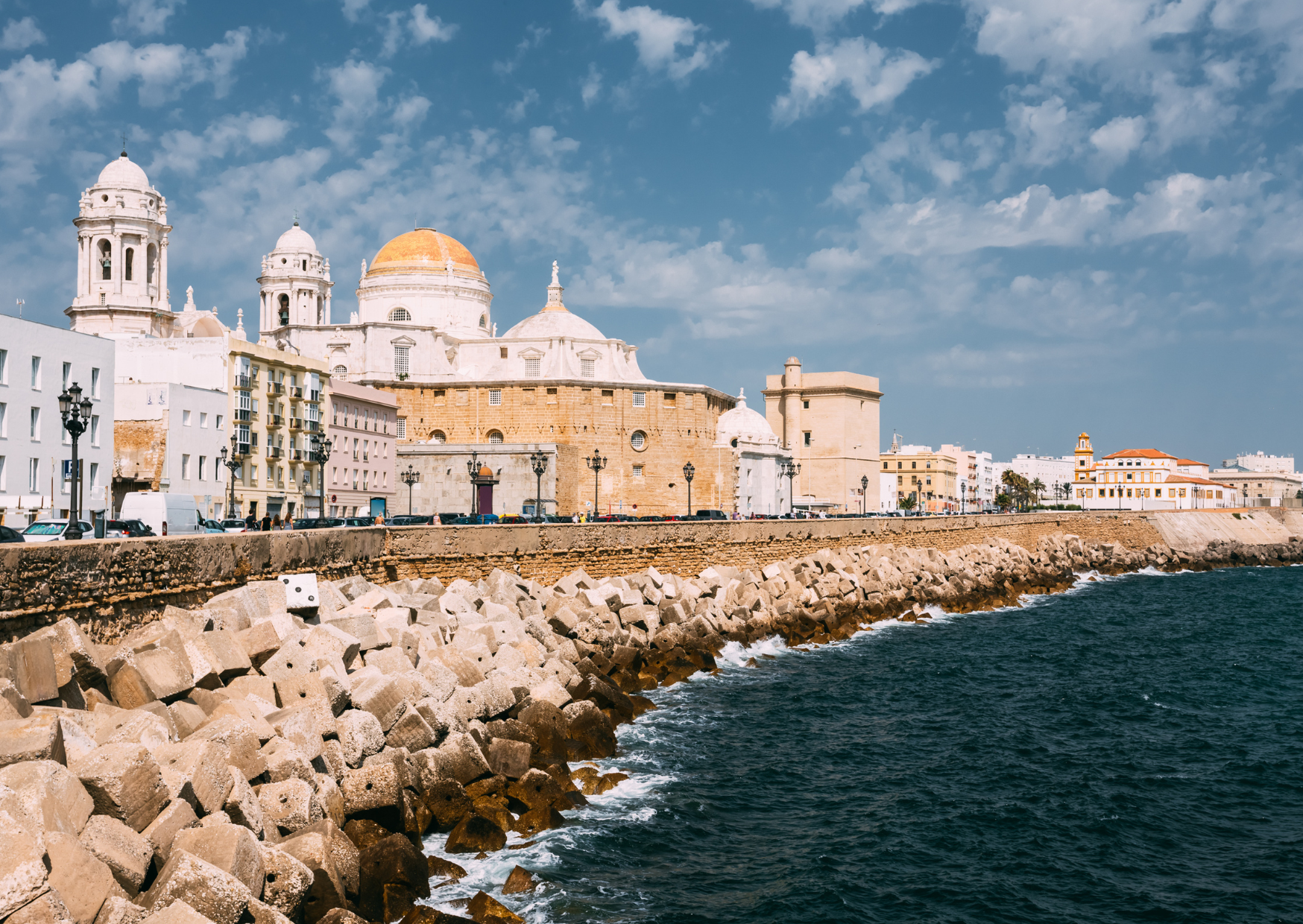
Cádiz is one of the oldest continuously inhabited cities in Western Europe. It sits on a narrow peninsula jutting into the Atlantic. The light is extraordinary. The seafood is arguably the best in Spain. And almost no American tourists go there.
The cost of living is low even by Andalusian standards.
- Rent for a one-bedroom in the old town runs €500 to €750
- Eating out is remarkably affordable, with fried fish and sherry at local spots costing €8 to €12 for a full meal
- Monthly living costs for a couple, including rent, can realistically stay under €2,000
The pace of life is genuinely slow. Not in a branded, wellness-retreat way. In a real way. People eat late. Shops close in the afternoon. The beach is a ten-minute walk from almost anywhere in the old town. The Carnival is one of the most important cultural events in Spain. The city has a creative, slightly eccentric energy that feels nothing like the polished tourism of the Costa del Sol.
Healthcare is handled through the Andalusian public system (SAS), with Hospital Universitario Puerta del Mar as the main facility. Private insurance gives access to additional options in nearby Jerez de la Frontera.
The downside: Cádiz is not the easiest city to reach internationally. The nearest major airport is Jerez, which has limited direct routes. Seville airport is about 90 minutes away. For retirees who do not need to fly frequently, this is manageable. For people who travel back to the U.S. often, it adds a layer of logistics.
But for the cost, the beauty, and the quality of daily life, Cádiz is one of the most underpriced cities in Southern Europe right now.
Oviedo
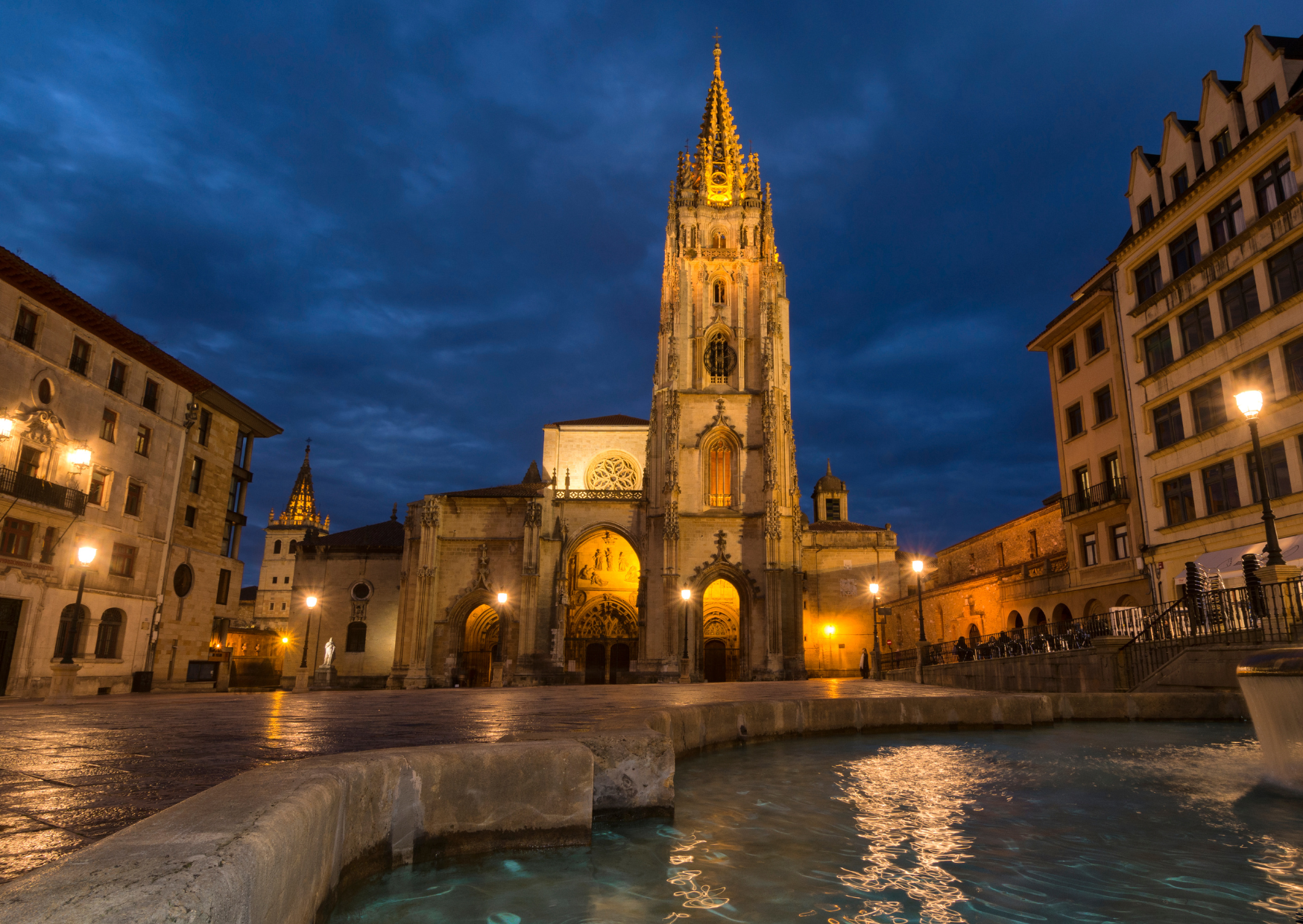
This one surprises people.
Oviedo is the capital of Asturias, in northern Spain. Green mountains. Cool summers. Rain. It looks nothing like the Spain most Americans imagine.
That is precisely the appeal for a specific kind of retiree.
If your ideal retirement involves mild summers (rarely above 25°C), green landscapes, world-class cider culture, and a sophisticated small city with almost zero tourist infrastructure, Oviedo is worth serious consideration.
The cost of living is remarkably low for a regional capital.
- A two-bedroom apartment in the center rents for €500 to €700
- The local food market sells produce, cheese, and meat at prices well below Madrid or Barcelona
- A menú del día runs €10 to €13
- Monthly expenses for a couple can stay under €1,800 including rent
The food culture is exceptional and underrecognized. Asturias produces some of Spain’s best cheeses (Cabrales, Afuega’l Pitu), has a cider tradition that rivals any beer culture in Northern Europe, and a bean stew called fabada that is one of the great cold-weather dishes on the continent.
Healthcare access is strong. Hospital Universitario Central de Asturias is a major facility. The Asturian public health system is well-regarded within Spain.
The trade-off is weather. Asturias is rainy. Winters are grey. If you moved to Spain specifically for sunshine, this is the wrong city. But if you moved to Spain for affordable European life with excellent food, culture, and healthcare, Oviedo delivers all of that without the heat, crowds, or inflated prices of the south.
Salamanca
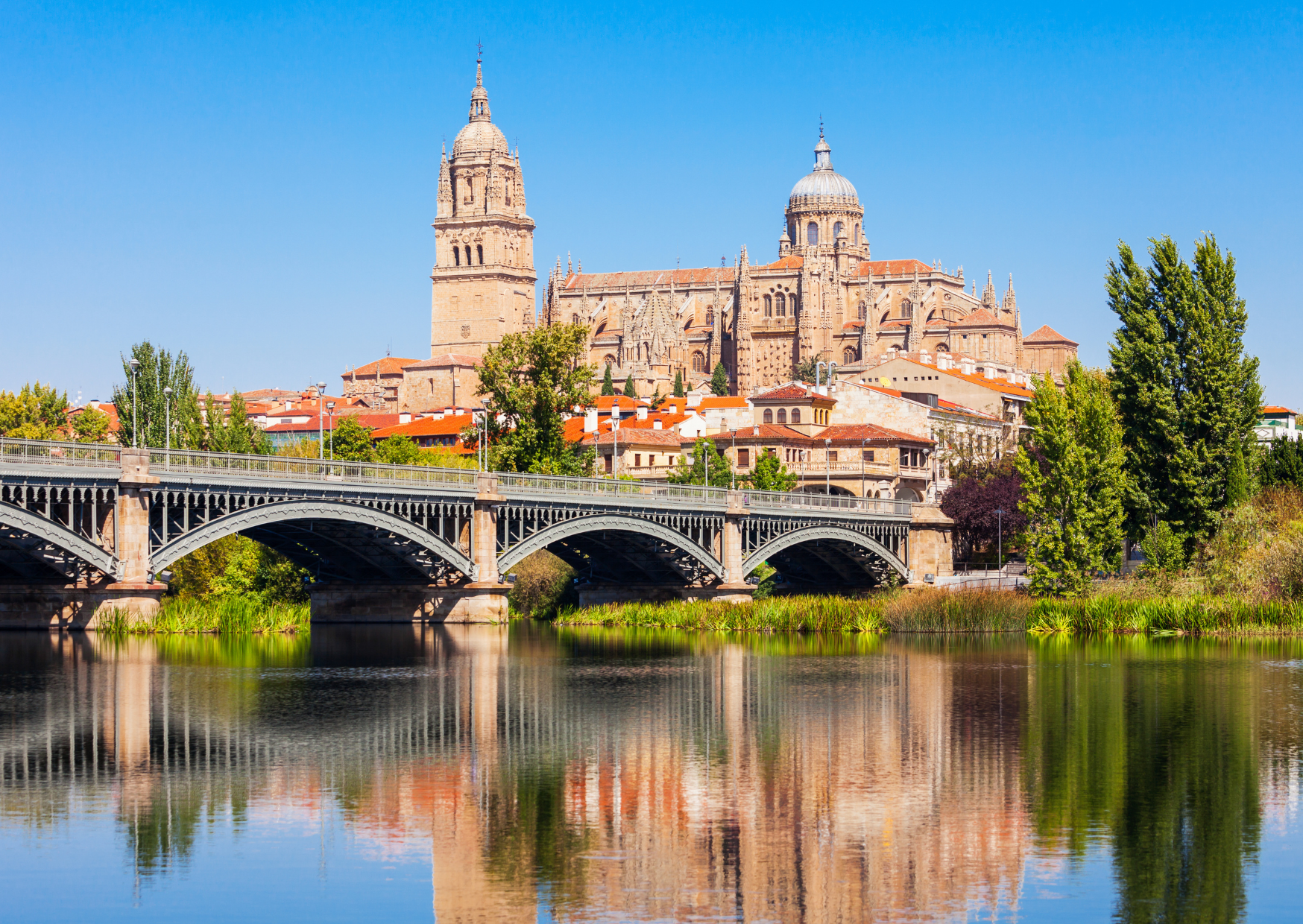
Salamanca is famous within Spain but almost invisible to American retirees.
It is a university city in Castilla y León. The architecture is stunning. The Plaza Mayor is widely considered one of the most beautiful squares in Europe. The cultural life is rich because of the university population. And the cost of living is genuinely low.
- One-bedroom apartments in the center rent for €450 to €650
- A couple can live comfortably on €1,500 to €1,800 per month including rent
- Restaurant meals are some of the cheapest in urban Spain
The city is compact, walkable, and beautiful in a way that does not require tourism to sustain itself. The university keeps the economy alive, the cultural calendar full, and the restaurant scene varied. It is one of the few Spanish cities where a retiree can access genuine intellectual and cultural life at a fraction of the cost of Madrid.
The climate is continental. Winters are cold, not Scandinavian cold, but noticeably colder than the coast. Summers are hot and dry. Spring and autumn are the sweet spots.
Healthcare is available through the Castilla y León public system, with Hospital Universitario de Salamanca as the primary facility.
The main drawback is connectivity. Salamanca does not have a commercial airport. Madrid is about 2.5 hours by car or bus. The AVE high-speed rail does not reach Salamanca directly, though there are plans. For retirees who do not mind the occasional bus or car trip to Madrid for flights, this is manageable. For those who need to fly frequently, it is a real limitation.
But for daily quality of life per euro spent, Salamanca is one of the best-kept secrets in Spain.
Valencia (Yes, Really)

Valencia is not exactly overlooked. It is Spain’s third-largest city. But among American retirees, it remains dramatically underrepresented compared to Barcelona, Madrid, and the Costa del Sol.
That is changing fast.
Valencia offers something unusual: a major city with beaches, world-class food, excellent public transport, a strong healthcare system, and a cost of living that is still 30 to 40 percent below Barcelona.
- A two-bedroom apartment in decent neighborhoods like Ruzafa or Benimaclet rents for €900 to €1,200
- Groceries at the Mercado Central or neighborhood markets are affordable and high quality
- The menú del día ranges from €10 to €15
- Monthly expenses for a couple run roughly €2,200 to €2,800 including rent
The city’s infrastructure is genuinely excellent. The Turia park, a former riverbed converted into nine kilometers of green space, runs through the city center. The metro and bus systems are reliable. The airport has direct connections across Europe. The beaches are accessible by public transport.
Healthcare access is strong, with Hospital La Fe and Hospital Clínico Universitario as major public facilities, plus a well-developed private healthcare market.
The expat community is growing rapidly but has not yet hit the saturation point of Barcelona. There are English-speaking services, international groups, and a social infrastructure for newcomers without the city feeling like it has lost its identity.
The climate is Mediterranean. Winters are mild (January average around 11°C). Summers are hot but coastal. Rainfall is low.
Valencia’s main risk is that it is being discovered. Prices are rising. The rental market is tightening. The window where Valencia offers big-city life at mid-tier prices is still open, but it is closing. Retirees who wait another three to five years may find a very different cost picture.
What Most American Retirees Get Wrong About Choosing A City
The mistake is almost always the same.
Americans research Spanish cities the way they research vacation destinations. They look at photos. They read travel blogs. They remember where they had a great week in 2019. And they try to retire to that place.
A great vacation city and a great retirement city are almost never the same place.
Vacation priorities:
- Beauty
- Restaurants
- Nightlife
- Things to do
- Instagram potential
Retirement priorities:
- Healthcare access
- Cost of living
- Walkability
- Climate comfort year-round
- Social infrastructure
- Bureaucratic accessibility
- Daily routine quality
The cities on the tourist circuit optimize for the first list. The cities in this article optimize for the second.
That does not mean you cannot retire happily in Barcelona or Seville. People do. But they pay a premium for it, they compete with tourists for housing, and they deal with a daily environment that was not designed for quiet, affordable, long-term living.
The retirees who report the highest satisfaction in Spain are almost always the ones who picked a city based on what it feels like to live there on a random Wednesday in February, not what it feels like to visit on a sunny week in June.
The Residency Math That Makes This Work
The non-lucrative visa requires applicants to prove roughly €2,400 to €2,800 per month in passive income or savings drawdown for the primary applicant, with additional amounts for dependents. That number varies slightly by consulate and year, but the ballpark is consistent.
In Barcelona, that monthly income covers rent and not much else.
In Alicante, Cádiz, Oviedo, or Salamanca, that same income covers rent, food, healthcare insurance, utilities, and leaves room for travel and discretionary spending.
The residency math is not just about qualifying. It is about what your money actually buys once you are approved. And in the overlooked cities, it buys a life that the tourist cities simply cannot offer at the same price point.
Private health insurance, required for the non-lucrative visa, runs €80 to €200 per month depending on age and provider. That is included in the cost estimates above. After one year of legal residence, access to the Spanish public healthcare system becomes available in most regions through the convenio especial, which costs roughly €60 per month.
The combination of low rent, affordable food, cheap healthcare, and a walkable daily routine means that retirees in these cities often spend less than they did living in the U.S. Not less than Manhattan. Less than mid-tier American cities with far worse weather, food, and healthcare access.
The Part Nobody Mentions In The Brochure
These cities are not perfect.
The bureaucracy is Spanish bureaucracy. It is slow. It is inconsistent. It sometimes contradicts itself between offices. The NIE appointment system is a recurring frustration. The padron registration is simple but has to be done. Banking as a foreigner involves paperwork that feels deliberately hostile.
Language matters more in these cities than in Barcelona or Madrid, where English is more widely spoken. In Oviedo, Cádiz, and Salamanca, basic Spanish is not optional. It is the price of entry to daily life. You can survive without it temporarily. You cannot build a life without it.
Social isolation is a real risk. These cities do not have the large, established American expat communities of the Costa del Sol. You will need to make local friends, which means speaking Spanish, showing up consistently, and accepting that European friendship timelines are longer than American ones.
And the summers in interior cities like Salamanca can be punishing. The winters in Oviedo are grey. Cádiz is hard to reach. Valencia is getting more expensive every year.
None of that changes the core math.
For American retirees willing to learn some Spanish, tolerate some bureaucracy, and prioritize daily quality of life over vacation aesthetics, these cities offer a version of retirement that the famous destinations simply cannot match on price.
The retirees who are catching on already know this. The question is whether you figure it out before the prices do.

About the Author: Ruben, co-founder of Gamintraveler.com since 2014, is a seasoned traveler from Spain who has explored over 100 countries since 2009. Known for his extensive travel adventures across South America, Europe, the US, Australia, New Zealand, Asia, and Africa, Ruben combines his passion for adventurous yet sustainable living with his love for cycling, highlighted by his remarkable 5-month bicycle journey from Spain to Norway. He currently resides in Spain, where he continues sharing his travel experiences with his partner, Rachel, and their son, Han.