
Americans are good at spotting a scam. At home.
They know the dealer markup at a car lot. They know the resort fee buried in a Las Vegas hotel bill. They know the difference between a real sale and a fake one at a department store. The American consumer is trained to look for the catch.
In Europe, that training stops working.
Not because Americans get stupid when they cross the Atlantic. Because the tricks are different. The pricing structures are unfamiliar. The booking patterns follow different logic. And the assumptions Americans bring from the U.S. hotel market, assumptions about how pricing works, what “included” means, when to book, and what constitutes a good deal, lead them into overpaying in ways they do not recognize until the credit card statement arrives.
European hotels are not running elaborate frauds. Most of the pricing tricks on this list are legal, transparent if you know where to look, and avoidable with basic knowledge. The problem is that Americans do not have that knowledge because nobody told them the European hotel market operates on a different set of rules.
This is the guide to those rules.
The Breakfast Trap

This is the most common and most expensive trick Americans fall for in European hotels.
In the U.S., hotel breakfast is often included. Holiday Inn, Hampton Inn, Marriott Courtyard. The free breakfast buffet is a standard feature of mid-range American hotels. Americans expect it. They budget around it. And when they book a European hotel, they assume breakfast works the same way.
It does not.
In most European hotels, breakfast is an add-on. It is not included in the base room rate. It is a separate charge, typically €12 to €25 per person per day at mid-range hotels, and €25 to €45 per person at upscale properties.
For a couple staying five nights, the breakfast add-on at a mid-range European hotel costs €120 to €250. That is a significant percentage of the total hotel bill, sometimes 15 to 25 percent on top of the room rate.
The trick is not that the breakfast is expensive. The trick is how it is presented.
Many booking platforms default to “room with breakfast” as the first option shown. The rate looks slightly higher but the American eye scans past it because breakfast feels like something that should be included. They book without realizing they just paid €15 per person per day for a buffet of bread, cheese, cold cuts, and coffee that they could replicate at a bakery for €3 to €5.
The fix is simple. Always check the rate options on the booking page. Look for “room only” or “bed only” rates. Compare the difference. Then walk to the nearest café or bakery in the morning and eat what the locals eat for a fraction of the price.
In Spain, a café con leche and a tostada costs €2 to €4. In France, a coffee and a croissant at a boulangerie costs €3 to €5. In Italy, an espresso and a cornetto at a bar costs €2 to €3.50. The European breakfast experience is better and cheaper outside the hotel. The hotel breakfast is a convenience tax, not a value.
The Booking Window Game
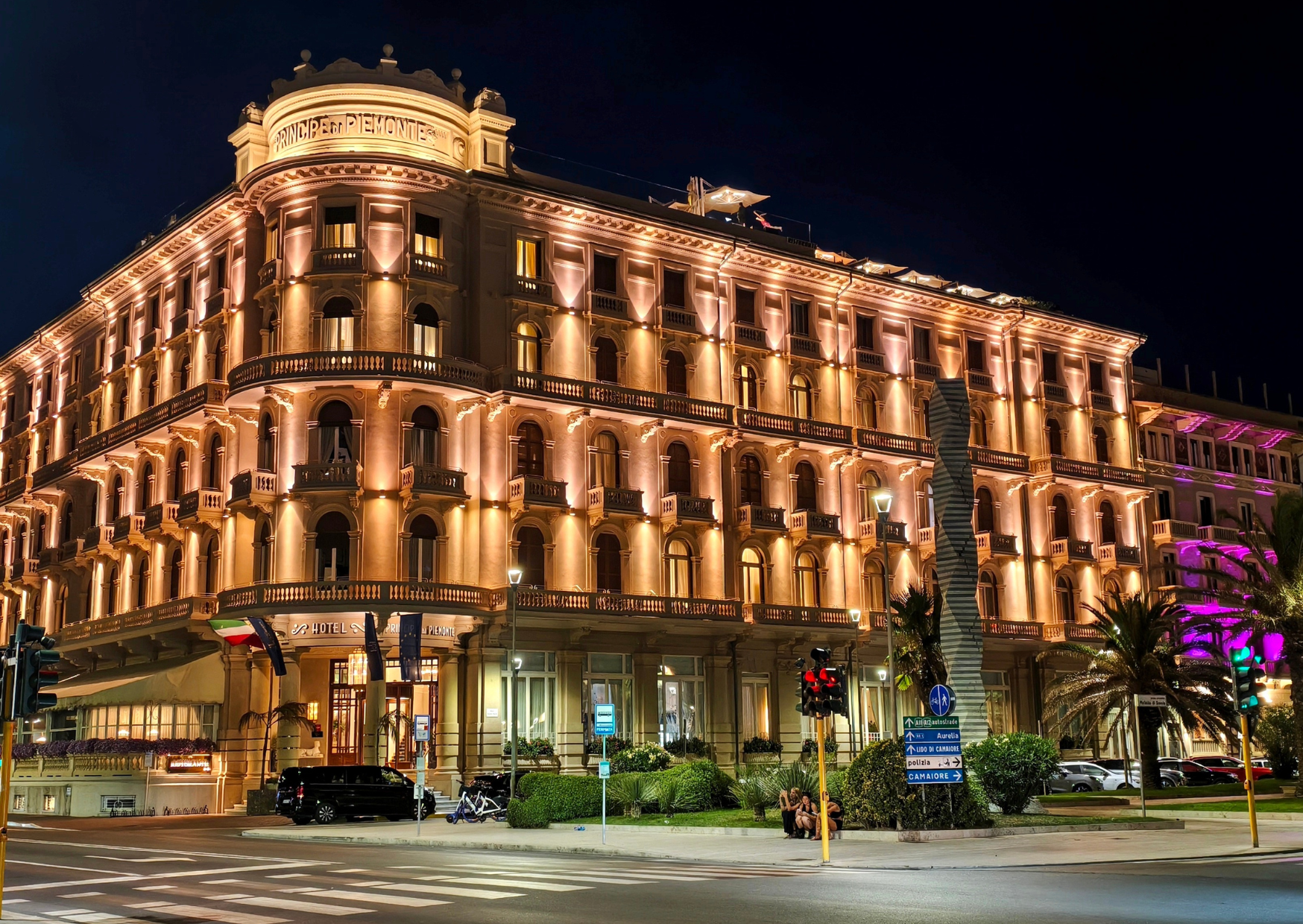
Americans tend to book hotels one of two ways. Either months in advance because they are planners, or last-minute because they procrastinate.
In Europe, both extremes can cost you money. The sweet spot is in the middle, and it varies by country, city, and season in ways Americans do not intuit.
Booking too early locks in higher rates. European hotels, especially independent ones, often set initial rates conservatively high and adjust downward as the date approaches if rooms are not filling. An American who books a Paris hotel six months in advance may pay 15 to 30 percent more than someone who books the same room six weeks out, because the hotel dropped its rate to fill remaining inventory.
Booking too late, especially in peak season, means scarcity pricing. The last available rooms in a sold-out city during a festival, holiday, or trade fair are priced at maximum.
The sweet spot varies:
- Major cities (Paris, Rome, Barcelona, Amsterdam): 3 to 6 weeks before arrival during shoulder season. 6 to 10 weeks during peak summer.
- Smaller cities and towns: 2 to 4 weeks is usually sufficient.
- Festival or event periods (Carnival, fashion weeks, trade fairs, major holidays): Book as early as possible. These are the one exception where early booking is genuinely better.
The trick Americans miss is that many European hotels allow free cancellation up to 24 to 48 hours before arrival. The smart strategy is to book early with a flexible rate, then check back periodically. If the rate drops, cancel and rebook at the lower price. Many European hotels will also match a lower rate if you call them directly.
American hotel loyalty programs (Marriott, Hilton, IHG) have trained Americans to book and forget. In Europe, the hotel market rewards active monitoring.
The “City Center” Pricing Illusion

Americans tend to search for hotels by filtering for “city center” locations. The assumption is that city center means walkable, convenient, and worth the premium.
In many European cities, that assumption costs money without delivering proportional value.
European city centers are often the most tourist-dense, most overpriced, and least authentic areas. A hotel in the center of Rome, Barcelona, or Prague is surrounded by restaurants that charge tourist prices, shops that sell souvenirs, and streets that feel nothing like the city the locals actually inhabit.
Meanwhile, neighborhoods one or two metro stops from the center are often quieter, cheaper, and closer to the food and daily life that make European cities worth visiting.
Examples:
Paris: A hotel in the 1st or 4th arrondissement (central) costs €180 to €350 per night for a basic room. A hotel in the 11th or 12th arrondissement, 10 to 15 minutes by metro from the center, costs €100 to €180 for comparable quality. The neighborhood restaurants are cheaper. The streets are more Parisian. The metro makes the central attractions equally accessible.
Barcelona: A hotel in the Gothic Quarter or on La Rambla costs €150 to €300 per night. A hotel in Gràcia or Poble-sec, both excellent neighborhoods with great food, costs €90 to €160. The metro and walking cover the distance easily.
Rome: A hotel near the Trevi Fountain or Piazza Navona costs €200 to €400. A hotel in Trastevere or Testaccio, both more interesting neighborhoods with better food, costs €120 to €200.
The trick is that booking platforms rank “city center” properties highest by default and charge a location premium that reflects tourist demand, not actual convenience. An American who sorts by location without understanding the city’s geography pays for proximity to other tourists rather than proximity to the real city.
The fix: research neighborhoods before searching for hotels. Every European city has areas that are slightly outside the tourist core but dramatically cheaper and more interesting. Ask a local. Read a blog that is not sponsored by a hotel chain. Look at where the restaurants have menus in the local language only.
The Room Size Expectation Gap
This one is not a trick in the traditional sense. It is a structural difference that costs Americans money because they respond to it the wrong way.
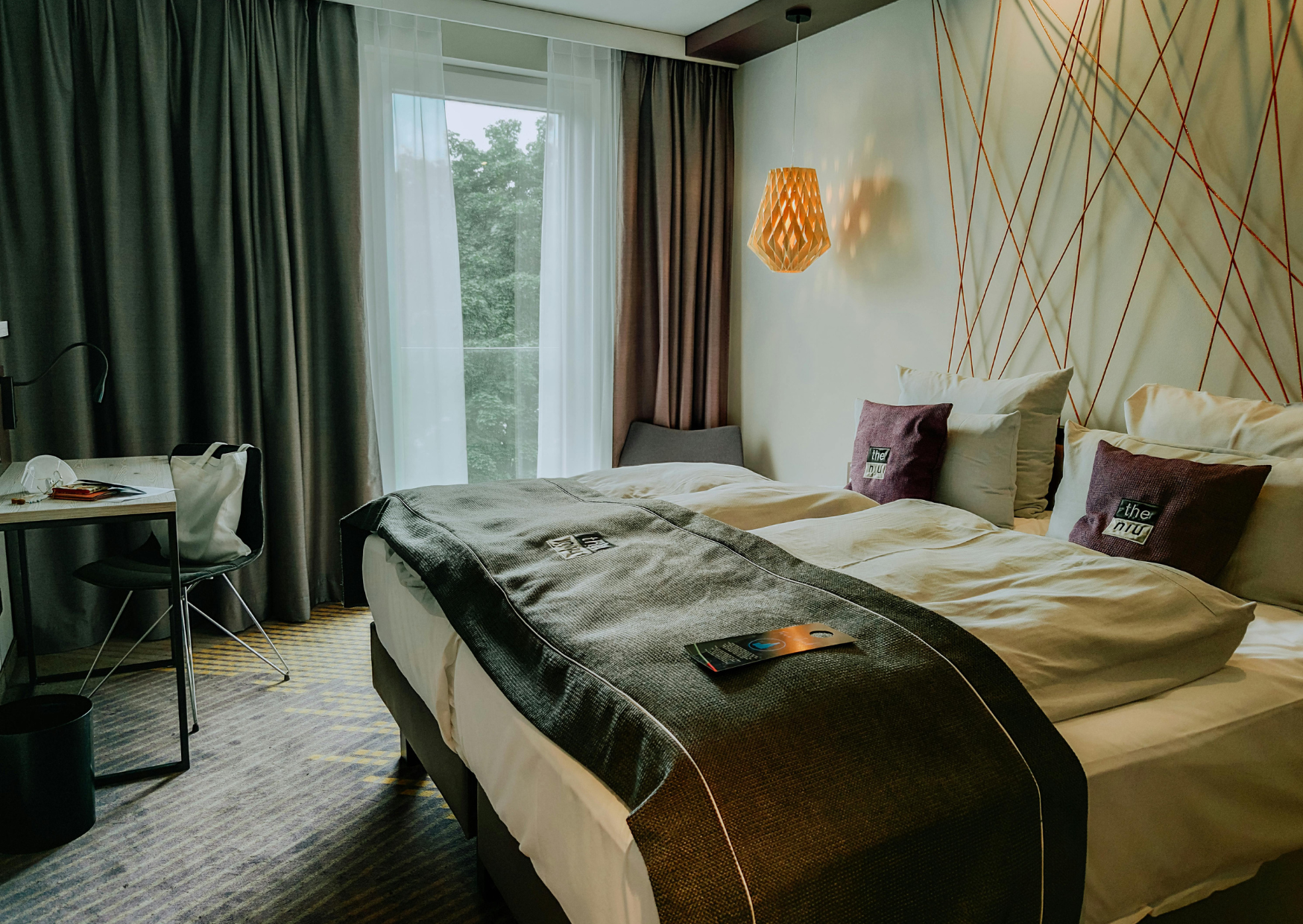
European hotel rooms are smaller than American hotel rooms. This is not a secret. But the degree of the difference surprises Americans every time.
A standard double room in a mid-range European hotel is typically 14 to 18 square meters. The American equivalent at a Holiday Inn or Marriott is 25 to 35 square meters. The European room is roughly half the size for a comparable nightly rate.
Americans respond to this by upgrading. They see the standard room photos and think something is wrong. They book a superior room, a junior suite, or a deluxe category to get the space they associate with a normal hotel room in the U.S.
That upgrade typically costs €30 to €80 per night. Over a week, that is €210 to €560 in extra spending to solve a problem that is not actually a problem.
European hotel rooms are smaller because European daily life happens outside the room. The room is for sleeping and storing luggage. The city is the living space. Americans who spend time in their hotel room the way they would at a Courtyard Marriott in Dallas are paying for space they do not need and missing the city in the process.
The fix: accept the small room. Use it for sleeping and changing. Spend the money you saved on the upgrade at a restaurant, a market, or an experience. The room size stops mattering within 24 hours once you adjust your expectations.
The OTA Loyalty Trap
Online travel agencies (OTAs) like Booking.com, Expedia, and Hotels.com dominate hotel booking in Europe. Americans use them because they are familiar, they aggregate options, and they create the illusion of comparison shopping.
The trick is that OTAs are often not the cheapest option for European hotels. They are the most visible option. That is not the same thing.
European hotels, especially independent properties (which make up a much larger share of the market than in the U.S.), frequently offer lower rates on their own websites. The reason is simple. OTAs charge hotels a commission of 15 to 25 percent per booking. Hotels that can sell directly keep that margin and often pass part of it to the guest as a lower rate or added perks.
The pattern:
- OTA rate for a hotel in Seville: €130 per night
- Same hotel, same room, same dates, booked directly on the hotel’s website: €110 to €120 per night, sometimes with free breakfast or a room upgrade included
This is not universal. Large chain hotels often enforce rate parity across platforms. But independent European hotels, boutique properties, and family-run establishments frequently undercut OTA prices on their own sites.
The fix: find the hotel on the OTA. Note the name. Go to the hotel’s own website. Compare the rate. Call the hotel directly if the website is unclear. In many cases, a two-minute phone call or email in English saves 10 to 20 percent.
Americans are conditioned by the U.S. hotel market, where chains dominate and OTAs often have the best or matching rates. In Europe, the independent hotel market is larger, and booking direct is more consistently rewarded.
The Dynamic Pricing Americans Do Not See
American hotels use dynamic pricing. Europeans know this. What Americans do not always realize is that European hotels use dynamic pricing more aggressively and with more variables than the U.S. market.
European hotel rates can change based on:
- Day of the week (weekday business hotels drop prices on weekends, tourist hotels spike on weekends)
- Local events (a trade fair in Milan, a football match in Madrid, a festival in Munich can double rates for specific dates)
- Seasonal micro-patterns (the week before Easter, the week after New Year, school holiday periods)
- Booking platform (different OTAs can show different rates for the same room on the same night)
- Device and browsing history (some platforms show slightly different prices based on search behavior)
Americans often search once, see a price, and either book or move on. The European hotel market rewards people who search multiple times, on different platforms, at different times of day, and in different browser sessions.
The most aggressive version of this is the “cookie tracking” phenomenon. Some booking platforms have been accused of raising displayed prices for users who have searched for the same property multiple times, creating artificial urgency. Whether this is widespread or anecdotal is debated. But searching in a private or incognito browser window is a zero-cost precaution that eliminates the possibility entirely.
The “Free Cancellation” Rate That Is Not Free
This one catches budget-conscious Americans who think they are being smart.
Many European hotel bookings offer two rate options:
- A non-refundable rate at the lowest price
- A “free cancellation” rate at a higher price (typically 10 to 20 percent more)
Americans, trained by Marriott and Hilton to expect flexible cancellation, often default to the free cancellation rate without doing the math.
On a €150 per night room for five nights, the free cancellation premium is roughly €75 to €150 total. That is the cost of the flexibility.
If your plans are firm, the non-refundable rate is the better value. If your plans are uncertain, the free cancellation rate is insurance. But most Americans select free cancellation out of habit, not because their plans are genuinely uncertain.
The trick is that booking platforms present the free cancellation rate as the “safe” choice, using language like “most popular” or “recommended.” The framing makes the more expensive option feel like the default and the cheaper option feel risky. It is a classic nudge design.
The fix: ask yourself honestly whether you are likely to cancel. If the trip is booked, the flights are paid for, and the dates are set, take the non-refundable rate. Save the money. Stop paying for optionality you will not use.
The Tourist Tax Nobody Mentions Until Checkout
Most major European tourist cities now charge a local tourist tax (sometimes called a city tax, occupancy tax, or tassa di soggiorno). This tax is typically not included in the room rate shown on booking platforms.
The amounts vary:
- Paris: €0.25 to €5.00 per person per night depending on hotel category
- Rome: €3 to €7 per person per night
- Barcelona: €0.65 to €3.50 per person per night (Catalonia tax plus Barcelona surcharge)
- Amsterdam: 7 percent of room rate
- Berlin: 5 percent of room rate
- Lisbon: €2 per person per night
- Venice: €1 to €5 per person per night depending on season and hotel category
For a couple staying five nights in a mid-range Rome hotel, the tourist tax adds €30 to €70 to the bill. In Amsterdam, 7 percent on a €200 room for five nights adds €70.
The trick is not that the tax exists. It is that it appears at checkout rather than at booking. Americans see a room rate, mentally commit to it, and then discover an additional charge at reception. By then, the psychological commitment is made. Nobody cancels over a tourist tax. But the cumulative cost across a multi-city European trip can add €100 to €300 to the total accommodation budget.
The fix: check whether the city charges a tourist tax before booking. Add it to your budget calculation. Some booking platforms now show the tourist tax in the total price breakdown, but not all do, and not always prominently.
The Minibar And Room Service Markup

This one is universal, not uniquely European. But the European version has a specific feature that catches Americans.
American hotel minibars are expensive. Everyone knows this. European hotel minibars are equally expensive but often use sensor-based shelves that automatically charge your room if you move an item, even if you do not consume it. Picking up a bottle of water to read the label can trigger a charge of €5 to €8.
Some hotels have moved away from sensor minibars, but they remain common in mid-range and upscale European properties. The charge appears on your bill at checkout. Disputing it requires the front desk to verify inventory, which takes time and creates friction. Most Americans pay it.
Room service in European hotels is marked up 200 to 400 percent above street prices. A sandwich that costs €5 at a café costs €18 from room service. A bottle of water that costs €0.50 at a supermarket costs €4 to €6 from the minibar.
The fix: do not use the minibar. Do not use room service. Buy water and snacks at a nearby supermarket or convenience store. A five-minute walk to a Carrefour Express, Día, or Monoprix saves enough over a week to fund a restaurant meal. The minibar is not a convenience. It is a revenue center.
The Wi-Fi Charge That Should Not Exist

This one is fading but not gone.
In the U.S., free Wi-Fi is standard at virtually all hotel tiers. In Europe, most hotels now offer free Wi-Fi as well. But a stubborn minority, usually older upscale properties and some business hotels, still charge for it.
The charge ranges from €5 to €15 per day. Some hotels offer a free “basic” tier that is unusably slow and a paid “premium” tier that functions normally. This is a transparent extraction.
The trick is not the charge itself. It is that the hotel knows you will pay it because you need it. And the charge is rarely mentioned at booking. It appears when you connect.
The fix: check Wi-Fi policy before booking. Filter for “free Wi-Fi” on booking platforms. If the hotel charges for usable internet in 2026, it is either extremely old-fashioned or extremely confident that its guests will not push back. Either way, it is a signal about how the hotel treats value.
The Airport Hotel Panic Book
Americans arriving in Europe after an overnight transatlantic flight are tired, disoriented, and vulnerable to bad decisions. The airport hotel is one of those decisions.
Airport hotels in European hub cities (London, Paris, Amsterdam, Frankfurt, Madrid) charge €120 to €250 per night for rooms that are mediocre by any standard. The premium is entirely location-based. You are paying for proximity to the terminal, not for quality.
The alternative: most major European airports are 20 to 40 minutes from the city center by train or bus. A hotel in the city, booked in advance, often costs the same or less and puts you in a neighborhood with actual restaurants, cafés, and life.
The airport hotel makes sense in exactly one scenario: you have a connection the next morning and cannot get into the city. In every other scenario, the airport hotel is a panic booking driven by fatigue, not logic. Take the train. Check into a city hotel. Eat a real dinner. Sleep in a real neighborhood. The extra 30 minutes of travel saves money and dramatically improves the first night.
Your First 7 Days Of Smart European Hotel Booking
Day 1: Set your search to “room only” on every booking platform. Compare the base rate without breakfast to the rate with breakfast. Calculate how much the breakfast add-on costs per person per day. If it exceeds €10, skip it and eat at a local café.
Day 2: Find three hotels you like on Booking.com or Expedia. Then visit each hotel’s own website. Compare rates. Check for direct booking perks (free breakfast, upgrade, lower rate).
Day 3: Research neighborhoods before filtering by “city center.” Identify two or three neighborhoods that are slightly outside the tourist core but well-connected by metro or walking. Search for hotels there.
Day 4: Check for local tourist taxes in every city on your itinerary. Add the per-person, per-night charge to your budget. This is money you will spend whether you plan for it or not.
Day 5: Search for your hotels in a private browser window. Compare the prices you see with what you saw in your regular browser. If they differ, book through the private window.
Day 6: For any booking more than six weeks out, select the free cancellation option. Set a calendar reminder to recheck the rate two to three weeks before arrival. If the rate has dropped, cancel and rebook.
Day 7: Accept the small room. Do not upgrade to fix a size problem. Spend the upgrade money on a dinner at a restaurant the concierge recommends. The room is for sleeping. The city is for living.
What Actually Matters Here
European hotels are not trying to scam Americans. They are operating in a market with different norms, different structures, and different revenue models than the American hotel market.
The tricks are not hidden. They are just unfamiliar. And unfamiliarity is expensive.
The breakfast markup, the booking window game, the city center premium, the OTA commission, the tourist tax, the minibar sensors, the upgrade instinct. Each one individually is small. Together, across a two-week European trip, they can add $500 to $1,500 to the total cost without the traveler ever feeling like they were overcharged.
The Americans who travel Europe cheaply are not staying in worse hotels. They are booking smarter. They check the hotel’s own website. They eat breakfast at bakeries. They stay one neighborhood outside the center. They accept the small room. They bring a water bottle.
None of that is sacrifice. It is just knowing the rules of a game that nobody explained before you started playing.

About the Author: Ruben, co-founder of Gamintraveler.com since 2014, is a seasoned traveler from Spain who has explored over 100 countries since 2009. Known for his extensive travel adventures across South America, Europe, the US, Australia, New Zealand, Asia, and Africa, Ruben combines his passion for adventurous yet sustainable living with his love for cycling, highlighted by his remarkable 5-month bicycle journey from Spain to Norway. He currently resides in Spain, where he continues sharing his travel experiences with his partner, Rachel, and their son, Han.