
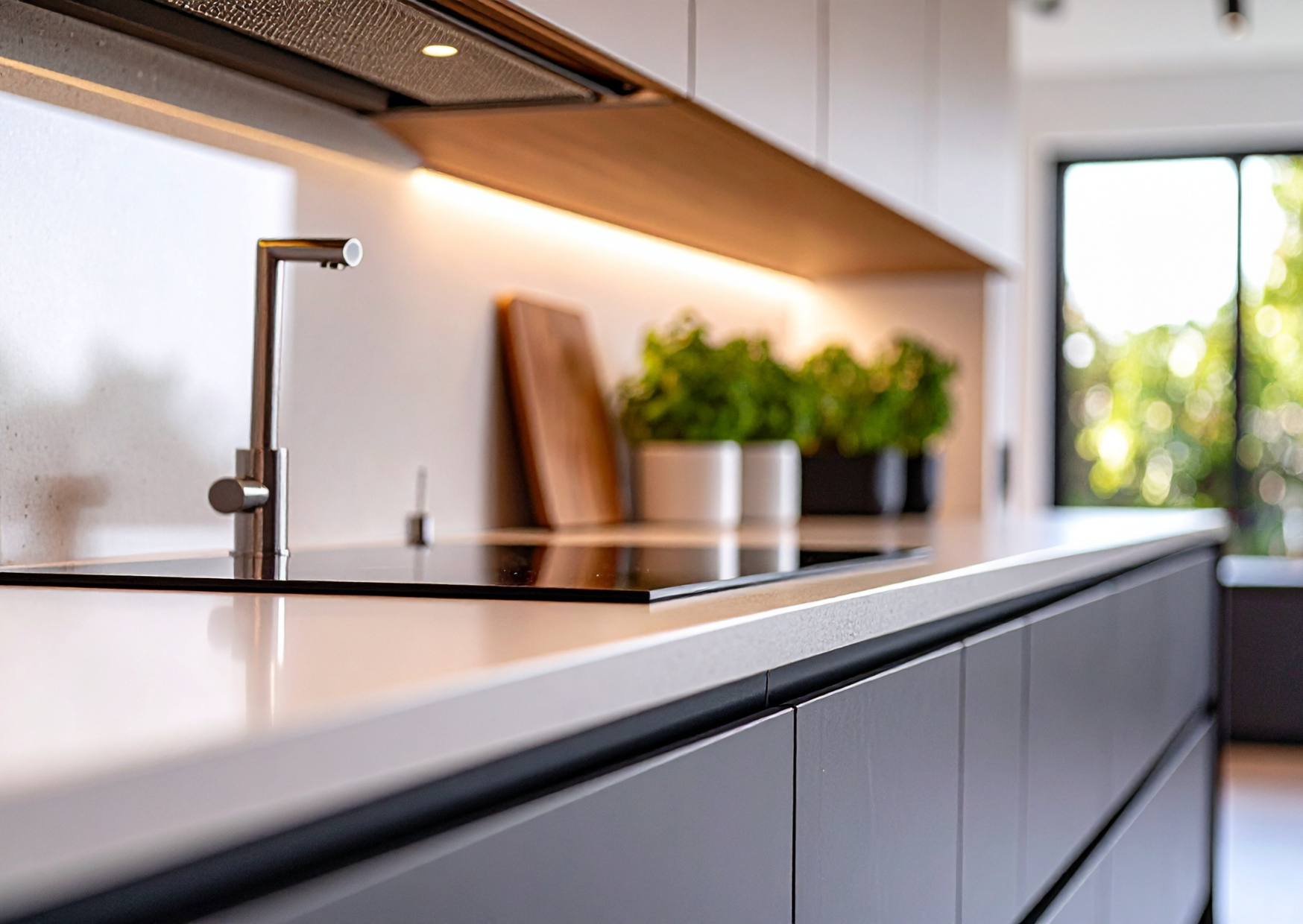
An American moving into a European kitchen often notices the missing thing under the sink before noticing the tiny fridge.
No humming metal grinder. No switch by the backsplash. No learned reflex of scraping half a plate into the drain and letting the plumbing deal with it.
At first it feels like a downgrade.
Then, after a while, it starts to look more like a different answer to the same problem.
Because European kitchens do deal with food waste. Constantly. They just usually do it in plain sight instead of hiding it in the pipework. In much of Europe, especially in cities, the default system is not “grind it and forget it.” It is separate it, collect it, compost it, or move it through a bio-waste stream.
That difference sounds small.
It is not.
It changes kitchen design, sink habits, storage, smells, plumbing expectations, and even the way people think about leftovers. Once the food scrap is no longer disappearing into the drain, the household starts treating it like waste that has to be managed, not a substance that can be made invisible with noise and water.
That is why garbage disposals never became ordinary in most European kitchens.
Not because Europe forgot to invent them.
Because the kitchen evolved around another system.
The European Answer Is Not Never It Is Usually Why Bother
This needs a correction up front.
Europe is not one giant disposal-free monastery.
Some households have them. Some new buildings can support them. Some countries are more open to them than others. Sweden, for example, has had pockets of adoption, and parts of the UK and Ireland have long sold them.
But in ordinary European housing, especially apartment-heavy cities and older buildings, they are still uncommon enough to feel abnormal.
That matters because the reason is not simple ban-or-no-ban folklore. It is a layering problem.
If a technology arrives late into a place with smaller kitchens, older building stock, shared plumbing stacks, municipal organics collection, stricter waste sorting, and no cultural expectation that food scraps belong in the sewer, it has to fight for a role. Most under-sink grinders never really won that fight.
They were solving a problem that a lot of European households were already solving another way.
And once a habit is built into everyday life, it becomes hard to dislodge. Kitchen habits harden fast.
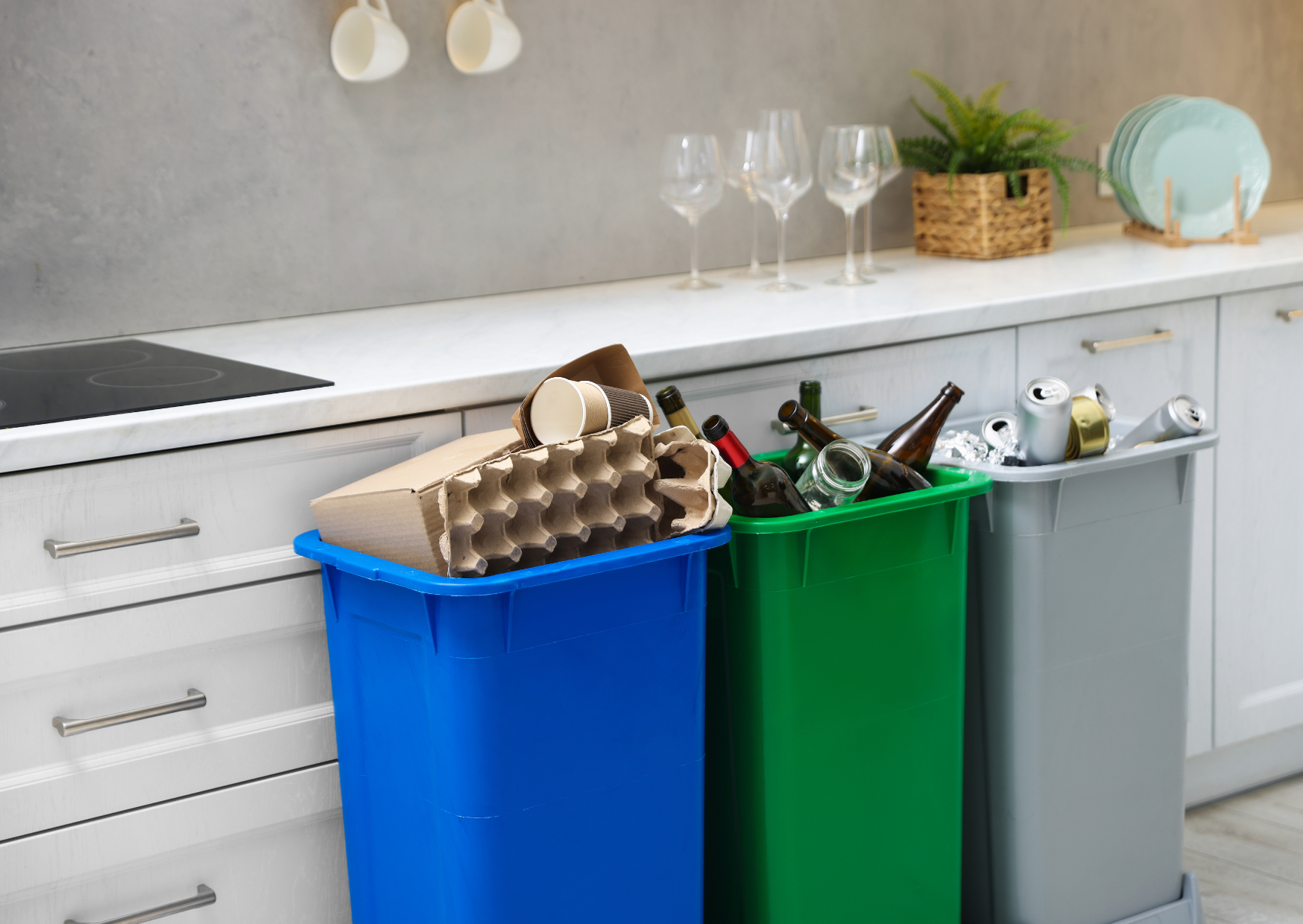
The same way Americans treat the disposal as normal plumbing, a lot of Europeans treat the small food caddy, the brown bin, the compostable liner, or the under-sink organics bucket as normal housekeeping.
That is the real answer.
Not “Europe hates convenience.”
More like, Europe built a different convenience.
Europe Pushes Food Waste Toward The Bin Stream Not The Sewer
This is the biggest reason.
European waste policy has been moving hard toward separate bio-waste collection and away from the idea that organic waste should become somebody else’s invisible liquid problem. The EU’s waste framework puts waste management in a clear hierarchy, and the European Environment Agency has been blunt that bio-waste is the largest single fraction of municipal waste and that convenient separate bio-waste collection is critical for high recycling rates. Since the end of 2023, separate collection of bio-waste has been required across the EU. Spain’s own public administration guidance now spells out that separate collection of biowaste is compulsory, with earlier deadlines already applying in larger municipalities.
That changes the logic of the kitchen.
If the system outside the building is designed to capture food waste separately, then a garbage disposal starts to look less like modern convenience and more like a weird detour. Instead of moving scraps into a brown bin, caddy, or organics collection stream, the household is grinding them into wastewater and handing the problem to sewers and treatment plants.
Which is exactly what many European waste systems are trying not to prioritize.
The Irish EPA put this very plainly years ago in a study on food waste disposers. Its summary found that source-separated collection of organic waste was the policy direction, while grinders move organic waste from the solid-waste stream into the wastewater system. It also concluded that wider use of disposers was not consistent with Irish waste-management or water-services policy and recommended regulation or restriction at household level.
That is a telling contrast.
In the American kitchen, the disposal feels like an appliance.
In much of Europe, it looks more like sending the wrong material into the wrong infrastructure.
Once that framing takes hold, the rest follows naturally.
The Plumbing Is Often Shared Older And Less Forgiving
The second reason is less glamorous and more physical.
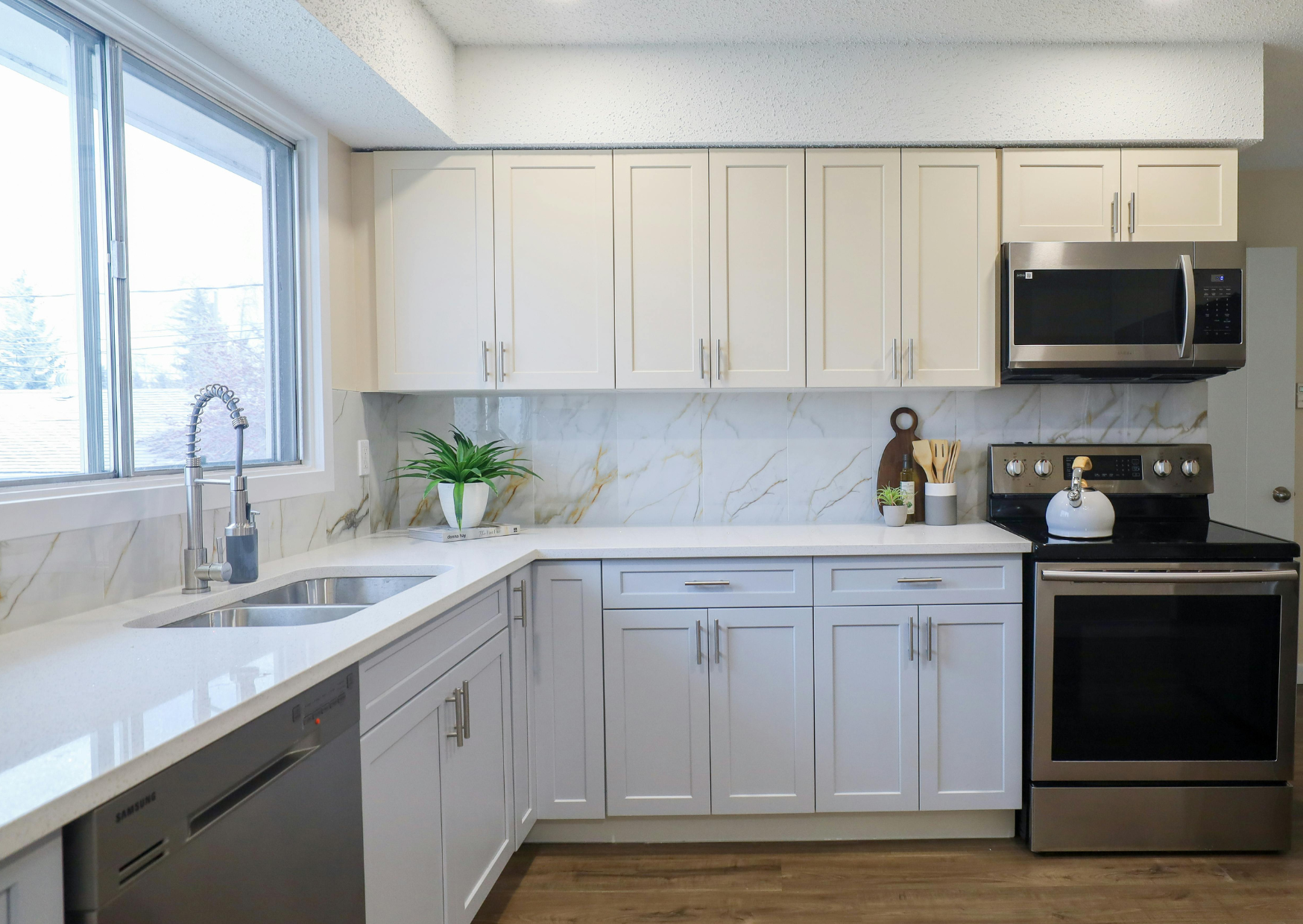
A lot of Europe lives in buildings that are older than the disposal habit itself. The European Commission has noted that about 35% of EU buildings are more than 50 years old, and more than 85% of today’s buildings are likely still to be standing in 2050. That means an awful lot of kitchens are sitting inside old apartment blocks, retrofitted buildings, narrow service cores, and plumbing systems that were not designed around a machine that turns scraps into slurry and asks the drain to cope with it.
This is not just about age in a nostalgic sense.
It is about design assumptions.
Shared stacks. Tighter service space. Smaller under-sink cabinets. Less appetite for adding one more motorized appliance. More caution about what gets flushed into systems serving multiple flats.
And then there is the messier truth. European plumbing culture is more suspicious of what goes down the drain in the first place.
Wastewater treatment has to screen out solids, grit, and grease. The European Investment Bank’s wastewater guide notes that fats, oils, and grease are often removed as early as possible in treatment to avoid build-up and blockages downstream. That is at plant level. In household life, people learn a simpler version of the same lesson: drains are for water and a little incidental food residue, not for turning dinner into infrastructure.
This is one reason the disposal never felt neutral in Europe.
The machine itself may work perfectly well.
The question is whether the building, the shared pipes, the maintenance culture, and the municipal system want that extra load at all.
Often, the answer is basically no.
Or, more accurately, not enough to make it standard.
What They Do Instead Is Much More Visible
Here is the part Americans tend to underestimate.
European kitchens do not simply scrape into a generic trash can and suffer.
They usually have a visible system.
Sometimes it is a small countertop caddy with a liner.
Sometimes it is a ventilated kitchen bin tucked under the sink.
Sometimes it is a brown communal organics container in the street.
Sometimes it is door-to-door food-waste collection. Sometimes compost. Sometimes a stricter version of “keep a strainer in the sink, empty it often, and stop pretending the drain is a mouth.”
In other words, the replacement is not one thing. It is a family of habits.
Local authorities make this explicit. Norwich City Council’s food-caddy guidance is almost comically ordinary: line the small kitchen caddy, put food waste in it, tie the bag, move it to the larger outside food bin, and put that out for weekly collection. Paris now describes food-waste collection through brown-lidded bins in some arrondissements and through voluntary collection points, including market locations. Milan’s municipal waste operator directs residents to its separate waste collection system and guide materials for the city.
That does not sound sexy because it is not sexy.
It is housekeeping.
But it works because it matches the larger infrastructure. The kitchen caddy is not a quirky local tradition. It is the indoor front end of a municipal organics system.
This is why European kitchens often feel like they have one more tiny chore and one less machine.
You scrape.
You sort.
You empty the caddy.
You move on.
The job is visible, yes. But it is also straightforward. And once the household is used to it, the lack of a disposal stops feeling primitive and starts feeling normal in the same way hanging laundry outside eventually stops feeling inconvenient and starts feeling obvious.
Smaller Kitchens Make Different Winners
A garbage disposal makes more intuitive sense in a kitchen with space.
Space for a bigger sink base.
Space for the motor unit.
Space for bulkier plumbing.
Space for a household that solves small annoyances by installing one more appliance.
A lot of European kitchens are not built on that logic.
They are often tighter, shallower, more modular, and less forgiving about what earns permanent under-sink real estate. Under the sink you may already have a hot-water unit, cleaning products, a pull-out sorting system, maybe a narrow bin arrangement that separates glass, packaging, general waste, and organic waste in one compressed cabinet.
In that setup, the disposal is not the obvious hero appliance.
It is the bulky outsider.
This matters more than people think. Kitchen design trains behavior. A kitchen with a dedicated sorting drawer and a small prep flow tells you to manage waste manually. A kitchen with a large sink base and a grinder tells you the sink will take care of it.
The European version is not always prettier. Sometimes it is just a compostable bag in a vented plastic pail that nobody wants to photograph.
Still, it suits the room.
And it suits another deep European instinct, which is to use less water, less noise, and less machinery where a simpler routine will do. Not because every European household is some austere monastery of restraint. Plenty are chaotic. Plenty are messy. Plenty hate the caddy.
But the caddy fits.
The grinder often does not.
The Disposal Also Solves The Wrong Part Of The Problem
This is the most interesting cultural difference.
Americans often see the disposal as solving food waste.
Europeans often see it as solving mess at the sink.
Those are not the same thing.
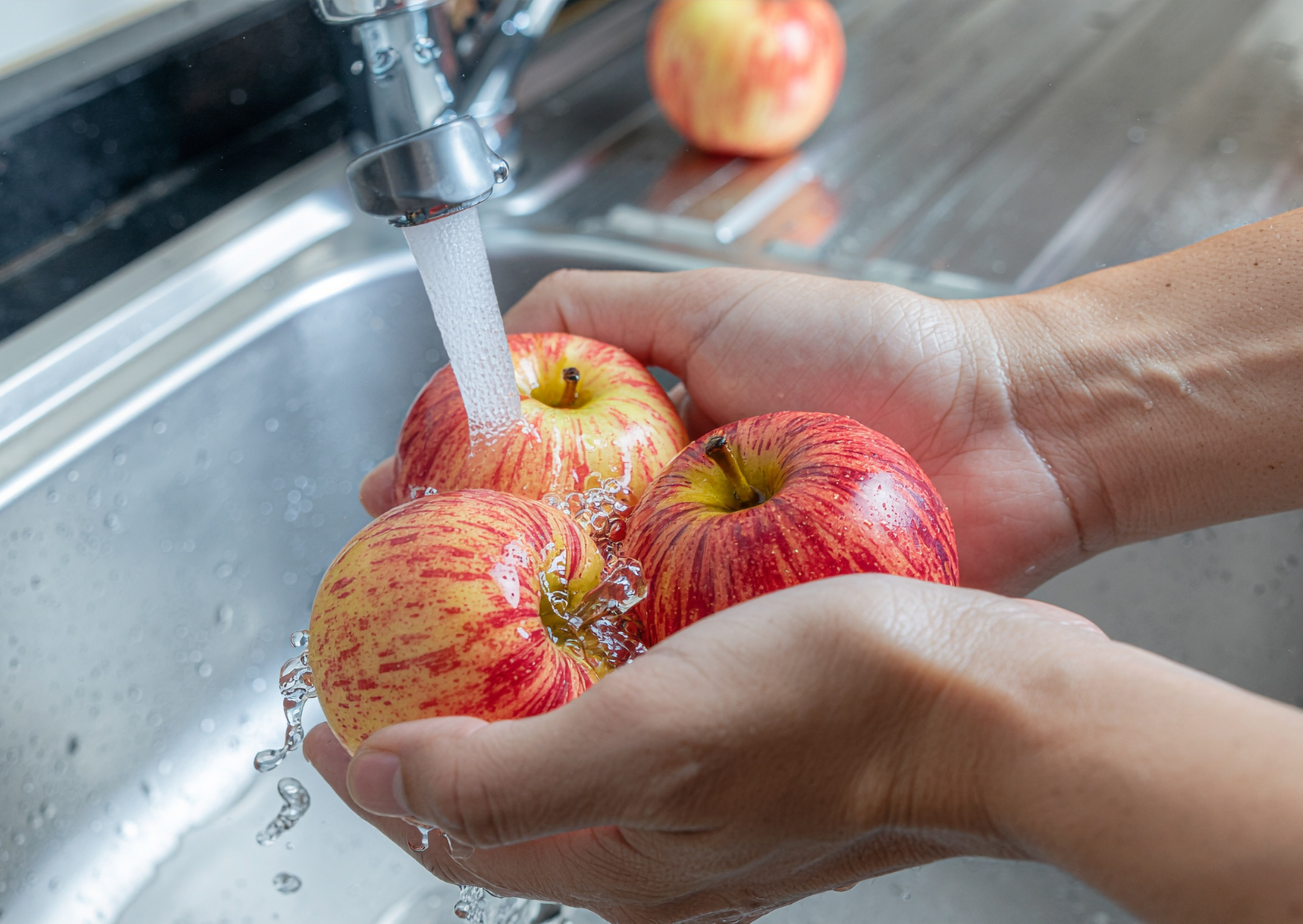
The disposal is great at making plate scraps disappear from the immediate scene. It is less great at reducing the actual amount of food a household wastes. The waste still exists. It has just been rerouted. In some cases, it now has to be treated through wastewater infrastructure instead of being separately collected for composting or anaerobic digestion.
And once you stop admiring the machine, this becomes obvious.
If dinner leftovers are being shoved into the sink every night, the household does not really have a disposal success story. It has a planning problem wearing a convenient costume.
European systems often force a more annoying but more honest confrontation. When scraps go into a caddy or organics bin, people see how much they are wasting. Coffee grounds, bones, peels, spoiled salad, old rice, limp herbs, half a lemon, crusts, that expensive avocado that turned into brown sadness overnight. The waste becomes countable.
That visibility matters.
The European Environment Agency has stressed that home and community composting, along with well-designed separate bio-waste collection, is central to improving waste management. That approach treats food waste as a material stream to be reduced and sorted, not merely liquefied and removed from sight.
Which brings us to the less romantic truth.
A lot of European kitchen habits are built around friction that teaches.
You think twice before scraping a whole bowl into the organics bucket.
You notice when the caddy fills too fast.
You become less casual about buying produce for an imaginary future self.
The disposal can be brilliant at convenience.
The caddy can be better at honesty.
European Menus And European Plumbing Quietly Work Together
This sounds overly grand, but it is real.
European food habits often produce a different kind of sink life.
More peels, yes. More coffee grounds, yes. Fish bones in some households, bread scraps in others. But also a stronger tradition of separating used oil, not sending grease into the drain, and keeping scraps out of the pipe if the municipal system expects them elsewhere.
Spain’s household-waste guidance is explicit that local authorities run different separation models, but organic waste is one of the standard fractions and separate collection has become compulsory. That means the kitchen routine is not an eccentric preference. It is increasingly part of how household waste is supposed to function.
Once the organic stream is normalized, the sink is freed from being the fallback disposal route.
And that, in turn, changes how people cook and clean. You keep a sieve or strainer over the plug hole. You wipe pans before rinsing. You cool and bottle used oil. You keep a small caddy nearby for prep scraps. You empty it into the building bin or street container.
It is not glamorous.
It is also not hard.
Actually, that is the point. The European replacement for the disposal is rarely a single clever gadget. It is a cluster of plain habits supported by municipal collection systems and kitchen design. None of them is impressive alone. Together, they make the disposal feel less necessary.
Not obsolete everywhere.
Just less necessary than Americans assume.
The American Shock Wears Off Faster Than You Think
The first week without a disposal can feel irritating.
People stand at the sink holding a plate like they have lost civilizational support. They poke at scraps. They curse quietly. They wonder why a continent that can run high-speed trains cannot install a motor under the sink.
Then a funny thing happens.
The alternative routine becomes automatic.
A small bowl for prep scraps while cooking.
A mesh strainer catching sink debris.
A countertop caddy or under-sink food bin.
A brown bin downstairs.
A compost bag tied and removed every couple of days.
A pan wiped with paper before washing.
An instinctive refusal to pour oil into the drain.
That sequence becomes normal much faster than people expect.
And once it does, the disposal begins to look like one of those intensely American conveniences that feels indispensable until it disappears, after which the household mostly adapts. Like giant dryers in mild weather. Or three types of bottled water in the fridge. Or the belief that every annoyance needs a powered solution.
This is where the European kitchen wins its argument.
Not by being more advanced in some chest-thumping way.
By being boringly workable.
That is a much stronger design principle than people think.
What They Do Instead Is More Low-Tech And More Systemic
European kitchens usually do not reject garbage disposals because they are anti-modern.
They skip them because the surrounding system points in another direction.
Waste policy says separate bio-waste matters.
Municipal collection increasingly expects it.
Older shared buildings are not eager for extra sewer load or retrofits.
Smaller kitchens reward bins and caddies more than under-sink motors.
And household habits evolved around all of that.
So the replacement is not one glamorous “European secret.”
It is this:
A small caddy.
A liner.
A strainer.
A brown bin.
A weekly routine.
Sometimes a compost heap.
Sometimes a market drop-off point.
Sometimes a shared building collection schedule taped near the entrance.
That is the answer under the sink.
Or, more accurately, the answer is usually next to the sink, because Europe decided that food waste belongs in a visible chain of handling rather than a hidden one.
Once you understand that, the missing garbage disposal stops looking like an omission.
It looks like a choice.

About the Author: Ruben, co-founder of Gamintraveler.com since 2014, is a seasoned traveler from Spain who has explored over 100 countries since 2009. Known for his extensive travel adventures across South America, Europe, the US, Australia, New Zealand, Asia, and Africa, Ruben combines his passion for adventurous yet sustainable living with his love for cycling, highlighted by his remarkable 5-month bicycle journey from Spain to Norway. He currently resides in Spain, where he continues sharing his travel experiences with his partner, Rachel, and their son, Han.