
The most underrated relationship advantage in a lot of Europe is not passion.
It’s rhythm.
In many European places, couples still have a simple evening pattern that makes them feel like a couple even after decades. It’s not romantic in the Hollywood sense. It’s not expensive. It’s not a “date night” production. It’s a repeatable sequence that happens almost automatically because the neighborhood and the culture support it.
A short walk. A small stop. A shared drink or coffee. A light bite. A slow return home. Phones down. The day ends with shared presence, not separate screens.
A lot of American couples dropped this somewhere between 35 and 45. Not because they stopped loving each other. Because American life makes the evening feel like collapse time. Commute time, kid logistics, exhaustion, car dependency, and the constant pull of home entertainment. The evening becomes survival, not ritual.
Europe doesn’t magically fix relationships. But it often makes it easier to keep one small habit that protects them.
The Ritual Is Not Romance It’s A Daily Reset Together

If you watch older couples in Spain, Portugal, Italy, and parts of France, you notice something that looks almost boring.
They don’t “go out.” They step out.
The distinction matters.
They’re not dressing up. They’re not scheduling it like a rare event. They’re not treating it as a reward for work. It’s closer to brushing your teeth. A small reset that signals the day is shifting and the household is not the entire universe.
That reset does three things quietly:
- it transitions the nervous system from day mode to evening mode
- it creates a low-pressure moment of togetherness
- it prevents the home from becoming a sealed box where the only shared activity is consumption
In the U.S., a lot of couples live without this transition. They go from work and errands straight into home. Then home becomes the only stage where the relationship exists. That’s a heavy stage. It’s full of chores, budgets, screens, and fatigue.
In much of Europe, couples still do a small thing that says: before we disappear into the house, we see each other in public for a bit. We move through the world together.
Small shared transitions protect long-term closeness. It’s not cute. It’s mechanical.
What The European Evening Ritual Usually Looks Like
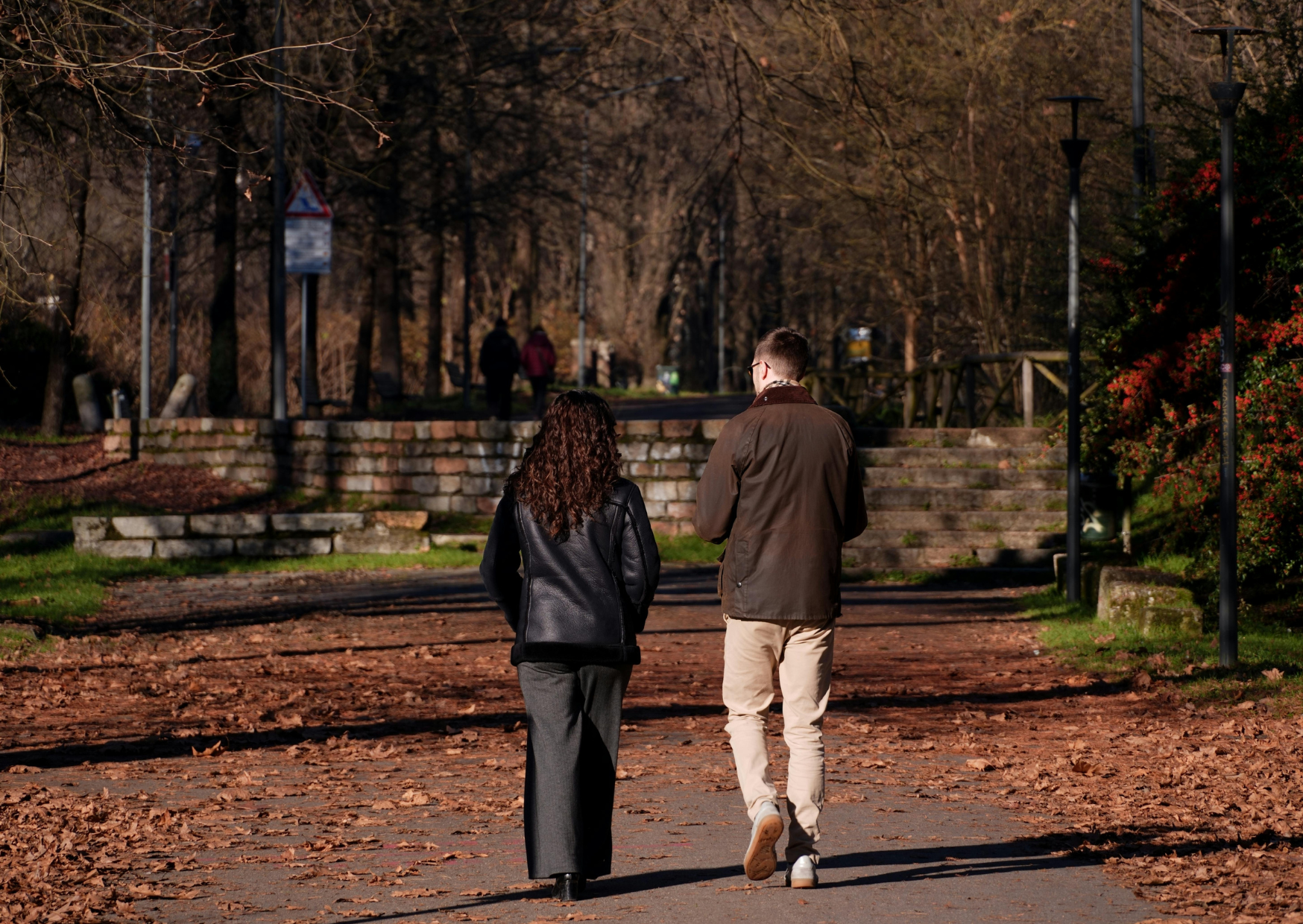
The ritual changes by country and neighborhood, but the structure repeats.
A typical version:
- dinner or pre-dinner walk, 15 to 30 minutes
- a small stop, 20 to 45 minutes
- home, with a lighter dinner or a simple meal
- a calmer last hour, often with less screen chaos
The “small stop” could be:
- a café for a coffee
- a bar for one drink
- a bakery for something small
- a plaza bench with a takeaway drink
- a neighborhood spot where the staff recognizes faces
It doesn’t have to be deep conversation. Many couples just sit and watch the street. The point is not performance. The point is being together without the house tasks sitting on your shoulders.
Americans often think a ritual needs meaning attached to it. Europeans often let the repetition create the meaning.
Also, Europeans are often comfortable with the ritual being short. An American couple might think, if we go out it should be worth it. Two hours minimum. A bigger bill. A bigger plan. Then they skip it because it’s too much work.
The European version is designed to survive tiredness.
Thirty minutes out beats zero minutes out. Every time.
Why American Couples Dropped It
This is less about culture wars and more about physics.
A lot of American evenings are built on:
- long commutes
- car-based errands
- earlier dinner schedules
- childcare and school schedules
- home sizes that encourage indoor living
- neighborhoods with fewer walkable third places
- fatigue that feels like a permanent condition
The American evening becomes a compression zone. Everything is squeezed into the few hours after work: dinner, kids, chores, tomorrow prep, catching up, collapsing. By the time the house quiets down, there’s no energy left for a ritual that requires leaving the house again.
Then screens take over.
Screens are the easiest substitute for ritual because they give quick relief and require no coordination. Each person can disappear into their own feed and call it rest. Couples sit near each other and drift apart.
Not always. Not everyone. But enough that it becomes the default.
The other issue is cost and friction. In many U.S. places, leaving the house means:
- driving
- parking
- spending more than you meant to
- dealing with noise and crowds
- returning home late and irritated
If the evening ritual carries high friction, it dies.
In many European places, it carries low friction:
- walk downstairs
- walk to the square
- sit
- return
So the ritual survives.
Low friction keeps good habits alive. That applies to relationships too.
The Walk Is The Actual Secret

People love focusing on the café, the wine, the dinner.
The walk is what matters.
The walk is where:
- the body decompresses
- the couple stops facing screens
- the conversation can happen without being forced
- the day gets processed
- the nervous system exits the work posture
Walking side by side is also easier than sitting face to face in a high-pressure “talk to me” setting. For many couples, especially after 50, the walk is the only setting where conversation returns naturally.
American couples often lose this because walking becomes “exercise,” which becomes optional, which becomes another task, which becomes something you skip when life is heavy.
European couples often treat walking as part of being a person. It’s not branded. It’s not a fitness identity. It’s the way you move through the evening.
That’s why the ritual lasts into older age. It doesn’t require performance. It’s just motion.
Walking is a relationship tool because it makes time together feel lighter. Not intense. Not forced. Light.
The Food Side Is Smaller Than Americans Expect
Another reason the ritual survives is that it doesn’t demand a heavy dinner.
In a lot of European routines, the day’s main meal is earlier, or the evening meal is simpler. The ritual doesn’t require a huge restaurant dinner every time. It can be:
- a shared plate
- a small sandwich
- a soup at home afterward
- fruit and yogurt later
- a simple omelet
American couples often link “going out” with “big meal.” Big meals cost more and feel heavier and harder to justify frequently. The European version decouples the ritual from the full dinner production.
You can step out and still eat lightly. The goal is not indulgence. The goal is transition and presence.
This is why older couples can keep doing it. Huge dinners get harder at 70. A small drink and a short walk are still doable.
It also matters for sleep. A lighter evening meal supports better sleep, and better sleep supports better mood, and better mood supports relationships. It’s a boring chain, but it’s real.
Small evening food supports better sleep and that supports better couples.
What It Does For Couples Over Decades
This is where the ritual starts looking less trivial.
A couple that keeps a small evening ritual gets a few long-term benefits:
- fewer days ending in full separation
- more micro-moments of repair after stress
- more shared memory without needing big events
- more public identity as a couple, not just a household
- less resentment that comes from never having time together
- less reliance on “big trips” to feel connected
In American relationship culture, a lot of couples wait for a crisis to do repair. They go to therapy after years of drifting. They plan a big vacation after years of no rituals. They try to resurrect intimacy with a dramatic move.
European couples with a small daily ritual often do less dramatic repair because the drift doesn’t get as far.
The ritual doesn’t prevent every problem. It prevents one problem: the slow disappearance of shared time.
Shared time is not automatic. It’s built.
Pitfalls Most People Miss When They Try To Copy This
American couples often hear this and immediately try to copy the wrong part.
They try to copy the wine, not the rhythm. Or they try to copy the “European lifestyle” and miss the real mechanism.
Common mistakes:
- making it too long so it becomes fragile
- making it too expensive so it becomes rare
- trying to force deep conversations every time
- choosing a place that requires driving and parking stress
- turning it into a health project or a self-improvement routine
- expecting instant emotional payoff
The ritual works because it’s easy.
It’s not supposed to feel like a relationship workshop. It’s supposed to feel like a small normal thing that happens even when you’re tired.
If you can’t do it on a mediocre Tuesday, it won’t last.
Mediocre Tuesdays are where relationships are actually built. Not anniversaries.
Your First 7 Evenings Building The European Version

Here’s a week plan that creates the ritual without turning it into a project. It’s designed for real American lives: work, fatigue, kids, weather, and all the usual chaos.
Night 1
Pick the smallest possible version. Ten-minute walk after dinner. No destination needed. The only rule is phones stay in pockets.
Night 2
Add a stop. One drink, one coffee, or one takeaway pastry to share. Keep it under €15 if you’re in Europe, or keep it under a modest budget if you’re in the U.S. The point is repeatability, not indulgence.
Night 3
Do it earlier. If you keep failing at 9 p.m., move it to 7 p.m. The ritual works when it happens before exhaustion wins.
Night 4
Make the walk the destination. Choose a route with a bench, a view, or a pleasant street. Sit for five minutes. That’s enough.
Night 5
Do a simple home version after the walk. Tea, fruit, yogurt, or a small bite at the table. No TV during this part. Give the day a clean ending.
Night 6
Invite light social contact if you want. Say hello to the same neighbor. Stop at the same place. The ritual becomes stronger when it connects you to a place, not just to each other.
Night 7
Lock the weekly anchor. Choose one night that is non-negotiable. If you do nothing else all week, you do that one. A ritual survives when it has a protected slot.
This is what Europeans do without calling it a system. They protect one repeatable habit that keeps the couple alive as a couple.
One protected night changes relationship tone more than people expect.
Where This Lands In Real Life

The European evening ritual is not a romance hack.
It’s a maintenance habit that:
- lowers stress
- increases shared time
- reduces drift
- makes older age less isolated
- keeps the couple feeling like a unit in public and in private
American couples dropped it for understandable reasons. Their environment often makes it harder and their time is often more compressed.
But the solution is not to wait for more time. More time rarely arrives on its own.
The solution is to make the ritual small enough that it survives your real life.
If you want the European at-70 version, don’t chase a perfect date night. Chase a repeatable evening reset: walk, small stop, home, phones down.
That’s the version that lasts through raising kids, through work stress, through aging, through boredom, through winters, through everything.
It’s not glamorous.
It works.

About the Author: Ruben, co-founder of Gamintraveler.com since 2014, is a seasoned traveler from Spain who has explored over 100 countries since 2009. Known for his extensive travel adventures across South America, Europe, the US, Australia, New Zealand, Asia, and Africa, Ruben combines his passion for adventurous yet sustainable living with his love for cycling, highlighted by his remarkable 5-month bicycle journey from Spain to Norway. He currently resides in Spain, where he continues sharing his travel experiences with his partner, Rachel, and their son, Han.