
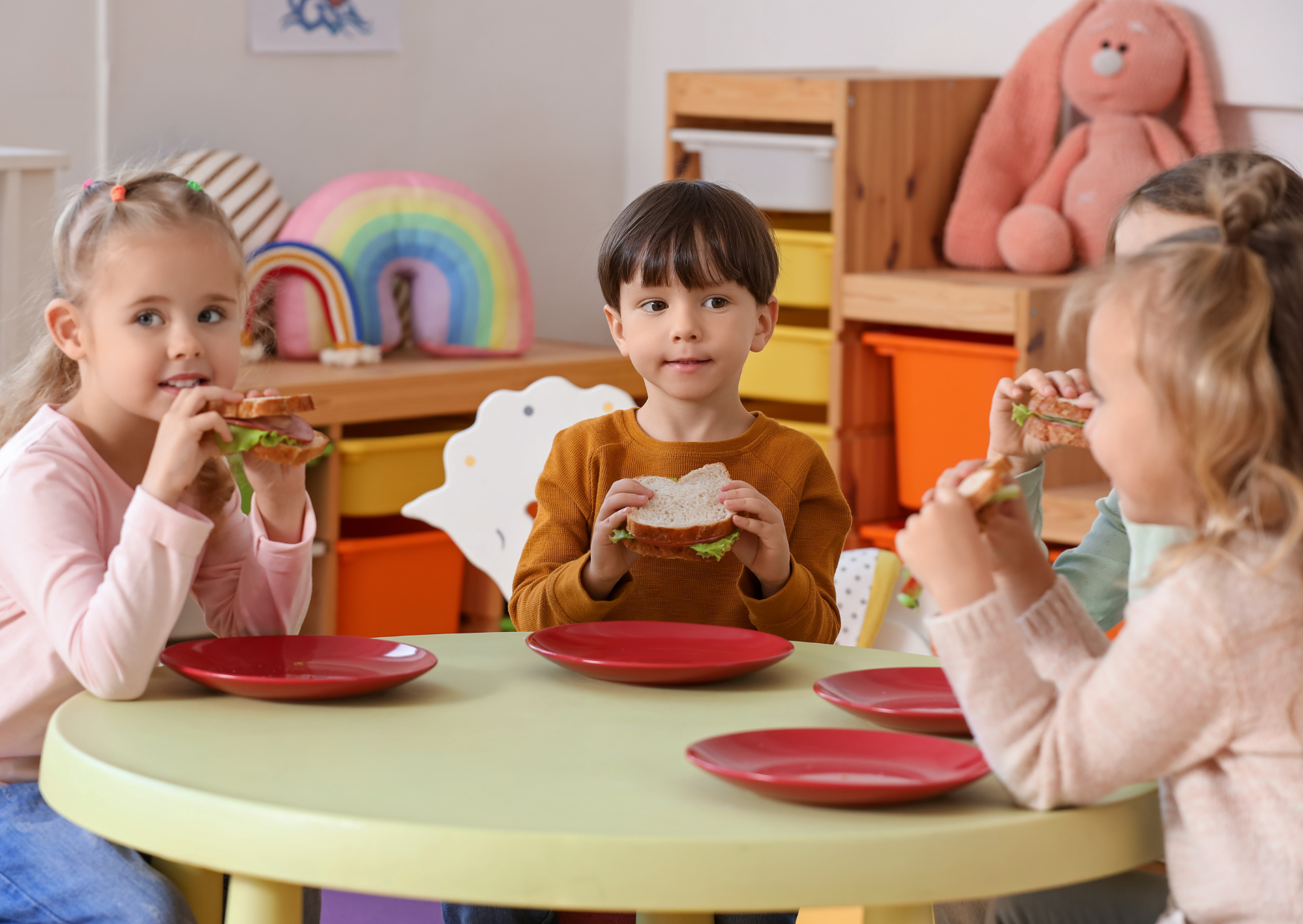
If you hand most American parents a real French school lunch menu, the first reaction is usually disbelief.
Not because it’s fancy. Because it’s calm.
There’s often a starter salad or grated vegetables. A real main dish. A vegetable side. Bread. Cheese or yogurt. Fruit or a small dessert. Water. No neon drinks. No “kids meals” logic. No constant chicken nugget bargaining.
It looks like the menu assumes children are capable of eating food.
That assumption is the shock.
American parents are used to school lunch being either processed and beige, or a moral battlefield where the “healthy option” is a sad compromise no one actually wants. French school lunch is built differently. It’s structured like a meal, not a snack break. It’s designed to teach taste and routine, not just to deliver calories quickly.
This isn’t a claim that French schools are perfect or that French kids never complain. They do. The point is simpler: the baseline expectations are higher, and the system is more intentional. That would feel foreign in a lot of American districts.
And yes, you can copy most of it at home without becoming French or spending your life chopping herbs.
The French Lunch Format Is Why It Feels So Different
A French school lunch menu often follows a predictable structure, and the predictability is the whole trick.
It usually looks like:
- starter, often a simple vegetable salad
- main protein or main dish
- vegetable or starch side
- dairy, often cheese or yogurt
- dessert, often fruit
That sounds basic. In practice, it’s a huge cultural difference, because it keeps meals from collapsing into “one big beige thing” plus a sweet drink.
French school lunches also tend to assume kids will sit, eat, and finish a meal in sequence. That structure builds habits: vegetables first, real food in the middle, and sweetness last.
In the U.S., a lot of lunch is built around speed, packaging, and crowd control. In France, lunch is built around teaching the body what a meal is supposed to feel like.
That’s why American parents feel shocked. It’s not only the ingredients. It’s the idea that lunch is allowed to be a real meal.
What Would Shock American Parents First
Here are the specific things that tend to land as cultural whiplash.
No constant sweet drinks. Water is the normal drink. Not a juice box. Not flavored milk as default. Not soda.
Cheese is normal. Not as a “sometimes” treat, but as a small everyday component. It’s usually not a melted cheese product. It’s a modest portion of actual cheese.
Vegetables are not a punishment. Grated carrots, cucumber salad, leeks vinaigrette, beet salad, lentil salad, tomato salad. These show up routinely.
Portions aren’t designed for entertainment. The food isn’t trying to be exciting in the American marketing sense. It’s trying to be edible, balanced, and repeatable.
Kids eat multi-course meals. A starter plus main plus dairy plus fruit is normal. This changes appetite and snacking later.
The menu rotates. You see fish, legumes, eggs, different meats, different vegetables. That variety trains taste over time.
American parents often assume kids won’t eat any of this. French schools assume kids can learn to eat it because they’ll see it repeatedly. Repetition is the strategy, not pleading.
The Hidden Reason French Lunch Works Better Than It Looks
French school lunch isn’t just “healthier.” It’s an appetite system.
A starter salad takes the edge off hunger and introduces fiber and volume early. A main dish provides protein and satiety. A side provides carbs that don’t have to come from refined snacks. Dairy adds fat and protein. Fruit closes the meal without turning it into a sugar bomb.
That sequence matters because it keeps kids from being ravenous and then crashing. It also keeps the day from turning into a snack marathon.
A lot of American kids eat a lunch that doesn’t fully satisfy, then snack hard after school. Parents interpret that as “kids are always hungry.” Sometimes they’re not. Sometimes lunch didn’t behave like a meal.
French lunch is designed to reduce that pattern without talking about it.
Structure creates satiety. That’s the trick nobody sells because it isn’t a product.
A Realistic Week of French Style School Lunches
This is a simplified version of what the pattern looks like. It’s not a literal menu from one school. It’s a realistic template that respects the French structure and the kinds of dishes that show up frequently.
Monday
Starter: grated carrot salad with lemon
Main: chicken with herbs
Side: green beans
Dairy: yogurt
Dessert: apple
Tuesday
Starter: lentil salad
Main: fish with tomato and olive oil
Side: rice and peas
Dairy: cheese
Dessert: orange
Wednesday
Starter: cucumber salad
Main: omelet
Side: ratatouille
Dairy: yogurt
Dessert: pear
Thursday
Starter: beet salad
Main: beef stew style dish
Side: potatoes or polenta
Dairy: cheese
Dessert: banana
Friday
Starter: leek vinaigrette
Main: chickpeas with vegetables
Side: bread
Dairy: yogurt
Dessert: seasonal fruit or a small yogurt cake slice
The point is not perfection. The point is vegetables show up daily, protein rotates, and dessert isn’t the main event.
Recipes Inside That Make This Easy
These are the types of dishes French school menus lean on because they’re cheap, scalable, and forgiving. They also taste like real food without requiring culinary theatrics.
Grated Carrot Salad
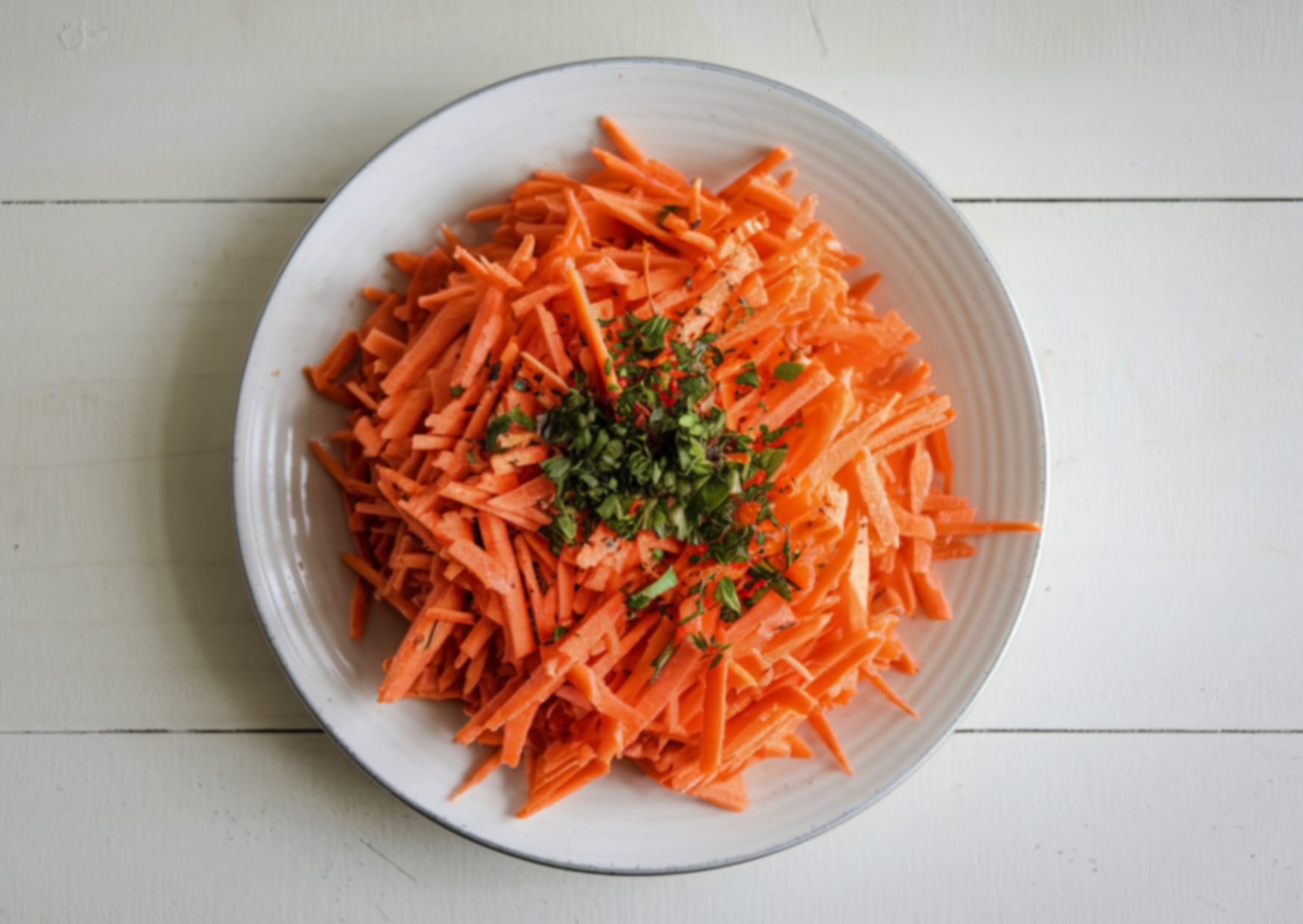
Serves 4
Ingredients
- carrots: 500 g, peeled and grated
- lemon juice: 2 tablespoons
- olive oil: 2 tablespoons
- Dijon mustard: 1 teaspoon
- salt: 1/2 teaspoon, then adjust
- optional: parsley or a few raisins
Method
Mix lemon juice, olive oil, mustard, and salt. Toss with grated carrots. Let it sit 10 minutes. That’s it.
Why it works
Crunch plus acidity wakes up appetite. It’s bright, not heavy. It’s also a perfect starter because it doesn’t feel like “salad punishment.”
French Lentil Salad
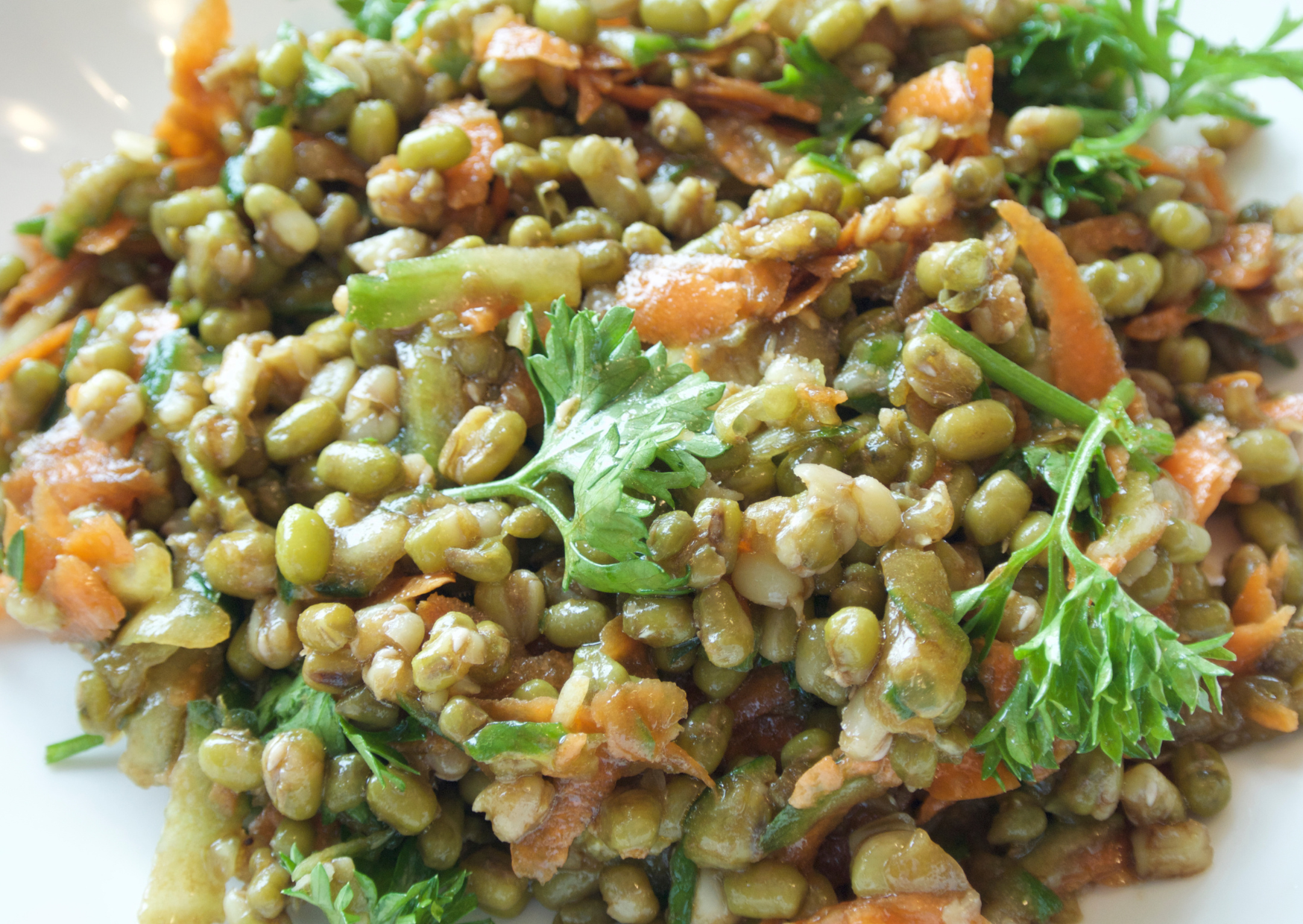
Serves 4
Ingredients
- green or brown lentils: 250 g
- bay leaf: 1
- carrot: 1 small, diced
- onion or shallot: 1 small, diced
- vinegar: 2 tablespoons
- olive oil: 3 tablespoons
- Dijon mustard: 1 teaspoon
- salt and pepper
- optional: chopped pickles or a spoon of capers
Method
Simmer lentils with bay leaf until tender, usually 18 to 25 minutes depending on lentils. Drain. While warm, toss with a dressing of vinegar, oil, mustard, salt, and pepper. Add diced carrot and onion. Let it sit.
Why it works
This is classic canteen logic: cheap protein, high fiber, and it tastes better after sitting. Warm dressing on warm lentils makes it taste like more than the ingredient list.
Leeks Vinaigrette
Serves 4
Ingredients
- leeks: 4, white and light green parts
- vinegar: 2 tablespoons
- olive oil: 3 tablespoons
- Dijon mustard: 1 teaspoon
- salt and pepper
- optional: chopped hard-boiled egg
Method
Trim leeks, rinse well. Steam or simmer until tender, 12 to 18 minutes depending on thickness. Drain and cool slightly. Mix vinaigrette. Pour over leeks. Add egg if using.
Why it works
It’s soft, mild, and feels oddly luxurious for how cheap it is. Mild vegetables plus sharp dressing is a French staple because it teaches kids to like vegetables without forcing them.
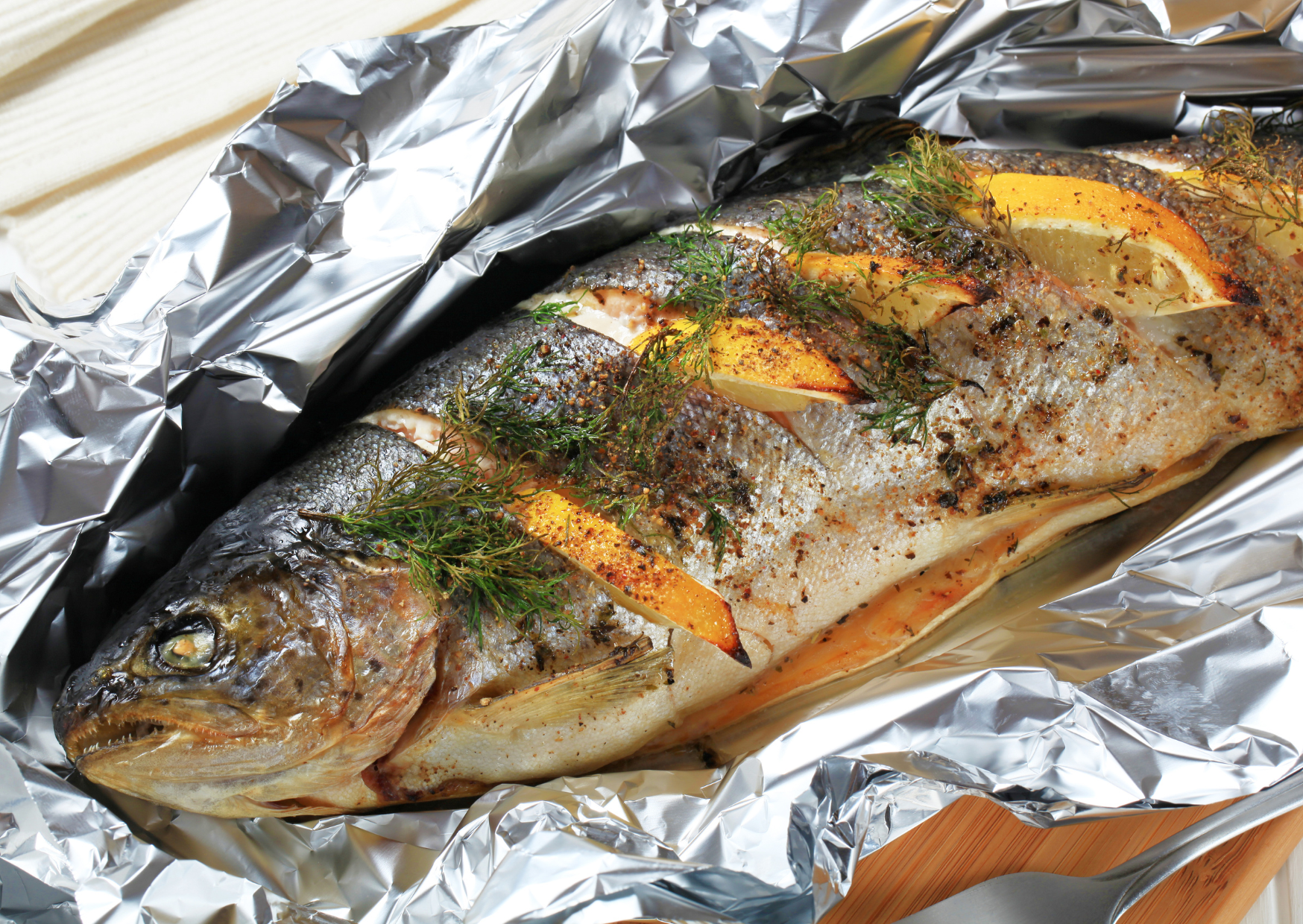
Fish Papillote For Kids Who “Don’t Like Fish”
Serves 4
Ingredients
- white fish fillets: 4
- olive oil: 2 tablespoons
- lemon: 1
- cherry tomatoes: 250 g, halved
- salt and pepper
- optional: a few olives or capers
Method
Heat oven to 180°C. Place each fillet on parchment paper. Add tomatoes, a drizzle of olive oil, salt, pepper, and lemon slices. Wrap into a sealed packet. Bake 12 to 15 minutes.
Why it works
The steam keeps fish tender and less “fishy.” The tomatoes soften into sauce. It’s very hard to ruin. Moist heat makes fish friendly.
Yogurt Cake
Serves 8
Ingredients
- plain yogurt: 125 g
- sugar: 180 g
- eggs: 3
- neutral oil: 80 ml
- flour: 200 g
- baking powder: 10 g
- zest of one lemon, optional
- pinch of salt
Method
Mix yogurt, sugar, eggs, oil. Stir in flour, baking powder, salt, and zest. Bake at 180°C for about 30 to 35 minutes.
Why it works
It’s a dessert, but it’s not a sugar brick. It slices well, travels well, and feels “school appropriate.” Small dessert, not dessert lunch is the French approach.
What French Lunch Teaches That American Lunch Often Doesn’t
The French system teaches a few things implicitly.
You don’t have to eat like a child forever. Kids are expected to learn. The menu doesn’t collapse down to only kid-coded foods.
Vegetables are part of life. They appear daily and in different forms: raw, cooked, dressed, baked.
You can be satisfied without being stuffed. The meal is structured to be filling, not to create a sugar crash later.
Food literacy matters. Children see fish, legumes, different cuts, different textures. Taste is trained.
American parents often get stuck in “will my kid eat it.” French schools often operate from “they will learn to eat it because they’ll see it again.” That difference in expectation changes everything.
Repetition is education. That’s what Americans underestimate.
What This Would Look Like If an American School Tried It
If an American district tried to run a French-style lunch tomorrow, they’d hit three obstacles fast.
First: time. Many U.S. schools have short lunch periods. French lunch culture assumes more time and a calmer pace.
Second: food training. If kids are used to ultra-processed defaults, it takes time to adapt. The first week would be rough. The second month would be different.
Third: parent expectations. American parents often want lunch to be “kid-friendly” in the narrow sense. French parents often accept that school lunches are part of education, including taste education.
So no, you can’t import this perfectly. But you can steal the logic at home.
And that’s the most useful part: French school lunch isn’t a brand. It’s a set of decisions.
Pitfalls Most People Miss When Copying French Lunch
People try to copy the menu and miss the method.
They go too fancy. French school lunch is not restaurant food. It’s simple, scalable food.
They remove all pleasure. The French system includes cheese and dessert. It’s not a punishment regime. It’s balanced.
They under-salt. A lot of American “healthy food” fails because it’s bland. French school food is usually seasoned enough to be edible. Not restaurant salty, but not sad.
They forget bread is part of the meal. Bread isn’t treated as a villain. It’s a small stabilizing component.
They expect instant compliance. If your kid has never eaten lentils, lentil salad will be rejected the first time. The point is to repeat it without drama.
They don’t build the sequence. A French lunch works because it’s structured. If you throw the components together randomly, you lose the effect.
The French approach is less about any one recipe and more about the pattern: starter, main, dairy, fruit.
Your First 7 Days Copying French Lunch At Home
This is a practical week plan that doesn’t require you to become a full-time cook.
Day 1
Make one large batch of lentil salad. Use it as a starter for two days.
Day 2
Make grated carrot salad. Keep it in the fridge. It becomes the default starter.
Day 3
Cook a simple main with a vegetable side. Chicken and green beans. Fish and rice. Omelet and ratatouille. Keep it boring.
Day 4
Add dairy intentionally. Yogurt or a small piece of cheese at the end of lunch.
Day 5
Make a soup that can serve as the starter and sometimes the main. Vegetable soup with beans is perfect.
Day 6
Bake yogurt cake or buy a simple dessert and serve it in small portions. Make dessert normal, not special, and it stops being the whole focus.
Day 7
Repeat one lunch pattern twice. The win is repetition, not novelty.
This week won’t turn your household into a French canteen. It will change one thing that matters: lunch becomes a meal again.
Meals beat snacks. That’s the whole strategy.
The Real Reason It Shocks Americans
The shock isn’t that France has better ingredients.
It’s that the lunch system assumes children are future adults.
It assumes taste can be trained. It assumes vegetables are normal. It assumes lunch is a real meal. It assumes boredom is survivable. It assumes kids can sit and eat something that isn’t designed like entertainment.
American parents often underestimate how much their kids can adapt to a new normal when the environment is consistent.
French school lunches are consistent.
That’s why they work better than people expect.

About the Author: Ruben, co-founder of Gamintraveler.com since 2014, is a seasoned traveler from Spain who has explored over 100 countries since 2009. Known for his extensive travel adventures across South America, Europe, the US, Australia, New Zealand, Asia, and Africa, Ruben combines his passion for adventurous yet sustainable living with his love for cycling, highlighted by his remarkable 5-month bicycle journey from Spain to Norway. He currently resides in Spain, where he continues sharing his travel experiences with his partner, Rachel, and their son, Han.