
Most American veterans do not get a special European residence permit just for having served.
That’s the first reality check.
The “expedited” pathways that actually exist in Europe tend to be tied to status, not sentiment: you are on official orders, you are part of a NATO or U.S. civilian component, you are a contractor supporting the mission, or you are covered by a specific bilateral agreement that treats certain retirees differently than ordinary tourists.
If that’s you, Europe can feel oddly fast and oddly bureaucratic at the same time. Fast because your right to be there is pre-recognized through an agreement. Bureaucratic because you still have to register, document, and carry the right proof.
This post is for the veterans who fall into one of these real-world buckets:
- you retired from the U.S. military and remain connected to the mission footprint in Europe in a way the host country recognizes (rare, but Spain is the big example)
- you are a veteran who later became a DoD civilian employee, NATO civilian staff, or a supported contractor assigned to Europe
- you are the dependent of someone who has that status
If you are simply a veteran who wants to retire to Europe on your VA income, you are usually looking at normal retiree visas, not expedited military-status residence. Your service helps you psychologically. It rarely helps you legally.
What “Expedited Residency” Actually Means Here

Let’s define it plainly.
In this context, “expedited” means one or more of these is true:
- You can enter and stay under Status of Forces Agreement rules or a bilateral defense agreement instead of starting with a standard residence visa.
- Your residence documentation is processed through a military or NATO administrative channel with established routines instead of the general immigration queue.
- Your legal presence is proven with SOFA certificates, mission visas, or protocol cards that are issued and recognized quickly compared to ordinary immigration pathways.
It does not mean:
- you get citizenship faster
- you can stay forever without renewing
- your time under these statuses automatically counts toward permanent residency or naturalization
- your spouse automatically gets the right to work in the local economy
That last one is where people blow up their own plans. Being allowed to reside is not the same as being allowed to work locally.
The Hidden Divider Is Whether You Are Still “In The System”
This is the divider that matters more than any country list.
If you are:
- on orders
- a DoD civilian employee
- a supported contractor
- or NATO civilian staff
you are “in the system.” Host nations often have a defined way to document your status quickly.
If you are:
- a regular retiree with a retiree ID card and a dream
you are usually not in the system for immigration purposes. Even U.S. Army retirement guidance aimed at retirees living in Europe is blunt that retirees become “ordinary residents” and must satisfy visa and residency requirements like other expatriates. That is a very different lane than SOFA-based presence.
So the list below is not “best countries for veterans.” It’s “countries where veterans who still have a recognized defense-related status are most likely to see a faster residence documentation lane.”
Spain

Spain is the outlier because it explicitly recognizes a broader set of U.S.-connected categories under the U.S.–Spain defense cooperation framework, including language that covers retired members of the U.S. armed forces residing in Spain and their dependents in the agreement’s category list.
That matters because it means Spain is one of the few places where a veteran can sometimes hear “retired” and “residing” in the same official defense text and think, wait, does this apply to me.
Here’s the practical reality:
- Spain’s defense cooperation framework is about the presence of U.S. forces, the civilian component, and dependents, with documentation used to prove that status.
- It can create a smoother lane for people who are actually covered under that umbrella, versus people applying as ordinary residents under Spain’s general immigration tracks.
What veterans get wrong in Spain:
- They assume a retiree ID and nostalgia equals coverage under the agreement. It doesn’t. The agreement language exists, but whether it applies to your personal situation depends on whether you truly fit the categories and the implementing procedures used for that documentation.
- They assume this status is a “residency permit” equivalent. It is more accurately a recognized presence status under an international agreement, which can coexist with, or be separate from, ordinary immigration residence.
What Spain does very well for eligible people:
- It has long-standing U.S. base infrastructure and an administrative rhythm around the defense relationship, which tends to make status documentation more legible compared to starting from scratch.
If you’re a veteran who is not covered by any defense-status category, Spain is still a top retirement destination. You’ll just be doing it through ordinary immigration options like everyone else.
Italy
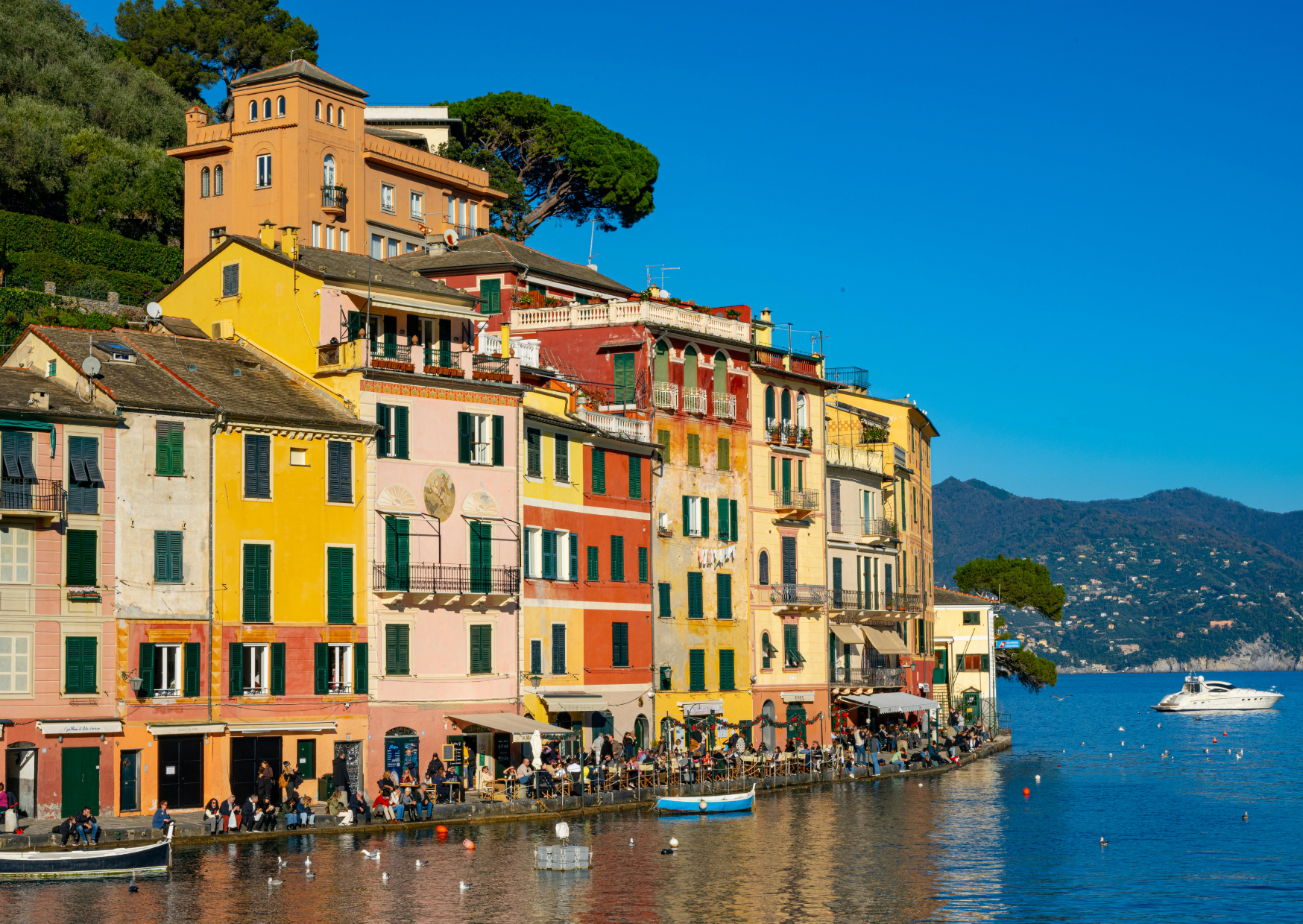
Italy is the clearest example of “expedited residency” meaning “you have a defined military-adjacent administrative pipeline.”
In Italy, U.S. service members on orders generally do not need a normal residence permit, but civilian employees, contractors, and dependents are often required to obtain the right entry documentation and then apply for a permit of stay that functions as their legal residence document for the duration of the sponsor’s tour.
If you’re a veteran who later became:
- a DoD civilian
- a contractor supporting the mission
- or NATO-adjacent staff tied to U.S. installations
Italy is one of the places where your residency documentation can feel “fast” compared to ordinary immigration because the process is already built.
A few very grounded takeaways from Italy’s documented workflow:
- The permit is tied to the sponsor’s tour and purpose.
- The entry documentation and timeline expectations are strict, and being sloppy can create a forced return to obtain the proper visa.
- This is a residence mechanism for people living under the SOFA mission ecosystem, not a general retirement pathway.
What veterans get wrong in Italy:
- They think SOFA time automatically converts into normal Italian residency time for long-term settlement.
- They assume that staying after separation is simple. In reality, when your sponsor status ends, you generally transition into ordinary immigration law.
Italy is great for “I have a mission-linked role” and not automatically great for “I’m a veteran who wants to stay forever because I loved living here once.”
Germany

Germany is famous in military circles for SOFA life, and it’s also famous for the misconception that SOFA life equals ordinary residency.
SOFA-related status in Germany is real. It can be documented and recognized through certificates and identification procedures that show you are not simply a tourist.
A useful way to think about Germany:
- If you are a service member assigned to Germany, your legal basis is not the same as a normal resident’s legal basis.
- If you are a DoD civilian employee, a contractor, or a dependent, you typically need a SOFA certificate or equivalent proof in your passport and must follow specific administrative steps tied to that status.
- This often feels “expedited” because it’s not the ordinary immigration front door.
What veterans get wrong in Germany:
- They assume the years they lived there under SOFA count as regular residency toward settlement. That’s a common myth and one of the biggest emotional traps, especially for retirees who did multiple tours and feel like Germany is home.
Germany can be a fantastic place to live as a veteran if you have a qualifying status path. If you don’t, Germany is still possible, but you enter through ordinary visas and residence permits like everyone else.
The Netherlands
The Netherlands is one of the most clearly documented examples of a host nation treating SOFA-linked people as a special administrative category.
For U.S. personnel under NATO SOFA in the Netherlands:
- U.S. service members can be exempt from standard Dutch aliens registration requirements under SOFA, while civilians and dependents may need a residence permit that identifies them specifically under a NATO-related category.
- Newcomer guidance for the Brunssum area references residence cards and registration steps connected to NATO ID and host nation registration routines.
This is exactly the kind of setup that makes things feel “expedited” for certain veterans:
If you are a veteran who becomes NATO civilian staff, a DoD civilian, or a supported contractor assigned to Dutch-based NATO infrastructure, the Netherlands has a well-worn administrative lane for documenting your right to reside.
What veterans get wrong in the Netherlands:
- They treat the absence of a BSN requirement in many SOFA daily-life tasks as if it means “I’m basically a normal resident.” It doesn’t. It means your legal lane is different, and that difference matters when the assignment ends.
The Fine Print That Breaks People
If you take nothing else from this, take these four truths:
1) These are not “veteran perks.” They are status-based systems.
Your DD-214 is not a European residence document.
2) Your spouse and adult kids do not automatically get full local labor rights.
They may have permission to reside. Work rights can be a separate process, and the rules vary by country and by the nature of the status.
3) When the assignment ends, the clock can reset emotionally and legally.
You may need to switch into an ordinary residence permit pathway if you want to stay.
4) The most dangerous word in this entire topic is “counts.”
People casually say “it counts toward residency.” Often it doesn’t, at least not in the way Americans mean it.
That’s why so many “I stayed in Europe after the military” success stories have a hidden detail: the person didn’t just stay. They transitioned legally into a new status, usually marriage, work, study, entrepreneurship, or retirement residence, depending on the country.
The 7-Day Reality Check Sprint
This topic is actionable, so here’s the practical first week for a veteran considering one of these lanes.
Day 1: Identify which bucket you’re in
- ordinary retiree
- DoD civilian employee
- contractor
- NATO staff
- dependent
You need to know which lane applies before you pick a country.
Day 2: Confirm which agreement is actually relevant
- NATO SOFA framework applies in many settings and defines status documentation basics.
- Spain has a bilateral defense cooperation framework that includes explicit category language that can be relevant.
Day 3: Ask one question that prevents most mistakes
“What happens to my status the day my orders or contract ends.”
Day 4: Separate “right to reside” from “right to work”
Don’t assume. Verify for your spouse and dependents.
Day 5: Build a documents pack that would survive an audit
Passport copies, orders or contract, proof of dependent relationship, housing contract, and the specific status certificate process required for that country.
Day 6: Decide whether you are planning a tour or a settlement
If it’s settlement, you must map the transition path into ordinary immigration residence early, not at the moment your status ends.
Day 7: Pick your country based on your legal lane, not your nostalgia
Many veterans choose Germany or Italy because they loved it at 23, then discover the legal and lifestyle reality at 55 is a different problem. Pick based on what you can actually sustain.
What Actually Matters Here
If you’re a veteran, Europe can absolutely be your next chapter.
But “expedited residency” is not a blanket benefit. It’s a niche advantage that shows up when you are still connected to a recognized defense status lane.
Spain, Italy, Germany, and the Netherlands are four of the most common places where those lanes are visible and documented through defense agreements, SOFA procedures, and host nation registration routines.
If you’re not in those lanes, you still have plenty of options. You just use the normal doors: retirement residence, work, study, family, investment, or entrepreneurship, depending on the country.
The win is not finding a loophole.
The win is knowing which lane you’re actually in before you move your life.

About the Author: Ruben, co-founder of Gamintraveler.com since 2014, is a seasoned traveler from Spain who has explored over 100 countries since 2009. Known for his extensive travel adventures across South America, Europe, the US, Australia, New Zealand, Asia, and Africa, Ruben combines his passion for adventurous yet sustainable living with his love for cycling, highlighted by his remarkable 5-month bicycle journey from Spain to Norway. He currently resides in Spain, where he continues sharing his travel experiences with his partner, Rachel, and their son, Han.