
(And How Ignoring It Instantly Marks You as a Foreigner)
Italy is known for many things its food, architecture, fashion, and pace of life. But ask anyone who has spent real time in the country, and they’ll tell you that what truly defines Italian culture is not found on the surface.
It’s in how people relate to one another. In daily interactions. In small choices. And most importantly, in the deeply rooted social rule that governs almost everything: knowing your place in the social atmosphere.
In Italian culture, this unwritten rule is so embedded that most Italians don’t even think about it. But when Americans (or any outsiders) break it, the reaction is immediate: people shift in their seats, go quiet, or stop listening.
So what is this rule that Italians never break and that most Americans don’t even realize exists?
It’s called “non farsi notare” literally, “not drawing attention to yourself.”
And it’s a social art form.
Here’s why this unwritten Italian social rule matters, what it looks like in daily life, and how it changes everything about how people speak, dress, move, and interact in Italy.
Want More Deep Dives into Other Cultures?
– Why Europeans Walk Everywhere (And Americans Should Too)
– How Europeans Actually Afford Living in Cities Without Six-Figure Salaries
– 9 ‘Luxury’ Items in America That Europeans Consider Basic Necessities
Quick Tips
Observe how Italians greet each other in different contexts; adjust your approach accordingly.
Always say “buongiorno” or “buonasera” when entering shops, cafes, or small businesses.
Remember that meals are social rituals; don’t rush them or treat them purely functionally.
Avoid discussing personal finances or politics with new acquaintances.
Dress neatly in public, even casually, as Italians view presentation as a sign of respect.
Most Americans pride themselves on casual friendliness, assuming an easy-going attitude is universally appreciated. But in Italy, social rituals are deeply ingrained, and ignoring them is considered rude rather than refreshingly informal. The controversial truth is that Italians care deeply about small daily courtesies, like greeting shopkeepers or neighbors, and perceive those who skip these as cold or disrespectful.
Another rarely understood aspect is the unwritten dress code. While Americans often value comfort over appearance in public, Italians view personal presentation as a reflection of respect for themselves and others. Walking into a cafe wearing gym shorts, flip-flops, or pajamas may not get you kicked out, but it will silently mark you as someone with no social awareness. To Italians, there is dignity in how you carry yourself in every public space.
Perhaps the most surprising cultural difference is that these rituals are not about status or snobbery but about maintaining social harmony. Many Americans dismiss them as old-fashioned or unnecessary formalities, unaware that they build the mutual respect Italians value in daily life. Ignoring these rules may seem liberating from an American lens, but in Italy, it simply makes you appear rude, detached, or self-absorbed.
1. Subtlety Is a Social Value, Not a Personality Trait

In the United States, standing out is often praised. From early school years, children are encouraged to “speak up,” “be bold,” and “be unique.”
In Italy, the highest form of social grace is blending in respectfully.
- This doesn’t mean becoming invisible.
- It means contributing without dominating, speaking without shouting, and showing refinement through behavior rather than volume.
- Being flashy or loud is seen not as confident, but as immature or insecure.
Italians admire style, personality, and charm—but they are turned off by anything that feels like performance.
2. Being Loud in Public Is an Instant Social Misstep
This is one of the fastest ways to identify an American tourist in Italy.
- Speaking at full volume in cafés
- Laughing too loudly on the street
- Talking to strangers as if you’re already friends
In Italian public life, the tone is lower, the volume is softer, and conversations are more private.
Even when two Italians are passionately arguing, it stays within a social rhythm that respects the shared space of others.
Americans are often unaware of how much space their voices take up. In Italy, it can be felt as jarring, even disrespectful.
3. Clothing Is Chosen to Blend with the Environment
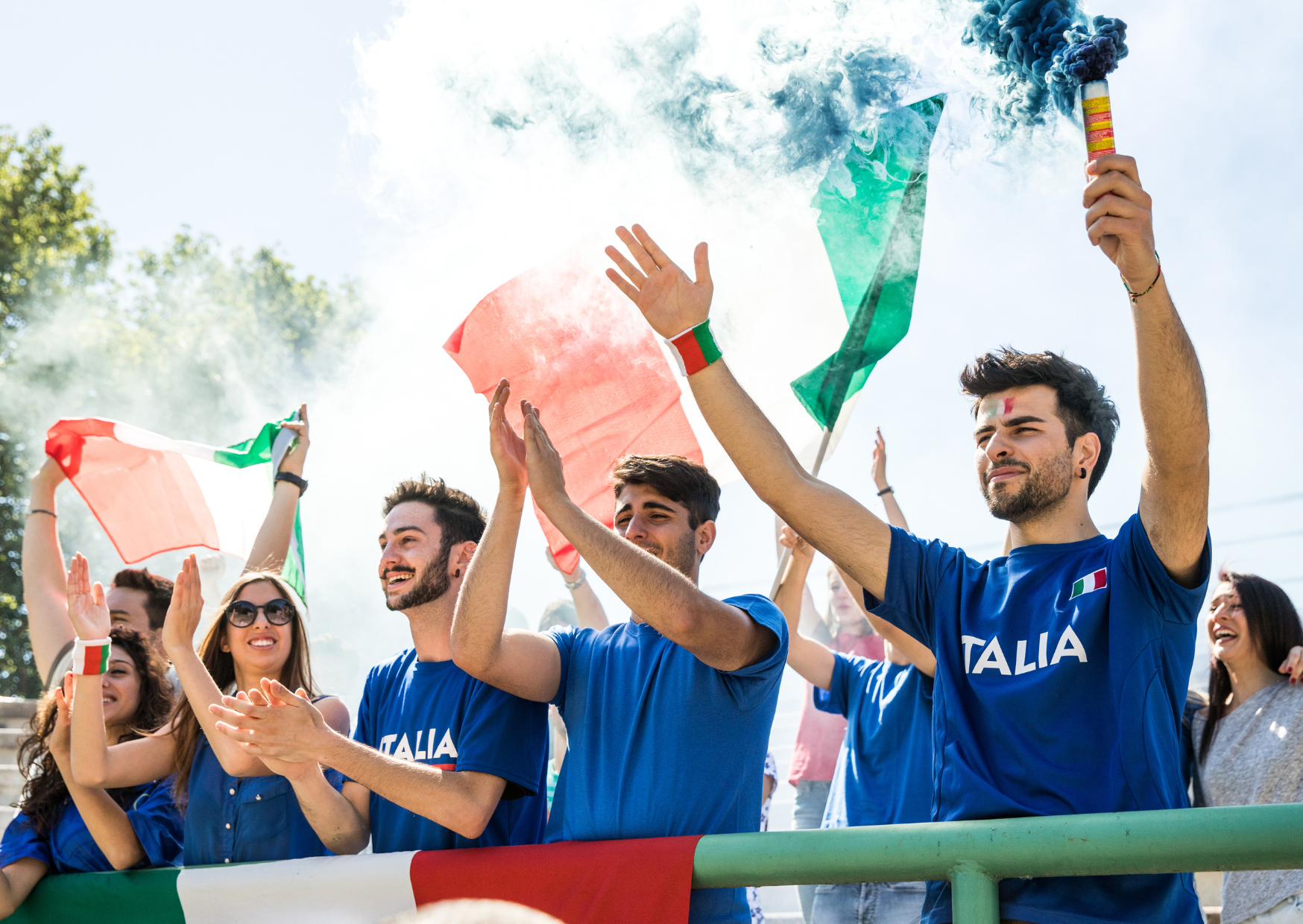
Italian style is admired around the world, but it’s not just about fashion. It’s about fitting into the context you’re in.
- At the beach, wear beach clothes.
- At a church, cover your shoulders.
- In the city, avoid hiking gear or athletic clothes unless you’re actually exercising.
Italians dress for the setting, the mood, and the company. Clothes are a form of social respect, not just self-expression.
Americans often choose comfort above all else. In Italy, comfort is important, but so is visual harmony with your surroundings.
4. There’s a Time and Place for Everything—And Everyone Knows It
Italians live by invisible schedules. Not just for meals, but for behavior.
- You don’t order a cappuccino after 11 a.m.
- You don’t call someone after dinner unless it’s urgent.
- You don’t raise serious topics in light social gatherings.
Each time of day, place, and setting has its own energy. And respecting that rhythm is part of the “non farsi notare” rule.
Breaking it doesn’t just confuse people. It puts them on edge, because it disrupts the shared understanding of how life flows.
5. Even Kindness Has Boundaries
Italians are warm, but not overly familiar. They don’t default to friendliness with strangers in the way Americans often do.
- Smiling at everyone on the street feels odd.
- Giving too many compliments comes across as insincere.
- Oversharing in a first conversation feels awkward.
Italians build relationships slowly. Trust and connection are earned over time. By being overly open or enthusiastic too early, Americans may seem naive or socially unaware.
6. Correct Behavior Is Quietly Expected—Not Explained
In Italy, people will rarely tell you that you’ve broken a social norm.
- They might go quiet.
- They might glance sideways.
- They might step away.
You won’t get direct feedback like you might in the U.S. Instead, you’ll feel a shift in tone, a sense of exclusion, or polite avoidance.
This is not passive aggression. It is a way of maintaining social harmony without confrontation.
7. Politeness Is Shown Through Restraint

Many Americans think politeness means being bubbly, smiling, and chatty. In Italy, politeness is more often shown by being discreet and measured.
- Listening without interrupting
- Speaking in turn
- Not monopolizing the conversation
- Not bragging or exaggerating
Modesty in speech, gestures, and presence is seen as elegant. The ability to contribute meaningfully without overtaking the room is a respected skill.
8. The Group Comes Before the Individual
Italian culture is deeply communal. At the dinner table, in a piazza, or on a group trip, decisions are made with the group in mind.
- You don’t dominate the conversation.
- You don’t insist on your personal preferences.
- You don’t act as if the moment revolves around you.
This doesn’t mean you can’t express yourself. But you’re expected to remain aware of the collective space you’re in.
In American culture, asserting your needs is often encouraged. In Italy, it’s the opposite: you show maturity by not needing to assert yourself constantly.
9. Non-Farsi Notare Is Not About Shame—It’s About Sophistication

For Americans, the idea of “not drawing attention” can sound like self-suppression.
In Italy, it is a form of elegance and confidence.
- It means knowing when to speak and when to hold back.
- It means dressing beautifully but not extravagantly.
- It means letting people notice you because you carry yourself with composure—not because you demanded attention.
This cultural rule does not punish individuality. It teaches how to let your individuality come through with dignity.
Why you Should Follow it
One reason you should pay attention to this topic is that it helps travelers see that offense is often cultural, not intentional. Many Americans do not mean to be rude in Italy, but everyday habits around tone, timing, food, dress, or public behavior can land differently there. A piece like this helps readers move beyond “I meant well” and understand how behavior is actually received. That makes travel more respectful and more rewarding.
You should also follow it because Italy has a strong culture of social cues, and many of them are rarely explained directly. People often assume they can rely on friendliness and common sense, but what feels casual or normal in the United States may feel careless, loud, rushed, or insensitive in an Italian setting. Learning those differences before a trip can prevent awkward moments that are easy to avoid once you know what to look for.
Another reason to follow it is that this kind of awareness usually leads to a better experience for the traveler too. When people understand local expectations, they tend to have smoother interactions in restaurants, shops, trains, and public spaces. They are less likely to get cold responses, confused reactions, or visible irritation from locals. Respect does not just help Italians feel more comfortable. It also helps visitors move through the country with less friction.
You should also take this topic seriously because it teaches a broader lesson about travel. The most successful travelers are usually not the ones who know the most facts. They are the ones who notice how things are done and adjust accordingly. A headline like this may sound specific to Italy, but the deeper message applies anywhere: good intentions are not always enough if your habits communicate something else.
Finally, you should follow it because it pushes against a very common tourist mistake: assuming that being open-minded automatically makes you culturally fluent. Americans often see themselves as relaxed, friendly, and approachable, which can be true, but those same traits can sometimes come across as intrusive or disrespectful in another social environment. A topic like this helps readers become more observant, which is one of the most useful travel skills anyone can develop.
Why you Shouldn’t Follow it Blindly
At the same time, you should not follow this topic as if all Italians are constantly offended or all Americans are constantly doing something wrong. That kind of framing may make a strong headline, but it can quickly turn into stereotype. Italy is made up of different regions, personalities, generations, and levels of tolerance for tourists. A habit that annoys one person may barely register with another.
You also should not read the article as a list of rigid rules that must be performed perfectly. Travel always includes a learning curve, and most people understand that visitors will not know every local norm. If readers take the topic too literally, they may become anxious, stiff, or overly self-conscious. That can make travel worse, not better. The goal is awareness, not fear.
Another reason to be careful is that these kinds of articles can exaggerate conflict for clicks. “Americans keep offending Italians” is a dramatic framing, but sometimes the real story is simply that social expectations differ. If the article turns every small cultural mismatch into a moral failure, it will feel more theatrical than useful. A stronger version explains the logic behind the behavior instead of just highlighting offense.
You should not ignore that Italians also adjust for tourists all the time. In heavily visited places, locals are often used to cultural differences and may be far more flexible than outsiders imagine. If the article presents Italy as fragile or easily insulted at every turn, it can feel unfair and unrealistic. The most helpful approach is to show respect without pretending that one mistake will destroy the trip.
Finally, you should not let this topic become an excuse for simplistic national comparisons. The point is not that Americans are rude and Italians are refined. The real value is in showing how different cultures define politeness, timing, and respect differently. If the article becomes about superiority instead of understanding, it loses the very insight that makes it worth reading.
Presence Over Performance
If there’s one thing American visitors could take away from Italian social culture, it’s this: you do not need to prove yourself in every moment.
Italians understand that true presence speaks more quietly than performance. That social grace means observing the room, adjusting your tone, and knowing when to shine and when to simply be.
“Non farsi notare” is not about hiding. It is about understanding that attention, when earned through quiet confidence and respectful presence, is far more powerful than anything forced or loud.
Many Americans do keep offending Italians without realizing it, but the important detail is that most of the offense is not rooted in bad intentions. It usually comes from assumption. People travel to Italy expecting friendliness, flexibility, and beauty, then move through the country as if the social rules will feel obvious on arrival. What they often miss is that Italy runs on a different set of signals around respect, pace, and public behavior. The problem is rarely cruelty. It is cultural overconfidence.
That is why these habits matter more than they may seem at first. Ordering the wrong way, rushing a meal, speaking too loudly, treating public spaces casually, or assuming service works like it does in the United States can all send messages travelers never intended to send. Italians may read those actions as impatience, entitlement, or lack of awareness. Americans may still think they are being perfectly normal. That gap between intention and perception is where so much friction begins.
The bigger lesson is not that Americans are rude or that Italians are too sensitive. It is that politeness is never universal. Every culture has a version of what feels respectful, and travelers who fail to notice that usually end up communicating something they did not mean. In Italy, where social rituals around food, public behavior, and interaction often carry real weight, those small missteps are more visible than many visitors expect.
What makes this topic useful is that it pushes people toward a better kind of travel. Instead of asking only what to see and where to eat, it asks how to move through a place without acting as though your own habits are the default. That shift changes everything. It makes travel more observant, more humble, and ultimately more rewarding. The most memorable experiences in Italy often come not from performing perfect behavior, but from showing enough respect to pay attention.
In the end, offending Italians without realizing it is less about individual failure and more about what happens when people mistake familiarity for understanding. Italy may look welcoming and relaxed on the surface, but like any culture, it has its own rhythm and logic. The travelers who do best are usually the ones who stop trying to act comfortable immediately and start learning first. Once that happens, the country opens up in a very different way.

About the Author: Ruben, co-founder of Gamintraveler.com since 2014, is a seasoned traveler from Spain who has explored over 100 countries since 2009. Known for his extensive travel adventures across South America, Europe, the US, Australia, New Zealand, Asia, and Africa, Ruben combines his passion for adventurous yet sustainable living with his love for cycling, highlighted by his remarkable 5-month bicycle journey from Spain to Norway. He currently resides in Spain, where he continues sharing his travel experiences with his partner, Rachel, and their son, Han.
Susan
Friday 29th of August 2025
Living in Italy for 3.5 yrs coming from NL having lived in 8 other countries prior. I am not impressed with the Italians and their ways to make life difficult. I have Italian friends and they take me as I am. The judgemental ones are just wrong and keep others low... And there are many unfortunately in an otherwise beautiful place.