
It was not a heroic lunch.
That is why it landed so hard.
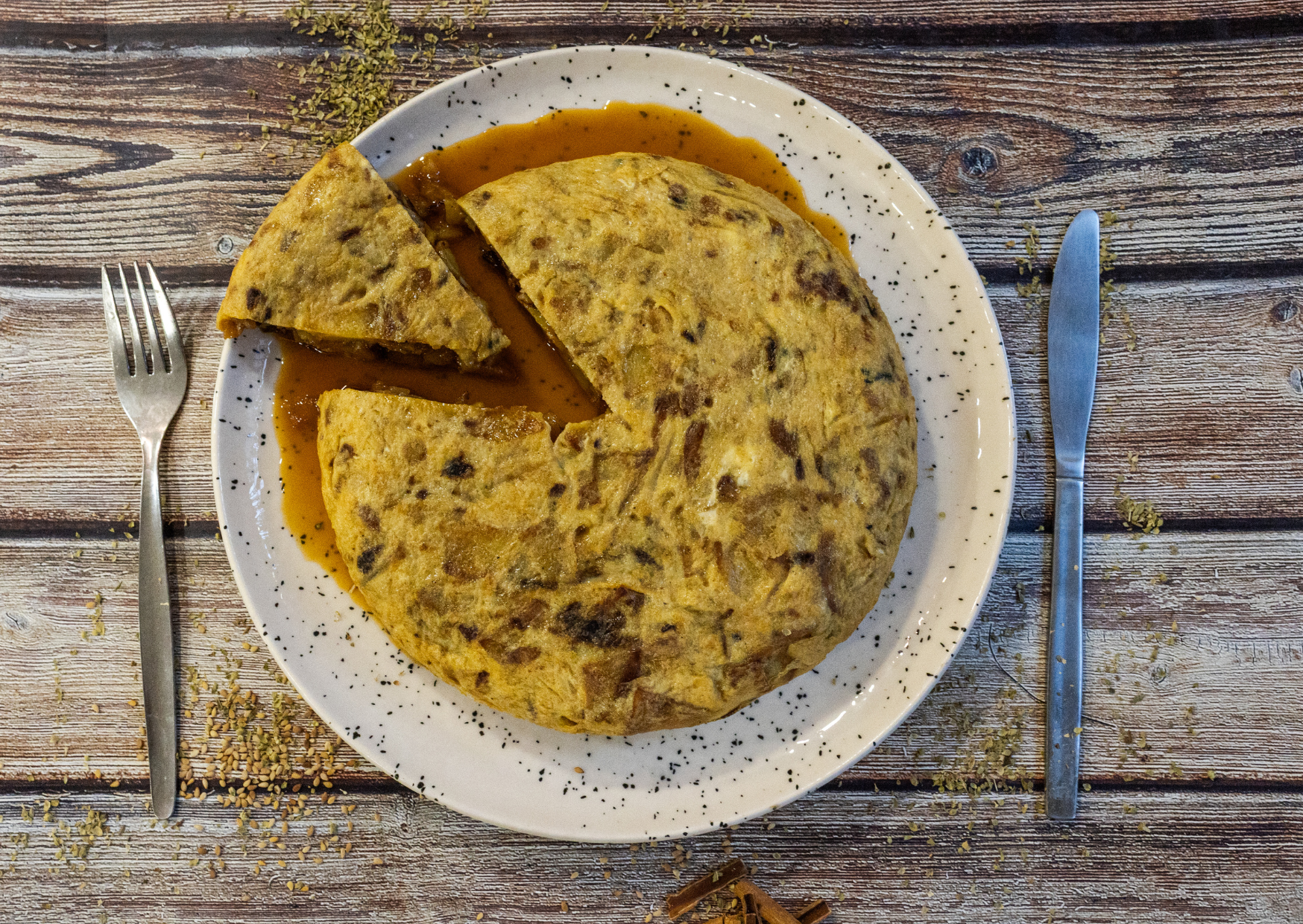
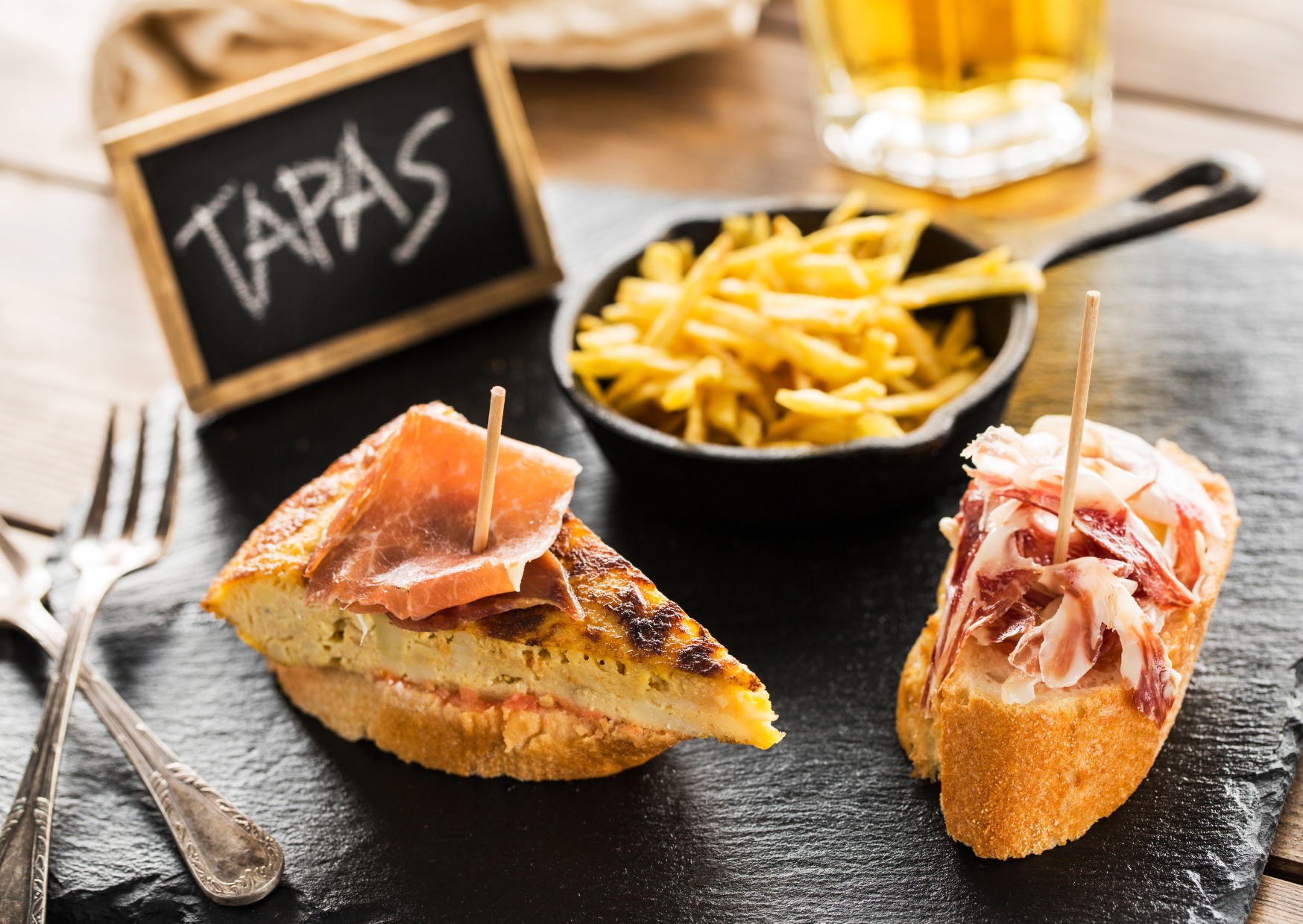
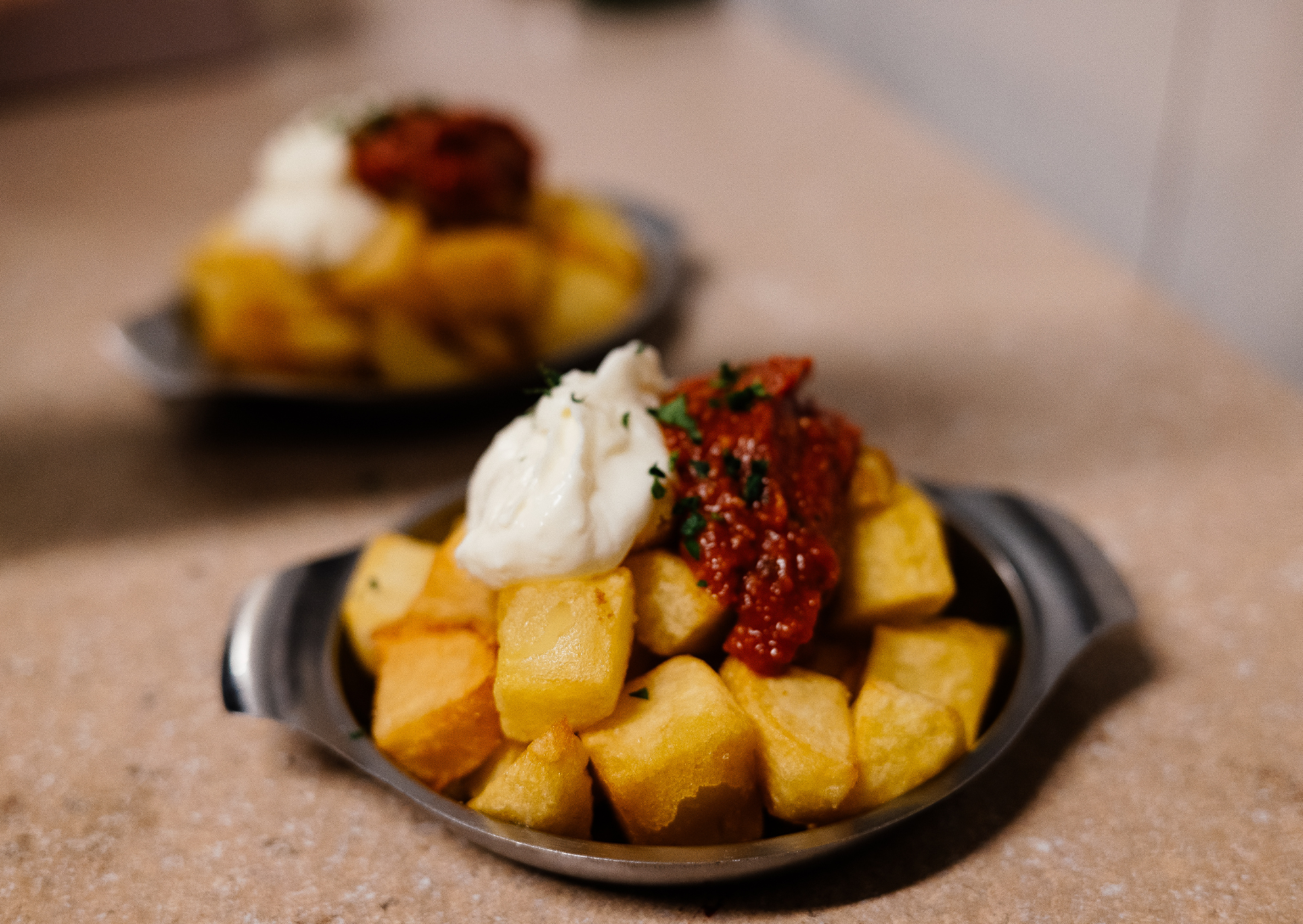
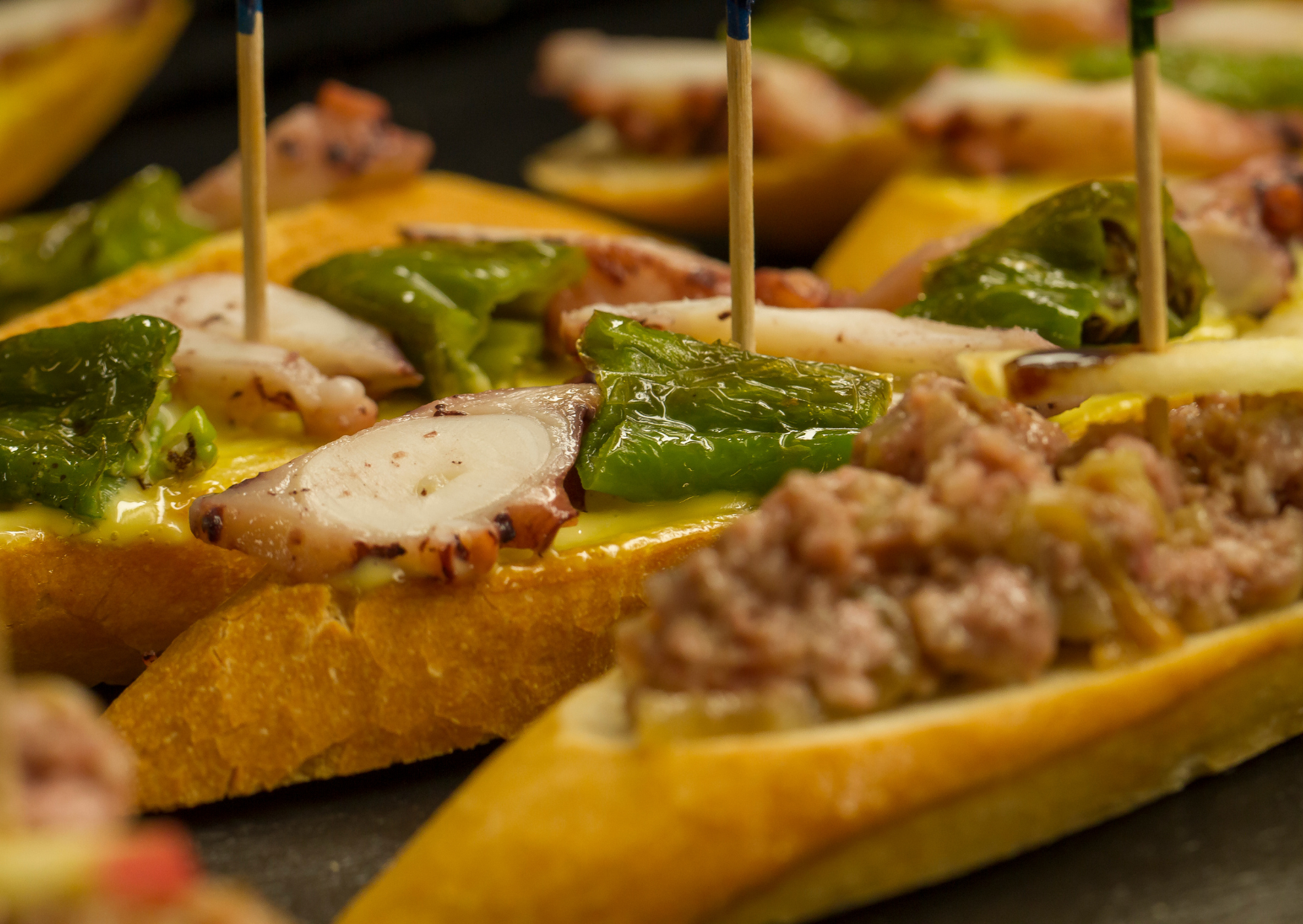
No tasting menu. No white tablecloth. No seaside terrace engineered for Instagram. Just a small Spanish bar, a counter with actual people leaning on it, a few trays of tortilla and croquetas, and a simple lunch that cost about €2. In my case, it was one of those ordinary bar moments Spain still does without making a speech about it: a small plate, something hot, something real, something that looked like food instead of branding.
That is what did the damage.
Because once a person has spent enough years in the U.S., especially in middle age, the brain gets used to a certain kind of lunch logic. Lunch is rushed. Lunch is lonely. Lunch is expensive for what it is. Lunch is often eaten in a car, at a desk, in a parking lot, from a plastic container, or with one eye on email and the other on blood sugar. Even when it is technically “healthy,” it often feels joyless, overpriced, and weirdly industrial. It does not feel like a meal. It feels like a patch.
Then Spain hands you something small, cheap, and unmistakably human.
And suddenly the problem is not the €2. The problem is what the €2 reveals.
The Shock Is Not That Spain Is Cheap
Spain is not universally cheap.
That is the first thing worth getting straight.
A normal inexpensive restaurant meal in Spain is nowhere near €2. Even broad cost-of-living data for March 2026 put an inexpensive restaurant meal around €15 on average nationally, and proper menu del día pricing has climbed too. El País reported in November 2025 that the average menú del día in Spain had reached €14.2, with regional variation from around €13 in the Canary Islands to €16 in the Balearics. So no, this is not a fake fairy tale where full lunches cost coins forever.
But that misses the point.
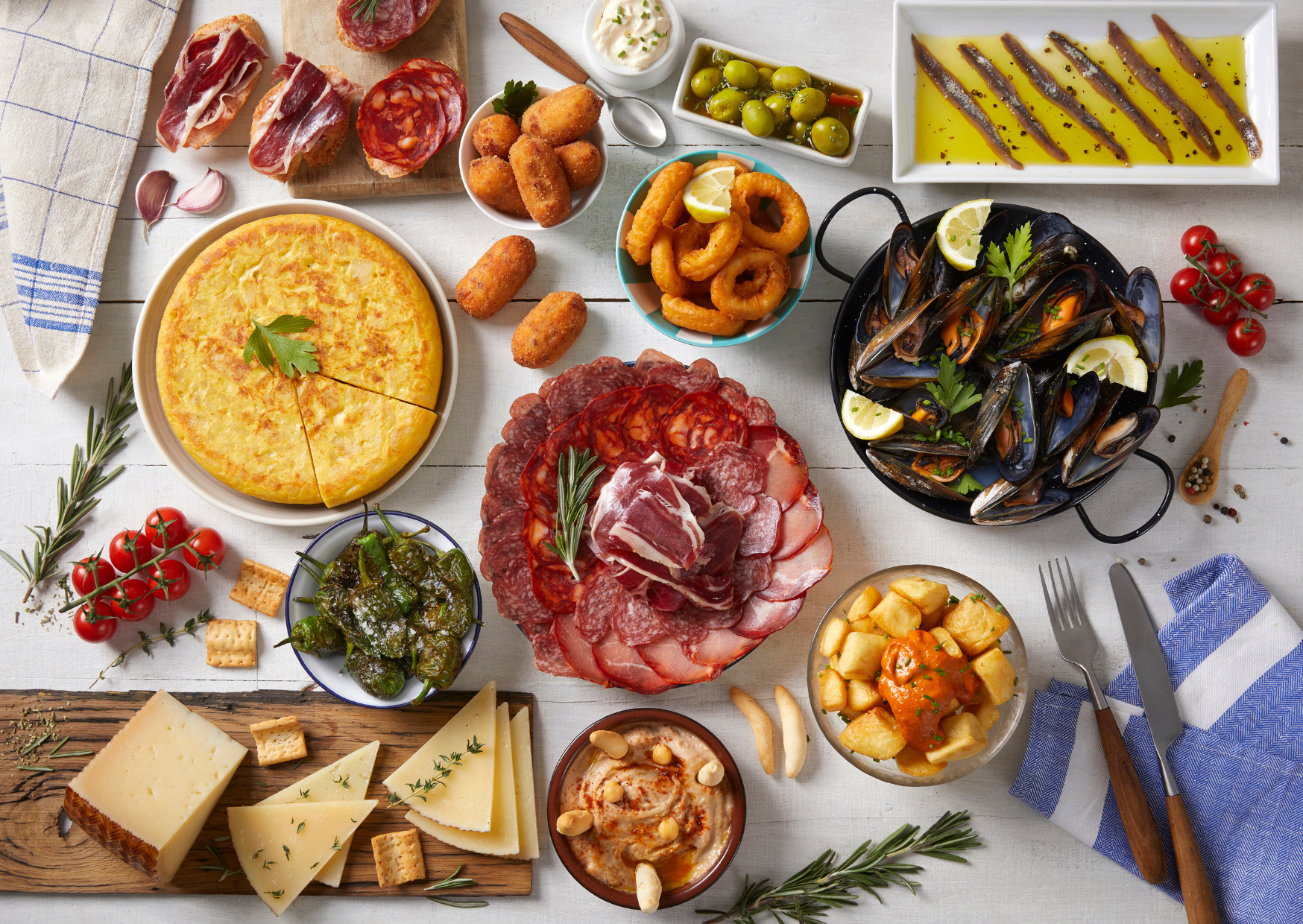
Spain still has a category of small real food that the U.S. has largely destroyed or premium-priced out of normal life. A tortilla pincho. A tapa. A half-bocadillo. A coffee and something substantial. A bar counter lunch that is not nutritionally perfect, not precious, not optimized by an app, and not pretending to be a lifestyle product. In some places, in some bars, some of those moments still land around €2 or only slightly above it.
That matters because the U.S. has done something perverse. It has made cheap food easy, but cheap real lunch much harder.
You can still get cheap calories in America. Very cheap. But that is not the same thing. Cheap calories are not the miracle. The miracle is cheap food that still behaves like food.
Spain has not fully lost that yet.
The American Lunch Is Usually Not A Meal
Lunch in the U.S. is often a stress event disguised as convenience.
It gets squeezed between work, errands, commuting, childcare, aging-parent logistics, and the general American religion of pretending everyone has more time than they do. That is why so many lunches become combinations of engineered products and strategic compromise. A salad with too much packaging. A protein bar with a halo. A sandwich that costs more than it should. A drive-through meal that was never the plan but happened anyway. Something inhaled alone at a desk because there is no actual lunch culture left, only a lunch slot.
That is not just individual failure. It is infrastructure.
The U.S. food system is built around ultra-processed normality. The CDC reported in 2025 that American adults still get 53% of their calories from ultra-processed foods, with adults aged 40 to 59 at 52.6%. That number explains more about the emotional life of lunch than people think. When over half of adult calories come from food products that are industrially designed, shelf-stable, aggressively marketed, and often easiest to eat under pressure, lunch stops being a meal and becomes an extraction point.
Spain has processed food too. Plenty of it. But it still preserves a more ordinary space for lunch to be a recognizable event. That changes what cheap food can look like.
In the U.S., cheap often means disposable.
In Spain, cheap can still mean modest.
That is a big civilizational difference hidden inside a very small bill.
A €2 Lunch Is Really About Proportion
The thing that hit me was not generosity. It was proportion.
The lunch felt proportionate to life.
It was not oversized. It was not sold as value theater. It was not loaded with ten sauces, two branding messages, and a fake protein promise. It did not try to become the day’s entertainment. It was just enough food for a moment in the day. That sounds basic until you realize how uncommon that feeling has become in the U.S.
America is terrible at proportion around food.
Portions are often too large, while satisfaction is oddly low. Packaging is elaborate, while the food itself feels dead. Lunches are expensive, while the ingredients feel suspicious. “Healthy” options are frequently more expensive but less comforting. Fast options are everywhere, but actual ease is rare because the entire system produces guilt, noise, overconsumption, or both.
Spain still has a category of lunch that says: here is something simple, edible, affordable, and socially normal. No sermon. No optimization. No shame.
That matters more than the exact number on the receipt.
Because a proportionate lunch implies a proportionate society. It suggests that ordinary people are still expected to eat in ordinary ways. It suggests that bars and cafés still understand a worker, retiree, or passerby might want a small real meal without entering a pricing scheme or nutritional identity contest.
A country does not need to be perfect for that to feel revolutionary.
What The €2 Actually Bought
It bought more than food.
It bought a different relationship to the middle of the day.
In Spain, lunch still carries social weight. Not always in the old romantic way foreigners imagine, and not always leisurely, but enough that the culture still recognizes lunch as a thing worth having. Even the statistics around food consumption and food waste in Spain hint at this. Lunch remains the meal around which a lot of household and public eating patterns still revolve. The structure survives.
That has consequences.
A cheap lunch in that context is not just fuel. It is permission. Permission to pause. Permission to eat before collapsing. Permission to inhabit the day instead of merely surviving it. That sounds soft until you compare it with the U.S., where lunch is often treated as a productivity obstacle.
The €2 lunch also bought dignity.
That word matters here. Dignity is not just healthcare. It is not just public transport. It is not just labor protections. It is also whether a person can sit down in the middle of the day and get something recognizably edible without feeling manipulated, rushed, overcharged, or nutritionally insulted.
In the U.S., lunch too often feels like a financial and metabolic trap. In Spain, even a tiny lunch can still feel like a modest human right.
That is what made me question everything.
Not because Spain is heaven.
Because the U.S. has normalized uglier things than most people admit.
The Real Comparison Is Not Spain Versus Fine Dining
The real comparison is Spain versus ordinary American adulthood.
That is where Spain starts looking dangerous to old assumptions.
An American middle-aged life often runs on a sad lunch economy. People overspend for mediocre convenience, under-eat real food during the day, then overcorrect at night. They eat alone more often. They eat in cars more often. They eat with screens more often. They eat while stressed more often. And they absorb the idea that this is just what busy grown-ups do.
Then one tiny Spanish lunch arrives and quietly asks a rude question:
Why was lunch back home so hard?
Not expensive in the abstract.
Hard.
Hard to find.
Hard to justify.
Hard to trust.
Hard to fit into the day.
Hard to finish without feeling vaguely cheated.
This is not just nostalgia for Europe. It is a systems question. A country that can still make small ordinary food available at ordinary prices is a country that has not fully surrendered every daily ritual to extraction.
That is what many Americans react to when they move abroad. They think they are reacting to beauty, culture, or charm. Often they are reacting to the return of proportionality.
And proportionality can feel incredibly emotional when you have been denied it for years.
Spain Still Has Cheap Real Food. America Has Cheap Edible Content.
That sentence sounds rude because it is.
But it is hard to avoid after a while.
The U.S. remains spectacularly good at producing cheap edible content: ultra-processed snacks, drive-through meals, frozen pseudo-meals, giant bakery items, sugar-heavy coffee drinks, convenience combos, value menus, protein-branded dessert bars, and every possible packaged object designed to get somebody through the next three hours. There is no shortage of affordability at the calorie level.
What the U.S. is far worse at preserving is a lane of low-cost, low-drama, socially normal real food.
The Spanish bar still protects some of that lane.
A small plate of tortilla. Bread that is just bread. Coffee that is coffee. A counter where older people, workers, retirees, and teenagers can all coexist without the space being aggressively optimized for turnover or upsell. The lunch may not be nutritionally ideal. It may be fried. It may be salty. It may not fit a wellness template at all. But it still belongs to the world of meals, not the world of food products.
That distinction matters.
Because a society full of cheap edible content eventually starts treating people like machines that need refueling. A society that still has cheap meals treats them more like humans moving through a day.
The €2 lunch was not healthy enough to save anyone.
It was sane enough to expose something.
The Psychological Damage Comes From Realizing This Was Optional
That is the nastiest part.
Americans often talk about the quality of life gap in dramatic areas: healthcare, guns, retirement, housing, college debt. Fair enough. Those are huge. But what catches people off guard abroad are the smaller daily proofs that the U.S. could have been less stupid in ordinary ways and simply chose not to be.
Lunch is one of those proofs.
There is no law of physics requiring middle-aged people to eat overpriced sadness at their desk. There is no serious reason a basic meal has to feel so friction-heavy. There is no moral necessity behind a food culture where convenience is abundant but normal eating feels rare, expensive, or structurally inconvenient.
That is why these little European moments can hit harder than the big ones. A beautiful train station is nice. A cheap museum is nice. A public square full of life is nice. But a €2 lunch that tastes like food and fits naturally into the day is harder to dismiss. It is too ordinary. Too repeatable. Too revealing.
It suggests that some of the exhaustion Americans feel is not just personal burnout. It is system design lodged deep in the body.
Once that clicks, lunch stops being lunch.
It becomes evidence.
This Is Also Why Retirees React So Strongly
For people in their late 40s, 50s, and 60s, the lunch contrast lands especially hard because the body has stopped being infinitely forgiving.
A younger person can survive years of rushed lunch habits with less visible resentment. By midlife, the pattern starts invoicing people properly. Blood sugar swings feel worse. Afternoon fatigue gets louder. Reflux becomes a personality. Weight gain is easier. Mood gets stranger. The workday feels longer. Hunger decisions get sloppier. Cheap industrial lunch starts feeling less like convenience and more like sabotage.
That is where the Spanish lunch can suddenly feel almost accusatory.
Not because it is superior in every nutritional way, but because it reminds you that food in the middle of the day was never supposed to be this adversarial.
And for retirees or semi-retirees, there is another layer. Lunch becomes a test of what the day is for. In the U.S., retirement can still inherit the old work-era food habits: drive somewhere, eat something random, spend too much, keep moving. In Spain, even a very modest lunch can imply a different rhythm: stop, sit, eat, continue.
That can feel either liberating or devastating depending on how much of a person’s old life was built around hurrying.
The First Week You Stop Eating Like An American Emergency
A cheap Spanish lunch is not a tourism trick to admire from a distance. It is a lesson.
The lesson is not “move to Spain and eat tortilla forever.” The lesson is that lunch can be smaller, calmer, cheaper, more social, and more food-like than the U.S. has taught people to expect.
If somebody wants to apply that lesson immediately, the first seven days are simple.
Day 1: stop treating lunch like an accidental side effect of your day. Put it on the calendar as a real break, even if it is only 20 minutes.
Day 2: build one lunch from plain components. Bread, eggs, beans, tomatoes, olive oil, cheese, tuna, fruit. Not because this is “Mediterranean.” Because it is recognisable.
Day 3: eat lunch seated, without driving and without a screen in your hand. This sounds embarrassingly basic. It is also where many Americans realize how distorted the habit has become.
Day 4: cut one fake lunch product. Usually a protein bar, packaged sandwich, sugary coffee meal, or expensive “healthy” grab-and-go item that never actually satisfies.
Day 5: price your normal American lunch honestly. The real cost, not the imaginary cost. Include drinks, convenience add-ons, parking, delivery fees, or impulse snacks.
Day 6: make one small lunch that feels proportionate instead of performative. Soup, toast, tortilla, beans, yogurt, salad, leftovers, fruit. Not giant. Not tiny. Just enough.
Day 7: ask the rude question. Was lunch hard because life is hard, or because the system trained you to accept bad lunch as normal?
That question is worth more than the €2.
What The Little Bar Really Taught Me
The cheap lunch did not make me want to become Spanish overnight.
It made me realize how much of American life is organized around controlled degradation. Not total collapse. Just enough degradation to keep people tired, overpaying, undernourished, hurried, and emotionally numb to it. Lunch is one of the cleanest examples because it seems so small.
But small things repeated for decades become worldview.
The €2 lunch showed me a different possibility. A society can still leave room for modest, affordable, ordinary food in the middle of the day. A person can still sit down without turning the event into a budget crisis or a self-improvement project. Food can still support the day instead of bullying it.
That should not feel radical.
The fact that it did is the part that made me question my entire American life.

About the Author: Ruben, co-founder of Gamintraveler.com since 2014, is a seasoned traveler from Spain who has explored over 100 countries since 2009. Known for his extensive travel adventures across South America, Europe, the US, Australia, New Zealand, Asia, and Africa, Ruben combines his passion for adventurous yet sustainable living with his love for cycling, highlighted by his remarkable 5-month bicycle journey from Spain to Norway. He currently resides in Spain, where he continues sharing his travel experiences with his partner, Rachel, and their son, Han.