
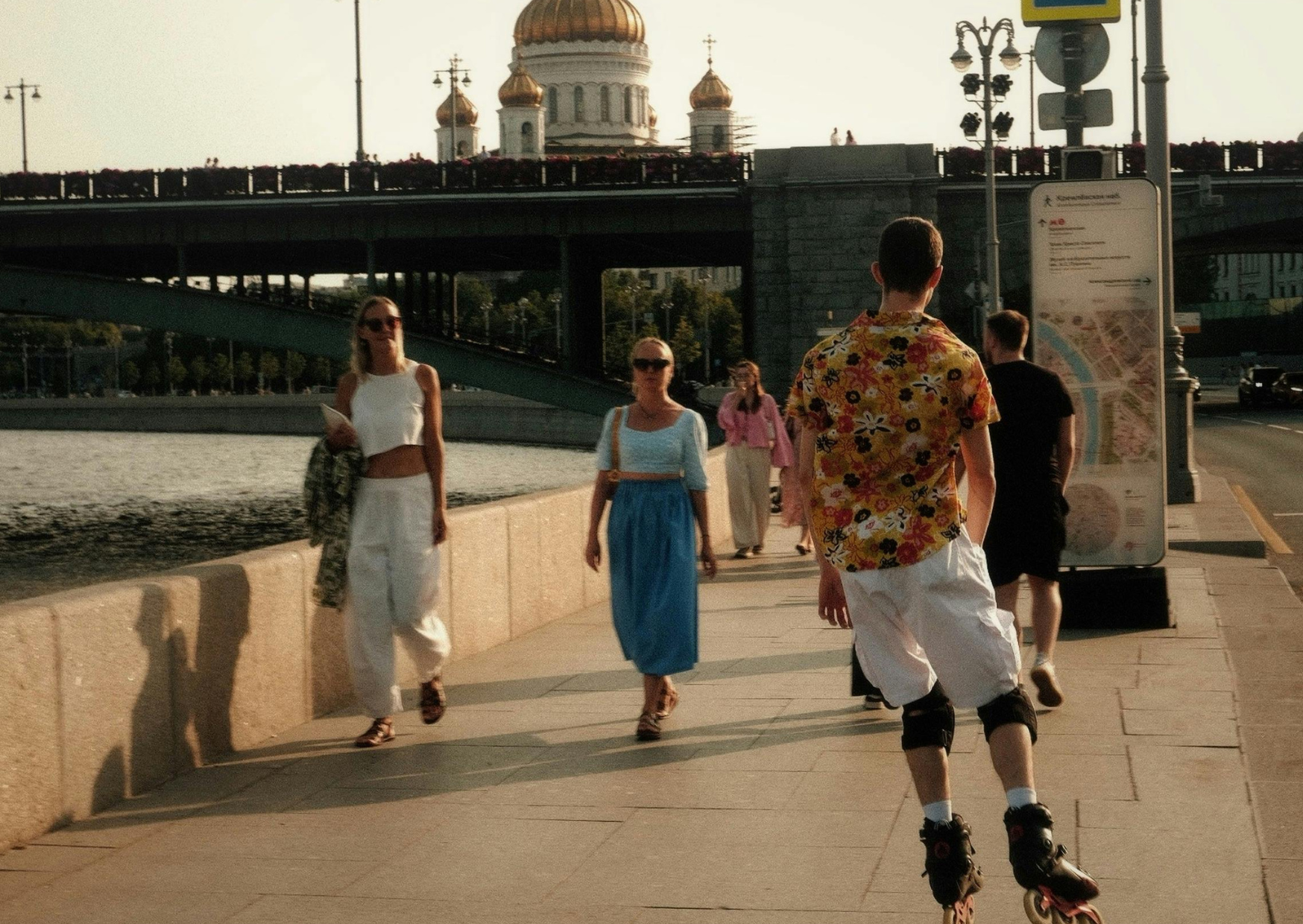
Americans keep looking for the European “secret” like it’s a quote you can print on a mug.
It’s not a quote. It’s a set of quiet defaults.
Most Europeans don’t sit around explaining their life philosophy. They don’t need to. It’s baked into how the week is organized, how time is treated, how money is spent, how public space is used, and how much social permission exists to live at a human pace without justifying it.
If you’re 45–65 and thinking about relocating, this matters more than the food, the weather, or the visa. You can solve the paperwork and still hate your life if you bring an American operating system into a European environment and refuse to adapt.
The “philosophy” is not romantic. It’s practical. It’s also the reason some Americans thrive in Europe and others get furious and leave.
Life is not an achievement, it’s a routine

A lot of Americans are raised inside an invisible rule: life is something you earn.
Earn rest. Earn leisure. Earn the nicer meal. Earn the day off. Earn the right to slow down. Earn the right to stop proving you deserve your own existence.
Europe isn’t free from that mentality, but in many places it’s less aggressive. The week is built around a baseline assumption that a person’s life includes non-productive time and that time is not inherently suspicious.
You see it in normal choices.
People take breaks without performing guilt. People take lunch as a real pause. People use public space without buying something big. People don’t apologize for sitting.
That doesn’t mean no one is ambitious. It means ambition is not the only socially acceptable identity.
For Americans, this can feel like a relief and an insult at the same time. Relief because your body has been tired for years. Insult because you were taught that tiredness is solved by trying harder.
The European routine often teaches something different: consistency beats intensity.
That’s a philosophy, even if nobody says it out loud.
Time is a real asset, not a thing you trade for status
Americans love to say they value time. Then they sell it like it’s cheap.
Work expands. Commutes expand. Obligations expand. Hustle expands. Optimizing expands. Suddenly you’re 58 and the week is a blur and you can’t remember the last day that felt calm.
In many European contexts, time is treated more like a protected asset. Not perfectly. Not in every job. Not for every worker. But culturally, there are more guardrails that make it harder for work to eat everything.
You can feel this in small friction points that annoy Americans at first:
- The shop closes.
- The office has limited hours.
- The service is slower.
- The appointment takes time.
At first, Americans call it inefficiency. Later, many realize the inefficiency is a boundary. It’s a society saying there are hours where you don’t get to buy other people’s attention.
That boundary changes how you plan your life. It forces buffers. It forces pacing. It forces you to stop expecting instant resolution, which ironically can reduce anxiety over time.
The philosophy hiding inside the schedule is this: your day is allowed to have space.
If you’ve spent decades living as if space must be earned, this is a bigger adjustment than learning a language.
The point is not to win the day, it’s to have the day
Americans organize life around the idea of “winning.”
Win the morning. Win the workout. Win the productivity block. Win the errands. Win the diet. Win the calendar. Win the retirement plan.
This creates a weird outcome: you might be doing well and still feel like you’re behind. Because the “win” is always one more task away.
In many European settings, the day isn’t designed to be won. It’s designed to be inhabited.
That shows up in micro-behaviors:
People linger without apologizing. Conversations aren’t always efficient. Meals are not always rushed. A walk is allowed to be a walk, not a performance of health.
This can make an American feel unmoored. If you’re used to measuring your worth by your output, Europe can feel like it took away your scoreboard.
But if you let it, it can also give you something you’ve probably wanted for years: a day that feels like life, not like a project.
The philosophy is simple: being present is productive enough.
Most Europeans would never phrase it that way. They’d just sit down and drink their coffee.
Money is for stability first, pleasure second, identity last
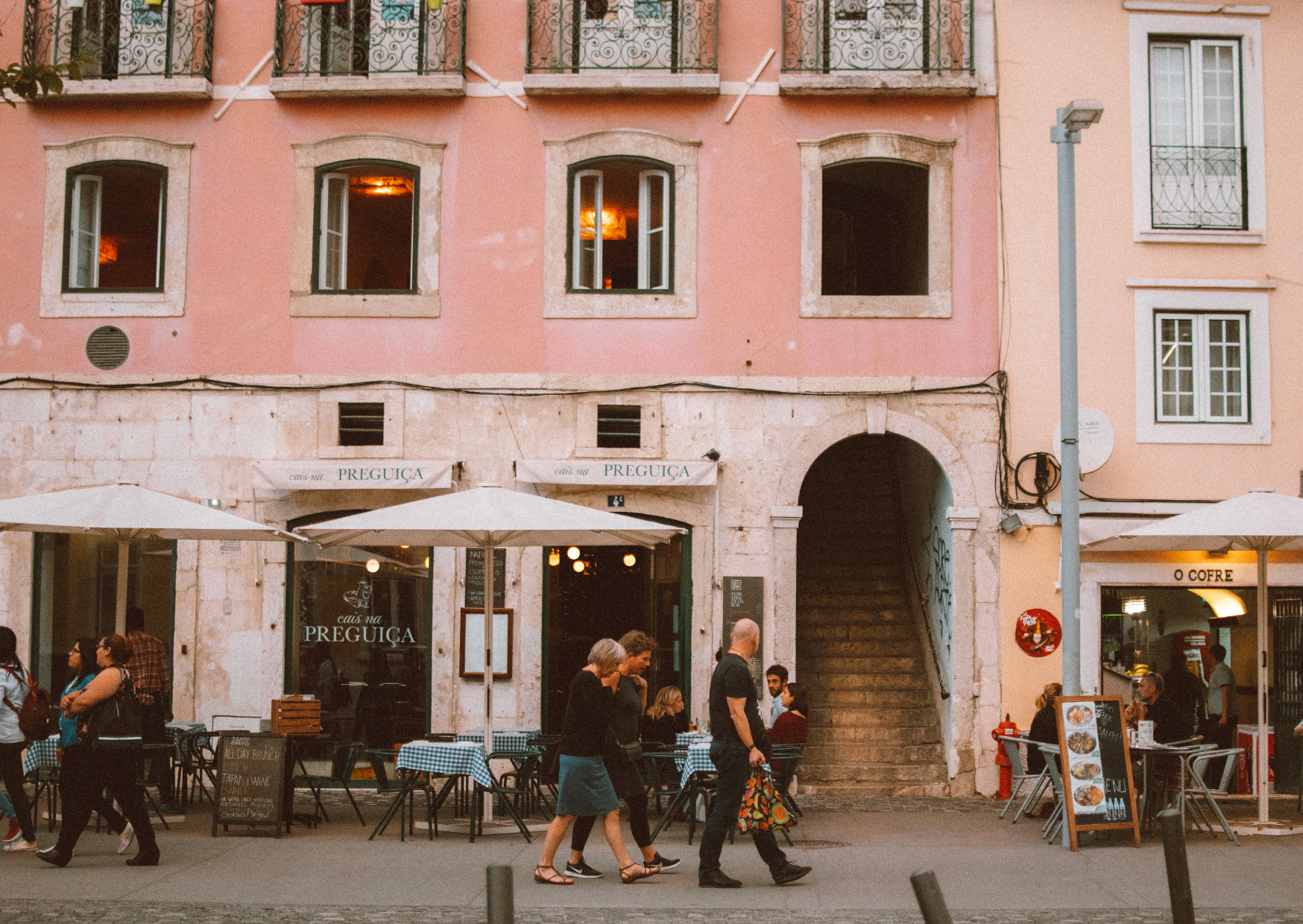
Americans often use money as an identity tool. The house, the car, the gear, the upgrades, the subscriptions, the constant “we deserve this” purchases because life is exhausting.
Europe has plenty of consumerism too, but in many places the culture pushes a different money story.
The first priority is stability. Pay the basics. Keep things working. Maintain. Repair. Don’t turn every desire into a purchase.
Pleasure exists, and it can be daily. The difference is that pleasure is often cheaper and more ritualized: a coffee, a pastry, a small meal out, a bottle of wine shared slowly, a walk, a chat. It’s not always packaged as a giant shopping event.
Identity through consumption still exists, but in many European contexts it’s less dominant than in the U.S. It’s less common to feel like you have to constantly upgrade your life to prove you’re doing well.
If you’re a midlife American, this can be a financial relief. You spend less on stress coping because your daily rhythm is calmer and your leisure options are more public and less purchase-driven.
The philosophy hiding in the spending pattern is this: enough is a real number.
Not a motivational slogan. A daily practice.
Public life is not a luxury, it’s the default
One reason Europe feels different is that it’s easier to have a life outside your home without spending a lot of money.
Public squares. Parks. Walkable streets. Benches. Promenades. Markets. Transit. Sidewalk cafés. Places where you can exist without paying an entry fee.
When public life is normal, social connection becomes easier. You see neighbors more. You have more casual interactions. You become a regular somewhere without making it a formal event.
Americans often underestimate how much that matters for health and happiness, especially at 45–65.
Loneliness is not solved by “trying harder.” It’s solved by systems that produce repeated low-stakes contact. Europe often has more of that built in.
This also changes the way people age. Older adults are visible. They’re out. They’re part of the street. They’re not hidden in houses and cars.
The philosophy is not abstract. It’s architectural and cultural: a life is meant to be lived in public sometimes.
If you’ve spent years living in a car-dependent environment, this shift can feel like a new nervous system.
Food is not a moral identity, it’s a social tool
Americans have turned food into a battlefield.
Good foods. Bad foods. Clean eating. Cheat meals. Macros. Tracking. “I was good today.” “I fell off.” The language alone reveals the stress.
In many European contexts, food is less moralized and more social. Not always. Not everywhere. But often enough that Americans feel the contrast.
Meals are still meals. Food is still pleasure. You eat what’s normal, you don’t perform it, and you don’t talk about it like it’s a personality.
That doesn’t mean Europeans eat perfectly. Plenty don’t. It means the cultural pressure to treat every bite as a virtue signal is lower.
The practical outcome is often better regulation. Not because Europeans are saints. Because they eat with rhythm:
- Meals at recognizable times.
- Less constant grazing.
- Sweets contained as a ritual.
- A little walking built into the day.
If you want the European eating effect, you don’t need a list of ingredients. You need a different relationship with meals.
The philosophy is simple: food is part of the day, not a referendum.
Bureaucracy is the price of the system, not a personal insult

This is where Americans either adapt or spiral.
European bureaucracy can be slow. It can be maddening. It can make you feel like you’ve been transported into a 1997 office where everyone has time to ignore you.
But there’s a mindset shift that makes it survivable: don’t treat it as a personal insult.
In the U.S., paying often buys speed. In Europe, paying does not always buy speed in the same way, especially in public systems. The process is the process.
If you keep expecting the American model, you will feel disrespected constantly. If you accept the European model, you build buffers and the frustration drops.
That doesn’t mean you tolerate incompetence. It means you stop letting administrative friction eat your entire mood.
You also learn a useful midlife lesson: not every inconvenience is an emergency.
The European system forces you to practice that. It’s annoying. It’s also a form of stress training.
Pitfalls most Americans miss when they try to “get” Europe
This is where people fail quietly, then blame the country.
They move and keep their American identity structure intact, then wonder why nothing feels better.
They keep living at American speed. They pack the calendar, chase convenience, and treat slowness as a flaw instead of a boundary.
They mistake tourism for lifestyle. Endless restaurants, constant travel, never building routine, then feeling empty when the novelty fades.
They choose the wrong neighborhood. A beautiful place far from daily needs becomes a car-dependent life with European bureaucracy on top.
They don’t build community. They have more time but nobody to put inside that time, then call Europe lonely.
They treat “quality of life” like a product. They think the country delivers it automatically, and don’t notice it requires habits, language effort, and repeated showing up.
If you avoid these traps, Europe can deliver what you came for. If you step into them, Europe can feel like a slow-motion disappointment.
The philosophy is not a secret. The mistake is refusing to live it.
The first 7 days you should actually do after you arrive
Not a sightseeing list. A life list.
Day 1: Build buffers into your calendar
Schedule nothing back-to-back. Leave real empty space.
If you try to run your week like an American week, you’ll spend your first month angry.
Day 2: Pick one daily anchor and repeat it
One café. One walking loop. One market. One gym. One small ritual.
Repetition is how a place stops feeling foreign.
Day 3: Eat one slow meal without multitasking
No phone, no rushing, no “we’ll just eat quickly.”
This is less about food and more about retraining your nervous system to accept calm as normal.
Day 4: Do one practical task early in the day
Bank, phone plan, appointment booking, anything bureaucratic.
Doing it early keeps it from poisoning the whole day.
Day 5: Choose your “enough” standard for spending
Pick a daily pleasure that doesn’t blow up the budget.
A coffee, a pastry, a small lunch out. Something sustainable. This is how you avoid turning Europe into a constant consumption loop.
Day 6: Start language in the smallest useful way
You don’t need fluency to start integrating. You need the basics that create dignity.
Greetings, numbers, pharmacy language, simple questions. The goal is to reduce helplessness, not become a poet.
Day 7: Add one weekly social repetition
A class, a volunteer shift, a club, a neighborhood group.
The fastest way to love Europe is to be recognized somewhere. Belonging comes from repetition, not from opinions.
This first week doesn’t solve everything. It does something better. It puts you inside the philosophy instead of just thinking about it.
Where this lands in real life
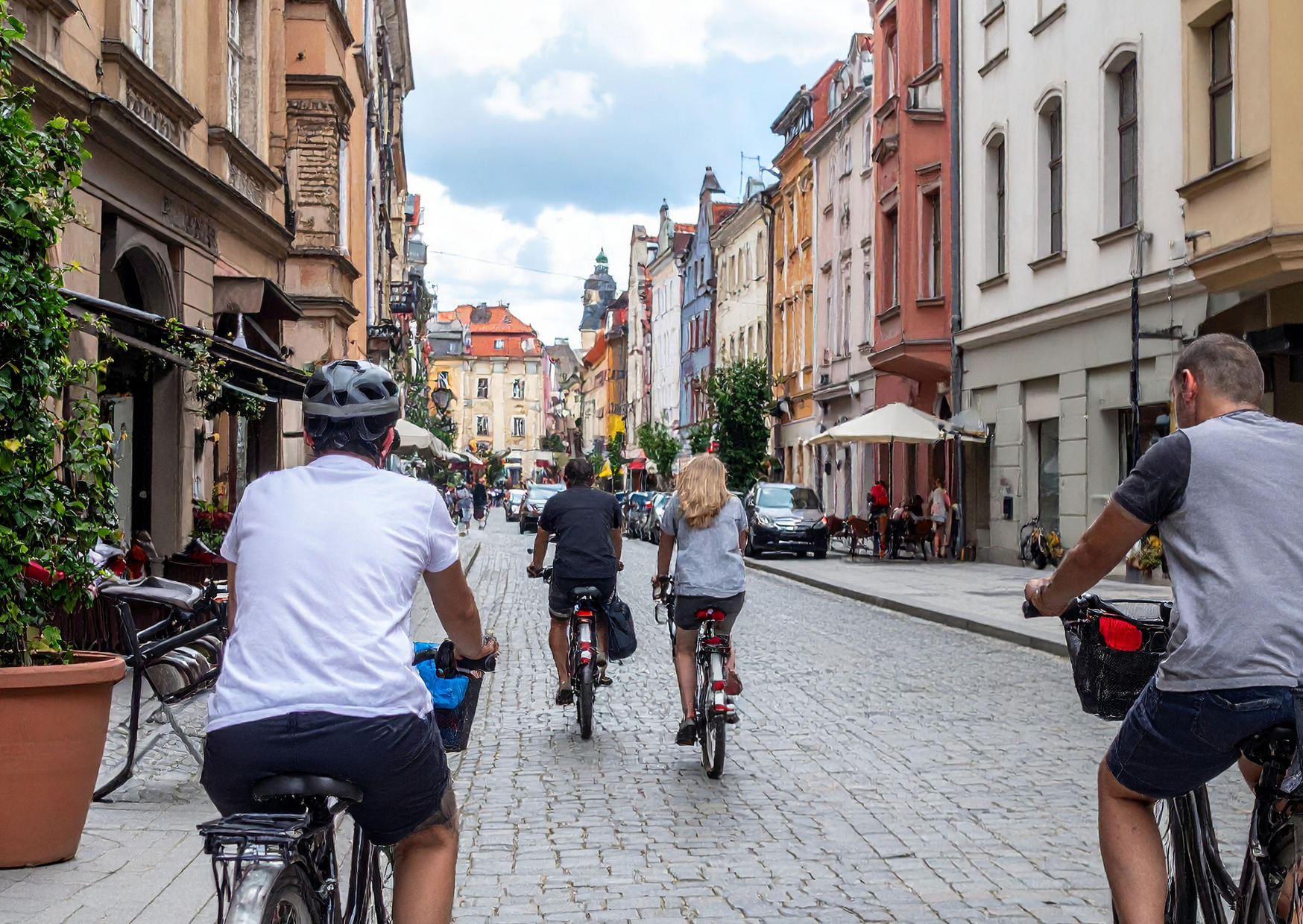
The life philosophy Europeans don’t talk about is not a speech. It’s a set of defaults:
- Time has value even when it produces nothing.
- A day is meant to be lived, not won.
- Enough is a real number.
- Public space is part of life, not an extra.
- Meals are anchors, not interruptions.
- The system has friction, and you plan for it instead of raging at it.
If you’re an American in midlife, this can feel like relief. It can also feel like loss, because it takes away some of the coping mechanisms you’ve used for decades.
Europe doesn’t automatically make you happier. It gives you a different set of tools, and it asks you to stop clinging to the old ones.
The difference is everything because it shows up in the one place you can’t fake: your Tuesday.
If your Tuesday becomes calmer, your life becomes calmer. Not perfect. Not always easy. But more human.
That’s the philosophy.
Nobody has to say it. You can see it on the street.

About the Author: Ruben, co-founder of Gamintraveler.com since 2014, is a seasoned traveler from Spain who has explored over 100 countries since 2009. Known for his extensive travel adventures across South America, Europe, the US, Australia, New Zealand, Asia, and Africa, Ruben combines his passion for adventurous yet sustainable living with his love for cycling, highlighted by his remarkable 5-month bicycle journey from Spain to Norway. He currently resides in Spain, where he continues sharing his travel experiences with his partner, Rachel, and their son, Han.