

Americans love a diet that starts Monday.
Europeans tend to have a Tuesday.
That’s the difference nobody wants to hear because it’s not glamorous. It’s also the reason so many Americans show up in Europe, keep eating bread and pasta, and still lose weight or feel better without feeling like they’re “on a plan.”
It’s not because Europeans have superior willpower. It’s because the structure of eating is different. The defaults are different. The social rules are different. The food environment is quieter. The daily movement is baked in. And the portion expectations are not built around “make it worth it.”
So yes, Americans diet. Europeans just eat differently.
If you’re 45–65 and considering Europe for a long stay or a real move, this is one of the highest leverage things to understand. Not for weight loss bragging rights, but because your midlife health depends far more on patterns you can repeat than on heroic bursts of discipline.
Diet culture is a coping strategy. Eating culture is a system.
In the U.S., dieting is almost a civic hobby.
People talk about “being good,” “falling off,” “earning” food, “starting over,” “cheat days,” “cutting carbs,” “tracking macros,” and “resetting” after a weekend. That language isn’t just annoying. It reveals the environment.
When the default food system pushes constant snacking, constant sweetness, and constant convenience, you end up with a predictable cycle:
- Eat loudly and often without noticing.
- Feel uncomfortable in your body.
- Clamp down with rules.
- Burn out.
- Repeat.
Europe doesn’t magically remove this cycle, but in many places it softens the conditions that create it.
Two big structural differences show up fast:
- Meals are more likely to be treated as meals, not grazing.
- Snacks exist, but they’re less likely to be the main character of the day.
That means the “solution” isn’t as often a dramatic new diet. The solution is a calmer baseline.
This matters more at 55 than it did at 35 because your body is less forgiving. Hormonal shifts, sleep changes, stress tolerance, and muscle loss make the American cycle hit harder. You don’t need a more intense diet. You need a more stable system.
European eating is boring on purpose
Americans tend to think “eating better” means buying special foods.
Europe often makes eating better feel like eating more normal foods.
The meals that keep people steady are not exotic. They’re repetitive, simple, and built around a few anchors:
- bread that tastes like bread, eaten with something
- vegetables that show up daily without being a performance
- olive oil used like a staple, not a supplement
- legumes as normal food, not a punishment food
- yogurt, cheese, eggs, fish, or meat in portions that don’t try to prove masculinity
- fruit as a default sweet, not an emergency sweet
You’ll also notice a cultural tolerance for “samey” meals. A lot of Americans need novelty to feel satisfied. Europe often uses routine as the satisfaction.
That routine does two things:
- It reduces decision fatigue.
- It reduces the odds you’ll end up eating “whatever” at 4 p.m. because you didn’t plan.
This is why Americans in Europe often say, “I’m not even trying.”
They’re trying in the only way that lasts. They’re repeating a pattern.
The three quiet changes that make Europeans look like they “don’t diet”
If you want the practical explanation for the difference, it’s usually these three. Not a secret ingredient, not a detox, not a magical Mediterranean gene.
1) Less liquid sugar, more drink sanity
Many Americans drink calories without counting them as food. Sweetened coffee drinks, soda, sports drinks, juice as hydration, sweet “energy” drinks.
In many European day-to-day routines, the default drinks are simpler: water, sparkling water, coffee, tea. Alcohol exists, sometimes heavily, but the constant sweet drink pattern is often less dominant.
That alone can remove hundreds of calories a day without touching your plate.
2) Fewer ultra-processed “default calories”
Ultra-processed foods are not just “junk.” They’re the entire category of foods engineered for shelf life, hyper-palatable texture, and easy overeating.
In the U.S., ultra-processed foods make up more than half of adult calorie intake in recent federal data. In many European places, people still eat plenty of processed food, but the default week often contains fewer ultra-processed calories because the environment provides other options that are normal and convenient.
When ultra-processed calories drop, food noise drops. Hunger becomes less dramatic. Cravings calm down. You stop feeling like you’re fighting your brain.
3) Portion expectations that don’t try to impress anyone
American portion culture is built around value signaling. Bigger feels smarter. Bigger feels like you won.
European portions, especially in everyday life, often feel smaller and more contained. That does not mean Europeans eat tiny amounts. It means the portioning is less theatrical.
This is where Americans get it wrong. They visit Europe, eat restaurant portions that still feel generous, then conclude the whole story is fake. The difference isn’t always the restaurant. The difference is what people eat on a regular Tuesday at home.
What Americans misread when they “eat like Europeans” on vacation
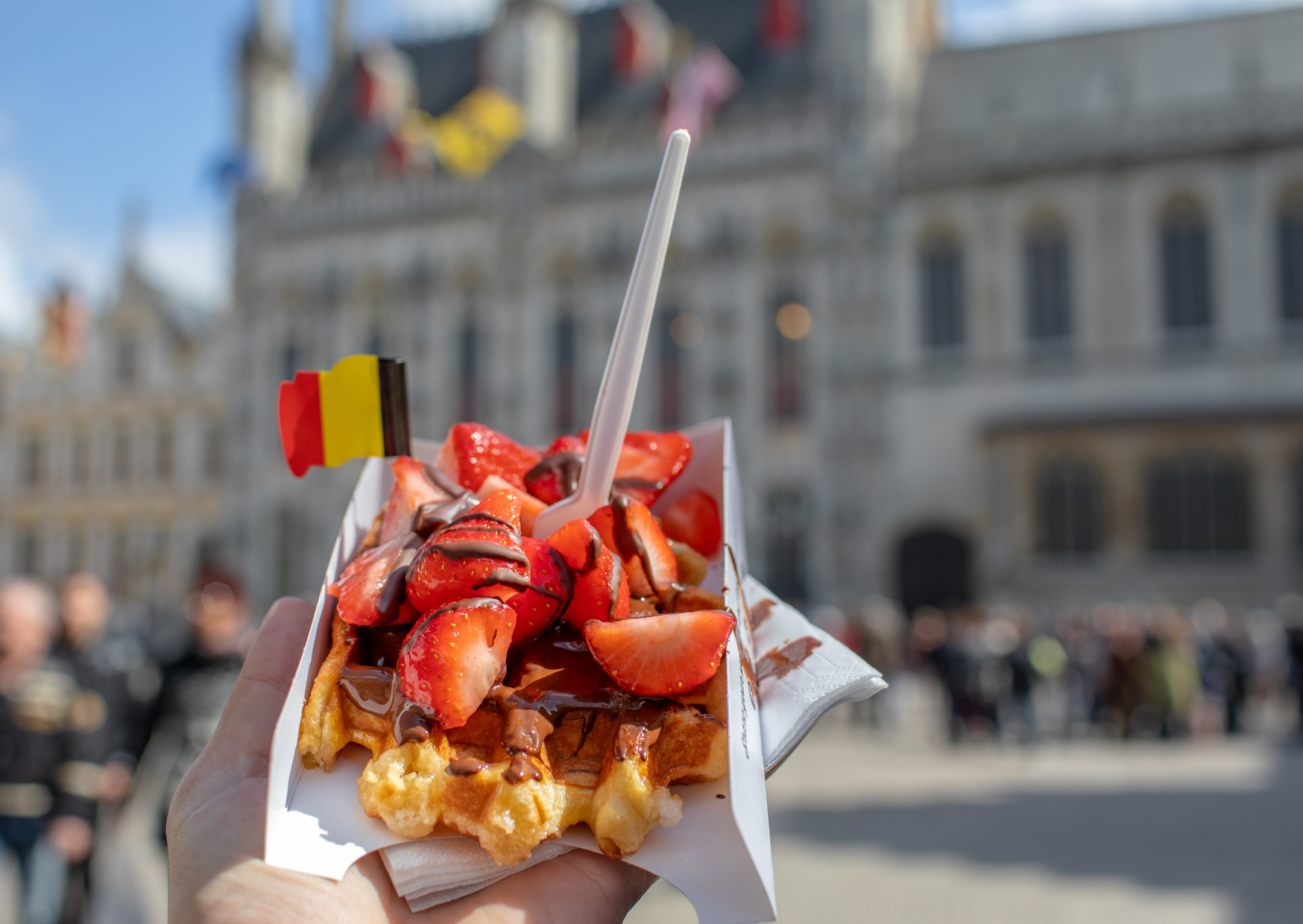
A two-week vacation in Europe can convince an American they’ve unlocked the secret.
Then they move and the magic disappears.
Because tourists eat like tourists.
Tourist eating is its own diet pattern:
- pastries every morning
- a big lunch because it’s “local”
- gelato because it’s “culture”
- wine because it’s “Europe”
- late dinners because “that’s what people do”
You can gain weight in Europe easily if you treat it like a permanent vacation.
The Europe effect people want is not tourist eating. It’s resident eating.
Resident eating looks more like:
- a boring breakfast
- a real lunch
- a lighter dinner more often
- fewer snacks
- fewer sweet drinks
- more walking because errands are not a car trip
So if your goal is to understand the difference, stop watching what people eat at the waterfront restaurant. Watch what they carry home from the supermarket at 7 p.m.
The part Americans hate: Europeans eat with friction
Americans are used to a food system designed to remove friction.
Drive-thru. DoorDash. Mega portions. Snacks everywhere. Food that stays soft for two weeks. Constant novelty.
Europe often adds friction back in. Not as a punishment. As a default.
Friction looks like:
- buying bread more often because it stales
- walking to shops
- smaller fridges in many homes
- fewer giant pantry stock-ups
- more frequent, smaller grocery runs
- fewer “snack aisles that feel like a carnival”
Friction reduces overeating because it slows down consumption. Not in a dramatic way. In a quiet way.
This is especially useful at 45–65 because you do not need a new identity. You need a system that makes it easier to eat normally for years.
Friction is not fun. Friction is effective.
Pitfalls most people miss when they try to copy European eating
This is where Americans turn a simple thing into a mess.
They copy the visible carbs and skip the hidden structure
They eat bread and pasta but keep the American snack and drink habits. That’s not European eating. That’s American eating with extra bread.
European eating tends to work because carbs are often eaten with protein, fat, and fiber, and because the day is less snack-driven.
They ignore protein and wonder why they’re starving
A lot of midlife diet failures are just under-eating protein and then snacking to compensate.
European meals often include modest amounts of protein more consistently. Not always huge servings. Just present, often.
They keep ultra-processed “health foods”
Protein bars, flavored yogurts with lots of added sugar, sweetened granola, “diet” snacks that are still engineered.
If you want the Europe effect, you need fewer foods designed to be eaten mindlessly.
They replace food with alcohol
Europe can normalize daily drinking in certain places. That’s fine until it becomes your main indulgence. Alcohol is an efficient way to cancel the benefits of better food.
They underestimate how much walking does
A small amount of daily walking improves appetite regulation, digestion, blood sugar stability, and sleep. Europe gives you walking without needing a gym identity.
If you move and immediately recreate a car-based lifestyle, you lose a big piece of the effect.
They treat “no banned ingredients” as a plan
Ingredient purity is not the goal. Pattern is the goal.
You can eat dye-free cookies every day and still feel terrible. You can eat bread daily and feel great if the rest of the pattern is stable.
The money reality: why European eating can be cheaper without feeling restrictive
This is one of the best parts of the shift for Americans.
When you stop living on packaged snacks, sweet drinks, and constant convenience foods, food spending often becomes more predictable.
A simple weekly “eat like a resident” basket in many European cities is built around:
- seasonal produce
- bread, rice, pasta, or potatoes
- eggs, yogurt, cheese
- legumes
- fish or meat in smaller quantities
- coffee, not sugar drinks
That basket often costs less than a U.S. “healthy convenience” basket built around:
- bars and snacks
- pre-cut produce
- packaged “better-for-you” meals
- sweetened drinks
- specialty everything
This is why European eating can feel like a financial relief, especially for retirees on a fixed income. It’s not that everything is cheap. It’s that simple food is normal.
If you’re planning a move, the best budgeting approach is to assume your grocery spending will drop only if you actually adopt the resident pattern. If you try to recreate your U.S. pantry with imported comforts and packaged convenience, Europe will happily take your money.
The first week you stop “dieting” and start eating differently
This is the seven-day plan that gets you the Europe effect without requiring a new identity. It’s not titled “what to do this week” because you’re not a spreadsheet. It’s your first week of changing the structure.
Day 1: Remove liquid sugar
For seven days: no soda, no juice as hydration, no sweetened coffees, no sports drinks.
Drink water, sparkling water, coffee, tea.
This is the fastest way to reduce daily calorie creep without feeling deprived.
Day 2: Make breakfast boring and repeatable
Pick one breakfast you can repeat without drama:
- eggs plus fruit
- plain yogurt plus fruit and nuts
- oats plus berries
- toast plus olive oil and tomato, plus protein
Repetition is a feature. It removes decision fatigue.
Day 3: Add one real lunch
Not a snack lunch. A real lunch.
Examples:
- soup plus bread plus cheese
- salad plus tuna or eggs plus bread
- rice plus vegetables plus beans
- pasta with vegetables and a modest protein
If you eat a real lunch, afternoon snacking drops naturally for many people.
Day 4: Contain your treat to one moment
You can have sweets. Just stop grazing.
Pick one treat moment:
- after lunch with coffee
- after dinner with tea
A contained treat feels indulgent without becoming a daily blood sugar rollercoaster.
Day 5: Swap one ultra-processed snack for a real mini-meal
Instead of chips or bars:
- cheese and fruit
- yogurt and nuts
- leftovers
- a small sandwich on real bread
This is where food noise starts to drop.
Day 6: Walk after your largest meal
Fifteen to twenty minutes after lunch or dinner.
This is one of the most underrated “European habits” because it improves blood sugar stability and digestion without feeling like exercise.
Day 7: Shop small
Buy food for two or three days, not a full survival week.
This forces the resident pattern: fresher food, fewer pantry traps, less waste eating.
If you do nothing else, do Day 1 and Day 7. Liquid sugar plus pantry friction are two of the biggest levers.
Why Europeans “don’t count calories” and still stay stable
A lot of European grandmothers are not living on magical genetics. They’re living on boring structure:
- meals at predictable times
- less constant snacking
- sweets as a ritual, not a background activity
- walking as transportation
- food that looks like food more often
- cooking that repeats
Calorie counting is a tool. It can be useful. But it’s often a response to an environment that makes overeating easy and normal.
When the environment is calmer, you don’t need as many tools to defend yourself.
That’s the honest reason Americans look at Europeans and think, “How are they not dieting?”
They are not constantly fighting their food system.
Where this lands in real life
If you move to Europe and want the health benefits people talk about, stop chasing a perfect diet.
Chase a repeatable structure:
- fewer liquid calories
- fewer ultra-processed default foods
- more real meals
- contained treats
- daily walking
This is not a European secret. It’s a human one. Europe just makes it easier in many places because the shelf is quieter and the day is built around neighborhoods instead of highways.
Americans diet because the system demands it.
Europeans often eat differently because the system nudges them there.
You can do this anywhere. The question is how hard you want it to be.
The only difference that actually matters
The difference is not bread. It’s not pasta. It’s not cheese.
It’s whether your daily eating requires constant self-control.
If it does, you will keep dieting. If it doesn’t, you’ll just eat.
That’s the real prize in midlife. Not a perfect body. A calm relationship with food that doesn’t require a new plan every month.

About the Author: Ruben, co-founder of Gamintraveler.com since 2014, is a seasoned traveler from Spain who has explored over 100 countries since 2009. Known for his extensive travel adventures across South America, Europe, the US, Australia, New Zealand, Asia, and Africa, Ruben combines his passion for adventurous yet sustainable living with his love for cycling, highlighted by his remarkable 5-month bicycle journey from Spain to Norway. He currently resides in Spain, where he continues sharing his travel experiences with his partner, Rachel, and their son, Han.