

Being American abroad is not a magic key. It does not override bureaucracy, language, or housing markets.
But it does change friction in a few specific ways, and in Europe those advantages cluster in predictable places: countries with very high English proficiency, heavy US business presence, large American resident communities, and systems already built to handle US-specific paperwork (banking, taxes, school records, health insurance).
This is not about ego. It’s about how fast you can get to “normal life”.
If you are 45–65 and trying to make a move feel livable, “advantage” usually means:
- You can handle daily life in English while you learn the local language.
- Employers, landlords, banks, and clinics are used to Americans showing up with American documents.
- There is an existing ecosystem for US tax compliance and US-style admin.
- You can find community without turning your social life into a full-time job.
Here are the places in Europe where those advantages tend to show up most reliably, plus the trade-offs people ignore.
The advantage isn’t “America.” It’s English plus systems that expect foreigners.
A lot of Americans misunderstand what makes a place feel easy.
They assume friendliness is the whole story. It helps, but most of what makes a move smooth is boring:
- English is widely used in public-facing life.
- Government and business systems already serve international residents.
- You can get services without being treated like an unusual case.
This is why certain countries “feel easy” even if the people are not outwardly warm in an American way. Ease is not always enthusiastic. Sometimes it’s simply competence.
Lower daily friction, faster admin, more English, less explaining yourself.
Netherlands: the English advantage is real, and it touches everything
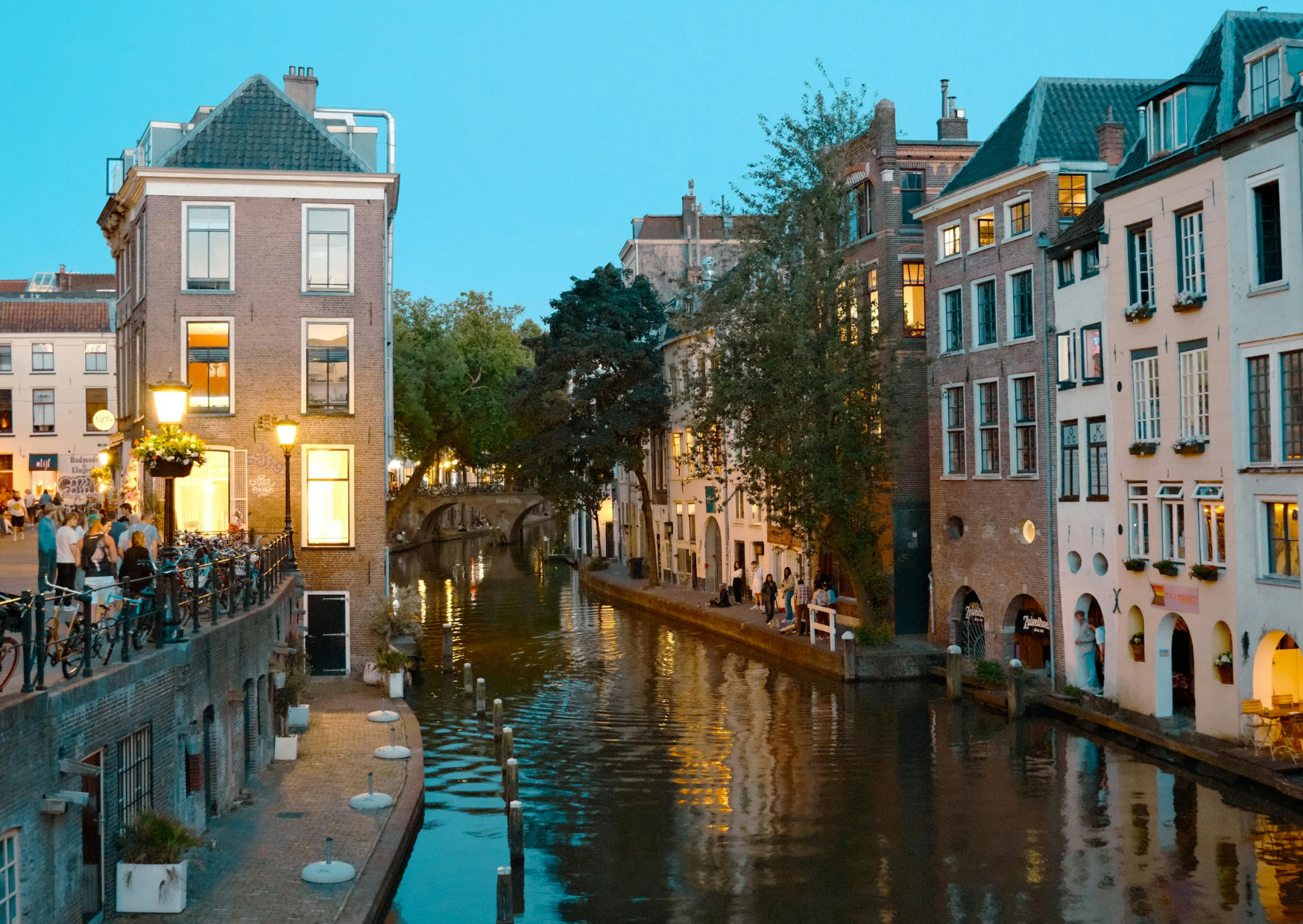
If you want a place where being an American is practically helpful, the Netherlands is one of the cleanest examples.
Why it’s an advantage:
- English is widely spoken in daily life, especially in cities.
- Workplaces are highly international in Amsterdam, Rotterdam, The Hague, and Eindhoven.
- Systems are used to foreigners. Housing and registration are not always fun, but the process exists.
- A lot of professional services are built for expats: tax advisors, relocation support, English-language clinics.
The lived advantage for Americans is that you can get through your first year without the constant “I cannot function without translation” panic. That reduces stress and reduces paid mistakes.
The trade-offs:
- Housing can be brutal in the exact cities Americans want.
- It is easy to end up in an expat bubble that feels comfortable but socially thin.
- Dutch directness is not American warmth. Some people love it. Some take it personally.
English as infrastructure, expat-ready services, workplace internationalism.
Denmark and Sweden: high competence, high English, low tolerance for chaos

For Americans who thrive in organized systems, Scandinavia can feel surprisingly comfortable.
Why it’s an advantage:
- High English proficiency in cities and many professional environments.
- Systems that run on rules and predictable processes.
- Strong public services, especially when you are properly registered.
The American “advantage” here is not cultural similarity. It’s that English gets you through most of daily life, and institutions tend to be consistent once you are inside the system.
What Americans often love:
- digital government services once you’re set up
- strong consumer protections and transparent processes
- a feeling that the country is not trying to trick you
What they often struggle with:
- social integration can be slow if you rely only on English
- winter can challenge mood and routine
- high costs in major cities compared to the Mediterranean dream narrative
This is a place where being American helps at work and in English-heavy environments, but long-term belonging tends to require language effort and patience.
Predictable systems, English comfort, slow social entry.
Ireland: US corporate gravity makes daily life easier

Ireland is a special case because it blends English-language life with a heavy US corporate footprint, especially around Dublin.
Why it’s an advantage:
- No language barrier in daily life.
- Lots of US companies and US-facing professional environments.
- A long history of Americans living, studying, and working there, which means many services know what they are dealing with.
For Americans who want Europe without feeling like they reset their identity, Ireland can feel like the softest landing.
The trade-offs are not subtle:
- Housing and cost of living can be intense, especially in Dublin.
- Residency pathways for retirees are not “easy mode” compared to places like Portugal or Spain.
- You might get the comfort, but you pay for it.
This is the advantage: if your priority is cultural friction near zero, Ireland is hard to beat. If your priority is budget calm, Ireland can be punishing.
English default, US business ecosystem, comfort with a price tag.
Portugal: Americans get a full ecosystem now, especially in Lisbon, Porto, and the Algarve

Portugal has become one of the most American-aware countries in Europe, and that matters in daily life.
Why it’s an advantage:
- There are established American communities in the places retirees choose most.
- Many service providers now operate with expat clients in mind: lawyers, accountants, health insurance brokers, real estate agents, relocation helpers.
- The country has a long-standing reputation as a retiree-friendly choice, which pulls infrastructure toward that demographic.
A practical benefit Americans feel: you can find help fast. You can find a tax person who understands US requirements. You can find English-speaking clinics. You can find community events without building everything from scratch.
The trade-offs:
- This ecosystem can make it easier to overspend. “Convenience” becomes a subscription.
- In popular areas, Americans are not invisible. Some locals are tired of housing pressure and may be less enthusiastic than the marketing suggests.
- It is easy to stay inside the expat layer and never fully integrate.
Portugal is an advantage for Americans because it already has a pathway for newcomers. You are not the first. The system is built.
Expat service infrastructure, US tax support exists, community is available.
Spain: being American helps socially, but the real advantage is lifestyle fit
Spain is not always “easy” on paperwork, but it can be emotionally easy.
Why it’s an advantage:
- The social culture can reduce isolation. It’s easier to have daily human contact.
- There are large foreign resident communities across the country, including Americans, especially in certain coastal and city hubs.
- Many private services, especially healthcare and property-related services, operate in English in expat-heavy areas.
For Americans 45–65, Spain often feels like a lifestyle match: walkability, café life, visible community, and a rhythm that does not demand constant productivity.
Where Americans feel the advantage:
- social routines are built into the public space
- it is easier to be a regular somewhere
- you can build a life around small rituals, which matters for retirement
Trade-offs:
- Residency paperwork and renewals can be mentally exhausting.
- Spain can punish people who expect everything to work on the first try.
- Some regions are easier than others for English-first living.
Spain is an advantage when you want a place where community happens without scheduling it three weeks in advance.
Public life is social, English is workable in many hubs, bureaucracy can still grind.
Cyprus and Malta: small countries where English presence is a real tool
These islands punch above their size for Americans because English is widely present in many contexts and international residents are common.
Why it’s an advantage:
- English is commonly used in services and business.
- International resident ecosystems are normal, not rare.
- Smaller scale can make routine-building easier.
Why some Americans love it:
- you can build a familiar rhythm quickly
- services are used to foreign paperwork
- the lifestyle is Mediterranean without the scale chaos of major capitals
Trade-offs:
- the island effect is real. Some people feel closed in after year one.
- healthcare and specialized services may require more planning than in larger countries
- costs can be higher than people expect in certain areas
These places work best for Americans who want calm, English access, and a small-world life without needing a mega-city.
English is usable, international residents are normal, small scale cuts stress.
Switzerland and Germany: the advantage is professional credibility and systems, not social ease

If the main reason you are moving is professional, Switzerland and Germany often treat Americans as credible on paper, especially in certain sectors.
Where it helps:
- corporate environments with English-heavy roles
- strong professional ecosystems in finance, engineering, pharma, and tech
- a culture that respects formal qualifications and structured experience
Where it does not help:
- daily life outside international bubbles can require real language effort
- bureaucracy can be exacting and slow
- the cost and housing reality can be a shock if you expected “Europe is cheaper”
The American advantage here is mostly occupational. For retirees, these are rarely the “easy home” countries unless they already have ties, language comfort, or a specific reason to be there.
Professional signal value, strong systems, not a low-friction retirement default.
The cultural advantage most people ignore: Americans are allowed to be new

This sounds soft, but it matters.
In many European places, Americans get a social pass in the early stage:
- People expect you to be learning.
- People are curious and will talk to you.
- People often assume you are temporary, which can make initial friendliness easier.
That can help you get your footing.
The downside is that curiosity does not equal community. If you don’t build routine relationships, the initial friendliness becomes shallow and you feel isolated later.
So treat the “American curiosity boost” like a short window:
- use it to build habits and friendships early
- do not assume it lasts on autopilot
Early curiosity is real, long-term belonging is built, routine wins.
Pitfalls most Americans hit in “easy” countries
They confuse English comfort with integration.
You can live for years in English and still feel lonely.
They pay for convenience forever.
The expat ecosystem makes life easier, but it can also quietly raise your monthly burn.
They choose the capital by default.
Capitals can be exciting, but many Americans feel more at home in mid-size cities where routines form faster and housing is less punishing.
They underestimate paperwork fatigue.
Even in the “easy” places, admin is real. Plan for it like a cost.
Comfort is not the same as belonging. Convenience can become expensive. Mid-size cities often win.
A 7-day shortlist plan that finds your best “advantage” match
If you want to use this intelligently, do this for each candidate country:
Day 1: List your top 3 friction fears (language, healthcare navigation, banking, isolation, weather).
Day 2: Choose two city types, not one: one major hub and one mid-size city.
Day 3: Check English reality in those specific places, not the country headline.
Day 4: Find three services you will need in year one: tax help, healthcare clinic, housing support. See if they exist in English.
Day 5: Look for community stability: are people staying, or is it a constant churn hub.
Day 6: Price housing in your realistic lifestyle, not your fantasy neighborhood.
Day 7: Pick the place that gives you the lowest daily friction for the money.
That is what “advantage” actually looks like.
The honest takeaway
In Europe, being American is an advantage most often in places where:
- English is widespread and practical
- expat systems already exist
- US-specific admin is common enough that service providers understand it
- community is findable, not rare
That’s why the Netherlands, Scandinavia, Ireland, Portugal, Spain, Cyprus, and Malta consistently show up as easier environments for Americans to settle into, each for different reasons.
If you tell me your priorities (English comfort vs deep integration, budget ceiling, climate, and whether you still work), I can narrow this into the two countries where your “American advantage” is most useful and least expensive.

About the Author: Ruben, co-founder of Gamintraveler.com since 2014, is a seasoned traveler from Spain who has explored over 100 countries since 2009. Known for his extensive travel adventures across South America, Europe, the US, Australia, New Zealand, Asia, and Africa, Ruben combines his passion for adventurous yet sustainable living with his love for cycling, highlighted by his remarkable 5-month bicycle journey from Spain to Norway. He currently resides in Spain, where he continues sharing his travel experiences with his partner, Rachel, and their son, Han.