
There’s a reason “pension income” is the golden ticket in parts of Europe.
It’s predictable. It’s documentable. It’s not tied to a local job. And for immigration offices, it’s the cleanest answer to the only question they really care about:
Are you going to become their financial problem.
If you’re an American retiree, Social Security plus a pension, or just a pension, is the most straightforward way to meet that test. Not everywhere. Not magically. But in enough countries that you can build a realistic shortlist in 2026 without chasing influencer fantasies.
The catch is that “they want pension income” doesn’t mean “they want you.”
It means they want proof, minimums, health coverage, housing, and a lifestyle that fits their rules. And those minimums can be wildly different. Spain can feel strict. Portugal can feel comparatively accessible. Ireland can be bluntly expensive. France can be surprisingly specific.
Here are eight countries where American pension income is commonly used to qualify under a financially independent or retiree-friendly pathway, with the practical requirements you actually need to plan around.
Before the list: what “pension income” needs to look like
Across most of these programs, “pension income” is accepted when it is:
- regular (monthly or quarterly)
- stable (not a one-time withdrawal)
- verifiable (letters, statements, deposit history)
- sourced abroad (you are not relying on local employment)
Some programs also want savings as a buffer, especially when your income is close to the minimum.
And almost all of them want the same three supporting pillars:
- Accommodation (lease or property)
- Health insurance (at least initially)
- No local work (varies by country and permit type)
Now the country-by-country reality.
1) Portugal: D7 Passive Income Visa (the classic retiree-friendly option)

Portugal’s D7 route is one of the most commonly used pathways for retirees with pensions or Social Security. The attraction is simple: the income threshold is relatively low compared to many neighbors, and the logic is straightforward.
What they want
- Proof of passive income (pension, dividends, rentals, similar)
- A Portuguese address (rental or ownership)
- Proof of sufficient means and documentation history
Income benchmark in 2026
Multiple 2026-focused summaries peg the minimum monthly passive income for a single applicant around €920 per month (often tied to minimum wage benchmarks).
The reality check
Portugal is not “cheap Lisbon.” Your visa can be affordable on paper and still become stressful if you rent in the highest-demand zones. The D7 works best when your housing choice is sane and your budget has buffer.
What trips people up
- Underestimating housing competition in popular areas
- Not showing a clean paper trail of income deposits
- Assuming “savings” can replace “income” without clear documentation
2) Spain: Non-Lucrative Visa (high standards, very clear math)
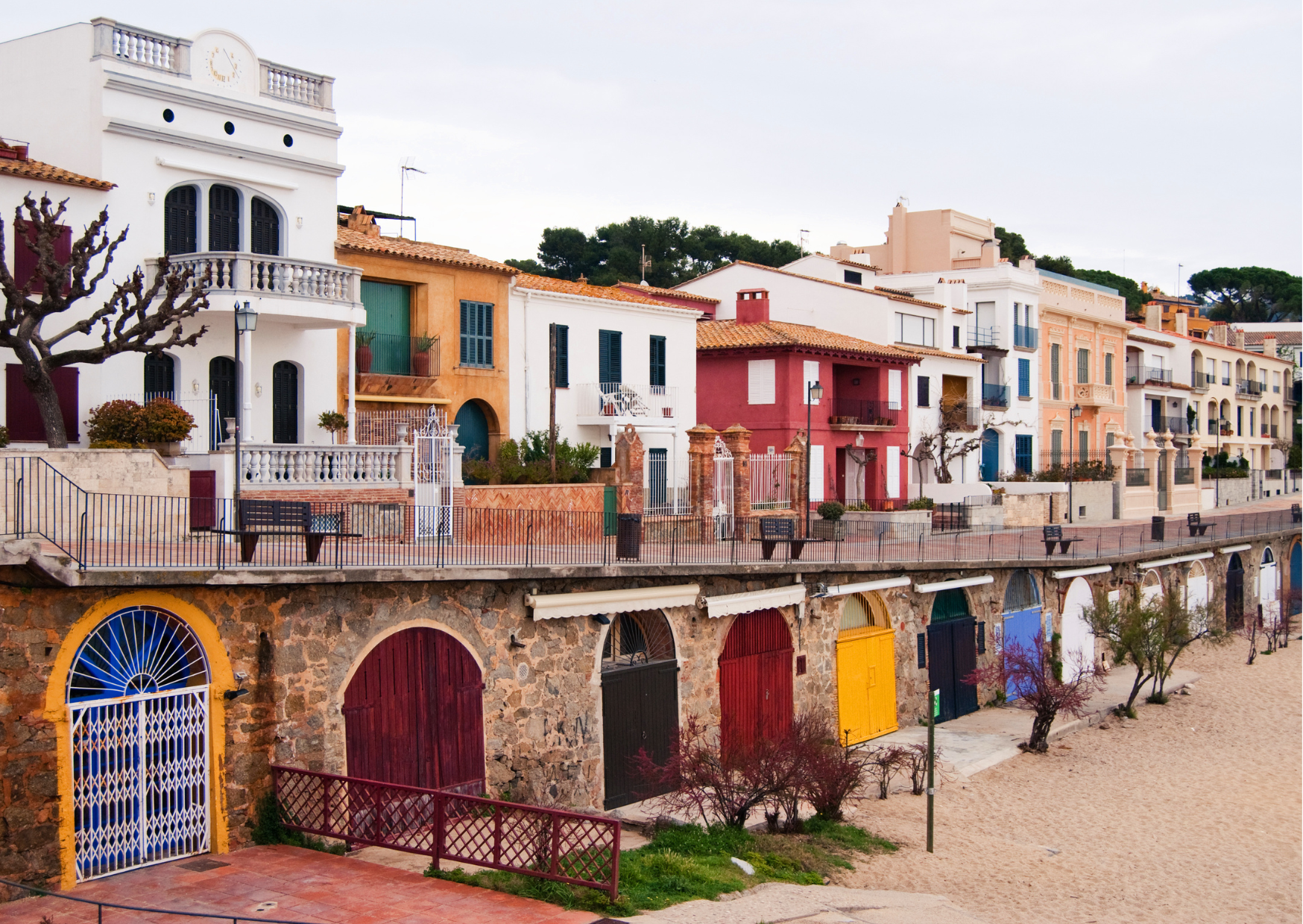
Spain’s Non-Lucrative Visa is one of the most recognizable retiree routes, and also one of the strictest in pure income math.
Spain’s standard is not vibes. It’s formula.
What they want
- Proof of sufficient financial means without working in Spain
- Private health insurance (typical requirement for the visa)
- Proof of accommodation
- Clear documentation, often more than people expect
Income benchmark in 2026
Spain’s official consular guidance ties the minimum requirement to IPREM, specifically 400% of IPREM for the main applicant, with additional amounts for dependents.
Many practical explainers translate that to roughly €2,300 to €2,400 per month for a single person in early 2026, depending on the IPREM figure applied and how the consulate interprets the proof.
The reality check
Spain is “worth it” for many people, but Spain is not the easiest place to qualify on a modest pension unless you have strong savings or multiple income streams.
What trips people up
- Thinking Social Security alone will qualify (sometimes it won’t)
- Underestimating insurance and documentation requirements
- Confusing initial and renewal thresholds
3) France: Long-Stay Visitor Route (surprisingly specific minimum)
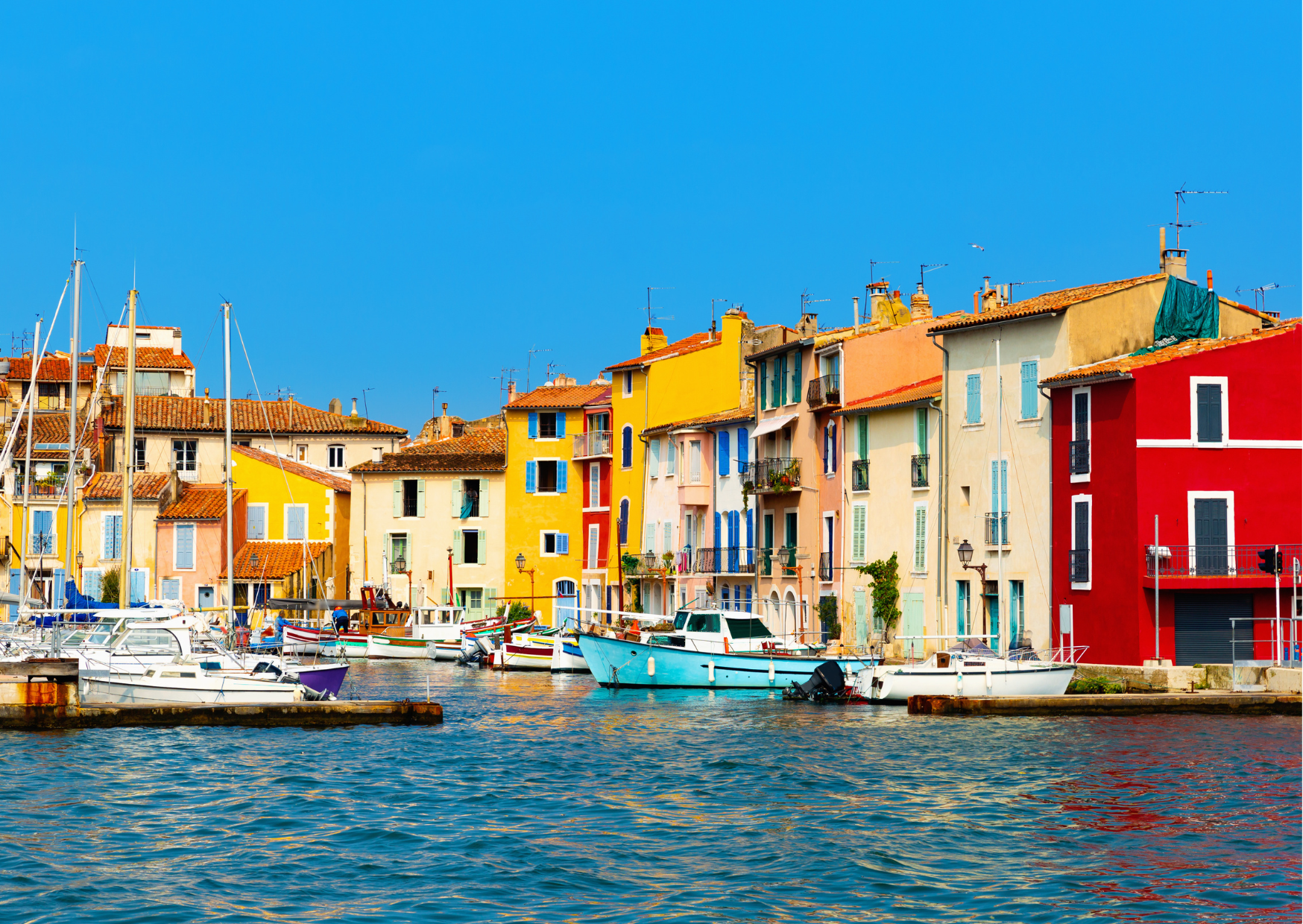
France’s “visitor” framework is commonly used by financially independent people who want to live in France without working locally. The paperwork can be serious, but the logic is clean: prove you can support yourself.
What they want
- A long-stay visa status aligned to “visitor”
- A commitment not to work in France
- Sufficient resources
- Health insurance for the duration of stay and setup period
- Accommodation
Income benchmark in 2026
France’s Service-Public guidance (official) states that for the visitor residence card pathway, the minimum resources required for a single person are €1,443.11 net monthly over one year.
France’s France-Visas portal also emphasizes that applicants must prove resources and medical cover, with specifics depending on the visa wizard outputs.
The reality check
France can be doable on a moderate pension, but you need to be organized. Consulates can be strict about proof, and you should assume they want clean, repeated documentation, not one statement screenshot.
What trips people up
- Vague proof of funds
- Not having health insurance lined up properly
- Underestimating the administrative burden of renewals
4) Italy: Elective Residence Visa (a classic retiree route with higher income expectations)
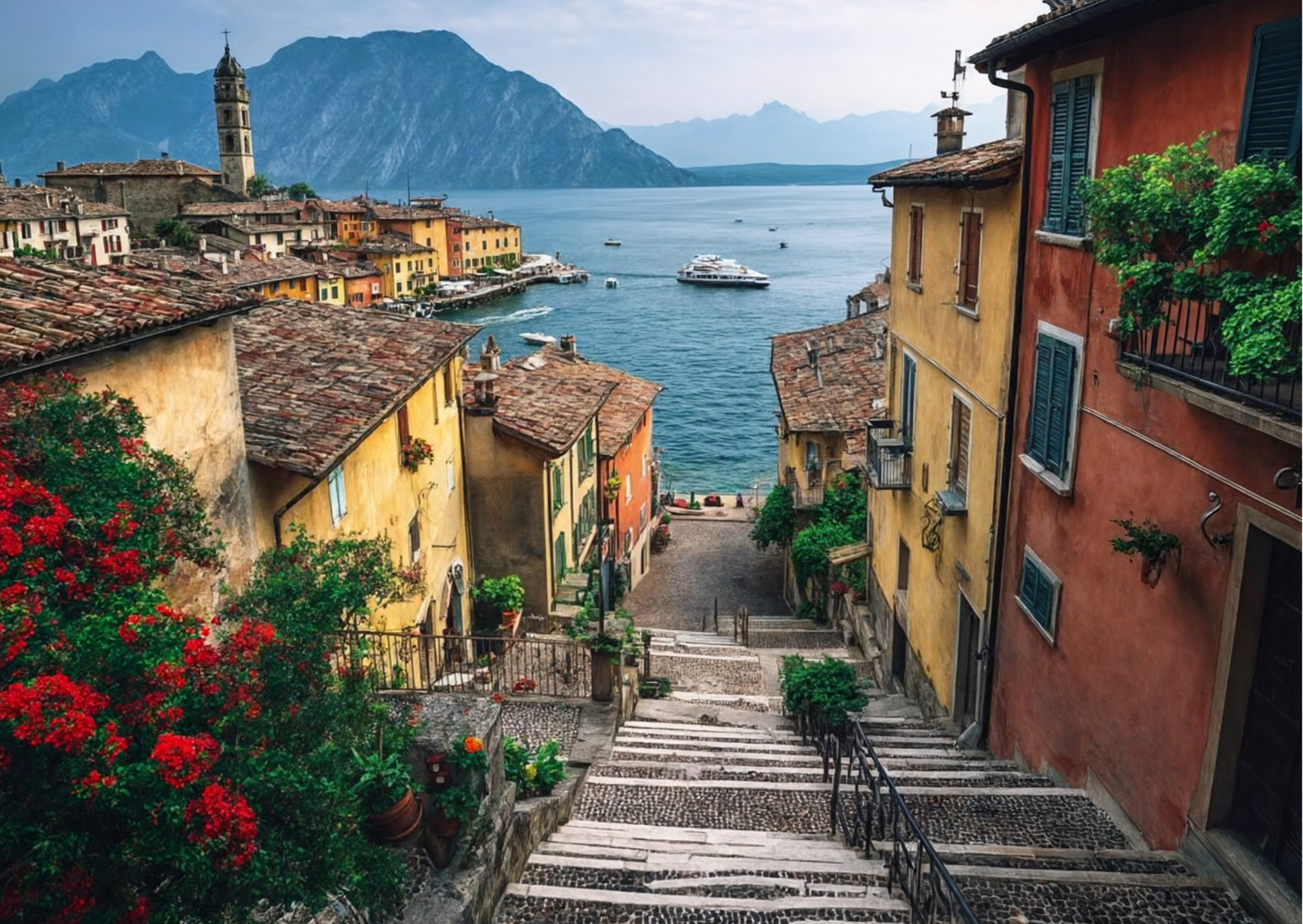
Italy’s elective residence route is a natural fit for retirees with strong pensions and savings, but it tends to require more income than Portugal and often more than Spain depending on your household size.
What they want
- Proof of stable passive income (pensions, investments, rentals)
- Proof of accommodation
- Proof you will not rely on work inside Italy
- Evidence of overall financial stability
Income benchmark in 2026
Multiple 2026-focused explainers put the minimum passive income expectation around €31,000 per year for a single applicant, with higher expectations for couples.
The reality check
Italy is doable if you have a meaningful pension and you are willing to show stability. If your pension is small, Italy tends to be harder than Portugal.
What trips people up
- Consulate-by-consulate variation
- Underestimating the “stable and regular” emphasis
- Thinking savings alone will carry the application without strong income proof
5) Greece: Financially Independent Person Residence (income threshold can be substantial)

Greece has a financially independent residence permit option that can fit retirees, but the income threshold often cited is not low.
What they want
- Proof of sufficient financial means from abroad
- Proof of accommodation
- Health insurance and documentation
- Typically no local employment
Income benchmark commonly cited
Legal and advisory sources frequently cite a minimum income requirement of €3,500 per month, with increases for spouse and children.
The reality check
Greece can be a great lifestyle choice, but this is not the “low income European retirement” route. This is a “you have strong income and want Greece” route.
What trips people up
- Assuming Greece is automatically easy because cost of living can be lower in some areas
- Not aligning documentation with the strict monthly income framing
6) Cyprus: “Pink Slip” style temporary residence (clear monthly transfer expectation)
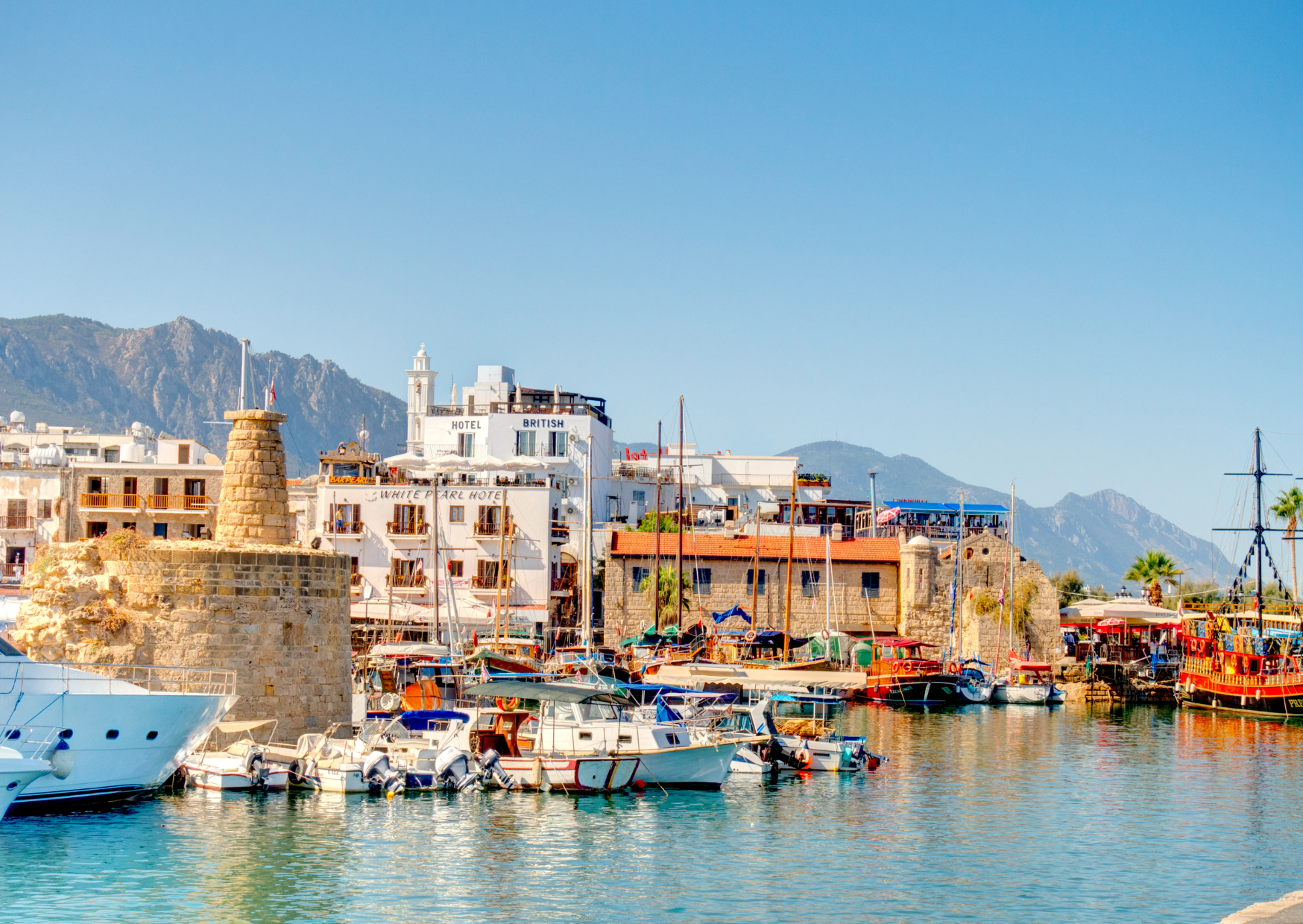
Cyprus doesn’t brand itself as a “retirement visa” in the way some countries do, but in practice, financially independent residency permits are widely used by retirees, including those with pensions.
What they want
- Proof of stable income from abroad
- Often a pattern of transferring funds into Cyprus
- Proof of accommodation
- Health insurance and documentation
Income benchmark in 2026
A common threshold cited is €2,000 per month (about €24,000 per year) from abroad, with additional amounts for spouse and dependents, plus a Cyprus bank balance or transfer requirement at application.
The reality check
Cyprus can be relatively straightforward if you can show the monthly income flow and you’re comfortable with the banking and paperwork steps.
What trips people up
- Not understanding the “transfer to Cyprus account” expectation
- Under-documenting income stability
7) Malta: Retirement-minded tax residency options (pension is explicitly part of the framing)
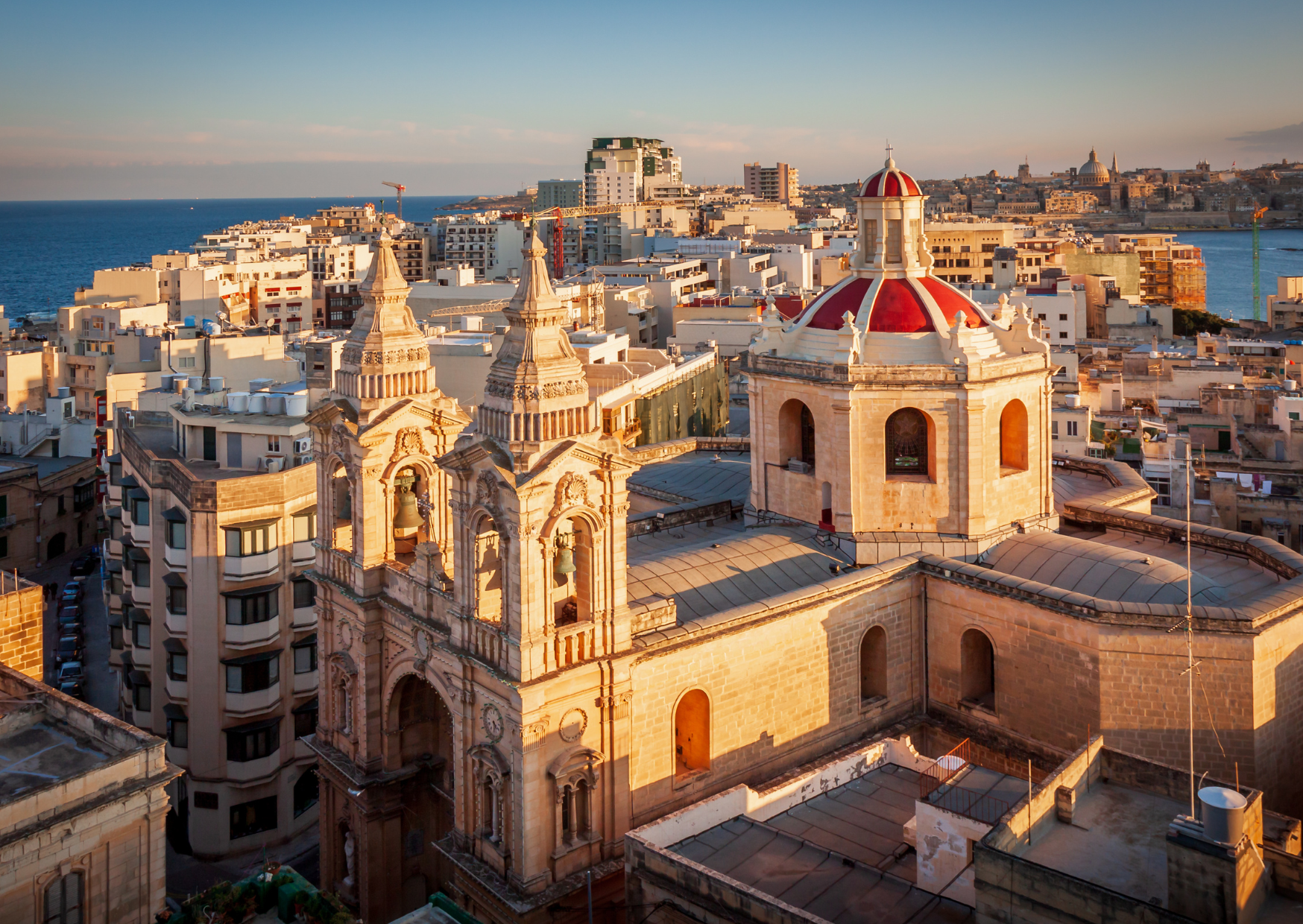
Malta has multiple residence and tax residency frameworks. For retirees, the important point is that Malta has programs built around foreign pension income and remittance, typically with a minimum tax component.
What they want (in retiree-oriented framing)
- Evidence you are a qualifying retiree receiving pension income
- Accommodation requirements depending on program
- Compliance with tax and residency rules
Pension framing in 2026 sources
Recent program explainers describe the Malta Retirement Programme as designed for retirees in receipt of pension income, with pension income remitted to Malta taxed at a flat rate, and minimum tax amounts referenced.
Malta’s Global Residence Programme also has property rental or purchase minimums and a minimum tax concept in some summaries, depending on how the program is structured for the applicant.
The reality check
Malta can work well for certain retirees, especially those comfortable with tax planning, remittance logic, and higher housing costs relative to some other Mediterranean options.
What trips people up
- Treating Malta as “cheap Mediterranean” when it often isn’t
- Not planning for minimum tax obligations and housing thresholds
8) Ireland: Stamp 0, retirees or persons of independent means (blunt income requirement)

Ireland is the opposite of the “cheap retire in Europe” narrative. But it is one of the clearest examples of a country saying: sure, if you can afford it.
What they want
- Independent means
- Proof you will not rely on Irish public funds
- Private medical insurance
- A substantial buffer for major expenses
Income benchmark
Ireland’s immigration guidance for retirees of independent means states you should have an individual income of €50,000 per year, and also access to a lump sum to cover major unexpected expenses, suggested as roughly equal to the price of a dwelling in Ireland.
The reality check
Ireland is not for “modest pension, stretch the budget” retirees. It is for retirees who want Ireland specifically and have the income and reserves to make it boring.
What trips people up
- Underestimating cost of living and housing
- Assuming “I can rent” satisfies the lump sum expectation automatically
The real comparison that matters
Most people compare countries like this:
Where is it cheapest.
Retirement visas don’t care where it’s cheapest. They care where you are clearly solvent.
So the real comparison is:
Which countries match your income profile without forcing you into constant stress.
Here’s a blunt way to bucket these eight:
Lower entry thresholds (often easier on modest pensions)
- Portugal (D7)
- France (visitor resources threshold)
Middle thresholds (often workable with solid pension plus buffer)
- Spain (NLV)
- Italy (elective residence)
- Cyprus (monthly income transfer model)
Higher thresholds or higher “total commitment”
- Greece (FIP cited thresholds)
- Malta (program and tax structure)
- Ireland (income plus major buffer)
Pitfalls most retirees miss
They budget lifestyle, not paperwork.
Visas are paperwork-heavy. That friction often causes paid shortcuts: private appointments, relocation help, extra renewals, courier fees, document translations.
They assume health coverage is simple.
Most countries want private coverage at the start. Some let you transition later. You need a plan, not vibes.
They choose the capital city first.
Capitals raise your burn rate and increase stress. Many retirees do better in smaller cities with hospitals and year-round life.
They think income proof is one document.
It is usually a pattern. Letters, statements, deposits, history.
A 7-day action plan to shortlist the right country
Day 1: Write your monthly gross pension income and your reliable monthly net after taxes and deductions.
Day 2: Decide your housing ceiling. This determines whether a country feels calm or constant stress.
Day 3: Pick two “must-have” lifestyle needs (healthcare proximity, climate, language comfort, flight access).
Day 4: Match your income to country thresholds above, and cross off anything that forces you into a tight squeeze.
Day 5: Price private health insurance at your age range for your top two countries.
Day 6: Build a “paperwork buffer” fund for year one.
Day 7: Choose the country you can afford without needing perfect months.
That last line is the whole retirement strategy abroad.
The honest takeaway
Yes, pension income can open doors in Europe in 2026.
But the win is not finding the country that “accepts pensions.” Many do.
The win is finding the country where your pension makes you comfortably compliant, not barely compliant.
Portugal and France often look more accessible on pure thresholds. Spain and Italy can work well with stronger income proof. Greece and Ireland tend to be for higher-income retirees. Cyprus and Malta can work well if you’re comfortable with the structure and documentation.

About the Author: Ruben, co-founder of Gamintraveler.com since 2014, is a seasoned traveler from Spain who has explored over 100 countries since 2009. Known for his extensive travel adventures across South America, Europe, the US, Australia, New Zealand, Asia, and Africa, Ruben combines his passion for adventurous yet sustainable living with his love for cycling, highlighted by his remarkable 5-month bicycle journey from Spain to Norway. He currently resides in Spain, where he continues sharing his travel experiences with his partner, Rachel, and their son, Han.