
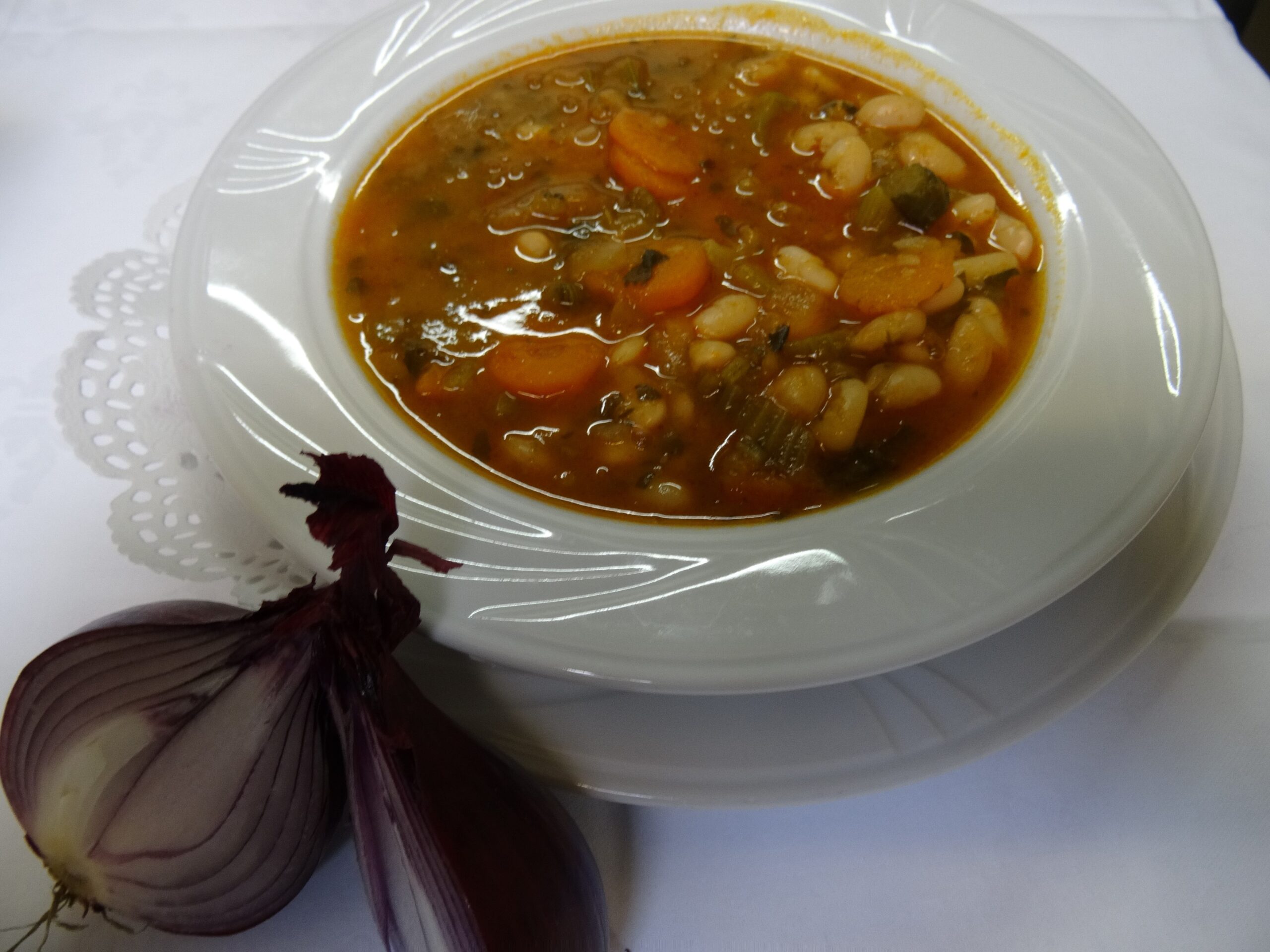
There’s a particular kind of meal Greece does better than almost anyone.
Not “vacation food.” Not grilled fish you pay €28 for on the water.
I mean the quiet, weekday Greek dinner that feels like someone’s grandmother is running your life in the background. The one where you look at the ingredients and think, this is basically pantry stuff. Then you taste it and realize you’d happily pay restaurant money for it if you didn’t know how cheap it was.
It’s fasolada. Greek white bean soup.
If you’ve never had it done properly, you’re picturing sad beans in water. That’s fair. A lot of bean soup is sad.
Greek fasolada is not sad. It’s rich without cream, satisfying without meat, and the flavor is built on the oldest trick in the Mediterranean: olive oil, aromatics, slow simmer, and patience.
And the reason it’s a €4 dinner is that it’s basically:
- beans
- vegetables
- olive oil
- tomato
- herbs
- time
This is the kind of dish that makes you understand why Mediterranean countries can eat “simple” and still feel fed.
Also, it’s the kind of dish that makes your next day easier. You get leftovers. You get broth. You get a meal that reheats like it was designed for real life.
Why this tastes expensive even though it’s cheap
Expensive-tasting food usually has one of three things:
- long cooking time
- good fat
- acid balance
Fasolada has all three.
Long cooking time turns cheap beans into creamy body and turns vegetables into sweetness.
Olive oil adds richness and carries flavor, especially when you finish with it.
Tomato and a little acid keep the whole bowl from tasting heavy or flat.
Also, fasolada is built on a flavor structure Americans often skip:
- sauté the aromatics properly
- build a base
- simmer long enough that the soup becomes cohesive
- finish like you mean it
Most American bean soups fail because people treat them like a dump recipe. Beans, water, seasoning, done.
Greek bean soup is not dump food. It’s slow and intentional without being complicated.
The €4 math, honestly
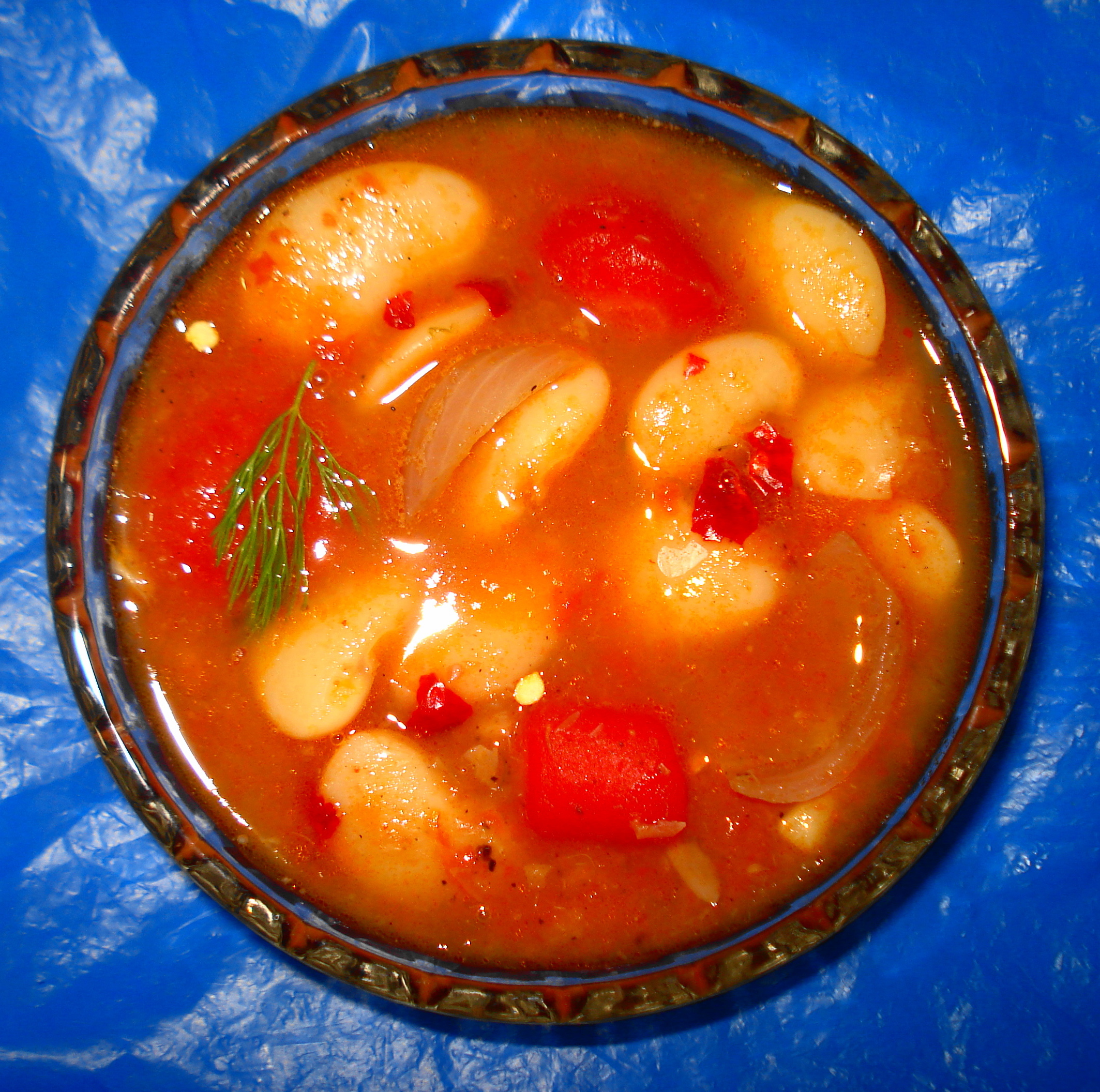
This price depends on where you live and what olive oil costs you, but the logic holds across most of Europe.
For a pot that feeds 4 to 6:
- dried white beans (500 g): €1.00 to €1.80
- onions, carrots, celery: €1.50 to €2.50
- tomato (passata or crushed): €0.60 to €1.20
- olive oil: €0.70 to €1.50 depending on how generous you are
- herbs, garlic, bay: pantry cents
If you already have olive oil and herbs at home, the cost drops even more.
So yes, you can realistically land around €4 to €7 for a full pot. That’s the whole point. It’s a low-cost dinner that eats like comfort food in a good restaurant.
The recipe
This is the version that tastes like Greece. It’s not a chef project. It’s a pot you can make on a Sunday and eat twice.
Greek Fasolada (White Bean Soup)
Serves: 4 to 6
Active time: 20 to 25 minutes
Total time: 2.5 to 3.5 hours (mostly unattended)
Ingredients
- 500 g dried white beans (cannellini or similar)
- 1 large onion, finely chopped
- 2 carrots, sliced
- 2 celery stalks, sliced
- 4 cloves garlic, minced
- 120 ml olive oil (yes, it’s a lot, and yes, it matters)
- 200 to 300 ml passata or crushed tomatoes
- 2 bay leaves
- 1 teaspoon dried oregano
- 1 small pinch chili flakes (optional)
- 1.5 teaspoons salt, plus more to taste
- black pepper
- 1.5 to 2 liters water or light vegetable stock
- Optional finish: 1 tablespoon red wine vinegar or lemon juice
- Optional add-ins: a handful of chopped parsley, a little smoked paprika, a Parmesan rind (not Greek, but useful)
Step 1: Soak the beans
Soak beans overnight in plenty of water.
If you forgot, do a quick soak:
- cover beans with water
- bring to a boil for 2 minutes
- turn off heat, cover, rest 1 hour
- drain and rinse
Step 2: Start the base
In a large pot, heat olive oil over medium heat.
Add onion, carrot, celery with a pinch of salt. Cook 10 to 12 minutes until soft and glossy. Do not rush this. This is where sweetness and depth are built.
Add garlic and oregano. Stir 30 seconds.
Add passata or crushed tomatoes. Cook 3 to 5 minutes to remove raw tomato taste.
Step 3: Add beans and simmer
Add drained beans, bay leaves, water or stock.
Bring to a gentle simmer. Lower heat. Partially cover.
Simmer 1.5 to 2.5 hours until beans are tender.
Stir occasionally. Add more water if needed. You want a soup, not a paste.
Step 4: Thicken like a Greek cook
When beans are tender, take a ladle of beans and broth and mash them with a fork, or blend briefly, then return to pot.
This makes the broth creamy without adding anything.
Simmer 10 to 15 more minutes.
Step 5: Finish
Taste. Add salt and pepper properly.
If you want the “restaurant” brightness, add a small splash of vinegar or lemon juice at the end.
Finish with chopped parsley and a final drizzle of olive oil.
How to serve it
This is where it turns into a Greek dinner:
- bowl of fasolada
- bread for dipping
- something salty on the side: olives or feta
- optionally a simple salad if you want balance
That’s it. No performance.
Why the method works
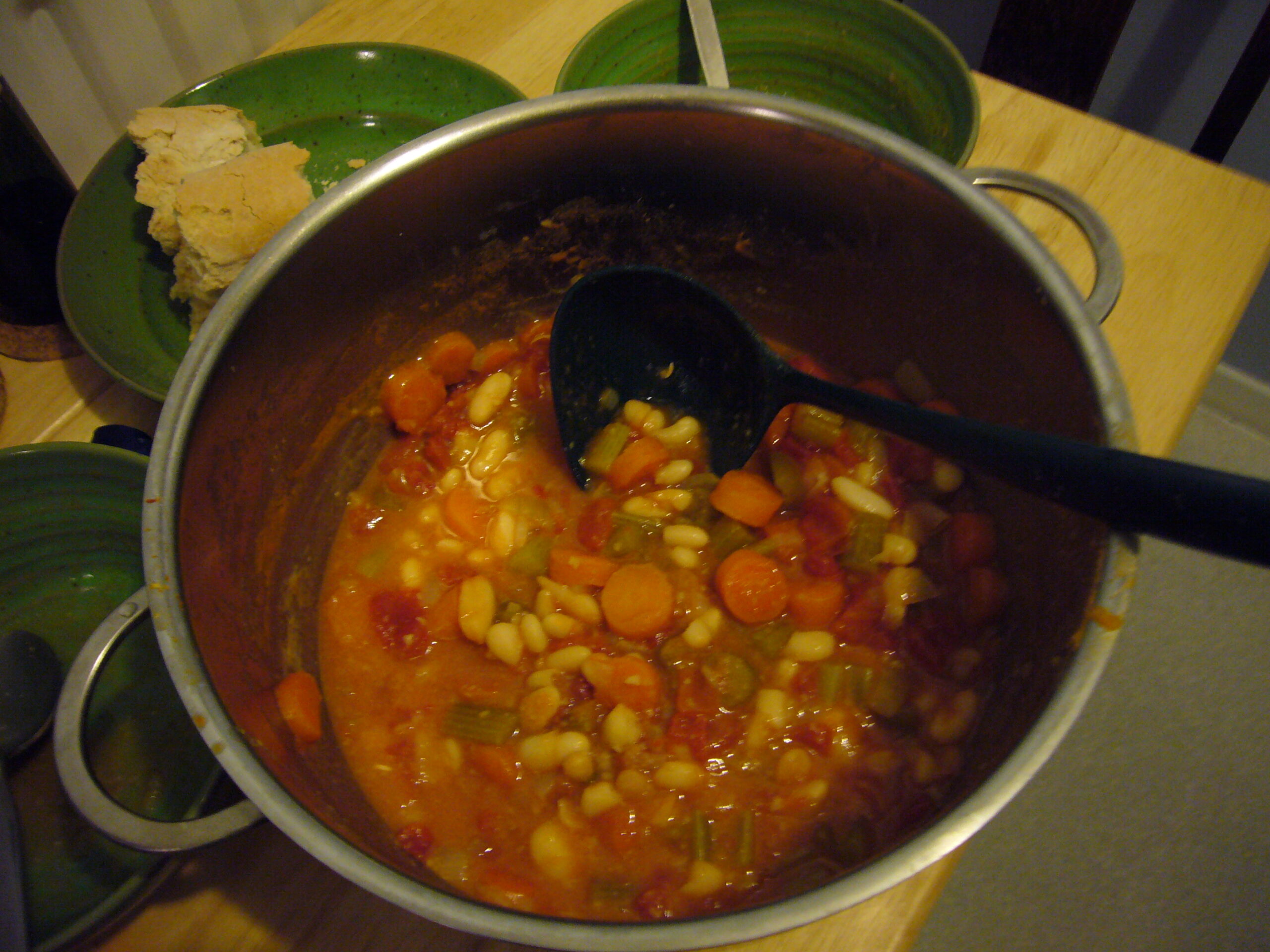
Bean soup becomes “expensive tasting” when you do three things that most people skip.
1) You cook the vegetable base long enough
Onion, carrot, and celery are not just filler. They’re sweetness, aroma, and body.
If you cook them properly in olive oil, you create a base that tastes like it belongs in a restaurant kitchen. If you rush them, you get soup that tastes like ingredients floating around.
2) You let the tomato cook
Raw tomato flavor is sharp and thin. Cooked tomato flavor is deeper and rounder.
A few minutes of cooking passata in the oil and aromatics changes the whole pot.
3) You thicken with the beans
The “creaminess” isn’t cream. It’s bean starch.
Mashing a portion of beans makes the broth cling to the spoon. That texture is what makes the soup feel like a real meal, not a diet bowl.
The health timeline nobody wants to hear because it’s boring
This is not a detox claim. It’s just what tends to happen when you eat a bean-based, olive-oil-based meal that is genuinely filling.
Week 1
You notice how full you feel for how “simple” the meal is. Your late-night snacking urge tends to drop because beans plus olive oil plus bread is satisfying in a steady way.
Weeks 2 to 3
If you’re not used to eating legumes, your gut adapts. This is also when people start noticing more stable energy and fewer blood sugar spikes, because beans are slow-digesting and fiber-rich.
Weeks 3 to 4
A lot of people notice better overall digestion and calmer appetite, especially if they replace one takeout meal per week with a pot of beans.
The key is consistency. One bowl won’t change your life. A weekly bean dinner can change your default food pattern without you feeling like you’re “dieting.”
Also, if you’re new to beans, start with smaller portions at first and drink water. Your gut bacteria need time to adjust. That’s normal.
What makes it taste like €40: the finishing moves
This is the part most people skip and then wonder why it tastes flat.
Finish with olive oil
Not a tiny drizzle, an actual finish. Olive oil is part of the dish, not a garnish.
Add acid at the end
A little vinegar or lemon makes the whole bowl brighter and more alive. This is often the missing piece.
Salt it properly
Beans need salt. Under-salted beans taste like cardboard no matter how good your olive oil is.
Eat it with bread
This is not optional if you want the full Greek experience. Bread turns the bowl into a meal.
Common mistakes Americans make with fasolada
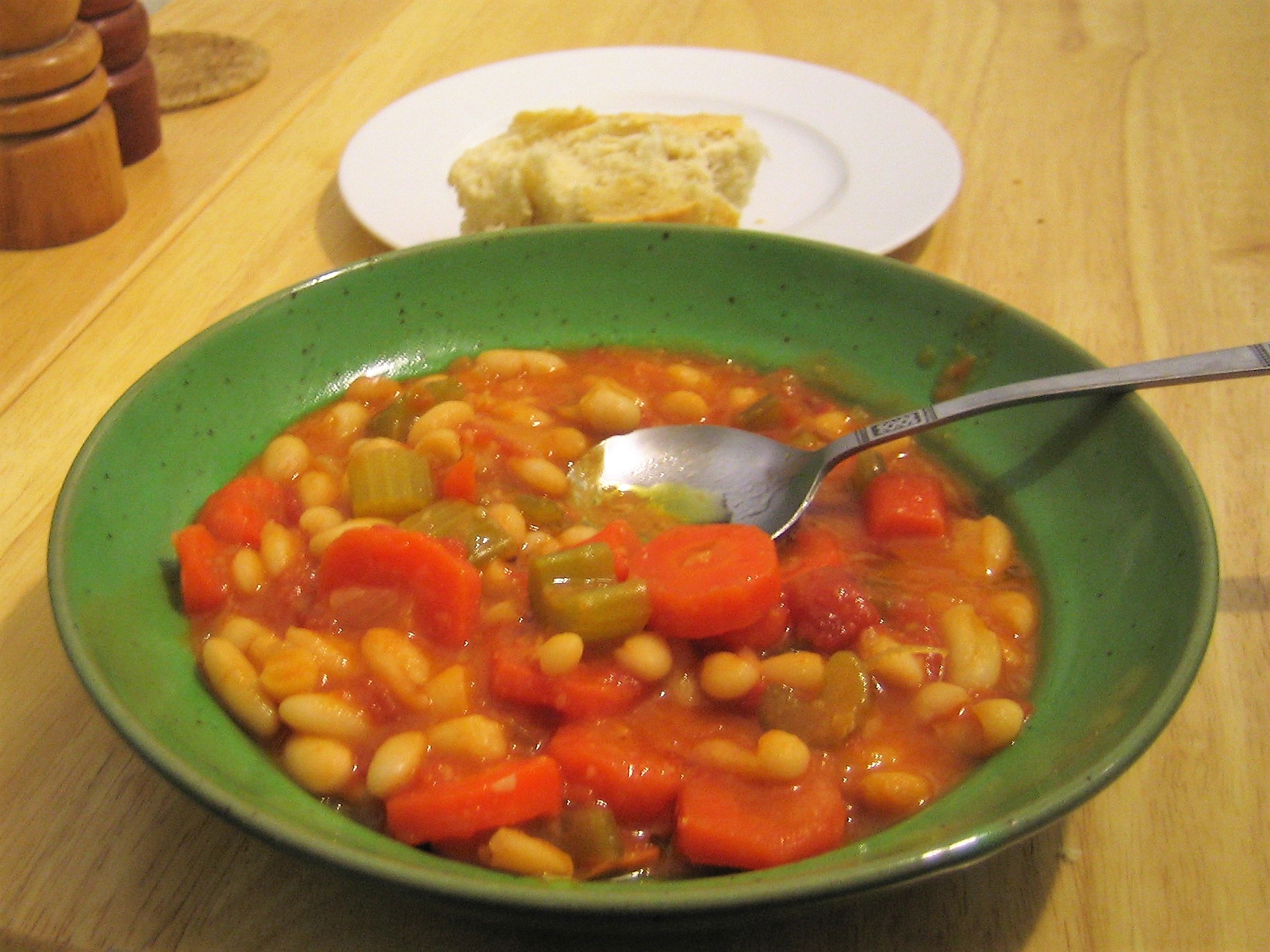
Mistake 1: Using too little olive oil
Then they wonder why it tastes thin. Olive oil is the engine of richness here.
Mistake 2: Not cooking the base long enough
If your onion is still sharp and your carrots still taste raw, the soup will never taste cohesive.
Mistake 3: Not soaking beans or undercooking them
If beans are not tender, the soup feels wrong. Give them time.
Mistake 4: Making it too watery
Fasolada should have body. Mash some beans. Reduce slightly. Build texture.
Mistake 5: Forgetting the table elements
Feta, olives, bread. The soup is part of a small meal system, not a standalone bowl.
Variations that keep the dish in your rotation
Once you learn the base version, you can shift it without turning it into a new recipe.
Add greens
Stir in spinach or kale at the end for a more modern, extra-veg version.
Add smoked flavor
A little smoked paprika gives depth. Not traditional everywhere, but it works.
Add a little meat if you want
Some households add a bit of sausage for flavor. You still get the bean meal structure, just richer.
Make it lemon-forward
Skip vinegar, finish with lemon zest and juice, and add more parsley. It becomes bright and springy.
The 7-day plan that makes this a weekly habit
If you want this to become one of those “we always have something” dinners, do it like this:
Day 1: Buy one big bag of dried beans. That’s multiple dinners.
Day 2: Make the soup once. Freeze two portions immediately.
Day 3: Eat leftovers with different sides: feta one night, olives another night.
Day 4: Use the soup as a base for lunch by adding rice or extra greens.
Day 5: Make a second pot two weeks later and tweak one variable: lemon or smoked paprika.
Day 6: Keep good bread in the freezer so you always have the full meal.
Day 7: Stop treating beans as “health food” and treat them as the most reliable cheap comfort meal you can cook.
This is how Greeks eat. Not as a cleanse. As a normal meal that works.
Where this lands
The Greek dinner that costs €4 and tastes like €40 is not a hack. It’s a lesson.
If you build flavor with time, use good fat, and finish with acid and salt, cheap ingredients stop tasting cheap.
Fasolada is the proof.
It’s warm, filling, ridiculously good, and it makes your week easier. Which is the actual definition of a great dinner.

About the Author: Ruben, co-founder of Gamintraveler.com since 2014, is a seasoned traveler from Spain who has explored over 100 countries since 2009. Known for his extensive travel adventures across South America, Europe, the US, Australia, New Zealand, Asia, and Africa, Ruben combines his passion for adventurous yet sustainable living with his love for cycling, highlighted by his remarkable 5-month bicycle journey from Spain to Norway. He currently resides in Spain, where he continues sharing his travel experiences with his partner, Rachel, and their son, Han.