

A lot of Americans move to Europe thinking cash is a minor detail. Then they start bleeding money in tiny bites: €4 here, €6 there, a “conversion” they didn’t ask for, a bank fee they didn’t notice until the statement hits.
It rarely feels dramatic. That’s why it works.
The usual monthly damage is not some exotic scam. It’s a boring structure that hits the same people the same way: Americans who withdraw cash often, use the wrong ATMs, accept the wrong screen prompts, and keep a US card that quietly taxes them for existing.
If you want a clean target: €30/month is a very common, very achievable “stop paying this” number. And you don’t need to become a finance nerd to fix it.
The three layers that create the drain
Most people think ATM fees are one fee. In Europe, the “drain” usually comes from stacking:
- Your US bank fee
Common: 1% to 3% foreign transaction fee on cash withdrawals, plus a flat “international ATM” fee. - The ATM operator fee
Common: a flat €2 to €7 per withdrawal, especially at independent tourist-area ATMs. - The currency conversion trap (DCC)
This is the big one. “Dynamic Currency Conversion” is when the ATM offers to charge you in USD instead of euros. It feels helpful. It’s often expensive, because the exchange rate includes an extra margin.
You can avoid one layer and still lose money to the other two. The fix is not “avoid fees.” The fix is “stop stacking them.”
How €30/month happens in real life
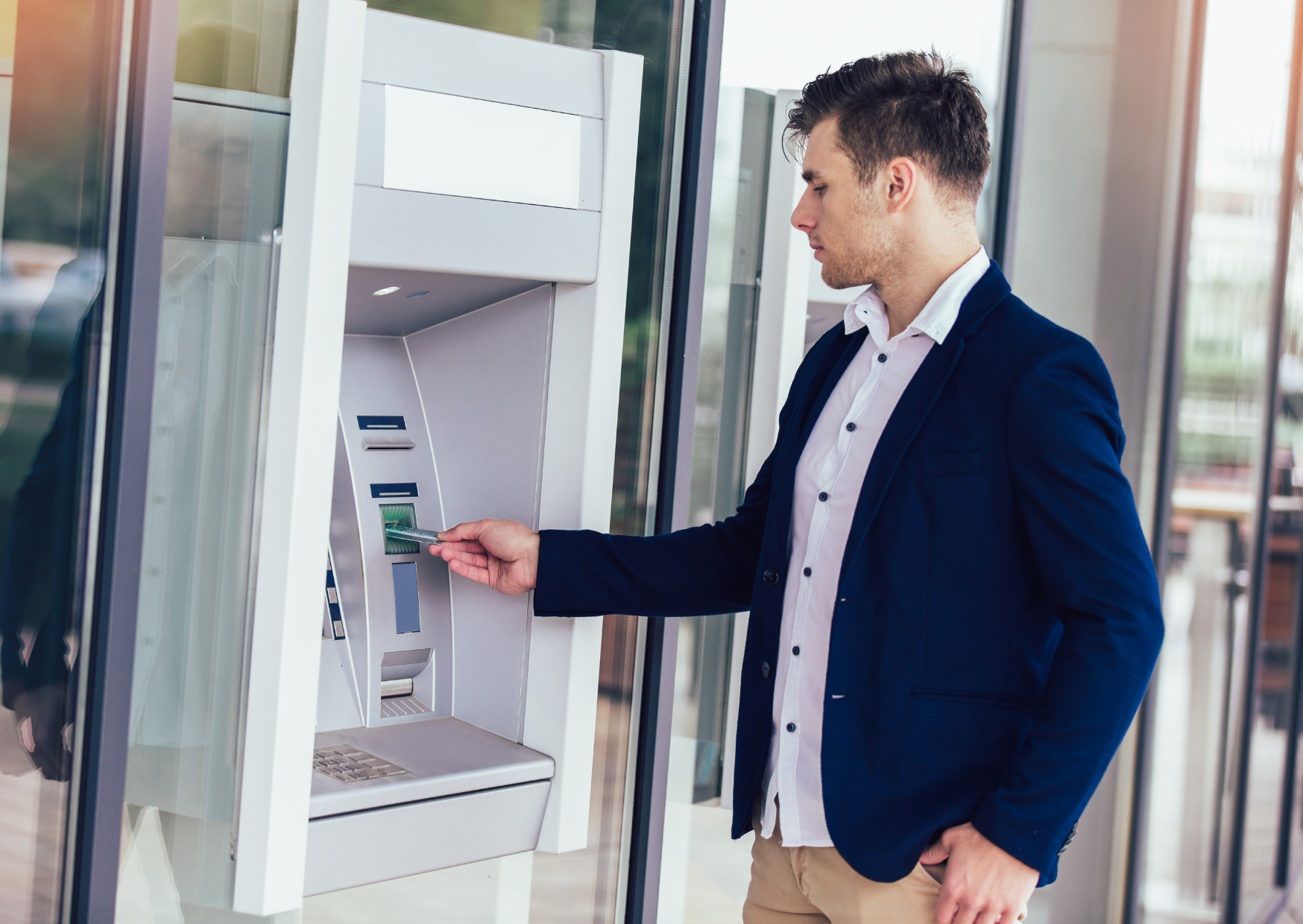
Here are three realistic monthly patterns that produce a €30 drain without you being reckless.
Pattern A: Two withdrawals a week, tourist-area ATMs
- 8 withdrawals per month
- Operator fee: €4 each
That’s €32/month right there, before any bank fees.
This is what happens when you withdraw small amounts constantly because you hate carrying cash, and you use whatever ATM is nearest the café or metro.
Pattern B: One withdrawal a week, plus DCC once
- 4 withdrawals per month
- Operator fee: €3.50 each = €14/month
- US bank fee: $5 (or equivalent) per withdrawal = roughly €18/month in total (depending on your bank and exchange rate)
- You accept DCC one time on a €200 withdrawal with a 7% worse rate: €14
Now you’re at €46/month in avoidable costs. The worst part is that it doesn’t feel like €46. It feels like “a few euros.”
Pattern C: One or two withdrawals per month, but you accept DCC every time
This is the sneaky one. You think you’re being smart by withdrawing less often.
- 2 withdrawals per month, €250 each
- You accept DCC both times
- If the margin is 8% worse than the card network rate, that’s €20 per withdrawal
- Total: €40/month in “conversion”
And it won’t show up as a line item called “we took €40.” It shows up as an exchange rate that quietly sucks.
That’s why the €30/month claim is so believable. It’s not one big fee. It’s a structure that makes small losses feel normal.
The DCC screen that tricks people who think they’re being careful
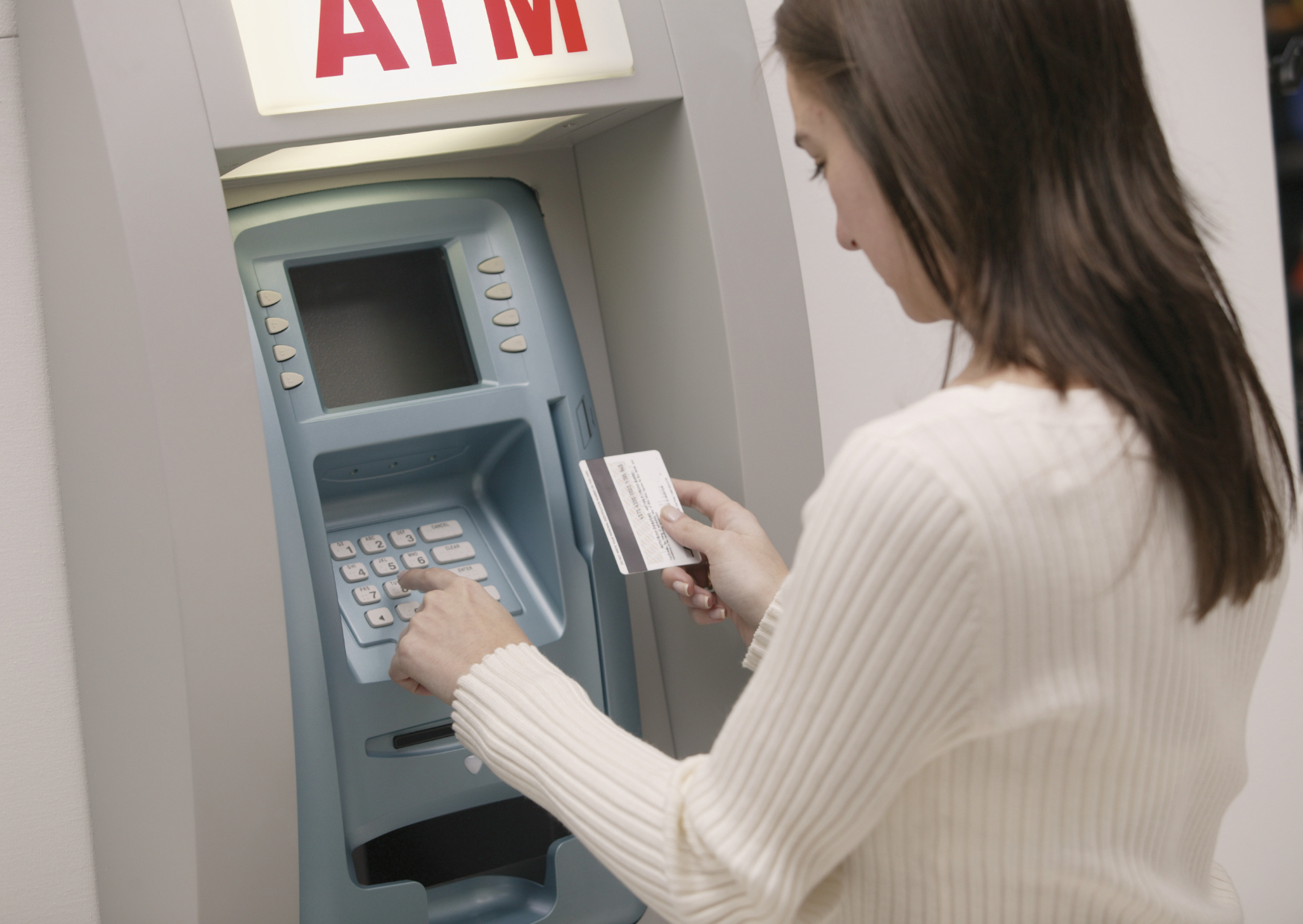
Dynamic Currency Conversion is the ATM moment where a screen says something like:
- “Do you want to be charged in USD or EUR?”
- “Guaranteed rate”
- “Know exactly what you’ll pay”
This is the psychological trap: certainty feels safe. But the “guaranteed” rate can be meaningfully worse than the Visa or Mastercard rate your bank would otherwise use.
The really frustrating part is that people often accept DCC because they think it helps them avoid bank fees. It usually does not. Many US issuers still treat it as a foreign transaction. You can end up paying the DCC markup and your bank’s foreign fee.
So the rule is blunt:
- Always choose euros.
- Always decline conversion.
- Always pick “without conversion” if you see it.
If you only change one behavior in this whole article, change that one. It’s the highest-impact fix.
The tourist ATM pattern that drains you faster than you think
Europe has plenty of normal bank ATMs. It also has a lot of independent ATMs in tourist zones that are optimized for one thing: fee extraction.
You can usually spot them:
- They’re placed in high-foot-traffic areas (near landmarks, nightlife, transit).
- They’re branded by independent operators rather than a major local bank.
- They often push DCC aggressively.
- They frequently charge higher flat fees.
This is why Americans get hit harder than locals. Locals already know which ATMs are “real.” New arrivals use whatever is closest.
If you are withdrawing from those machines, you’re playing the game on hard mode.
A practical rule that works in most of Europe: use major bank ATMs whenever you can. If your only option is an independent ATM, treat it as a last resort and withdraw fewer times, in larger amounts, with DCC declined.
The American bank account factor nobody wants to deal with
A lot of Americans move to Europe and keep their US banking setup mostly unchanged. Sometimes that’s necessary. Sometimes it’s just inertia.
If you keep a US debit card with:
- a flat international ATM fee
- foreign transaction fees
- no reimbursements for operator fees
You have basically chosen a monthly penalty.
Some US banks and fintechs reduce this pain (no foreign transaction fee, refunds on ATM fees, better exchange handling). But the key idea is simple: your card terms matter as much as your behavior.
Because even if you avoid DCC perfectly, a bad card can still charge you:
- a foreign transaction fee on the withdrawal amount
- a flat fee per withdrawal
- and you still pay whatever the ATM operator charges
So you can be doing everything “right” at the screen and still lose €15 to €30 per month just through the card’s rules.
The €30/month fix that actually works (without becoming a spreadsheet person)
Here’s the simplest system that usually eliminates the bleed:
1) Reduce withdrawal frequency
Aim for 1 to 2 withdrawals per month, not 6 to 10.
This is not about hoarding cash. It’s about avoiding repeated fixed fees.
2) Use bank ATMs, not tourist ATMs
Make “bank ATM” a habit the way you make “good grocery store” a habit.
3) Decline DCC every single time
Choose euros. Decline conversion. If the machine doesn’t give you a clean choice and feels pushy, walk away.
4) Stop treating cash as your default payment method
In much of Europe, cards and contactless are normal for daily life. Use cash for the places that truly need it, not as your main spending channel.
5) Put one “good” card in the center of your life
This is the part that changes everything. One card with reasonable foreign terms and ATM handling will outperform five random accounts.
If you do these five things, €30/month is not ambitious. It’s conservative.
The part Americans miss: DCC is not only at ATMs
Even if you never touch an ATM again, you can still get hit by DCC at:
- hotels
- car rentals
- tourist attractions
- some retail terminals
The move is the same: pay in euros.
If a card terminal asks “EUR or USD,” your answer is EUR. If a cashier insists USD is “better,” it usually isn’t.
Once you understand this, you start seeing the pattern: DCC is a business model. It survives because people choose certainty and don’t realize they’re buying it at a premium.
Seven days to stop bleeding €30/month
If you want this fixed fast, do it in one week.
Day 1: Check your current damage
Look at the last month of your statements and find:
- ATM operator fees
- bank ATM fees
- weird exchange rate conversions
Write down the total. Don’t guess.
Day 2: Find your “safe” ATMs
In your neighborhood, locate:
- 2 or 3 major bank ATMs you can rely on
- 1 backup near your usual routes
Now you’re not making ATM decisions when you’re tired.
Day 3: Set a cash rhythm
Pick one: withdraw on the first Monday of the month, or every other Friday, or whatever fits your life.
The goal is to make withdrawals boring and rare.
Day 4: Practice declining DCC
This sounds silly, but it matters. The screens are designed to rush you.
Your script:
- Choose EUR
- Decline conversion
- Continue without conversion
Day 5: Set a minimum withdrawal amount
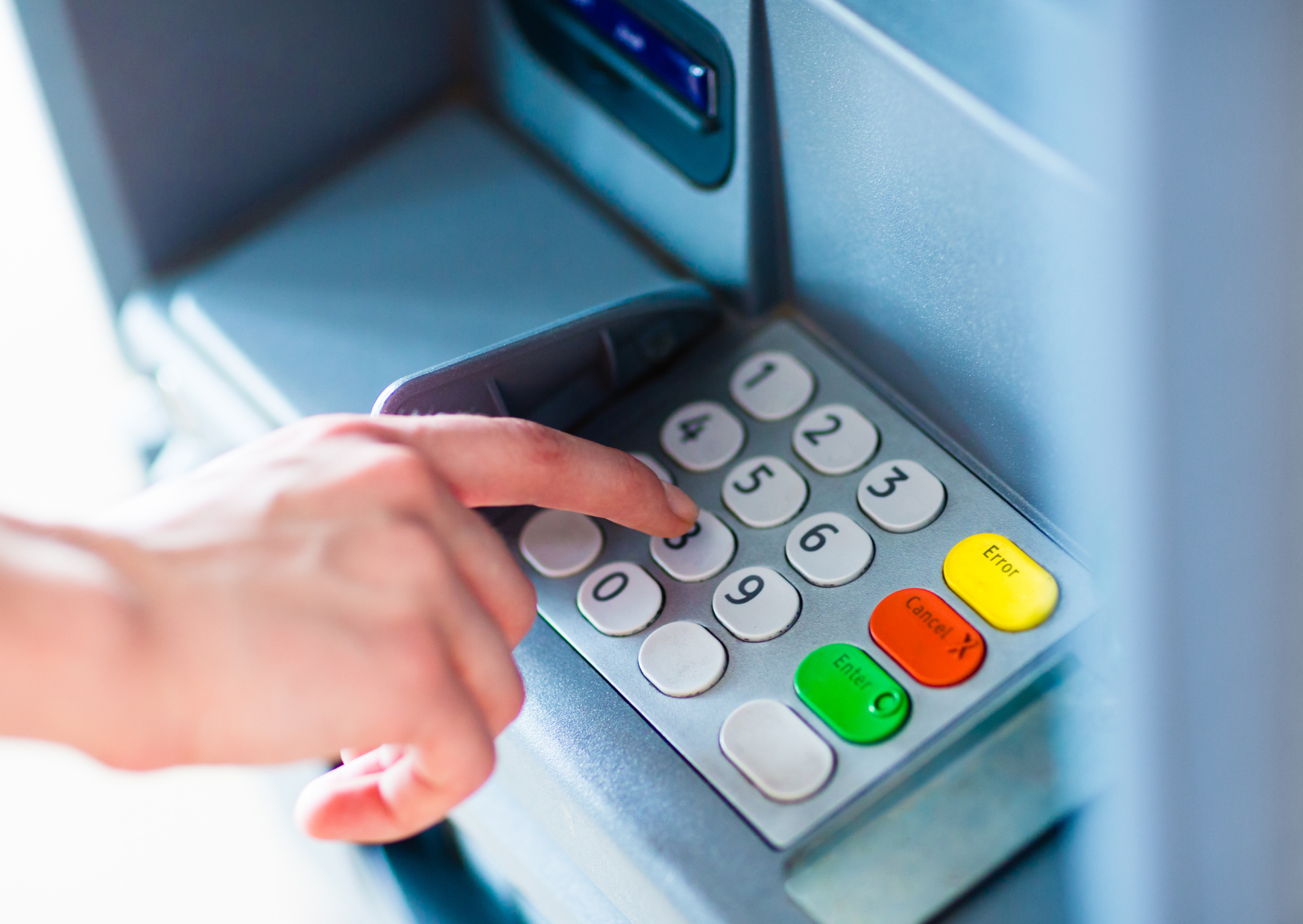
If you’re paying fixed fees, tiny withdrawals are the enemy.
A practical number for many people is €150 to €300 depending on how much cash you actually use.
Day 6: Stop using cash for card-friendly spending
If you’re withdrawing to pay for things that take tap-to-pay, that’s the problem.
Use cash only where it’s genuinely helpful.
Day 7: Upgrade the weak link
If your US card is charging you like it’s 2009, replace it as your daily driver.
One better card can eliminate most of the monthly drain, even before you optimize anything else.
The bottom line
The “€30/month ATM fee drain” is not a myth. It’s usually the combination of:
- too many small withdrawals
- operator fees from tourist ATMs
- a US bank fee structure that punishes international cash access
- and the DCC conversion trap that quietly takes a percentage cut
The fix is not complicated. Make withdrawals rare, use real bank ATMs, always choose euros, and stop using a fee-heavy card as your main tool.
That’s it. Boring wins.

About the Author: Ruben, co-founder of Gamintraveler.com since 2014, is a seasoned traveler from Spain who has explored over 100 countries since 2009. Known for his extensive travel adventures across South America, Europe, the US, Australia, New Zealand, Asia, and Africa, Ruben combines his passion for adventurous yet sustainable living with his love for cycling, highlighted by his remarkable 5-month bicycle journey from Spain to Norway. He currently resides in Spain, where he continues sharing his travel experiences with his partner, Rachel, and their son, Han.