
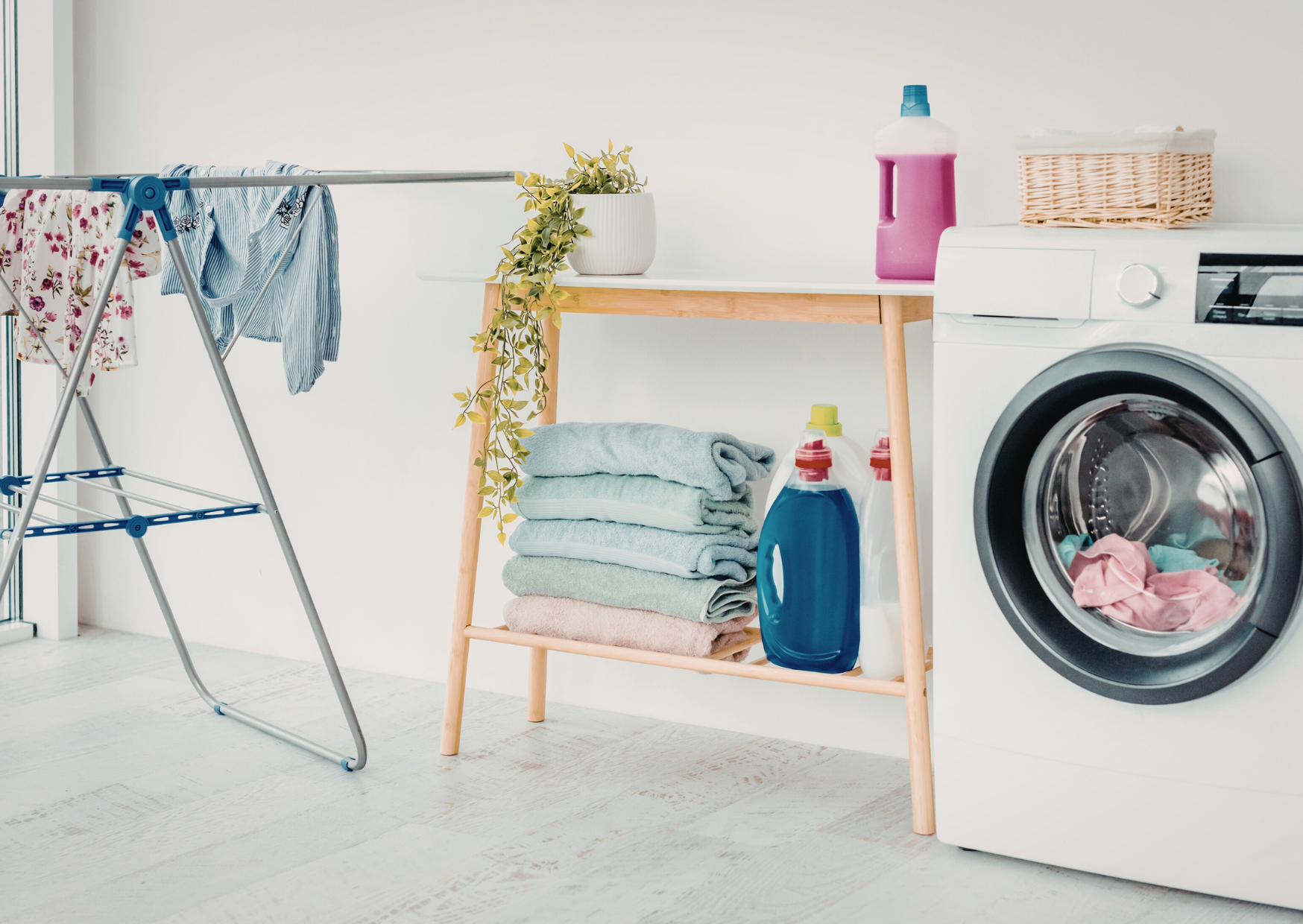
Nothing makes an American feel personally attacked like a European washing machine calmly announcing it will be finished in 2 hours and 58 minutes.
You can be a fully grown adult with a residency card and a pension plan and still get into a petty emotional war with a Bosch.
Because Americans aren’t just reacting to the time. They’re reacting to what the time implies: that the appliance is not designed around their urgency, their throughput, or their cultural belief that “faster equals better.”
European laundry is built around different assumptions:
- smaller loads
- lower water and energy use
- gentler cycles
- air drying instead of blasting heat
- time as a trade for efficiency
So the machine isn’t “slow.” It’s doing a different job.
Once you understand that, you stop treating your washing machine like an enemy and start using it like a system.
The 3-hour cycle is usually an eco cycle. That’s the whole story.
A lot of Americans hit “Cotton Eco” because it looks like the default, and then they stare at the display like it’s mocking them.
Eco programs often run longer because they use:
- lower temperatures
- less water
- different agitation patterns
- longer soak phases
That trade can reduce energy consumption because heating water is one of the biggest energy costs in laundering. Many European machines are optimized to meet EU energy labeling requirements and efficiency targets, and eco programs are designed around those standards.
So your “3 hour wash” is often the most energy-efficient program doing exactly what it’s supposed to do.
It’s not slow out of incompetence. It’s slow on purpose.
Key point: Eco is longer because it saves energy, not because Europe hates you.
The real reason it feels offensive: Americans expect appliances to respect their time
American appliances are built like little productivity assistants. They don’t just clean. They protect your schedule.
A typical US laundry story is: do it fast, do it in bulk, get it out of your life. The machine exists to remove friction.
A European washer is not built around that emotional contract. It’s built around constraints: energy efficiency, water efficiency, and not shaking an apartment building like an earthquake.
So when the screen says 2:58, your brain hears something else: “Your time is not important here.”
That’s why people get petty about it. It’s not about laundry. It’s the feeling of being forced to move at someone else’s pace in your own home.
There’s also a control issue. Americans are trained to measure adulthood by throughput: get the tasks done, stay ahead, never fall behind. A 3-hour cycle makes you feel behind before you even started.
The fix is not “be more European.” The fix is to stop treating laundry like a performance metric. Treat it like something that runs while you do other life. Once you stop hovering, you win.
European machines are smaller, so Americans overload them and make everything worse
This is the second reason people think European washers are “bad.”
In the US, many people are used to large top-loaders or big front-loaders where you can throw in half your closet.
In much of Europe, the standard machine capacity has historically been smaller, especially in apartments. Even when modern machines offer 8 to 10 kg capacities, the drum size and recommended fill level can still feel tight compared to what many Americans are used to.
So Americans do what Americans do: they stuff it.
Overloading triggers:
- worse cleaning
- longer cycle adjustments
- unbalanced spin issues
- damp laundry that never fully spins out
- that sour smell you will blame on “European washers”
The truth is simpler: you’re trying to wash a US load in a European drum.
Fix: smaller loads, more often. Yes, it’s annoying. It also works.
The apartment factor: Europe designs washers for shared walls, not suburban basements
A lot of American laundry culture is built around one quiet truth: many people have space. Laundry rooms. Garages. Basements. Utility closets with distance from bedrooms and neighbors.
In Europe, a washer is often in a kitchen, a hallway, a bathroom, or a tiny laundry nook next to someone else’s living room wall. That changes everything.
European machines are designed to:
- manage vibration and balance aggressively
- protect older plumbing and smaller drain systems
- keep water use down in smaller household setups
- avoid the kind of violent spin cycles that would make a neighbor hate you
So yes, the machine “thinks” a lot. It pauses. It redistributes. It recalculates. Because it’s trying not to launch itself across your tile floor.
That’s also why overloading backfires so hard. You’re not just lowering wash quality, you’re triggering the machine’s safety brain. It will extend, adjust, and sometimes refuse to spin properly.
If you want faster cycles, the biggest cheat code is boring: smaller loads, better distribution, and stop washing one heavy towel with nine shirts. That’s how you get the angry wobble.
Why Europeans can tolerate this: air drying is normal, so timing feels different
In the US, laundry is often a pipeline:
wash fast, dry fast, done.
In many European homes, drying is:
- a rack
- a balcony
- a heated towel rail
- a dehumidifier
- time
So the washing machine’s timeline is not the end of the process. It’s just step one.
That changes how people psychologically experience laundry.
If you already accept that drying will take hours, the wash taking 3 hours doesn’t feel outrageous. It’s just part of a slower household rhythm.
Americans arrive expecting “laundry in 90 minutes total.” Europeans are often operating on “laundry is a daytime process.”
This is why newcomers feel like laundry took over their life. Not because it’s impossible, but because it’s not designed for last-minute urgency.
The energy and water logic is different, and it shows up in cycle design
European machines are often engineered to be efficient with water and energy. Longer cycles at lower temperatures can be part of that efficiency strategy.
Also, European homes often have different hot water setups. Some washers primarily heat water internally, meaning the machine is managing temperature and time differently than an American system that assumes hot water is just “available.”
So the machine is balancing:
- temperature ramp
- soak time
- agitation patterns
- spin optimization
That’s why a “normal cotton wash” can be two to three hours on certain settings.
It’s not because the machine is doing nothing. It’s because it’s doing the job under different constraints.
Americans lose their minds because they treat laundry like a productivity task
This is the cultural part nobody says out loud.
In the US, fast laundry is tied to:
- efficiency
- control
- being on top of life
So when a washing machine forces you to wait, it hits a nerve. It feels like lost time.
In Europe, especially in southern Europe, a lot of household life is structured around:
- doing things in batches
- letting things run in the background
- accepting that domestic tasks take up space in the day
This is why European laundry doesn’t feel like a personal failure. It feels like a normal part of the day.
Americans often feel that if something takes three hours, they must “optimize it.” Europeans often just… live around it.
Not always. But enough that it becomes a cultural difference you feel in your bones.
The part that really annoys Americans: the machine lies
You start a cycle and it says 2:58.
Then it changes to 3:12.
Then it changes again.
This feels like betrayal.
What’s happening is usually:
- the machine is sensing load balance
- adjusting spin
- adjusting water intake and temperature stability
- recalculating based on internal sensors
So yes, it’s annoying. But it’s not random. It’s the machine optimizing for cleaning and avoiding an unbalanced spin that would shake your kitchen to death.
Once you accept that the time is a live estimate, you stop checking it every 12 seconds like a hostage.
The actual fix: stop using the eco cycle when you need speed
This is the simplest solution and the one Americans resist because it feels like cheating.
Most European machines have quicker programs:
- “Daily” or “Mixed”
- “Quick 30”
- “Super Quick 15”
- “Sports”
- “Delicates”
They exist because Europeans also sometimes need clean clothes quickly. They’re just not the default.
So if you need speed:
- use the quick cycle for lightly soiled clothes
- wash smaller loads
- use warmer water only when needed
Save the 3-hour eco cycle for:
- towels
- bedding
- heavily worn cotton
- when you’re not in a rush
You don’t have to live inside eco mode just because it’s there.
The settings Americans ignore that change everything
Americans often treat washer settings like decoration. Start button. Done.
European machines actually let you control the parts that matter. If you use them, your life gets easier fast.
Here are the settings that make a 3-hour wash turn into something sane:
- Temperature: Eco often runs cooler. If you bump temperature slightly on a non-eco cycle, you can get clean faster without the endless soak behavior.
- Spin speed: Higher spin means less drying time. If you’re air drying, spin speed is your best friend. A strong spin is a free dryer.
- Soil level or “intensive” toggle: If you don’t need it, don’t use it. It can quietly add a lot of time.
- Extra rinse: Great for sensitive skin, also adds time. Don’t default to it unless you need it.
- Delay start: This is the one Europeans use constantly. You load the washer at night, set it to finish when you wake up, then hang immediately. It makes laundry feel like it runs itself.
Also, quick cycles are not “fake.” The quick cycle is perfect for lightly worn clothes that are not actually dirty, just lived-in. Americans often wash things like they survived war. If the clothes are lightly worn, a quick wash plus high spin gets you 80 percent of what you want.
If you do one thing differently: stop defaulting to the program name that sounds virtuous. Eco is not morally superior if it makes you hate your own home routine.
The mold and smell issue: the real reason some Americans hate European washers
If you’ve ever heard an American say “European washers make everything smell weird,” it’s often one of these issues:
- overloading
- too much detergent
- low-temperature washes only
- leaving wet clothes sitting too long
- a dirty gasket or filter
- no periodic hot wash
European detergents and dosing habits can be different too. Many people use less detergent than Americans expect, especially in high-efficiency machines.
And because lower-temp eco cycles are common, machines can develop biofilm over time if they never get a hot wash.
So if your laundry smells off:
- use less detergent than you think
- run a periodic hot wash
- clean the gasket and filter
- don’t leave clothes sitting wet for hours
That’s not “Europe.” That’s washer maintenance.
The bigger point: Europeans trade speed for system stability
A slower washer makes sense in a system where:
- energy prices can be high
- water conservation is culturally and politically important
- apartments are smaller
- drying is slower
- and laundry is not treated as an emergency
Americans are trained to treat domestic tasks like performance. Europeans often treat them like rhythm.
Neither is morally superior. But if you move to Europe and keep expecting US throughput, you will be annoyed constantly.
If you adapt your rhythm, the machine stops being your enemy.
A 7-day “stop fighting your washing machine” plan
Day 1: Learn your machine’s fastest useful cycles
Find the “Daily/Mixed” and “Quick” programs and test them with a light load.
Day 2: Reduce load size by 20%
If you’re stuffing the drum, you’re creating your own misery.
Day 3: Cut detergent by a third
If you’re using US amounts, you’re probably overdosing.
Day 4: Do one hot wash
Run a hot cycle on towels or a maintenance wash. It helps reset the machine.
Day 5: Clean the gasket and filter
This is the source of many “Europe smells weird” complaints.
Day 6: Stop using eco when you’re in a rush
Use eco when you want efficiency, not when you want speed.
Day 7: Build a laundry rhythm that matches your life
In Europe, laundry works best when it’s routine, not panic.
Pick two laundry days. Use racks or a balcony. Stop trying to do it all in one evening.
The appliance isn’t slow. Your expectations are.
European washing machines take 3 hours because they’re often running an eco program designed for efficiency, not speed.
Americans lose their minds because they expect throughput, treat laundry like a productivity task, and overload smaller machines.
Once you:
- stop defaulting to eco
- wash smaller loads
- dose detergent correctly
- and accept air drying as part of the system
European laundry stops feeling like a daily insult and starts feeling like a boring household routine, which is the real goal of moving to Europe anyway.

About the Author: Ruben, co-founder of Gamintraveler.com since 2014, is a seasoned traveler from Spain who has explored over 100 countries since 2009. Known for his extensive travel adventures across South America, Europe, the US, Australia, New Zealand, Asia, and Africa, Ruben combines his passion for adventurous yet sustainable living with his love for cycling, highlighted by his remarkable 5-month bicycle journey from Spain to Norway. He currently resides in Spain, where he continues sharing his travel experiences with his partner, Rachel, and their son, Han.