
Pan hot, oil shimmering, eggs hit the metal and billow into a golden cloud. In five minutes you have a crisp-edged, pillow-light Thai omelette that eats like street food and fuels like a gym bottle. Build it the classic way or the high-protein way with minced pork or extra whites. Either way you get serious protein, glossy texture, and a plate that often costs far less than a store shake.
Why This Works In 10 Minutes
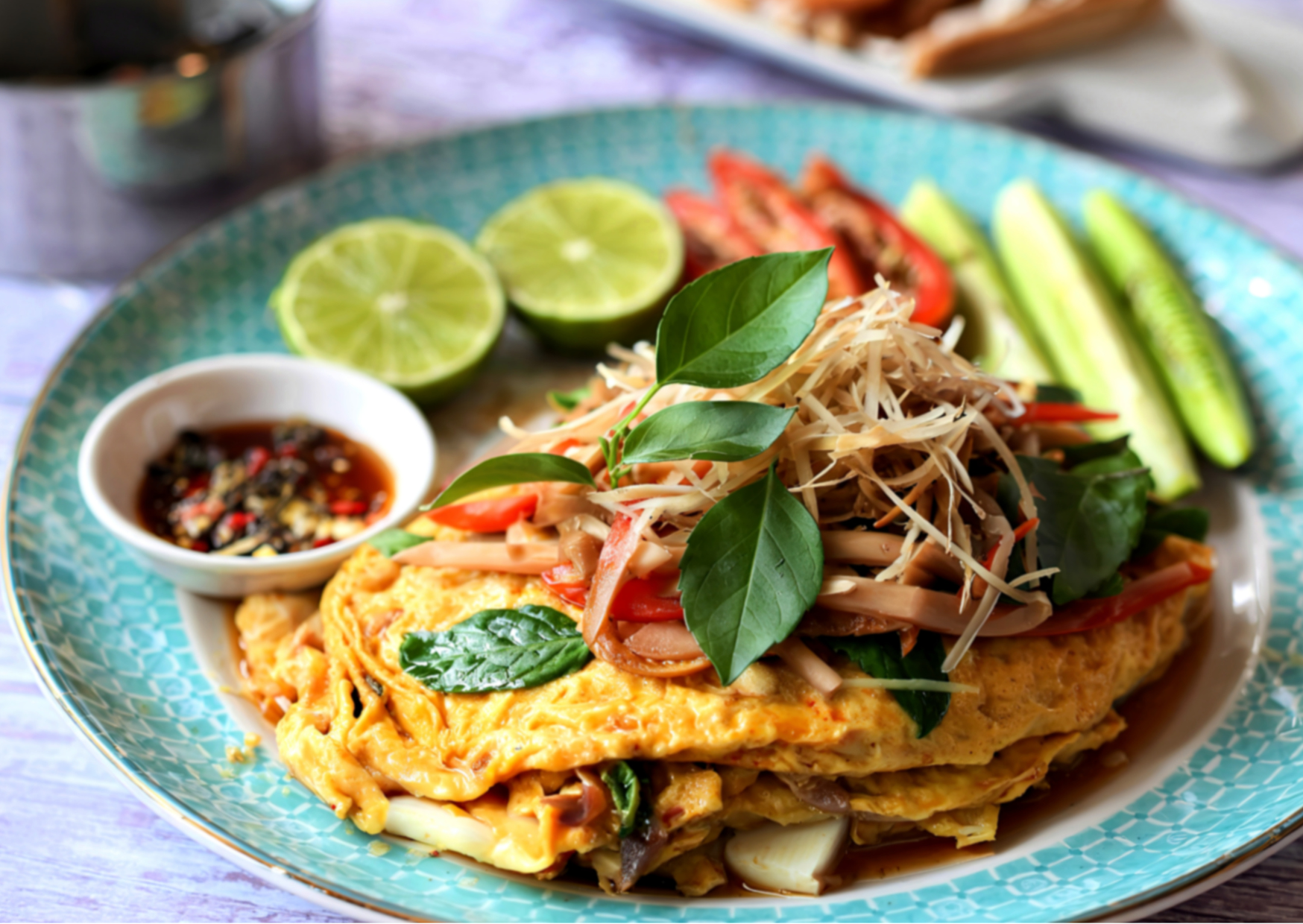
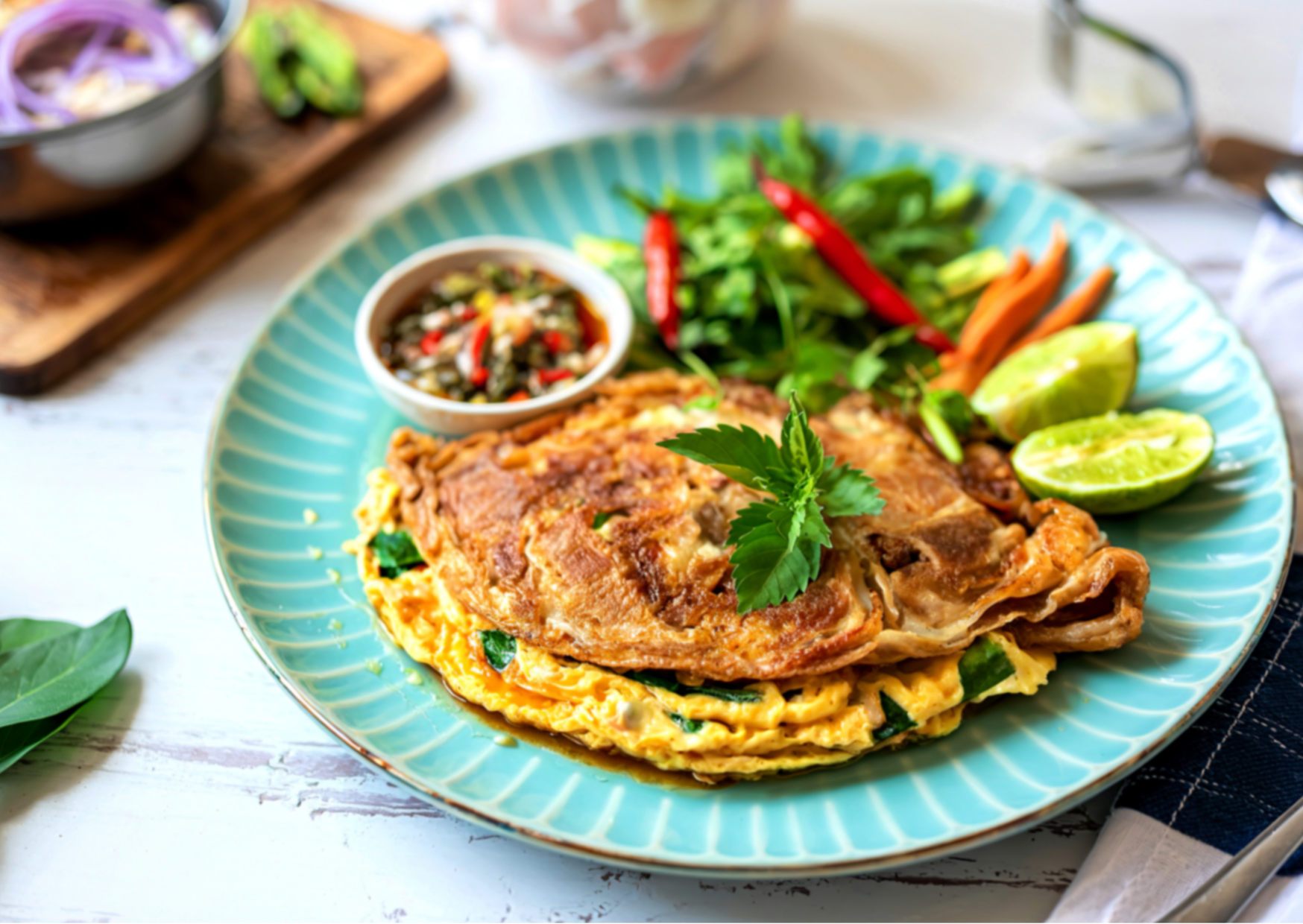
Thai omelette, or kai jeow, is not a French fold. It is whipped eggs, a little seasoning, and hot oil that flash-puffs the batter so the inside stays custardy while the outside crackles. The trick is to aerate the eggs, pour into very hot oil, and leave them alone until the underside is deeply colored. The result is light, springy, and protein dense without any powders.
Two versions earn a permanent spot in your weeknight rotation:
- Classic kai jeow: eggs with fish sauce and a pinch of sugar, fried over medium high heat in enough oil to let the edges frill.
- High-protein kai jeow moo sap: the same batter with finely minced pork folded in, or a whites boost for people who prefer lean. You jump from a typical 18 to 24 grams of protein into the 30 to 40 gram lane with almost no extra time.
You do not need a wok. Any 10 to 11 inch skillet with even heat and high sides will do. Oil is not the enemy here. It is the puff engine that makes this dish feel special on a Tuesday.
The Recipe, Two Ways
You will be eating in under 10 minutes. The classic version appears first. The high-protein version follows with two options: minced pork or extra whites. Both stay true to Thai home kitchens.
Classic Kai Jeow (Serves 1 hungry person)
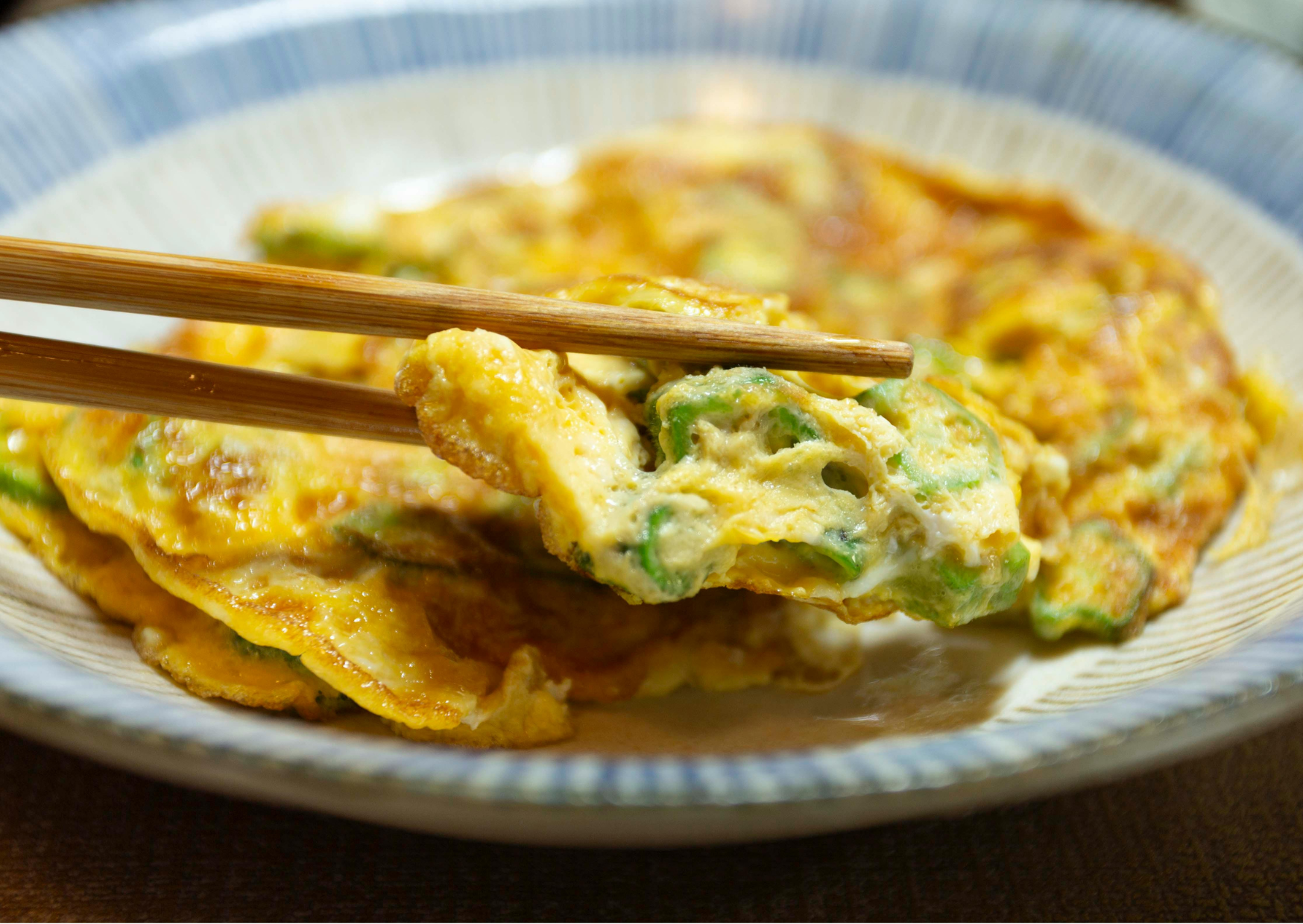
Ingredients
- 3 large eggs
- 1 teaspoon fish sauce, or ¾ teaspoon fine salt
- ½ teaspoon sugar
- 1 teaspoon soy sauce, optional
- 1 tablespoon very cold water or seltzer, optional for extra puff
- 4 to 6 tablespoons neutral oil for frying
- Cooked jasmine rice and sliced cucumber to serve
- Sriracha, prik nam pla, or chile vinegar to finish
Method
- Beat hard. Crack eggs into a bowl. Add fish sauce, sugar, soy if using, and cold water. Whisk vigorously for 30 to 45 seconds until foamy. The air is your leavening.
- Heat the pan. Set a skillet over medium high. Add oil. You want a shallow pool about 3 to 5 mm deep so the omelette floats and frills. When a drop of batter sizzles instantly, you are ready.
- Pour and wait. Pour the foamy eggs into the hot oil in one swift motion. The edges should ruffle and rise at once. Do not touch for 60 to 90 seconds until the bottom is deep golden and the omelette has ballooned.
- Flip once. Slide a spatula under and flip. Cook 30 to 45 seconds on the second side.
- Drain and serve. Lift to a wire rack or paper towel for 20 seconds. Slide over hot rice with cucumber and your favorite chili sauce.
Why it works: high heat and enough oil create steam pockets that expand the egg network, while the brief second side keeps the center custardy.
High-Protein Kai Jeow, Two Options
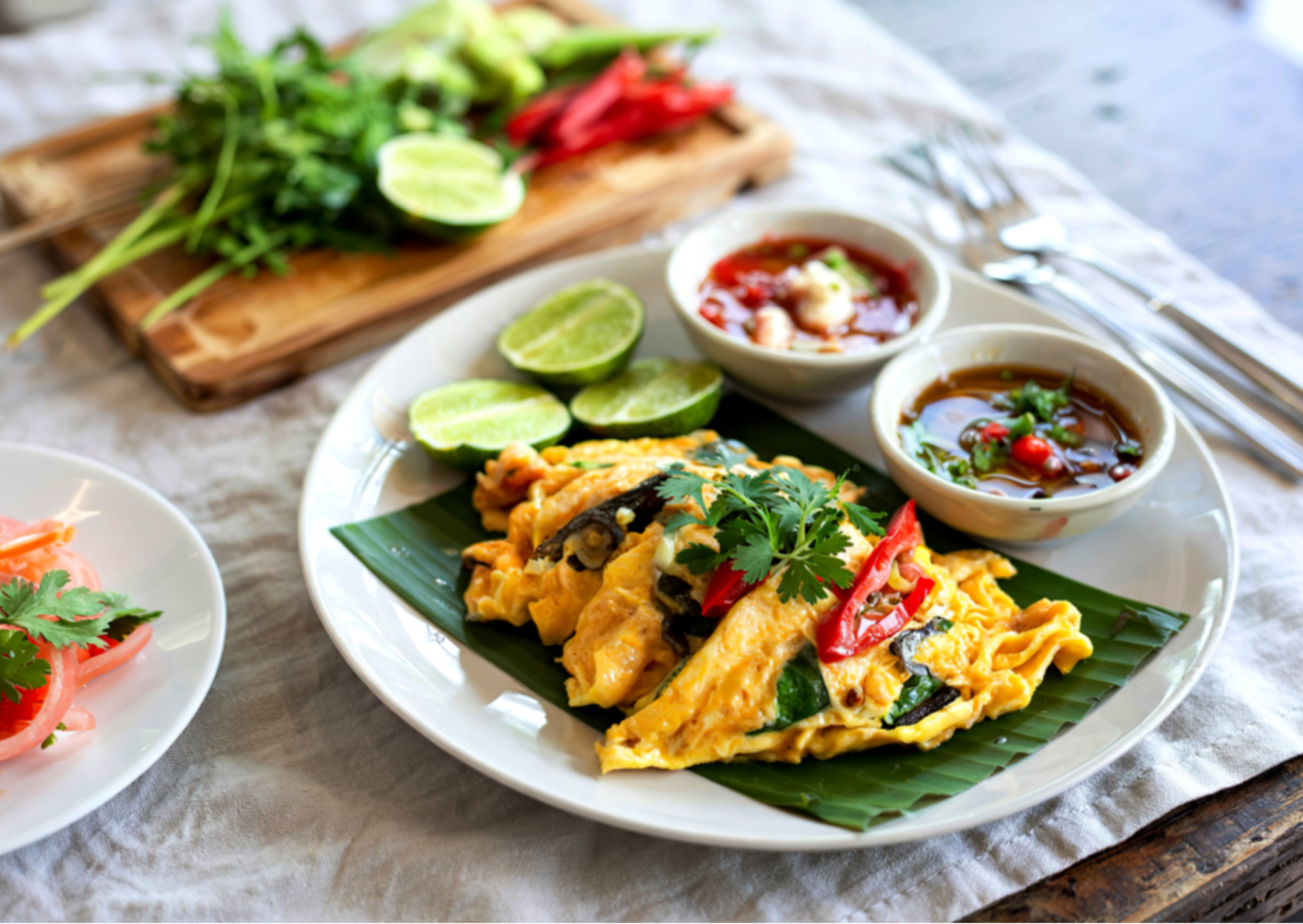
Pick your lane based on taste and goals. Both deliver shake-beating protein in home food form.
Option A: Kai Jeow Moo Sap (minced pork)
Ingredients
- 3 large eggs
- 80 to 100 g very finely minced pork, squeezed dry
- 1 teaspoon fish sauce
- ½ teaspoon sugar
- 1 teaspoon light soy sauce
- 1 tablespoon cold water
- 4 to 6 tablespoons neutral oil
Method
- Season and beat as in the classic.
- Fold in pork gently so you do not deflate the foam. The mince should be very fine so it cooks through in one cycle.
- Fry as above, adding 15 to 30 seconds to the first side to cook the pork. Flip once and finish.
- Drain briefly and serve over rice with chile vinegar or sriracha.
Option B: Egg Whites Boost
Ingredients
- 2 whole eggs + 120 g liquid egg whites
- 1 teaspoon fish sauce or ¾ teaspoon salt
- ½ teaspoon sugar
- 1 tablespoon cold water
- 4 to 6 tablespoons neutral oil
Method
Same as classic. Whites make the mixture foam aggressively, so beat a little less and watch the pan so it does not overflow. The result is very puffy and lean.
Flavor add ons for both
- Scallions or shallots thinly sliced
- Cilantro stems minced
- White pepper for Thai diner vibes
- A few drops of lime at the end for lift
The Protein And Cost Math, No Hype
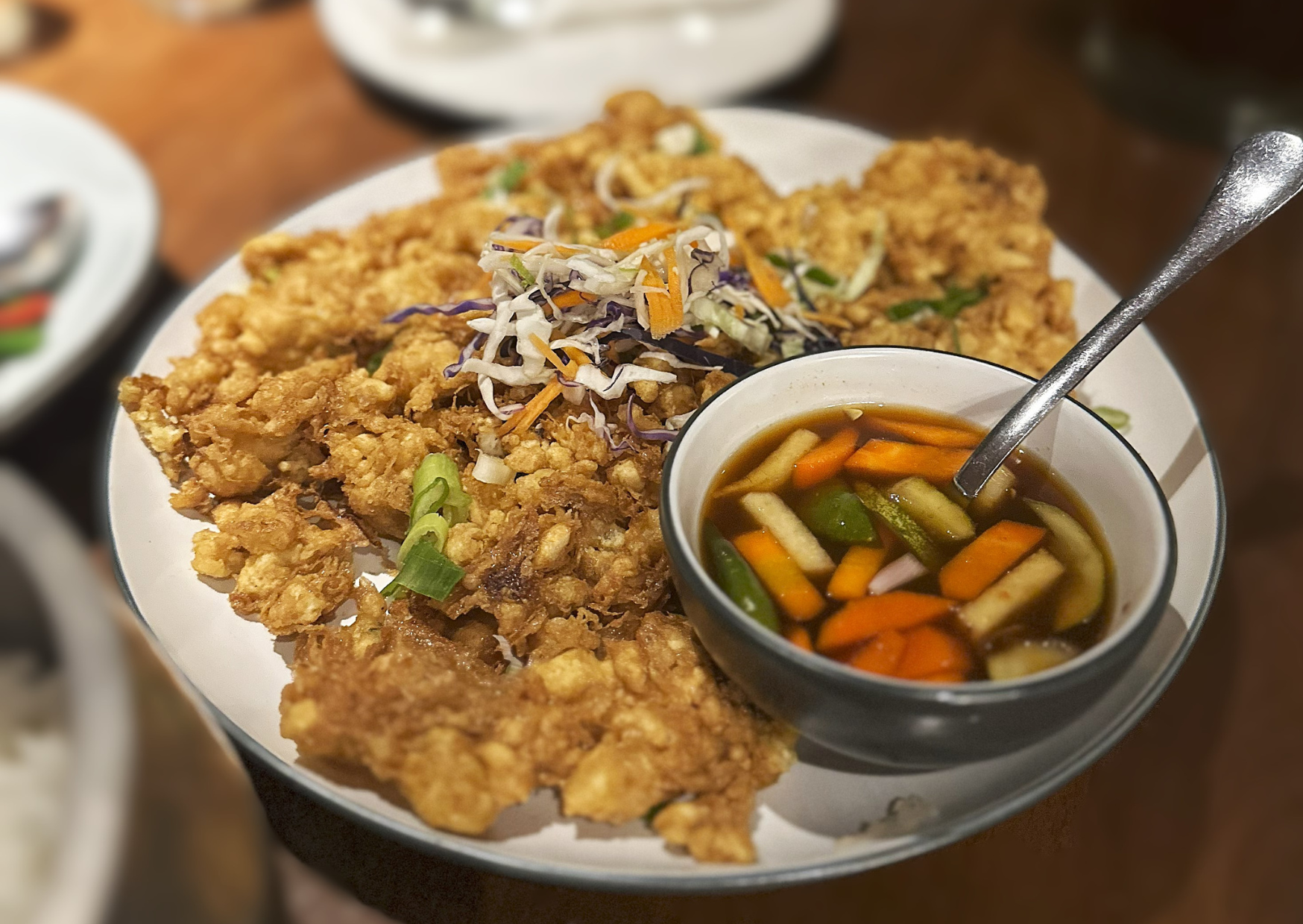
Let us put numbers on the plate so the claim is not vibes.
Protein per serving
- Classic 3 egg: about 18 to 21 g protein depending on egg size
- Pork version: 3 eggs 18 to 21 g plus 80 to 100 g lean mince at 16 to 20 g protein gives 34 to 41 g
- Whites boost: 2 eggs 12 to 14 g plus 120 g egg whites at 12 to 13 g gives 24 to 27 g and can be pushed higher with more whites
Many commercial shakes land at 20 to 30 g protein per bottle or scoop. The pork omelette clears that without powders and delivers actual food with iron, B vitamins, and a satisfying texture. The whites version lands in the same band with less fat.
Cost per serving
Prices change by country and shop, so use these as realistic bands for 2025:
- Classic: 3 eggs, seasoning, oil share. Often €0.70 to €1.40 depending on egg grade and where you live.
- Pork version: add 80 to 100 g mince. Often €1.60 to €2.80 total.
- Whites boost: if you buy carton whites, per serving cost €1.20 to €2.00.
Ready-to-drink shakes at supermarkets and gyms often sit €2.50 to €4.50 for 20 to 30 g protein. Powder portions with milk land €1.20 to €2.50 depending on brand. That means the classic omelette is commonly 60 to 85 percent cheaper than a bottle and still cheaper than many powders, while the pork version often comes in 30 to 60 percent cheaper per 30 g protein in most EU cities. In lower cost markets or with market eggs and mince, the gap widens further.
What changes the math: buying eggs by the dozen on promotion, using market mince, and spreading oil cost across multiple cooks. If you meal prep rice and cucumbers, you are eating a complete plate for less than a café coffee.
Why It Gets Fluffy: The Science In Plain Words
Three things make this omelette billow instead of lie flat.
Air in the batter
Whisking introduces bubbles. Cold water or seltzer makes the bubbles more stable so they survive the pour. The bubbles expand in the heat and give the omelette lift.
Oil depth and temperature
A shallow pool of oil separates the batter from the metal so it fries and steams at the edge. Oil around 180 C triggers rapid expansion and sets the outer lattice into those crispy ruffles.
One decisive flip
Jostling collapses structure. Let the underside color deeply, flip once, finish, and rest briefly. The interior stays custardy, not dry.
Bonus effect: sugar in the batter helps browning and balances fish sauce salt. You would not taste it as sweet. You taste roundness and savory depth.
Scan this section for: air + hot oil + one flip, custardy center, sugar boosts browning.
Pitfalls Most Cooks Miss
You do not need to practice for weeks. Avoid these five slips and you will be proud on your first try.
Pan too cool
If the batter does not burst into a frill at the edges, you lose lift and soak oil. Wait for a fast sizzle on a test drop.
Not enough oil
A dry skillet makes a flat, rubbery pancake. This dish wants a shallow pool. Drain after if you like, but start with enough.
Overloading with wet add ins
Tomatoes, big veg piles, or wet mince deflate the foam. Keep the add ins dry and fine.
Scrambling after the pour
Once the batter is in, leave it. Poke once to peek, flip once, finish.
Salt but no sugar
A pinch of sugar is not dessert. It is browning insurance and balance. Keep it.
Pantry Swaps For US And EU Kitchens
You can make this with what you have. Use the nearest equivalent and carry on.
- Fish sauce: Thai or Vietnamese brands are ideal. In a pinch, use soy sauce plus a few drops of anchovy paste.
- Soy sauce: light soy in the batter, dark soy for finishing. If you only have one, use what you have.
- Oil: any neutral high-heat oil works. Sunflower, rice bran, canola, peanut.
- Rice: jasmine is classic. Day-old rice reheats beautifully, or swap in sticky rice for fun.
- Protein add in: minced pork is classic. Ground chicken or turkey work well. For a pescatarian twist, use minced shrimp squeezed dry. For vegetarian, use finely crumbled firm tofu with a teaspoon of soy to season.
- Heat: sriracha is easy. Authentic punch comes from prik nam pla: sliced chilies in fish sauce with a squeeze of lime.
Health Notes And Smart Tweaks
You can steer this dish toward leaner or richer without losing joy.
Leaner lane
Use two eggs plus whites, fry in slightly less oil, and drain well. Serve with cucumber and herbs as the main side instead of a large mound of rice.
Richer lane
Stick with three eggs, use minced pork, and add shallots for sweetness. Serve over steamed jasmine rice and accept happiness.
Sodium awareness
Fish sauce and soy carry salt. Balance with acidity at the table. A squeeze of lime or splash of chile vinegar brightens flavor so you do not chase more salt.
Repeatable fuel
The pork version lands in the 30 to 40 g protein zone with iron and B vitamins from meat and choline from eggs. If you train, pair it with fruit for carbs and herbs for micronutrients.
Scan this section for: lean vs rich, lime for balance, real protein for training.
Weeknight Playbook: From Fridge To Plate In 8 Minutes
Put this on autopilot and you will eat better than takeout.
Setup once
- Keep a small bottle of fish sauce and light soy on the counter.
- Store a jar of chile vinegar in the fridge: sliced chilies, vinegar, pinch of sugar.
- Freeze a 400 g slab of mince flat in a bag. It thaws fast in water.
Cook flow
- Start rice or reheat day-old.
- Heat oil while you beat the eggs.
- Fold in dry mince if using.
- Fry, flip, drain.
- Plate with cucumber and herbs. Eat while hot.
Leftover strategy
Cold omelette slices go into rice bowls the next day with soy and scallions, or get tucked into a baguette with pickled veg for a cheat banh mi vibe.
Regional Touches If You Want To Play
Make it yours without leaving the format.
Isan crunch
Add a spoon of toasted rice powder and chopped cilantro stems to the batter. Finish with lime and bird chilies.
Bangkok diner
White pepper in the batter, a dash of Maggi to finish, served over rice with cucumber and tomato.
Southern Thai heat
A half teaspoon prik pon or another mild chili powder in the batter. Serve with lime and fish sauce spiked with chilies.
What This Means For Your Kitchen
If you want protein speed without the price of bottled shakes, keep eggs, fish sauce, and oil on hand and master one flip. Make the classic when you want comfort and crunch. Make the pork or whites version when you need 30 to 40 grams of real protein that tastes like lunch, not a supplement. Serve it over rice with cucumber and chili and call it done. The pan pays you back in minutes, not hours, and your budget stops flinching.
Origin and History
The Thai omelette, known locally as khai jiao, is one of Thailand’s most beloved comfort foods. Found everywhere from street stalls to family kitchens, it is valued for its simplicity, affordability, and satisfying flavor. Unlike Western-style omelettes, it is deep-fried quickly in hot oil, creating a signature puffed texture and crisp edges.
Eggs became widely integrated into Thai cooking during periods of Chinese influence, blending seamlessly into the country’s cuisine. Over time, the Thai omelette evolved into a fast, protein-rich dish that pairs effortlessly with rice and chili sauce.
What makes khai jiao distinct is its technique. The beaten eggs are poured into very hot oil, causing them to expand and form airy layers. This method creates the fluffy interior and slightly crispy exterior that define the dish.
Though often considered humble street food, the Thai omelette reflects a broader cultural emphasis on balance. It combines protein, texture, and flavor in a way that feels indulgent yet accessible, making it a staple across economic classes.
The claim that this omelette has more protein than a shake can spark debate. Protein shakes are marketed as scientifically optimized nutrition, while an omelette may seem too simple to compete. However, whole eggs naturally contain high-quality protein along with additional nutrients absent in many processed supplements.
Another controversial aspect is cooking method. Deep-frying eggs may raise concerns about fat content. Yet the actual oil absorbed is often less than expected when the oil is properly heated, and portion control keeps the dish balanced.
There is also skepticism about cost comparisons. Protein powders are often expensive due to branding and processing, while eggs remain one of the most affordable whole protein sources globally. The price gap can be substantial depending on region.
Finally, some question whether traditional dishes should be reframed as fitness alternatives. While the Thai omelette was not designed as a gym meal, its nutritional profile demonstrates that cultural foods can meet modern dietary goals without sacrificing authenticity.
How Long It Takes to Prepare
One of the biggest advantages of this dish is speed. Beating the eggs with a splash of fish sauce and optional herbs takes less than five minutes. Preparation is minimal and requires only a bowl and whisk or fork.
Heating the oil properly is crucial and usually takes about three to four minutes. Once the oil is hot, the eggs cook in under one minute, puffing up almost instantly.
After flipping, the omelette needs only another minute to finish cooking through. The entire active cooking process is typically under two minutes.
From start to finish, the Thai omelette can be ready in about ten minutes. Its efficiency rivals the convenience of blending a shake, without the need for specialized equipment.
Serving Suggestions
Traditionally, the Thai omelette is served over steamed jasmine rice. The rice balances the richness of the eggs and makes the meal more filling and satisfying.
A drizzle of Thai chili sauce or a spoonful of prik nam pla adds brightness and heat. These condiments elevate the flavor without overwhelming the natural taste of the eggs.
Fresh herbs like cilantro or sliced green onions can be sprinkled on top for added freshness. These small additions enhance both presentation and aroma.
For a heartier version, minced pork or vegetables can be mixed into the eggs before cooking. This variation increases both protein and texture while maintaining the classic fluffy structure.
Final Thoughts
The fluffy Thai omelette challenges the idea that high-protein meals must be expensive or processed. Whole ingredients, prepared simply, can deliver comparable nutritional value at a fraction of the cost.
This dish also highlights how traditional foods often meet modern needs naturally. Long before protein supplements became popular, cultures relied on affordable, nutrient-dense staples like eggs.
While it may not replace every protein shake, it offers an alternative rooted in culinary tradition rather than marketing claims. The balance of taste, texture, and affordability makes it accessible to nearly anyone.
Ultimately, the Thai omelette proves that nourishment does not require complexity. Sometimes the most effective meals are the ones that have been quietly perfected for generations.

About the Author: Ruben, co-founder of Gamintraveler.com since 2014, is a seasoned traveler from Spain who has explored over 100 countries since 2009. Known for his extensive travel adventures across South America, Europe, the US, Australia, New Zealand, Asia, and Africa, Ruben combines his passion for adventurous yet sustainable living with his love for cycling, highlighted by his remarkable 5-month bicycle journey from Spain to Norway. He currently resides in Spain, where he continues sharing his travel experiences with his partner, Rachel, and their son, Han.