
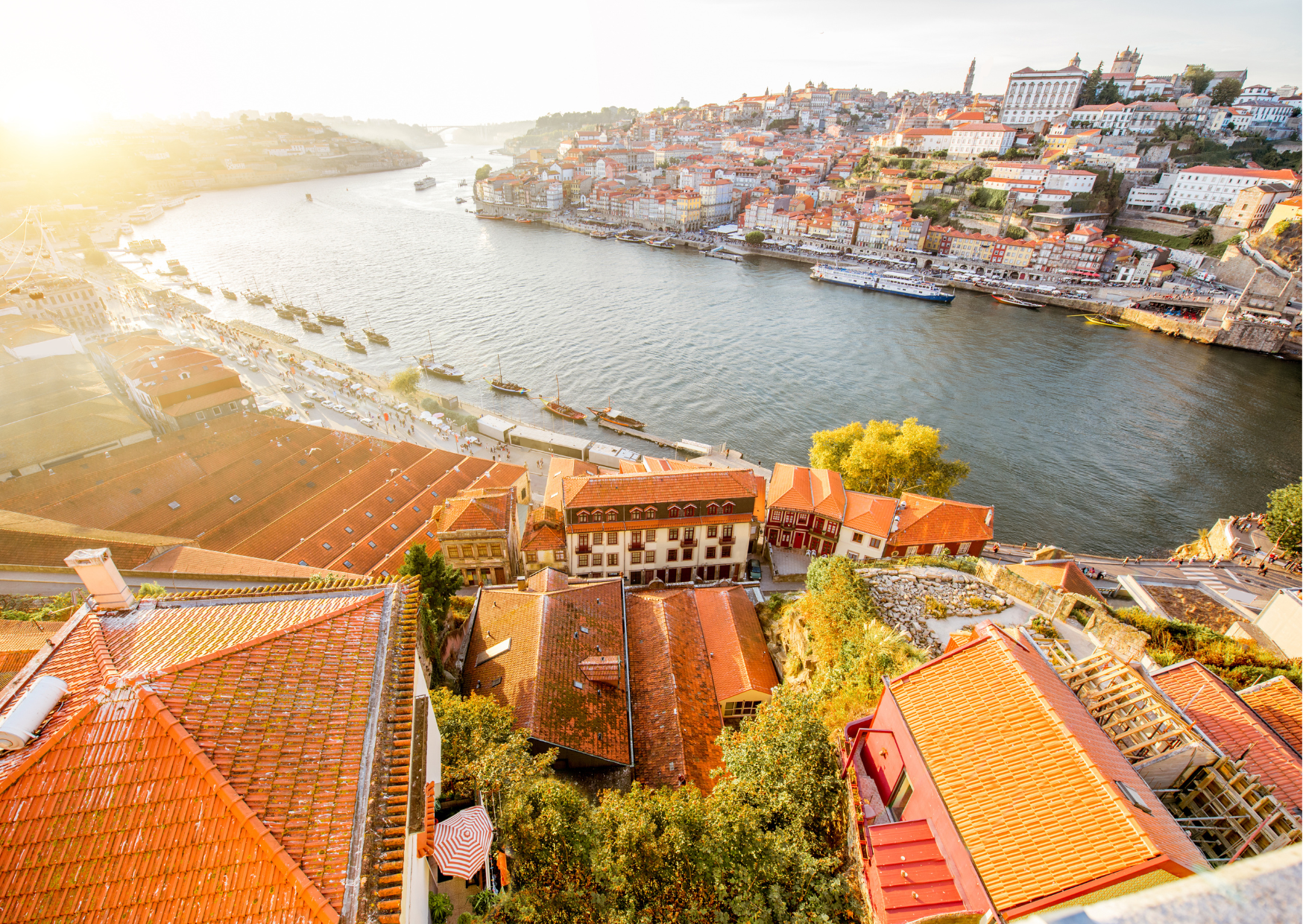
Portugal looks easy from the outside.
The light is soft. The cafés are calm. People are kind. The pace feels humane. You assume the paperwork will match the vibe.
Then you meet the system.
Suddenly you’re living inside a maze where every door requires a different key, and every key requires an appointment you can’t get, and every appointment requires a login that doesn’t work, and every login requires a number you don’t have yet.
It’s not that Portugal is uniquely cruel. It’s that Portugal is still very paper-forward in the places that matter, and it expects you to know the local sequence. If you don’t, you keep getting sent back to the start.
That’s what broke us. Not one big nightmare. A long chain of small ones. A month of “almost.” A year of being told, politely, that we were missing one more thing.
Then we learned the system. Not in a magical, love-your-life way. In a practical, adult way.
You stop trying to win. You start trying to move. And once you move, the country gets easier.
The myth: “Portugal is simple, Spain is the complicated one”
There’s a lazy stereotype floating around: Portugal is the friendlier, simpler bureaucracy. Spain is the intense one.
That myth survives because most people only interact with Portuguese bureaucracy in short bursts: a quick NIF, a quick bank account, a quick rental, a quick golden visa story they read online.
Living in Portugal is different. You’re not collecting a few documents. You’re building a legal identity inside overlapping systems: immigration, tax, health, banking, municipal registration, utilities, and sometimes business compliance.
Portugal has a particular talent for interlocking requirements. One office won’t touch you until you have a number from another office. That second office needs a document from a third office. That third office needs proof that you already solved the first office.
It feels circular until you accept the truth: the system is built around sequence. It’s not designed for improvising.
Americans and other newcomers often assume bureaucracy is a matter of persistence. If you keep trying, someone will eventually help you. In Portugal, trying harder doesn’t always help if you’re trying in the wrong order.
The turning point is when you stop asking, “Why is this so hard?” and start asking, “What is the correct order?”
That one question changes everything.
The AIMA bottleneck is not a small detail. It sets the tone.
If you’re dealing with Portuguese immigration, AIMA is the word you’ll hear in every conversation. AIMA replaced SEF as part of a restructuring, and that transition has had very real downstream effects on timelines and backlogs.
Here’s the lived experience of it: you can do everything right, and still be stuck waiting for one appointment or one card or one renewal confirmation that doesn’t arrive on the timeline you imagined.
When you’re new, the most psychologically brutal part is the limbo. You have proof you submitted. You have proof you paid. You have emails. You have receipts. You still don’t have the one thing every other system wants: a clean, current residence card that makes you legible.
In 2025 and 2026, Portugal expanded online renewal pathways through AIMA’s renewal portal for certain cases, which helped some people, but the pressure point for many remains the same: appointments and physical documents can take longer than your nervous system likes.
Also, there’s a nasty trap that hits people who assume “receipt equals freedom.” AIMA has published guidance that the receipt proving you applied is not a travel document for moving around Schengen. That means a lot of people feel legally fine inside Portugal but hesitant to leave, because the paperwork they have is not the paperwork border control cares about.
This is where people melt down. They planned a life. They’re now living inside a timeline they don’t control.
So the honest take is this: Portuguese bureaucracy didn’t break us because it was aggressive. It broke us because it was slow and conditional.
Speed is not the default. Proof is not the same as permission. Limbo is the real tax.
The hidden dependency chain: NIF, bank, address, and the endless loop
Portugal runs on numbers. The famous one is the NIF, and newcomers are told it’s step one. That’s true, but it’s not the whole story.
Because what people actually need is a working identity stack:
- NIF
- a bank account that can receive and send money reliably
- proof of address that is accepted by institutions
- a residency status pathway that is legible to banks and services
- access to healthcare registration if you’re going that route
- a phone number and email that won’t change every month
The pain comes from how these elements depend on each other.
A bank may want proof of address. Your landlord may not want to give you documents that banks accept. The municipality may require a rental contract with specific details. The bank may require proof of legal stay. The immigration step is delayed. Now you are blocked. You can’t fully join the banking system, and without banking, you can’t smoothly handle payments, taxes, rent, insurance, and sometimes even your immigration proof.
This is why people end up with a patchwork life:
- one bank account that half works
- one address proof that only one office accepts
- one portal login that breaks
- one appointment that keeps moving
It’s not glamorous, but it’s common.
The fix is not fighting each office individually. The fix is building a coherent chain:
- Choose an address situation that produces acceptable proof.
- Choose a bank strategy that matches your residency status and documentation.
- Keep your identity documents consistent and current.
- Accept that you may need temporary solutions while the main pipeline completes.
This is where Portugal rewards people who are calm and organized. A disorganized person can still succeed, but they will suffer more.
Portugal doesn’t punish you for being foreign. It punishes you for being fragmented.
The municipal layer: “Local offices” are where reality lives

A lot of newcomers obsess over national systems. They forget that daily life is often handled locally.
In Portugal, municipal and local offices can be the gatekeepers for things that feel basic:
- confirming your address
- issuing certain local certificates
- directing you to the correct pathway for services
- providing the local documentation rhythm that institutions expect
This is also where expectations collide.
Newcomers arrive with an American mental model: local offices are customer-facing, flexible, and designed for convenience. In Portugal, local offices can be helpful, but the rules are the rules and the hours are the hours. The system isn’t built to bend around your work schedule or your travel plans.
So you have to build a daytime, weekday life for administrative tasks. This is where many people get bitter because they feel forced to take time off work to exist.
If you’re coming from a culture where admin can be handled at 7 pm, Portugal can feel like it’s blocking you from being a normal adult.
But it’s not personal. It’s structural.
Once you accept that the weekday morning is your friend, you stop trying to brute force the system at the wrong time. You start bundling tasks. You start treating admin like a planned event instead of a spontaneous errand.
That shift alone can make Portugal feel 30 percent easier.
Local offices are not optional. Weekday hours are the real hours. Plan your admin like it matters.
The paper culture: Portugal loves documents that look official
The most misleading thing about Portuguese bureaucracy is that it feels modern on the surface. Portals exist. Emails exist. QR codes exist. Some renewals can be done online.
And still, the system often reverts to what it trusts most: official-looking documents, stamped confirmations, and consistent proof.
People coming from the US often assume that a screenshot of an email or an app notification is “proof.” Portugal’s system often wants a document that:
- has a reference number
- looks like a formal certificate
- has a date
- can be filed or printed
- matches your identity exactly
This is where tiny inconsistencies become big obstacles.
If your name format differs across documents, you can get flagged.
If your address formatting is inconsistent, you can get questioned.
If your proof is informal, you can be dismissed.
It’s not always logical, but it is predictable once you see it. Portugal’s bureaucracy is a confidence game, not in the scam sense, but in the documentation sense: the system wants to feel confident that you are who you say you are, that you live where you say you live, and that you followed the steps in the correct order.
So the practical approach becomes:
- Keep a clean folder of every official PDF.
- Save every receipt and payment confirmation.
- Print key documents before appointments.
- Maintain a simple timeline note with dates and reference numbers.
- Assume you will need the same document again later.
This is boring. It works.
Portugal rewards documentation discipline. Receipts are a currency. Consistency is your leverage.
The emotional trap: comparing every step to how the US would do it
A lot of people break themselves by running a constant mental comparison.
In the US, people are used to:
- one identity system that works across banks and services
- instant verification
- customer service escalation as a normal tool
- faster, more transactional problem solving
Portugal does not always operate that way. Escalation is less effective. Complaining can backfire. Speed is not a guaranteed outcome even if you are correct.
When you compare everything to the US, you build resentment. You start treating every delay like disrespect. You stop seeing the system as a system and start seeing it as a personal affront.
That’s when people spiral. They start doing reactive behaviors:
- emailing constantly
- calling daily
- showing up without the right documents
- switching strategies every week
- paying random people for “fixes”
- joining online groups that amplify panic
The irony is that these behaviors often slow you down. They make you less consistent, less organized, and more likely to miss the one clear window when things could actually move.
The healthier move is colder and more effective:
- accept the timeline you can’t control
- focus on the steps you can control
- build redundancy in documents and proof
- stop performing rage at the system
- treat bureaucracy like weather
It’s not romantic. It is survival.
Anger feels productive. It isn’t. Stability beats intensity. The system responds to order, not emotion.
What finally worked: the rules we adopted

We stopped hoping for a shortcut and started operating by rules. These rules are not official. They’re just what keeps you sane.
Rule 1: Never rely on one document
Have copies. Have PDFs. Have printed versions. Have them named clearly. If you need a document, assume you will need it again.
Rule 2: Every process gets a timeline note
One note per process. Dates, reference numbers, receipts, outcomes. When you’re stressed, memory becomes unreliable. The note becomes your brain.
Rule 3: Admin happens in weekday windows
Stop pretending you can do everything after work. You can’t. Protect one or two weekday mornings per month for admin tasks and stack your errands.
Rule 4: Build a “Portugal kit”
A simple folder with:
- ID scans
- NIF proof
- proof of address
- bank details
- insurance details if applicable
- AIMA receipts and confirmations
- appointment confirmations
- translations if relevant
You should be able to produce these in minutes, not hours.
Rule 5: Choose one channel, then stick with it
People break themselves by changing strategy constantly. One week it’s private insurance, next week it’s public, next week it’s a different city, next week it’s a different portal, next week it’s a different bank.
Portugal punishes constant switching.
Pick your path, stabilize it, then improve it.
Rule 6: Pay for help only at real bottlenecks
There’s a difference between paying for convenience and paying because you’re panicking.
If you’re stuck because of sequencing, or language, or repeated rejections, professional help can be rational. If you’re paying because you’re angry and desperate, you’re usually about to waste money.
Rules create calm. Calm creates consistency. Consistency gets you through.
The first 7 days: how to stop the system from eating your life
If you’re currently in the “Portugal is breaking me” stage, here’s a week plan that actually reduces chaos.
Day 1: Build the master folder
Create one folder and keep it sacred:
- Identity
- Address
- Tax and NIF
- Banking
- Immigration
- Health
- Receipts and payments
- Appointments
Name files clearly with dates. You’re building a system that survives stress.
Day 2: Write your timeline note
Open one note and write:
- what you applied for
- when
- what references you have
- what deadlines exist
- what the next step is
This prevents you from spinning.
Day 3: Fix your proof of address
This is the most common blocker for everything else. Make sure you have one form of address proof that is consistent and usable. If your address situation is messy, stabilize it now.
Day 4: Stabilize your banking plan
Pick one bank strategy and commit for three months. Stop opening and abandoning accounts. Get one stable payment channel working and keep it boring.
Day 5: Review your AIMA posture
Be clear about what you actually have:
- application receipt
- approval proof if available
- appointment confirmation
- expired card
- renewal proof
Do not assume one document does the job of another. If you travel, treat travel as its own compliance question, not as a vibe.
Day 6: Bundle one real admin morning
Choose one weekday morning and do two tasks back to back. This is how you stop spending your whole month in admin mode.
Day 7: Decide your escalation threshold
Pick a rule:
- “If I’m blocked twice for the same reason, I get professional help.”
- “If the cost of delay is higher than the fee, I pay.”
Rules prevent panic spending and reduce resentment.
This week won’t make bureaucracy disappear. It will stop it from running your life.
The goal is momentum. Not victory. Momentum is how you get through.
The honest takeaway: Portugal gets easier when you stop expecting it to be easy
Portugal can be a wonderful place to live. But the bureaucracy is not a background detail. It’s part of the price.
If you expect the system to be smooth because the lifestyle looks calm, you’ll feel betrayed. If you expect the system to be slow, document-driven, and sequence-heavy, you’ll be annoyed but functional.
The breakthrough is not discovering a secret trick. It’s accepting three truths:
- you need a clean identity stack
- you need document discipline
- and you need to operate inside weekday windows
Once you do that, Portugal stops breaking you. It becomes a place where bureaucracy is still annoying, but it’s predictable. And predictable is survivable.
It didn’t get easy. We got competent.
That’s the whole story.

About the Author: Ruben, co-founder of Gamintraveler.com since 2014, is a seasoned traveler from Spain who has explored over 100 countries since 2009. Known for his extensive travel adventures across South America, Europe, the US, Australia, New Zealand, Asia, and Africa, Ruben combines his passion for adventurous yet sustainable living with his love for cycling, highlighted by his remarkable 5-month bicycle journey from Spain to Norway. He currently resides in Spain, where he continues sharing his travel experiences with his partner, Rachel, and their son, Han.