
Most Americans budget for the flight and a cute carrier. Maybe a vet visit. They feel responsible. They feel prepared.
Then the real costs show up in layers, and none of them feel optional.
Because “flying a dog to Europe” is not one purchase. It’s a chain of purchases across three systems that do not care about your feelings:
- the airline’s pet transport rules
- the EU entry paperwork rules
- the US export paperwork rules
So if you want a useful answer, it can’t be “it depends.” It has to be a breakdown you can actually run against your dog.
Here it is, with three common scenarios:
- Small dog in cabin (under the airline’s weight/size limits)
- Medium or large dog in the hold (checked as excess baggage)
- Large dog moved as cargo or with a pet shipper (the expensive, complicated lane)
I’ll use Spain as the EU destination example in the paperwork section because it’s a common landing point, and USDA APHIS has a very clear country page for US-to-Spain pet travel.
The non-negotiables Europe requires
Before costs, the rules. Because your costs depend on whether you already have these done.
For typical non-commercial pet travel into the EU (your pet traveling with you, not being sold or adopted), the EU baseline is:
- microchip identification
- rabies vaccination
- wait period after a primary rabies vaccination (commonly 21 days)
- the correct documentation for entry (for a US departure, that’s usually an EU health certificate endorsed by USDA, unless your pet already has a valid EU pet passport)
The “21 days after primary rabies vaccination” rule is explicitly described in EU-facing guidance.
If your dog is already microchipped and vaccinated properly and everything is current, great. You’re mostly paying for paperwork and transport.
If not, you’re paying for timing too. Timing is where people get wrecked.
What Americans underestimate most: the USDA endorsement fee is real
For US-to-EU travel, one common bottleneck is the USDA endorsement of the health certificate.
USDA APHIS publishes an endorsement fee schedule (it varies based on the number of animals and certificates). That fee can run from around $160 in some common cases up to $275 for the first pet in higher-count scenarios.
And USDA APHIS also publishes a US-to-Spain pet travel page that points you directly to those endorsement costs and explains when an export health certificate may be needed.
This is why people say, “The vet paperwork cost more than the plane ticket.” It can.
Scenario A: Small dog in cabin (the cheapest lane)
This is the lane everyone wants. It is also the lane most dogs do not qualify for.
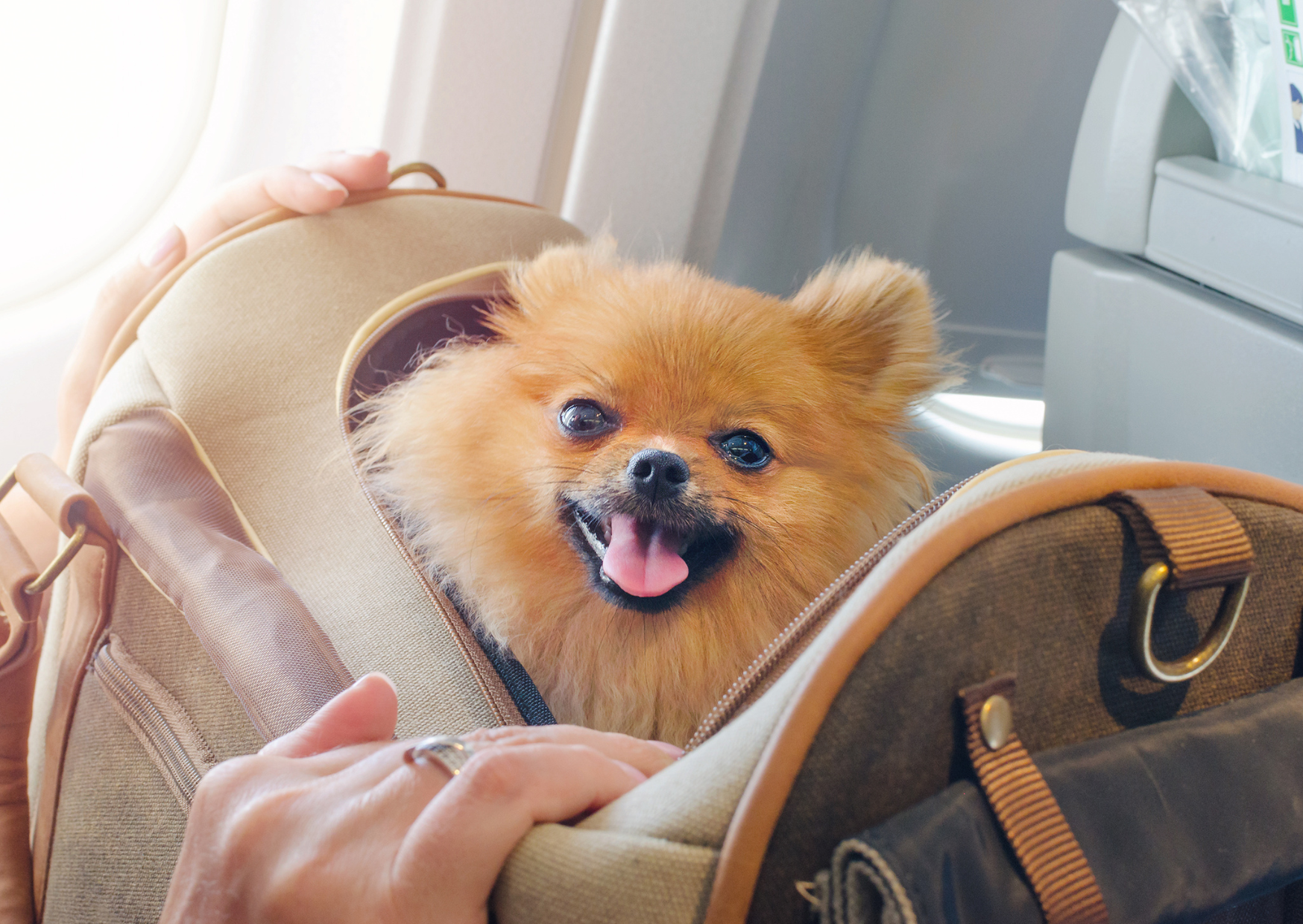
Many airlines cap in-cabin pets to small dogs and cats, usually with weight limits that include the carrier (8 kg is a very common cutoff). For example, Air France’s public policy states pets under 8 kg including carrier can travel in the cabin, and above that they must go in the hold (up to 75 kg with kennel).
TAP also lists an 8 kg total limit for in-cabin transport and publishes carrier size limits.
Typical cost ranges (small dog, in cabin)
These are the buckets you should budget. You’ll see why the total climbs quickly.
1) Airline pet fee (in cabin)
Airlines price this differently. TAP openly advertises that its in-cabin pet service starts at a published price point (it shows “Prices from EUR40” on its pet booking page), and the final fee depends on route and booking channel.
Air France doesn’t show a simple fee table on the page I pulled, but multiple independent policy summaries of Air France’s published booking rates consistently describe in-cabin fees ranging roughly from the tens of euros up to about €200 depending on route.
Budget: €50 to €200 one-way for in-cabin pet fees, depending on airline and route.
2) Carrier that meets airline rules
You may already own one. If not, expect to buy a compliant soft carrier.
Budget: €40 to €120 (sometimes more if you need a specific size or sturdier model).
3) Vet visit and required documentation
Even in the easiest version, you need a vet appointment to confirm your rabies vaccination status, verify the microchip, and prepare the EU health certificate paperwork.
USDA doesn’t set your vet’s price, but it does set endorsement fees and process requirements.
Budget: commonly a few hundred dollars for the veterinary exam and paperwork prep, plus USDA endorsement fees.
4) USDA endorsement of the health certificate
This is a separate cost from the vet.
Budget: roughly $160 to $275 depending on certificate/animal count specifics.
Realistic total for Scenario A (small dog in cabin)
If your dog is already microchipped and rabies-vaccinated and you’re just doing the paperwork:
- Airline pet fee: €50 to €200
- Carrier: €40 to €120
- Vet paperwork: often $200 to $500+ depending on location and complexity (varies widely)
- USDA endorsement: $160 to $275
A very common “all-in” total for a small dog winds up in the high hundreds once you include paperwork and carrier, even before you count your own flight ticket.
Scenario B: Dog in the hold (excess baggage, not cargo)
This is where a lot of medium-sized dogs land, and where people start panicking.
First, terminology matters:
- “Hold as checked pet” (often treated as excess baggage): usually you book it through the airline as part of your passenger itinerary.
- “Cargo”: shipped through cargo services, with different rules, pricing, and paperwork.
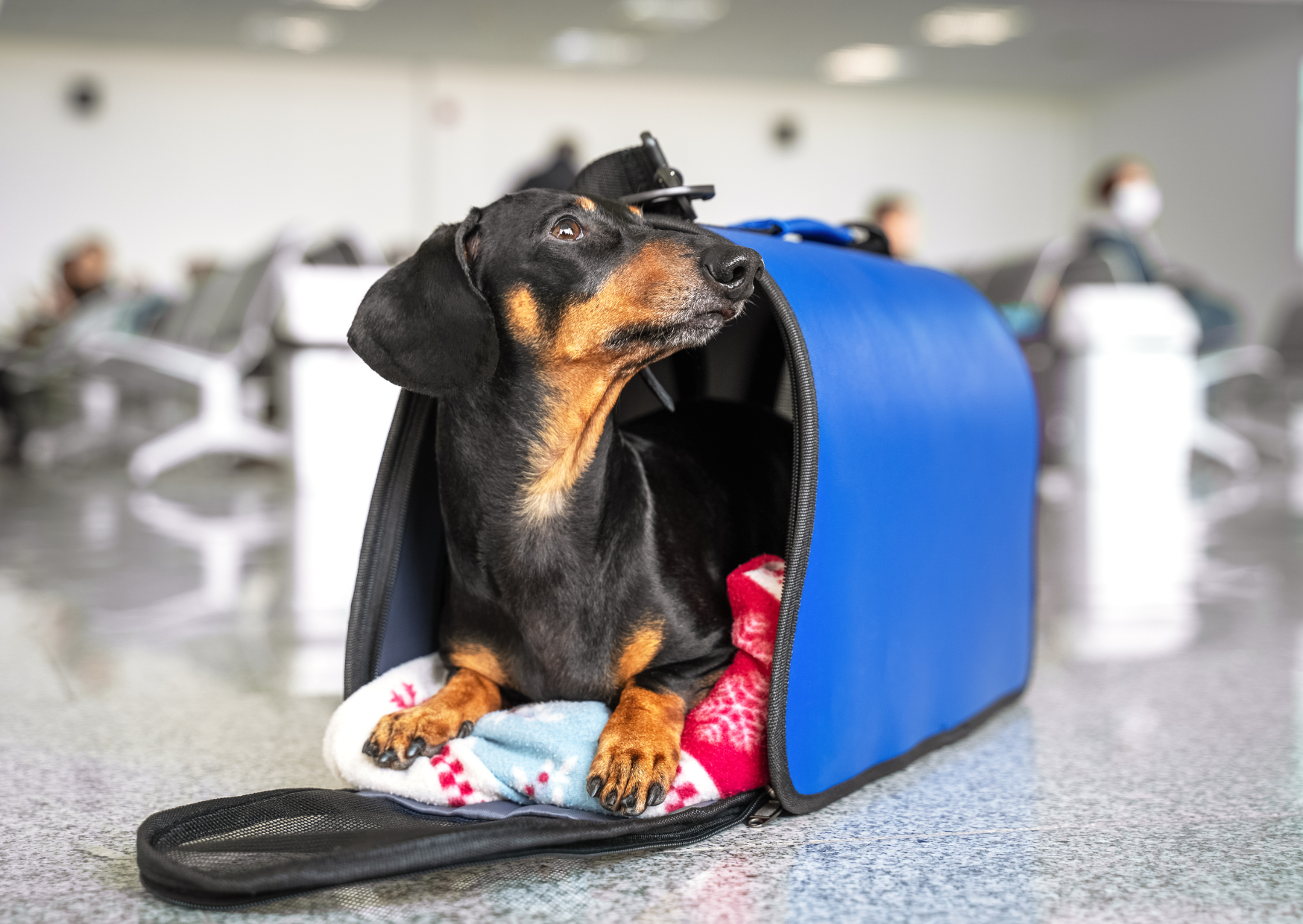
Many airlines will accept pets in the hold up to certain combined weights and with specific kennel requirements. Air France outlines that pets above 8 kg (with carrier) go in the hold, up to 75 kg with kennel.
TAP lays out hold limits too (including different combined weight caps depending on route) and explicitly discourages tranquilizers or sedatives for pets traveling in the hold due to safety concerns.
IATA also emphasizes that pet transport depends on airline policy and container suitability and that pets may travel in heated/ventilated holds when cabin travel isn’t allowed.
Typical cost ranges (hold)
1) Airline pet fee (hold)
This can be meaningfully higher than in-cabin fees, and it can vary wildly by airline, route, and aircraft.
Because airlines often don’t publish a single fixed number on the public page (they push you to calculate based on route), the best planning approach is to budget a range and treat the high end as realistic.
Independent summaries of Air France’s published fee ranges often cite hold fees that can climb into the hundreds of euros depending on route.
Budget: €150 to €400+ one-way (sometimes higher), depending on airline and route.
2) IATA-compliant hard crate
This is the big physical cost in this lane. You’re not buying a cute carrier. You’re buying a crate sized to your dog that meets airline requirements.
Budget: €120 to €500+ depending on size and brand.
3) Extra vet and handling needs
Same paperwork bucket as Scenario A, but often with additional considerations:
- fit-to-fly assessment
- sometimes additional documentation requests depending on airline
- more time and coordination
USDA’s requirements for endorsed certificates and export process still apply.
4) Heat restrictions and rebooking risk
This isn’t a line item until it is.
Depending on time of year and route, airlines may restrict pet transport in the hold based on temperature and aircraft suitability. You can end up paying for changes, extra nights, and rebookings if your dog can’t fly on the original plan.
This is where “my dog flight cost” turns into “my dog flight plus three extra hotel nights plus a last-minute new ticket.”
Budget: set aside a buffer. Seriously.
Realistic total for Scenario B (hold, excess baggage)
For a medium dog, you’re often looking at:
- Airline fee: €150 to €400+
- Crate: €120 to €500+
- Vet + paperwork: similar to Scenario A, often higher due to complexity
- USDA endorsement: $160 to $275
- Buffer for disruptions: highly recommended
You can easily hit four figures without doing anything “luxury.”
Scenario C: Large dog moved as cargo or with a pet shipper (the expensive lane)
This is where people get blindsided because the pricing stops feeling like travel and starts feeling like logistics.
Once you’re in cargo territory, costs can jump into the thousands depending on:
- crate size and handling
- route availability
- airline cargo policies
- whether you need a professional shipper
- and whether there are any restrictions around breeds, season, or connections
Some pet shipping estimate guides from UK/EU-focused shippers show multi-thousand price ranges for shipping animals via cargo services depending on airline and route. Those are not universal quotes, but they give you an idea of the “order of magnitude” people encounter.
This is also where a lot of Americans end up paying for help not because they’re lazy, but because the logistics are truly punishing when you’re juggling your own move plus a large animal’s move.
Typical cost ranges (cargo / shipper)
- Cargo or shipper costs: often €1,500 to €6,000+, and higher in some cases (route and size dependent)
- Crate: €250 to €800+ for very large sizes
- Vet + paperwork + USDA endorsement: still required
- Ground transport to/from airports (special handling): can add hundreds
If you’ve ever seen someone say, “Flying my dog cost more than my own ticket,” this is usually the lane they’re talking about.
The paperwork cost breakdown (US to EU, using Spain as the concrete example)
Here’s the checklist Americans actually need to budget for, and where the costs attach.
1) Microchip (if your dog doesn’t already have one)
EU rules generally require microchip identification for pet travel.
Cost: varies by vet, often modest compared to everything else.
2) Rabies vaccination (and timing)
The EU requires a valid rabies vaccination. If it’s the first rabies shot (primary vaccination), you generally need to wait at least 21 days before travel.
Cost: varies.
Timing cost: this is the bigger risk. If you discover your rabies vaccine is not valid for EU entry because it was done before microchipping or records are incomplete, you can lose weeks.
3) EU health certificate prepared by a USDA-accredited vet
USDA APHIS explains that accredited veterinarians can issue health certificates and use the USDA electronic system to submit for endorsement, but USDA must endorse with ink signature and embossing.
Cost: your vet sets it.
4) USDA endorsement of the health certificate
USDA publishes the endorsement costs.
This is the fee people forget to budget.
5) Country-specific notes
For Spain specifically, USDA APHIS provides a country page for pet travel from the US to Spain and references how requirements work and when an export health certificate is needed.
Separately, Spain’s government guidance (and EU guidance) reiterates the core rabies and identification rules for pet movement.
The return-to-US cost people forget
If you’re not “moving forever” and you expect to travel back with the dog, don’t ignore the US re-entry rules.
CDC rules for dogs entering or returning to the US were updated in recent years, including requiring a CDC Dog Import Form receipt for dogs entering the US.
This is not usually a huge cost, but it is a paperwork and timing step people forget, and forgetting it can create last-minute scrambling.
The hidden cost category: your dog’s stress tolerance
This is not a moral lecture. It’s a practical budgeting point.
If your dog cannot tolerate:
- long waiting
- crates
- strange environments
- being separated from you
then you may end up buying solutions:
- behavior training sessions
- crate training gear
- consults with a veterinarian
- extra travel days to reduce stress
TAP explicitly warns against tranquilizers or sedatives for hold travel because of serious risks.
Meaning: you can’t just “sedate and hope” as a strategy. You may need training and gradual acclimation, which has a real cost in time and money.
A simple “most Americans should budget” number
If you force me to put a planning number on it:
- Small dog in cabin: often lands around €700 to €1,200 all-in once you include paperwork and USDA endorsement, depending on vet pricing and airline fee.
- Medium dog in hold: often lands around €1,200 to €2,500 all-in once you include crate, higher airline fees, and buffer.
- Large dog cargo/shipper: often lands around €2,500 to €6,000+, with some cases higher.
Those aren’t guarantees. They’re “don’t embarrass yourself with a €200 budget” numbers.
The mistakes that blow up costs
These are the classic ways Americans accidentally double the cost.
Mistake 1: Not checking the airline’s in-cabin weight rules early
Many airlines cap in-cabin transport around 8 kg including carrier. Air France and TAP both explicitly describe that threshold.
If you buy tickets assuming cabin, then discover your dog doesn’t qualify, you can end up rebooking flights, buying a crate, and paying new fees at the worst possible moment.
Mistake 2: Booking a route with a risky connection
Connections add handling risk and increase the odds of missed flights and rebookings. If you can afford direct, direct is not a luxury. It’s a risk control choice.
Mistake 3: Leaving paperwork to the final 10 days
USDA endorsement timing matters, and vet scheduling is not always flexible. USDA explicitly discusses endorsement processes and fees, and country pages outline timing windows and requirements.
Mistake 4: Treating a big dog like a small dog problem
Large dogs are in a different logistics category. Budget accordingly or you’ll end up paying panic prices.
Mistake 5: Ignoring the “admin” costs
Extra hotel nights. Taxi to a special cargo terminal. One more vet visit because a stamp is missing. These aren’t rare. They’re normal.
The first 7 days to build a budget that won’t collapse
If you’re planning this move, do this in order.
Day 1: Confirm your dog’s travel category
Weigh your dog with the carrier. If you’re near the limit, assume the airline will enforce it strictly.
Day 2: Pick the airline based on pet policy, not just ticket price
Look for:
- clear in-cabin/hold rules
- routes with fewer connections
- published booking process for pets (TAP’s page is a good example of clarity)
Day 3: Call your vet and ask one question
“Can you prepare the EU health certificate and help coordinate USDA endorsement?”
If the answer is uncertain, you need to solve that immediately.
Day 4: Price the crate and buy it early (if hold/cargo)
Crate training takes time. Don’t make the crate a last-minute surprise.
Day 5: Build the paperwork timeline
Account for:
- rabies timing (including the 21-day rule after a primary rabies vaccination)
- vet appointment availability
- USDA endorsement processing
Day 6: Budget a disruption buffer
If your plan has any hold/cargo element, you want a buffer. The cost of “one disruption” is often a few hundred euros.
Day 7: Decide your return strategy (if applicable)
If you expect to return to the US, read the CDC dog entry steps so you don’t get stuck at the end of your trip.
Bottom line
Flying a dog to Europe costs more than most Americans budget because the cost is not one fee. It’s:
- airline pet fees (which vary widely, with strict weight rules for cabin travel)
- the crate and compliance gear
- vet paperwork
- USDA endorsement fees
- and a pile of small logistics costs that show up when anything deviates from plan
If you budget like an adult and plan your timeline early, it’s manageable.
If you budget like it’s an “add-on,” you’ll pay for the lesson in the least convenient week of your life.

About the Author: Ruben, co-founder of Gamintraveler.com since 2014, is a seasoned traveler from Spain who has explored over 100 countries since 2009. Known for his extensive travel adventures across South America, Europe, the US, Australia, New Zealand, Asia, and Africa, Ruben combines his passion for adventurous yet sustainable living with his love for cycling, highlighted by his remarkable 5-month bicycle journey from Spain to Norway. He currently resides in Spain, where he continues sharing his travel experiences with his partner, Rachel, and their son, Han.