
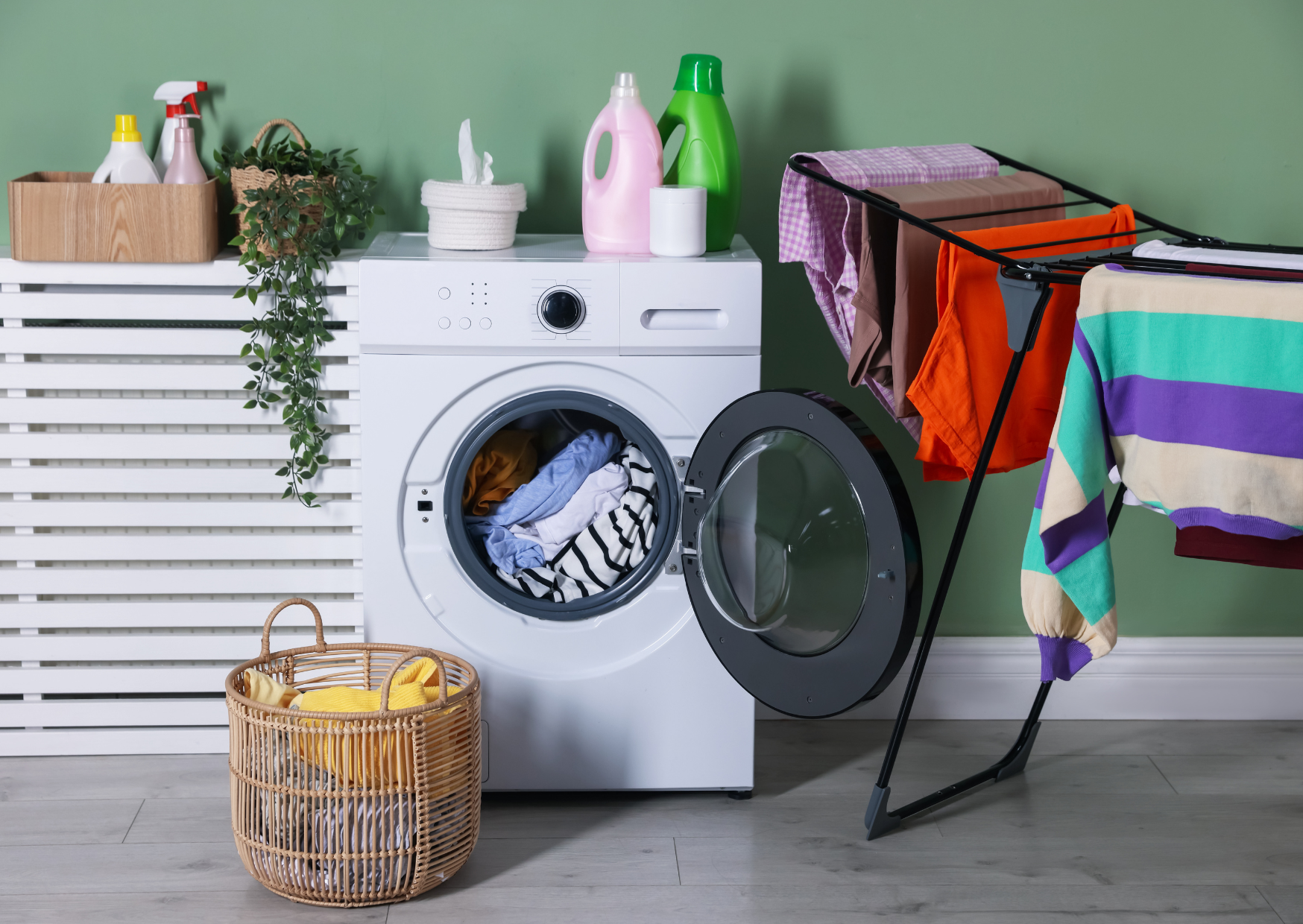
You can move countries, sort out visas, learn a new grocery rhythm, and still get humbled by a wet pair of jeans that refuses to dry.
Americans don’t miss dryers because they’re spoiled. They miss them because the US dryer is a whole household system: fast turnaround, predictable timing, and a psychological promise that laundry will not take over your day.
In a lot of Europe, the system is different. Dryers exist, sure, but they’re not automatic in the way Americans expect. Many homes rely on air drying, racks, balconies, heated towel rails, dehumidifiers, and planning. It works. It’s also the exact kind of slow domestic logistics that makes newcomers feel like they’re failing at adulthood.
This is what’s actually going on, why it’s harder than it looks, and how to build a drying routine that doesn’t turn your home into a damp textile museum.
The real shock is not “no dryer.” It’s no fast turnaround
Americans are used to laundry being a pipeline:
Wash. Dry. Put away. Done.
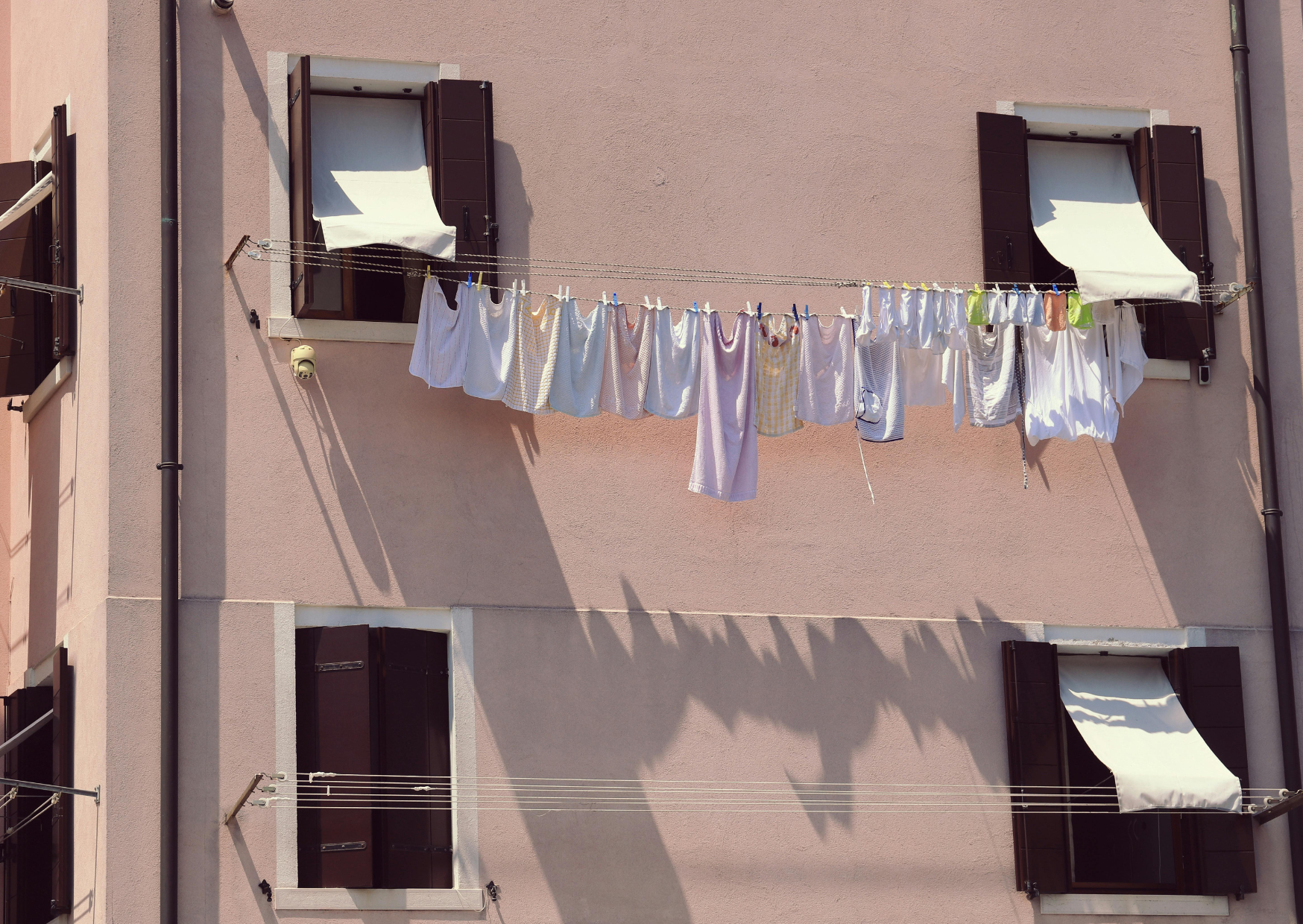
In many European homes, laundry is a schedule:
Wash. Hang. Wait. Rotate. Wait. Put away.
That shift matters because it changes the time cost. A dryer compresses time. Air drying stretches it. And if you’re living in an apartment with limited space, that stretched time becomes a constant background nuisance.
The struggle usually hits in week one:
- You do a load.
- You hang it.
- It’s still damp the next day.
- Your towels smell weird.
- You start Googling “best dehumidifier” like it’s a medical emergency.
What you’re missing is not a machine. You’re missing throughput.
The fix is not “buy a dryer.” The fix is learning the European drying system, which is mostly about airflow, spacing, and load size.
Why dryers are less common in many homes
This is not one reason. It’s a stack.
Space
Apartments are often smaller. A full-size dryer is not always an easy fit. Even if there’s room, it can feel like giving up valuable storage for something you didn’t grow up needing.
Energy costs and habits
In many places, household energy prices and cultural norms push people toward air drying as the default. Dryers feel like a “nice to have,” not a baseline.
Building design
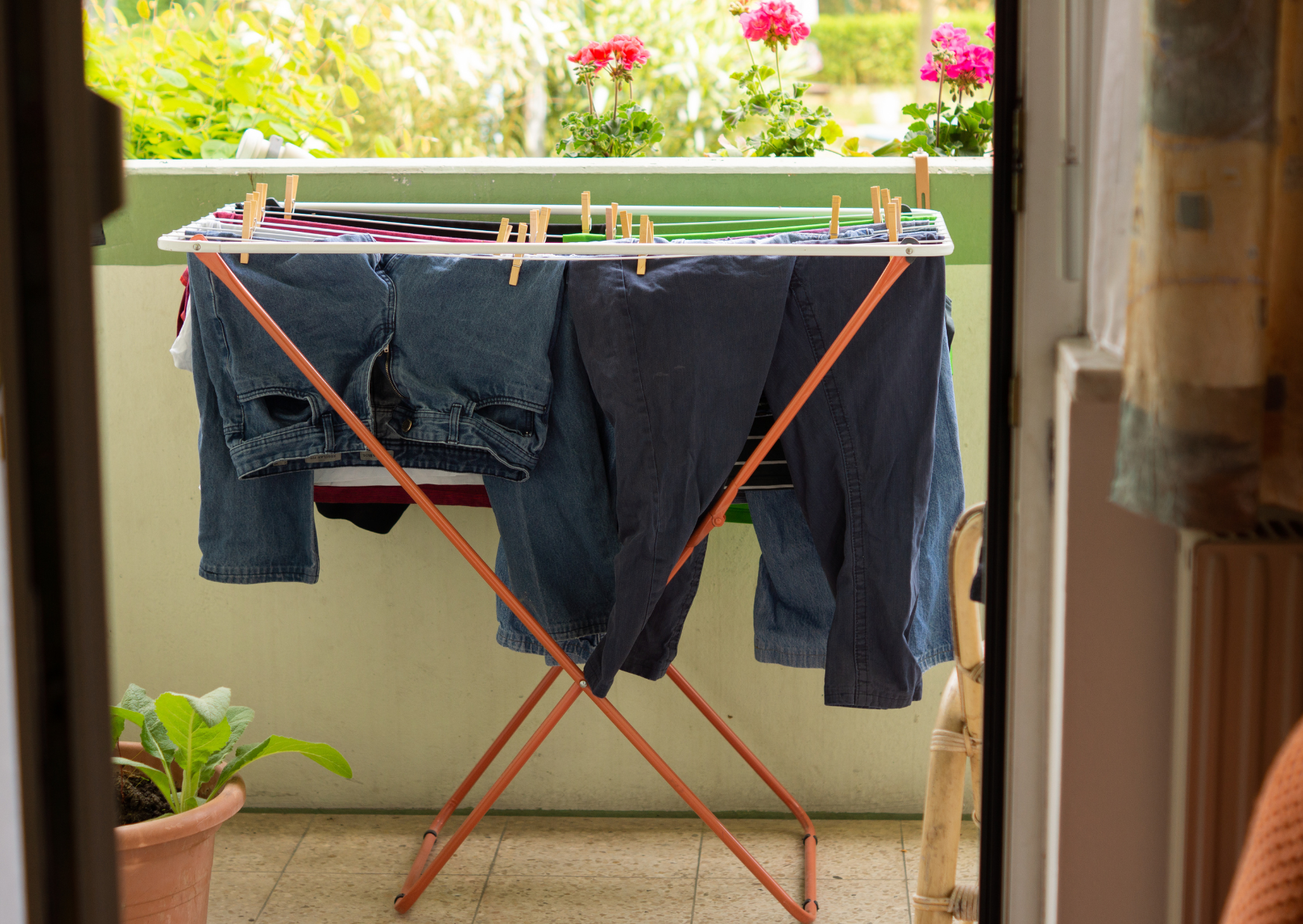
Balconies, interior courtyards, and dedicated laundry rooms are more common in some housing stock than Americans expect. If you have a balcony with sun and breeze, air drying is not a hardship. It’s just what you do.
Climate reality
In the right months, air drying is effortless. In the wrong months, it’s a damp slow-motion disaster. Locals adapt seasonally. Americans arrive expecting one year-round method.
The result is a continent-wide pattern: many households treat the dryer as optional, and many simply don’t have one.
The European drying toolkit: what people actually use
This is the part Americans don’t see in short visits because it’s not tourist content. It’s just normal life.
The drying rack
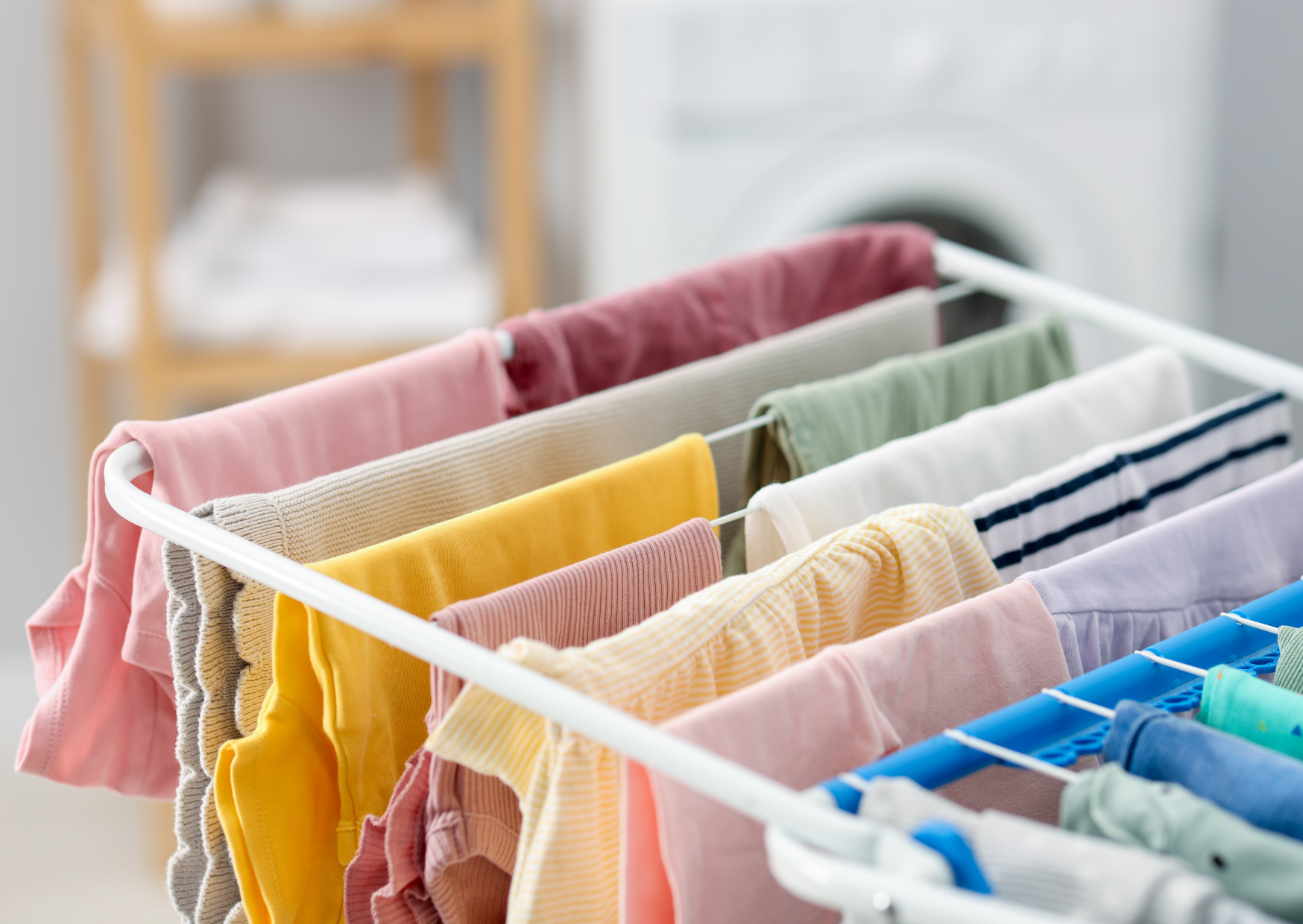
The classic foldable rack is the backbone. It’s cheap, flexible, and surprisingly effective when used correctly.
The mistake Americans make is hanging clothes too close together. If air can’t move, the rack becomes a humidity trap.
Key habit: space matters more than heat.
The balcony or window
Sun and airflow are free. Lots of households dry outside whenever possible because it’s faster and it keeps humidity out of the home.
If you’ve never dried clothes outside, you will be shocked how fast it works on a warm breezy day.
The heated towel rail
In many bathrooms, the towel rail is not a luxury. It’s part of the drying strategy. It dries towels, helps manage bathroom humidity, and in some cases warms the room just enough to keep mold at bay.
The dehumidifier
This is the secret weapon in humid climates and winter months. A dehumidifier does two jobs at once:
- pulls moisture out of the air so clothes dry faster
- reduces that damp smell that makes everything feel dirty
If you’re in a humid area, a dehumidifier often gives you dryer-like reliability without the dryer.
The ventilation routine
A lot of Europeans manage indoor humidity by habit: airing out rooms, opening windows for short bursts, and keeping airflow moving. It sounds basic. It’s massively effective.
If you come from a US habit of closed windows and constant HVAC, this takes adjustment.
Why Americans struggle specifically
Europeans don’t have a secret laundry gene. They just grew up with different defaults.
Americans struggle because they keep applying dryer logic to an air-drying system.
Here are the biggest mismatch points.
1) Load size is wrong
Americans wash big loads. European machines and racks often assume smaller loads. If you wash too much at once, you cannot hang it with adequate spacing.
So clothes stay damp longer. Then you hang them longer. Then your apartment gets humid. Then you get that sour smell. Then you blame Europe.
The fix: smaller loads, more often.
2) Spinning is undervalued
If your spin speed is low, your clothes come out wet. Air drying will feel impossible.
Many European washers have high-spin options. Use them for items that can tolerate it, like cotton, towels, and bedding.
Key move: max spin for towels.
3) Americans expect “dry” to mean “today”
In many households, the rhythm is overnight or daytime. You hang in the evening, take down in the morning. Or you hang in the morning and take down by dinner.
When you insist on immediate turnaround, air drying feels like failure.
4) Indoor humidity surprises people
If you dry clothes indoors with no airflow, you are pumping water into your living space.
That can cause:
- musty smells
- condensation on windows
- mold risk in corners
- towels that never feel fresh
Europeans tend to manage this with ventilation, dehumidifiers, and seasonal shifts. Newcomers often don’t.
5) “Nice” fabrics behave differently
Thicker cotton, denim, and hoodies can take forever. Locals often adapt their wardrobe to their drying reality without even thinking about it.
If you’re wearing heavy US-style casual clothes and doing indoor winter drying, you’re choosing hard mode.
The towel problem and the smell problem
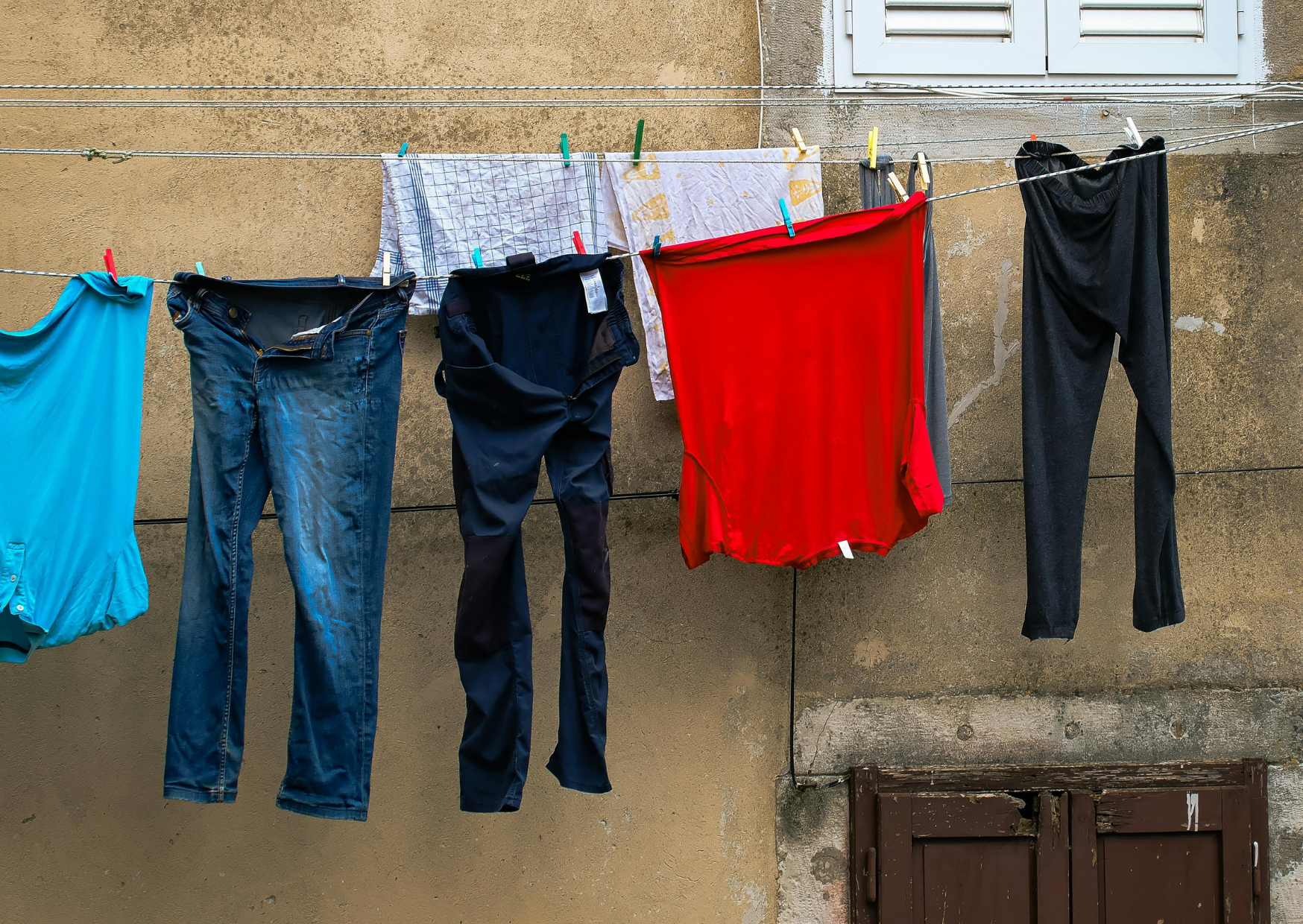
This is where Americans get truly furious.
Towels in an air-drying setup must dry fully, quickly. If they stay damp too long, bacteria and mildew odors show up fast. That smell is hard to remove once it’s set in.
The main causes:
- towels hung folded or doubled
- not enough airflow
- drying in a closed bathroom
- low-spin wash
- too much detergent residue
Practical fixes that actually work:
- use high spin
- shake towels before hanging
- hang them flat, not doubled
- dry towels near airflow, not in a sealed bathroom
- use less detergent than you think you need
- do a hotter wash occasionally for towels and bedding
If you take nothing else from this piece, take this: drying speed is hygiene.
Summer vs winter: the system changes by season
This is the part Americans underestimate. They think once they “figure it out,” they’re done.
In reality, you run two different systems:
Warm months
- outdoor drying whenever possible
- faster turnaround
- low humidity buildup indoors
- racks are manageable
Cold or humid months
- indoor drying becomes a humidity management task
- dehumidifier becomes valuable
- heating and airflow matter more
- you may need to reduce load size further
- you may need to prioritize drying essentials first
Europeans don’t think of this as complicated. It’s just seasonal living. But Americans often want one stable, year-round setting. Air drying doesn’t work like that.
When it makes sense to buy a dryer anyway
Dryers are not taboo. They’re just not automatic.
Buying one makes sense if:
- you live in a humid climate with long damp seasons
- you have kids and constant laundry throughput
- your apartment has no good drying space
- you have allergies and want to avoid outdoor pollen drying
- you value time more than energy cost
If you do buy one in Europe, know the common reality:
- condenser and heat pump dryers are more common than vented models in many apartments
- they can be slower than US dryers but much more efficient
- they solve the towel problem immediately
The key is to make the decision based on your life, not ideology.
A realistic first-week setup that actually works
This is the part people want. Not theory. A simple routine that keeps your home livable.
The next 7 days: build a drying system that doesn’t ruin your apartment
Day 1: Buy a proper rack and stop pretending a chair is a rack
Get a stable rack with enough rails to spread items out. Spread is the whole game.
Day 2: Change your washer settings
Use higher spin for cottons and towels. You’re trying to remove as much water as possible before drying even begins.
Day 3: Pick a dedicated drying zone
Choose a spot with airflow, near a window or where air naturally moves. Avoid hanging everything in a sealed bathroom.
Day 4: Start doing smaller loads
This is the hardest adjustment. Do it anyway. A smaller load that dries fully is better than a huge load that smells weird for two days.
Day 5: Fix towel protocol
Wash towels with adequate spin, hang them flat, and make sure they dry within 12 to 24 hours. If they don’t, change the setup.
Day 6: Add airflow or add dehumidification
If your clothes are still damp the next day indoors, you need either more airflow or a dehumidifier. Don’t fight physics.
Day 7: Adjust your wardrobe expectations
Heavy hoodies and thick denim are drying anchors. If you’re in a damp season, rotate in lighter layers that dry faster. Your closet can help you.
This is not about becoming European. It’s about creating a system that matches your home and climate.
The boring fix that works
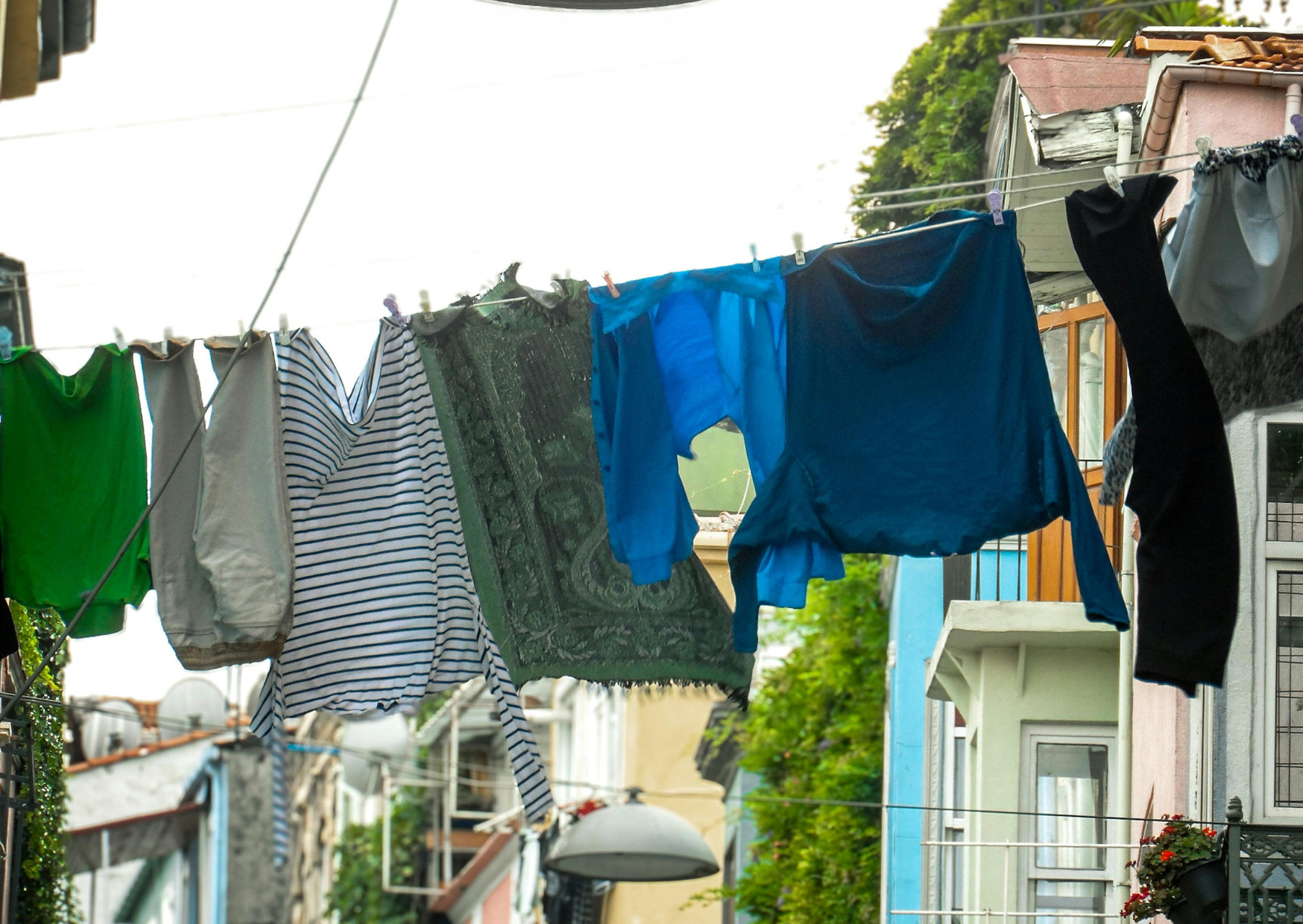
Air drying isn’t a moral choice. It’s just the default in many European homes.
Americans struggle because they expect dryer-level turnaround in an air-drying system, overload the washer and rack, and underestimate indoor humidity.
The fix is boring and practical:
- wash smaller loads
- use higher spin
- space items properly
- dry near airflow or outdoors
- add a dehumidifier if your climate demands it
- treat towels like a hygiene item, not a casual cloth
Once you do that, “no dryer” stops feeling like a hardship and starts feeling like a normal household rhythm.

About the Author: Ruben, co-founder of Gamintraveler.com since 2014, is a seasoned traveler from Spain who has explored over 100 countries since 2009. Known for his extensive travel adventures across South America, Europe, the US, Australia, New Zealand, Asia, and Africa, Ruben combines his passion for adventurous yet sustainable living with his love for cycling, highlighted by his remarkable 5-month bicycle journey from Spain to Norway. He currently resides in Spain, where he continues sharing his travel experiences with his partner, Rachel, and their son, Han.