
If you think Italian home cooking is a never-ending parade of simmering ragù and nonna-approved feasts, you’ve been watching too much internet Italy. Real Tuesday-night Italian cooking is mostly about getting fed with what’s already in the kitchen, in under an hour, without turning dinner into a second job.
The most “Italian” thing about a weeknight dinner is not a rare ingredient. It’s the restraint. A few staples. A predictable rhythm. A dish that tastes like you meant it, even when you absolutely did not.
Ask anyone who actually cooks at home in Italy and you’ll hear the same themes: pantry pasta, legumes, greens, eggs, tinned fish, a little cheese, olive oil, garlic. Comfort food that’s also just… food.
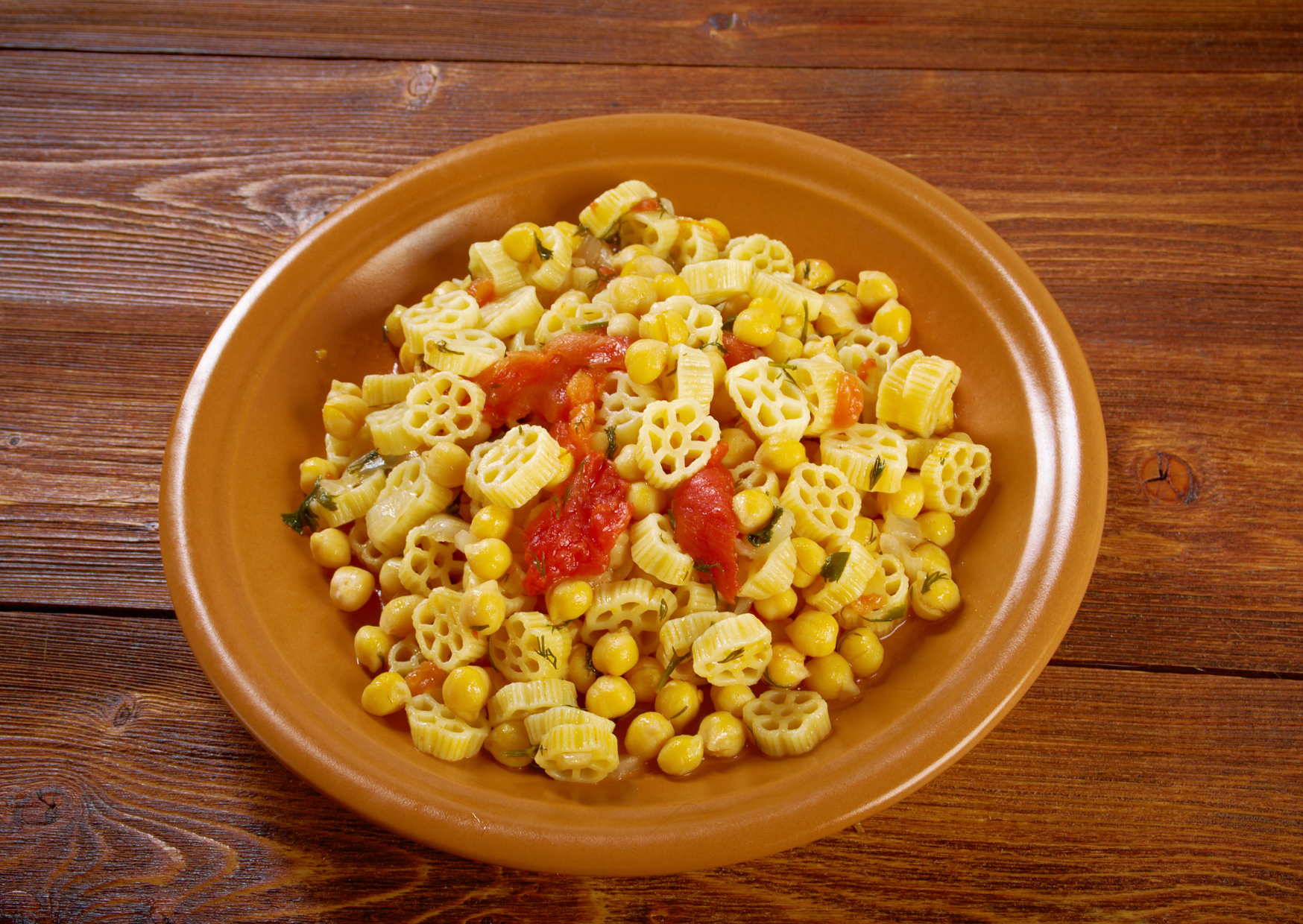
Tonight’s centerpiece is the one that shows up across regions in different forms: pasta e ceci (pasta with chickpeas). La Cucina Italiana calls it Italian comfort food, and it’s exactly that: warm, filling, and built from boring ingredients.
The real Tuesday-night formula is pantry + one fresh thing
Here’s the pattern behind a lot of Italian weeknight meals:
- One pantry backbone: pasta, beans, rice, bread.
- One flavor base: garlic, onion, rosemary, chili, tomato paste.
- One “lift”: lemon, greens, a salty finishing cheese, good olive oil.
That’s it. Not twelve ingredients. Not a “quick 45-minute” recipe that uses three pans and your sanity.
Pasta e ceci sits right in the middle of that formula. It’s cucina povera energy without the cosplay. Chickpeas make it hearty. Pasta makes it satisfying. The broth turns creamy because starch and chickpeas do their thing without asking permission.
And yes, Italians do cook like this on a weekday. La Cucina Italiana literally frames pasta and chickpeas as a classic combo, with notes on pasta shapes and regional variations.
The recipe you can actually make on a Tuesday
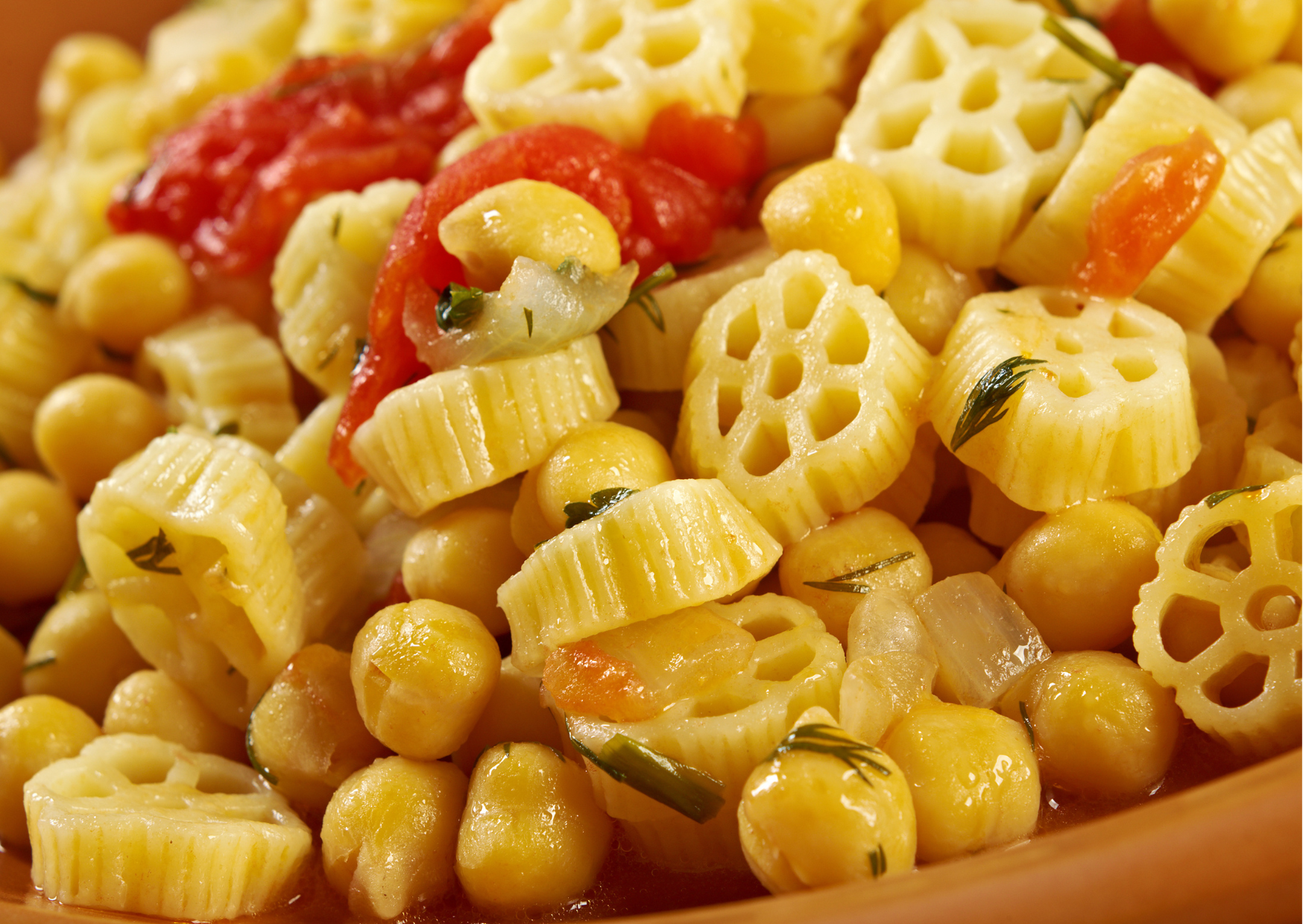
This version is the weeknight version: canned chickpeas, one pot, no soaking, no drama. You’ll get a brothy, creamy pasta, not a dry “pasta salad” situation.
Pasta e ceci (one-pot, weeknight version)
Serves: 3 hungry adults, or 2 adults + leftovers
Prep: 10 minutes
Cook: 25 to 30 minutes
Total: 35 to 40 minutes
Ingredients
- 3 tbsp extra-virgin olive oil, plus more to finish
- 1 small onion, finely chopped (or 2 shallots)
- 3 cloves garlic, thinly sliced
- 1 tsp tomato paste (optional, for a slightly deeper base)
- 1 sprig rosemary (or 1 tsp dried)
- Chili flakes or a small dried chili, to taste
- 2 cans chickpeas (about 400 g each), drained and rinsed
- 900 ml to 1 liter vegetable broth or water (start with 900 ml)
- 220 to 260 g small pasta (ditalini, tubetti, pasta mista, small shells)
- Salt and black pepper
- 30 to 50 g grated Pecorino Romano or Parmigiano Reggiano (optional)
- Optional: 3 to 5 anchovy fillets (for a Roman-ish savory kick)
This lines up with how Italian sources describe the dish: chickpeas, aromatics like garlic and rosemary, broth, then pasta cooked in the pot, finished with olive oil and optionally cheese or chili.
Method
- Start the base. Warm olive oil in a pot over medium heat. Add onion and a pinch of salt. Cook 6 to 8 minutes until soft.
- Add the aromatics. Add garlic, rosemary, and chili. If using anchovies, add them now and mash them into the oil. Cook 1 minute.
- Build the broth. Stir in tomato paste (if using) for 30 seconds. Add chickpeas and 900 ml broth. Bring to a simmer.
- Make it creamy without cream. Scoop out about 1 cup of chickpeas and mash or blitz them with a little broth, then stir back in. This is the cheat that makes the broth silkier.
- Cook the pasta in the pot. Add pasta and simmer, stirring often, until al dente. Add more broth as needed. You’re aiming for a thick soup, not a dry pot.
- Rest, then finish. Turn off heat and cover 3 minutes. Taste for salt. Finish with olive oil, black pepper, and cheese if using.
What it should look like
Thick and brothy. The pasta is suspended, not swimming in water, not glued together. If it tightens up too much, you add a splash of hot water and stir. Italians treat this kind of dish as flexible, not fragile.
Bold truth: stir more than you think. Pasta releases starch and thickens the pot fast.
Why this works (the science, not the romance)
Pasta e ceci tastes like comfort because it’s basically a controlled starch situation.
- Pasta starch thickens the broth. When pasta cooks in liquid, it releases starch into the pot. That starch binds water and creates body.
- Chickpeas add both starch and protein. Mash a portion and you’ve got a natural thickener that mimics creaminess.
- Fat carries flavor. Olive oil at the beginning builds the base. Olive oil at the end makes it taste finished.
- Salt timing matters. Under-salt early and the base tastes flat. Over-salt late and you ruin the whole pot. Season gradually.
La Cucina Italiana describes cooking pasta with chickpeas as a classic approach and points out that pasta shape changes by region. That’s the same logic as the science: shape affects starch release and how quickly the pasta turns the broth creamy.
Two practical rules:
- Small pasta wins here because it thickens the broth faster.
- Resting matters because the pot keeps thickening after heat is off.
The Tuesday-night cost breakdown (and why this is such a staple)
This is one of those meals that feels too filling for how cheap it is.
Approximate Spain supermarket costs (varies by brand and city):
- Chickpeas (2 cans): €1.60 to €2.80
- Pasta (250 g): €0.50 to €0.90
- Onion + garlic + rosemary: €0.60 to €1.20
- Olive oil portion: €0.40 to €0.80
- Broth or bouillon: €0.20 to €0.60
- Cheese (optional, 40 g): €0.80 to €1.60
Total: about €3.30 to €7.70 for the pot
Per serving: roughly €1.10 to €2.60
For US readers, the same pot is often about $6 to $13 depending on olive oil and cheese choices, still very economical for a filling dinner.
This is why this style of cooking persists. It’s not “poor food.” It’s smart food. It’s how you feed yourself without making dinner a lifestyle brand.
Substitutions, upgrades, and what not to mess with
You can bend this recipe a lot without breaking it.
Good substitutions
- No onion: use more garlic and a pinch of powdered onion.
- No rosemary: sage works, or thyme. Even a bay leaf helps.
- No broth: water + bouillon cube is fine.
- Gluten-free: use GF small pasta, but watch timing and stir gently.
- No cheese: finish with extra olive oil and black pepper, still great.
- Want greens: stir in spinach or chopped kale in the last 2 minutes.
Easy upgrades that still feel Italian
- Add a spoon of tomato passata for a rosier broth.
- Add lemon zest at the end for brightness.
- Add sautéed mushrooms for a deeper base.
- Add pancetta if you want it richer, but don’t overdo it.
What not to do
- Don’t use giant pasta shapes. You’ll get uneven cooking and weird texture.
- Don’t skip the stirring. Pasta will stick and the bottom will scorch.
- Don’t drain and rinse the pasta after cooking it separately. That defeats the whole point.
Key move: mash some chickpeas. It’s the difference between “bean soup with pasta” and “this tastes like Italy on a Tuesday.”
Common mistakes and how to fix them in 60 seconds
“It’s bland.”
Fix: Add salt, pepper, and a final drizzle of olive oil. If you have it, add a little cheese. If you used only water, add a bouillon boost.
“It turned into paste.”
Fix: Add hot water or broth a splash at a time, stir, and stop when it loosens. Next time, cook pasta 1 minute less and rest 3 minutes.
“The pasta is overcooked.”
Fix: You can’t un-cook it, but you can make it intentional. Add more broth and treat it like a thicker soup. Eat it anyway. Italians do not throw food away because the pasta is a touch soft.
“It stuck to the pot.”
Fix: Lower heat and stir more. If you scorched it, do not scrape the burnt bottom into the soup. Carefully ladle into another pot and pretend this never happened.
“It’s watery.”
Fix: Simmer uncovered for 2 minutes while stirring, or mash more chickpeas directly in the pot.
This is a forgiving dish. Your job is not to be perfect. Your job is to get dinner on the table.
Make this once, eat all week (your 7-day rotation)
This is where the Tuesday-night logic becomes life logic.
Day 1: Cook the pot
Make pasta e ceci as written. Eat it hot with olive oil and pepper.
Day 2: Lunch leftovers
It will thicken in the fridge. Reheat with a splash of water. Taste and re-salt. Finish with olive oil again. Olive oil twice is not extra, it’s correct.
Day 3: Turn it into “pasta e ceci al forno”
Put leftovers in a baking dish, top with a little cheese and breadcrumbs, bake until bubbling. Now it’s a totally different dinner.
Day 4: Add greens
Reheat with spinach or kale and a squeeze of lemon. Suddenly it tastes lighter.
Day 5: Make it spicy and tomato-forward
Stir in tomato paste and chili flakes while reheating. Serve with bread. This feels like a new meal.
Day 6: Stretch it into soup
Add more broth and a handful of chopped vegetables. It becomes a chickpea soup with pasta, still satisfying.
Day 7: Pantry reset shopping list
If you liked this, keep the “Italian Tuesday” staples stocked:
- 2 to 4 cans chickpeas
- 2 bags small pasta
- onions, garlic
- bouillon or broth
- rosemary or dried herbs
- decent olive oil
- optional: pecorino, anchovies, chili
The secret to weeknight Italian cooking is not inspiration. It’s inventory.
So what do Italians actually cook on Tuesday?
A lot of the time it’s some version of this: pasta + legumes, eggs + vegetables, soup + bread, pasta with garlic and oil, pasta with tuna and tomatoes. Things that are fast, cheap, and satisfying.
Pasta e ceci is a perfect example because it shows the whole philosophy in one pot. La Cucina Italiana frames it as comfort food, and recipes like the Roman-style versions lean on anchovies for depth, which is exactly the kind of weekday trick Italians use.
It’s not glamorous. It’s not a performance.
It’s dinner. On a Tuesday. The way people actually live.

About the Author: Ruben, co-founder of Gamintraveler.com since 2014, is a seasoned traveler from Spain who has explored over 100 countries since 2009. Known for his extensive travel adventures across South America, Europe, the US, Australia, New Zealand, Asia, and Africa, Ruben combines his passion for adventurous yet sustainable living with his love for cycling, highlighted by his remarkable 5-month bicycle journey from Spain to Norway. He currently resides in Spain, where he continues sharing his travel experiences with his partner, Rachel, and their son, Han.