
I went looking for a credible survey behind “68%” and the “$800/month” figure and I couldn’t find a solid, citable source that I’d be comfortable treating as fact.
But here’s the annoying part: the $800/month underestimate is absolutely believable. Not because Europeans are secretly expensive. Because Americans budget for prices and forget to budget for friction, duplicates, and the first-year reality.
So instead of pretending that statistic is proven, I’m going to do the useful thing: show exactly how an $800/month gap happens, where it hides, and how to price Europe retirement like a grown-up.

Quick and Easy Tips
Build a monthly buffer of at least 15 percent above your projected budget.
Research private healthcare and insurance requirements before relocating.
Test your lifestyle with a 3–6 month stay before committing long term.
Track expenses carefully during your first year and adjust early.
The idea that retiring to Europe is automatically cheaper than living in the United States has become a powerful narrative. Social media and relocation blogs often highlight affordable rents, low grocery bills, and walkable cities. What gets less attention are the hidden and transitional costs that quietly inflate monthly budgets.
One controversial factor is lifestyle inflation. Many retirees do not replicate a modest local lifestyle; they pursue the “dream” version of European living. Dining out frequently, traveling across the continent, or choosing prime city-center housing can push expenses well beyond local averages.
Healthcare assumptions also create friction. While European systems can be more affordable in certain cases, non-citizens often need private insurance or supplemental coverage. Residency requirements and administrative fees add layers that are rarely reflected in surface-level cost comparisons.
Currency volatility adds another layer of unpredictability. A favorable exchange rate at the time of planning may shift months later. Retirees relying on fixed U.S.-based income can feel the impact immediately when the dollar weakens against the euro.
The $800/month gap is usually not one big mistake
Most retirees don’t miss their budget by $800 because groceries are higher than expected.
They miss by $800 because of five boring misses stacked together:
- housing assumptions that are too optimistic
- utilities and winter costs (especially electricity)
- healthcare as a full category (not just insurance)
- transportation creep (car, taxis, “we need convenience”)
- “home costs” like repairs, furnishings, admin, and travel back to the US
None of these feel dramatic. They’re just constant.
The gap is death by a thousand normal expenses.
A realistic example: how $800/month disappears

Let’s say an American couple plans to retire to a coastal-ish European town and builds a “clean” budget:
- Rent: $1,200
- Utilities + internet: $200
- Groceries: $500
- Eating out: $250
- Transport: $150
- Healthcare: $250
- Misc: $350
Planned total: $2,900/month
Then real life arrives.
1) Rent is $300 higher than planned
This is the most common miss. People budget for “a nice place” and then discover “a nice place in a livable neighborhood” is a different number.
Gap: +$300
2) Utilities are $100 higher in winter than the average they Googled
Electricity-heavy heating, damp management, dehumidifiers, and the reality that older housing stock can be expensive to keep comfortable.
Gap: +$100
3) Healthcare is $150 higher because you forgot dental, prescriptions, specialists
Even when insurance is reasonable, retirees still spend on the parts that don’t feel optional once you’re actually living there.
Gap: +$150
4) Transportation creeps by $150
The car you didn’t plan to buy, the taxis you didn’t plan to take, the “we’re too tired to deal with buses today” moments, plus occasional longer trips.
Gap: +$150
5) You forgot the “US gravity” cost: $100 to $200/month
Flights back for family, emergencies, weddings, grandkids, funerals. People say “we’ll visit once a year.” Then life happens. The smart way is to amortize it monthly.
Gap: +$150 (typical)
That’s $850/month without even trying.
Not because you’re irresponsible. Because you didn’t budget for the reality of being a human with a life.
Why Americans underestimate Europe retirement costs specifically

You budget for the destination, not for the transition
The first year is rarely your cheapest year. You pay for:
- deposits and setup
- admin help when the language hits you
- furnishing and replacements
- small repairs you can’t ignore
- temporary housing during paperwork gaps
If you smooth those one-time costs into a monthly number, they can easily add $200 to $500/month equivalent in year one.
You assume you will live like a local immediately
You won’t. Locals have:
- social networks
- system fluency
- stable housing
- appliances already sorted
- a rhythm that avoids “convenience spending”
Newcomers often spend more until the learning curve settles.
You underprice the “comfort tax”
This is the money you spend to reduce friction:
- delivery meals when you’re tired of figuring things out
- private appointments because you want speed
- paid help with paperwork
- taxis when walking feels like too much
- replacing things fast instead of slowly sourcing them
That comfort tax can be the whole $800 gap by itself.
The three retirement budgets you actually need
Most people only write one budget. That’s the mistake.
You need three:
- Starter year budget (higher, because setup and learning curve)
- Normal year budget (once life stabilizes)
- Bad year budget (health issue, travel back to US, rent increase, major repair)
If your plan only works in the normal year, your plan is fragile.
Retirement budgets fail in the bad year, not the normal year.
Where the underestimate hurts most by country
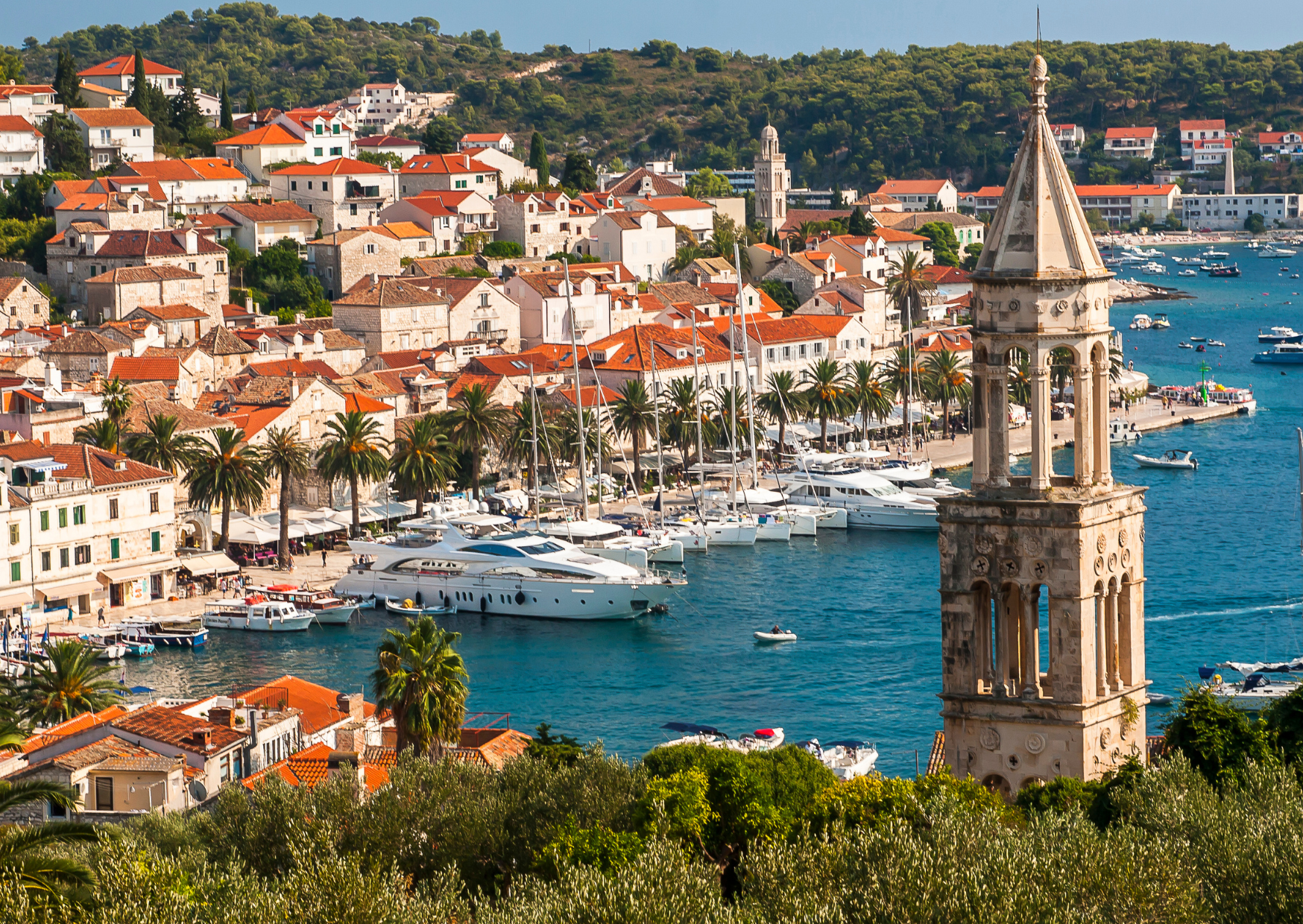
This is not “Spain is cheap” versus “France is expensive.” It’s more specific.
- In Spain and Portugal, people underestimate rent in the best neighborhoods and winter housing comfort costs.
- In Greece and southern Italy, people underestimate car dependence and repairs/maintenance reality.
- In France, people underestimate housing plus bureaucracy friction costs.
- In Croatia, people underestimate tourist pricing and how seasonality changes costs and availability.
Europe retirement budgeting isn’t country-level. It’s micro-location plus housing condition plus your temperament.
The fix: price retirement like you’re already living there
Here’s a simple method that reduces the “$800 surprise.”
Step 1: Use a “Tuesday life” budget
Not vacation life. Tuesday life.
List a normal week:
- groceries
- pharmacy
- café or lunch out
- one errand that costs money
- transport
- one social activity
Then multiply by 4.3 (average weeks per month). That’s your real baseline.
Step 2: Add a comfort buffer on purpose
Add 10% to 20% as “new country friction.”
Not forever. Just until you stabilize.
Step 3: Add a US travel line item even if you “won’t travel much”
If you plan €3,000 per year in travel, that’s €250/month. Put it in the budget.
Step 4: Separate healthcare into three lines

- insurance
- pharmacy and prescriptions
- dental and specialist visits
If you merge them, you will lie to yourself.
Your first 7 days to stop underestimating by $800
Day 1: Write two rent numbers
- rent you hope to pay
- rent you would pay to be in the right neighborhood
Use the higher number until proven otherwise.
Day 2: Price winter utilities, not annual averages
If you can’t, assume winter months are 30% to 60% higher than summer months for utilities in an older home, then adjust later.
Day 3: Add the comfort tax
Put $250/month in a line called “friction.” You can reduce it later. But plan it now.
Day 4: Add healthcare properly
Insurance is not healthcare spending. Build the full category.
Day 5: Add US travel monthly
Even if you only fly annually, budget it monthly.
Day 6: Create a “bad year” scenario
What if rent rises, you need dental work, and you fly home twice?
If that breaks the plan, your retirement location isn’t “cheap.” It’s fragile.
Day 7: Build a one-page budget you can actually follow
If you need a spreadsheet to understand your life, it’s too complicated. Make it readable.
Why You Should Take This Cost Gap Seriously
Underestimating retirement expenses abroad can quietly erode financial security. An $800 monthly shortfall adds up to $9,600 a year, which compounds quickly over a decade. Even in lower-cost European regions, unexpected expenses can narrow the savings advantage many retirees anticipate.
Healthcare is often one of the biggest surprises. While public systems may be affordable, private insurance, supplemental coverage, and residency requirements can introduce costs retirees didn’t factor into their original plan.
Housing expectations also play a role. Popular cities and coastal areas often command higher rents than online averages suggest. Seasonal demand, property taxes, and maintenance fees can shift a “budget-friendly” estimate into something far more expensive.
Currency fluctuations present another risk. Living on U.S.-based retirement income while spending in euros exposes retirees to exchange rate volatility that can change monthly budgets overnight.
Taking this statistic seriously encourages careful financial modeling. Running conservative projections and building a buffer can make the difference between thriving abroad and feeling financially squeezed.
Why You Shouldn’t Assume Europe Is Financially Risky by Default
While some retirees underestimate costs, many successfully manage their budgets with proper research and flexibility. The $800 gap often reflects unrealistic expectations rather than systemic financial failure.
Cost of living varies dramatically across Europe. Major capitals differ significantly from smaller cities or rural regions. Choosing location strategically can align expenses more closely with retirement income.
Lifestyle adjustments matter. Dining out less frequently, living slightly outside tourist centers, or adapting to local consumption habits can dramatically reduce monthly spending.
Healthcare quality and infrastructure in many European countries remain strong value propositions compared to certain U.S. costs. For some retirees, even with higher-than-expected expenses, overall financial stability improves.
The key is preparation, not fear. With accurate research, contingency planning, and realistic expectations, retiring in Europe can still be financially sustainable and rewarding.
Final Thoughts

I can’t back the “68%” statistic as a verified claim.
But I can tell you the $800/month underestimate happens constantly because the misses are predictable: housing reality, winter comfort, healthcare beyond insurance, transport creep, and US travel gravity.
If you budget for those upfront, Europe retirement stops being a financial surprise and starts being what you wanted in the first place: a calmer life that actually works.
Underestimating costs by $800 a month is not necessarily a sign of failure. It often reflects optimism combined with incomplete information. Many retirees focus on visible savings and overlook structural expenses.
The first year abroad is typically the most financially unpredictable. Deposits, paperwork fees, initial setup costs, and lifestyle experimentation can temporarily inflate spending. Over time, many retirees stabilize their budgets once routines are established.
Retiring in Europe can still be financially rewarding. Lower transportation costs, walkability, and different consumption habits may reduce spending in ways not immediately obvious. The key is distinguishing between permanent expenses and transition-related costs.
Ultimately, the difference between financial stress and financial freedom abroad lies in preparation. Conservative projections, realistic expectations, and adaptability matter far more than viral cost-of-living comparisons.

About the Author: Ruben, co-founder of Gamintraveler.com since 2014, is a seasoned traveler from Spain who has explored over 100 countries since 2009. Known for his extensive travel adventures across South America, Europe, the US, Australia, New Zealand, Asia, and Africa, Ruben combines his passion for adventurous yet sustainable living with his love for cycling, highlighted by his remarkable 5-month bicycle journey from Spain to Norway. He currently resides in Spain, where he continues sharing his travel experiences with his partner, Rachel, and their son, Han.