

Five years in, Spain stopped feeling like the “move abroad” experiment and started feeling like the default setting. Not perfect. Not always easy. But quieter in the ways that matter, and livable in the ways the US kept making expensive.
We still love a lot about the US. We miss people. We get nostalgic. But when Americans talk about the constant cost stack and the always-on urgency, we know exactly what they mean.
We’re still not moving back.
The daily stress level is lower, and it stays lower
The easiest way to explain Spain is this: the baseline is calmer. Not “vacation calm.” More like your nervous system is no longer doing unpaid overtime.
In Spain, a normal week doesn’t feel like a series of sprints with penalties. The culture expects you to be a person in public, not a productivity unit with a credit card. That shows up in tiny, boring ways that add up: how people talk to each other, how long a lunch can reasonably be, how acceptable it is to say no, how much “urgent” stuff is actually urgent.
You can still work hard here. People do. But the environment does not constantly dare you to collapse.
A lot of Americans hear that and assume it’s just vibes. It’s not. It’s systems.
- Public space is designed for humans. Sidewalks that make sense, plazas, parks, benches, kids out late, grandparents in the mix. You’re not trapped in the house unless you want to be.
- Life is locally scaled. In many Spanish cities, you can do 80 percent of your life within a 15 to 20 minute walk.
- Time has texture. Weeknights are not just “work, commute, collapse, scroll.”
And yes, Spain has its own stressors. Bureaucracy can be a sport. The job market can be stubborn. Wages can be lower. Some offices still operate like it’s 1997 and the printer is in charge.
But the day-to-day pressure cooker feeling is just… less. Less ambient panic, less performative urgency, less financial jump-scare energy. That alone is a lifestyle upgrade people underestimate until they feel it.
Healthcare stopped being the loudest thing in the room

In the US, healthcare is never just healthcare. It’s a constant negotiation. It’s bills you cannot predict. It’s phone calls that feel like interrogations. It’s the weird moralizing tone of “coverage.” It’s the underlying fear that a random injury can become a financial event.
In Spain, healthcare becomes what it should have been the whole time: a service you access without it hijacking your life.
If you’re in the public system, you get a tarjeta sanitaria, you have a local centro de salud, you see your family doctor, you get referred to specialists, you pick up prescriptions. Wait times can be real depending on region and specialty. Nobody pretends it’s instant. But the difference is that the process is not designed to extract money through confusion.
Most expat families we know do a mix: public system plus some private coverage, especially if they want faster access for certain specialists.
For context with real numbers: private health insurance in Spain can often land around €60 to €200 per adult per month, depending on age, coverage, and pre-existing conditions. Kids are often cheaper. Some plans have copays, some don’t. Even if your premium is on the higher end, you’re still not living under the US-style “one ER visit could ruin the year” cloud.
Also: prescriptions. Spain’s pricing varies by situation and coverage, but the general experience is not “why is this medication the price of a used car.” You still budget for it, but it’s not theatrical.
And then there’s the psychological part. The US trains you to avoid care until you are sure it’s “worth it.” Spain trains you to just go to the doctor when you need to. That changes how you parent, how you age, how you sleep.
Predictability matters. Access matters. The fear tax disappears.
We’re not saying Spain is perfect. We’re saying the US system is loud on purpose. Spain’s is quieter by design.
Our monthly costs got boring, and that’s the point

Spain can be expensive if you force it to be. If you insist on living in the most in-demand neighborhoods of Madrid or Barcelona, eating out constantly, paying for international schools, and traveling every weekend, you can burn money just like anywhere else.
But if you live like a normal person here, the numbers are simply less punishing.
Here’s a realistic, non-influencer monthly picture for a family living in a Spanish city (not a tiny village, not a penthouse neighborhood). These ranges move by city and lifestyle, but they’re grounded:
Spain: typical monthly costs (euros first)
- Rent: €900 to €1,600 (depending on city, size, neighborhood)
- Utilities (electricity, gas, water): €120 to €250
- Internet + mobile: €40 to €90
- Groceries for a family: €350 to €650
- Public transport (or mixed transport): €60 to €150
- Private health insurance (optional, family): €150 to €450
- Eating out and cafés: €120 to €350 if you’re not pretending you’re on holiday
- School extras, activities, kid stuff: €60 to €200
Now compare the emotional experience of those bills to the US equivalents. In the US, rent or mortgage can swallow a household. Healthcare and insurance alone can feel like a second housing payment. Car dependence becomes a mandatory subscription: payment, insurance, gas, repairs, parking, tolls. Childcare can be a full salary.
US: typical monthly costs (USD for contrast)
This varies wildly by region, but a lot of families in many US metros see something like:
- Housing: $2,000 to $4,000+
- Health insurance premiums + out-of-pocket: $600 to $1,800+
- One or two cars all-in: $700 to $1,500+
- Childcare: $1,000 to $2,500+ (often more)
- Groceries: $600 to $1,000+
- Internet + mobile: $120 to $250
You can quibble with the exact numbers, and you should, because every city is different. But the pattern is stable: the US stacks essential costs in a way that keeps you earning, worrying, and chasing.
Spain’s costs are not “cheap.” They are more proportionate. We spend less time bracing for the next hit.
Also, Spain makes it easier to opt out of some high-cost defaults. You can live without a car. You can walk. You can use public transport. You can exist in public without paying a cover charge.
That’s what we mean by boring bills. Rent is still your big one, but it’s not rent plus healthcare plus cars plus childcare plus surprise everything.
Safety and the way public life works changed how we parent
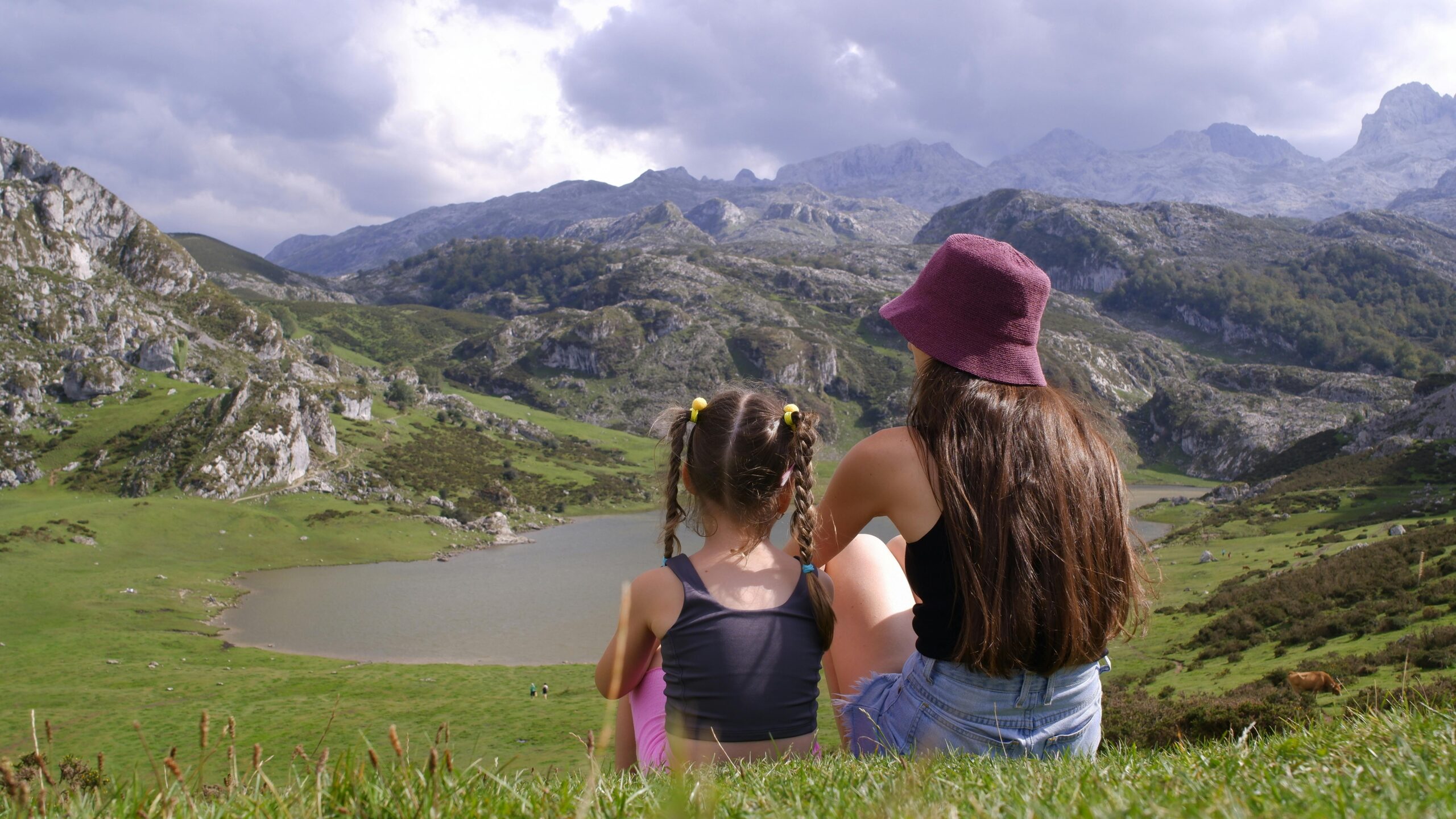
Spain is not a fantasy land. Stuff happens. Cities have petty theft. You pay attention, especially in tourist-heavy zones. But the overall sense of public safety, especially in everyday family life, is different.
Kids are out. Families are out. People use the streets. There’s a casual social surveillance that comes from communities actually existing outside.
In many Spanish neighborhoods, a normal evening includes:
- kids playing in plazas
- parents chatting nearby
- grandparents walking laps
- cafés full but not chaotic
That matters for a family. It changes your routines. It changes what you consider “normal.”
In much of the US, parenting can become a logistics operation shaped by fear and distance. You drive from bubble to bubble. You schedule playdates like corporate meetings. You pay for “safe environments.” You stay home because outside is either unsafe, unpleasant, or expensive.
Spain does not eliminate parenting stress, but it removes some of the structural anxiety. Public life feels usable. Independence arrives earlier. Community is not a niche hobby.
Also: the soundscape. Spain can be loud socially, sure. But it’s a human loud. It’s not the constant edge of aggression you can feel in some US contexts, especially where everyone is stressed and armed and one bad day can escalate into something irreversible.
You notice it most when you go back to visit the US. The vibe can feel tighter, more suspicious, more ready to pop. That’s not an insult. It’s what happens when a society runs on pressure.
Spain still has conflict. People still argue. But the temperature in public life feels lower.
Work did not become easier, but it became less consuming

Let’s be honest: if you move to Spain expecting to “make American money with Spanish life,” you might be disappointed. Wages can be lower, career ladders can move slower, and some industries simply pay differently.
But here’s what surprised us: even when work is challenging, it doesn’t colonize the entire week the same way.
There’s a difference between “I work a lot” and “work is the organizing principle of my existence.”
Spain’s work culture varies by sector and company, and there are definitely places that still fetishize presenteeism. But the wider society does not worship the grind the way the US does. That shows up in how people talk about work. In how bosses are tolerated. In what sacrifices are considered normal.
And yes, Spain has bureaucracy that can make you feel like you’re in a Kafka reboot. But that’s different from the US feeling where every system is optimized for extracting money and time from you while smiling.
For a lot of Americans, the issue is not that they love work. It’s that the US makes everything else expensive, so you cannot afford to have a life outside it. Spain makes a life outside work more available.
You can finish work and still have:
- a walk that feels pleasant
- a cheap coffee that isn’t a $9 identity statement
- a dinner that doesn’t cost the same as a small appliance
- a neighborhood that stays awake and social
That makes “work stress” more survivable. Life is not a reward you earn. Rest is not treated like weakness. Your evenings belong to you more often.
The trade-offs are real, and we’re still choosing them
This is the part people skip because it’s not viral enough. Spain is not a cheat code. It’s a set of trade-offs that we find more honest.
Here are the biggest ones, plainly:
1) Bureaucracy can be slow and stubborn
Residency paperwork, renewals, appointments, stamps, systems that don’t talk to each other. You learn patience. You learn to bring extra documents. You learn to print things in an era that should not require printing.
But here’s the thing: it’s annoying, not terrifying. It rarely carries the financial threat level the US attaches to basic life logistics.
2) Wages can be lower
If you are tied to a Spanish salary in some sectors, you will feel it. That’s why many expats look for remote work, international companies, or dual-income strategies.
But lower wages do not automatically mean lower quality of life if your core costs are structured differently.
3) Housing can be frustrating in big cities
Madrid and Barcelona have real housing pressure. So do parts of Valencia, Málaga, and other high-demand areas. Quality varies. You can find gorgeous apartments and also apartments that seem designed by someone who hates insulation.
Still, even with housing challenges, the overall cost stack can remain lighter than the US version.
4) Some things are less convenient
US convenience is unmatched in certain categories. Big box stores, delivery, 24-hour everything, customer service that sometimes actually does what you want.
Spain is more “come back tomorrow.” But you adapt. You build routines. And in exchange, life stops feeling like it’s accelerating without your consent.
5) You will miss people
This is the hardest part. It’s not about croissants. It’s about relationships. Time zones. Milestones you can’t attend. Family you want to hug, not FaceTime.
We don’t minimize that. We just know it’s not enough to make us want the US system again.
Because the trade-offs here are about inconvenience. The trade-offs there can be about financial risk, healthcare fear, work consumption, and constant stress.
We’re choosing the version that lets us breathe.
What “going back” would actually mean in practice

People talk about moving back to the US like it’s a simple choice. It’s not. It’s a complete reconstruction of daily life.
If we moved back, we’d likely need:
- higher income, immediately, to match the US cost stack
- a car (probably two), depending on location
- healthcare coverage we’d have to evaluate like a legal document
- a housing plan that doesn’t eat the entire paycheck
- a school or childcare plan that functions without turning into a second job
And then there’s the subtle part: the cultural re-entry.
The US can feel like:
- everything is up for sale
- everything is politicized
- everyone is tired
- every interaction has a transactional undertone
That’s not a moral judgment. It’s an observation. It’s what a high-pressure economy does to a society.
Spain has its own politics, its own tensions, its own frustrations. But your daily life is not constantly dragged into the national mood. You can live. You can go to the market. You can take your kid to the park. You can do normal life without feeling like you need a strategy session to stay stable.
Also, it’s worth saying out loud: in the US, the safety conversation is different. Even if you personally never encounter violence, you live in a society where it’s a background possibility in more places. That changes your nervous system.
So when someone says, “But don’t you want to go back someday?” the real question is: go back to what, exactly?
Go back to a culture that often frames exhaustion as achievement? Go back to a cost structure that punishes you for being human? Go back to the constant mental budgeting of healthcare, safety, and work?
We understand the appeal of the US. We just understand the price too.
The first seven days if you’re thinking about making the same call
If you’re reading this and thinking, “Okay, but how do I figure out if Spain would actually work for me,” here’s a blunt first-week plan that doesn’t require you to cosplay as an expat influencer.
Day 1: Pick two cities, not ten
Choose one “big city” option and one “smaller city” option. Example pairings:
- Madrid + Valencia
- Barcelona + Málaga
- Bilbao + Alicante
You’re looking for daily-life fit: climate, walkability, airport access, and how much tourist pressure you can tolerate. Two options keeps it real, and it prevents endless browsing.
Day 2: Build a realistic monthly budget in euros
Do it with your real habits, not your fantasy self.
Start with:
- rent range for the city
- utilities
- groceries
- transport
- health insurance (if you want private)
- school or childcare assumptions if relevant
Then add a buffer. Spain has fewer financial jump scares, but it still has costs. Budget in euros first. Convert to USD only to sanity-check.
Day 3: Learn the paperwork path that applies to you
Not “all visas.” Yours.
Are you looking at:
- work-based options
- non-lucrative style routes
- digital nomad type setups
- family pathways
You don’t need to memorize law. You need to understand what documents you’ll be asked for, and what timelines feel realistic. Paperwork is the gate, so you don’t want to discover that on month six.
Day 4: Price out healthcare like an adult
Look at private plans for your ages and needs. Note ranges. Make a list of ongoing medications or recurring care and research how that tends to work in Spain. You’re not chasing perfection. You’re testing whether the system is livable for you.
Day 5: Simulate the daily routine
This sounds silly but it’s the most honest exercise.
Ask:
- Do I want to walk daily?
- Can I live without a car?
- Do I need quiet, or do I want street life?
- What time do I actually like to eat?
- What do I need nearby to feel stable?
Spain rewards people who like neighborhood life. If you hate being outside, it can still work, but you’re skipping a major advantage.
Day 6: Talk to two people who live there, and one who left
Not ten. Not fifty. Two who stayed, one who left.
Ask boring questions:
- rent reality
- healthcare reality
- what surprised them
- what they’d do differently
People who left will tell you the parts the stayers normalize.
Day 7: Decide what you’re optimizing for
Be honest.
Are you optimizing for:
- lower monthly costs
- healthcare predictability
- walkable daily life
- calmer social environment
- better family rhythm
Or are you optimizing for:
- maximum income
- convenience
- familiar culture
- proximity to family
Spain is amazing for some goals and frustrating for others. Clarity beats vibes.
If you do those seven days seriously, you’ll know whether this is an actual plan or just a mood.
Five years in, the answer is still no
We’re not anti-US. We’re not trying to win an argument on the internet. We’re describing a lived comparison.
Spain has flaws. It has bureaucracy. It can be slow. It can be stubborn. It can be noisy. You will complain sometimes.
But the structure of daily life is more humane, and that keeps showing up in the same places: healthcare, public space, costs, parenting, and the general temperature of existence.
After five years, we’re not in the honeymoon phase. We’re in the phase where you know what breaks, what disappoints you, what annoys you, and what still feels worth it anyway.
And the US, for us, still feels like a system that asks too much for the privilege of being okay.
So no, we’re not coming back.

About the Author: Ruben, co-founder of Gamintraveler.com since 2014, is a seasoned traveler from Spain who has explored over 100 countries since 2009. Known for his extensive travel adventures across South America, Europe, the US, Australia, New Zealand, Asia, and Africa, Ruben combines his passion for adventurous yet sustainable living with his love for cycling, highlighted by his remarkable 5-month bicycle journey from Spain to Norway. He currently resides in Spain, where he continues sharing his travel experiences with his partner, Rachel, and their son, Han.