
It’s Tuesday morning in a midlife waiting room. One woman is fanning herself with a folder of lab results. Another is being told to “try an SSRI first.” Meanwhile, in plenty of European clinics, the same symptom list triggers a boring, ordinary conversation about hormone therapy.
Americans are not imagining it. Menopause care in the United States often feels like a negotiation, a moral debate, or a high-risk legal deposition. In parts of Europe, it’s more likely to be treated like what it is: a common physiological transition with predictable symptoms and a menu of evidence-based options.
This is not about Europeans being brave and Americans being fragile. It’s systems. It’s the ghost of one famous study. It’s warning labels that stayed frozen in amber for two decades. It’s training gaps. It’s the way healthcare is organized, paid for, and legally punished.
Also, both things are true: hormone therapy helps a lot of women, and it is not appropriate for everyone. The problem is that American medicine has often handled that nuance by defaulting to “no,” even when guidelines and newer analyses say “it depends.”
(General info only. Menopause care is personal, and decisions about hormone therapy should be made with a qualified clinician who knows your history.)
The WHI Study Was About Prevention, Not Relief, and It Hijacked Everything

If you want to understand American hesitation, you start with the Women’s Health Initiative (WHI). The WHI hormone therapy trials were designed to test hormone therapy as a long-term strategy for preventing chronic disease, not as a targeted treatment for miserable symptoms.
The part that gets lost in casual retellings is who the WHI participants actually were.
In the WHI trials, the average age at screening was about 63, and large portions of the group were in their 60s and 70s. Many were decades past menopause. In the combined therapy trial, most participants reported no vasomotor symptoms at baseline. That matters because symptom-driven care for a 50 to 55-year-old in early menopause is not the same clinical situation as chronic disease prevention in a mostly asymptomatic 63-year-old population.
The WHI results were widely publicized, and hormone use dropped fast. In the U.S., the cultural takeaway became blunt and sticky: “HRT is dangerous.”
Here’s the more accurate takeaway: the WHI showed a complex pattern of risks and benefits, and later WHI analyses emphasized that age and timing mattered for outcomes. Younger women (50 to 59) in the estrogen-alone trial, for example, showed more favorable results on several outcomes, while stroke and venous thrombosis risks remained concerns. That is nuance. American medicine turned it into a warning label and a reflex.
Europe felt the WHI shock too. But many European systems and guidelines evolved into a posture that looks like: treat symptoms, use the lowest effective dose, reassess regularly, and be smart about formulation and route.
In the U.S., the WHI became a long-running permission slip for clinicians to avoid the conversation entirely.
Europe’s Guidelines Tend to Say “Offer HRT,” Not “Prove You Deserve It”

A lot of what Americans interpret as “European doctors are more willing” is actually “European systems are more comfortable with guideline-driven, boring medicine.”
Take the UK’s NICE guidance. For vasomotor symptoms, NICE is explicit: offer HRT. It also explicitly warns against routinely using SSRIs, SNRIs, or clonidine as first-line treatment for vasomotor symptoms alone. That framing matters. It sets a default. It doesn’t mean everyone gets HRT. It means the conversation starts there, not as a last resort.
NICE also treats local therapy like it should be treated: matter-of-fact. For genitourinary symptoms, it advises offering vaginal estrogen and notes that serious adverse effects are very rare, and that absorption is primarily local with minimal systemic absorption compared with systemic therapy.
That’s a different tone than what many American women experience, where the conversation begins with fear, or with a pivot to antidepressants, or with a vague instruction to “wait it out.”
Here in Spain, you will still find variation by doctor, region, and public versus private care. No one should romanticize Europe as a single enlightened system. But there is often a baseline assumption that menopause symptoms deserve treatment, and that hormone therapy is one legitimate tool, not a scandal.
The difference Americans feel is often the difference between default access and default resistance.
The Route Matters, and Europe Talks About It Like It’s Normal
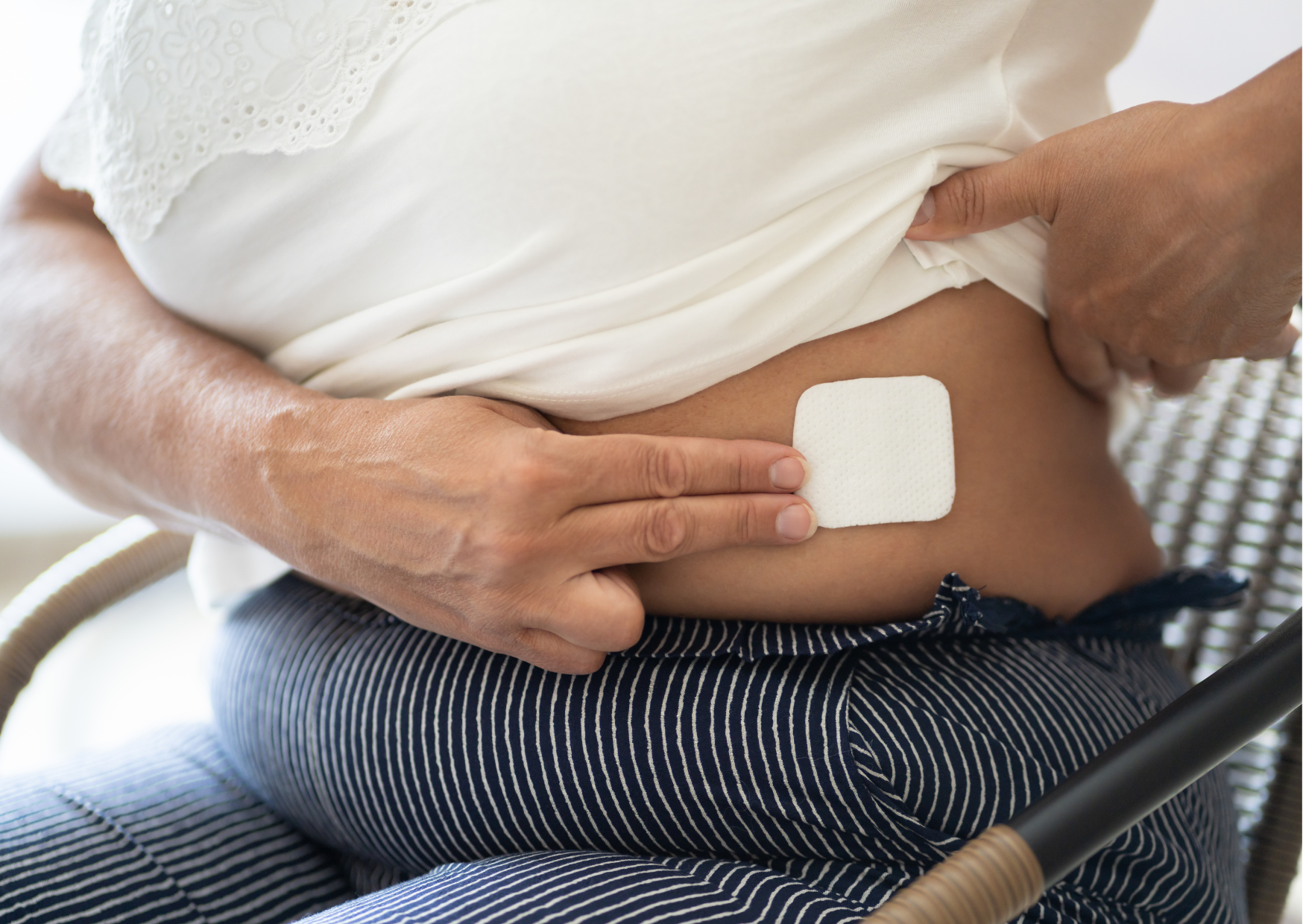
One of the quiet ways Europe looks “more permissive” is that European guidance often gets specific about delivery method.
NICE, for example, recommends considering transdermal rather than oral HRT for people at increased risk of venous thromboembolism, including those with BMI over 30. It also states plainly that VTE risk is not increased with transdermal HRT, while it is increased with oral HRT, and that oral carries greater risk than transdermal.
That kind of clarity does two things:
- It gives clinicians a practical way to reduce risk without refusing treatment.
- It makes the discussion feel clinical instead of moral.
In the U.S., many women are still living under an older mental model where “HRT” is a single, monolithic thing. Patch, pill, ring, gel, local versus systemic, dose, progestogen type, timing, and personal risk profile all get flattened into one scary category.
Europe does not magically eliminate risk. It often just does a better job of separating categories so women are not punished with blanket denial.
You can see this in how vaginal estrogen is discussed. In European guidance, it’s often treated as a localized treatment with a different risk profile than systemic therapy, and it is offered more routinely for genitourinary symptoms.
That doesn’t make it trivial. It makes it appropriately categorized.
The U.S. Had a Black Box Warning for 22 Years, and It Shaped Behavior
If you want a single structural reason for American clinician fear, it’s this: the warnings.
In November 2025, U.S. health agencies announced they were initiating removal of long-standing boxed warnings on menopausal hormone therapy products, working with companies to remove labeling language that referenced risks of cardiovascular disease, breast cancer, and probable dementia, while keeping boxed warning language for endometrial cancer risk on systemic estrogen-alone products.
That announcement matters not just medically, but culturally. A boxed warning is not subtle. It trains clinicians to avoid. It trains patients to panic. It becomes a liability magnet.
European systems did not have the same two-decade labeling regime shaping every conversation. So European clinicians were less likely to practice menopause care like they were handling an explosive.
Will this change U.S. behavior overnight? No. The culture will lag. Many clinicians were trained during the peak “never prescribe HRT” era. Many patients have been scared for years. And U.S. healthcare is still heavily shaped by defensive medicine and time-starved visits.
But the labeling shift is a quiet admission of what many menopause specialists have argued for years: American fear hardened into policy, and policy hardened into habit.
The Training Gap in the U.S. Is Real, and Patients Pay for It
A brutal truth: many American clinicians were never trained to do menopause well.
A national survey of U.S. OB-GYN residency program directors found only 31.3% reported having a menopause curriculum in their residency program. Only 29.3% reported trainees had dedicated time assigned to a menopause clinic.
That’s not a small gap. That’s a structural hole in the pipeline.
When a clinician lacks training, they fall back on what feels safest:
- avoid prescribing,
- refer out (often to nowhere),
- offer non-hormonal options first,
- or treat menopause symptoms like a mood disorder.
This is not about doctors being bad people. It’s about a medical education system that spent decades giving menopause the attention of a footnote.
In many European settings, menopause care is more normalized in general practice, and referral pathways for “menopause expertise” can be clearer, even if access varies.
The result is that American women often become their own case managers. They show up with spreadsheets, podcasts, and printouts, trying to force a serious conversation in a system that never learned the vocabulary.
American Prescribing Stayed Low Even as Guidelines Softened
Here’s another uncomfortable data point: even with updated position statements and more nuanced interpretations of risk, U.S. hormone therapy use stayed low.
A Menopause Society analysis covering 2007 to 2023 reported that overall hormone therapy use among women aged 40 or older declined, reaching about 1.8% in 2023, down from 4.6% in 2007. In age bands close to typical menopause timing, use also fell across 2007 to 2023.
That’s not what you’d expect if clinical practice were purely evidence-following. It’s what you’d expect when practice is shaped by fear, labeling, time, and training gaps.
It also helps explain why American readers describe European care as “more willing.” In many European settings, you will still find caution. But you are less likely to hit an immediate wall of “we don’t do that,” especially when symptoms are significant and contraindications are not present.
In other words, the U.S. didn’t just become cautious. It became avoidant.
The Appointment Model Shapes the Treatment You Get

Menopause care is not a single prescription. It is risk assessment, symptom mapping, follow-up, and adjustment.
That requires time. And time is exactly what many Americans cannot buy inside their insurance-driven visit model.
A typical American primary care visit can feel like speed dating with lab results. Symptoms get triaged into billable boxes. Menopause is messy, multi-system, and nonlinear. It doesn’t fit neatly into a 12-minute slot.
European systems have their own access problems, and nobody should pretend otherwise. But continuity of care in general practice, and a more normalized expectation of follow-up for chronic symptom management, can make it easier to have a “let’s try this, reassess, adjust” rhythm.
Menopause care thrives in systems that allow iteration.
American medicine often forces menopause into a single visit outcome: yes or no. If the clinician is nervous, “no” wins.
What a European-Style HRT Conversation Actually Looks Like
Decision makers don’t need vibes. They need the anatomy of a competent consult.
A solid menopause consult, the kind American readers keep describing when they talk about “good European care,” usually includes:
- a clear symptom inventory, including sleep, vasomotor symptoms, mood changes, and genitourinary symptoms
- the timing question: age and years since menopause
- personal and family history that affects risk, including clot history, cardiovascular history, and hormone-sensitive cancers
- uterus status, because estrogen-only is not the same conversation as estrogen plus a progestogen
- a route discussion, especially whether transdermal versus oral changes the risk profile for that patient
- a plan for follow-up and adjustment, not “here’s a prescription, good luck”
It also includes honesty about what hormone therapy is for.
Modern position statements emphasize that hormone therapy is the most effective treatment for vasomotor symptoms and helps prevent bone loss in appropriate candidates, with a favorable benefit-risk profile for many women who are younger than 60 or within 10 years of menopause onset, assuming no contraindications.
That is not the same as using hormone therapy as a blanket strategy to prevent aging. And it is not a promise that risk disappears.
It is a clinical tool, used intelligently.
The tragedy is that many American women cannot even get to the intelligent discussion stage. They get filtered out at the door by a clinician’s fear.
Your First 7 Days of Menopause Care Without the Chaos

If you are trying to navigate U.S. hesitation and you want a more European, system-based approach, you can’t just ask, “Will you prescribe HRT?” You walk in with a structure that makes it easier for a cautious clinician to say yes when appropriate.
Day 1: Build a symptom log that is boring and specific
Track hot flashes, night sweats, sleep disruption, mood changes, and genitourinary symptoms. Include frequency and severity. Specific counts beat vague misery.
Day 2: Write your timing and your non-negotiables
List your age, your best estimate of menopause timing, and what you are trying to fix first. Sleep first is a valid strategy. So is hot flashes first.
Day 3: Collect risk flags in one page
Personal history of clots, stroke, coronary disease, breast cancer, endometrial cancer, smoking status, migraines with aura, and current meds. Don’t editorialize. Just list.
Day 4: Prepare three formulation questions
Ask about local versus systemic therapy. Ask whether transdermal options change the risk profile for you. Ask what the plan is for follow-up adjustments.
Day 5: Book the right type of appointment
If you can, book with a clinician who explicitly lists menopause care, midlife women’s health, or hormone therapy expertise. If not, book longer visits when available. The goal is time on task, not a rushed yes.
Day 6: Ask for the decision logic, not a vibe
Instead of “I want HRT,” try “Given my age, timing, symptoms, and history, what does the evidence-based risk-benefit look like for me?” This forces the conversation into clinical reasoning.
Day 7: Build a backup plan that still respects your body
If hormone therapy is not appropriate for you, ask what the next best evidence-based options are for your main symptoms, and how you’ll measure success. Menopause care should still be measurable and revisable, even when hormones are off the table.
If a clinician refuses to discuss any of this, that is not “caution.” That is a failure to provide competent counseling.
You don’t need a doctor who is enthusiastic. You need one who is willing to do the work.

About the Author: Ruben, co-founder of Gamintraveler.com since 2014, is a seasoned traveler from Spain who has explored over 100 countries since 2009. Known for his extensive travel adventures across South America, Europe, the US, Australia, New Zealand, Asia, and Africa, Ruben combines his passion for adventurous yet sustainable living with his love for cycling, highlighted by his remarkable 5-month bicycle journey from Spain to Norway. He currently resides in Spain, where he continues sharing his travel experiences with his partner, Rachel, and their son, Han.