
You can make this in the time it takes to scroll a delivery app, and it will still taste like you sat down in a Paris café and made a better decision than your past self.
Why This French Lunch Fixes the American “I’m Still Hungry” Problem
Most American lunches are built like a prank.
A sad turkey sandwich with dry bread. A salad that’s basically garnish. A “protein bar” that’s dessert with better marketing. Then you hit 3 p.m. and you’re hunting for something salty, something sweet, something that feels like relief.
A proper croque monsieur is the opposite.
It’s hot, salty, crisp, and creamy. It has real protein and fat, plus enough bread to feel like a meal, not a moral lesson. And because it’s warm and structured, it slows you down just enough to register fullness.
The point of this recipe is not to cosplay French life.
The point is to steal a functional lunch idea that actually works on a normal day.
A croque monsieur also has a hidden superpower for anyone trying to eat better without getting dramatic: it’s easy to portion. One sandwich plus a simple side is plenty. You can stop chasing “just one more snack” because the lunch actually landed.
This is why it becomes a habit. It feels indulgent, but it behaves like a real meal.
You do not need a café. You need a pan, a toaster oven or broiler, and ten calm minutes of attention.
The Only Ingredients That Matter
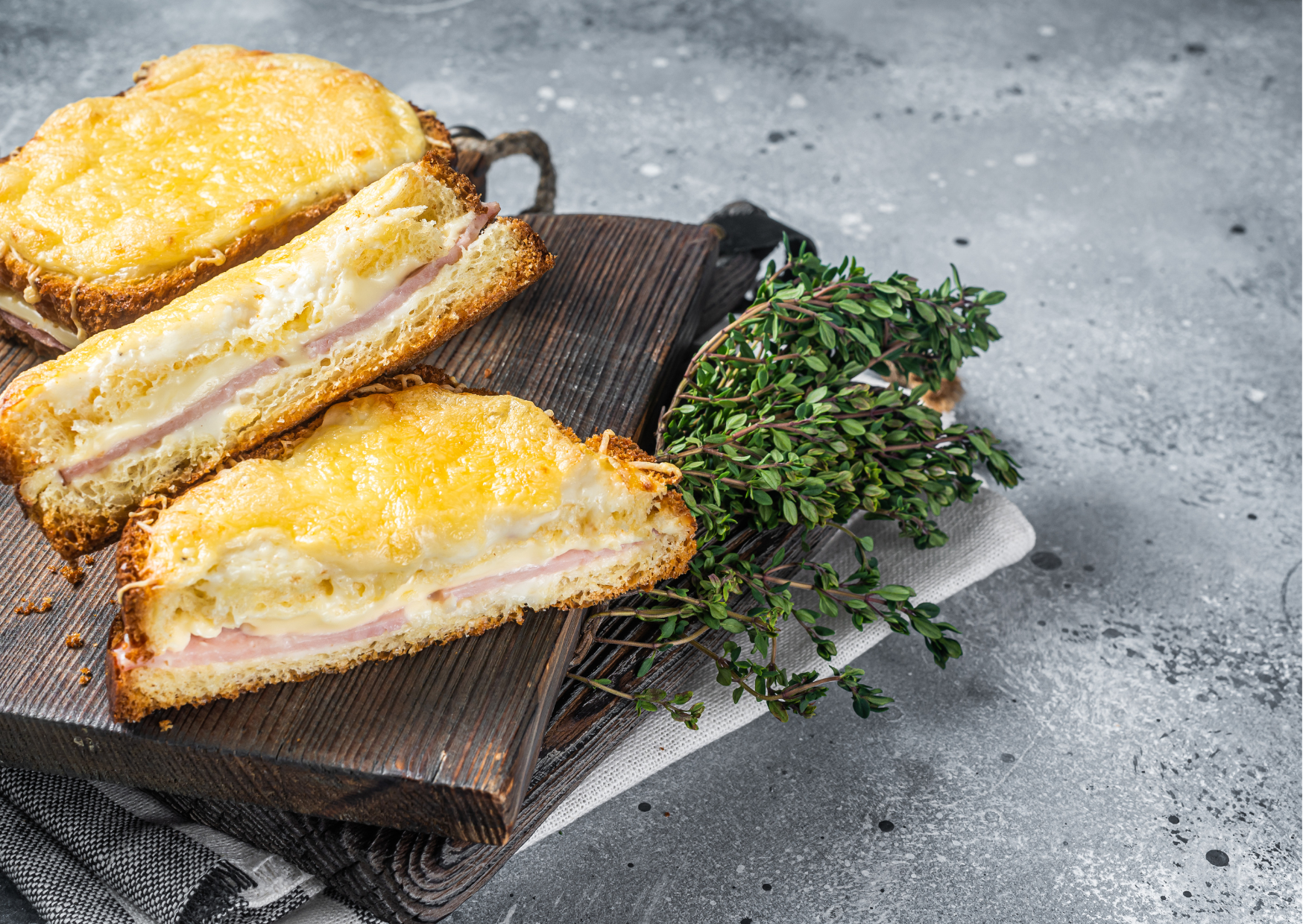
A croque monsieur is not complicated. It’s just unforgiving if you use the wrong stuff.
You need four core building blocks:
- good bread
- good ham
- good cheese
- a fast béchamel
Everything else is optional.
Bread: Use a sturdy sliced loaf. Pain de mie is classic, but any good sandwich loaf works if it can handle heat without collapsing. Thin, fluffy American-style bread tends to go limp and sad. You want bread that toasts crisp and stays structured under sauce.
Ham: Use a ham that tastes like something. In Spain and Portugal, cooked ham varies wildly. Avoid the watery, ultra-processed slices that smell like a fridge. Choose a cooked ham that has real meat texture. Two slices per sandwich is enough.
Cheese: Gruyère is traditional, Emmental is common, Comté is excellent. For practicality, you can also use a mature cheddar, but the flavor shifts away from French café and toward grilled cheese. The key is a cheese that melts smoothly and browns well.
Béchamel: This is the entire identity. Without béchamel, you’ve made a ham and cheese toastie. Still good, not a croque monsieur.
The “15-minute” trick is using a quick béchamel method that doesn’t require a separate saucepan if you don’t want it, and doesn’t require perfection.
You can also add Dijon mustard, which is not mandatory, but it gives the sandwich that sharp French bite that makes the richness feel balanced.
The 15-Minute Croque Monsieur Recipe
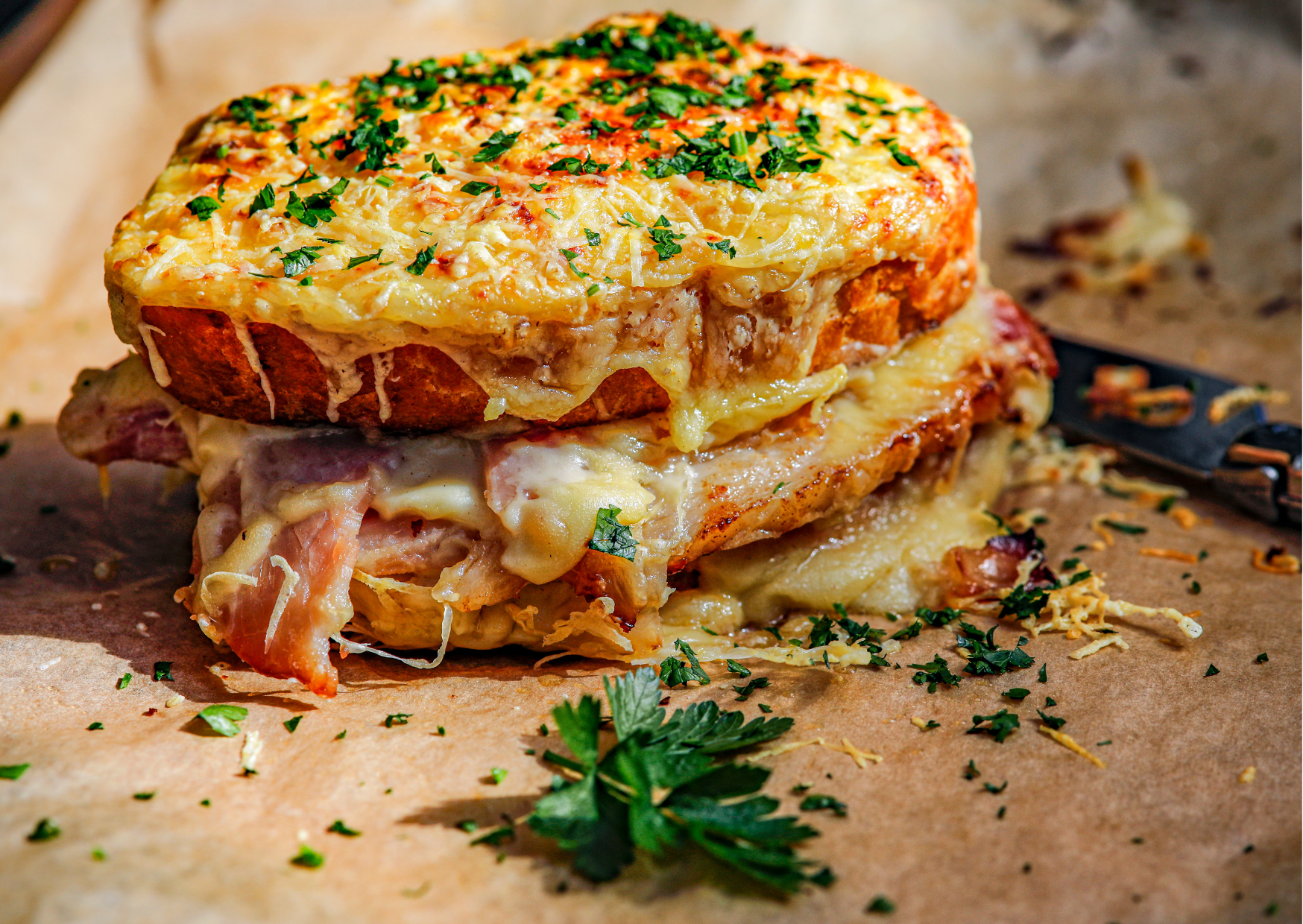
This makes 2 sandwiches. If you’re cooking for one, still make two and eat the second tomorrow. It reheats better than you’d expect.
Ingredients
For the sandwiches:
- 4 slices sturdy sandwich bread
- 4 thin slices cooked ham
- 120 g cheese, grated or thin-sliced (Gruyère, Emmental, Comté)
- 1 to 2 teaspoons Dijon mustard, optional but strongly recommended
- 1 tablespoon butter for the pan, plus a little for the bread if needed
For the quick béchamel:
- 20 g butter
- 20 g flour
- 250 ml milk, warmed if possible
- ¼ teaspoon salt
- Black pepper
- A pinch of nutmeg, optional but classic
Method
- Preheat your top heat.
Set your oven to grill or broil. If you have a toaster oven, use it. You want high top heat ready to brown the sauce quickly. - Make the béchamel in 4 minutes.
In a small saucepan, melt 20 g butter over medium heat. Add 20 g flour and whisk for 60 to 90 seconds until it smells slightly nutty and loses the raw flour smell. Slowly add milk while whisking. Cook 2 to 3 minutes until thick enough to coat a spoon. Season with salt, pepper, and nutmeg.
You’re aiming for thick but spreadable. If it’s too thick, splash in a bit more milk.
- Lightly toast the bread.
This is non-negotiable. Toast the bread lightly in a dry pan or toaster. You’re not fully browning it yet. You’re just giving it structure so it doesn’t go soggy under béchamel. - Build the sandwiches.
On two slices, spread Dijon if using. Add ham, then a layer of cheese. Top with the other slices. - Pan-toast for crispness.
Melt 1 tablespoon butter in a pan over medium heat. Toast the sandwiches 2 to 3 minutes per side until lightly golden. You are building crisp edges and warming the center. - Sauce and broil.
Move the sandwiches to a baking tray. Spoon béchamel on top, covering the surface. Add a little extra cheese on top of the béchamel.
Broil 2 to 4 minutes until bubbling and browned. Watch closely. The line between “perfect” and “burnt dairy” is thin.
- Rest one minute, then cut.
Let it sit briefly so the sauce sets. Slice in half. Eat while it’s still loud and crisp.
That’s the whole lunch.
If you do this once, it becomes muscle memory. The next time, it really will take 15 minutes.
How to Get the Crisp, Not the Soggy Version
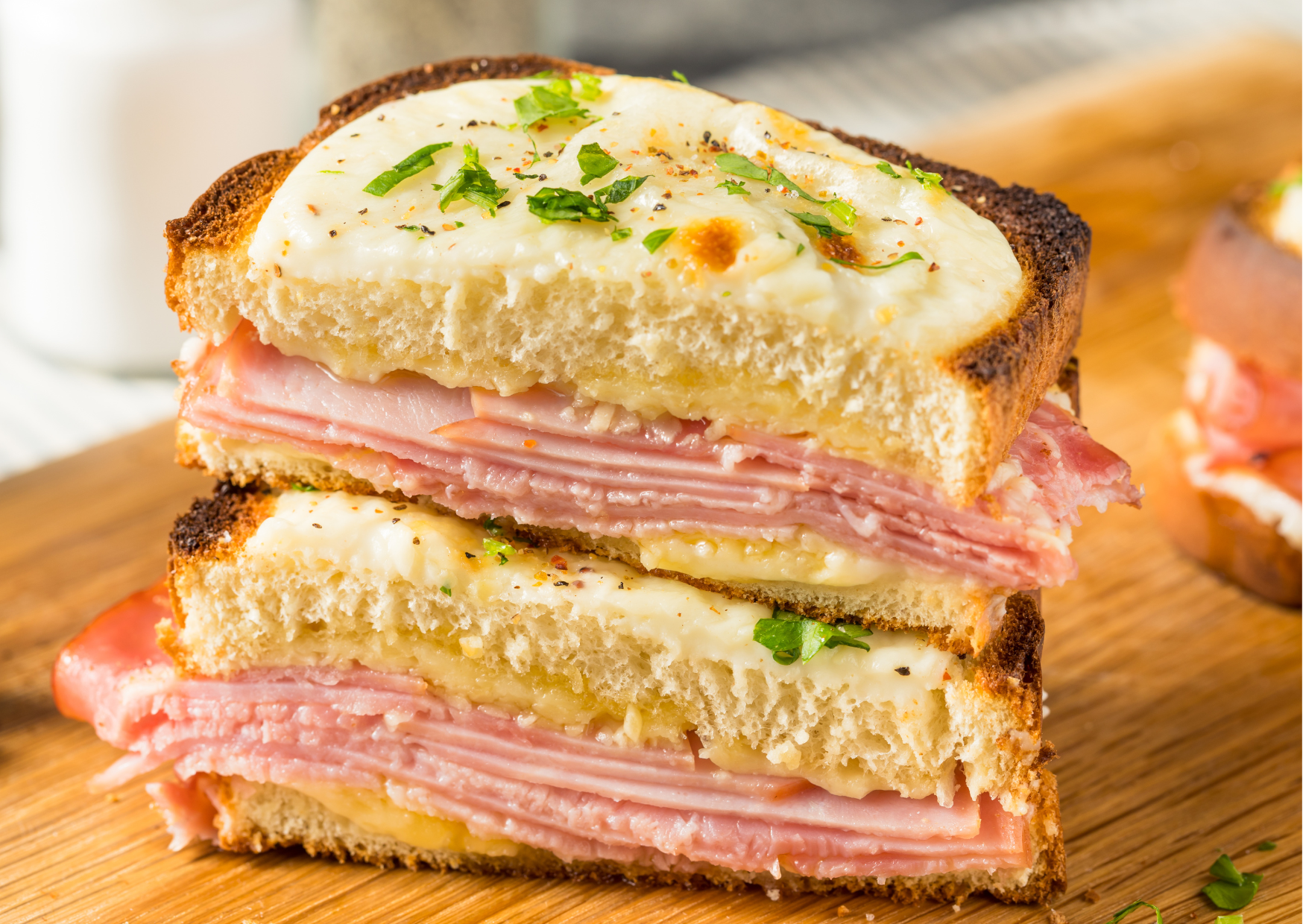
A croque monsieur has two textures that matter: crisp outside and creamy top.
Most home versions fail because people build a wet sandwich and hope the oven fixes it.
The fix is three small decisions.
First, you toast the bread before assembly. This is your moisture barrier. It gives the crumb a head start so it doesn’t absorb béchamel like a sponge.
Second, you pan-toast before broiling. This is what gives you the browned crust and the “hot sandwich” aroma. If you skip this, the broiler only browns the top, and the bottom stays pale and soft.
Third, you keep the béchamel thick. Thin béchamel turns into a wet layer that soaks in. Thick béchamel sits on top, bubbles, browns, and tastes like sauce.
If you want the science in plain language, it’s this: moisture moves into bread. Heat drives it out, but only if you’ve given the bread structure and surface browning. Toasting is your insurance.
Also, grate the cheese if you can. Grated cheese melts faster and more evenly. Big slices can slide and create pockets.
One more detail that matters more than people admit: don’t overload the ham. A croque monsieur isn’t a deli sandwich. Too much ham releases moisture and makes the center steam instead of melt.
Keep it simple. Let the béchamel be the star.
The French Lunch Upgrade: What to Serve With It
A croque monsieur does not need a complicated side. It needs contrast.
If you serve it with something crisp and acidic, it stops feeling heavy.
Good options:
- A simple green salad with lemon and olive oil. Add salt like you mean it. Acid cuts richness.
- Cornichons or any crunchy pickle. Even basic supermarket pickles work.
- Thin-sliced tomatoes with salt and a little vinegar.
- A small bowl of soup if you want a winter lunch, but keep it light.
If you’re someone who tends to overeat bread, this is the moment to be honest.
One croque monsieur plus a salad is enough. Two croques plus nothing is how you accidentally nap at 2 p.m.
This lunch is meant to make your day easier, not foggier.
If you want a drink with it, keep it simple. Sparkling water, coffee, or a small glass of something if it’s a weekend. The sandwich is already rich. You don’t need to pile on.
Variations That Still Feel French
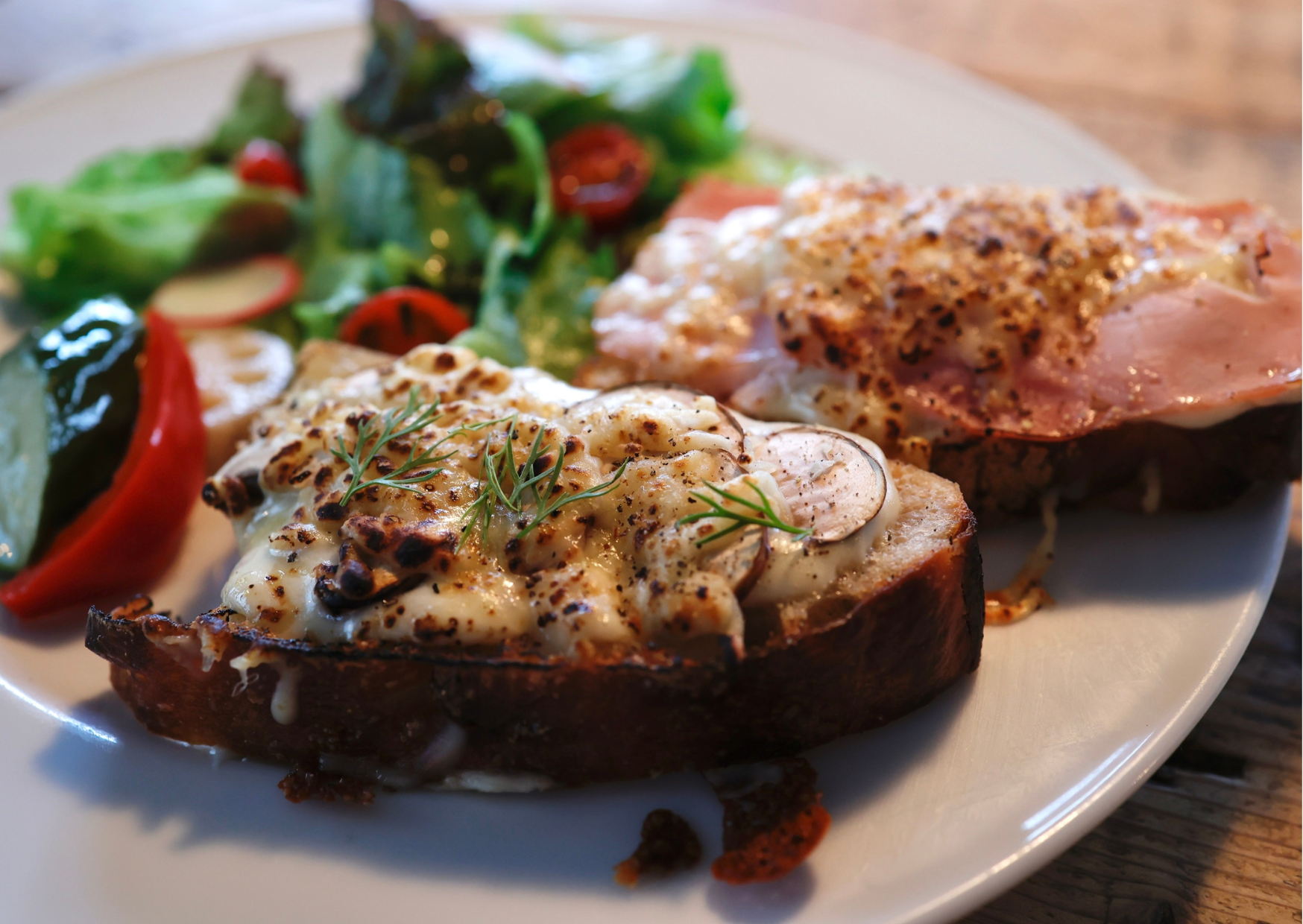
This is where the recipe becomes a repeatable system.
The base is ham, cheese, béchamel. You can riff without turning it into something unrecognizable.
Croque Madame
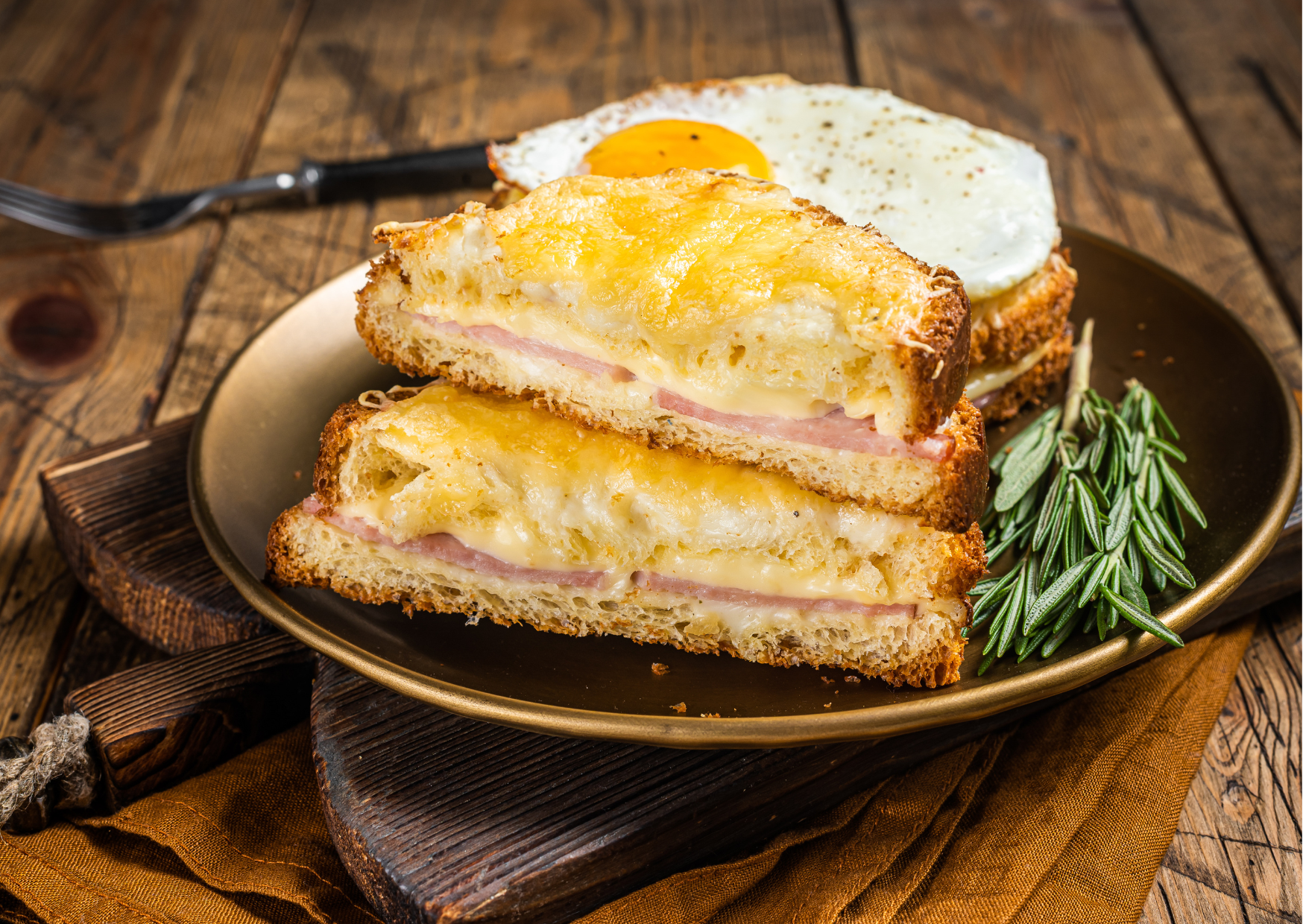
Add a fried egg on top after broiling. That’s it. It turns lunch into something that feels like a proper sit-down meal. The yolk makes it even more indulgent, so keep the side light.
Mushroom croque
Sauté sliced mushrooms quickly in butter with salt and pepper. Use them instead of ham, or do half-and-half. This is a great option if you want a more vegetable-forward lunch without making it feel like punishment.
Lighter version that still tastes good
Use less béchamel, not no béchamel.
Make the béchamel with a little less butter, use semi-skimmed milk, and keep the layer thin. You still get the identity, just less richness. The sandwich stays creamy, not greasy.
A version that works if you can’t find Gruyère
Use a good melting cheese with real flavor. In Spain, a semi-cured cheese can work. In Portugal, a mild cured cheese can work. The key is to avoid very fresh mozzarella, which can release too much water and make the top rubbery.
The “I have no time” shortcut
If you truly can’t do béchamel, you can do a quick hack with crème fraîche or thick Greek yogurt mixed with a little Dijon and grated cheese. It won’t be classic, but it will be fast and still give you a creamy top.
It’s not a croque monsieur in the strict sense. It is still an excellent lunch.
Make the classic first. Then you can cheat later.
What It Costs in Europe, and What Americans Pay for the Same Lunch
This is why this recipe is worth keeping.
In Spain or Portugal, a croque monsieur at a café can easily run €8 to €14, depending on location. In touristy areas it can be more, especially if it’s branded as “French bistro.”
In the United States, the same item often sits in the $12 to $18 range in many cities, sometimes more, because it gets priced as a “specialty sandwich.” Add tax and tip and it becomes a full lunch bill.
At home in Spain, this is what the ingredient math typically looks like for 2 sandwiches:
- Bread: €0.60 to €1.20
- Ham: €1.50 to €3.00
- Cheese: €1.80 to €3.50
- Milk, butter, flour: €0.80 to €1.40
- Mustard and seasoning used: €0.20 to €0.50
Total: roughly €4.90 to €9.60 for two sandwiches.
That’s €2.45 to €4.80 per sandwich.
For Americans used to paying $14 for a café croque, this is the kind of lunch that quietly changes behavior. You stop treating a hot, satisfying lunch as a “treat.” It becomes normal.
And because it’s fast, you’re not trading your entire afternoon for it.
This is also a sneaky health win for a lot of people. Not because it’s “light.” Because it reduces the urge to snack and graze on processed food later.
A lunch that actually satisfies often leads to fewer impulsive calories by accident, not by willpower.
If you want to use this as a weekday reset meal, pair it with:
- a salad
- a piece of fruit later
- and water
That’s a normal European-style pattern: one real lunch, not constant little food events.
Your First Week of Croques: The “French Lunch” Reset
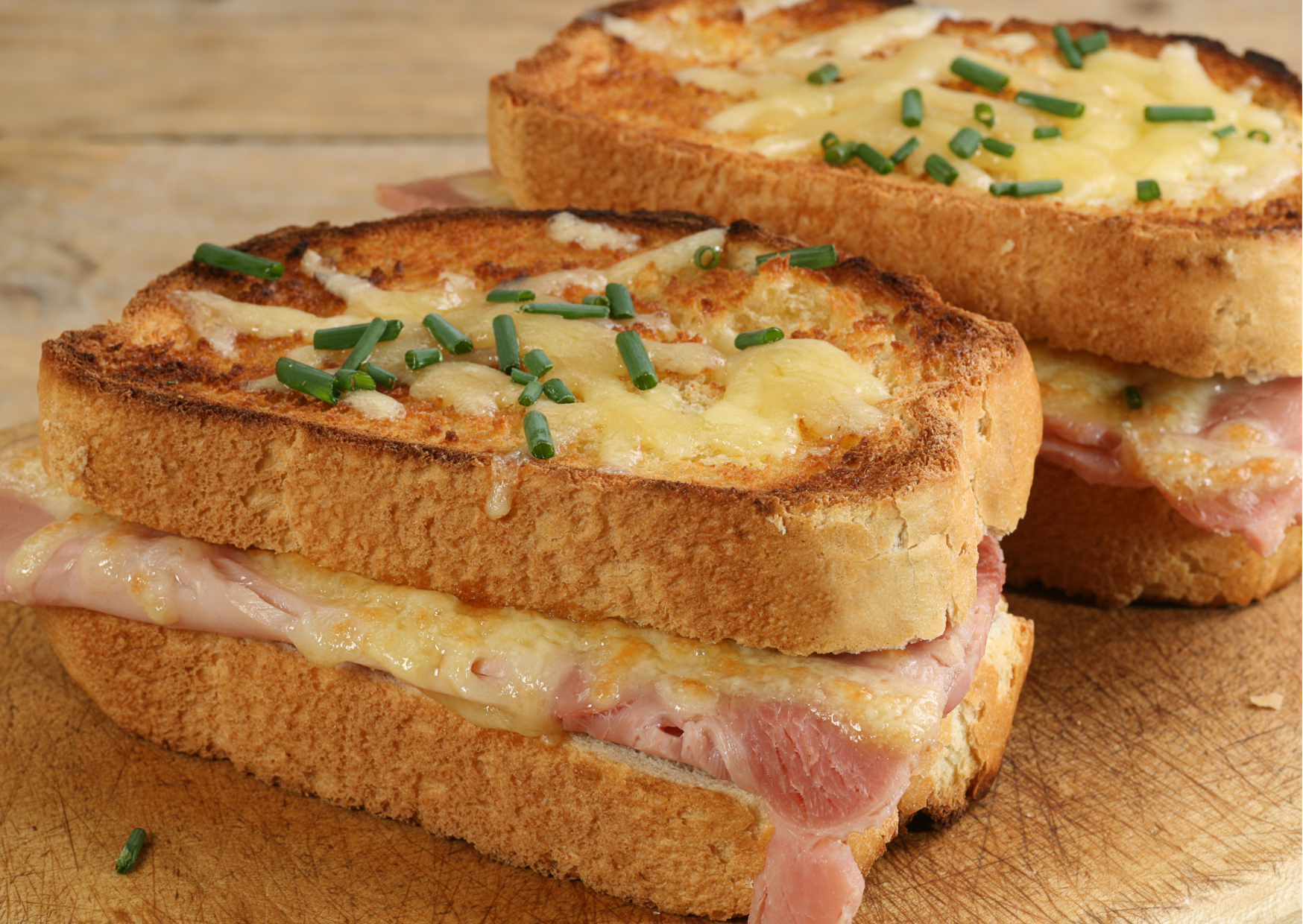
If you want this to become a repeatable habit instead of a one-time experiment, do it like a system.
Day 1: Make the classic version exactly once.
Do the real béchamel. Do the toast-then-pan-then-broil sequence. Get the baseline.
Day 2: Eat the second sandwich as leftovers.
Reheat in an oven or toaster oven so it stays crisp. Avoid microwaving unless you want sad bread.
Day 3: Make a lighter béchamel.
Use slightly less butter, keep the sauce thick, and see if it still satisfies. Most people realize they don’t need a huge layer.
Day 4: Try a croque madame on a weekend.
One egg on top changes the whole experience. It also makes it easier to treat this as a full meal, not “a sandwich plus snacks.”
Day 5: Do the mushroom version.
This is the one that convinces people they can eat fewer processed meats without losing satisfaction. Mushrooms plus béchamel tastes like comfort.
Day 6: Build a fridge kit.
Keep ham, grated cheese, and milk stocked. The friction in cooking is often shopping, not cooking. Make it easy to start.
Day 7: Lock your “default lunch.”
Decide what your standard side will be. Salad, pickles, tomatoes, fruit. When you remove side decision fatigue, the croque becomes truly quick.
If you do this one week, you’ve basically built a new lunch routine. That’s the real transformation.
Not “life changing” because it’s magical.
Life changing because it replaces a messy lunch pattern with something predictable, satisfying, and fast.
Common Mistakes That Make It Taste Wrong
This is the short list of what ruins croque monsieur at home.
- Using bread that’s too soft. It collapses under sauce and becomes soggy.
- Skipping the initial toast. That step is what keeps the center structured.
- Making béchamel too thin. Thin sauce soaks. Thick sauce sits and browns.
- Broiling too far. Dairy goes from browned to bitter quickly.
- Using low-flavor cheese. A croque needs cheese that tastes like cheese.
- Overfilling. The croque is a composed sandwich, not a deli stack.
If your first one is not perfect, good. You’re learning.
The second one will be better. The third one will feel automatic.
That’s when the lunch becomes “French” in the only way that matters: it becomes normal.

About the Author: Ruben, co-founder of Gamintraveler.com since 2014, is a seasoned traveler from Spain who has explored over 100 countries since 2009. Known for his extensive travel adventures across South America, Europe, the US, Australia, New Zealand, Asia, and Africa, Ruben combines his passion for adventurous yet sustainable living with his love for cycling, highlighted by his remarkable 5-month bicycle journey from Spain to Norway. He currently resides in Spain, where he continues sharing his travel experiences with his partner, Rachel, and their son, Han.