
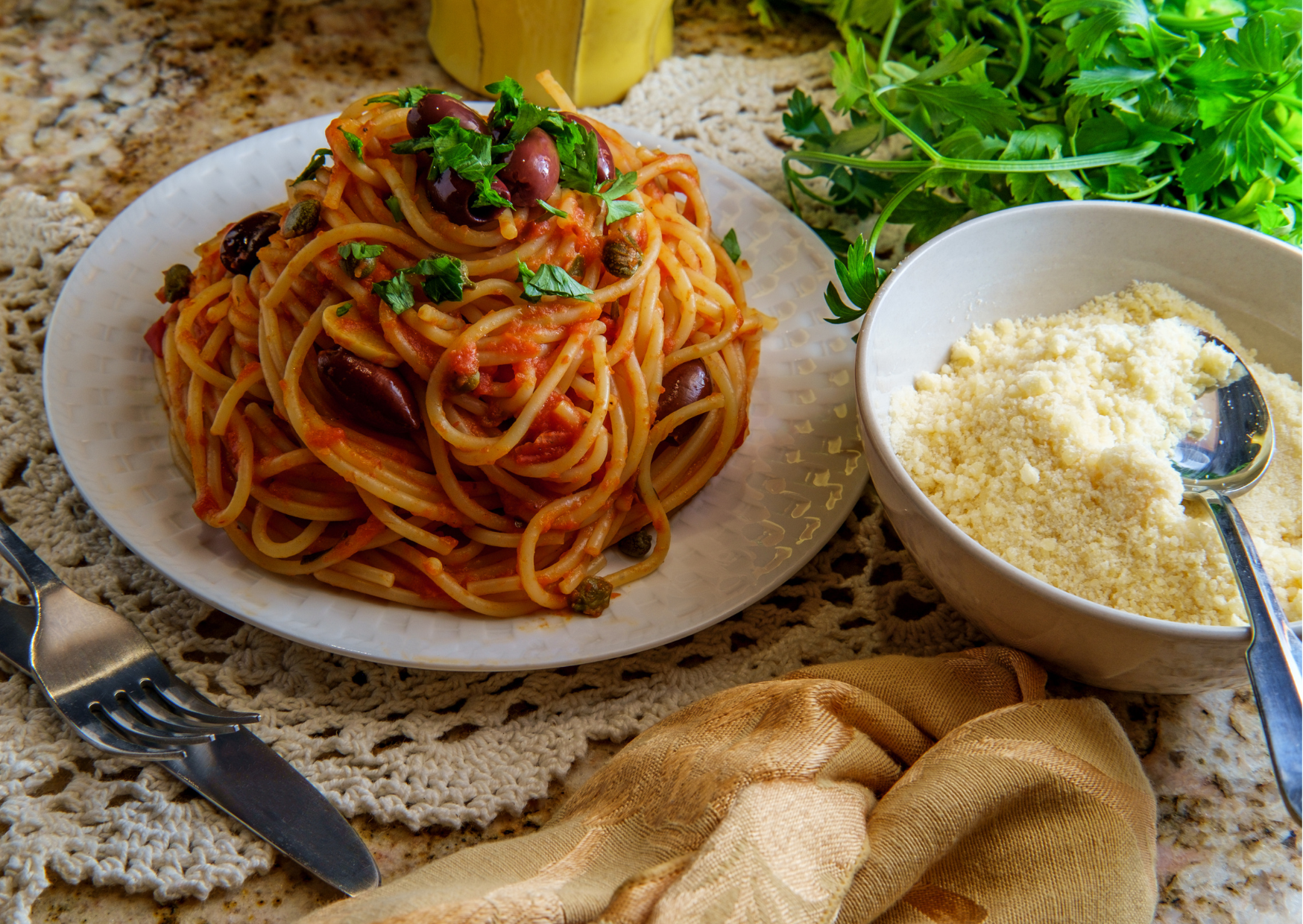
Puttanesca gets sold as the fastest pasta in the universe. “Pantry ingredients.” “Ten minutes.” “Done before the water boils.”
That’s how people end up disappointed.
Not because puttanesca is hard, but because the dish has a job: take cheap, salty, shelf-stable ingredients and turn them into something that tastes intentional. That job needs a little time. Not an hour. Just enough to let the garlic soften instead of scorch, let the anchovy dissolve instead of sit there like fish confetti, and let the tomatoes lose that raw edge.
When you rush it, the sauce tastes like a jar exploded into a pan. When you give it the right 15 minutes, it tastes like you knew what you were doing all along.
The “entire point” of puttanesca is balance: briny, hot, tomato-sweet, and glossy. That doesn’t happen at full speed.
What puttanesca is actually for, and why speed is the wrong flex
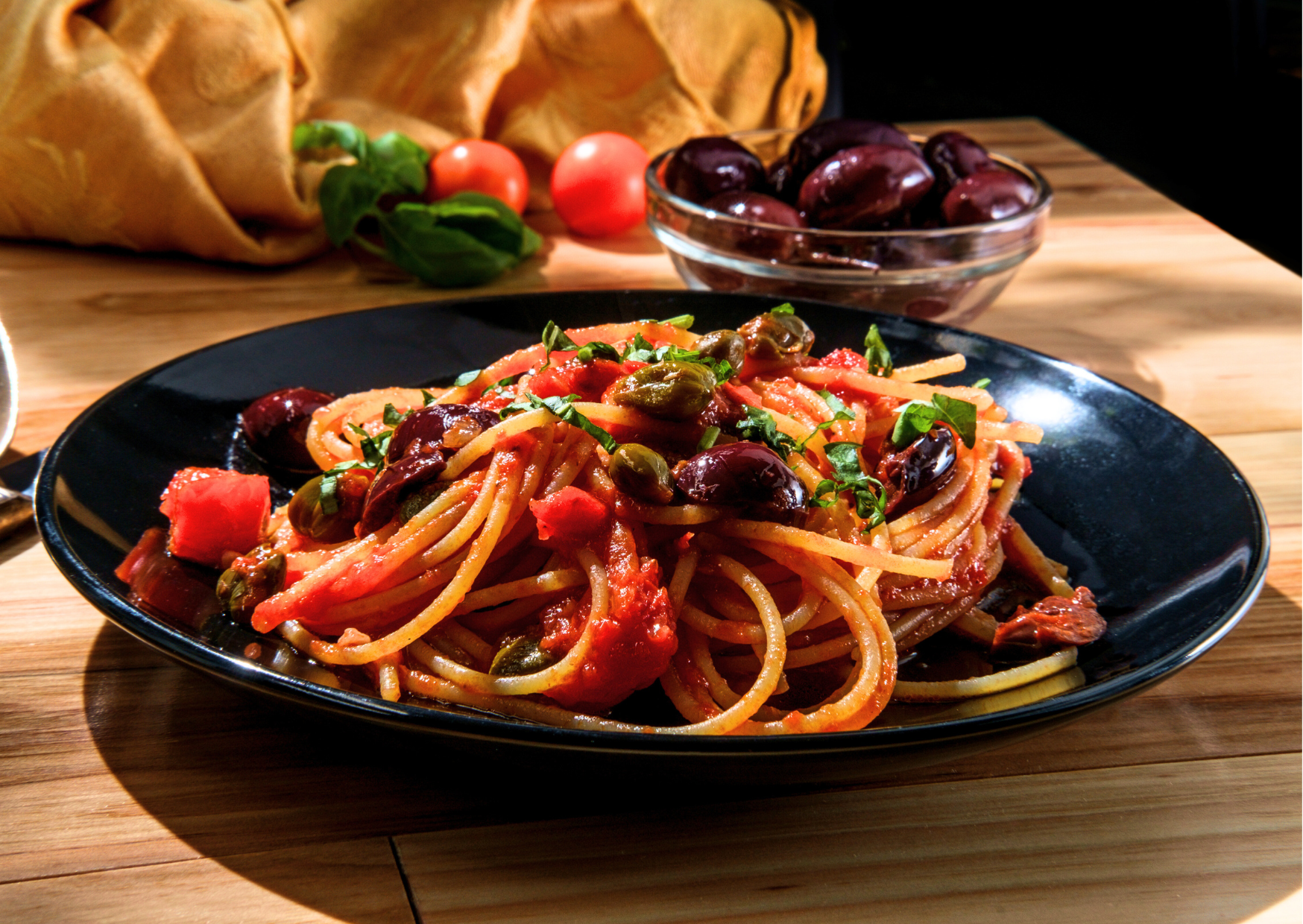
Puttanesca is not a date-night showpiece. It’s pantry pasta with a grown-up palate.
It was built for nights when the fridge is empty but the cupboard has olives, capers, garlic, anchovies, and tomatoes. In other words, nights when you want dinner to feel vivid without turning your kitchen into a project.
The mistake Americans make is treating it like an emergency sprint. They crank the heat, dump everything in, and call it rustic. The result is usually harsh and noisy: burnt garlic, bitter olive notes, sharp caper tang, tomatoes that still taste metallic or raw.
A good puttanesca has a calmer structure. It starts with oil that smells like garlic and chili, not oil that smells like “oops.” Then the anchovy melts in and disappears, leaving anchovy umami without fishiness. Then tomatoes simmer just long enough to thicken and sweeten. Then the salty ingredients go in at the right moment so they season the sauce instead of dominating it.
If you want a number, the sauce wants a 10 to 15 minute simmer. That is it. Not slow-cooker time. Just enough for the flavors to stop arguing.
And there’s another reason rushing ruins it: puttanesca is one of those sauces that gets better when pasta finishes in the pan. That final minute is where the sauce clings and turns glossy. If you race past that, you lose the texture and the taste.
This dish is supposed to feel like the Mediterranean in a bowl, not like a salt bomb you regret halfway through.
The ingredients that matter, and the swaps that wreck it
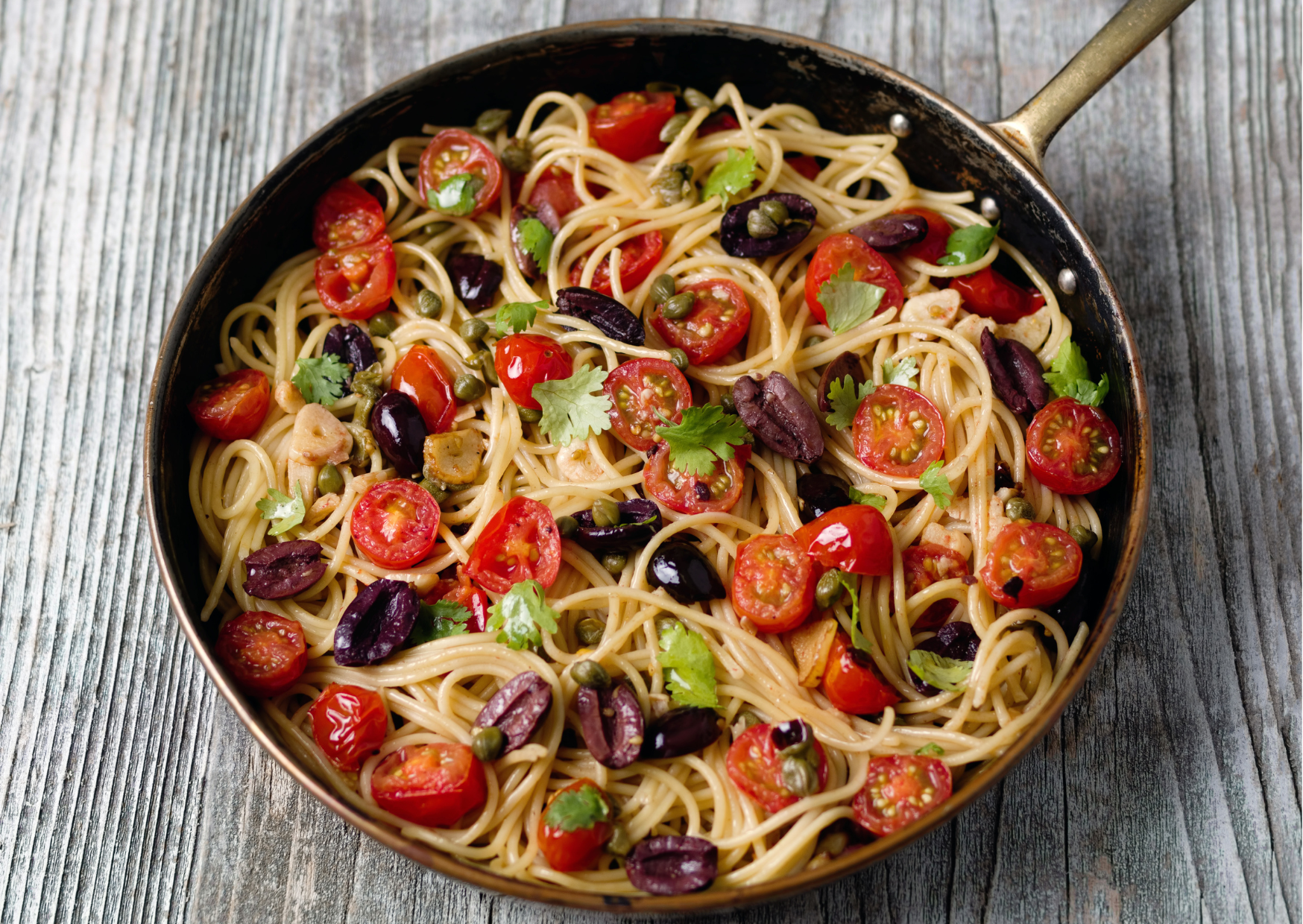
Puttanesca is forgiving in the way a blunt friend is forgiving. It will still show up for you, but it will also tell on you.
The core components are simple: tomatoes, garlic, olive oil, olives, capers, anchovies, chili, parsley. The order and quality decide whether it tastes cohesive.
Here’s what matters most:
- Olive oil does the carrying. Use something you would actually dip bread into, not the dusty bottle that tastes like nothing. The dish relies on olive oil gloss for mouthfeel.
- Garlic needs gentle heat. When garlic burns, it becomes bitter, and bitter plus brine is a nasty combo. Slice it, do not pulverize it.
- Anchovies should dissolve. Chop them so they melt into oil. The goal is anchovy melt, not visible pieces.
- Capers and olives are seasoning. Rinse them if they’re aggressively salty, especially salt-packed capers. You want salted capers flavor, not salt-water shock.
- Tomatoes need time. If you use canned, let them cook down until the sauce looks darker and thicker. If you use fresh, you need good ones, or you will get watery sadness.
Swaps that change the dish, sometimes for the worse:
- Skipping anchovy is allowed in some local variations, but you must replace the depth. A little extra tomato paste helps. You can also lean harder on olives and capers, but that risks turning it too briny.
- Adding onion is not a crime, but it changes the speed and sweetness. It can work, but it’s not the same dish.
- Adding cheese is controversial because of the fish element. If you insist, a little aged cheese can be fine, but keep it light. The sauce is already loud.
The main thing to avoid is throwing everything in at once. Puttanesca is not a dump sauce. It’s a sequence.
What to buy, and what this should cost in a real kitchen
Puttanesca is often marketed as “cheap,” and it can be, but only if you stop buying tiny premium jars as if you’re building a museum exhibit.
A realistic target in Spain for four servings is usually €6 to €11 depending on oil, anchovies, and the olives you choose. The most expensive line item is often the olives, because people buy fancy ones in small tubs.
If you keep your pantry stocked, the incremental cost per dinner drops fast.
Here’s the practical shopping approach: buy one decent tin of anchovies, one jar of capers, and one bag or jar of olives that you actually like eating. Once those exist in your kitchen, puttanesca becomes a Tuesday dinner, not a special event.
Shopping list you can screenshot
- Pasta, 400 g (spaghetti or linguine)
- Canned whole tomatoes, 800 g (two 400 g cans) or passata, 700 ml
- Anchovy fillets, 20 to 30 g (about 6 to 8 fillets)
- Capers, 30 g (about 2 tbsp), preferably brined or salt-packed
- Black olives, 120 g (about 3/4 cup), pitted
- Garlic, 3 cloves
- Extra-virgin olive oil, 60 ml (1/4 cup)
- Chili flakes, 1 tsp
- Parsley, 15 g (small handful)
- Tomato paste, 15 g (1 tbsp), optional but helpful
This is the part Americans miss: the dish gets cheaper when you stop treating anchovies like a one-time purchase. A tin should last multiple meals.
And if you’re feeding two, you can halve everything. This sauce scales cleanly, and it reheats well, which is why it’s such a useful winter staple.
The timing rules that make it taste Roman-coastal instead of chaotic
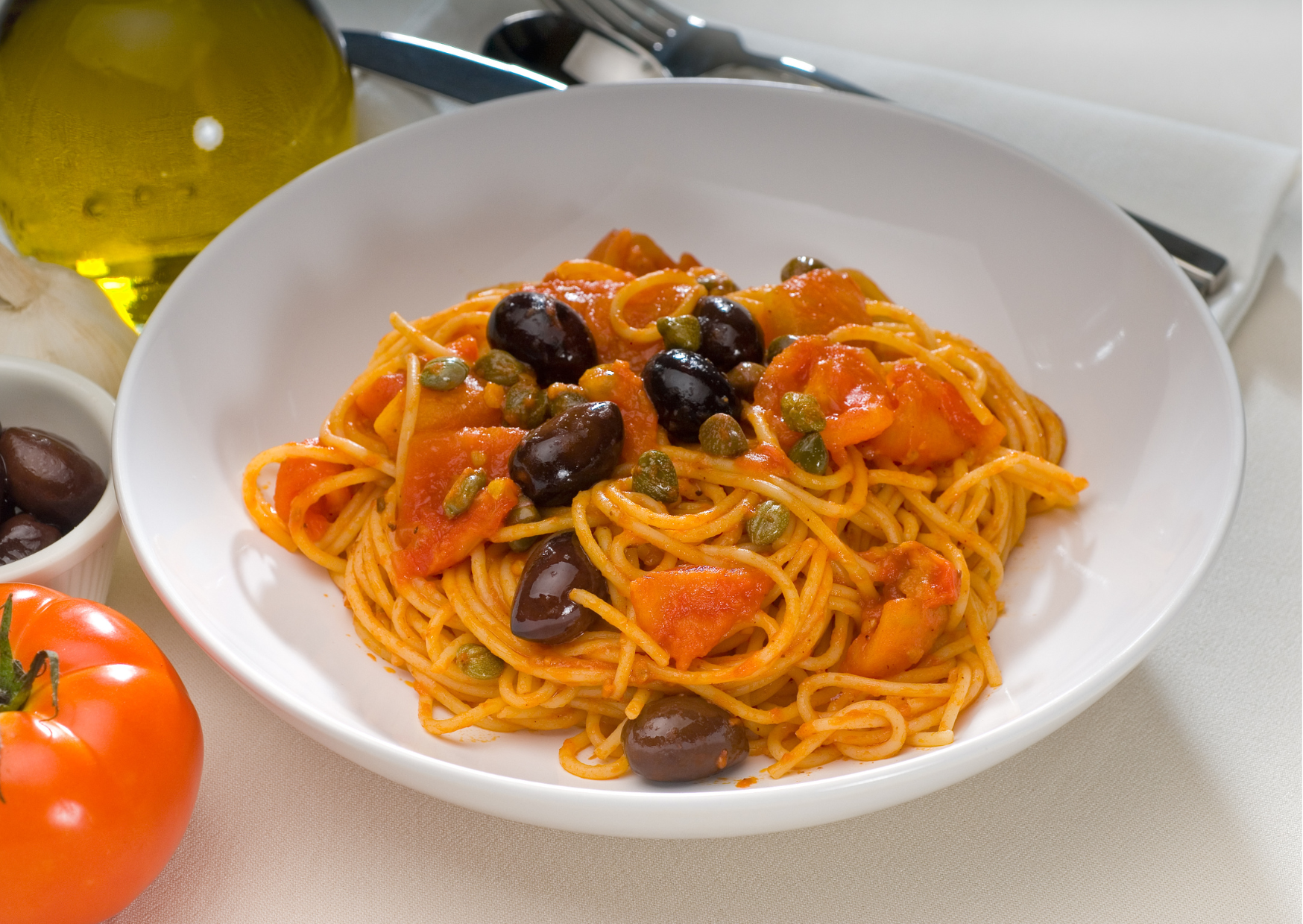
Rushing puttanesca usually means high heat, fast reduction, and a sauce that tastes sharp. That sharpness comes from three things: raw garlic bite, uncooked tomato acidity, and capers that haven’t mellowed.
The fix is not “cook forever.” The fix is control.
Rule 1: Start low, not hot.
Puttanesca begins like aglio e olio. You want garlic to gently perfume oil, not brown aggressively. Keep it at medium-low for the first few minutes. If you can smell garlic clearly but it’s still pale, you are doing it right.
Rule 2: Dissolve the anchovy before you add tomatoes.
If you add tomatoes too early, the anchovy never melts properly. Chop anchovy fine, stir it into the warm oil, and watch it disappear. That disappearing act is the flavor base.
Rule 3: Add brine ingredients after the tomatoes start thickening.
Olives and capers are seasonings. If they go in immediately, they can dominate and stay harsh. If they go in after the tomatoes have cooked a bit, they blend into the sauce.
Rule 4: Simmer, don’t boil the life out of it.
A gentle simmer is the sweet spot, roughly 90 to 95°C / 195 to 203°F if you like numbers. The goal is thickening and mellowing, not evaporation by violence.
Rule 5: Finish the pasta in the sauce.
This is where puttanesca becomes more than a pantry dump. Tossing pasta in the pan for the final minute helps the sauce cling and turns everything glossy. That last minute is the entire point in practice.
If you only change one thing, change your heat. The sauce doesn’t need drama. It needs time to come together.
The recipe: Slow-ish puttanesca that actually tastes right
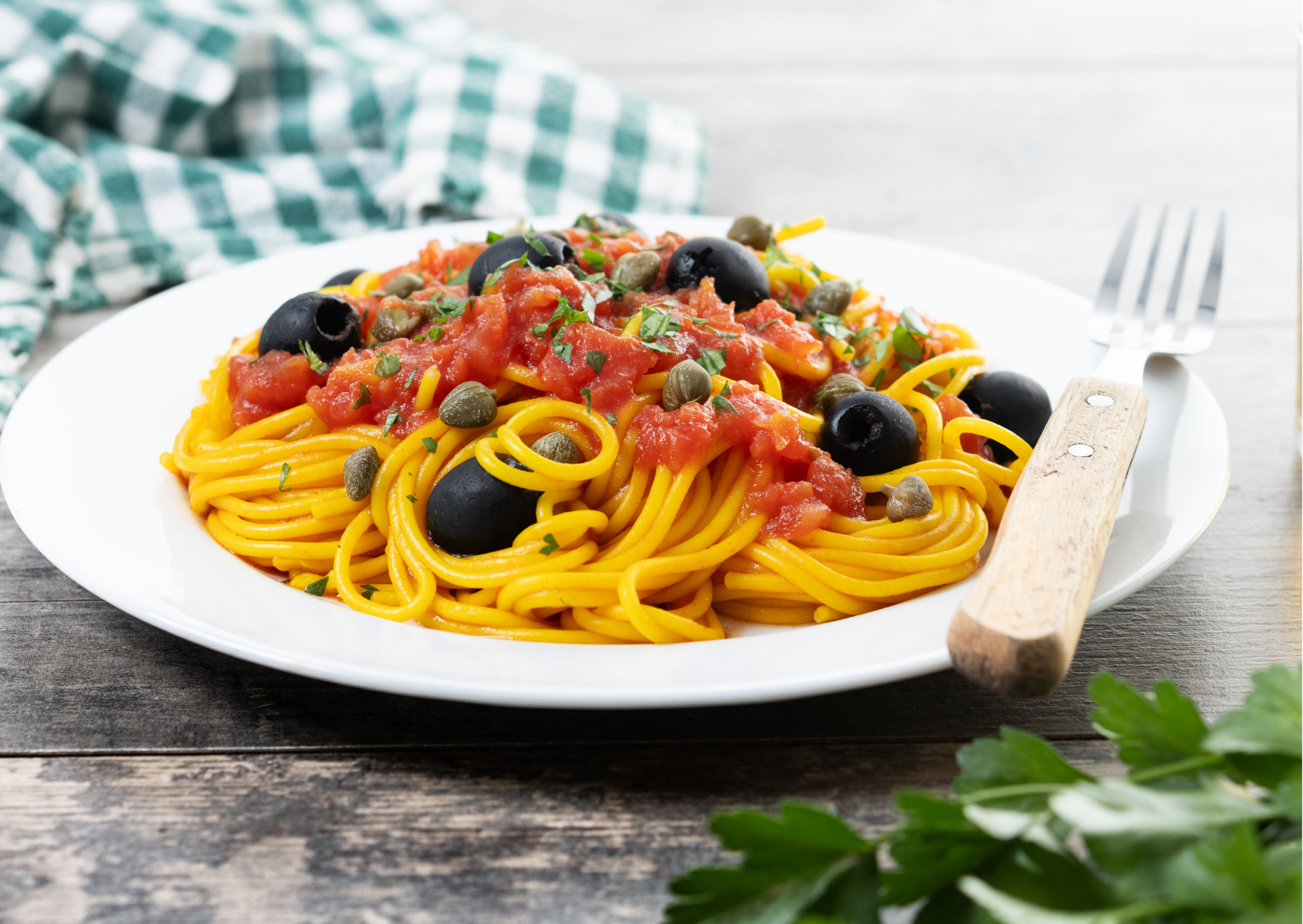
Servings: 4
Prep time: 10 minutes
Active time: 20 minutes
Rest time: 5 minutes
Total time: 35 minutes
Storage: 4 days in the fridge, 2 months in the freezer
Best pasta shapes: spaghetti, linguine, bucatini
Ingredients
- Pasta: 400 g (14 oz) spaghetti or linguine
- Extra-virgin olive oil: 60 ml (1/4 cup)
- Garlic: 3 cloves, thinly sliced
- Anchovy fillets: 20 to 30 g (6 to 8 fillets), finely chopped
- Chili flakes: 1 tsp
- Canned whole tomatoes: 800 g total, crushed by hand, or passata 700 ml
- Tomato paste: 15 g (1 tbsp), optional but useful
- Capers: 30 g (2 tbsp), rinsed if very salty
- Black olives: 120 g (about 3/4 cup), pitted and roughly chopped
- Parsley: 15 g, chopped
- Salt: for pasta water only
- Black pepper: optional, a few turns
Optional add-ins that keep the spirit:
- 1 tsp lemon zest at the end for brightness
- 1 tbsp extra olive oil at the end for shine
Equipment
- Large pot for pasta
- Wide skillet or sauté pan
- Tongs
- Knife and board
- Measuring cup for pasta water
Method
- Bring a large pot of water to a boil. Salt it.
- In a wide pan, warm olive oil over medium-low heat. Add garlic and chili flakes. Cook 2 to 3 minutes until garlic is pale gold, not brown.
- Add chopped anchovy and stir until it dissolves into the oil, about 60 to 90 seconds.
- Add tomatoes and tomato paste. Stir well. Raise heat slightly to reach a gentle simmer. Cook 10 to 12 minutes, stirring occasionally, until the sauce looks darker and thicker.
- Add olives and capers. Simmer 3 more minutes. Taste. It usually needs nothing but sometimes wants a pinch of salt, depending on your capers and anchovies.
- Cook pasta until just shy of al dente. Reserve 150 ml (2/3 cup) pasta water, then drain.
- Toss pasta into the sauce pan. Add a splash of pasta water and toss hard for 60 to 90 seconds until the sauce clings. Add more water only if it looks dry.
- Turn off heat. Stir in parsley. Let the pan sit 5 minutes before serving so the brine and tomato settle into each other.
Why this works
The gentle oil stage builds aroma without bitterness, the anchovy becomes a hidden backbone, and the short simmer softens tomato acidity so the capers and olives taste integrated, not aggressive. Finishing pasta in the pan creates the glossy texture people assume requires cream or butter.
Substitutions, storage, and reheating without ruining it
This dish is adaptable, but not infinitely. The goal is briny balance, not whatever was in the fridge.
Tomatoes:
- Canned whole tomatoes give better texture than pre-diced, which can taste flat. Passata works if you want smoother sauce. Fresh tomatoes can be great in summer, but they need longer cooking if they’re watery.
Anchovies:
- If you cannot do anchovies, you can omit them, but you should add the tomato paste and use a bit more olive oil. The sauce will taste less deep. That’s the honest trade. Some traditional narratives around puttanesca vary on anchovy use anyway, but the modern pantry version usually includes it.
Capers and olives:
- Salt-packed capers are powerful. Rinse well. Brined capers are easier.
- Use olives you like eating plain. If you hate them out of the jar, you will hate them in the sauce.
Heat:
- Chili flakes are easier to control than fresh chili. Start with 1 tsp, then adjust next time.
Storage:
- Sauce alone stores beautifully. Keep it in a jar for up to 4 days.
- If freezing, freeze sauce without pasta. Pasta goes soft in the freezer.
Reheating:
- Reheat sauce in a pan with a tablespoon of water and a small drizzle of oil. Keep heat low.
- If reheating pasta already mixed, add a splash of water and toss until it loosens. The sauce will tighten as it cools, so serve hot.
This is also a rare pasta that tastes better the next day. The briny ingredients mellow, and the tomatoes sweeten. That’s why rushing it is so self-defeating. Time is literally part of the flavor.
A 7-day plan that turns one sauce into multiple dinners
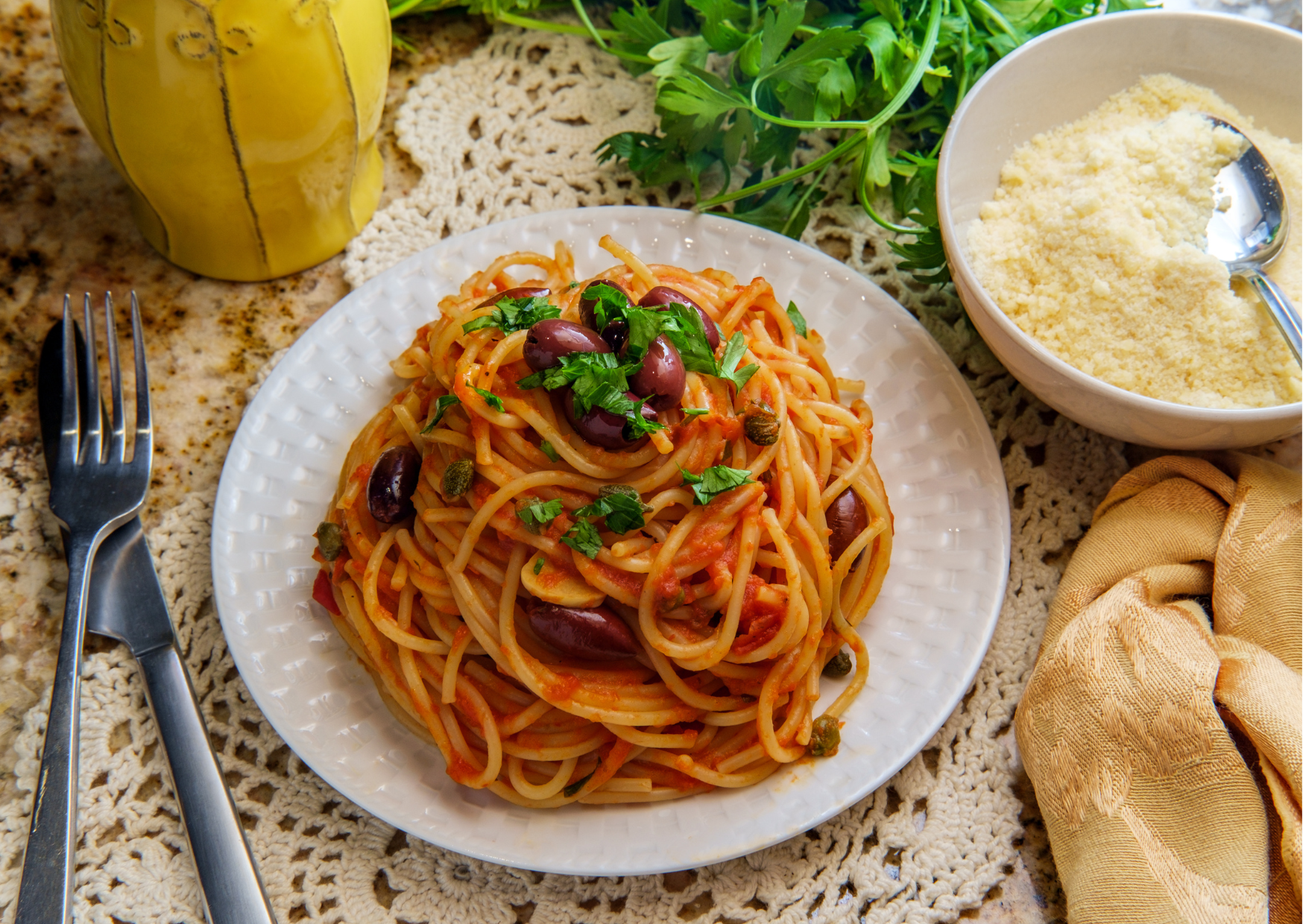
Puttanesca is a pantry strategy disguised as a recipe. Once you have the core ingredients, you can stretch it in smart ways without making it sad.
Day 1: Classic puttanesca
Make the full recipe. Save extra sauce if you can. It will taste better tomorrow.
Day 2: Puttanesca plus protein
Warm sauce, add a can of drained tuna or a handful of cooked chickpeas. It’s not traditional, but it’s honest and filling.
Day 3: Eggs in purgatory style
Simmer leftover sauce, crack in 2 to 4 eggs, cover, and cook until whites set. Serve with bread. Suddenly you have dinner with almost no work.
Day 4: Roasted vegetables + puttanesca
Roast cauliflower or zucchini, then spoon warm sauce over it. The salty sauce makes cheap vegetables taste expensive.
Day 5: Sandwich night
Use sauce as a condiment inside a toasted sandwich with mozzarella or a salty cheese. Keep it minimal, because the sauce is loud.
Day 6: Pasta bake, small and controlled
Mix sauce with pasta, top lightly with breadcrumbs and a little cheese, bake at 200°C / 390°F for 12 to 15 minutes. This is not Rome, but it’s winter and you live where you live.
Day 7: Reset pantry
Replace what you used: one tin of anchovies, one jar of capers, olives that don’t taste like punishment. This is how the dish becomes a habit, not a once-a-year idea.
If you want one takeaway, it’s this: puttanesca is best when it’s treated as infrastructure. The ingredients live in your kitchen so dinner stays easy.
The decision you’re making when you cook it
Rushing puttanesca is usually a mood. It’s the “feed me now” mood.
But the dish is quietly teaching a different habit: take 15 extra minutes so your food tastes settled, not frantic. That’s a very European lesson, and it applies to more than pasta.
If you want puttanesca to taste like the real thing, stop treating it like a shortcut and treat it like a small ritual. Low heat. Proper sequence. A short simmer. Pasta finished in the pan.
That’s the whole point.

About the Author: Ruben, co-founder of Gamintraveler.com since 2014, is a seasoned traveler from Spain who has explored over 100 countries since 2009. Known for his extensive travel adventures across South America, Europe, the US, Australia, New Zealand, Asia, and Africa, Ruben combines his passion for adventurous yet sustainable living with his love for cycling, highlighted by his remarkable 5-month bicycle journey from Spain to Norway. He currently resides in Spain, where he continues sharing his travel experiences with his partner, Rachel, and their son, Han.