

The difference isn’t that Europeans are “more open.” It’s that many were taught, early and repeatedly, that bodies are normal, pleasure is real, and health systems exist for messy human situations, not just emergencies.
Americans Didn’t Miss One Class. They Missed an Entire Operating System.

A lot of American adults think they missed “sex ed” the way you miss a unit in ninth-grade biology.
That’s not what happened.
Many Americans missed an entire operating system: the idea that sex education is public health, not morality. That it’s a skills class, not a scare tactic. That it doesn’t stop at pregnancy prevention, because adults still have bodies, still have desire, and still need language that works in real life.
In much of Europe, sexuality education has often been framed as a long, age-appropriate progression. It starts with naming body parts. It grows into consent and boundaries. It includes contraception competence. It talks about relationships as something you build, not something that “happens.” In some places, it also includes pleasure, sexual function, and how to seek help without shame.
In the U.S., huge numbers of people were trained on a narrower script: don’t get pregnant, don’t get an STI, and don’t embarrass your parents.
That script produces adults who can run companies but cannot say “dryness,” “pain,” “erectile changes,” or “I need lube” without turning it into a joke.
Here in Spain, you see the downstream effect constantly. Americans arrive with money and confidence, then freeze in a pharmacy aisle because the products are explicit and the language is direct. They are not immature. They were undertrained.
The goal of this piece is not to dunk on the U.S. The goal is to show, plainly, what many Europeans were taught that Americans weren’t, and why it changes adult relationships after 50.
Europe Built Sex Ed Around Health. The U.S. Built It Around Fear.
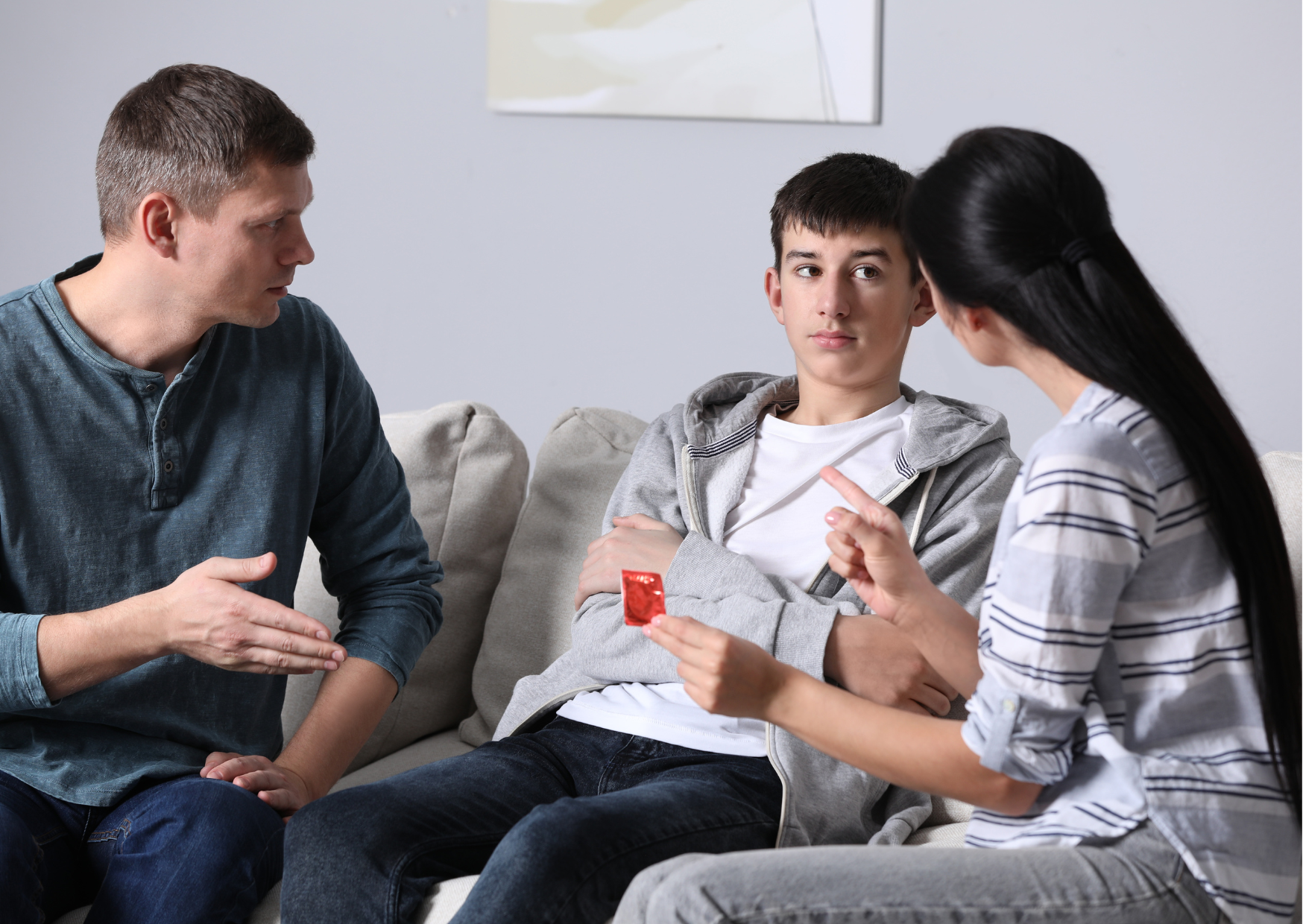
When Europeans seem less embarrassed later in life, it’s often because their early education made embarrassment less useful.
In Europe, sexuality education standards have been treated as a public health tool for decades. Sweden made sexuality education mandatory in 1955, and many countries built national or regional approaches over time. Even where the content was uneven, the core framing mattered: sex ed belongs in school because bodies belong in life.
In the U.S., sex education became a political battlefield. In many states, programs have historically been shaped by abstinence emphasis, local control, and inconsistent medical accuracy requirements. So what a student learned depended on where they lived, which year they were in school, and whose values had the microphone.
That inconsistency is why American adults share wildly different experiences. Some got comprehensive education. Many got a thin, awkward lecture. Plenty got nothing beyond warnings.
Europe is not uniform either. Some countries are conservative. Some regions teach better than others. But across much of Western and Northern Europe, sexuality education became a normal civic topic. That created shared language, and shared language becomes a lifelong tool.
It also created a second tool: pathways.
In many European countries, sexuality education is linked to services. Youth clinics, school nurses, family planning consultations, and GP systems make “getting help” feel like a normal step, not an admission of failure.
That’s one of the biggest adult differences. A person who was taught that care exists will seek it sooner. A person taught that sex talk is shameful will wait until the relationship is already strained.
This isn’t about being liberal. It’s about being functional.
Europeans Were Taught Real Anatomy. Americans Were Taught Euphemisms.

This is where things get awkward, fast.
Many Americans were taught anatomy in a way that was incomplete, male-centered, and weirdly euphemistic. They can name male parts, but struggle with female anatomy beyond “vagina.” They often never learned the clitoris properly, never learned what pelvic floor muscles do, never learned that pain is a symptom, not a price of admission.
A lot of European programs were not perfect on pleasure either. Some were strongly biological. Some barely touched desire. But many were more explicit about naming parts and normalizing function.
That matters after 50 because anatomy becomes unavoidable.
Menopause changes tissue and lubrication. Pelvic floor strength matters. Prostate enlargement affects urination and sleep, which affects sex. Erections become more vascular than spontaneous. Libido becomes more dependent on sleep and stress than on fantasy.
If you don’t have accurate vocabulary, you can’t communicate. If you can’t communicate, you can’t adjust. If you can’t adjust, you stop trying.
In Spain, blunt language helps. People say “I have dryness” or “it hurts” without the extra shame performance. That directness doesn’t make the symptom disappear, but it makes treatment possible.
This is one reason Americans perceive Europe as “more comfortable.” Comfort is often just familiarity with accurate words.
A practical example: in many European contexts, local vaginal estrogen and lubricants are discussed plainly as tools for comfort. In the U.S., plenty of women still feel like buying lube is an admission that they are “old.” That’s not biology. That’s culture.
Accurate anatomy education doesn’t make people crude. It makes them competent.
Contraception Was Taught as a Skill, Not a Moral Test

One of the biggest adult differences is how people relate to contraception.
In much of Europe, contraception has been treated as routine healthcare. Not “permission for sex,” not a debate about character, not a high-drama topic you only bring up when you’re desperate.
That framing produces adults who handle contraception like adults. They know what options exist. They know where to get them. They understand that side effects are real and should be managed, not endured in silence.
In the U.S., contraception access varies by insurance, state rules, clinic availability, and politics. Even when contraception is available, the emotional framing can still be loaded. Some people grow up with the idea that contraception is shameful, or that discussing it is an accusation.
Here’s what Europeans often learned earlier:
- contraception is part of life planning
- it is normal to ask for adjustments
- it is normal to switch methods
- it is normal to require condoms early in dating, without apology
That last one matters for adults over 50, especially after divorce. Older adults are not immune to STIs. In fact, many are more vulnerable because they don’t fear pregnancy and may underestimate infection risk.
When contraception education includes STI education that stays relevant across adulthood, people are less likely to treat condoms as “something for teenagers.”
They treat them as protective equipment, like seat belts.
This is also where Europe’s clinic pathways matter. In many places, people have a clear idea of where to go: GP, family planning clinic, local health center, pharmacy advice. In the U.S., many adults still see sexual health as something you only discuss with a gynecologist, which turns it into a rarer, more intimidating event.
Skill-based education lowers friction. Lower friction changes behavior.
Consent Was Treated as a Normal Life Skill, Not a Courtroom Concept
When Americans talk about consent, the conversation often gets dragged into extremes. Legal cases. Headlines. Moral panic. Fear of saying the wrong thing.
In many European education frameworks, consent is treated more like a life skill: boundaries, respect, communication, and the ability to say yes or no without shame.
That matters after 50 because long-term couples also need consent. Bodies change. Desire changes. Health changes. The same touch that felt good at 35 might not feel good at 55. The person who can say “not tonight” kindly and the person who can hear it without spiraling are not just emotionally mature. They are trained.
A lot of Americans were trained on a different script: sex is implied in relationships, especially in marriage, and talking about boundaries is awkward or confrontational.
Then menopause arrives. Or ED arrives. Or depression arrives. And suddenly the old script breaks.
European adults are not magically better communicators. But many were given earlier language to talk about boundaries without turning it into a fight. That reduces resentment. It also reduces the quiet coercion that happens in many couples where one partner endures discomfort because they feel guilty.
The most important consent skill for adults is not a slogan. It’s the ability to renegotiate intimacy without shame.
That means being able to say:
- “This hurts now.”
- “I need slower.”
- “I want more affection without pressure.”
- “I miss closeness, but I’m anxious.”
Those sentences sound simple. For many American adults, they feel impossible, because they never practiced them in a safe context.
Europe’s advantage here is often just repetition. People were told early that boundaries are normal, and they carried that norm into adulthood.
Porn Literacy Was Handled More Like Media Literacy
Porn has shaped everyone, whether people admit it or not.
The difference is how societies frame it.
Many American adults grew up with porn as a secret education. It became the curriculum because no one else would talk plainly. That’s a bad teacher. Porn is performance. It’s edited. It’s often male-centered. It rarely models communication, care, or real bodies.
European sexuality education frameworks have more often treated media influence as something to discuss, not pretend doesn’t exist. Some programs explicitly include conversations about media, pornography, expectations, and pressure. Again, not everywhere. But the framing is more likely to be “this exists, so we need tools.”
When you don’t have porn literacy, you carry porn expectations into midlife without noticing:
- the belief that desire should be instant
- the belief that bodies should respond on demand
- the belief that pain is normal
- the belief that erections are a test of masculinity
- the belief that women should not need lubrication
After 50, those beliefs become destructive because bodies become less predictable. Couples either adapt or they stop trying. Adaptation requires realistic expectations.
In Europe, you’ll still find shame around porn and sexuality. You’ll also find more adults who can say, plainly, “That’s not real life,” and build intimacy around what actually works.
For American readers, porn literacy is not a moral debate. It’s a practical one. If your expectations are unrealistic, your relationship will pay the price.
Menopause and Erectile Changes Were Not Treated Like a Personal Failure

This is where the gap becomes painfully obvious.
Many Americans were trained to treat sex after 50 as either a joke or a miracle. Jokes about “dry spells,” jokes about “the change,” jokes about “men being men.” The message underneath is resignation.
In several European healthcare contexts, menopause management is more normalized, and sexual function is treated more clinically. Not perfect, not always fast, but more like: symptoms exist, treatments exist, follow-up exists.
That includes:
- local treatment for dryness and pain
- counseling on what changes are normal
- practical guidance on libido shifts
- medical evaluation for erectile changes as part of vascular health
The difference is not that Europeans never feel embarrassed. It’s that they’re less likely to treat sexual symptoms as a character flaw.
A woman with painful sex is not “broken.” She has symptoms. A man with erectile changes is not “less of a man.” He has physiology, possibly medication side effects, possibly vascular issues, possibly anxiety.
When a society treats these topics clinically, adults seek help sooner. When a society treats them as shameful, couples adapt by avoiding.
Avoidance becomes the new normal, and then people claim they “just grew out of it.”
Many did not grow out of it. They grew silent.
The adult sex education Europeans often received included a quiet permission: you can talk about this without being ridiculous.
That permission is what Americans are missing, and it’s why so many American marriages slide into a roommate phase right when bodies need more care, not less.
Seven Days to Get the Education You Should Have Gotten
This isn’t therapy homework. It’s a practical reboot.
If you are an American adult over 45 and you want a more European level of competence, do this for one week. The point is not to become “open-minded.” The point is to become less awkward, more informed, and more capable of getting help.
Day 1: Learn the anatomy properly
Spend 20 minutes with a reputable medical diagram source and learn correct terms, especially female anatomy beyond “vagina.” If you cannot name the parts, you cannot describe symptoms.
Day 2: Write a symptom script
If you have any sexual health symptoms, write a two-sentence script you can say to a clinician. Keep it plain. Example: “Sex has become painful and I have dryness. I want to discuss treatment options and follow-up.” Or: “Erections have changed and I want to review causes, medications, and options.”
Day 3: Do the medication reality check
Many common medications affect libido and function. Make a list of what you take, then ask your clinician or pharmacist what could be contributing. Treat this as normal, not shameful.
Day 4: Learn contraception and STI basics for older adults
If you’re dating again, refresh condom use and STI testing routines. If you’re partnered, know the basic testing pathways and be honest about risk.
Day 5: Practice one consent sentence
Say one boundary sentence out loud, to yourself if you have to. “Slower feels better.” “Not tonight.” “I need more foreplay.” “That hurts.” Your goal is to make the words usable.
Day 6: Build your intimacy menu
Write a list of intimacy that is not goal-driven. Touch, massage, kissing, shower together, cuddling, oral intimacy if you like it. Couples who stay connected after 60 usually broaden the menu. That reduces pressure.
Day 7: Make one appointment or one purchase that supports comfort
Book a clinician visit if symptoms exist. Or buy a quality lubricant and stop treating it like a scandal. Choose one action that supports your body this month.
That’s the European advantage in practice: not bravado, but competence.
What This Means for Americans Moving to Europe
If you’re relocating, Europe won’t magically rewrite your upbringing.
You can live in Portugal and still be embarrassed. You can live in Spain and still avoid the topic. Geography doesn’t fix scripts.
But Europe can make it easier to build new ones, because the environment gives you more permission:
- pharmacies treat sexual health products as normal
- clinicians in many settings discuss menopause more clinically
- sex education traditions make adult language less taboo
- social norms in many places allow blunt body talk without drama
The real win is not having more sex to prove something.
The win is having fewer years lost to silence, pain, and unnecessary shame.
That’s what good sex education gives you.
It doesn’t make you wild.
It makes you capable.

About the Author: Ruben, co-founder of Gamintraveler.com since 2014, is a seasoned traveler from Spain who has explored over 100 countries since 2009. Known for his extensive travel adventures across South America, Europe, the US, Australia, New Zealand, Asia, and Africa, Ruben combines his passion for adventurous yet sustainable living with his love for cycling, highlighted by his remarkable 5-month bicycle journey from Spain to Norway. He currently resides in Spain, where he continues sharing his travel experiences with his partner, Rachel, and their son, Han.