
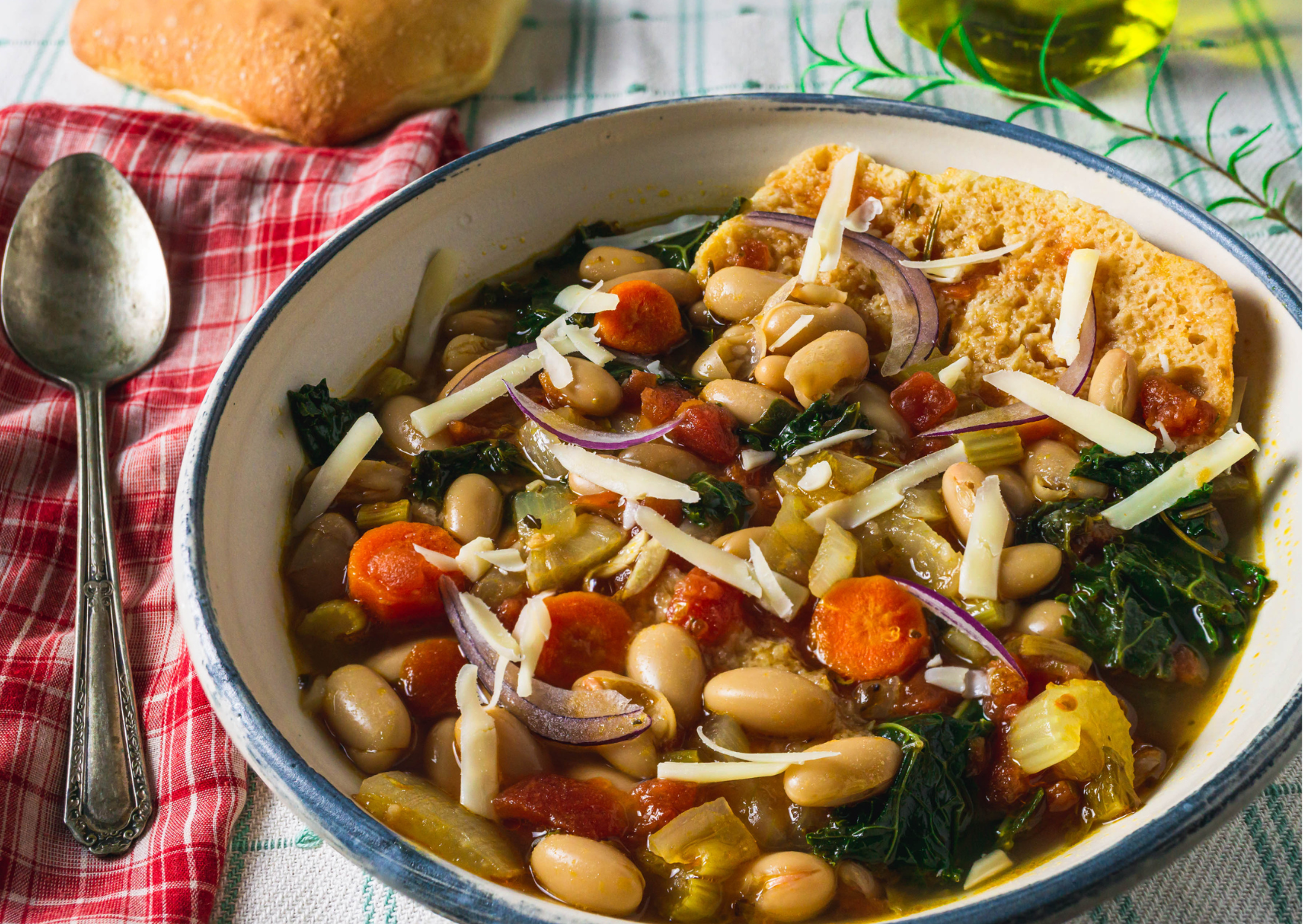
This is the opposite of “healthy cooking” theater. It’s beans, greens, old bread, and olive oil, the kind of pot that makes your body calm down and your grocery bill stop yelling at you.
The Soup Americans Think They Need, Versus the One That Actually Works
A lot of American “healthy soup” is secretly a diet plan in liquid form.
Watery broth. A few sad vegetables. Maybe some chicken breast floating around like it’s waiting to be rescued. You finish the bowl and your brain immediately asks for chips.
Ribollita is built differently.
It’s a Tuscan soup that uses beans as the backbone, greens as the bulk, and stale bread as the thickener. It eats like a meal, not a starter.
If you’re 45–65 and you’re trying to lose the constant snack cycle, ribollita is the kind of dish that changes your day without you “trying harder.”
Not because it’s magical. Because it’s structured for satiety:
- fiber from beans and greens
- slow carbs from bread and potatoes
- fat from olive oil added at the end
- salt that you control, not a factory
In our Spain kitchen, ribollita is also the most underrated “Europe trick” for American readers: it proves you can eat cheap and still feel fed.
And if you’re on diabetes or blood pressure meds, any big shift toward legumes, fiber, and less ultra-processed food can move your numbers quickly, so keep an eye on your readings the first week.
How It “Costs €2” Without Lying to You
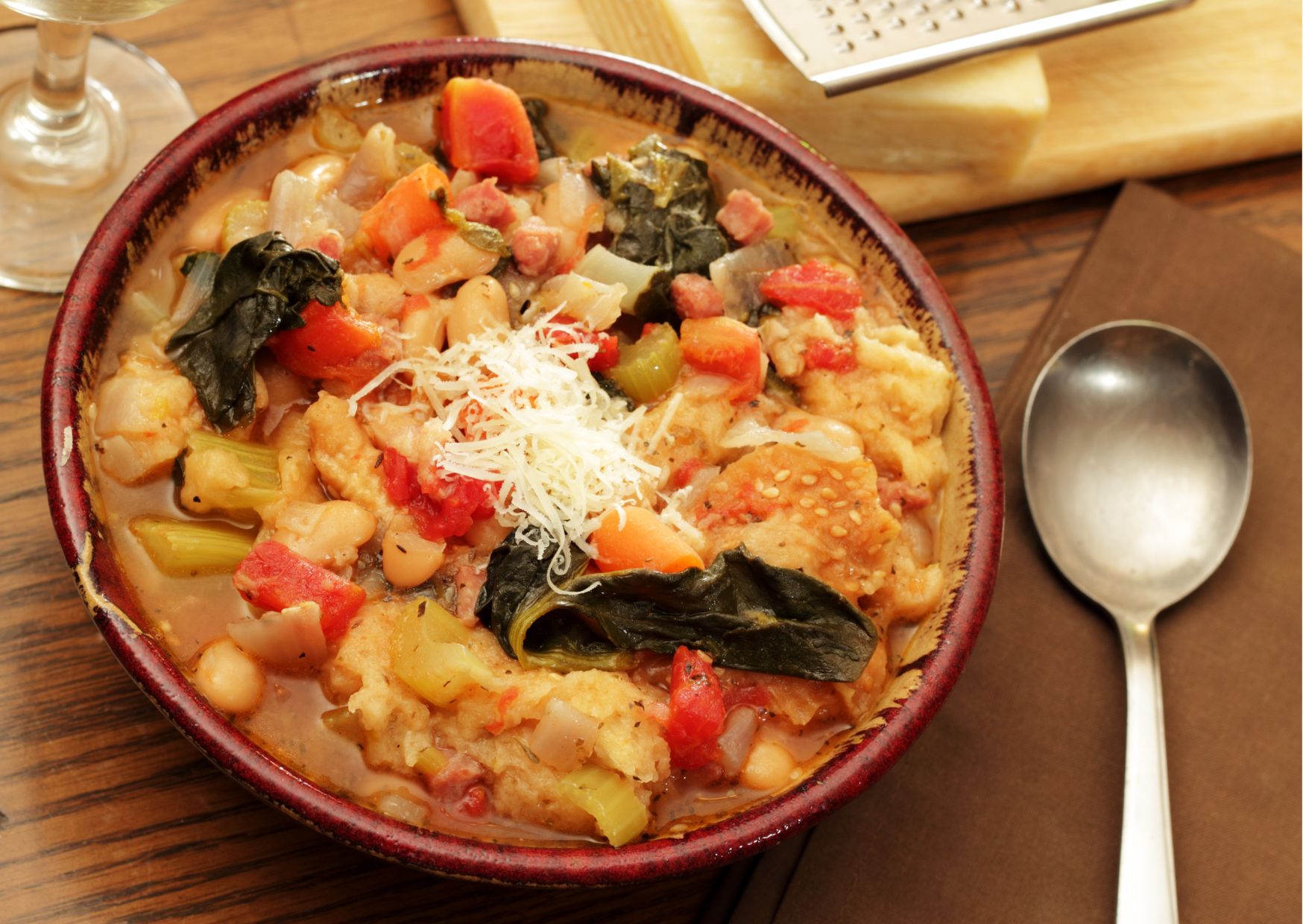
Let’s be blunt. If you walk into a supermarket and buy everything from zero, including a full bottle of olive oil, this doesn’t cost €2.
It costs more.
The €2 claim is about incremental cost, the new money you spend for one pot when you’re cooking like a normal Mediterranean household:
- you already have olive oil, salt, pepper
- you already have some stale bread or you buy the cheapest loaf
- you’re using dried beans, not premium canned “organic” anything
- you’re using seasonal greens, not a tiny plastic tub labeled “superfood”
In February 2026 Spain grocery math, the building blocks are still shockingly cheap:
- dried white beans around €2.45/kg in a common supermarket brand
- onions around €1.48/kg
- carrots around €1.15/kg
- crushed tomatoes around €0.98 for 800 g
- Swiss chard (a great stand-in for Tuscan greens) around €2.15 for 800 g
- extra virgin olive oil around €4.95 per liter
If you use a portion of each and count only what you actually consume, a four-bowl pot lands around €2 to €3 for many households.
Here’s an example “incremental” pot cost using typical February 2026 prices in Spain:
- 200 g dried white beans: about €0.49
- 1 medium onion (150 g): about €0.22
- 1 carrot (100 g): about €0.12
- 1 small potato (200 g): about €0.31
- 250 g chard or similar greens: about €0.67
- 200 g crushed tomato: about €0.25
- 2 tbsp olive oil (about 30 ml): about €0.15
- bread: €0 if it’s truly leftover, or add about €0.25 to €0.60 if you’re buying a basic loaf portion
That’s how the €2 claim can be real without fantasy.
Also, ribollita is a two-day dish. It’s literally “reboiled.” Day two is when it tastes like Tuscany, and day two is when it feels like you hacked dinner.
Ribollita Recipe: The €2 Tuscan Pot
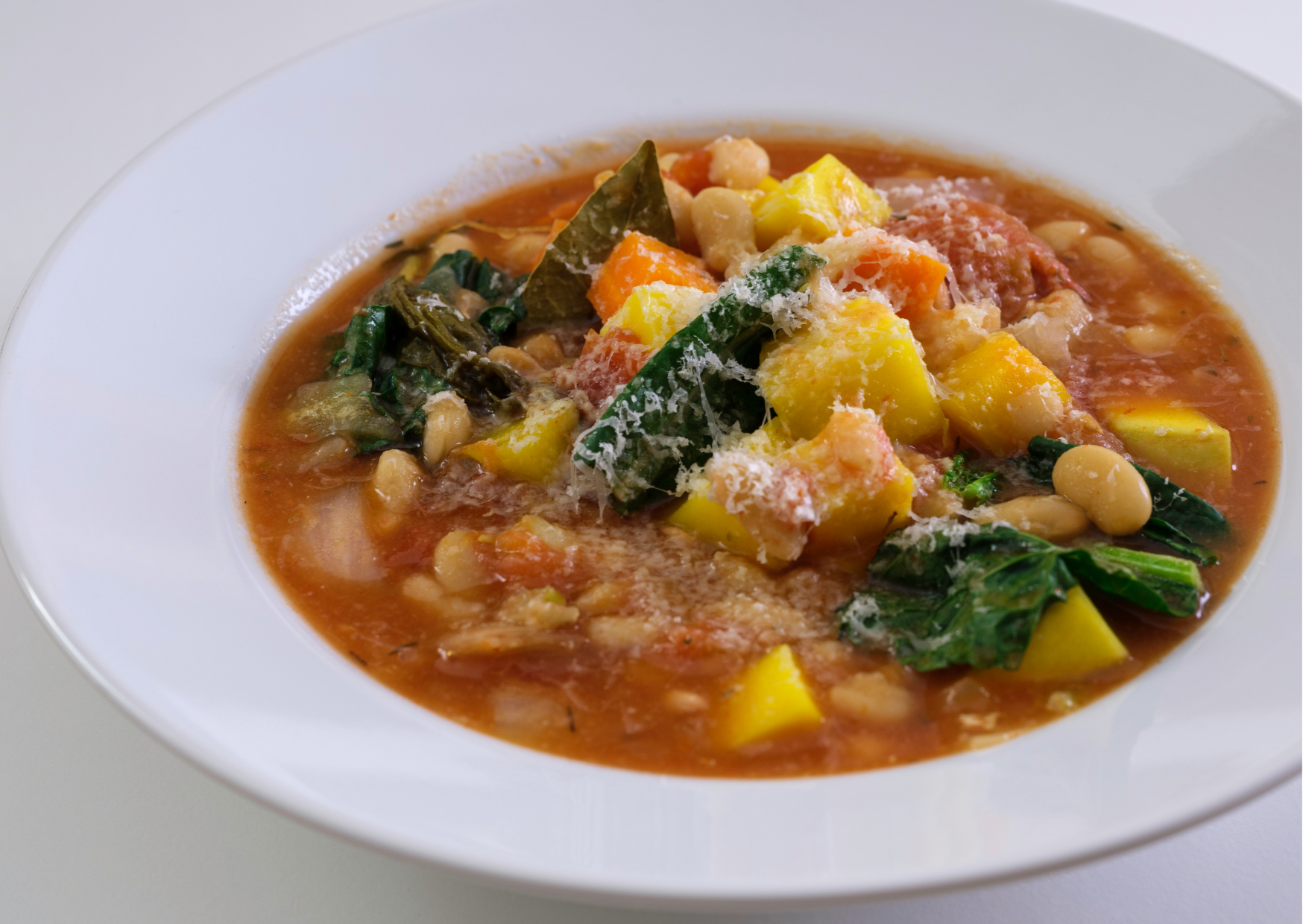
This version is built for Spain supermarkets and American kitchens.
It’s faithful to the method, but flexible on the greens, because most people are not walking around with cavolo nero on demand.
Serves: 4 hearty bowls (European-style dinner)
Prep: 15 minutes active, plus soaking if using dried beans
Cook: 60 to 75 minutes
Total: about 1 hour 15 minutes (or 10 minutes longer if you’re slow with chopping)
Ingredients (metric first, then U.S.)
Beans
- 200 g dried cannellini or other white beans (about 1 cup), soaked overnight
- or 2 cans cooked cannellini beans, drained and rinsed (2 x 400 g cans, about 2 x 15 oz)
Soup base
- 3 tbsp extra virgin olive oil (45 ml)
- 1 medium onion, finely chopped (about 150 g)
- 1 medium carrot, finely chopped (about 100 g)
- 1 celery stalk, finely chopped (about 50 g), optional but classic
- 4 garlic cloves, smashed
- 1 small potato, diced (about 200 g), optional but makes it extra filling
- 200 g crushed tomatoes (about 3/4 cup), or 2 tbsp tomato paste plus water
- 1.2 L water or light vegetable broth (about 5 cups), more as needed
- 1 bay leaf
- 1 sprig rosemary or 1/2 tsp dried rosemary
- 1 tsp fine salt to start, then adjust
- Black pepper
Greens and bread
- 250 to 300 g greens, chopped (about 8 to 10 cups loosely packed)
- Tuscan-style: cavolo nero (lacinato kale)
- Spain budget: chard (acelgas) or regular cabbage
- 200 to 250 g stale bread, torn into chunks (about 6 to 8 cups loosely packed)
- rustic bread works best, avoid soft sandwich bread
Finish (optional but very “Italy”)
- 30 to 40 g grated Parmesan or Pecorino (about 1/3 cup)
- 1 Parmesan rind (throw it in while simmering if you have it)
- 1 to 2 tsp red wine vinegar or a squeeze of lemon at the end
Step-by-step
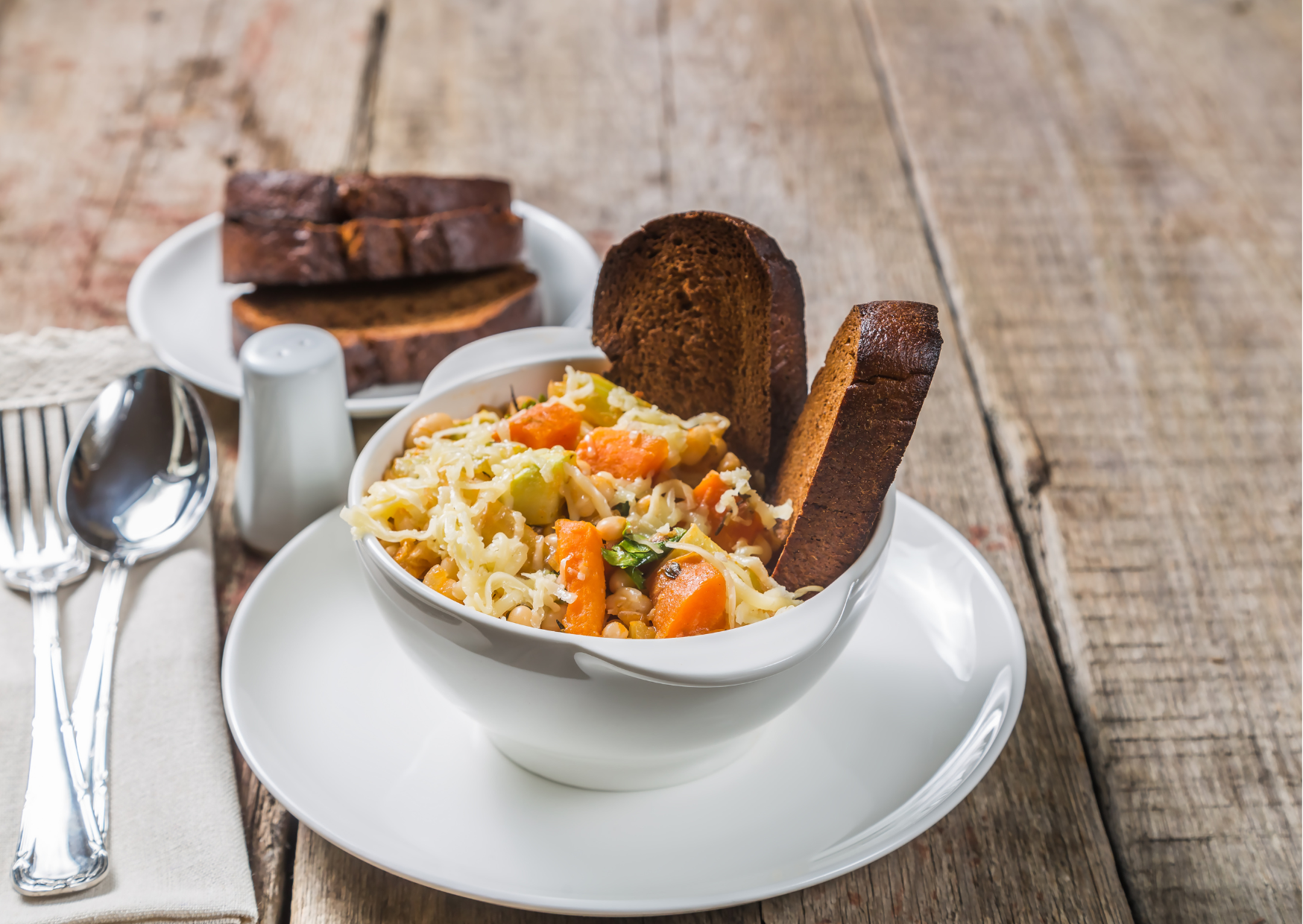
1) Cook the beans (if using dried).
Drain the soaked beans. Put them in a pot with plenty of water.
Simmer until tender, typically 45 to 60 minutes depending on bean age. Salt lightly in the last 10 minutes.
Reserve at least 500 ml of the bean cooking liquid (about 2 cups). It’s gold.
If using canned beans, skip this step and keep moving.
2) Build the soffritto base.
In a large pot, heat 3 tbsp olive oil over medium heat.
Add onion, carrot, and celery. Cook 10 to 12 minutes, stirring often, until soft and sweet. You’re not rushing this. This is where cheap ingredients turn into flavor.
Add garlic and cook 60 seconds until fragrant.
3) Add tomato, herbs, and broth.
Stir in crushed tomato, bay leaf, and rosemary.
Cook 2 minutes, then add 1.2 L water or broth.
If you have a Parmesan rind, drop it in now.
Bring to a gentle simmer.
4) Add potatoes and greens.
Add diced potato (if using) and simmer 10 minutes.
Add greens in handfuls. Let each handful wilt before adding the next.
Simmer 10 to 15 minutes, until the greens are tender but not dead.
5) Add beans, and thicken it the Tuscan way.
Add the cooked beans.
Now take about one-third of the soup contents (beans and veg) and blend it. You can use a stick blender right in the pot, or scoop out 2 to 3 cups and blend in a blender.
Pour the blended portion back in.
This is the trick that makes ribollita feel rich without cream. Beans become the broth.
If it looks too thick, add a splash of reserved bean liquid or water.
If it looks too thin, simmer uncovered for 5 to 10 minutes.
6) Add bread, then stop cooking.
Turn off the heat.
Stir in the torn stale bread. Press it down so it soaks.
Cover and let it sit at least 20 minutes. Longer is better.
The bread should disappear into the soup and make it spoonable, like a thick stew.
7) Finish like an adult.
Taste and adjust salt and pepper.
If the soup tastes flat, add 1 tsp vinegar or a squeeze of lemon. This is the “wake up” move.
Serve with grated cheese if you want it.
8) The real ribollita move: eat it tomorrow.
Cool it, refrigerate it, and reheat the next day with a splash of water.
Day two is why this soup has a reputation. The starch and bean broth settle into something deep and cohesive.
“Make it work on a Tuesday” shortcuts
If your life is busy, do this without turning it into a weekend project:
- Use canned beans, but still blend a portion so it thickens properly.
- Use a bag of chopped greens or cabbage.
- Use any day-old bread, even a basic baguette.
- Skip celery if you don’t have it, just use onion and carrot and don’t overthink it.
The method is the point.
Storage and reheating
- Fridge: 3 to 4 days, covered
- Freezer: yes, up to 2 months (freeze before adding cheese)
- Reheat: low heat with a splash of water, stir slowly so it doesn’t stick
Why Italians Use Bread as the Thickener
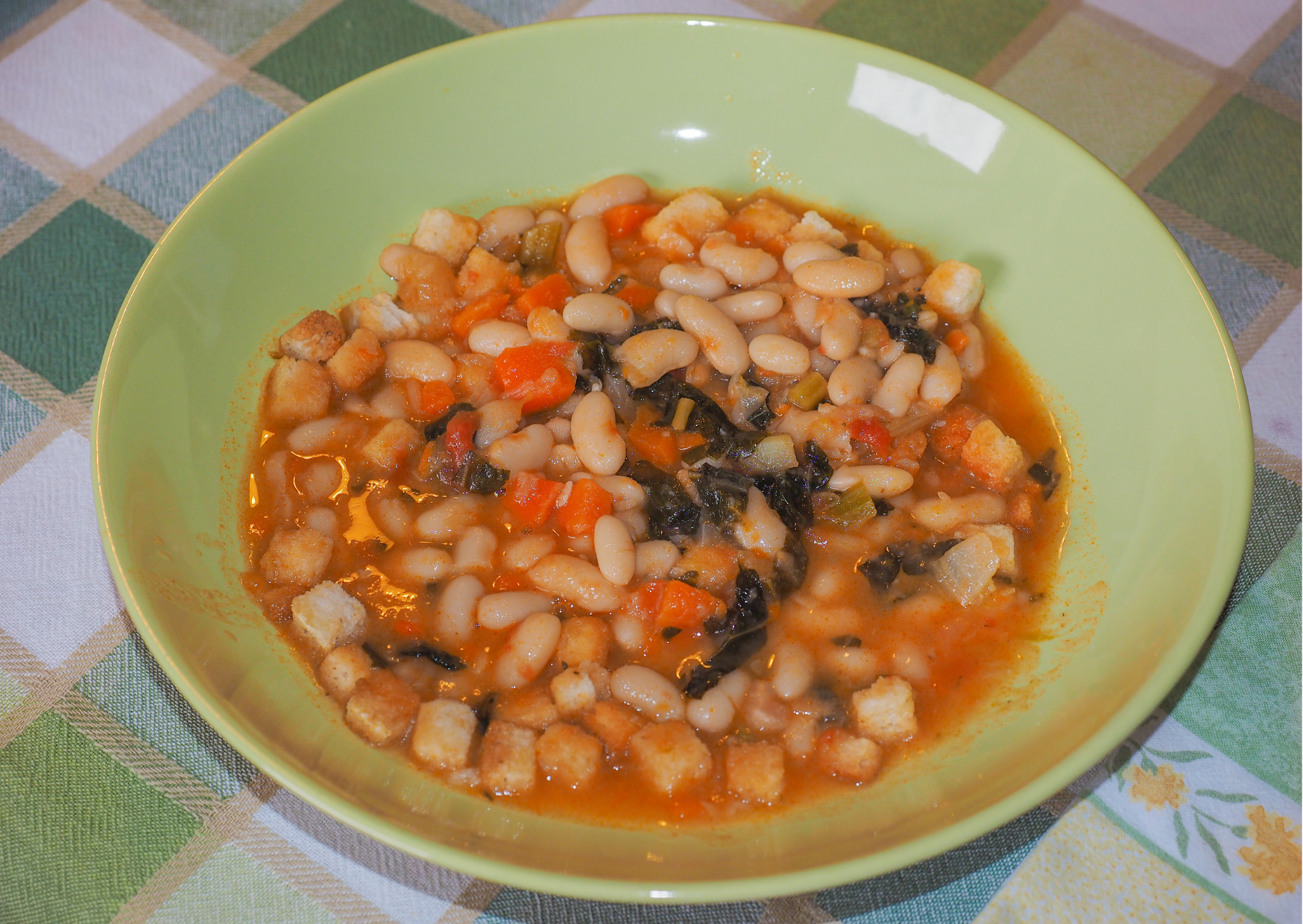
Americans hear “bread in soup” and assume it’s a carb bomb.
That’s the wrong lens.
In Tuscany, bread historically wasn’t a fluffy white accessory. It was structure. It was used fresh, then used stale, then used again.
Ribollita is a leftover strategy that became a signature dish. Bread thickens the broth, makes it clingy, and turns “vegetable soup” into “I’m full until tomorrow.”
And Tuscan bread has its own story. Traditional Tuscan bread is famously unsalted, which is why it pairs well with salty foods and why it can be used as a neutral base in soups.
Even if you’re not using true pane toscano, the principle holds: stale bread absorbs flavor and makes the dish feel complete.
If you want ribollita to taste right, avoid soft sandwich bread. It turns gummy fast and tastes like wet sponge.
Use rustic bread that can take a beating.
Why This Soup Changes Appetite for Americans
This is where ribollita becomes a “health piece” without pretending it’s medicine.
Most American hunger is not hunger. It’s the urge to eat something engineered to be easy, fast, and stimulating.
Ribollita is the opposite.
It’s slow food that creates steady signals:
- fiber plus protein from beans
- bulk without chaos from greens
- slow carbs from bread and potatoes
- fat that satisfies from olive oil
- a warm meal that makes people stop prowling the kitchen
For a lot of Americans, the “I need something after dinner” habit is a blood sugar swing plus a reward habit.
A thick bean soup with olive oil can flatten both.
This is also why ribollita fits a Mediterranean rhythm. It’s not a diet. It’s a default.
If you eat like this for a week, a lot of people report less snacking, fewer cravings, and a calmer stomach. Not because Tuscany is magical, but because the inputs are different.
What It Costs in Spain Versus the United States
Here’s the clean comparison: in Spain, the raw ingredients for ribollita are still priced like normal food.
In the U.S., you can absolutely make ribollita cheap, but many Americans end up paying more because of how they shop:
- they buy canned beans instead of dried
- they buy “kale” in small premium packs
- they buy fancy broth cartons
- they buy a $7 loaf of “artisan bread” and call it necessary
It’s not necessary.
Spain cost reality (February 2026 examples)
Using typical supermarket prices for staples:
- dried white beans: about €2.45/kg
- onions: about €1.48/kg
- carrots: about €1.15/kg
- chard: about €2.15 for 800 g
- crushed tomatoes: about €0.98 for 800 g
- extra virgin olive oil: about €4.95/L
For the recipe above, a realistic pot comes out around €2 to €3 incremental cost if olive oil and salt are already in your kitchen.
If you buy everything new, including olive oil and a full loaf of bread, your first pot can land closer to €7 to €10, then future pots drop back down because the bottle of olive oil and the leftover bread habit carry you.
U.S. cost reality (late 2025 baseline data)
In the U.S., dried beans averaged about $1.689 per pound in December 2025.
That means the beans themselves can still be cheap.
Where the U.S. cost inflates is everything around it:
- olive oil often costs significantly more per usable tablespoon
- bread is often priced like a specialty product
- greens can be expensive if you buy them in small “health” packages
- people rely on boxed broth instead of water plus flavor building
So the same pot often lands around $7 to $12 depending on where you live and how you shop.
Still cheap for four meals, but not “€2 cheap.”
And that’s the point. Mediterranean cooking is not just ingredients. It’s a shopping philosophy: buy staples, repeat them, use leftovers, and stop paying the convenience tax.
Seven Ways to Keep Ribollita From Becoming a One-Time Project
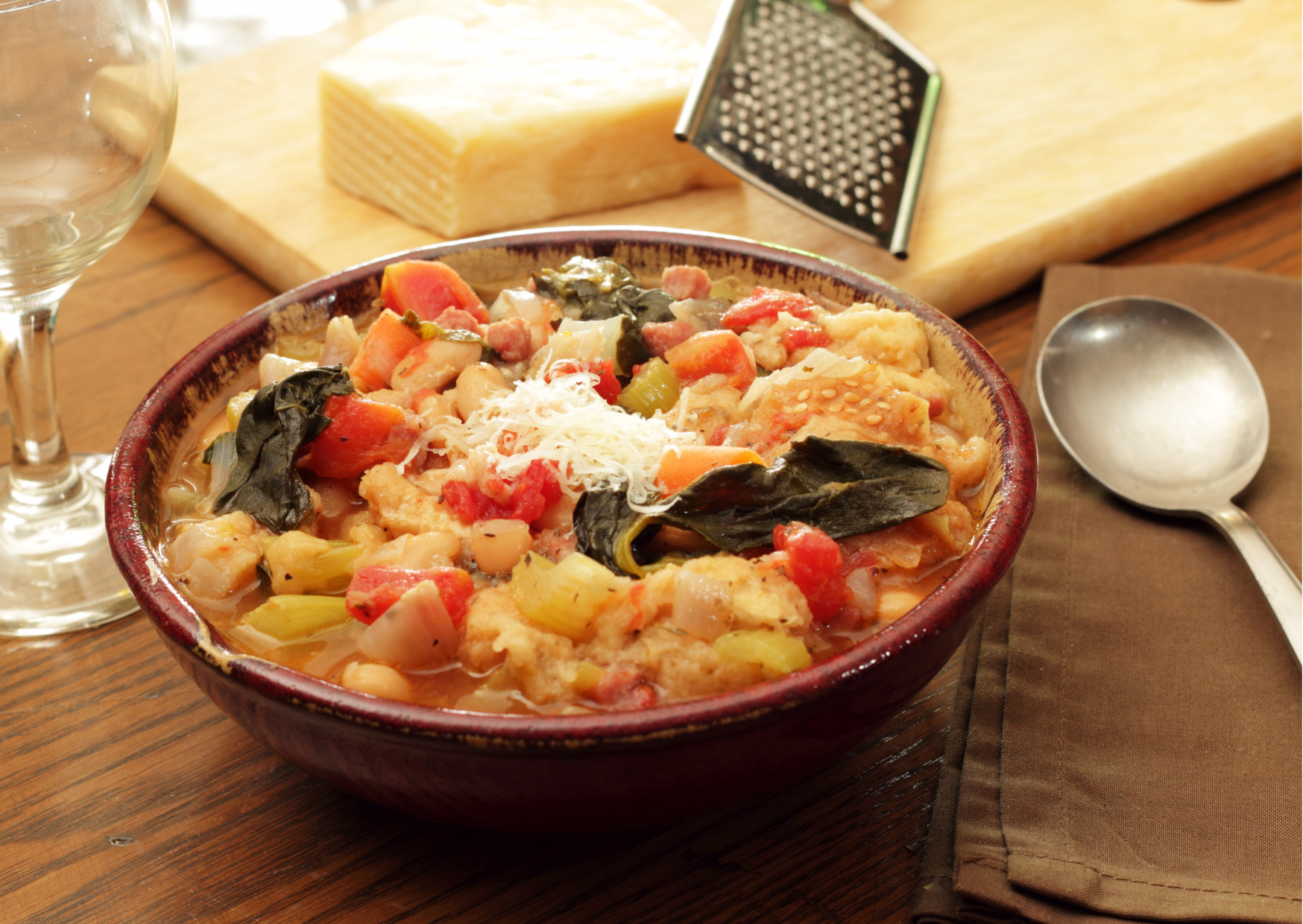
Ribollita is at its best when it becomes part of your routine, not a museum recipe.
Here are repeatable variations that keep the method intact:
- Cabbage ribollita
Use regular green cabbage. It’s cheap, it holds up, and it tastes right. - Chickpea version
Swap cannellini for chickpeas. Blend a portion so it still thickens. - Spicy version
Add a pinch of chili flakes with the garlic. Not much. Just a little heat. - Winter version
Add more potato and a handful of white beans extra. This becomes pure comfort. - Spring version
Use spinach or acelgas, and finish with lemon. - No-cheese version
Skip the cheese and finish with extra olive oil and black pepper. Still satisfying. - Protein-boosted version
Add a soft-boiled egg on top at serving. Very Spanish, very filling, still cheap.
The core stays the same: beans, greens, bread, olive oil.
The Mistakes That Make It Taste Like “Vegetable Soup”
Ribollita fails in predictable ways, especially in American kitchens.
Mistake 1: Not cooking the soffritto long enough.
If onion, carrot, and celery are still sharp, the soup tastes thin. Give it time.
Mistake 2: Using too much tomato.
This is not minestrone. Tomato is a background note, not the lead singer.
Mistake 3: Skipping the bean blend step.
If you don’t blend a portion, you lose the creamy body that makes ribollita feel rich.
Mistake 4: Using soft sandwich bread.
It turns gummy and sad. Use rustic bread that can absorb.
Mistake 5: Forgetting the finishing fat.
Ribollita without a little olive oil at the end tastes incomplete. That final olive oil gloss matters.
Mistake 6: Under-salting, then trying to fix it with cheese.
Salt properly, then add cheese for depth, not as a rescue plan.
Once you avoid these, ribollita stops tasting like “healthy soup” and starts tasting like a real meal.
The First Week Ribollita Plan for Americans Who Want the Health Effect
If you want the appetite and energy shift, don’t cook this once and call it a lifestyle.
Cook it once and use it strategically.
Day 1: Cook the pot.
Eat one bowl for dinner with a simple salad. Don’t add extra bread on the side unless you truly need it.
Day 2: Eat the “reboiled” version.
This is the real ribollita. Notice how filling it is.
Day 3: Lunch anchor.
Bring a container for lunch. This is how you avoid the midday snack spiral.
Day 4: Reset dinner.
Eat a bowl, then stop eating. The goal is to retrain “I need something after dinner.”
Day 5: Make a fresh salad plus ribollita.
Add crunch on the side so you don’t miss snack textures.
Day 6: Freeze two portions.
Future-you needs easy food that isn’t ultra-processed.
Day 7: Repeat with a variation.
Swap the greens or the beans. Keep the method.
If you do this for one week, you’ll understand why Europeans can eat “simple” food and still feel satisfied. It’s not willpower. It’s structure.

About the Author: Ruben, co-founder of Gamintraveler.com since 2014, is a seasoned traveler from Spain who has explored over 100 countries since 2009. Known for his extensive travel adventures across South America, Europe, the US, Australia, New Zealand, Asia, and Africa, Ruben combines his passion for adventurous yet sustainable living with his love for cycling, highlighted by his remarkable 5-month bicycle journey from Spain to Norway. He currently resides in Spain, where he continues sharing his travel experiences with his partner, Rachel, and their son, Han.